Iran Will Not Allow Crypto Payments, Prepares to Pilot Digital Rial

newsbtcОпубліковано о 2022-04-12Востаннє оновлено о 2022-04-12

Анотація

Cryptocurrencies like bitcoin will not be treated as legal tender in the Islamic Republic of Iran.

Iran Will Not Allow Crypto Payments, Prepares to Pilot Digital Rial

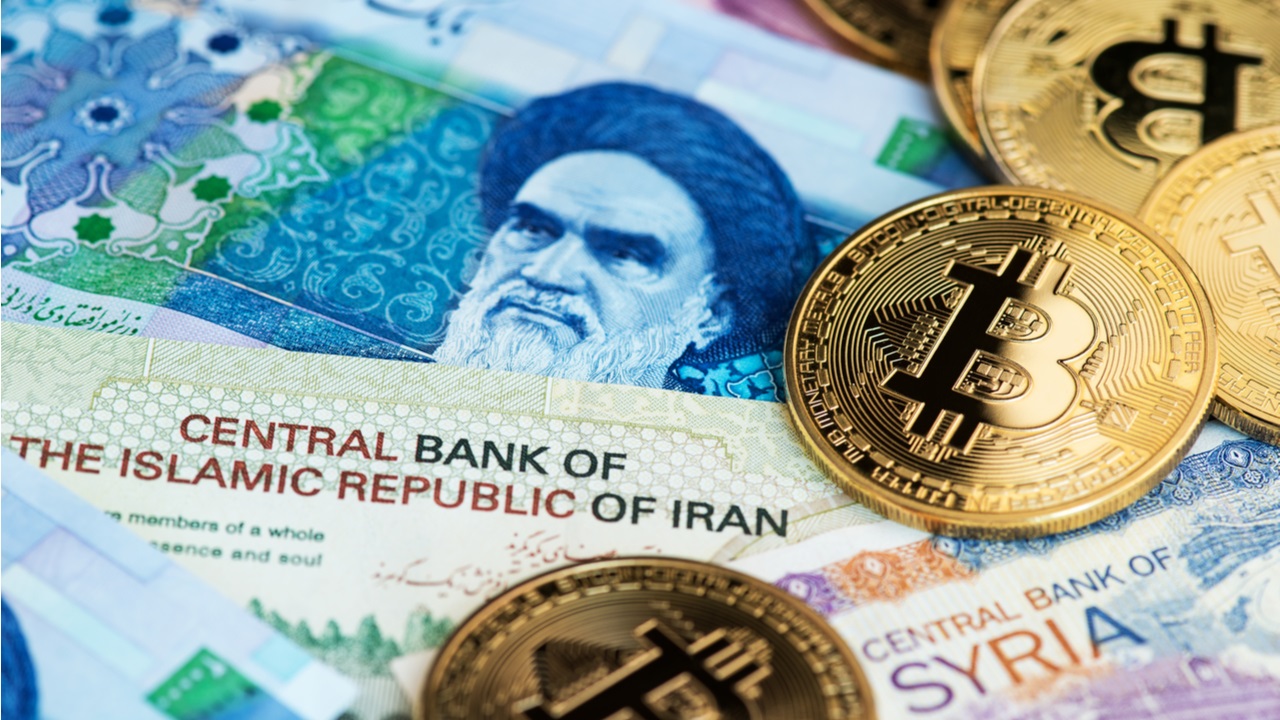
Iran will not recognize cryptocurrencies as a means of payment, a high-ranking government official has indicated. His statement came as the Central Bank of Iran announced rules for the issuance of digital coins in the country. These are meant, however, for its own “crypto rial,” the pilot phase of which should start in the near future.

Accepting Cryptocurrency for Payments Is a Red Line, Iranian Minister Says

Cryptocurrencies like bitcoin will not be treated as legal tender in the Islamic Republic of Iran. Discussing regulatory matters related to the storage and exchange of cryptocurrencies, Iran’s deputy minister of communications, Reza Bagheri Asl, emphasized:

We do not recognize payments with cryptocurrencies.

The government official was commenting on the latest resolution by the Digital Economy Working Group regarding crypto assets. He pointed out that the use of any foreign currency is outside the sovereignty and against the monetary and banking law of Iran.

“So, we will by no means have any regulations recognizing payments with cryptocurrencies that do not belong to us,” Bagheri Asl elaborated, quoted by the Iranian financial news portal Way2pay. “Iran has its own national cryptocurrency, so no payments will be made with non-national cryptocurrencies,” he insisted.

The deputy minister added that in order to prevent risks for the Iranian citizens, digital asset exchange in the country will be subject to a set of rules similar to those that apply to the stock market and other currencies. “Cryptocurrencies must be regulated and banking systems must be observed,” he added.

Central Bank of Iran Shares Details About Digital Rial Project

Tehran authorities have in the past considered allowing Iranian business to use decentralized digital currencies for settlements with foreign partners as a way to circumvent Western financial sanctions. What they are focusing on at the moment, however, is the launch of the digital version of the nation’s fiat currency, the rial.

The Central Bank of Iran (CBI) has recently informed banks and other credit institutions about regulations related to the “crypto rial,” which has been under development for some time. They apply to the minting and distribution of the central bank digital currency (CBDC). The CBI will be its sole issuer and will determine the maximum supply.

According to Way2pay, the digital currency is based on a distributed ledger system that will be maintained by authorized financial institutions and capable of implementing smart contracts. The infrastructure and the guidelines for the CBDC have been finalized and it will be piloted in the near future, the publication unveiled.

The crypto rial will be issued under the legal provisions governing the emission of banknotes and coins, the report noted. The CBI will be monitoring the economic impact of the digital currency and managing its effects in accordance with the authority’s monetary policy. Users will be able to make transactions with the CBDC only within the territory of Iran.

Пов'язані матеріали

Macroeconomic Origins of the African Payments Market Structure

Africa’s payment landscape exhibits the world’s highest mobile money penetration and fastest cryptocurrency adoption. This is not a market anomaly but a macroeconomic inevitability driven by deep structural factors: a vast, young population, heavy reliance on commodity exports and remittances generating massive cross‑border payment needs, and a chronically underdeveloped formal banking system plagued by de‑risking, high inflation, and currency instability. This vacuum has allowed mobile money (e.g., M‑Pesa) to become the primary payment channel domestically, while cryptocurrencies—particularly stablecoins—serve as a store of value against local‑currency depreciation and a lower‑cost cross‑border medium. The key divide is the Sahara: North Africa integrates with the MENA oil‑centric financial system, while Sub‑Saharan Africa, facing acute dollar shortages and fragmented currencies, is the epicenter of this fintech surge. Structural reliance on dollars, driven by trade deficits and weak local currency credibility, creates persistent dollar scarcity, which crypto and mobile payments effectively address. Efforts like the Pan‑African Payment and Settlement System (PAPSS) aim at de‑dollarization, but these alternatives will remain essential as long as underlying economic constraints—commodity dependence, limited industrialization, and financial exclusion—persist.

marsbit11 хв тому

Macroeconomic Origins of the African Payments Market Structure

marsbit11 хв тому

AAOI Defies Trend with Over 10% Surge, 'New Stock God' Serenity Predicts Potential to Double Again

On June 4th, despite a significant sell-off in the broader AI and semiconductor sector triggered by Broadcom's disappointing guidance, Applied Optoelectronics (AAOI) surged over 11%, showcasing a sharp divergence in market sentiment. Broadcom's warning about potential supply chain diversification by key customer Google and a weaker-than-expected outlook punctured the high-flying AI valuation narrative. This led to heavy selling in names like Broadcom (-12.6%) and Micron (-7%), with funds rotating into traditional industrial stocks. AAOI defied this trend. The stock has experienced high volatility recently, driven by bullish analyst coverage, notably from Rosenblatt which raised its price target to $220. Key catalysts include initial 800G optical module revenue from Amazon, potential certification from Oracle, and strong demand across its product portfolio. The company has reported cumulative orders for 800G/1.6T modules exceeding $324 million and is aggressively expanding manufacturing capacity in Texas, targeting an annualized run-rate of $1.4 billion for its module business by Q3 2027. However, AAOI's fundamentals present a mixed picture. Its Q1 2026 results missed expectations, showing a GAAP net loss, and Q2 guidance points to merely breakeven adjusted EPS. Risks include a delayed 800G production ramp to the second half of the year and high dependence on a few key cloud customers. Recent stock sales by company executives near price highs also noted. The article suggests AAOI's rally reflects a market beginning to differentiate within the AI ecosystem. While Broadcom's issues prompted a reassessment of custom ASIC and customer concentration risks, funds flowing into AAOI indicate a belief that the "physical bottleneck" narrative for optical connectivity—where supply remains tight—remains intact and is somewhat decoupled from the current sector weakness. The sustainability of AAOI's premium valuation now hinges on the successful execution of its production plans and upcoming quarterly results.

marsbit18 хв тому

AAOI Defies Trend with Over 10% Surge, 'New Stock God' Serenity Predicts Potential to Double Again

marsbit18 хв тому

Worried about AI's Self-Evolution, Anthropic Intends to Stop Training?

In early 2026, Anthropic signaled a significant shift in its public narrative regarding AI development timelines and safety. In June, its Anthropic Institute published a detailed article, "When AI builds itself," presenting internal data suggesting accelerating AI self-improvement. Key figures included over 80% of merged code being written by Claude and a 52x speedup in certain optimization tasks. The article outlined three future scenarios, with the most speculative being full recursive self-improvement (RSI), where AI autonomously builds better successors. Anthropic stated RSI is "possible" and may arrive faster than most institutions are prepared for. This narrative pivot followed a series of strategic moves. In January, CEO Dario Amodei wrote about a powerful self-improvement feedback loop. In February, Anthropic revised its Responsible Scaling Policy, removing a core commitment to pause training if capabilities outstripped safety controls, citing the risk of falling behind competitors. This change coincided with reported pressure from the US Department of Defense. By May, Anthropic's valuation had soared to $965 billion. Anthropic's stance was mirrored by other industry leaders. DeepMind CEO Demis Hassabis adjusted his AGI timeline to "by 2029" and admitted to using provocative language like "foothills of the singularity" to create urgency. OpenAI also released a model claiming a key role in its own creation process. The article's carefully calibrated tone—presenting dramatic data alongside qualifying footnotes—exemplifies a balancing act between signaling technological acceleration and managing commercial, regulatory, and safety imperatives. External experts offered contrasting interpretations of the same data, from warnings of catastrophic risk akin to Chernobyl to skepticism that current automation merely handles "grunt work," not genius. The coordinated narrative shift among top labs highlights the complex interplay between perceived technical inflection points and strategic communication aimed at investors, regulators, and the public.

marsbit20 хв тому

Worried about AI's Self-Evolution, Anthropic Intends to Stop Training?

marsbit20 хв тому

Торгівля

Спот
Ф'ючерси
活动图片