长推:时代的鲍威尔,还是鲍威尔的时代?

MarsBitОпубліковано о 2023-06-16Востаннє оновлено о 2023-06-16

Анотація

ai革命和新冷战都是慢变量,将为经济提供长期的动力,在这样的情况下,联储也将面临长期的维持高息的压力。

注:原文来自@rickawsb发布长推。
时代的鲍威尔,还是鲍威尔的时代?
fomc会议讲话分析及后续长期预测,本推主要内容包括:
1、美国经济和联储(fed)利率政策;
2、利率和新冷战;
3、利率和其他资产,石油,加密货币等。
先上今天老鲍Powell讲话全文,和之前的比较,没啥变化,但同时一切都在起变化。
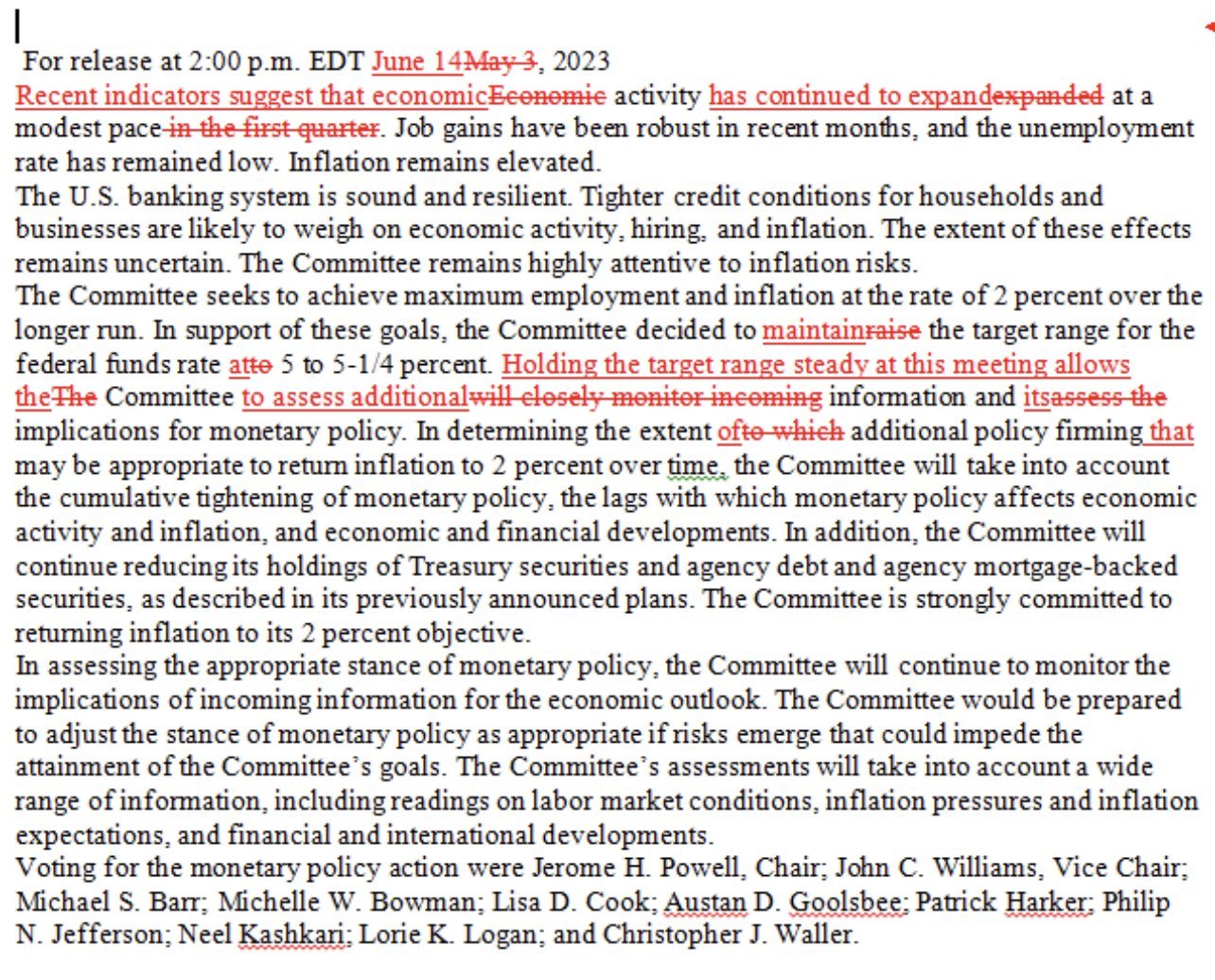
鲍威尔


加息这么久,美国经济并没有如大多数人所预期的进入萧条,甚至都没有像样的衰退,银行风险并没有传导,股市逆天的上涨,但通胀却被慢慢的但肉眼可见的打来下来。如果后面不出幺蛾子,鲍威尔这一战,可以封神了。 当然,只有时代的鲍威尔,没有鲍威尔的时代,我们后面会说到。 图:纳指今年走势
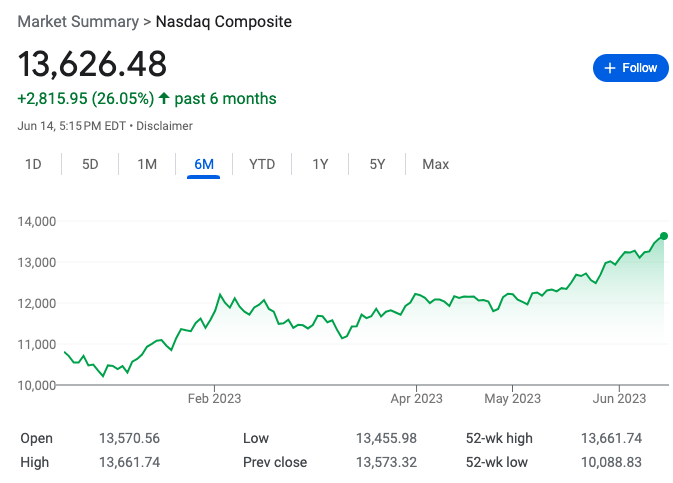
鲍威尔


经济表现良好,通胀被控制,这当然给了联储后续更多的政策空间应对国内外经济问题。 为什么到目前,加息如此猛烈的情况下,美国经济看起来软着陆,股市看起来正在走出大行情? 原因有二:
1、ai产业革命的效果超出大部分人的预期,即使到现在,很多机构和个人都还没有完全意识 。
到这次革命带来的生产力提升的质与量。这是从互联网起,但会迅速蔓延到各个产业的一次多维度的工业革命,效果约等于前四次工业革命的叠加。(篇幅所限,后续另文论述)。生产力的持续发展,会保证经济的持续发展,自然也就会为股市提供持续的动力,自然也就增加了联储加息或者维持高利率的动力。
2、新冷战带来的挤出效应让美国获益,从新增工厂建设比例可知。 这就说到了本文的第二个观点,联储也是新冷战的战略制定执行部门,利率就是最前线,科技贸易是战线的正面,利率是侧翼。https://twitter.com/rickawsb/status/1664524705385308167
科技贸易锁死对手的发展和利润空间,利率挤压对手的货币政策空间,让对手在经济基本面恶化的同时,还不敢大胆的开闸放水。
妥妥的锁喉大战略,之前提到的针对币圈的operation choke point,看来更像是项庄舞剑,意在某国。
而大国的经济成功实现L型反弹,自然就只能拉动油价L型上涨,低油价自然无法推动通胀。 operation choke point,原意针对币圈,放在大棋局下,既然要锁死对手,当然不能留后门。从香港的web3新政来看,把币圈作为后门的意图明显,所以,现在的sec选这个时候对币圈进行打压是不是非常make sense了?
这次fomc,在形势好于预期的情况下,鲍威尔为什么还坚持维持加息两次的说法呢?个人认为,最重要的原因并不是对内,而是对外。 安内所以能攘外,有了坚实的国内经济,才能腾出政策工具,让联储有更多的挪腾的空间,来继续吹灭别人的灯。
攘外以便安内,对外冷战吹灭别人的灯,让自己更光明,让别人青年失业率达到20%,才能让自己失业率历史最低。才能保证联储充足的政策空间,面对新冷战。 所以美国经济在加息的情况下能软着陆,鲍威尔也只是沾了时代的光。 所以 “只有时代的鲍威尔,没有鲍威尔的时代”。
预测后市,ai革命和新冷战都是慢变量,将为经济提供长期的动力,在这样的情况下,联储也将面临长期的维持高息的压力。 去年11月和今年2月的旧推,当时对联储政策的看法:https://twitter.com/rickawsb/status/1620858872025223169
Пов'язані матеріали

a16z Deep Dive: Stop Chasing the 'AI Smell', Here's a Practical Guide to Writing with AI

"Don't Obsess Over AI Detection: A Practical Guide to Writing Alongside AI" by Steph Zinn (a16z Crypto) This guide moves beyond the flawed premise that AI-generated text can be easily spotted by a set of "tells" and that these features automatically mean poor quality. Instead, it focuses on how writers and founders can use LLMs effectively by understanding, controlling, and editing the common stylistic tendencies of AI-assisted prose. The article breaks down AI writing "tells" into four key dimensions: **1. Rhetorical Features (Insight-Shaped Writing):** AI often produces semantically empty, "corporate-sounding" filler language—vague profundities, hedging phrases, excessive parallelism, and summary statements. The advice is to ruthlessly edit these out, using prompts to make language more specific and direct. **2. Voice Features (The Alexa Voice):** Default AI writing relies on a narrow, fungible vocabulary of low-friction, abstract words and cliché phrases that lack personality. While this generic voice is acceptable for support docs or mass communications, founders should preserve their unique voice for impactful writing. Use LLMs to identify and replace jargon, aiming for concrete, distinctive word choices. **3. Structural Features (Form Without Function):** AI tends towards over-structured text with excessive subheadings, lists, roadmaps, and the rigid "three-point" framework. While clear structure is good for readability and SEO, it shouldn't force ideas into unnatural containers. Choose a structure that serves the format and purpose, borrowing from effective examples. **4. Punctuation Features (Dash Panic):** The overuse of em dashes and colons has become a hallmark, but writers shouldn't avoid useful punctuation just to seem "human." The key is avoiding repetitive, distracting patterns. Use punctuation that is grammatically correct and supports the flow of your argument. The core argument is that many so-called AI flaws are just amplified versions of existing bad writing habits. The goal isn't to eliminate AI's role but to use it as a tool while maintaining editorial control. The final question shouldn't be "Can this be detected as AI?" but "Does this writing effectively do its job?"

marsbit19 хв тому

a16z Deep Dive: Stop Chasing the 'AI Smell', Here's a Practical Guide to Writing with AI

marsbit19 хв тому

Podcast Notes | Conversation with Tom Lee: Bitmine Acquiring Nearly 5% of Total ETH Supply Is Not the End Goal, ETH Price Target Set at $10,000

In a podcast interview, Tom Lee, Chairman of BitMine Immersion Technologies, discusses the company's strategy to accumulate nearly 5% of the total Ethereum supply within 14 months, using equity financing and avoiding debt. BitMine has consistently purchased ETH for over 60 consecutive weeks, with recent weeks combining buybacks with purchases. The company's substantial ETH holdings generate approximately $300 million in annual staking rewards, covering operational costs like the dividends for its 9.5% perpetual preferred stock (BMNP). Lee positions ETH as a store-of-value asset, likening it to stocks or land, rather than a pure cash-flow instrument. Looking ahead, Lee suggests BitMine may continue buying beyond the 5% target if institutional adoption grows. He outlines a bullish price target for ETH: surpassing $5,000 in a new crypto bull cycle and potentially exceeding $10,000 within 1-2 years, driven by Wall Street tokenization and AI-related demand. The discussion also covers BitMine's evolution into an ecosystem player, funding Ethereum Foundation spin-offs and developing its Maven staking platform. Lee acknowledges his significant financial interests are tied to ETH's price and BitMine's performance. The interview provides a framework for evaluating ETH as a long-term asset, emphasizing staking yield sustainability and future institutional demand, while noting the uncertainties surrounding macro cycles and real-world adoption.

marsbit19 хв тому

Podcast Notes | Conversation with Tom Lee: Bitmine Acquiring Nearly 5% of Total ETH Supply Is Not the End Goal, ETH Price Target Set at $10,000

marsbit19 хв тому

Pricing Risk Assets in 8 Hours: Tonight's PCE to Set the Discount Rate, Nvidia to Test Earnings Tomorrow Morning

"Pricing Risk Assets in 8 Hours: PCE to Set the Discount Rate Tonight, NVIDIA to Test Profits Tomorrow Morning" Risk asset prices hinge on two variables: the numerator (earnings expectations) and the denominator (the discount rate). Both will be recalibrated within eight hours. First, at 20:30 Beijing time, the US Bureau of Economic Analysis releases July PCE inflation data and the second estimate of Q2 GDP. Consensus expects mild core PCE growth, but a surge in key PPI components poses an upside risk. A hotter-than-expected print could push Treasury yields and the dollar higher, threatening the recent rally in Bitcoin (BTC) above $80K, which was fueled by falling yields. A benign reading would support risk assets. Market sentiment is already "greedy" (Fear & Greed Index at 74), making it vulnerable to disappointment. Second, around 04:20, NVIDIA reports its Q2 FY27 earnings. While consensus revenue of ~$91.85B slightly exceeds company guidance, the market has priced in a beat. The key will be the magnitude of the beat and, crucially, the Q3 guidance. As a bellwether for tech and AI narratives, NVIDIA's results will significantly impact overall risk appetite and AI-related crypto tokens. The combination creates four scenarios: 1) Benign PCE & strong NVIDIA guidance confirms the bullish trend. 2) Hot PCE & strong NVIDIA leads to conflicted signals and likely volatility for BTC. 3) Benign PCE & weak NVIDIA guidance pressures tech but offers some macro support for BTC. 4) Hot PCE & weak NVIDIA guidance presents a "double whammy," risking a sharp pullback in BTC toward the $75K-$76K support zone. The outcomes will set the tone for markets ahead of the upcoming Jackson Hole symposium.

marsbit52 хв тому

Pricing Risk Assets in 8 Hours: Tonight's PCE to Set the Discount Rate, Nvidia to Test Earnings Tomorrow Morning

marsbit52 хв тому

Торгівля

Спот
活动图片