Bank of China Tokenises Securities on EthereumBank of China Tokenises Securities on Ethereum

cryptodailyОпубліковано о 2023-06-13Востаннє оновлено о 2023-06-13

Анотація

The Bank of China (BOCI) has made history by issuing tokenised securities on the Ethereum blockchain in Hong Kong. 

The Bank of China (BOCI) has made history by issuing tokenised securities on the Ethereum blockchain in Hong Kong. 
This revolutionary development signifies a significant stride forward in the adoption of decentralised finance and highlights Hong Kong's efforts to attract major players in the cryptocurrency industry, including Coinbase. 
Tokenised Securities: Pioneering a New Era in Finance
The Bank of China's decision to issue tokenized securities on the Ethereum blockchain is a bold testament to the institution's acknowledgment of the tremendous potential of blockchain technology. 
By harnessing the smart contract capabilities of Ethereum, BOCI aims to amplify the efficiency, transparency, and accessibility of traditional securities. Tokenisation paves the way for fractional ownership, heightened liquidity, and streamlined settlement processes, ushering in a revolutionary approach to trading, selling, and purchasing assets.
Hong Kong's Crypto-Friendly Stance
Hong Kong's ambitions to establish itself as a global hub for digital assets and cryptocurrencies have taken a significant leap forward with the Bank of China's introduction of tokenised securities. This milestone aligns seamlessly with the city's concerted efforts to allure leading cryptocurrency exchanges, with Coinbase expressing its interest in expanding its footprint in the region. 
Hong Kong's proactive approach to embracing digital innovation and its regulatory framework, striking a balance between investor protection and industry growth, positions it as a potential destination for companies operating in the crypto space.
Unprecedented Accessibility and Enhanced Liquidity
By tokenising securities on the Ethereum blockchain, the Bank of China paves the way for investors, both institutional and retail, to access traditional financial assets with newfound ease and flexibility. 
Tokenisation empowers fractional ownership, allowing investors to buy and trade smaller portions of high-value assets, thereby rendering previously illiquid investments more accessible. This democratisation of investment opportunities has the potential to revolutionise financial markets, expanding participation and fostering financial inclusion.
Advancing Blockchain Adoption
The Bank of China's pioneering initiative to issue tokenized securities represents a substantial stride in the adoption of blockchain technology within the conventional financial system. As a prominent financial institution, BOCI's embrace of blockchain validates its transformative potential to reshape the global financial landscape. 
This progressive move is poised to inspire other institutions to explore the utility of blockchain and cryptocurrencies, propelling further innovation and nurturing a more inclusive and efficient financial ecosystem.

Пов'язані матеріали

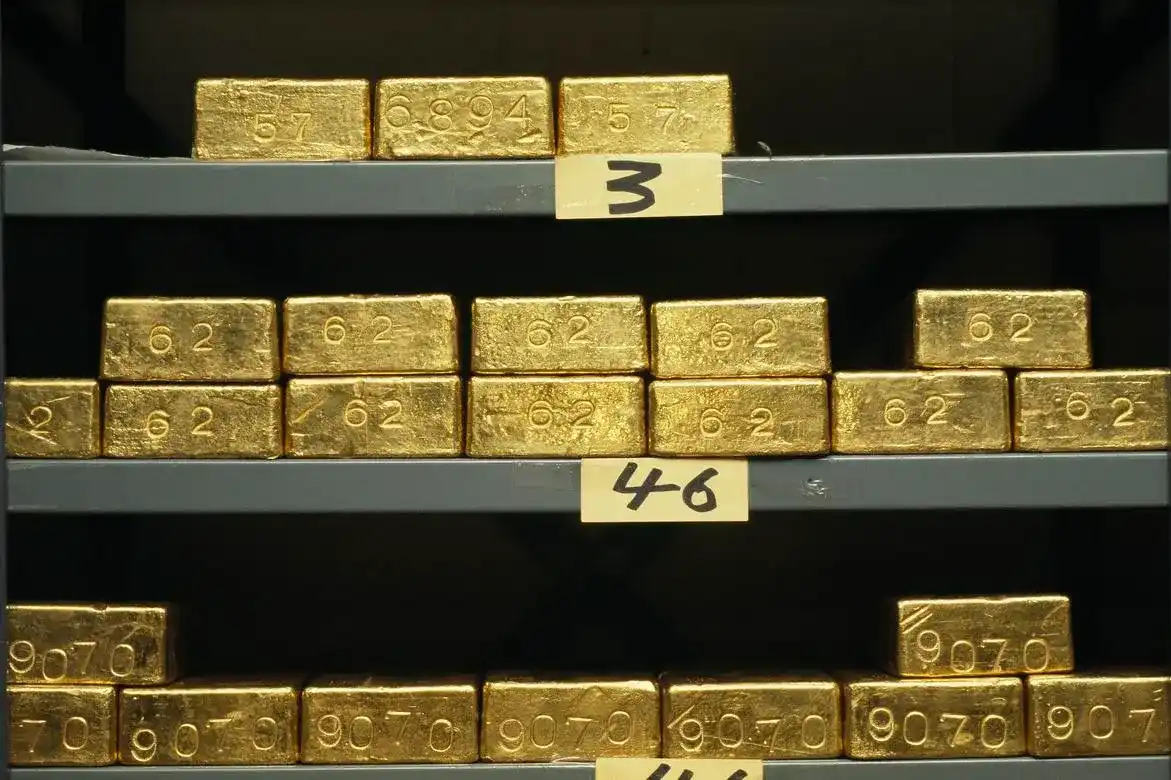
Gold Price Achieves Strongest Rally in 46 Years, Tokenized Gold Trading Volume Already Exceeds Full-Year 2025

Gold is experiencing its strongest rally since 1979, with prices reaching a record high near $5,600 per ounce in January. This surge is driven primarily by central banks, not retail investors. In 2025, central banks net purchased 863 tonnes of gold, with a similar increase expected in 2026. Traditional gold investment methods—physical bullion and ETFs—present trade-offs like storage issues, limited access, or management fees. Tokenized gold emerges as a third option: digital tokens representing ownership of physical bars stored in professional vaults. These tokens are globally transferable in seconds, divisible, and redeemable for physical metal. The potential impact mirrors that of dollar stablecoins. Stablecoins digitized the dollar, enabling cheap, instant, global transfers and driving adoption from $27 billion in 2020 to over $3 trillion today. Similarly, tokenized gold solves gold's "form problem"—its lack of divisibility, portability, and accessibility. Adoption is accelerating. In Q1 2026, tokenized gold trading volume hit $90.7 billion, surpassing the $84.6 billion for all of 2025. Its market cap exceeded $6 billion, growing 5.5 times faster than physical gold holdings in the quarter. While concerns about counterparty risk exist, tokenized gold represents a direct claim on allocated bars, with major issuers providing regular attestation reports. Just as stablecoins placed dollars on a digital, global rail, tokenized gold now offers a more practical form for this ancient asset, potentially expanding access to billions.

marsbit2 хв тому

Gold Price Achieves Strongest Rally in 46 Years, Tokenized Gold Trading Volume Already Exceeds Full-Year 2025

marsbit2 хв тому

Japanese Rates Return to 1996 Levels, Can Bitcoin Withstand the September Rate Hike?

Japanese borrowing costs have hit their highest levels since 1996, with yields on 30-year bonds reaching 4.185%. This marks a significant shift for a country long reliant on negative rates. Concurrently, Bitcoin surged 22% past $80,000, seemingly decoupled from the bond market turmoil. Historically, the massive yen carry trade has fueled global risk assets, predicated on near-zero Japanese rates. This assumption is now challenged. A potential rate hike by the Bank of Japan in September could strengthen the yen, forcing carry trade unwinds and potentially triggering a global deleveraging event, as seen in August 2024 when Bitcoin fell sharply. Conversely, if the yen weakens further, Bitcoin could attract Japanese investors as a hedge against currency depreciation and the country's massive debt burden. Institutional adoption in Japan is growing, with regulatory changes paving the way for potential crypto ETFs by 2027. The key variable is the BoJ's September policy signal. If it hints at a rapid tightening cycle to combat inflation and support the yen, risk assets like Bitcoin may face selling pressure from carry trade liquidation. However, if debt sustainability concerns limit its hawkishness, leading to a weaker yen, Bitcoin could benefit. Currently, the market is betting on a slow-motion debt crisis, not a sudden collapse. While Bitcoin shows resilience, its fate remains tied to the direction of the yen and the scale of any carry trade unwind.

marsbit5 хв тому

Japanese Rates Return to 1996 Levels, Can Bitcoin Withstand the September Rate Hike?

marsbit5 хв тому

How Can Bitcoin Resist Quantum Computers? A Comparison of Three Lattice-Based Signature Schemes

"Bitcoin's Quantum Defense: A Comparison of Three Lattice-Based Signature Schemes" by the Blockstream Research Team explores how Bitcoin can transition to quantum-resistant digital signatures, as current schemes like Schnorr and ECDSA are vulnerable to quantum computers. The report evaluates three lattice-based signature candidates—Dilithium, Falcon, and Hawk—against criteria like on-chain cost (key/signature size), implementation complexity, deployment risks, and support for Bitcoin's key derivation standard (BIP-32). The analysis recommends a minimum Security Level 3 for Bitcoin due to its long-term security needs. Dilithium (ML-DSA) is praised for its simplicity and integer-only operations, making it easier to implement securely, but it has the largest signature size (~5.3 KB for Level 3). Falcon (FN-DSA) offers the most compact signatures (e.g., ~3.1 KB for Level 5) and the fastest verification, though its signing requires complex floating-point sampling—a solvable engineering challenge. Hawk, despite its small size, was withdrawn from NIST standardization after a security vulnerability was discovered, highlighting the importance of conservative security margins. Currently, neither Dilithium nor Falcon has a fully viable, production-ready BIP-32 key derivation method. The report concludes that if a lattice-based scheme had to be chosen now, Falcon-1024 would be the preferred option for its balance of size, speed, and mature security assumptions. However, the short-term recommendation remains hash-based signatures (like SPHINCS+) for their lower risk, with a potential future hybrid or full transition to Falcon once its standard (FN-DSA) is finalized and well-supported.

marsbit7 хв тому

How Can Bitcoin Resist Quantum Computers? A Comparison of Three Lattice-Based Signature Schemes

marsbit7 хв тому

Торгівля

Спот
活动图片