The coin meme craze is back – Check out the top 3 coin meme

Tap Chi BitcoinОпубліковано о 2023-05-23Востаннє оновлено о 2023-05-24

Анотація

For those of you who have been following the crypto market news over the past few weeks, it is certainly impossible not to hear about the coin meme and its rapid growth in order to build an ecosystem that supports this huge potential.

For those of you who have been following the crypto market news over the past few weeks, it is certainly impossible not to hear about the coin meme and its rapid growth in order to build an ecosystem that supports this huge potential.

These projects are mainly focused on promoting positive and humorous information. While not offering much value in the harsh global financial landscape, the popularity of the coin meme went viral, leaving many private investors in profits thousands of times.

We invite you to read along to find out the four viral coin memes below with great potential predictions for crypto investors who want to double their capital in a short period of time.

Topping the list of potentially massive viral meme tokens is $COPIUM.

Token $COPIUM is a meme asset intended to help users deal with sudden cryptocurrency corrections when early investors sell out.
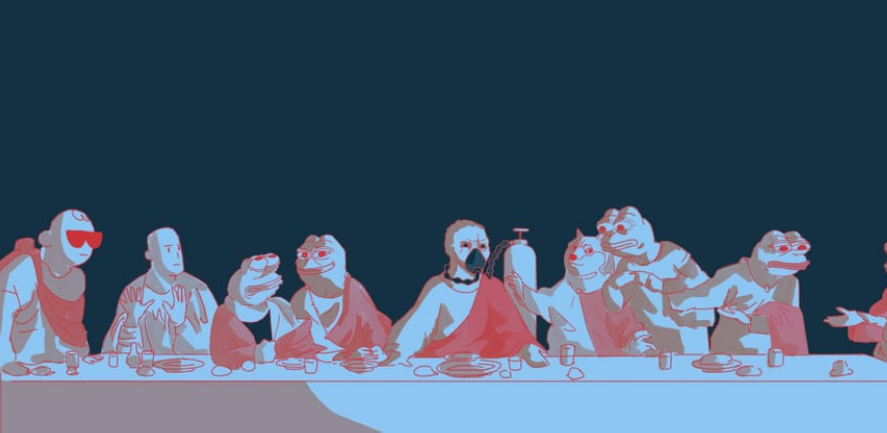
Instead of whining about the losses, crypto investors can easily turn to $COPIUM to enjoy the hilarious jokes. And most importantly, turn crypto investment mistakes into profits.

Many analysts have suggested that $COPIUM will become the next Chad and Pepe coin memes, as it reached a market cap of $8 million in less than five minutes of its launch.

Featuring an image of a bald man with a sad expression on his face, $COPIUM represents the fate of most of the emerging crypto investors in the market.

This has given the project the necessary credibility, and many investors are also participating in the purchase and sale of Copium's NFTs.

To date, the Copium protocol has been supported by several key figures in the crypto community such as @MattInWeb3, and many others.

With increasing popularity, the Copium team has planned to list on CoinMarketCap in the near future.

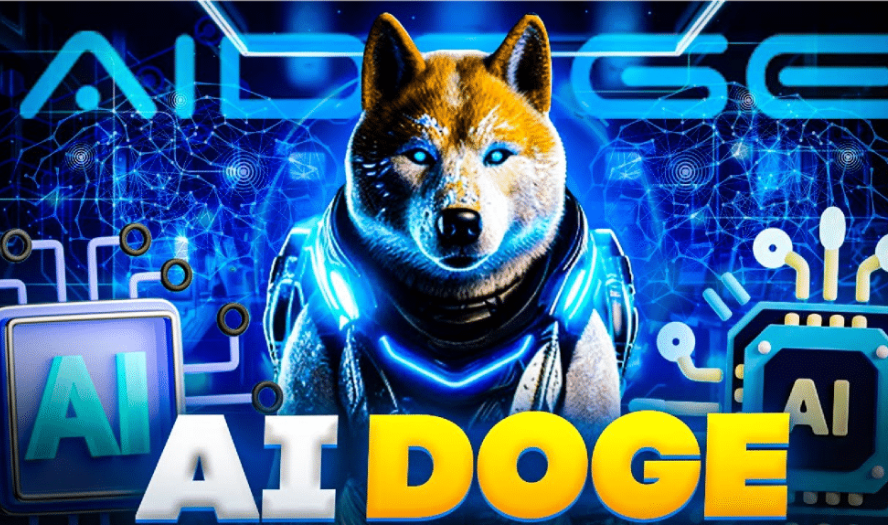
$AI is another coin meme that has made many investors anxiously waiting.

While hundreds of other coin memes do not bring much real value, coin $AI is contributing meaningful value to the crypto and meme ecosystem.
One topic that can reach the masses is their favorite celebrity.

This is demonstrated with $SPONGE , developed for the crypto project SpongeBob Square Pants.

With the massive success this animated series has enjoyed, $SPONGE has become one of the standout “foreigners” in a competitive market of coin memes.

This ERC-20 token has grown by more than 1,800% in a trading period, helping it to list on several centralized exchanges like Gate.io.

It also conquered the BitMart exchange after just one month of its launch, becoming the fastest meme coin to be listed on the exchange in the nascent crypto space.

$SPONGE was scheduled to be listed on the OKX exchange.

Currently, $SPONGE is participating in the OKX listing vote and competing with other top coin memes that are taking the industry by storm.

Looking at its price performance, we can easily see why $SPONGE is one of the biggest favorites among investors.

In a crypto market where key players like Bitcoin and Ethereum are struggling, $SPONGE has gained 7.19% over the past 24 hours, trading at $0.0048.

This is impressive, as the project has no plans to make any roadmaps or developments in the coming months.

Пов'язані матеріали

When the Market Begins to Question AI Capex: A Full Analysis of Q2 Earnings Reports from Five Tech Giants

In late July 2026, five major US tech giants—Alphabet, Intel, Microsoft, Meta, and Apple—released their Q2 earnings reports. While all companies exceeded revenue and profit expectations, driven by strong AI-related business growth, investor reactions diverged sharply due to concerns over escalating AI capital expenditures (capex) and their impact on free cash flow. Alphabet reported strong revenue growth and a surging cloud business, but its stock fell after announcing a doubled year-on-year capex and negative quarterly free cash flow for the first time. Intel posted its strongest revenue growth in over 15 years, but its stock experienced volatile trading after significantly raising its full-year capex guidance. Microsoft saw its stock surge after beating estimates and, crucially, lowering its capex forecast while projecting positive free cash flow. Meta faced the most severe sell-off as its profits declined despite revenue beats, with free cash flow plunging over 90% and its capex guidance raised. Apple reported record June-quarter results, but its stock plummeted after providing Q4 revenue guidance that fell short of expectations, citing supply chain constraints and forex headwinds. The overall takeaway is that the market's focus has shifted from validating AI demand to scrutinizing the timeline for returns on massive AI investments. Companies demonstrating a clearer path to managing capex and preserving free cash flow, like Microsoft, were rewarded, while those signaling continued aggressive spending faced investor skepticism.

Odaily星球日报3 хв тому

When the Market Begins to Question AI Capex: A Full Analysis of Q2 Earnings Reports from Five Tech Giants

Odaily星球日报3 хв тому

a16z: From Companies to DAOs, DUNA May Become the Next Generation Organizational Form

This article, "From Companies to DAOs: How DUNA Could Become the Next Organizational Form," traces the 500-year evolution of business collaboration. It begins with medieval structures like the *commenda* and Florentine *compagnia*, which exposed partners to personal risk. The modern corporation, exemplified by the Dutch East India Company (VOC), was a revolutionary leap, enabling large-scale, capital-intensive ventures by offering limited liability and reducing coordination costs. However, corporations introduced new challenges like principal-agent problems and bureaucratic overhead. The piece argues that software and internet-native protocols are now reducing these traditional overheads. Decentralized Autonomous Organizations (DAOs) emerged as a new model for coordination without centralized management. Yet, DAOs face a significant legal vacuum: they lack legal recognition, leaving members exposed to unlimited personal liability, and their tokens are vulnerable to being classified as securities under unclear regulations (e.g., the Howey Test). This has forced projects into suboptimal workarounds like offshore foundations. The article identifies the Decentralized Unincorporated Nonprofit Association (DUNA) as a potential solution. Recently legalized in states like Wyoming, the DUNA provides a legal wrapper for decentralized networks. It grants key protections—legal personality, limited liability, and perpetual existence—to a group without imposing a traditional hierarchical management structure. This allows token-holder communities to govern, hold assets, and contract as a single legal entity, aligning with their decentralized nature. While DUNA doesn't solve all governance challenges or magically resolve securities law questions, it represents a crucial step. It fills the legal recognition gap, offering a native legal form for internet-scale, decentralized collaboration and extending the separation of personal risk from organizational venture into a new domain.

marsbit48 хв тому

a16z: From Companies to DAOs, DUNA May Become the Next Generation Organizational Form

marsbit48 хв тому

2026 Mid-Year Report On-Chain RWA: Tokenized Stock Market Cap Doubles in a Year, But 90% of Rights Are Hollow Shells

The 2026 Mid-Year Report on On-Chain RWA highlights a significant growth in tokenized stock market capitalization, which nearly doubled from $951 million in March to $1.89 billion by July. However, the report reveals a fundamental contradiction in this "layer 2.5" ecosystem: products with the strongest legal foundation (like regulated U.S. infrastructure) lack liquidity and distribution, while freely tradable offshored wrapper products often lack substantive ownership rights. The increase is driven largely by a few products (SECZ, FGRS, STRCx) and platforms (Ondo, xStocks, Securitize collectively hold over 85% share). While distributed value across networks like Ethereum, Solana, and BNB Chain has grown, the market remains fragmented. Products referencing the same underlying asset (e.g., Apple stock) are distinct legal liabilities with different intermediaries and jurisdictional rules, offering varying degrees of legal claim. The report cautions that headline numbers are misleading, as they reflect changes in distributed token value—driven by issuance, conversions, and price movements—not pure investor inflows. True "canonical shares" with legal ownership, wide wallet distribution, institutional liquidity, and independent on-chain price discovery do not yet exist at scale. Tokenized treasuries show stronger product-market fit, and ETFs may be easier to scale than single stocks. The core takeaway is a trade-off: legal certainty versus liquidity and composability.

marsbit1 год тому

2026 Mid-Year Report On-Chain RWA: Tokenized Stock Market Cap Doubles in a Year, But 90% of Rights Are Hollow Shells

marsbit1 год тому

Торгівля

Спот
活动图片