BRC-20代币市值接近10亿美元

TokenviewОпубліковано о 2023-05-10Востаннє оновлено о 2023-05-10

Анотація

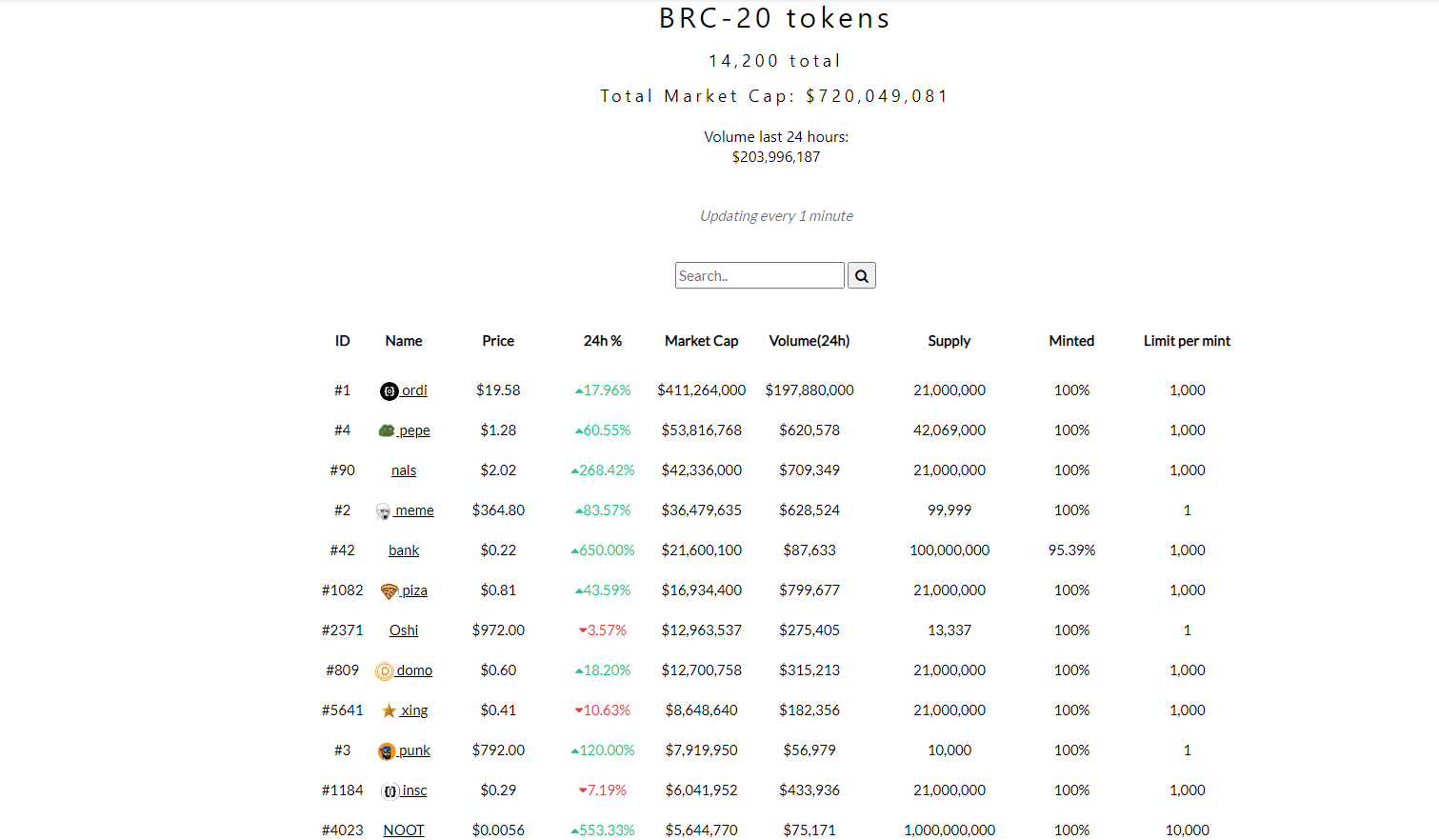
BRC-20 代币市值已“接近”触及 10 亿美元大关,比特币上铸造了 14,200 个代币。其中,Ordinals(ORDI)以4.11亿美元的总市值领跑潮流。
BRC-20 代币市值已“接近”触及 10 亿美元大关,比特币上铸造了 14,200 个代币。其中,Ordinals(ORDI)以4.11亿美元的总市值领跑潮流。

根据网站brc-20.io和Ordspace的数据,比特币网络上的 BRC-20 代币曾经“濒临”达到 10 亿美元的市值,目前又回到了 7 亿美元的区域。 .

BRC-20 拥有 14,200 个代币,其中大部分是模因币,正在蓬勃发展并吸引了加密社区的关注。目前,Ordinals (ORDI) 是上升趋势中领先的 memecoin,稀释价值接近 50 亿美元。

自 4 月初至今,ORDI 强劲爆发,在持续的 memecoin 热潮中竖立了 22,5000%(从 0.11 美元到 25 美元)的柱子。此外,ORDI于5月8日刚刚上线Gate.io和Crypto.com。这两家交易所很可能希望赶上 BRC-20 浪潮。

📣 #Gateio新上市: $ORDI

🔸交易对: $ORDI / $USDT

🔸交易开始时间:5 月 8 日凌晨 02:00(UTC)

贸易:https: //t.co/ExBA5etVlI

存款:https: //t.co/HfIxOcAgML

更多: https ://t.co/2RcrH9D77F pic.twitter.com/mPx63DTwnw

- Gate.io (@gate_io)2023 年 5 月 7 日

在撰写本文时,ORDI 价格已从 29.58 美元的峰值大幅下跌,交易价格约为 15-20 美元。

BRC-20板块中,紧随ORDI之后的是PEPE代币(区别于以太坊上大热的同名memecoin)、MEME、DOMO、NALS……市值从1200万美元到4200万美元不等。
据报道,BRC-20 是 Ordinals 协议最近开发的一种代币标准,目前处于比特币网络的测试阶段。序数允许开发人员将信息分配给网络中的每个卫星,这一过程称为铭文。本质上,BRC-20 代币不使用智能合约,而是需要比特币钱包来铸造和交易代币。

当 Ordinals 团队在比特币上创建 NFT 铸造方法时,推特帐户@domodata 的开发人员于 3 月 8 日推出了 BRC-20,这是建立在 Ordinals 上的新代币标准。

也正是因为社区的好奇心,造就了目前的BRC-20热潮,助推比特币交易手续费屡创新高,甚至造成网络拥堵,迫使币安多次停止提现。。根据 Dune Analytics 的统计,65% 的比特币交易来自 BRC-20。

目前,自 2022 年 12 月底以来,比特币网络的每日交易量翻了一番,达到 534,000 笔交易。最近区块被 BRC-20 交易填充,每笔交易的汽油费一度高达 20 美元,比之前的 1-2 美元框架增加了 800%。


Пов'язані матеріали

Why Is the World Nervous About Japan Raising Interest Rates?

In June 2026, the Bank of Japan raised its policy rate to 1%, marking its first hike to this level since 1995. While this rate remains low compared to global peers like the US and Europe, the move signals a profound shift for a nation that has been a global source of ultra-cheap funding for decades. Japan's long-standing near-zero or negative interest rates had facilitated massive "yen carry trades," where international investors borrowed low-cost yen to invest in higher-yielding assets worldwide, such as US tech stocks and emerging market bonds. This made Japan a critical, often overlooked, source of global liquidity. Japan's ultra-loose policy stemmed from structural challenges post-1990s asset bubble: aging demographics, chronic low inflation/deflation, and high public debt. Recent shifts, including sustained wage growth (exceeding 5% in recent years) and inflation consistently above the 2% target, have created a "wage-price spiral" possibility, prompting the policy normalization. The global market's concern lies not in the absolute rate but in the potential unwinding of the yen carry trade. As Japanese borrowing costs rise, the economics of these leveraged global investments change, potentially triggering deleveraging and capital outflows from risk assets. Market anxiety focuses on the end of a thirty-year consensus that Japan would perpetually provide cheap funding. Ultimately, the global impact will depend on the interplay with US monetary policy. While Japan is tightening, the significant interest rate differential with the US remains. The key future dynamic is whether simultaneous Japanese hikes and eventual US rate cuts will narrow this gap, forcing a major recalibration of global capital flows and asset pricing built on an era of abundant, cheap yen liquidity.

marsbit7 год тому

Why Is the World Nervous About Japan Raising Interest Rates?

marsbit7 год тому

Торгівля

Спот
Ф'ючерси
活动图片