Long before Bitcoin became worth a fortune, it had its first real recipient. On January 12, 2009, Finney became the first person to receive a Bitcoin transaction when Satoshi Nakamoto sent him 10 $BTC — a moment now recognized as when digital money transitioned from a theoretical concept into a functioning network.
Nevertheless, Finney was not just a random, lucky bystander, but a technology industry veteran who had for decades been building the tools that would eventually underpin Bitcoin. In the early 1990s, he was an active participant in various Cypherpunk mailing lists — that very community of programmers and privacy advocates whose ideas formed the foundation of Bitcoin's design.
Later, he became the second employee hired by Phil Zimmermann at PGP Corporation — the company behind the Pretty Good Privacy (PGP) encryption software — and worked there as one of the key developers until his retirement in 2011.
Furthermore, in 2004, many years before the emergence of Bitcoin, Finney created Reusable Proofs of Work (RPoW) — an early prototype cryptocurrency built on Hashcash, which validated concepts that were later formalized in Bitcoin.
The Struggle He Did Not Shrink From
In October 2009, less than a year after receiving that first Bitcoin transaction, Finney publicly announced that he had been diagnosed with Amyotrophic Lateral Sclerosis (ALS). This progressive disease affects the nerve cells that control muscle movement.
In March 2013, Finney wrote that he had become "virtually paralyzed," but continued to engage with the early Bitcoin community through all stages of the disease's progression. When he was officially declared deceased on August 28, 2014, in Phoenix, Arizona, at the age of 58, his family carried out cryopreservation arrangements with the Alcor Life Extension Foundation, which had been made many years prior.
The Unceasing Question of Satoshi
Finney's close association with Bitcoin's creation, combined with his expertise in cryptography and his engineering degree from the California Institute of Technology (Caltech), has fueled speculation over the years that he was either Satoshi Nakamoto himself or closely collaborated with whoever was.
Bitcoin.com News has previously outlined numerous facts pointing to Hal Finney being Satoshi — an internal look at the circumstantial evidence that people still return to every time the question of the creator's identity resurfaces. Finney always denied being the creator of Bitcoin, and no confirmed evidence has ever emerged to definitively settle the question one way or the other.
What Became of the Ten Bitcoins
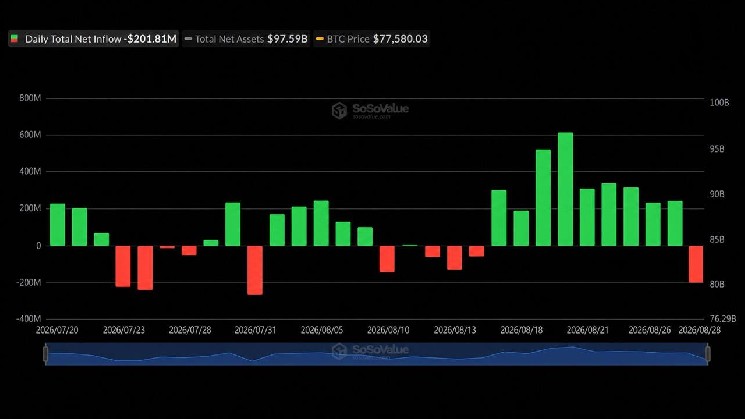
This anniversary comes at a significant moment for the asset Finney helped bring to life. On August 25, the price of Bitcoin surpassed the $80,000 mark for the first time since May, gaining approximately 28% in eight days and briefly reaching a daily high above $81,000.
At such a price range, the 10 $BTC that Finney received from Satoshi Nakamoto in January 2009 would be worth roughly $805,000 today — a figure that would have seemed absurd to almost anyone present in the room at the moment that transaction first cleared.
Finney never lived to see the price of Bitcoin reach even a fraction of the level at which it trades now. But the tools he built, the questions his life still raises about Bitcoin's origins, and the fact that his name remains the answer to "who received the first bitcoin" mean his trace in the network has not faded with time.
Twelve years later, this is precisely what people remember when they enter the network today.