Crypto Analyst Explains Why XRP Will Not Fall To $0.10

newsbtcОпубліковано о 2023-04-25Востаннє оновлено о 2023-04-25

Анотація

XRP price is trading sideways alongside most cryptocurrencies in the market today. The coin had been trading above $0.5 until April 21, when a bearish wave pushed it below $0.45...

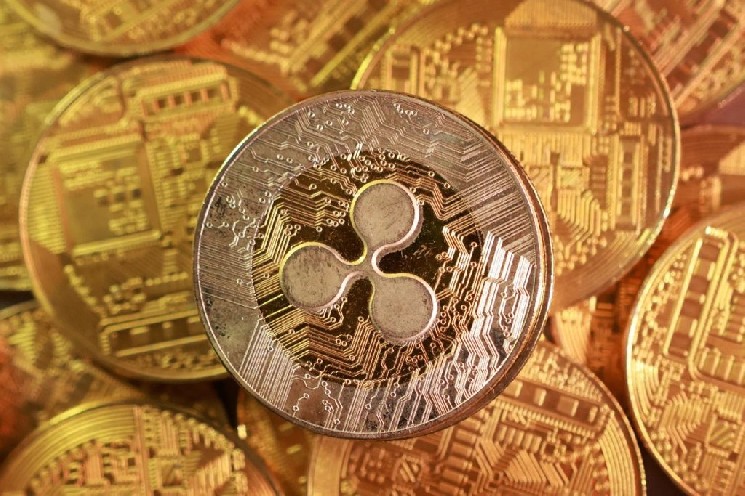
XRP price is trading sideways alongside most cryptocurrencies in the market today. The coin had been trading above $0.5 until April 21, when a bearish wave pushed it below $0.45 to $0.43. The token has witnessed a slight recovery above $0.46 today.
As a result, crypto enthusiasts fear a further decline in XRP. Notably, a prominent crypto analyst shared a post responding to his friend’s forecast of XRP slumping to $0.10, but Egrag’s response was that technical indicators on XRP price don’t support such a price decline. 
No Technical Indicator Supports Dropping To $0.10, Says Egrag
The ongoing market-wide downturn has caught up with XRP, its price has been gaining momentum over the past few weeks. The coin succumbed to the bearish trend, pushing it to lose its past week’s gain by 9.87%. This downturn has stirred reactions among the crypto community, with people, including Egrag’s friend speculating a drop back to $0.10.

However, Egrag reacting to his friend’s forecast, said it was a wrong call. The analyst shared some technical insights for XRP in response to the friend’s prediction. Egrag noted that XRP’s movements aligned with his predetermined technical indicators like the Fibonacci targets. And no technical indicator or Fibonacci targets support the idea of Ripple’s native coin price correction to $0.10.
Egrag said his friend’s forecast seems more like a personal speculative opinion than an analytic insight. He further noted that while a price correction to $0.10 is possible, the probability is slim and not as low as his friend speculates. Nevertheless, sudden regulatory enforcement could stir up such a price drop for XRP.
Egrag argued that while crypto assets have some immunity against bearish economic events, their prices are still susceptible to unforeseen occurrences. Therefore, any notable XRP price decline to $0.10 would rather be due to a regulatory action instead of mere market forces. 

So, Egrag concluded that a price fall to $0.10 for XRP is technically impossible without unfair regulations. He encouraged the XRP Army to remain steadfast in support of the token as a significant price correction presents a buying opportunity.
XRP Price Outlook
Meanwhile, the XRP community anticipates the summary judgment for the Ripple vs. SEC lawsuit regarding the token’s status as a security. 

Experts speculate the outcome of this lawsuit will cause a notable change in the crypto market. Attorney John Deaton, Amicus Curiae in the XRP lawsuit, forecasted that a ruling might come before May 6. 
XRP price often surged when Ripple hit some breakthroughs in the lawsuit. However, at press time, XRP is trading at $0.465, indicating a minor price recovery.

This Expert Claims XRP Might Slide To $0.10, But There's A Catch

XRP is slightly surging l XRPUSDT on Tradingview.com The token has surrendered its 14-week price gains by 8.6%, with a seven-day price decline of 11.3% due to the market-wide onslaught. XRP’s current price move aligns with Egrag’s previous prediction that the token could pull back between $0.43 and $0.48.

Пов'язані матеріали

Tidal Investment: We Remain Bullish on the AI Industry Chain, But the Reasons Have Changed

Tidal Investment remains optimistic about the AI industry chain, but the rationale has shifted. The market narrative has changed. While recent large-scale IPOs (e.g., SpaceX) and major fundraising plans by tech giants like Alphabet and Meta have caused some nervousness, this isn't a sign of an AI peak. The focus has moved from the initial question of AI's viability to the sustainability of massive investment cycles. The key players—primarily the major cloud providers—are not slowing down; their capital expenditure (Capex) guidance for 2026 has been increased across the board (e.g., Alphabet to $180B, Amazon to $200B). This investment cycle is proving resilient and difficult to stop. Unlike traditional hardware cycles, current AI Capex is distributed across multiple physical layers—computing, memory, networking, and critically, power infrastructure. Bottlenecks are shifting from chips to elements like electricity, transformers, and cooling systems, which have much longer lead times and cannot be easily pre-built like fiber optics during the dot-com bubble. Supply chain data (e.g., Eaton's 240% YoY data center orders) confirms this broad-based, project-driven expansion. Market concerns are acknowledged but viewed differently. First, while Capex growth currently outpaces revenue growth, raising ROI questions, this mirrors the early scaling phase of cloud computing itself. A change in view would require concrete signals like downward Capex revisions or missed AI product targets, which haven't materialized by mid-2026. Second, comparisons to the 2000 dot-com bust are flawed. That crash was driven by a massive, parallel oversupply of cheap capacity (fiber). The current cycle faces *supply constraints* in critical, capital-intensive physical infrastructure that cannot be overbuilt as easily. In conclusion, the wave of fundraising reflects the next, more complex act of the AI story. Physical bottlenecks and sustained high Capex plans suggest this is not the finale but an ongoing, capital-intensive build-out phase. The script has changed, but the play is far from over.

marsbit45 хв тому

Tidal Investment: We Remain Bullish on the AI Industry Chain, But the Reasons Have Changed

marsbit45 хв тому

Tidal Investment: We Remain Bullish on the AI Industry Chain, But for Different Reasons Now

Tidal Investments remains optimistic about the AI industry chain, but the rationale has shifted. The market is concerned about massive concurrent fundraising by tech giants like SpaceX, OpenAI, Alphabet, and Meta, fearing an AI peak. However, the authors argue this signals the next act of AI development, not its end. Capital expenditure (Capex) from major cloud providers (Alphabet, Amazon, Meta, Microsoft, Oracle) continues to surge aggressively into 2026. This investment cycle is more resilient than past hardware cycles due to its scale and complexity. Bottlenecks have shifted from chips to critical physical infrastructure like power grids, transformers, cooling, and data center construction—areas with long lead times and limited capacity for rapid expansion. Supply chain data (e.g., Eaton's orders) confirms substantial, tangible progress. Key market concerns are addressed: 1. **ROI vs. Capex Growth**: While Capex growth outpaces revenue, the authors note cloud giants have historically overcome similar phases through scale. The cycle will only be in danger if Capex guidance is cut, orders are canceled, or AI product demand falters—none of which are currently observed. 2. **Comparison to the 2000 Dot-com Bubble**: Unlike the telecom bubble, where cheap, oversupplied fiber crashed prices, AI infrastructure (especially power) is constrained, customized, and subject to lengthy approvals, making a similar supply glut and crash unlikely. In conclusion, the wave of fundraising reflects the immense, ongoing capital needs for AI's next phase, constrained by slow-moving physical bottlenecks. The AI cycle is not over; the script has simply changed.

链捕手52 хв тому

Tidal Investment: We Remain Bullish on the AI Industry Chain, But for Different Reasons Now

链捕手52 хв тому

Grayscale: These 15 Profitable Crypto Protocols Are Severely Undervalued

Grayscale Research identifies 15 top-revenue crypto protocols trading at significant valuation discounts, with many at single-digit or even 1x revenue multiples. Protocols like Pump.fun, PancakeSwap, and Meteora have market capitalizations roughly equal to their annual revenue. The report argues these financially-focused protocols (DEXs, lending, staking) are fundamentally undervalued and could benefit from the potential passage of the CLARITY Act, expected as soon as next month. This legislation aims to clarify digital asset regulation, potentially reducing institutional barriers and driving on-chain activity. The analysis breaks down the protocols into three groups: the "1x Club" (market cap ≈ revenue), mid-tier protocols with 3-9x multiples (e.g., Aave, Lido, Jupiter), and high-multiple protocols like Hyperliquid (15x) and Uniswap (37x), where valuation reflects future potential rather than current cash flows. Grayscale applies a traditional DCF model to Aave, suggesting a one-year price target of ~$175, representing ~130% upside from current levels. The report notes a risk-off macro environment since the Iran conflict has further compressed valuations, creating a potential entry window. The conclusion highlights that while the valuation data presents an intriguing opportunity, the investment thesis is contingent on the CLARITY Act's passage and subsequent institutional capital flows. Investors are cautioned to consider Grayscale's inherent conflict of interest as a crypto asset manager with products tied to these assets.

marsbit1 год тому

Grayscale: These 15 Profitable Crypto Protocols Are Severely Undervalued

marsbit1 год тому

Sam Altman's Personal Alchemy of Wealth: Investing in 400 Companies, Over 10 Deeply Tied to OpenAI

The article investigates Sam Altman's personal wealth strategy, centered around his investments in approximately 400 companies while serving as OpenAI's CEO. Despite not holding direct equity in OpenAI, Altman has built a vast portfolio, with at least 10 of his investments having commercial ties or ongoing negotiations with OpenAI. This creates a complex network of potential conflicts of interest, drawing scrutiny from U.S. congressional committees and state attorneys general. Key investments highlighted include the anti-aging startup Retro Biosciences (valued at $258 million for his stake as of late last year) and the chipmaker Cerebras, whose value soared following an OpenAI procurement deal. His most significant financial gain is linked to the nuclear fusion company Helion, where a recent funding round reportedly increased his stake's value to at least $4.1 billion. The article details a decade-long relationship between Altman, Helion, and OpenAI, including a controversial non-binding power purchase agreement and Altman's efforts to secure investments from OpenAI and its backer SoftBank for Helion. Other points include internal investigations at Tools for Humanity (developer of Worldcoin) and OpenAI's massive contracts with tech giants like Nvidia. According to Forbes, Altman's net worth is around $3.4 billion, ranking him 1251st globally—a rise of over 1400 places since 2024. OpenAI's board states that Altman's external dealings are transparent and potential conflicts are carefully managed.

Odaily星球日报1 год тому

Sam Altman's Personal Alchemy of Wealth: Investing in 400 Companies, Over 10 Deeply Tied to OpenAI

Odaily星球日报1 год тому

Торгівля

Спот
Ф'ючерси
活动图片