Ether's Security Status Remains Unclear as SEC Chair Gensler Fails to Answer Lawmaker's Question
newsbtcОпубліковано о 2023-04-20Востаннє оновлено о 2023-04-20

Анотація

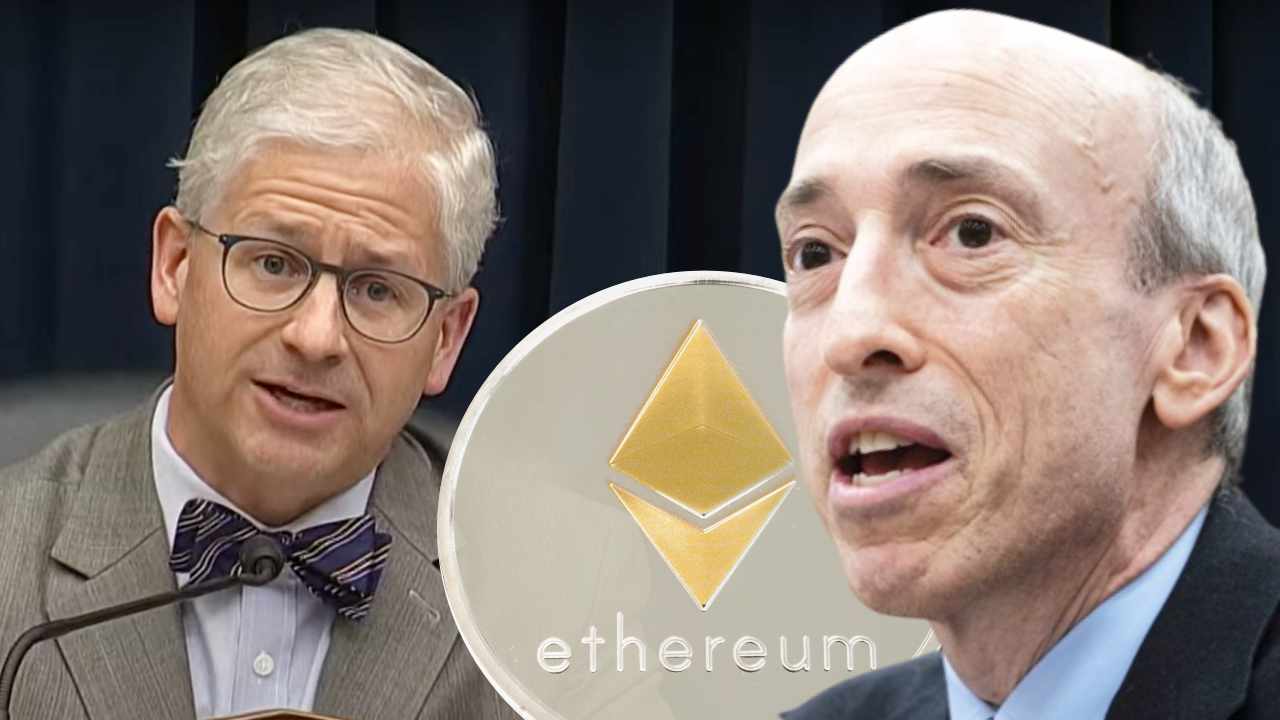
The chairman of the U.S. Securities and Exchange Commission (SEC), Gary Gensler, would not answer a direct question in a congressional hearing about whether ether is a security. While the SEC chair insisted that the law is clear on crypto, Congressman Patrick McHenry argued that the SEC’s regulatory actions say “there’s a great deal of uncertainty.”

Ether's Security Status Remains Unclear as SEC Chair Gensler Fails to Answer Lawmaker's Question

Ether's Security Status Remains Unclear as SEC Chair Gensler Fails to Answer Lawmaker's Question

The chairman of the U.S. Securities and Exchange Commission (SEC), Gary Gensler, would not answer a direct question in a congressional hearing about whether ether is a security. While the SEC chair insisted that the law is clear on crypto, Congressman Patrick McHenry argued that the SEC’s regulatory actions say “there’s a great deal of uncertainty.”

Lawmaker Probes SEC Chair Gary Gensler on Whether Ether Is a Security

The chairman of the U.S. Securities and Exchange Commission (SEC), Gary Gensler, testified on Tuesday before the House Financial Services Committee on the oversight of the SEC. During the hearing, the committee’s chairman, Congressman Patrick McHenry (R-NC), asked the SEC chief whether ether (ETH) is a commodity or a security.

McHenry explained that back in 2018, Bill Hinman, who was the director of the SEC’s Division of Corporation Finance at the time, stated that ether was not a security. Last month, the chairman of the Commodity Futures Trading Commission (CFTC), Rostin Behnam, expressed his view that ether is a commodity, he continued, adding that the New York State Attorney General asserted in a court filing last month that ether is a security. “Clearly, an asset cannot be both a commodity and a security, do you agree?” the lawmaker asked Gensler.

The SEC chief replied:

Actually, all securities are commodities under the Commodity and Exchange Act. It’s that we are excluded commodities but I would agree that a security cannot be also an excluded commodity and an included commodity.

“How do you categorize ether then?” McHenry questioned Gensler. When the SEC chair attempted to provide a generic answer about securities laws, the congressman pressed: “I’m asking you, sitting in your chair now, to make an assessment, under the laws as exist, is ether a commodity or a security?”

While Gensler insisted that he will not discuss any specific tokens, the congressman pointed out that the SEC chief has already spoken about one token, bitcoin, and he is now being asked to speak about ethereum. Gensler previously said that all crypto tokens, other than BTC, are securities but would not name any other tokens in particular.

Disregarding the lawmaker’s question about ETH specifically, Gensler stressed that there are 10,000 to 12,000 crypto tokens and proceeded to give the same generic explanation he has said many times:

If there is a group of entrepreneurs raising money from the public in anticipation of profits based on…

McHenry cut Gensler off mid-sentence and repeated this question: “I’m asking about one. I’m asking a specific question, Chair Gensler. I said this in private. It should be no shock to you I’m asking this question. Is ether a commodity or security?”

Gensler responded:

And again, it depends on the facts and the law and if there’s a group…

“I’m asking about the facts and a law sitting in your seat and the judgment you’re making,” the congressman reiterated his question after cutting Gensler off mid-sentence again.

“Mr. Chair, I think you would not want me to pre-judge,” Gensler insisted.

“But you have prejudged on this. You have taken 50 enforcement actions. We are finding out as we go, as you file suits, as people get Wells notices on what is a security in your view and your agency’s view. I’m asking you a very simple question about the second-largest digital asset. What is your view?” Gensler replied:

My view is if there is a group of individuals in the middle that the public is in…

McHenry cut Gensler off mid-sentence again and proceeded to ask his next question.

“Let me just ask a second question. Do you think it serves the market for an object to be viewed by the commodities regulator as a commodity and the securities regulator as a security? Do you think that provides safety and soundness for the product? Do you think it provides consumer protection? Do you think it serves the value of innovation? I think ‘no’ should be a very simple answer for you here,” McHenry told Gensler. “Uncertainty is bad, is it not?”

When the committee chair confronted Gensler about not answering his ETH-specific question, the SEC chief replied: “I’m answering it in the generic because you would not want me to speak about any one set of facts and circumstance.”

The lawmaker continued: “Let me just step back. There’s a lack of clarity here in the marketplace. Can you at least agree to that?” Gensler responded:

I think the clarity is there. The law is clear.

“All right, let me be explicit about this. The market doesn’t see it. Your regulatory actions and the CFTC’s regulatory reactions say that there’s a great deal of uncertainty here. It is the intention of this committee to fix that uncertainty and actually provide a sound legal basis for this,” McHenry stressed.

Many people have complained about the SEC, under Gensler, taking an enforcement-centric approach to regulating the crypto sector. Congressman Warren Davidson recently revealed that he is introducing legislation to remove the chairman of the SEC due to “a long series of abuses.”

Пов'язані матеріали

Grayscale: These 15 Profitable Crypto Protocols Are Severely Undervalued

Grayscale Research identifies 15 top-revenue crypto protocols trading at significant valuation discounts, with many at single-digit or even 1x revenue multiples. Protocols like Pump.fun, PancakeSwap, and Meteora have market capitalizations roughly equal to their annual revenue. The report argues these financially-focused protocols (DEXs, lending, staking) are fundamentally undervalued and could benefit from the potential passage of the CLARITY Act, expected as soon as next month. This legislation aims to clarify digital asset regulation, potentially reducing institutional barriers and driving on-chain activity. The analysis breaks down the protocols into three groups: the "1x Club" (market cap ≈ revenue), mid-tier protocols with 3-9x multiples (e.g., Aave, Lido, Jupiter), and high-multiple protocols like Hyperliquid (15x) and Uniswap (37x), where valuation reflects future potential rather than current cash flows. Grayscale applies a traditional DCF model to Aave, suggesting a one-year price target of ~$175, representing ~130% upside from current levels. The report notes a risk-off macro environment since the Iran conflict has further compressed valuations, creating a potential entry window. The conclusion highlights that while the valuation data presents an intriguing opportunity, the investment thesis is contingent on the CLARITY Act's passage and subsequent institutional capital flows. Investors are cautioned to consider Grayscale's inherent conflict of interest as a crypto asset manager with products tied to these assets.

marsbit3 хв тому

Grayscale: These 15 Profitable Crypto Protocols Are Severely Undervalued

marsbit3 хв тому

Sam Altman's Personal Alchemy of Wealth: Investing in 400 Companies, Over 10 Deeply Tied to OpenAI

The article investigates Sam Altman's personal wealth strategy, centered around his investments in approximately 400 companies while serving as OpenAI's CEO. Despite not holding direct equity in OpenAI, Altman has built a vast portfolio, with at least 10 of his investments having commercial ties or ongoing negotiations with OpenAI. This creates a complex network of potential conflicts of interest, drawing scrutiny from U.S. congressional committees and state attorneys general. Key investments highlighted include the anti-aging startup Retro Biosciences (valued at $258 million for his stake as of late last year) and the chipmaker Cerebras, whose value soared following an OpenAI procurement deal. His most significant financial gain is linked to the nuclear fusion company Helion, where a recent funding round reportedly increased his stake's value to at least $4.1 billion. The article details a decade-long relationship between Altman, Helion, and OpenAI, including a controversial non-binding power purchase agreement and Altman's efforts to secure investments from OpenAI and its backer SoftBank for Helion. Other points include internal investigations at Tools for Humanity (developer of Worldcoin) and OpenAI's massive contracts with tech giants like Nvidia. According to Forbes, Altman's net worth is around $3.4 billion, ranking him 1251st globally—a rise of over 1400 places since 2024. OpenAI's board states that Altman's external dealings are transparent and potential conflicts are carefully managed.

Odaily星球日报24 хв тому

Sam Altman's Personal Alchemy of Wealth: Investing in 400 Companies, Over 10 Deeply Tied to OpenAI

Odaily星球日报24 хв тому

Former SpaceX Engineer Reconstructs Financial Execution System Using First Principles

Former SpaceX engineer Lex Li applies "First Principles Thinking" to financial infrastructure with Plan Execution Lab, recently raising angel funding at a $50M post-money valuation. The team argues that the core function of finance is capital allocation, and the critical gap is not in trading but in execution, which remains highly manual and fragmented. While assets, liquidity, and settlement have migrated on-chain, execution workflows (monitoring, risk management, liquidity coordination) are still human-native. In an era of accelerating AI agents, strategy decay is rapid, shifting the competitive edge from having the best strategy to having the most robust execution network. Plan Execution Lab introduces two core components: 1. **PlanX**: A Financial Execution Protocol designed as infrastructure for the migration from CEX to DEX, providing on-chain execution capabilities, liquidity access, risk management, and capital orchestration. 2. **Xgent**: An Autonomous Financial Runtime. Users define investment intents, risk preferences, and constraints; Xgent automatically constructs an execution graph, verifies it, and handles ongoing execution and optimization—streamlining the process from Intent to Autonomous Execution. The long-term vision is to create the "Bloomberg Terminal for Autonomous Finance"—a shared operating environment and execution network built collectively by participants like execution nodes, liquidity providers, and autonomous agents. The future of finance, they contend, belongs not to isolated algorithms but to open, collaborative execution networks.

marsbit58 хв тому

Former SpaceX Engineer Reconstructs Financial Execution System Using First Principles

marsbit58 хв тому

Former SpaceX Engineer Reconstructs Financial Execution System from First Principles

Plan Execution Lab, a financial infrastructure project founded by former SpaceX engineer Lex Li, has raised angel funding at a $50M post-money valuation. The startup is applying "first principles thinking" from Li's SpaceX experience to rethink financial market execution. Their analysis posits that while assets, liquidity, and settlement have moved on-chain, the execution layer remains fundamentally human-dependent and fragmented. In the era of AI Agents, strategy advantages decay rapidly, shifting the competitive edge from isolated algorithms to robust **execution networks**. Plan Execution Lab's solution is a two-part system: **PlanX**, a Financial Execution Protocol designed to facilitate the migration from centralized exchanges (CEX) to on-chain markets by providing core on-chain execution capabilities; and **Xgent**, an Autonomous Financial Runtime. Xgent allows users to define investment goals and constraints, then autonomously constructs and manages the execution logic—moving from **Intent to Execution Graph to Verification to Autonomous Execution**. The long-term vision is to create the "Bloomberg Terminal for Autonomous Finance"—an operating environment not for humans, but for agents and execution nodes. The future financial system, they argue, will be a collaborative network built by diverse participants contributing execution capabilities, not secret strategies. The core competition will shift to who builds the most powerful and adaptive execution network.

链捕手59 хв тому

Former SpaceX Engineer Reconstructs Financial Execution System from First Principles

链捕手59 хв тому

Торгівля

Спот
Ф'ючерси
活动图片