【研报精选】以太坊/比特币比率为何持续下跌

CryptoslateОпубліковано о 2023-03-21Востаннє оновлено о 2023-03-22

Анотація

在持续的银行业危机叙述的刺激下, BTC表现明显强于以太坊,市场似乎开始摆脱长达两年的 ETH 主导地位

过去关于以太坊翻转比特币的说法很多,尤其是在 2017 年牛市周期期间,当时 ETH/BTC 比率达到 0.157 的峰值。

然而,快进到现在,在持续的银行业危机叙述的刺激下, CryptoSlate分析的 Glassnode 数据表明未来以太坊表现不佳的时期 - 支付“翻转”的想法。

比特币 – 以太坊实现了上限优势

市值是评估和比较加密货币的最流行方式。它是通过将当前价格乘以流通供应量来计算的。

市值方法的一种变体是实现上限,它将上述计算中的当前价格替换为代币最后移动时的价格。支持者认为,由于将丢失和无法找回的硬币的影响降至最低,因此可以提供更准确的估值。

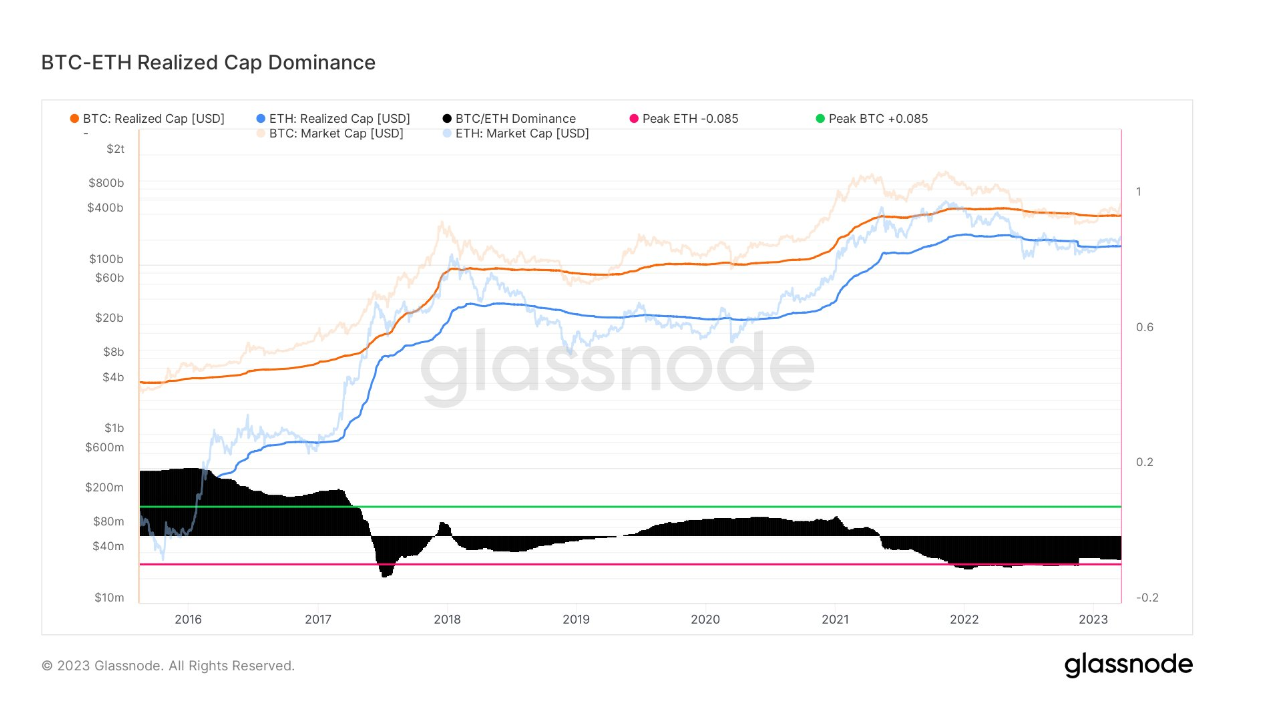
下图记录了比特币和以太坊市场以及自 2016 年以来的已实现上限。它显示了 2017 年 6 月 BTC 和 ETH 之间的紧缩,尤其是在查看已实现上限线时。

2019年4月左右,两人开始出现分歧。但到 2021 年 5 月,这两个频段进一步收窄。然而,以太坊的已实现上限最近几周开始下降,而比特币的持有量相对稳定。

该图表还绘制了 BTC/ETH 的主导地位,计算方法是将 BTC 市值除以 [(BTC 市值 + ETH 市值) – 0.765]。0.765 数字可视化了围绕长期平均值的振荡器。这表明市场开始摆脱长达两年的 ETH 主导地位。
资料来源:Glassnode.com

根据目前的情况,市场正在为更高的利率做准备,银行将继续收紧信贷供应——这种情况通常有利于避险资产。

以太坊被认为比比特币更具风险、更高的贝塔值,这表明它的表现将低于进入避险环境的领先加密货币。

以太坊基本面

对以太坊基本面的分析也表明未来表现不佳。

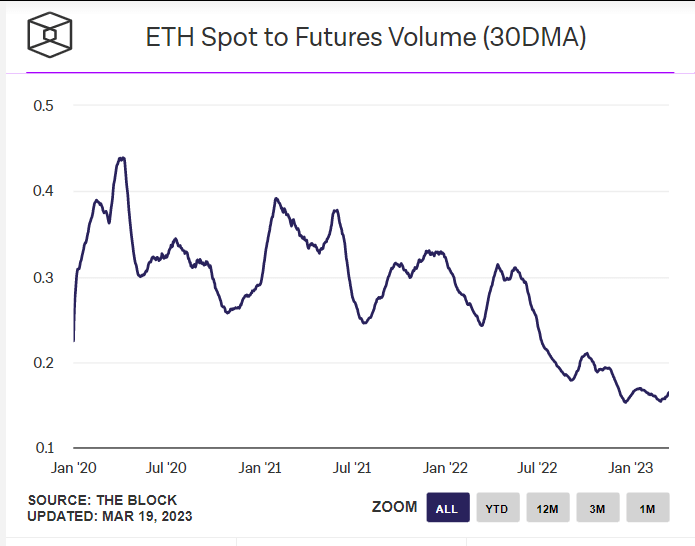
生态系统健康的一般指标是现货与期货比率高/上升——这表明持有者主导交易者的生态系统,其意图是利润而不是对生态系统的信任。

从 ETH 现货到期货交易量的数据显示,自 2020 年 4 月以来呈宏观下降趋势。下降趋势在 2022 年 5 月左右加速(Terra-LUNA 内爆),此后跌至历史最低点。
资料来源:theblock.com

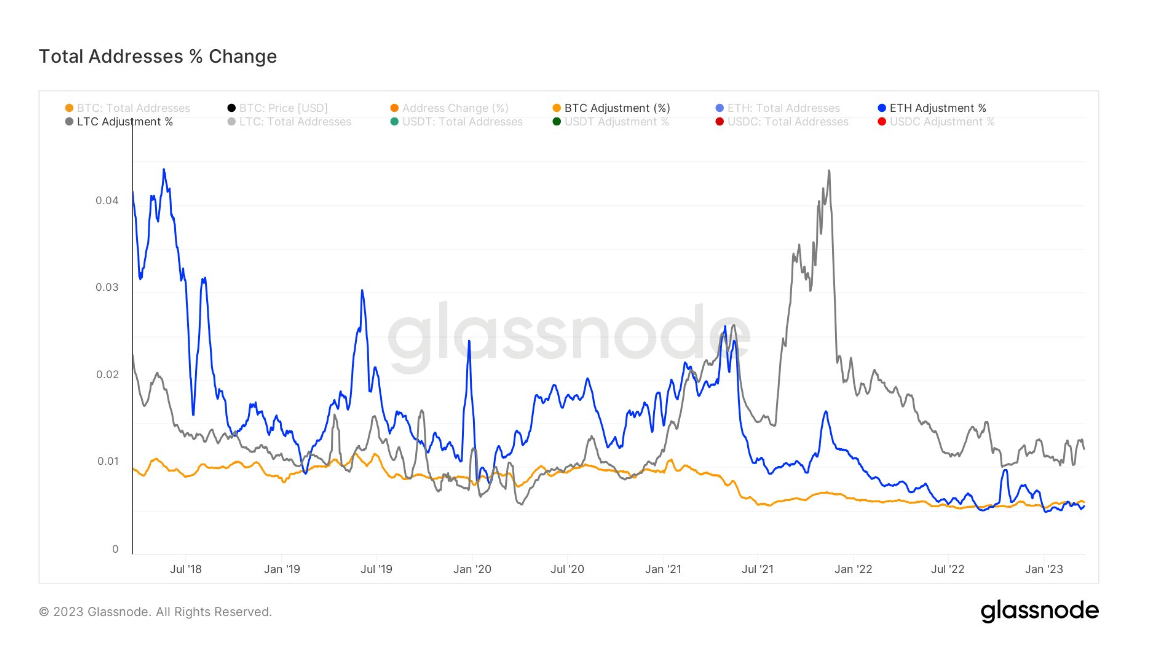
在过去五年中,ETH 地址总数的百分比变化有所下降,上个月低于 BTC。

同样,LTC 地址总数的百分比变化在 2021 年 6 月左右开始远离 ETH(和 BTC),此后一直保持较高水平,尤其是在 2021 年 11 月左右进入市场顶部。
资料来源:Glassnode.com

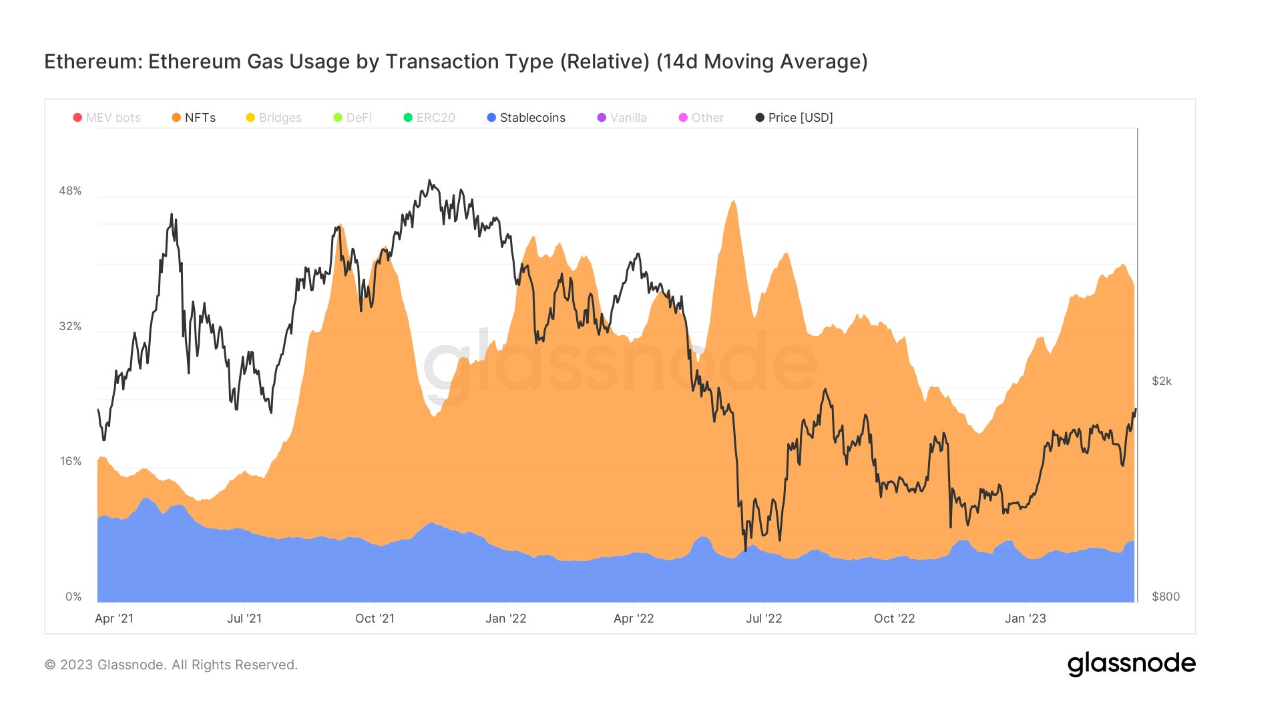
链上数据显示,稳定币和 NFT 交易构成了 ETH 上最重要的 gas 使用量,前者在 2022 年 12 月左右飙升。后者自 2021 年 4 月以来一直保持相对平稳。

2022 年 6 月,稳定币和 NFT 交易占 ETH 天然气使用量的近一半。现在,这个百分比约为 35%,表明 ETH 链上的这些应用程序普遍低迷。
Glassnode.com

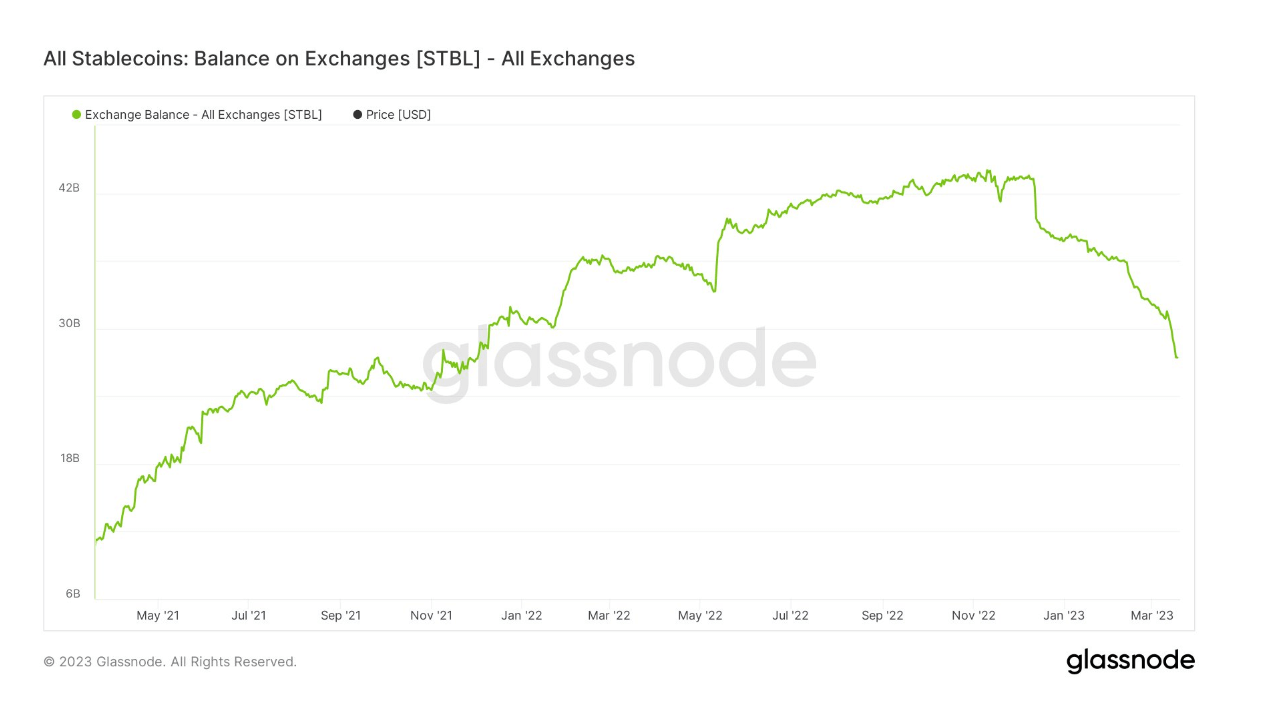
这可以用 BTC 上 Ordinals 的日益普及来解释,这在一定程度上减少了 ETH NFT 需求。同样,交易所的稳定币已跌至 17 个月低点——这表明它们对加密货币的重要性普遍下降,这可能是由于围绕其安全性/可赎回性的持续叙述。
资料来源:Glassnode.com

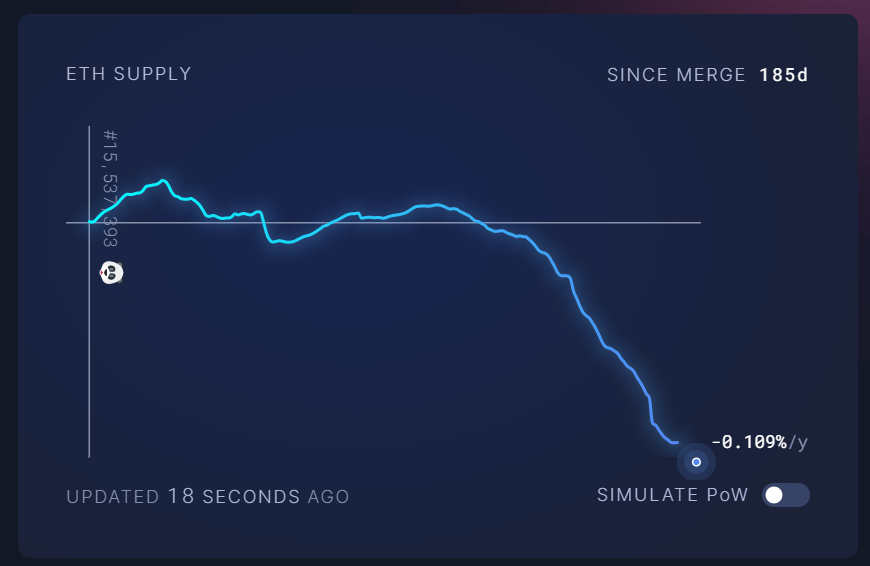
Merge 的叙述导致了转向权益证明和通货紧缩代币经济学的看涨价格驱动因素。然而,六个多月过去了,ETH 对比特币的价格继续下跌。这背后可能有几个原因。
以太坊供应:(来源:ultrasound.money)

自 Tornado Cash 制裁以来,以太坊作为不受审查的去中心化链的声誉受到了重大打击。超过一半的区块仍然符合外国资产控制办公室 (OFAC) 的要求,这意味着超过一半的网络将根据美国当局的要求排除交易。
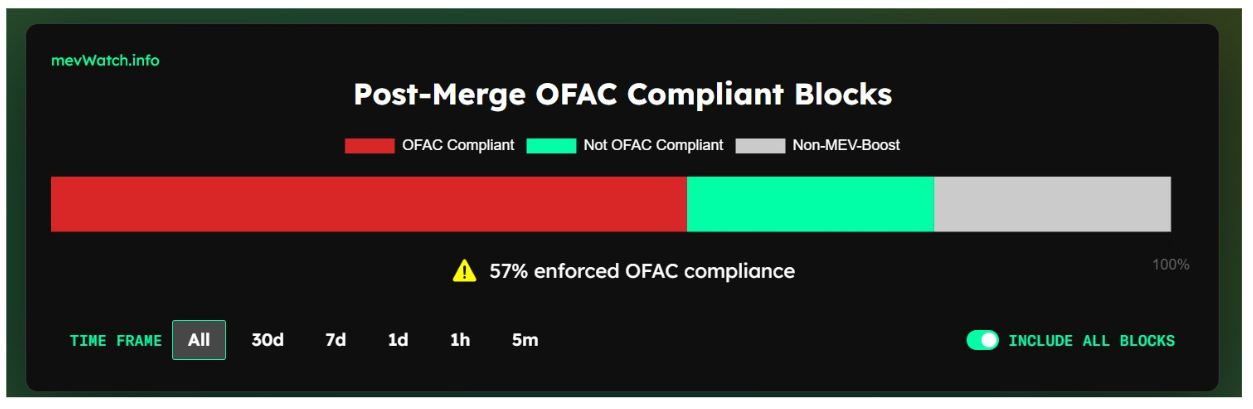
OFAC 合规块:(来源:mevwatch.info)

此外,虽然开发人员透明地表示合并不会直接降低费用,但仍然存在一个持续的、未解决的问题,即昂贵的交易。下图显示交易费用最近飙升至约 5k ETH。
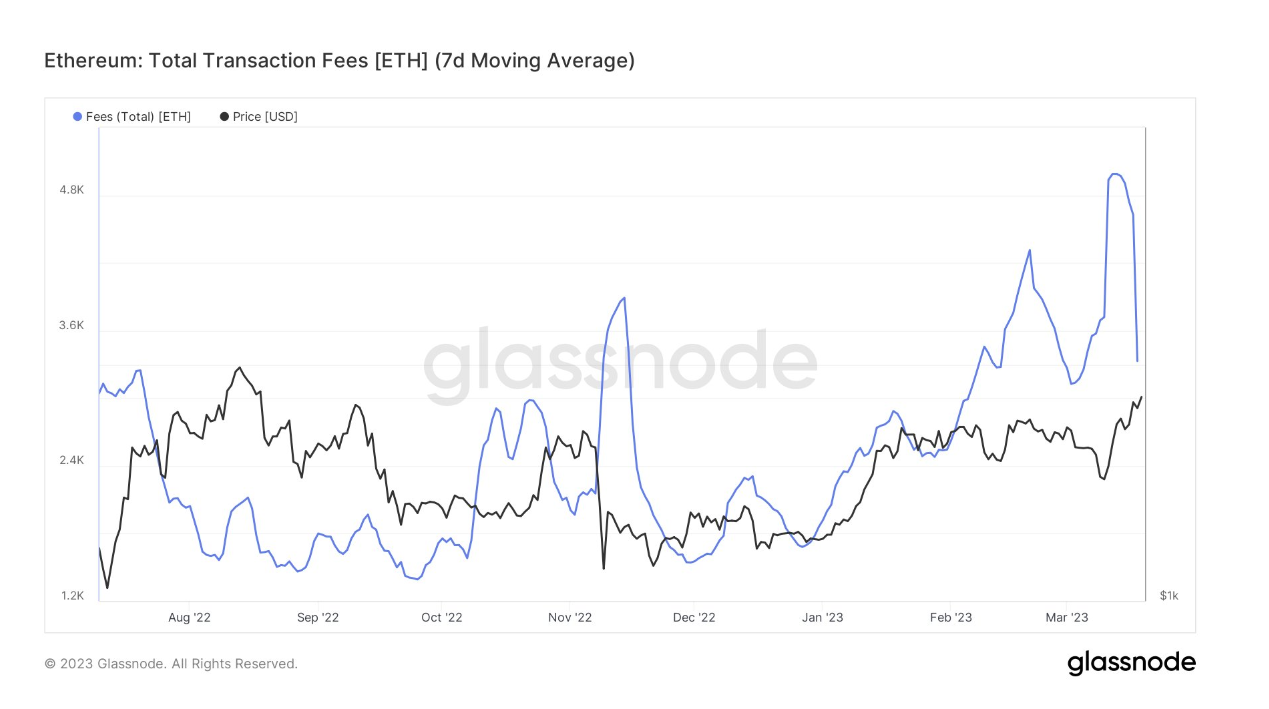
资料来源:Glassnode.com

ETH/BTC 比率目前为 0.0635,不到 2017 年峰值时的一半。自银行业危机以来,该比率出现了显着下降,表明在这些不确定时期市场压倒性地青睐比特币。

Пов'язані матеріали

What If the CLARITY Act Ultimately Fails to Pass?

This article examines the potential consequences if the CLARITY Act, a major US crypto market structure bill, fails to pass in the Senate. Having cleared the House in July 2025 and a key committee in May 2026, the bill's passage into law this year is now considered uncertain, with prediction markets showing its probability dropping from 82% in February to 35%. The article analyzes three main areas of impact should the bill fail. First, for the crypto market, analysts believe a negative reaction is limited and partially priced in already, with Bitcoin's recent weakness attributed more to macro factors. The specific details of the failed bill would matter more than its failure alone. Second, for US stocks, Coinbase (COIN) could see short-term pressure, with analysts citing a potential drop to the $140-$160 range, though its long-term thesis is not solely tied to the bill. For Circle, failure might be neutral or even positive long-term, as a passed bill could invite more stablecoin competition. Bitcoin-treasury firms like Strategy (MSTR) are seen as more directly tied to Bitcoin's price than the legislation. Third, in Washington, the failure is framed within a broader political struggle. Democratic resistance is partly linked to concerns over former President Trump's crypto holdings, making the bill a political tool. If it fails in 2026, the industry would likely rely on existing frameworks like the GENIUS Act and agency-level rules. Missing the August window likely pushes any significant progress to 2027, a period of political reshuffling after midterm elections, making consensus harder to achieve.

Odaily星球日报8 хв тому

What If the CLARITY Act Ultimately Fails to Pass?

Odaily星球日报8 хв тому

SK Hynix Q2 Profit Soars Sixfold, Still 'Misses Expectations'; Secures Long-Term Agreements with 10 Clients, HBM4 to Accelerate Volume Ramp in Second Half

SK Hynix reported record-breaking Q2 2026 financial results, with operating profit soaring 557% year-over-year to 60.5 trillion won and revenue increasing 257% to 79.3 trillion won, driven by strong demand for AI server memory, HBM, and enterprise SSDs. The operating profit margin reached 76.3%. However, both figures fell short of analyst expectations, leading to a drop in its share price. The company attributed the earnings miss to three factors: a high sales mix of HBM, which limited upside from surging prices of general-purpose DRAM; a deceleration in memory price increases compared to Q1; and long-term supply agreements (LTAs) with major customers that lock in prices, reducing sensitivity to spot market gains. SK Hynix has signed LTAs with about 10 clients, covering roughly half of its sales. Despite the miss, the company remains optimistic about AI-driven demand. Its net profit of 93.9 trillion won was significantly boosted by a one-time gain from the partial sale of its Kioxia stake. Financially, it strengthened its cash position, ending the quarter with a net cash position of 69.4 trillion won. Looking ahead, SK Hynix plans capital expenditures at the high end of its 40-50 trillion won range for 2026 to expand capacity for HBM and advanced NAND products, including accelerating the mass production of HBM4 in the second half of the year.

marsbit28 хв тому

SK Hynix Q2 Profit Soars Sixfold, Still 'Misses Expectations'; Secures Long-Term Agreements with 10 Clients, HBM4 to Accelerate Volume Ramp in Second Half

marsbit28 хв тому

Behind the 67,000 Semiconductor Talent Shortage: U.S. Industrial Policy Game and Implications for China

The U.S. push to reshore semiconductor manufacturing faces a core challenge: a significant talent shortage. While over $770 billion in investments are planned across 160 projects, a key hurdle is finding enough people to run the new fabs. According to industry projections, the U.S. could face a shortage of approximately 67,000 technicians, engineers, and computer scientists by 2030. This shortage is multi-faceted. It includes not only high-level chip design engineers requiring advanced degrees but also a substantial need for technicians to operate and maintain fab equipment. Technician roles, while often requiring less formal education, are hard to fill due to factors like shift work, factory locations, and local community infrastructure. Conversely, for high-end engineers, the issue is less about salary—which is already competitive—and more about intense competition for specialized skills from other tech sectors and the long lead time to develop such expertise. The geographic dispersion of new investments complicates recruitment, as fabs need large numbers of local, stable employees. In response, U.S. policy emphasizes building workforce development as critical infrastructure. Strategies include expanding community college programs for technician training, fostering industry-education partnerships, and pursuing immigration reforms for high-skilled talent, aiming to balance immediate needs with long-term domestic pipeline development. For China, the key takeaway is the need to integrate talent supply planning with factory construction from the outset. This involves requiring companies to submit workforce plans, strengthening vocational education aligned with industry needs, and building supportive local ecosystems to retain talent. Ultimately, a sustainable semiconductor industry depends not just on building fabs, but on cultivating a continuous, local talent pipeline capable of keeping them running and advancing.

marsbit1 год тому

Behind the 67,000 Semiconductor Talent Shortage: U.S. Industrial Policy Game and Implications for China

marsbit1 год тому

Торгівля

Спот
活动图片