Indian Parliament Member Asks Government to Tax Crypto Income More Than 30%

newsbtcОпубліковано о 2022-03-29Востаннє оновлено о 2022-03-29

Анотація

India’s Finance Bill 2022 containing the proposed 30% tax on crypto income is now being considered in Rajya Sabha, the upper house of India’s parliament.

Indian Parliament Member Asks Government to Tax Crypto Income More Than 30%

An Indian parliament member has urged the government to increase the tax on crypto income from the current proposed rate of 30%, stressing that crypto trading is similar to gambling. He has also requested that the goods and services tax (GST) be imposed on the total transaction value of crypto.

Indian Parliament Member Wants to Tax Crypto Income More Than 30%

India’s Finance Bill 2022 containing the proposed 30% tax on crypto income is now being considered in Rajya Sabha, the upper house of India’s parliament.

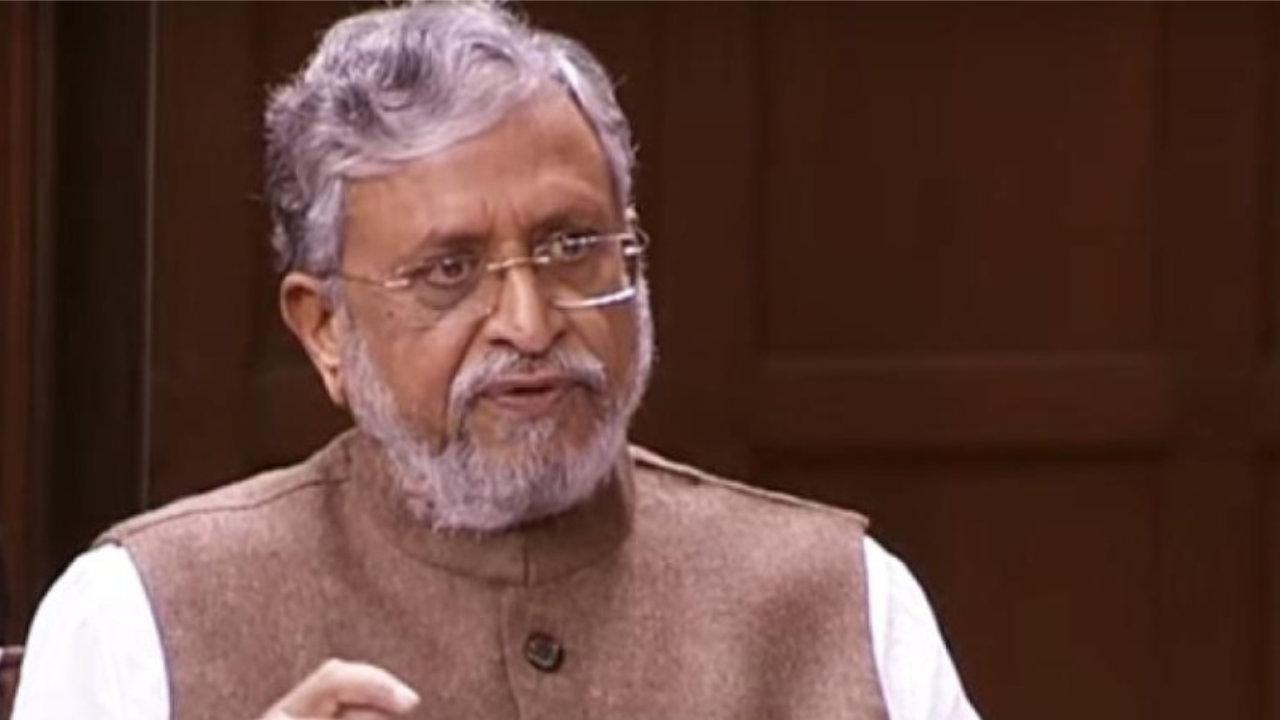
Parliament member Sushil Kumar Modi asked the government Monday to increase the tax on cryptocurrency income from the current rate of 30%. He said:

I would like to request the finance minister that the 30% tax that you have imposed on crypto, please consider in the coming days if this tax can be further increased.

Parliament member Modi argued that cryptocurrency is not a commodity, an asset, goods, or a service, emphasizing that it does not have intrinsic value.

He added that while stocks are backed by companies behind them, “crypto is gambling.” He further questioned, “Who are behind crypto?”

The parliament member further pointed out that the 18% goods and services tax (GST) is only levied on crypto service providers, such as exchanges, emphasizing that this needs to be increased. Modi opined:

Cryptos are similar to lottery, casinos betting, gambling and horse racing. In all these activities, 28% tax (GST) is imposed on the total transaction value … So I request to you that the GST council needs to consider imposing GST on the total transaction value of crypto.

“Investors are attracted by extraordinary profits,” Modi stressed, adding that “no one knows what is the value of crypto.”

Modi proceeded to give examples of countries that have imposed higher taxes on crypto. He said Japan has imposed a 55% tax while Germany, France, and Australia have imposed up to 45%.

The parliament member further claimed that investors have been storing cryptocurrencies in private wallets before April 1 and “$8 billion worth of crypto assets are expected to go out of the country.”

Besides the 30% tax on crypto income, Indian Finance Minister Nirmala Sitharaman also proposed imposing a 1% tax deducted at source (TDS) on every crypto transaction. The 1% TDS will go into effect on July 1 while the 30% income tax will start levying on April 1. An Indian parliament member has warned that imposing a 1% TDS on every crypto transaction will kill the nascent asset class.

Пов'язані матеріали

Countdown to the CLARITY Act: 25 Days Left—What Will Happen to the Crypto Market if It Fails to Pass Before the August Recess?

"The CLARITY Act, a key US crypto market structure bill, faces a tight deadline with only 25 working days left before the Senate's August 10 recess. The bill aims to clarify SEC/CFTC jurisdiction and establish a non-security path for decentralized tokens. Despite passing the House in 2025 and a Senate committee in May 2026, final negotiations have stalled over ethics and law enforcement provisions, jeopardizing the 60 Senate votes needed. If the bill fails to pass before the recess, its chances in 2026 drop significantly, with prediction markets giving only a 40% probability. Analyst Galaxy Digital has lowered its 2026 passage odds to 50%. Failure would likely lead to continued 'slow bleeding' in crypto markets, as seen in June's record $4.5 billion net outflow from US Bitcoin ETFs. XRP, which stands to gain permanent commodity status from the bill, could lose its 'regulatory premium.' Bitcoin and Ethereum, already classified as commodities via a joint agency interpretation, would face less direct impact but broader regulatory uncertainty would persist, delaying institutional capital and DeFi innovation. The path forward includes: 1) Passage before August (a major catalyst), 2) Delay to 2027 (extending market uncertainty), or 3) Failure, requiring the bill to be reintroduced in the next Congress. While delay is a setback, the bill's progress indicates the US is closer than ever to resolving crypto regulatory ambiguity."

marsbit25 хв тому

Countdown to the CLARITY Act: 25 Days Left—What Will Happen to the Crypto Market if It Fails to Pass Before the August Recess?

marsbit25 хв тому

In the First Half of the Year, Half of VC Money Flowed to AI, with These 30 Companies Alone Raising Over 170 Billion Yuan

First Half of 2026: VC Investment in AI Explodes, with 30 Top Companies Raising Over 170 Billion RMB In the first half of 2026, China's AI sector saw a massive surge in venture capital, with total equity financing exceeding 300 billion RMB—already surpassing the entire 2025 total. Key trends include: * **Massive Funding Scale:** The AI track recorded 1,203 financing events totaling over 300 billion RMB. Investment peaked in June, partly driven by DeepSeek's landmark 51-billion-RMB Series A round. * **Geographic Concentration:** Beijing, Hangzhou, Shanghai, and Shenzhen dominated, accounting for 74% of deals and 86% of total funding. Beijing led with 95.5 billion RMB, while Hangzhou surged to second place due to DeepSeek's round. * **Sector Focus:** * **Large Models** were the top draw, securing over half of all funds (nearly 1.6 trillion RMB). * **AI Infrastructure** (compute, chips) and **Embodied AI** (e.g., robotics) were other major investment areas, with the latter being the most active in number of deals. * **AIGC Applications** attracted significant capital (59.6 billion RMB), indicating strong belief in near-term commercialization. * **Investment Stage Logic:** Capital followed a clear strategy: heavy bets on growth-stage companies (A/B rounds), major funding for mature leaders, and widespread, smaller-scale seeding of early-stage innovators. * **Notable Early-Stage Trends:** World models (seen as the "OS" for embodied AI) attracted the most early capital. Angel/seed rounds reached unprecedented sizes ("inflation"), and investment shifted from foundational large models to downstream applications like robotics and physical AGI. * **Top Companies:** The 20 largest mid/late-stage deals raised 1.565 trillion RMB. Leaders include the "Big Three" large model firms (DeepSeek, StepFun, Kimi), seven leading humanoid robot companies ("Seven Samurai"), and top AIGC application players. * **Outlook:** Full-year 2026 funding is projected to exceed 6 trillion RMB. However, consolidation is expected in the large model sector, with the window for pure-play general AI startups closing. Survival will depend on finding niche verticals or securing strategic backing.

marsbit30 хв тому

In the First Half of the Year, Half of VC Money Flowed to AI, with These 30 Companies Alone Raising Over 170 Billion Yuan

marsbit30 хв тому

Торгівля

Спот
活动图片