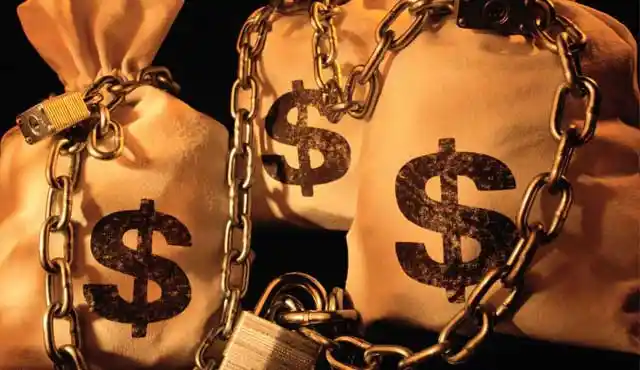
WSJ: Unveiling the Secret Jury That Controls Disputes on Polymarket

marsbit2026-05-18 tarihinde yayınlandı2026-05-18 tarihinde güncellendi

Özet

Last month, Garrick Wilhelm lost a $567 bet on the Polymarket prediction platform about whether a ceasefire would be reached with Hezbollah. When a truce was announced, some traders argued it counted, but Wilhelm disagreed. The dispute was settled not by Polymarket, but by a decentralized group of UMA token holders who vote on such disagreements. As trading surges, resolving ambiguous outcomes is a growing challenge for prediction markets. Unlike competitors like Kalshi that decide internally, Polymarket outsources dispute resolution to UMA. Its token holders, mostly anonymous and with voting power weighted by holdings, arbitrate cases. Critics argue this system is prone to manipulation, as voters can also bet on the same markets they judge. A Wall Street Journal analysis found that over the past year, at least 60% of active UMA voters had corresponding Polymarket accounts and held positions in disputes they voted on. Voting power is also concentrated among a few large holders. Polymarket says only 0.2% of bets go to UMA and that the system disperses authority. Its founder has acknowledged flaws and promised fixes. UMA's backers deny any proven manipulation, dismissing critics as sore losers. The platform penalizes voters in the minority to incentivize "correct" outcomes. Disputes are rising, covering topics from a streamer's pregnancy announcement to Iran. This model also helps Polymarket argue it's an offshore platform outside U.S. regulation, a shift made after a 2022 s...

Last month, Garrick Wilhelm joined the rush into prediction market trading, but he soon began to regret it. This user based in British Columbia, Canada, registered on the Polymarket platform and started placing bets on events related to the Middle East situation, with one betting option being whether Israel and Hezbollah could reach a ceasefire agreement.

Wilhelm put in $567 on a losing bet, convinced that the armed group would absolutely not sign a ceasefire agreement, calling it a sure win.

Subsequently, Israel and the Lebanese government reached a truce agreement. Some traders deemed this equivalent to reaching a ceasefire with Hezbollah. After carefully studying the platform rules, Wilhelm firmly disagreed with this determination.

The outcome of this bet involving millions of dollars was not ultimately decided by the Polymarket platform. Wilhelm then learned that the resolution of his trade was to be arbitrated by a loosely organized group holding cryptocurrency tokens.

With a massive influx of new users and explosive growth in trading volume, trading disputes have become an increasingly thorny problem for prediction market platforms like Polymarket. Platforms originally strive to frame betting topics as clear-cut, black-and-white questions, but real-world events are complex, and the line between win and loss is often blurry.

Most other similar prediction market platforms, like Kalshi, resolve controversies and determine final outcomes themselves; but Polymarket chooses to outsource its dispute arbitration business to a third-party service called UMA. When parties to a trade disagree on the payout result, the UMA voting arbitration mechanism is triggered. Voting power is controlled by UMA token holders, with more tokens conferring greater voting weight, and the vast majority of voters remain anonymous.

Polymarket explicitly states in its user agreement that the platform assumes no responsibility for arbitrating disputes related to trading contracts.

Many traders and crypto industry veterans point out that this UMA voting system is highly susceptible to manipulation. Token holders can freely vote on contentious bets in which they have a financial stake, with no institutional constraints.

Analysis by The Wall Street Journal, combining Polymarket trading data and on-chain information, found: Over the past year, at least 60% of active UMA voters could be matched to Polymarket trading accounts; in over 300 dispute cases during the same period, UMA voters were found to hold financial positions in the very bets under dispute.

UMA bills itself as decentralized, but on-chain data shows voting power is highly concentrated among a few "whales." Statistics indicate that in the vast majority of dispute votes, the top ten wallet addresses account for over half the votes.

Nic Carter, founding partner of venture capital firm Castle Island Ventures, bluntly stated that Polymarket shouldn't shirk its dispute resolution responsibilities. "Arbitrating disputes is inherently part of Polymarket's job. It shouldn't be outsourced to this anonymous, unidentified third-party group of token holders."

A Polymarket spokesperson responded that only 0.2% of betting contracts on the platform trigger UMA voting arbitration, and added that UMA disperses adjudication authority into an open market system rather than leaving it to a single entity.

In March of this year, Polymarket founder Shayne Coplan admitted at a Harvard Business School forum that the platform's current dispute resolution mechanism indeed has many flaws. "Related optimization solutions are about to be implemented," he said, but did not reveal specific reform details. It is reported that Polymarket has entered into a data partnership with Dow Jones, the parent company of The Wall Street Journal.

UMA was co-founded by two former Goldman Sachs traders and is managed by the Risk Labs Foundation, registered in the Cayman Islands. Foundation spokesperson James Fry stated that no conclusive evidence has been found to suggest UMA manipulates trades. "Much of the external skepticism is just losing traders looking for excuses."

When disputes arise, UMA token holders debate on the Discord social platform, citing various pieces of evidence to support their views. UMA also has a penalty mechanism that financially penalizes users who vote in the minority, a move the platform says aims to guide voters toward factually correct determinations.

According to statistics from Polymarket's dedicated trading terminal Betmoar, from the beginning of 2026 to now, the platform has seen over 1,150 betting disputes, a number that has already surpassed the total for all of 2025.

A recent popular dispute involved a bet on whether streamer Clavicular would officially announce a pregnancy: the streamer did publicly announce a partner's pregnancy, but many traders argued this announcement didn't meet the contract's requirement of a "formal and valid declaration." Ultimately, UMA voting ruled the announcement was compliant. Additionally, multiple arbitration disagreements have erupted over bets related to the situation in Iran.

Public regulatory filings show that Polymarket initially handled various disputes internally; in early 2022, the platform reached a settlement with the U.S. Commodity Futures Trading Commission over alleged violations of U.S. financial regulations and subsequently handed over all dispute arbitration work to UMA.

This model of adjudication by a dispersed group of token holders also serves as a key basis for Polymarket to argue it is an offshore platform, not subject to U.S. domestic regulation.

However, Polymarket occasionally overturns UMA's final rulings and also proactively adds supplementary clarifications to betting contract details to avoid potential disputes.

The novice trader Wilhelm mentioned earlier ultimately lost his bet related to the ceasefire agreement; 87% of UMA token voters determined that the Israel-Lebanon truce agreement applied to the Hezbollah-related bet. Despite reasoned arguments from Wilhelm and others, they were powerless to change the ruling.

A group of losing traders formed a Discord community called "Whale Hunters," collectively accusing top UMA voting users of suspected backroom dealings.

Traders have pointed fingers at the startup project UMA.rocks, a platform that allows UMA token holders to pool their voting tokens and delegate voting authority to a specialized decision committee. Its votes recently accounted for about 8% in various dispute votes and are also seen by the market as an important indicator of UMA's overall ruling trends.

UMA.rocks founder Lancelot Chardonnet responded: "Many traders' losses are essentially because they didn't seriously read the betting rules, but afterward they shift all the blame to UMA and our platform. We are the easiest targets."

At the end of April, UMA.rocks formally expelled voting committee member Scout, citing his past suspected market manipulation behavior.

Contacted via Discord, Scout denied manipulating the market or deliberately guiding incorrect voting outcomes but readily admitted to participating in Polymarket bets on disputed markets while exercising UMA dispute voting power.

Scout believes that voters with such conflicting interests can actually make rulings more aligned with the facts. "Voters with no skin in the game might spend at most 5 minutes casually looking into the matter; but we, as stakeholders, driven by our own financial interests, will verify the full picture of the event to make an accurate judgment."

He acknowledged the industry faces a dilemma: "Either use traders with conflicting interests in the adjudication, or let complete outsiders with no expertise drive the voting. There's currently no perfect answer."

İlgili Sorular

QAccording to the article, what is the main difference between how Polymarket and other prediction markets like Kalshi handle trade disputes?

AMost prediction markets like Kalshi resolve disputes internally. In contrast, Polymarket outsources the arbitration of disputes to a third-party service called UMA, where voting power is held by anonymous holders of UMA tokens.

QWhat finding did the Wall Street Journal's analysis reveal about UMA voters and their activity on Polymarket?

AThe Wall Street Journal's analysis found that over the past year, at least 60% of active UMA voters could be linked to trading accounts on Polymarket, and in more than 300 dispute cases, UMA voters themselves held financial positions in the contested markets.

QWhat did Polymarket's founder, Shayne Coplan, admit about the platform's current dispute resolution mechanism?

AShayne Coplan admitted at a Harvard Business School forum that the platform's current dispute resolution system has many flaws and stated that improvements are on the way, though he did not provide specific details.

QHow does UMA claim its system encourages accurate voting outcomes?

AUMA has a penalty mechanism that financially punishes users who vote with the minority opinion. The platform claims this is designed to incentivize voters to make factually correct decisions.

QWhat dilemma does the expelled UMA.rocks committee member Scout highlight regarding the dispute resolution system?

AScout highlights a dilemma: the system must either use arbitrators who have a conflict of interest (because they are also traders in the market) or rely on outsiders with no professional stake or deep understanding of the event, suggesting there is currently no perfect solution.

İlgili Okumalar

Fei-Fei Li's Team Clarifies the Concept of 'World Models', Sora Merely a Renderer

"World Models" has become a widely used yet confusing term in AI. To address this, a team led by Fei-Fei Li and World Labs proposed a functional taxonomy based on the Partially Observable Markov Decision Process framework. This taxonomy categorizes systems called "world models" into three distinct projections: Renderers, Simulators, and Planners. Renderers, like OpenAI's Sora and other video generation models, focus on producing photorealistic visual outputs for human perception. They prioritize visual fidelity over physical accuracy. Simulators, such as NVIDIA Omniverse, aim to compute precise future environmental states for computational tasks like engineering analysis or digital twins. Planners, like Vision-Language-Action models, take in observations and goals to output executable actions for robots or agents. The article clarifies that most current "world models," including Sora, are primarily Renderers. They generate convincing visuals but lack the core ability to simulate state transitions based on actions, a key requirement for a true world model in classic reinforcement learning definitions. This conceptual confusion has practical implications, leading to potential misalignment in technology selection, investment, and public understanding of AI capabilities. Clear categorization is crucial. It helps enterprises avoid costly mistakes (e.g., using a renderer for robot training), allows investors to accurately assess markets, and enables researchers to build comparable benchmarks. While future systems may integrate these functions, recognizing current boundaries is essential for honest assessment and progress.

marsbit1 saat önce

Fei-Fei Li's Team Clarifies the Concept of 'World Models', Sora Merely a Renderer

marsbit1 saat önce

Bloomberg Uncovered: How Do China's Wealthy Circumvent the Annual $50,000 Limit to Transfer Assets?

**Summary: How Wealthy Chinese Circumvent $50,000 Annual Foreign Exchange Limits** Despite China's strict capital controls, including an annual $50,000 per person foreign exchange quota, an estimated $150 billion in funds still leaves the country annually via various gray and underground channels. This report outlines the evolution of China's "capital wall" and the methods used to bypass it. **The Evolving Capital Controls:** * **Foundation (1994):** The system of "current account convertibility with strict capital account controls" was established. * **Quota Set (2007):** The $50,000 individual annual forex purchase limit was formalized. * **Crackdown Begins (2015-2017):** Following market volatility, enforcement tightened. Banks were required to scrutinize transactions, and channels like using UnionPay cards for Hong Kong insurance premiums or buying overseas property were blocked. * **Digital & Legal Upgrades (2024-2026):** Enhanced algorithms now flag suspicious patterns (e.g., "smurfing"). The Common Reporting Standard (CRS) provides Chinese tax authorities with data on citizens' offshore accounts. Unlicensed cross-border brokers have been targeted. **Five Primary Methods for Moving Capital:** 1. **Underground Banking / "Hawala" (Duiqiao):** The largest-scale method. No money crosses borders. Clients pay RMB to a domestic account; an overseas associate deposits equivalent foreign currency into the client's offshore account. Risks include high fees, account freezes, and legal penalties. 2. **"Smurfing" or "Ant Moving":** Using multiple individuals' $50,000 quotas to pool funds for one offshore recipient. Increasingly detected by anti-money laundering algorithms. 3. **Trade Invoice Manipulation:** Businesses over-invoice imports or under-invoice exports via offshore shell companies, creating a pretext to transfer excess funds abroad under the guise of trade. 4. **Channel Migration:** After a crackdown on internet brokers, funds flow toward more compliant but costly channels like major banks' cross-border wealth management services or Qualified Domestic Institutional Investor (QDII) quotas. 5. **Structural Arrangements:** High-net-worth individuals use complex, high-cost legal structures involving offshore trusts, insurance, and investment migration programs to transfer asset ownership. **Regulatory Response: Focusing on People, Not Just Money** The current strategy extends oversight from enterprises to **individual residents**. Tools like CRS allow retroactive visibility into offshore assets. Cryptocurrencies, once seen as a potential loophole, are now actively monitored and prosecuted as an illegal channel. The underlying driver remains: with significant wealth concentrated among millions of affluent households seeking diversification amid domestic economic shifts, the incentive to move assets offshore persists despite regulatory barriers.

marsbit1 saat önce

Bloomberg Uncovered: How Do China's Wealthy Circumvent the Annual $50,000 Limit to Transfer Assets?

marsbit1 saat önce

İşlemler

Spot
Futures
活动图片