‘Wrong approach’ – Crypto lobby rejects Wall Street’s tighter DeFi rules for tokenized securities

ambcrypto2026-04-08 tarihinde yayınlandı2026-04-08 tarihinde güncellendi

Özet

The Blockchain Association (BA) has strongly opposed a proposal from Citadel Securities and traditional finance (SIFMA) calling for stricter regulation of DeFi protocols that handle tokenized securities. In a letter to the SEC, the BA argued that applying existing securities laws, which are designed for intermediaries, to neutral decentralized infrastructure is the "wrong approach." While affirming that tokenized securities are still securities, the BA emphasized that the SEC should consider how modern blockchain technology works before regulating, rather than automatically classifying DeFi infrastructure as exchanges or brokers. This pushback aligns with earlier criticism from the DeFi Education Fund (DEF). Citadel and SIFMA, however, maintain that all platforms handling tokenized securities must be under regulatory oversight to ensure a level playing field and investor protection, regardless of whether they are custodial or decentralized. The outcome hinges on the SEC's decision, which could potentially be challenged in court if it is not codified by the CLARITY Act.

The DeFi sector is doubling down on its pushback against the Citadel-led call for barring decentralized protocols from blanket regulatory exemption.

In a letter to the U.S SEC on Monday, the Blockchain Association (BA) termed Citadel’s proposed regulation of DeFi protocols handling tokenized assets as a “wrong approach.”

The BA is an advocacy and an umbrella group with key industry members, including Coinbase. In the letter, the BA rebutted,

Securities laws regulate intermediaries. They do not automatically turn neutral infrastructure into an exchange, broker, or dealer simply because that infrastructure is part of a tokenized market.

The lobby group added that the DeFi sector is not after a “free pass.” However, it asked the SEC to consider how the underlying tech works before regulating any DeFi protocol.

The digital asset industry is not asking for a free pass. Tokenized securities are still securities. The question is whether the SEC will apply the law in a way that reflects how modern infrastructure actually works.

Tokenized securities are an on-chain version of traditional securities, but traded via blockchain rails.

Citadel wants everyone to play by the rules

Intriguingly, the BA’s request for the SEC to consider how “modern blockchain infrastructure design” works is what Citadel and SIFMA (broader TradFi group) are against. For the TradFi players, the SEC must ensure a level playing field through a “neutral technology” framework.

For them, the issue is not whether a DeFi venue is custodial (controlled by the developer) or not. What’s crucial, they added, is that every platform handling tokenized securities must be under oversight just like traditional intermediaries.

According to critics of the proposed innovation exemption, investor protections in the DeFi world, which is full of scams and rug pulls, can only be ensured by regulations.

Last week, another crypto lobby, the DeFi Education Fund (DEF), castigated SIFMA and Citadel’s call for regulation of AMMs (automated market makers), which are deemed decentralized platforms by experts.

It remains to be seen which route the SEC will take and whether the disgruntled side will sue the agency for its decision on the innovation exemption.

Even so, if the agency’s rulemaking or guidelines related to DeFi exemptions aren’t codified via the CLARITY Act, then they could still be disputed in court. For instance, Roman Storm, the developer behind Tornado Cash with no control over the crypto mixer, is still facing a retrial.


Final Summary

  • Blockchain Association has joined DeFi Education Fund to fend off Citadel and Wall Street’s push for regulations of decentralized protocols.
  • The DeFi lobby groups pleaded with the SEC to consider the neutral nature of decentralized protocols before attempting to regulate them.


İlgili Sorular

QWhat is the main argument of the Blockchain Association (BA) against Citadel's proposed DeFi regulations?

AThe Blockchain Association argues that Citadel's proposed regulation is a 'wrong approach,' stating that securities laws regulate intermediaries and should not automatically turn neutral infrastructure into an exchange, broker, or dealer simply because it is part of a tokenized market.

QAccording to the article, what do Citadel and SIFMA believe is crucial for platforms handling tokenized securities?

ACitadel and SIFMA believe that every platform handling tokenized securities must be under regulatory oversight, just like traditional intermediaries, to ensure a level playing field through a 'neutral technology' framework.

QWhat specific request did the Blockchain Association make to the SEC regarding DeFi regulation?

AThe Blockchain Association asked the SEC to consider how the underlying technology of 'modern blockchain infrastructure design' works before regulating any DeFi protocol, rather than granting a blanket exemption or applying rules without understanding the tech.

QWhich other crypto lobby group has also opposed Citadel and SIFMA's call for DeFi regulation?

AThe DeFi Education Fund (DEF) has also opposed Citadel and SIFMA's call for regulation, specifically criticizing their push to regulate automated market makers (AMMs).

QWhat potential legal outcome is mentioned if the SEC's rulemaking on DeFi exemptions isn't codified via the CLARITY Act?

AIf the SEC's rulemaking or guidelines related to DeFi exemptions aren't codified via the CLARITY Act, they could still be disputed in court, as seen in the case of Roman Storm, the developer behind Tornado Cash, who is facing a retrial.

İlgili Okumalar

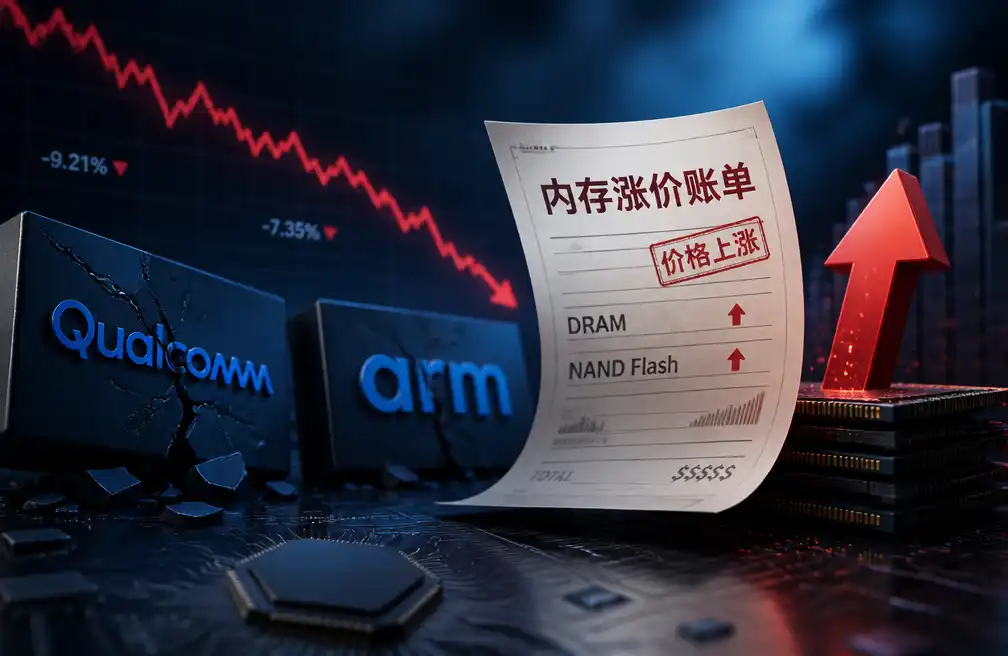
Qualcomm and Arm Fall Together: The Bill for Memory Price Hikes Finally Arrives at Mobile Chip Companies

After posting Q2 FY2026 results, Qualcomm and Arm both saw their shares decline, reflecting the impact of memory price increases on the smartphone chip sector. Qualcomm's revenue of $9.95B slightly beat expectations, but EPS of $2.21 fell short. More concerning was its guidance for next quarter, with EPS projections below analyst estimates. The company directly attributed a >$1.50 per share annual EPS headwind to rising memory costs and supply constraints in Android phones, prompting planned price hikes. While automotive revenue grew 61% and is approaching one-third of phone revenue, the mobile segment declined 20%. Qualcomm also confirmed a significant reduction in its modem share for the upcoming iPhone and outlined a plan for data center revenue to replace all Apple-related income by FY2027. Arm's results surpassed expectations with revenue of $1.29B and EPS of $0.45, and its guidance was also strong. However, its stock fell. Key concerns included royalty revenue failing to set a new record and a downward revision to full-year royalty growth guidance from ~20% to the high-teens, citing weak smartphone demand and high memory prices. Despite robust growth in its data center business, Arm's premium valuation (over 100x forward P/E) means even beating expectations isn't enough to push the stock higher, as any sign of uncertainty is magnified. Ongoing global antitrust investigations add another risk factor. The situation highlights a broader shift. Memory price surges, which boosted Samsung's profits, are now pressuring chip designers. Meanwhile, the semiconductor sector saw significant corrections in July, with the hardest-hit stocks often being those with the biggest AI-driven gains year-to-date. Qualcomm, lacking such a premium, was an exception.

marsbit14 dk önce

Qualcomm and Arm Fall Together: The Bill for Memory Price Hikes Finally Arrives at Mobile Chip Companies

marsbit14 dk önce

13 Business Lines Surpass $100 Million in Annualized Revenue, Robinhood Moves Toward a 'Super Financial App'

Robinhood Q2 2026 Earnings: Record Revenue and a Push Towards a "Super Financial App" Robinhood (HOOD) reported strong Q2 2026 results, with net revenue reaching $1.308 billion, up 32% year-over-year, and net income hitting $561 million, a 45% increase. The company now has 13 distinct business lines each generating over $100 million in annualized revenue. Key drivers included a 44% surge in transaction-based revenue to $776 million, led by a more than 10x growth in "event contracts" (prediction markets) and strong performance in stocks and options. User metrics also grew, with funded accounts rising to 28.4 million and total assets under custody reaching $369 billion. The Robinhood Gold subscription service hit a record 4.8 million users. The report highlights a strategic shift for Robinhood. Moving beyond its core as a zero-commission trading platform for retail investors, it is actively building a broader financial ecosystem. This includes expanding into wealth management (Robinhood Strategies), payments (Robinhood Credit Card), and next-generation infrastructure like AI-powered "Agentic Trading" and its own Ethereum Layer 2 blockchain, Robinhood Chain. The company's goal is to evolve from a trading app into a comprehensive "super financial app," offering a one-stop shop for investing, cash management, and future on-chain finance.

Odaily星球日报44 dk önce

13 Business Lines Surpass $100 Million in Annualized Revenue, Robinhood Moves Toward a 'Super Financial App'

Odaily星球日报44 dk önce

13 Business Lines Surpass $100 Million in Annualized Revenue, Robinhood Advances Toward a 'Super Financial App'

On July 30th, Robinhood (HOOD) reported its Q2 2026 financial results, showcasing significant growth with record revenue and profits. The company achieved a net revenue of $1.308 billion, a 32% year-over-year (YoY) increase, and a net income of $561 million, up 45% YoY. This strong performance was driven by robust trading activity and expansion into new financial services. A key highlight was the surge in transaction-based revenue, which rose 44% YoY to $776 million. Notably, income from event contracts (prediction markets) skyrocketed over 10x to $156 million, emerging as a major new growth driver alongside strong gains in stock and options trading. However, crypto trading revenue declined by 38%. Beyond trading, Robinhood is successfully diversifying its revenue streams. User assets grew 32% to $369 billion, and the subscription service Robinhood Gold reached a record 4.8 million users. The company revealed that 13 of its business lines now generate over $100 million in annualized revenue, including its new credit card, prediction markets, and Gold subscriptions. Looking forward, Robinhood is strategically investing in AI and blockchain to build a comprehensive financial ecosystem. It has launched AI-powered "Agentic Trading" and the "Robinhood Chain," a layer-2 blockchain network. The company's vision is evolving from a retail trading platform into a "super financial app" that integrates trading, wealth management, payments, and next-generation digital asset services, though regulatory hurdles remain for some new ventures.

marsbit44 dk önce

13 Business Lines Surpass $100 Million in Annualized Revenue, Robinhood Advances Toward a 'Super Financial App'

marsbit44 dk önce

İşlemler

Spot
活动图片