World Cup 'Stress Test': How to Interpret the Development Prospects of Prediction Markets Next Year?

marsbit2025-12-25 tarihinde yayınlandı2025-12-25 tarihinde güncellendi

Özet

Summary: The 2026 FIFA World Cup is set to be a major stress test for the prediction market industry, which has moved from niche experimentation to mainstream adoption in 2025. Growth is now driven by distribution through major platforms like Robinhood, DraftKings, and FanDuel, rather than pure product innovation. The key constraint is no longer demand but the ability to operate at scale within strict regulatory frameworks, particularly in the US where the CFTC and state regulators are actively defining legal boundaries. The industry is bifurcating: compliant, licensed platforms are focusing on regulatory design and geographic rollout strategies, while crypto-native platforms like Polymarket are seeking legitimacy through acquisitions and enhanced controls. The 2026 World Cup will test infrastructure on liquidity, settlement integrity, and compliance under peak load. The long-term winners will be those that combine deep liquidity, regulatory trust, and seamless user experience, likely within larger financial super-apps.

Editor's Note: In 2025, prediction markets accelerated into the mainstream: brokers, sports platforms, and crypto products entered simultaneously, proving demand is validated. The true watershed is no longer product innovation, but the ability to scale within a regulatory framework.

This article, using global regulatory comparisons, the divergence between on-chain and compliant paths, and the 2026 World Cup as a "system-level stress test," points out that prediction markets are entering an elimination stage centered on compliance, settlement, and distribution. The winners will be platforms that can operate stably under peak load and strong regulation.

The original text follows:

The U.S. event contract market accelerated significantly in 2025, resonating with the approach of a "generational" catalyst.


Kalshi's valuation doubled to $11 billion, and Polymarket is reportedly also seeking a higher valuation; meanwhile, mass-market platforms—including DraftKings, FanDuel, and Robinhood—are launching compliant prediction products ahead of the 2026 FIFA World Cup (to be hosted in North America). Robinhood estimates the events market has brought in approximately $300 million in annualized revenue, becoming its fastest-growing business line, showing that "opinion-based trading" is entering the financial mainstream at scale.

However, this growth is colliding head-on with regulatory reality. As platforms prepare for the participation peak driven by the World Cup, prediction markets are no longer just a product issue but increasingly a problem of "regulatory design." In reality, teams are shifting their focus from simply meeting user demand to legal qualification, jurisdictional boundaries, and the design of settlement terms. The importance of compliance capabilities and distribution partnerships is gradually becoming as crucial as liquidity; the competitive landscape is also shaped more by "who can scale operations within the permitted framework" rather than who can list the most markets.

The Intertwining Forces of Regulation

The U.S. Commodity Futures Trading Commission (CFTC) only allows a narrow category of event contracts tied to economic indicators, while judging other types as unacceptable gambling. In September 2023, the CFTC blocked Kalshi's attempt to list political futures; but a subsequent court challenge granted limited approval for presidential election-related contracts.


At the state level, regulatory attitudes are tougher towards "sports-like" markets. In December 2025, Connecticut's gaming regulator issued cease-and-desist orders to Kalshi, Robinhood, and Crypto.com, determining their sports event contracts constituted unlicensed gambling; Nevada also sought judicial action to halt similar products, forcing relevant platforms to delist in the state.

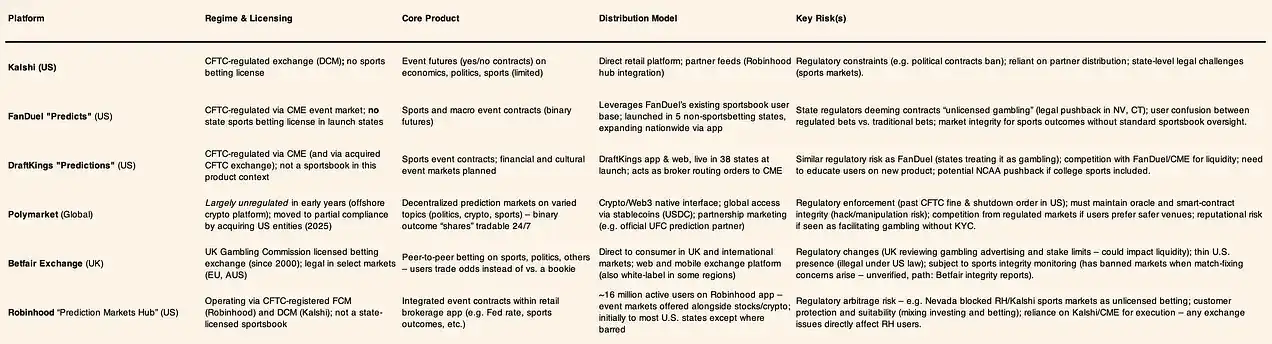
In response, established giants like FanDuel and DraftKings restrict prediction products to jurisdictions "without legal sports betting," highlighting that distribution strategy is now led by regulatory boundaries rather than user demand. The core implication is clear: scale is determined not by product innovation, but by regulatory tolerance. Contract design, settlement terms, marketing wording, and geographical rollout paths are being systematically engineered to pass legal qualification reviews; platforms that can operate within accepted regulatory frameworks will gain more lasting advantages. In this market, regulatory clarity itself forms a moat, while uncertainty directly limits growth.
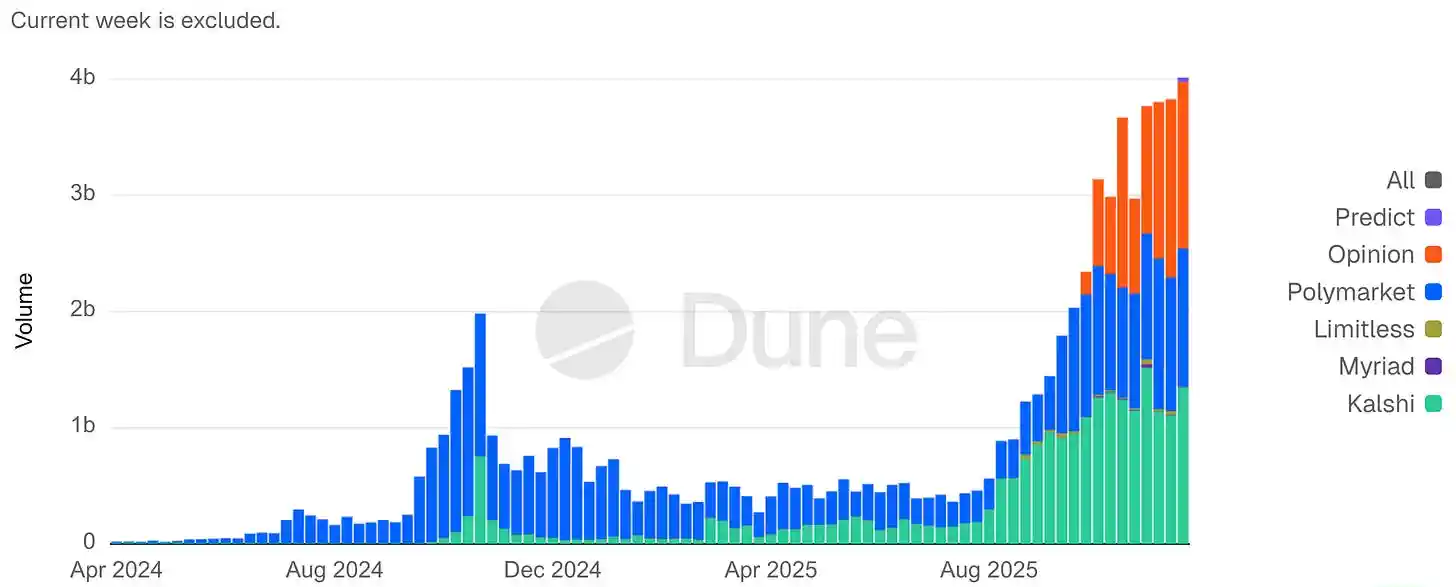
Weekly Prediction Market Notional Volume
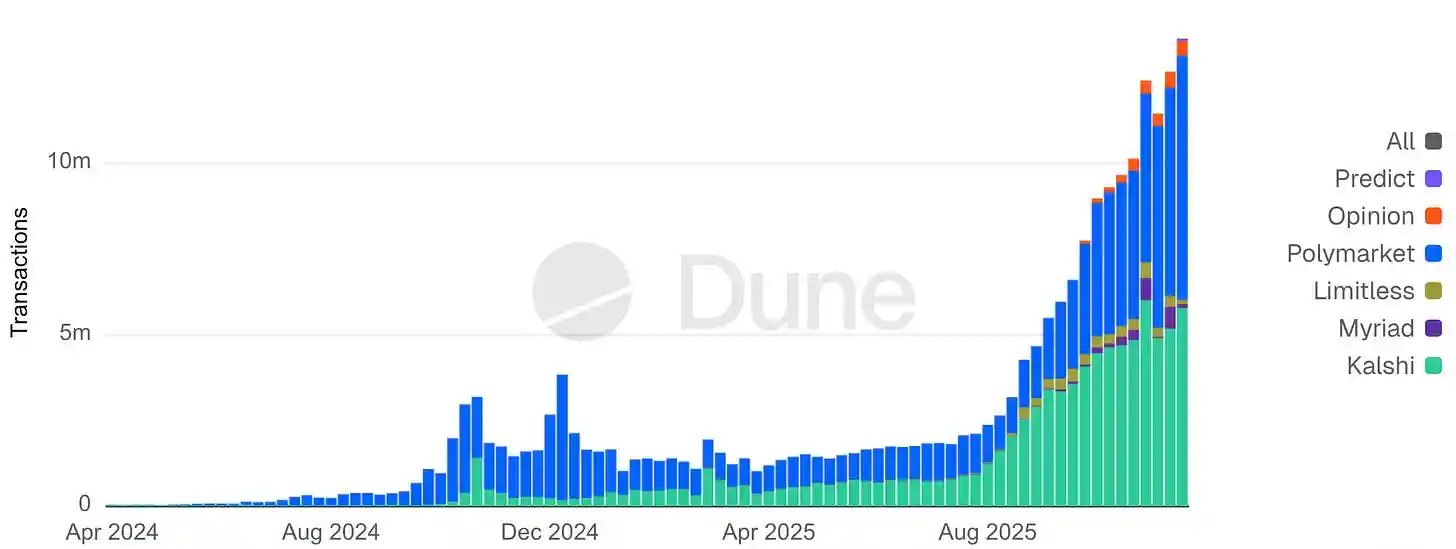
Weekly Prediction Market Transactions

Global Comparable Cases

Outside the U.S., mature betting platforms and newer licensing regimes indicate that event-based markets can achieve liquidity under gambling regulation, but their economics and product boundaries are significantly constrained. The UK's Betfair Exchange proves market depth is possible within a gambling license framework, though strict consumer protection rules limit profitability. Betting in Asian markets is mostly state-monopolized or handled by offshore platforms, reflecting strong underlying demand but also long accompanied by enforcement and fairness challenges. Latin America is moving towards formalization: Brazil opened a regulated betting market in January 2025, attempting to transform a long-standing gray area into a taxed, regulated activity.

The overall cross-regional trend is consistent: regulation is plugging loopholes. Sweepstakes and social casino models relying on "free tokens + prize mechanisms" have been restricted or banned in multiple jurisdictions, significantly raising the compliance bar for any product skirting the edges of gambling. The global direction is stricter regulation, not tolerance of gray areas.

On-Chain Platforms vs. Compliance

Decentralized prediction markets once traded faster, global access for a lack of compliance. Take crypto platform Polymarket as an example: it was fined $1.4 million by the CFTC in January 2022 for unregistered event swaps and forced to geoblock U.S. users. Polymarket subsequently pivoted: strengthening internal controls (bringing in a former CFTC advisor) and acquiring a licensed entity in 2025, allowing it to return to the U.S. in a test form in November 2025. Its trading volume surged—reportedly reaching $3.6 billion in bets on a single election issue in 2024, with monthly volume hitting $2.6 billion by end-2024; and it attracted blue-chip investors at a valuation of around $12 billion in 2025.

On-chain platforms rely on oracles for rapid market creation and settlement but face a speed vs. fairness trade-off: governance and oracle disputes can delay results, and anonymity raises concerns about manipulation or insider trading. Regulators remain vigilant: even if the code is decentralized, organizers and liquidity providers can still be enforcement targets (the Polymarket case is an example). The 2026 challenge is: to combine the innovation of 24/7 global markets and crypto instant settlement with sufficient compliance, without sacrificing openness.

User Behavior & Trading Trends

In 2025, prediction markets surged simultaneously in both sports and non-sports events. Industry estimates show total notional volume expanded more than tenfold compared to 2024, reaching about $13 billion per month by end-2025. Sports markets became the main "trading engine," with frequent events driving continuous small trades; political and macro markets were "capital magnets," with fewer but larger trades.

Structural differences are clear: on Kalshi, sports contracts contribute most cumulative volume, reflecting the repeated participation of entertainment-focused users; but open interest is more concentrated in politics and economics, meaning heavier single positions. On Polymarket, political markets similarly dominate open interest, despite lower trading frequency. Conclusion: sports maximize turnover, non-sports concentrate risk.

This forms two types of participants:

Sports users: More like "flow traders," frequent small amounts, driven by entertainment and habit;

Political/Macro users: More like "capital allocators," few but large trades, seeking information advantage, hedging, or narrative influence.

Platforms thus face a dual optimization:既要维持流量参与,又要为资本驱动型市场提供可信与公正.

This also explains risk concentration points: controversies in 2025 mainly appeared in non-sports, including opposition from U.S. college sports regulators to contracts related to student-athletes. Platforms quickly delisted related contracts, indicating governance risk rises with capital concentration and information sensitivity, not pure volume growth. Long-term growth depends on the ability to operate high-impact non-sports markets without touching regulatory or reputational red lines.

2026 World Cup: System-Level Stress Test

The FIFA World Cup, co-hosted by the United States, Canada, and Mexico, should be seen as a full-stack stress test for event trading and compliant betting infrastructure. Historical analogies show:

The 1994 U.S. World Cup primarily tested physical infrastructure and venues; the 1996 Atlanta Olympics shifted the critical path to communications, information distribution, and emergency response. IBM's "Info '96" centralized timing and results, telecoms expanded cellular networks, Motorola deployed large-scale radio systems; the Centennial Olympic Park bombing on July 27, 1996, highlighted the importance of systems shifting from throughput to integrity and resilience under pressure.

The 2026 pressure points will clearly enter the digital + financial coupling layer: the tournament expands to 48 teams, 104 matches, 16 cities, with multiple concentrated bursts of attention and trading flow over about five weeks. The global betting scale for the 2022 World Cup was widely estimated at hundreds of billions of dollars, with peak windows bringing extreme short-term liquidity and settlement loads.


The North American compliant轨道 will carry a larger proportion of activity—38 U.S. states plus Washington D.C. and Puerto Rico have legalized sports betting to varying degrees, more funds will flow through KYC, payment, and monitoring systems rather than offshore channels. App-based distribution further tightens the coupling: live streaming, real-time contracts, deposits, and withdrawals are often completed within a single mobile session.

For event contracts/prediction markets, observable operational pressure points include: liquidity concentration and volatility during match windows; settlement integrity (data delays, dispute resolution); federal/state product and jurisdictional design; scalability of KYC/AML/responsible gambling/withdrawals under peak demand.

The same regulatory and tech stack will be tested again by the 2028 Los Angeles Olympics, so the 2026 World Cup is more of a screening event: it may trigger regulatory intervention, platform consolidation, or market exits, distinguishing infrastructure built for阶段性峰值 from platforms that are sustainable, compliant, and scalable.

Payment & Settlement Innovation

Stablecoins are transitioning from speculative assets to operational infrastructure. Most crypto-native prediction markets use USD stablecoins for deposits and settlements, and regulated platforms are also testing similar channels. In December 2025, Visa launched a pilot in the U.S., allowing banks to use Circle's USDC for on-chain settlement 7x24, building on cross-border stablecoin experiments since 2023. In event-driven markets, stablecoins (where allowed) offer instant access, global coverage, and settlement advantages matching continuous trading hours.

In practice, stablecoins act more like settlement middleware: users see them as faster deposit/withdrawal tools; operators benefit from lower failure rates, improved liquidity management, near-instant settlement. Therefore, stablecoin policy has second-order effects on prediction markets: restricting stablecoin channels increases friction, slows withdrawals; regulatory clarity favors deep integration with mainstream betting and brokerage platforms.

But there is resistance. Christine Lagarde warned in 2025 about the monetary stability risks of private stablecoins and reiterated support for a digital euro; the European Central Bank also highlighted in its November 2025 Financial Stability Review that stablecoin expansion could weaken bank funding sources and interfere with policy transmission. 2026 is more likely to see gradual integration: more betting accepts stablecoin deposits, payment institutions bridge cards to crypto, while strengthening licensing, reserve audits, and disclosure, rather than full endorsement of native crypto payment rails.

Macro Liquidity Background

Evaluating the 2025 boom requires skepticism: easy money amplifies speculation. The Fed's shift to end quantitative tightening in late 2025, or a slight improvement in liquidity in 2026, affects risk appetite more than adoption direction. For prediction markets, liquidity affects participation intensity: ample funds → amplified trading; tightening → marginal speculation cools.

But the 2025 growth occurred in a high-interest-rate environment, suggesting prediction markets are not primarily driven by liquidity. A more reasonable framework is to see macro liquidity as an accelerator, not an engine. Long-term factors—mainstream distribution by brokers/betting firms, product simplification, rising cultural acceptance—better explain baseline adoption. Monetary conditions affect amplitude, not occurrence.

"Missing Element": Super App Distribution & Moats

The key悬念 is: Who controls the user interface for integrated trading/betting?

A consensus is forming: distribution is king, the real moat lies in super app-style user relationships.

This drives intense collaboration: exchanges want retail users (e.g., CME Group partnering with FanDuel/DraftKings), consumer platforms want differentiated content (e.g., Robinhood partnering with Kalshi, DraftKings acquiring a small CFTC exchange).

The model resembles comprehensive brokerage: stocks, options, crypto, event contracts listed side-by-side, users don't leave the platform.

Prediction markets are异常 sensitive to liquidity and trust: thin markets fail quickly, depth compounds. Platforms with existing users, low acquisition costs, ready KYC, and funding channels naturally outperform independent venues needing to build depth from scratch. Therefore, it's more like options trading than social networks: depth and reliability trump novelty. This is also why the "feature vs. product" debate is increasingly decided by distribution, not technology.

Robinhood's early success supports this: it launched event trading to some active traders in 2025, volume grew rapidly; ARK Invest estimated its recurring revenue reached $300 million by year-end. The moat comparison is clear: independent prediction markets (however innovative) struggle against incumbent users. For example, FanDuel has 12 million+ users, integrated CME event contracts, and quickly built liquidity and trust in 5 states; DraftKings replicated a similar path in 38 states. In contrast, Kalshi and Polymarket spent years building depth from scratch and are now more actively seeking distribution partnerships (Robinhood, Underdog Fantasy, even UFC).

Possible outcome: a few large aggregation platforms gain network effects and regulatory endorsement; small platforms either specialize (e.g., crypto-only events) or get acquired. Meanwhile, fintech and media super app convergence is approaching: PayPal, Cash App may list prediction markets alongside payments, stocks in the future; Apple, Amazon, ESPN explored sports betting collaborations in 2023–25, potentially evolving into broader event trading. The real "missing element" might be the moment a tech giant fully embeds prediction markets into a super app—combining news, betting, and investment into one, creating a moat few can match.

Until then, the user lock-in race among exchanges, betting companies, and brokers will continue. The key question for 2026 is: Will prediction markets become a feature within large financial apps, or continue to exist as independent verticals? Early evidence points to integration.


But regulators may also be wary of super apps that seamlessly switch between investment and betting. The ultimate winners will be platforms that can convince both users and regulators—their moat comes not just from technology and liquidity, but from compliance, trust, and experience.
Opinion Trade (Opinion Labs): A Macro-First On-Chain Challenger

Opinion Trade (launched by Opinion Labs) positions itself as a "macro-first" on-chain prediction trading platform, its market form closer to a dashboard for rates and commodities rather than an entertainment-event-dominated betting product. The platform launched on BNB Chain on October 24, 2025. As of November 17, 2025, cumulative notional volume exceeded $3.1 billion, with an early-stage average daily notional volume of about $132.5 million.
During the period November 11–17, weekly notional volume was about $1.5 billion, ranking among the top prediction market platforms; as of November 17, its open interest reached $60.9 million, still trailing Kalshi and Polymarket at that time.

On the infrastructure front, Opinion Labs announced a partnership with Brevis in December 2025, introducing a zero-knowledge proof verification mechanism into the settlement process, aiming to reduce the trust gap in market outcome determination. The company also disclosed completion of a $5 million seed funding round led by YZi Labs (formerly Binance Labs), with participation from other investors, providing not only financial support but also forming a tight strategic connection with the BNB ecosystem.


Additionally, the platform's explicit geoblocking of the U.S. and other restricted jurisdictions highlights a core trade-off facing on-chain prediction markets in 2025–2026: how to achieve rapid global liquidity aggregation under regulatory boundary constraints.

Consumer Prediction Markets as "ICO 2.0" Distribution Channels

Sport.Fun (formerly Football.Fun) provides a concrete case study of how consumer prediction markets are evolving into a new generation of token distribution infrastructure. This emerging "ICO 2.0" model is directly embedded into consumer applications with real revenue. Sport.Fun launched on Base in August 2025, initially focusing on match trading similar to football fantasy play, later expanding to NFL-related markets.


As of the end of 2025, Sport.Fun disclosed cumulative trading volume exceeding $90 million, with platform revenue over $10 million, showing clear product-market fit was validated before any public token offering.

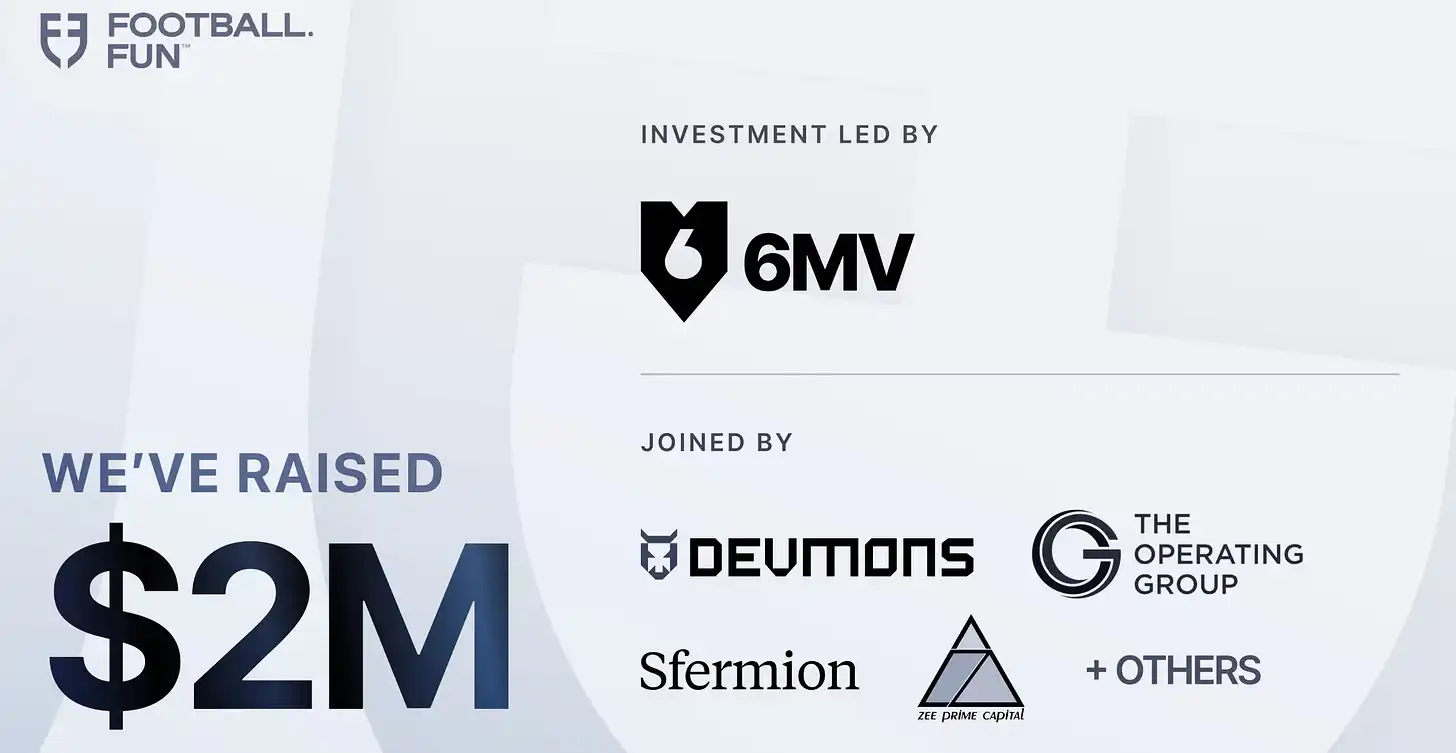
The company completed a $2 million seed funding round led by 6th Man Ventures, with participation from Zee Prime Capital, Sfermion, and Devmons. This investor structure reflects rising interest in consumer-facing crypto applications—projects combining financial primitives with entertaining participation methods, rather than just betting on underlying infrastructure. More importantly, this funding came after user activity and monetization were proven,颠覆了 early ICO cycles' traditional sequence of "sell token first, find users later."
Sport.Fun's public token offering further confirms this shift.

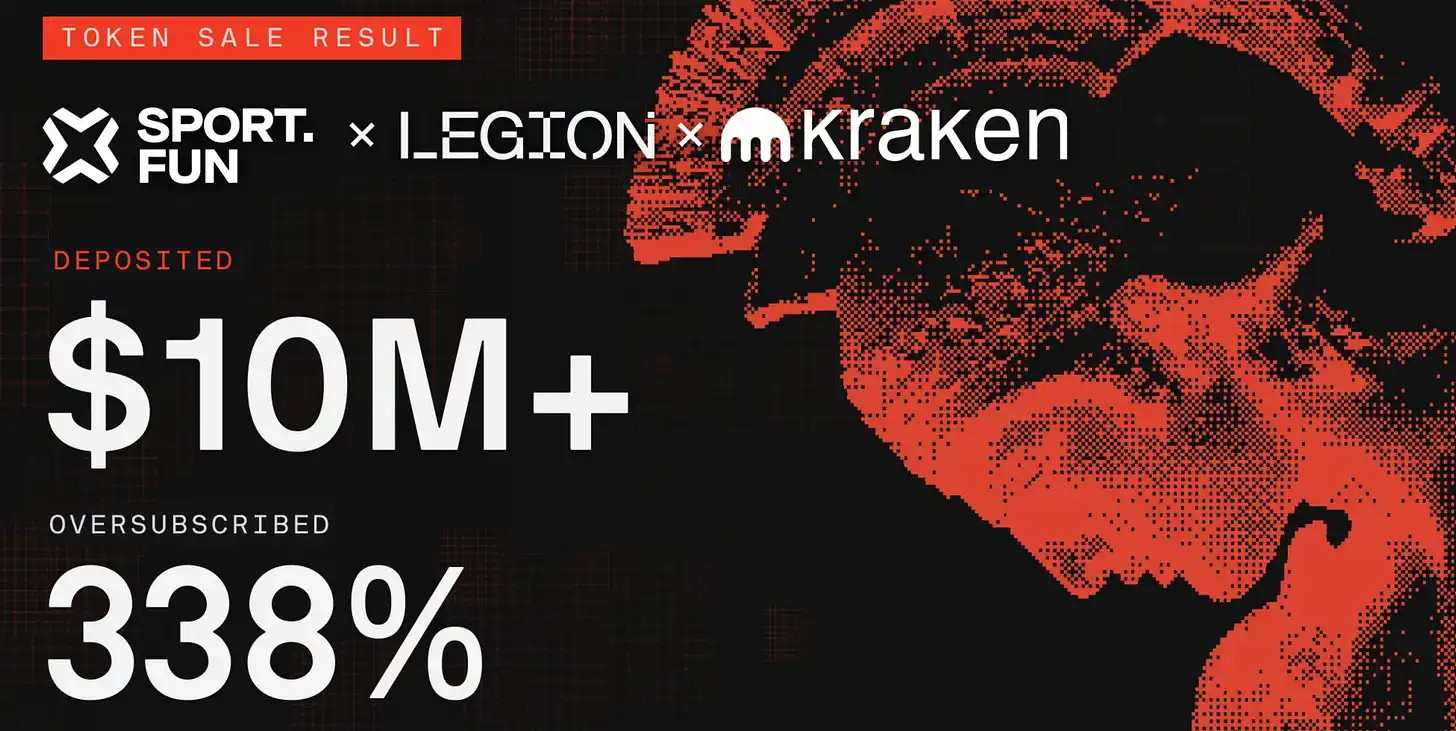
The $FUN public sale took place from December 16 to 18, 2025, conducted via the Kraken Launch platform, combined with a contribution and seniority-oriented Legion distribution path. The sale attracted over 4,600 participants, with cumulative subscription amounts exceeding $10 million; average participation per wallet was about $2,200. Demand was about 330% oversubscribed relative to the $3 million soft cap.
最终募资 $4.5 million, with tokens priced at $0.06, corresponding to a fully diluted valuation (FDV) of $60 million; after exercising the greenshoe option to expand, a total of 75 million tokens were sold.
The token economic model was designed to balance liquidity and post-listing stability.

According to the安排, 50% of the tokens will be unlocked at the Token Generation Event (TGE) in January 2026, with the remainder released linearly over 6 months. This structure is significantly different from the "immediate full unlock" common in early ICO cycles, reflecting lessons learned and corrections from past volatility-driven price collapses. Functionally, this token offering resembles less a pure speculative fundraising and more a natural extension of an existing consumer market—allowing users already active on the platform to "invest" in the product they are using.

Conclusion

By the end of 2025, prediction markets had moved from marginalized experiments to a credible, mass-market category. Their growth动力 came from mainstream channel distribution, product simplification, and clearly visible user demand. The core constraint is no longer "whether adopted," but how to design within the regulatory framework: legal qualification, settlement integrity, and cross-jurisdictional compliance determine who can achieve scale.

The FIFA World Cup should not be simply understood as a growth narrative, but more as a system-level stress test under peak load—a comprehensive examination of liquidity, operational capability, and regulatory resilience. Platforms that can pass this test without triggering enforcement risks or suffering reputational damage will define the next phase of industry consolidation; those that fail will accelerate the industry's concentration towards higher standards, stronger regulation, and fewer but larger winners.


İlgili Sorular

QWhat is the main challenge facing prediction markets as they approach the 2026 FIFA World Cup, according to the article?

AThe main challenge is no longer product innovation, but the ability to scale within a regulatory framework. The 2026 World Cup is seen as a 'system-level stress test' that will separate platforms that can operate stably under peak load and strong regulation from those that cannot.

QHow does the regulatory landscape in the United States differ between federal and state levels for prediction markets?

AAt the federal level, the CFTC only allows a narrow category of event contracts tied to economic indicators, blocking others as unacceptable gambling. At the state level, regulators are more aggressive against 'sports-like' markets, with states like Connecticut and Nevada issuing cease-and-desist orders and legal actions, forcing platforms to delist products.

QWhat key difference in user behavior is observed between sports and non-sports (e.g., political) prediction markets?

ASports users act more like 'flow traders,' making frequent, small bets driven by entertainment and habit. Political/macro users act more like 'capital allocators,' making fewer but larger bets, seeking information advantage, hedging, or narrative influence.

QWhat role do stablecoins play in the evolution of prediction markets, and what are the potential regulatory hurdles?

AStablecoins are transitioning from speculative assets to operational infrastructure, offering instant deposits/withdrawals, global reach, and settlement advantages that match continuous trading hours. However, regulators like the ECB have warned about their risks to monetary stability, and their adoption may face hurdles through increased licensing, reserve audits, and disclosure requirements rather than full endorsement.

QWhy does the article suggest that 'distribution is king' and what is the likely future for independent prediction market platforms?

ADistribution is considered the true moat because prediction markets are highly sensitive to liquidity and trust. Platforms with existing users, low customer acquisition costs, and ready-made KYC and funding channels have a natural advantage. The likely future is integration, where prediction markets become a feature within large financial super-apps, leading to industry consolidation where smaller platforms either specialize or are acquired.

İlgili Okumalar

Stuck Polymarket: The Real Test After Riding the Traffic Boom Has Arrived

Polymarket, a leading prediction market platform, is facing significant technical challenges as its growth outpaces its current infrastructure on Polygon. Users are experiencing laggy transactions, unresponsive orders, and delayed confirmations, severely impacting the trading experience. In response, DeFi Engineering VP Josh Stevens outlined a comprehensive engineering overhaul. The plan includes reducing on-chain data delays, fixing order cancellation issues, rebuilding the central limit order book (CLOB), improving website performance, and developing a unified SDK and API. A major revelation was the ongoing "chain migration," indicating a potential move away from Polygon. The core issue is that Polymarket has evolved from a simple prediction market into a high-frequency trading platform, making Polygon's limitations—such as block space, gas fees, and block time—a ceiling for further growth. The migration is not just a simple chain switch but a fundamental rebuild of its trading system to support more complex products like perpetual contracts (Perps). This announcement has sparked competition among chains like Solana, Sui, and Algorand, all vying to host Polymarket. For Polygon, losing this key application, which contributes significantly to its gas fee revenue, would be a major setback. The real test for Polymarket is no longer attracting users but proving it can provide a stable, reliable trading environment that retains them.

Odaily星球日报21 dk önce

Stuck Polymarket: The Real Test After Riding the Traffic Boom Has Arrived

Odaily星球日报21 dk önce

Lowering Expectations for BTC's Next Bull Market

The author, Alex Xu, explains his decision to significantly reduce his Bitcoin holdings (from full to ~30% of his portfolio) during the current bull cycle, citing a lowered long-term outlook for BTC's price appreciation in the next cycle. He outlines six key reasons for this reduced expectation: 1. **Diminished Growth Drivers:** The narrative of exponential user adoption has largely played out with institutional ETF adoption. The next major growth phase—adoption by sovereign national reserves or central banks—seems unlikely in the near future. 2. **Personal Opportunity Cost:** More attractive investment opportunities have emerged in other assets, such as undervalued companies. 3. **Industry-Wide Contraction:** The broader crypto industry is struggling, with most Web3 business models (SocialFi, GameFi, DePIN) failing. This overall萧条 (depression) reduces the fundamental demand and consensus for Bitcoin. 4. **Strain on Major Buyer:** MicroStrategy, a major corporate buyer of BTC, faces rising financing expenses for its debt, which could slow its purchasing rate and create significant marginal pressure on the market. 5. **Increased Competition from Gold:** The emergence of "tokenized gold" has closed the functional gap (portability, divisibility) between physical gold and Bitcoin, offering a strong competitor in the non-sovereign store-of-value space. 6. **Security Budget Concerns:** The block reward halving continues to exacerbate the long-standing issue of funding Bitcoin's network security, with new fee source explorations like Ordinals and L2s largely failing. The author's decision to hold a significant (though reduced) position reflects a cautious, not bearish, outlook. He remains open to increasing his exposure if the fundamental reasons for his skepticism change or if new positive catalysts emerge.

marsbit1 saat önce

Lowering Expectations for BTC's Next Bull Market

marsbit1 saat önce

Can Iran 'Control' the Strait of Hormuz?

Iran has announced a comprehensive plan to assert control over the strategic Strait of Hormuz, a critical global oil shipping chokepoint. The proposed measures include requiring all vessels to obtain Iranian permission for passage, imposing fees for security, environmental protection, and navigation management—preferably paid in Iranian rials—and absolutely banning Israeli ships. Vessels from countries deemed hostile by Iran’s top security bodies may also be barred. Analysts suggest Iran’s motives are multifaceted: increasing pressure on the U.S. and Israel by leveraging control over oil transit to influence global prices and inflation; creating a new revenue stream, potentially exceeding $7.7 billion annually, to counter Western sanctions and support postwar reconstruction; and using transit permissions as bargaining chips in future negotiations, notably with the U.S. However, the plan faces significant practical and diplomatic challenges. Enforcing comprehensive interception and fee collection in the busy waterway, patrolled by international military forces, would be difficult. The U.S. has already countering with a blockade of Iranian ports and threats to intercept any ship paying fees, potentially strangling Iran’s oil exports and fee revenue. Broad international opposition, led by European and Gulf states, and legal controversies further complicate implementation. The proposal may ultimately serve more as a negotiating tactic than a feasible policy, with its execution remaining highly uncertain.

marsbit2 saat önce

Can Iran 'Control' the Strait of Hormuz?

marsbit2 saat önce

İşlemler

Spot
Futures

Popüler Makaleler

$S$ Nedir

SPERO'yu Anlamak: Kapsamlı Bir Genel Bakış SPERO'ya Giriş İnovasyonun manzarası gelişmeye devam ederken, web3 teknolojilerinin ve kripto para projelerinin ortaya çıkışı dijital geleceği şekillendirmede önemli bir rol oynamaktadır. Bu dinamik alanda dikkat çeken projelerden biri SPERO, $$s$$ olarak adlandırılmaktadır. Bu makale, SPERO hakkında ayrıntılı bilgi toplamak ve sunmak amacıyla, meraklılar ve yatırımcıların web3 ve kripto alanlarındaki temellerini, hedeflerini ve yeniliklerini anlamalarına yardımcı olmayı amaçlamaktadır. SPERO,$$s$$ Nedir? SPERO,$$s$$, kripto alanında merkeziyetsizlik ve blok zinciri teknolojisi ilkelerini kullanarak etkileşimi, faydayı ve finansal kapsayıcılığı teşvik eden bir ekosistem yaratmayı amaçlayan benzersiz bir projedir. Proje, kullanıcıların yenilikçi finansal çözümler ve hizmetler sunarak eşler arası etkileşimleri yeni yollarla kolaylaştırmayı hedeflemektedir. SPERO,$$s$$'nin temel amacı, bireyleri güçlendirmek ve kripto para alanındaki kullanıcı deneyimini artıran araçlar ve platformlar sağlamaktır. Bu, daha esnek işlem yöntemlerini mümkün kılmayı, topluluk odaklı girişimleri teşvik etmeyi ve merkeziyetsiz uygulamalar (dApp'ler) aracılığıyla finansal fırsatlar yaratmayı içermektedir. SPERO,$$s$$'nin temel vizyonu kapsayıcılık etrafında dönmekte olup, geleneksel finansal sistemlerdeki boşlukları kapatmayı ve blok zinciri teknolojisinin faydalarından yararlanmayı hedeflemektedir. SPERO,$$s$$'nin Yaratıcısı Kimdir? SPERO,$$s$$'nin yaratıcısının kimliği bir miktar belirsizdir, çünkü kurucusu(ları) hakkında ayrıntılı arka plan bilgisi sağlayan sınırlı kamuya açık kaynaklar bulunmaktadır. Bu şeffaflık eksikliği, projenin merkeziyetsizlik taahhüdünden kaynaklanabilir—birçok web3 projesinin paylaştığı bir etik anlayışı, bireysel tanınmanın yerine kolektif katkıları önceliklendirmektedir. Topluluk ve onun kolektif hedefleri etrafında tartışmaları merkezileştirerek, SPERO,$$s$$, belirli bireyleri öne çıkarmadan güçlendirme özünü taşımaktadır. Bu nedenle, SPERO'nun etik anlayışını ve misyonunu anlamak, tek bir yaratıcının kimliğini belirlemekten daha önemlidir. SPERO,$$s$$'nin Yatırımcıları Kimlerdir? SPERO,$$s$$, kripto sektöründe yeniliği teşvik etmeye adanmış girişim sermayedarlarından melek yatırımcılara kadar çeşitli yatırımcılar tarafından desteklenmektedir. Bu yatırımcıların odak noktası genellikle SPERO'nun misyonuyla uyumlu olup, toplumsal teknolojik ilerlemeyi, finansal kapsayıcılığı ve merkeziyetsiz yönetimi vaat eden projeleri önceliklendirmektedir. Bu yatırımcı temelleri, yalnızca yenilikçi ürünler sunan projelere değil, aynı zamanda blok zinciri topluluğuna ve ekosistemlerine olumlu katkılarda bulunan projelere de ilgi duymaktadır. Bu yatırımcıların desteği, SPERO,$$s$$'yi hızla gelişen kripto projeleri alanında dikkate değer bir rakip haline getirmektedir. SPERO,$$s$$ Nasıl Çalışır? SPERO,$$s$$, onu geleneksel kripto para projelerinden ayıran çok yönlü bir çerçeve kullanmaktadır. İşte benzersizliğini ve yeniliğini vurgulayan bazı temel özellikler: Merkeziyetsiz Yönetim: SPERO,$$s$$, kullanıcıların projenin geleceğiyle ilgili karar alma süreçlerine aktif olarak katılmalarını sağlayan merkeziyetsiz yönetim modellerini entegre etmektedir. Bu yaklaşım, topluluk üyeleri arasında sahiplik ve hesap verebilirlik duygusunu teşvik etmektedir. Token Kullanımı: SPERO,$$s$$, ekosistem içinde çeşitli işlevler sunmak üzere tasarlanmış kendi kripto para token'ını kullanmaktadır. Bu token'lar, işlemleri, ödülleri ve platformda sunulan hizmetlerin kolaylaştırılmasını sağlayarak genel etkileşimi ve faydayı artırmaktadır. Katmanlı Mimari: SPERO,$$s$$'nin teknik mimarisi, modülerlik ve ölçeklenebilirliği destekleyerek projenin evrimi sırasında ek özelliklerin ve uygulamaların sorunsuz bir şekilde entegrasyonuna olanak tanımaktadır. Bu uyum sağlama yeteneği, sürekli değişen kripto manzarasında geçerliliği sürdürmek için hayati öneme sahiptir. Topluluk Katılımı: Proje, işbirliği ve geri bildirim teşvik eden mekanizmalar kullanarak topluluk odaklı girişimlere vurgu yapmaktadır. Güçlü bir topluluk oluşturarak, SPERO,$$s$$, kullanıcı ihtiyaçlarını daha iyi karşılayabilir ve piyasa trendlerine uyum sağlayabilir. Kapsayıcılığa Odaklanma: Düşük işlem ücretleri ve kullanıcı dostu arayüzler sunarak, SPERO,$$s$$, daha önce kripto alanında yer almamış bireyler de dahil olmak üzere çeşitli bir kullanıcı tabanını çekmeyi hedeflemektedir. Bu kapsayıcılık taahhüdü, erişilebilirlik yoluyla güçlendirme misyonuyla uyumludur. SPERO,$$s$$ Zaman Çizelgesi Bir projenin tarihini anlamak, gelişim yolculuğu ve kilometre taşları hakkında kritik bilgiler sağlar. Aşağıda, SPERO,$$s$$'nin evriminde önemli olayları haritalayan önerilen bir zaman çizelgesi bulunmaktadır: Kavram Geliştirme ve Fikir Aşaması: SPERO,$$s$$'nin temelini oluşturan ilk fikirler, blok zinciri endüstrisindeki merkeziyetsizlik ve topluluk odaklılık ilkeleriyle yakından uyumlu olarak geliştirildi. Proje Beyaz Kağıdının Yayınlanması: Kavramsal aşamayı takiben, SPERO,$$s$$'nin vizyonunu, hedeflerini ve teknolojik altyapısını ayrıntılı bir şekilde açıklayan kapsamlı bir beyaz kağıt yayımlandı ve topluluk ilgisini ve geri bildirimini toplamak amacıyla sunuldu. Topluluk Oluşturma ve Erken Katılımlar: Projenin hedefleri etrafında tartışmalar yürüterek destek toplamak ve erken benimseyenler ile potansiyel yatırımcılar için bir topluluk oluşturmak amacıyla aktif iletişim çabaları gerçekleştirildi. Token Üretim Etkinliği: SPERO,$$s$$, yerel token'larını erken destekçilere dağıtmak ve ekosistem içinde başlangıç likiditesini sağlamak amacıyla bir token üretim etkinliği (TGE) gerçekleştirdi. İlk dApp'in Yayınlanması: SPERO,$$s$$ ile ilişkili ilk merkeziyetsiz uygulama (dApp) faaliyete geçti ve kullanıcıların platformun temel işlevleriyle etkileşimde bulunmalarını sağladı. Sürekli Gelişim ve Ortaklıklar: Projenin tekliflerine sürekli güncellemeler ve iyileştirmeler yapılmakta olup, blok zinciri alanındaki diğer oyuncularla stratejik ortaklıklar, SPERO,$$s$$'yi rekabetçi ve gelişen bir oyuncu haline getirmiştir. Sonuç SPERO,$$s$$, web3 ve kripto paranın finansal sistemleri devrim niteliğinde dönüştürme ve bireyleri güçlendirme potansiyelinin bir kanıtıdır. Merkeziyetsiz yönetime, topluluk katılımına ve yenilikçi tasarlanmış işlevselliğe olan bağlılığıyla, daha kapsayıcı bir finansal manzaraya doğru bir yol açmaktadır. Hızla gelişen kripto alanındaki herhangi bir yatırımda olduğu gibi, potansiyel yatırımcılar ve kullanıcılar, SPERO,$$s$$ içindeki devam eden gelişmelerle ilgili olarak kapsamlı bir araştırma yapmaları ve düşünceli bir şekilde katılmaları teşvik edilmektedir. Proje, kripto endüstrisinin yenilikçi ruhunu sergileyerek, sayısız olasılığını keşfetmeye davet etmektedir. SPERO,$$s$$'nin yolculuğu hala devam ederken, temel ilkeleri, teknoloji, finans ve birbirimizle etkileşim biçimimizi etkileyebilir.

89 Toplam GörüntülenmeYayınlanma 2024.12.17Güncellenme 2024.12.17

$S$ Nedir

AGENT S Nedir

Agent S: Web3'te Otonom Etkileşimin Geleceği Giriş Web3 ve kripto para dünyasında sürekli gelişen manzarada, yenilikler bireylerin dijital platformlarla etkileşim biçimlerini sürekli olarak yeniden tanımlıyor. Bu tür öncü projelerden biri olan Agent S, açık ajans çerçevesi aracılığıyla insan-bilgisayar etkileşimini devrim niteliğinde değiştirmeyi vaat ediyor. Otonom etkileşimlerin yolunu açarak, Agent S karmaşık görevleri basitleştirmeyi ve yapay zeka (AI) alanında dönüştürücü uygulamalar sunmayı hedefliyor. Bu detaylı inceleme, projenin karmaşıklıklarına, benzersiz özelliklerine ve kripto para alanındaki etkilerine dalacaktır. Agent S Nedir? Agent S, bilgisayar görevlerinin otomasyonunda üç temel zorluğu ele almak üzere özel olarak tasarlanmış çığır açıcı bir açık ajans çerçevesidir: Alan Spesifik Bilgi Edinimi: Çerçeve, çeşitli dış bilgi kaynaklarından ve iç deneyimlerden akıllıca öğrenir. Bu çift yönlü yaklaşım, alan spesifik bilgi açısından zengin bir veri havuzu oluşturmasını sağlar ve görev yürütmedeki performansını artırır. Uzun Görev Ufukları Üzerinde Planlama: Agent S, karmaşık görevlerin verimli bir şekilde parçalanmasını ve yürütülmesini kolaylaştıran deneyim artırımlı hiyerarşik planlama kullanır. Bu özellik, çoklu alt görevleri etkili ve verimli bir şekilde yönetme yeteneğini önemli ölçüde artırır. Dinamik, Homojen Olmayan Arayüzlerle Başlama: Proje, ajanlar ve kullanıcılar arasındaki etkileşimi geliştiren yenilikçi bir çözüm olan Ajan-Bilgisayar Arayüzü'ni (ACI) tanıtmaktadır. Çok Modlu Büyük Dil Modellerini (MLLM'ler) kullanarak, Agent S çeşitli grafik kullanıcı arayüzlerini sorunsuz bir şekilde gezinebilir ve manipüle edebilir. Bu öncü özellikler aracılığıyla, Agent S, makinelerle insan etkileşimini otomatikleştirmede karşılaşılan karmaşıklıkları ele alan sağlam bir çerçeve sunarak, AI ve ötesinde birçok uygulama için zemin hazırlıyor. Agent S'nin Yaratıcısı Kimdir? Agent S'nin kavramı temelde yenilikçi olsa da, yaratıcısı hakkında spesifik bilgiler belirsizliğini koruyor. Yaratıcı şu anda bilinmiyor, bu da projenin yeni aşamasını veya kurucu üyeleri gizli tutma stratejik tercihini vurguluyor. Anonimlikten bağımsız olarak, odak çerçevenin yetenekleri ve potansiyeli üzerinde kalıyor. Agent S'nin Yatırımcıları Kimlerdir? Agent S, kriptografik ekosistemde oldukça yeni olduğundan, yatırımcıları ve finansal destekçileri hakkında ayrıntılı bilgiler açıkça belgelenmemiştir. Projeyi destekleyen yatırım temelleri veya organizasyonları hakkında kamuya açık bilgilerdeki eksiklik, finansman yapısı ve gelişim yol haritası hakkında sorular doğuruyor. Destekleyicilerin anlaşılması, projenin sürdürülebilirliğini ve potansiyel pazar etkisini değerlendirmek için kritik öneme sahiptir. Agent S Nasıl Çalışır? Agent S'nin temelinde, çeşitli ortamlarda etkili bir şekilde çalışmasını sağlayan son teknoloji bir sistem yatmaktadır. İşleyiş modeli birkaç ana özellik etrafında inşa edilmiştir: İnsan Benzeri Bilgisayar Etkileşimi: Çerçeve, bilgisayarlarla etkileşimleri daha sezgisel hale getirmeyi amaçlayan gelişmiş AI planlaması sunar. Görev yürütmedeki insan davranışını taklit ederek, kullanıcı deneyimlerini yükseltmeyi vaat eder. Anlatı Belleği: Yüksek düzeyde deneyimlerden yararlanmak için kullanılan Agent S, görev geçmişlerini takip etmek amacıyla anlatı belleğini kullanarak karar verme süreçlerini geliştirir. Episodik Bellek: Bu özellik, kullanıcılara adım adım rehberlik sağlayarak, çerçevenin görevler gelişirken bağlamsal destek sunmasına olanak tanır. OpenACI Desteği: Yerel olarak çalışabilme yeteneği ile Agent S, kullanıcıların etkileşimleri ve iş akışları üzerinde kontrol sağlamasına olanak tanır ve Web3'ün merkeziyetsiz felsefesiyle uyumlu hale gelir. Dış API'lerle Kolay Entegrasyon: Çeşitli AI platformlarıyla uyumluluğu ve çok yönlülüğü, Agent S'nin mevcut teknolojik ekosistemlere sorunsuz bir şekilde entegre olmasını sağlar ve geliştiriciler ile organizasyonlar için cazip bir seçenek haline getirir. Bu işlevsellikler, Agent S'nin kripto alanındaki benzersiz konumuna katkıda bulunarak, karmaşık, çok aşamalı görevleri minimum insan müdahalesi ile otomatikleştirir. Proje geliştikçe, Web3'teki potansiyel uygulamaları dijital etkileşimlerin nasıl gelişeceğini yeniden tanımlayabilir. Agent S'nin Zaman Çizelgesi Agent S'nin gelişimi ve kilometre taşları, önemli olaylarını vurgulayan bir zaman çizelgesinde özetlenebilir: 27 Eylül 2024: Agent S'nin kavramı, “Bilgisayarları İnsan Gibi Kullanan Açık Bir Ajans Çerçevesi” başlıklı kapsamlı bir araştırma makalesi ile tanıtıldı ve projenin temelini sergiledi. 10 Ekim 2024: Araştırma makalesi arXiv'de kamuya açık olarak yayınlandı ve çerçevenin derinlemesine bir incelemesini ve OSWorld benchmark'ına dayalı performans değerlendirmesini sundu. 12 Ekim 2024: Agent S'nin yetenekleri ve özellikleri hakkında görsel bir içgörü sağlayan bir video sunumu yayımlandı ve potansiyel kullanıcılar ve yatırımcılarla daha fazla etkileşim sağlandı. Bu zaman çizelgesindeki işaretler, sadece Agent S'nin ilerlemesini değil, aynı zamanda şeffaflık ve topluluk katılımına olan bağlılığını da göstermektedir. Agent S Hakkında Ana Noktalar Agent S çerçevesi gelişmeye devam ederken, birkaç ana özellik öne çıkmakta ve yenilikçi doğasını ve potansiyelini vurgulamaktadır: Yenilikçi Çerçeve: İnsan etkileşimine benzer bir bilgisayar kullanımı sağlamak üzere tasarlanan Agent S, görev otomasyonuna yeni bir yaklaşım getiriyor. Otonom Etkileşim: GUI aracılığıyla bilgisayarlarla otonom olarak etkileşim kurabilme yeteneği, daha akıllı ve verimli hesaplama çözümlerine doğru bir sıçrama anlamına geliyor. Karmaşık Görev Otomasyonu: Sağlam metodolojisi ile karmaşık, çok aşamalı görevleri otomatikleştirerek süreçleri daha hızlı ve daha az hata payı ile gerçekleştirebilir. Sürekli İyileştirme: Öğrenme mekanizmaları, Agent S'nin geçmiş deneyimlerden öğrenmesini sağlar ve sürekli olarak performansını ve etkinliğini artırır. Çok Yönlülük: OSWorld ve WindowsAgentArena gibi farklı işletim ortamlarında uyumlu olması, geniş bir uygulama yelpazesine hizmet edebilmesini sağlar. Agent S, Web3 ve kripto alanında kendini konumlandırırken, etkileşim yeteneklerini artırma ve süreçleri otomatikleştirme potansiyeli, AI teknolojilerinde önemli bir ilerlemeyi temsil etmektedir. Yenilikçi çerçevesi aracılığıyla, Agent S dijital etkileşimlerin geleceğini örneklemekte ve çeşitli sektörlerde kullanıcılar için daha sorunsuz ve verimli bir deneyim vaat etmektedir. Sonuç Agent S, AI ve Web3'ün birleşiminde cesur bir sıçramayı temsil ediyor ve teknoloji ile etkileşim biçimimizi yeniden tanımlama kapasitesine sahip. Henüz erken aşamalarında olmasına rağmen, uygulama olanakları geniş ve çekici. Kritik zorlukları ele alan kapsamlı çerçevesi ile Agent S, otonom etkileşimleri dijital deneyimin ön plana çıkmasına taşımayı hedefliyor. Kripto para ve merkeziyetsizlik alanlarına daha derinlemesine girdikçe, Agent S gibi projelerin teknoloji ve insan-bilgisayar işbirliğinin geleceğini şekillendirmede önemli bir rol oynayacağı kesin.

440 Toplam GörüntülenmeYayınlanma 2025.01.14Güncellenme 2025.01.14

AGENT S Nedir

S Nasıl Satın Alınır

HTX.com’a hoş geldiniz! Sonic (S) satın alma işlemlerini basit ve kullanışlı bir hâle getirdik. Adım adım açıkladığımız rehberimizi takip ederek kripto yolculuğunuza başlayın. 1. Adım: HTX Hesabınızı OluşturunHTX'te ücretsiz bir hesap açmak için e-posta adresinizi veya telefon numaranızı kullanın. Sorunsuzca kaydolun ve tüm özelliklerin kilidini açın. Hesabımı Aç2. Adım: Kripto Satın Al Bölümüne Gidin ve Ödeme Yönteminizi SeçinKredi/Banka Kartı: Visa veya Mastercard'ınızı kullanarak anında Sonic (S) satın alın.Bakiye: Sorunsuz bir şekilde işlem yapmak için HTX hesap bakiyenizdeki fonları kullanın.Üçüncü Taraflar: Kullanımı kolaylaştırmak için Google Pay ve Apple Pay gibi popüler ödeme yöntemlerini ekledik.P2P: HTX'teki diğer kullanıcılarla doğrudan işlem yapın.Borsa Dışı (OTC): Yatırımcılar için kişiye özel hizmetler ve rekabetçi döviz kurları sunuyoruz.3. Adım: Sonic (S) Varlıklarınızı SaklayınSonic (S) satın aldıktan sonra HTX hesabınızda saklayın. Alternatif olarak, blok zinciri transferi yoluyla başka bir yere gönderebilir veya diğer kripto para birimlerini takas etmek için kullanabilirsiniz.4. Adım: Sonic (S) Varlıklarınızla İşlem YapınHTX'in spot piyasasında Sonic (S) ile kolayca işlemler yapın.Hesabınıza erişin, işlem çiftinizi seçin, işlemlerinizi gerçekleştirin ve gerçek zamanlı olarak izleyin. Hem yeni başlayanlar hem de deneyimli yatırımcılar için kullanıcı dostu bir deneyim sunuyoruz.

1.3k Toplam GörüntülenmeYayınlanma 2025.01.15Güncellenme 2025.03.21

S Nasıl Satın Alınır

Tartışmalar

HTX Topluluğuna hoş geldiniz. Burada, en son platform gelişmeleri hakkında bilgi sahibi olabilir ve profesyonel piyasa görüşlerine erişebilirsiniz. Kullanıcıların S (S) fiyatı hakkındaki görüşleri aşağıda sunulmaktadır.

活动图片