Winner Takes All: First Bitcoin Spot ETF Liquidated, Survival of Smaller Players in Jeopardy

marsbit2026-08-05 tarihinde yayınlandı2026-08-05 tarihinde güncellendi

Özet

**Summary:** On August 3rd, asset manager Hashdex announced the closure and liquidation of its Hashdex Bitcoin ETF (DEFI), the first U.S. spot Bitcoin ETF to be wound down. With assets of only $14.7 million, DEFI's annual fee revenue (~$36,700) was insufficient to cover operational costs estimated at $500k-$1M+. Its exit highlights the "winner-takes-most" dynamic in the competitive U.S. spot Bitcoin ETF market, where giants like BlackRock's IBIT ($47.25B) dominate. Despite a cumulative return of ~166% since inception, DEFI's small size, combined with Hashdex's relative lack of brand recognition and established U.S. distribution channels compared to Wall Street incumbents, made the fund unsustainable. Other smaller ETFs like WisdomTree's BTCW ($143M) also operate near the profitability threshold. The market remains highly concentrated, with the top five funds holding nearly all assets, putting pressure on smaller players to achieve scale or risk a similar fate.

Original author: Nicky, Foresight News

On August 3rd, asset management company Hashdex announced the closure and liquidation of its Hashdex Bitcoin ETF (NYSE Arca: DEFI), marking the first spot Bitcoin ETF to officially announce liquidation in the US market. As of July 30th, the fund's assets under management were approximately $14.7 million, holding about 225.58 Bitcoins. Hashdex stated that the closure decision was based on a comprehensive assessment of factors including assets under management, trading liquidity, operational costs, and investor interest.

According to the official announcement, the last trading day for DEFI shares will be August 17th. After this date, it will stop accepting creation orders from authorized participants and be delisted from NYSE Arca. Shareholders who still hold shares by the last trading day will receive a cash liquidation distribution, expected to be paid around August 28th.

DEFI was initially launched for trading in September 2022 as a Bitcoin futures ETF. It was the first Bitcoin futures ETF in the US registered solely under the Securities Act of 1933, launched by Hashdex in collaboration with Teucrium Trading and Victory Capital. In January 2024, the US Securities and Exchange Commission approved 11 spot Bitcoin ETF applications, including Hashdex's. In March of the same year, DEFI completed its transition from a futures strategy to a spot strategy, officially rebranded as the Hashdex Bitcoin ETF, with a fee rate set at 0.25%. Since its inception, the fund has delivered a cumulative performance of approximately 166%, but its asset size has remained chronically low, with a historical peak of only about $17.54 million before declining again.
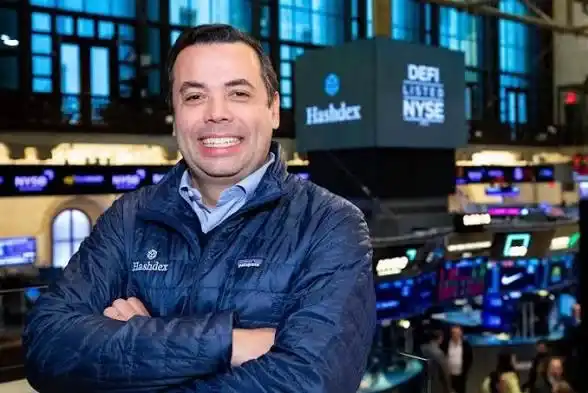
Marcelo Sampaio, Hashdex CEO (Image source: NYSE)

Hashdex is a global asset management company focused on crypto asset index investments, founded in 2018 in Rio de Janeiro, Brazil, by Marcelo Sampaio, Bruno Caratori, and others. In 2020, it partnered with Nasdaq to develop the Nasdaq CME Crypto Index. In 2021, it launched products like HASH11 in Brazil and later expanded to European and US markets. In February 2025, Hashdex launched the multi-asset crypto ETF NCIQ in the US, currently tracking seven crypto assets. As of July 28, 2026, Hashdex's global crypto index product assets under management exceeded $888 million, covering eight countries.

While closing DEFI, Hashdex continues to advance other product innovations. On July 24th, the company filed documents with the SEC announcing that its NCIQ has been approved to conduct staking activities with the crypto assets held by the fund, with Coinbase Cloud as the initial staking service provider. According to the distribution plan, staking net income equivalent to up to 25 basis points annualized of the net asset value per common share goes to the sponsor; any amount exceeding that is split 40% to the sponsor and 60% to the holders.
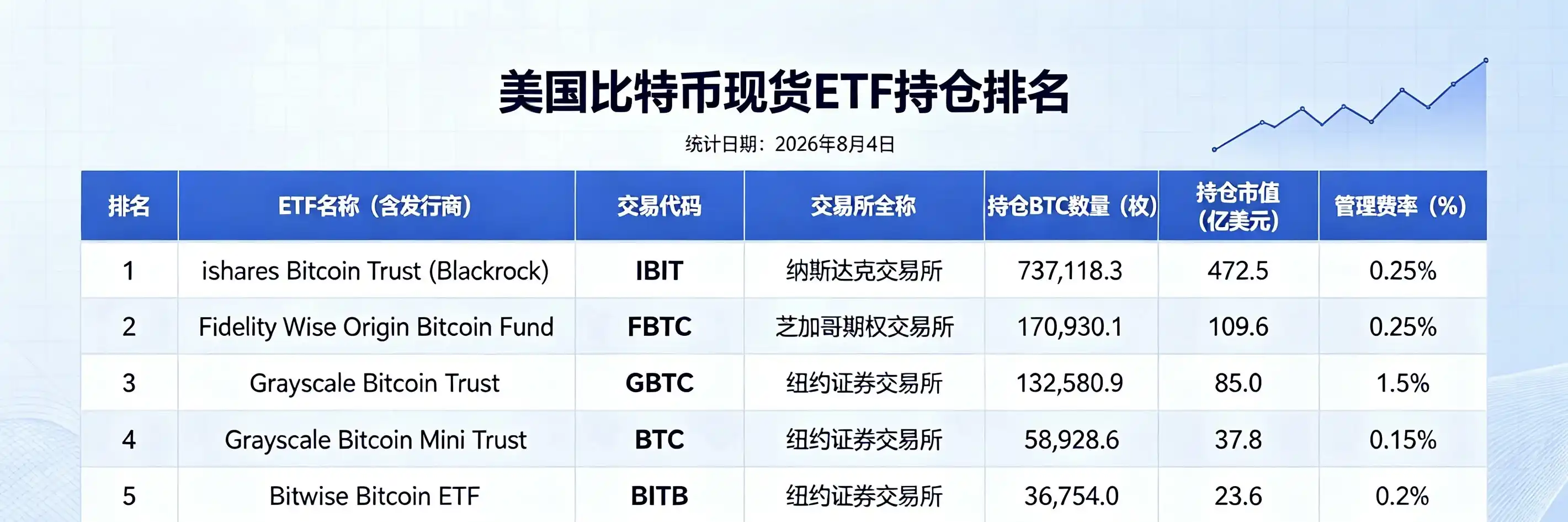
According to BitBo data, as of August 4th, there are 13 spot Bitcoin ETFs in the US market, collectively holding approximately 1.212 million Bitcoins, accounting for about 5.773% of the total Bitcoin supply, with a total size of about $77.7 billion. However, the fund distribution is extremely uneven. The top five products hold about $72.85 billion, occupying almost the entire market share.

BlackRock's iShares Bitcoin Trust (IBIT) holds about 737,000 Bitcoins, with a size of approximately $47.25 billion, accounting for over 60% of the total market size, with a fee rate of 0.25%. Fidelity Wise Origin Bitcoin Fund (FBTC) holds about 171,000 Bitcoins, with a size of about $10.96 billion, also with a 0.25% fee. Grayscale Bitcoin Trust (GBTC) holds about 133,000 Bitcoins, with a size of about $8.5 billion. Despite its high fee rate of 1.5% and persistent net outflows, it maintains its position as the third largest due to first-mover advantage and existing holdings. Grayscale's mini trust BTC holds about 59,000 Bitcoins, with a size of about $3.78 billion and a fee rate of only 0.15%, attracting significant funds transferred from GBTC.

Bitwise's BITB (0.2%), ARK 21Shares' ARKB (0.21%), and VanEck's HODL (0.25%) have sizes ranging from $1 billion to $2.4 billion, forming the middle tier. Morgan Stanley's MSBT holds about 6,231 Bitcoins, with a size of about $399 million, marking the first Bitcoin ETP directly held by a Wall Street investment bank. Valkyrie's BRRR, Franklin's EZBC, and Invesco's BTCO have sizes between $340 million and $380 million. WisdomTree's BTCW is about $143 million. In contrast, Hashdex's DEFI holds only about 225.6 Bitcoins, with a size of about $14.46 million, ranking at the bottom.

Management Fee Ledger: Annual Revenue Hardly Covers Operating Costs

The core revenue for ETF issuers comes from management fees, accrued daily as a percentage of the fund's assets under management. Taking DEFI as an example, with a fee rate of 0.25% and assets of $14.7 million, the annual management fee revenue is only about $36,700. Even at its peak size of $17.54 million, the annual revenue was less than $44,000. The fixed operating costs for a Bitcoin spot ETF include custody fees (Bitcoin custody requires qualified custodians like Coinbase, typically charging several basis points of assets plus a fixed fee), legal compliance and auditing (SEC periodic reporting, AML reviews, annual audits, etc., with annual expenditures in the hundreds of thousands of dollars range), market making and liquidity management (small ETFs need to pay higher incentives to maintain reasonable spreads), exchange listing annual fees, as well as director & officer liability insurance and administration. Industry estimates put the minimum annual operating cost for an ETF at $500,000 to over $1 million.

Even for ETFs with assets over $300 million like Valkyrie BRRR and Franklin EZBC, annual management fee revenue at the same fee rate is around $9 million, leaving profit room after subtracting operating costs. For WisdomTree BTCW below $150 million, annual management fee revenue is about $357,000, already at the breakeven edge. DEFI's annual revenue is only one-tenth of that, showing a clear operational deficit. With shares continuously shrinking and no new fund inflows, it is not commercially sustainable for the issuer to continue subsidizing operating expenses, making liquidation a rational choice.

Hashdex DEFI's exit is not just about size numbers; deeper reasons lie in the structural disadvantages of the issuer's origin and client acquisition capabilities in the US market. Hashdex originated in Rio de Janeiro, Brazil, and built strong brand recognition in Latin American and European markets. Its HASH11 once became Brazil's largest crypto index ETF. However, the US ETF market is dominated by Wall Street giants. Institutional investors place high importance on brand trust, capital strength, and trading depth when choosing products. When established institutions like BlackRock, Fidelity, and Morgan Stanley simultaneously launched similar products, fund managers tend to favor these long-term partners rather than issuers from emerging markets lacking a traditional asset management foundation in the US.

This gap is even more pronounced in customer acquisition costs. Leading issuers have vast existing client bases. BlackRock and Fidelity cross-sell to existing clients through their own platforms and channels like pensions, endowments, and family offices, with marginal customer acquisition costs being extremely low, almost zero. Grayscale has accumulated years of crypto-native investors. In contrast, Hashdex needed to build its brand from scratch in the US. Every step—participating in industry conferences, maintaining data terminal displays, sustaining market maker relationships—means high investment. At the same 0.25% fee level, a revenue gap tens of times larger means Hashdex cannot invest equivalent resources in marketing and investor education.

If Bitcoin prices continue to rise, DEFI's asset size could improve with market appreciation and new inflows, but structural challenges might not be fundamentally resolved. Assuming Bitcoin's rise pushes the size back to $50 million, annual management fee revenue could increase to $125,000, but the operational deficit would still exist. The true breakeven point requires assets exceeding $200 million, demanding a combined force of net investor inflows and price appreciation. However, in a highly concentrated competitive landscape, new funds continuously converge towards the top. BlackRock's IBIT has attracted tens of billions of dollars since listing. Small ETFs often only receive limited spillover even in a bull market. The fact that DEFI's size remained only $17.54 million during Bitcoin's peak in 2025 is proof; the bull market tailwind was insufficient to compensate for the shortcomings in client acquisition.

Besides Hashdex, Which Small ETFs Are in Danger?

As of August 4th, WisdomTree BTCW ($143 million), Invesco BTCO ($348 million), Franklin EZBC ($370 million), and Valkyrie BRRR ($377 million) are the four smallest funds. Among them, BTCW is closest to the safety margin. At a 0.25% fee rate, its annual management fee revenue is about $357,000. If the size continues to shrink, it might enter a loss-making zone. However, as an established ETF issuer, WisdomTree might continue its operation for strategic reasons like maintaining product line completeness. Invesco, Franklin, and Valkyrie have sizes around $350 million, with annual management fee revenue of about $870,000, facing little short-term survival pressure.

Prior to DEFI, there have been precedents of Bitcoin-related ETF closures in the US market, but they were all futures or other types. In January 2024, VanEck closed its Bitcoin futures ETF XBTF, which had a size of about $50 million at closure, as the company decided to concentrate resources after spot ETF approval. Earlier, in October 2022, Valkyrie's VBB was liquidated due to its small size of only about $570,000.


Trend Kriptolar

İlgili Sorular

QWhich ETF is reported as the first spot Bitcoin ETF to be liquidated in the U.S. market, and what were the main reasons cited for its closure?

AThe first spot Bitcoin ETF to announce liquidation is the Hashdex Bitcoin ETF (DEFI). The closure decision was based on a comprehensive evaluation of factors including assets under management size, trading liquidity, operational costs, and investor interest.

QAccording to the article, what was the asset size of the Hashdex Bitcoin ETF (DEFI) before its liquidation and how does it rank among the U.S. spot Bitcoin ETFs?

AThe Hashdex Bitcoin ETF (DEFI) had assets under management of approximately $14.7 million as of July 30. With this size, it ranked last among all U.S. spot Bitcoin ETFs at the time.

QWhat are the key structural disadvantages, as outlined in the article, that made it difficult for Hashdex's DEFI ETF to compete in the U.S. market?

AKey structural disadvantages for Hashdex's DEFI included its origin as a non-U.S. firm (based in Brazil), which led to lower brand recognition and trust among U.S. institutional investors compared to established Wall Street giants like BlackRock and Fidelity. It also faced much higher customer acquisition costs from a near-zero base, unlike incumbents with vast existing client networks for low-cost cross-selling.

QWhat is the estimated annual operational cost for a Bitcoin spot ETF mentioned in the article, and why does this create a challenge for smaller funds?

AThe article states that the estimated minimum annual operational cost for a Bitcoin spot ETF is between $500,000 to over $1 million. This creates a major challenge for smaller funds because their management fee income, calculated as a percentage of their assets, often falls far short of covering these fixed costs, leading to unsustainable losses for the issuer.

QName at least two other small U.S. spot Bitcoin ETFs identified in the article as being in potentially precarious positions following DEFI's liquidation.

AFollowing DEFI's liquidation, the article identifies WisdomTree BTCW ($143 million), Invesco BTCO ($348 million), Franklin EZBC ($370 million), and Valkyrie BRRR ($377 million) as the smallest funds. Among these, WisdomTree's BTCW is noted as being closest to the profitability threshold due to its relatively lower asset size.

İlgili Okumalar

Playing the "Decoupling" Card Again? Domestic Optical Modules Face a Stress Test

The U.S. Federal Communications Commission (FCC) is reportedly drafting a ban on importing new models of Chinese-made optical transceiver modules, with a potential implementation target of 2026. This "decoupling" move comes as Chinese firms, led by industry leaders like Zhongji Innolight and Eoptolink, dominate the global optical module market with over 60% share, and hold an even larger position in the high-speed 800G and 1.6T segments critical for AI data centers. Market reactions were mixed: U.S. optical module stocks initially rose, while Chinese A-shares opened lower but largely recovered by the close. Analysis suggests a complete U.S. decoupling from Chinese modules faces significant hurdles. North American cloud giants (Meta, Google, Microsoft, Amazon) and NVIDIA have massive demand for high-speed modules, estimated at around 40 million units in 2026. U.S. manufacturers' combined monthly production capacity for these modules is less than one-fifth that of a single major Chinese player like Zhongji Innolight, which reported production of 23.76 million units in 2025. Chinese companies are heavily reliant on the U.S. market, with over 90% of revenue for top firms coming from overseas, primarily the U.S. However, they have begun mitigating risks by establishing assembly plants in Southeast Asia and Mexico. Industry observers note the final impact depends on whether any potential U.S. restrictions target specific companies or products based on origin. Past U.S. sanctions on Chinese tech firms have often spurred increased domestic R&D and market diversification. Despite initial stock volatility, shares of major Chinese optical module companies pared losses, indicating market belief in the sector's resilience and the practical difficulties of abruptly replacing Chinese supply.

marsbit1 dk önce

Playing the "Decoupling" Card Again? Domestic Optical Modules Face a Stress Test

marsbit1 dk önce

When the Competition in Chip Manufacturing Equipment Stops Being Just About Who Is More Advanced

The competition in chip manufacturing equipment is no longer solely about who has the most advanced technology. While performance, yield, and cost remain key, U.S. export controls are adding a critical new dimension: long-term supply chain reliability. Major chipmakers like Samsung and SK Hynix, despite having mature supply chains with leading American and European vendors, are reportedly evaluating etching equipment from China's AMEC for their Chinese factories. This move is not primarily about immediate replacement or AMEC's current capabilities. Instead, it's a risk mitigation strategy. Companies are concerned that future U.S. policies could disrupt their access to spare parts, software updates, and maintenance for existing equipment over its decade-long lifespan. For chipmakers investing billions in fabs with long planning cycles, this policy-induced uncertainty is a significant new risk. The U.S., through its controls, is inadvertently eroding the very reliability and certainty that were foundational strengths of its equipment suppliers. This creates a pivotal shift for Chinese semiconductor equipment. Previously seen largely as a "domestic replacement" option when foreign gear was unavailable, they are now being assessed as potential "contingency suppliers" by global players—even before a supply disruption occurs. This provides a crucial entry point for validation in real production lines, which is essential for iterative improvement. Chinese equipment, particularly in areas like etching, has progressed from prototypes to participating in mass production within China, gaining valuable experience. However, this does not signify full global competitiveness. Gaps remain in advanced lithography, metrology, and other key tools. The current evaluations are largely confined to foreign firms' China-based fabs, not their global procurement networks. The core change is in the decision-making framework. Efficiency-driven globalization favored single, optimal suppliers. An era of heightened geopolitical risk is forcing companies to value "replaceability." While technical prowess remains paramount, supply chain certainty is now being factored into a device's competitive equation. Ultimately, U.S. policies have not made Chinese equipment more advanced, but they have given global customers a compelling reason to start testing it. The competition has expanded: it's no longer just about who is more advanced, but also about who can be relied upon to stay.

marsbit1 dk önce

When the Competition in Chip Manufacturing Equipment Stops Being Just About Who Is More Advanced

marsbit1 dk önce

Trading Volume Increased by 2.5x, Why Did Circle's Revenue Only Grow by 7%?

Circle's Q2 performance presents a seemingly contradictory picture: the transaction volume of its stablecoin USDC surged 151% year-over-year to $14.8 trillion, while its "Total Revenue & Reserve Revenue" grew by only 7% to $701 million. This discrepancy highlights the core of Circle's business model. Revenue is primarily driven not by transaction volume, but by the average amount of USDC in circulation and the yield generated from its reserves. Key points: 1. **Revenue Drivers:** Over 90% of revenue comes from "reserve income," which is a function of average USDC circulation (up 25% YoY) and the reserve yield (which fell by 66 basis points). The net effect was a mere ~5% increase in reserve income. 2. **Transaction vs. Revenue:** High transaction volume indicates robust usage of USDC for payments and settlements, but does not translate directly to revenue. It must first convert into a sustained, average circulating balance. 3. **Cost Structure:** After accounting for distribution and other costs, the metric "Revenue Less Direct Costs" (RLDC) grew faster than total revenue, with its margin improving. However, rising operating expenses (up 23% YoY) meant that Adjusted EBITDA growth was limited to 8%. 4. **New Initiatives:** Circle reported progress on new networks like the Circle Payments Network and upcoming products (Arc, Agent Stack), but these are currently measured by adoption metrics (e.g., transaction run-rate, number of services) rather than material revenue contribution this quarter. In summary, the financial results are determined by the interplay of USDC circulation, reserve yields, and cost structures, while high transaction volume signals underlying network strength that has not yet fully flowed through to the income statement.

marsbit19 dk önce

Trading Volume Increased by 2.5x, Why Did Circle's Revenue Only Grow by 7%?

marsbit19 dk önce

Samsung China, Another Step Back

Samsung China Takes Another Step Back Samsung Electronics is further retreating from the Chinese consumer market. Following the exit of its home appliance business in May, its mobile phone division is now reportedly scaling down. Stores with monthly sales below 300,000 RMB are being closed in several cities. Data shows Samsung's smartphone market share in China has plummeted to 0.1% in Q2 2026, a stark contrast to its 22% global leadership. The decline is attributed to intense competition from domestic brands offering better value, higher specs (like faster charging), and superior localization in software and services. Samsung's premium pricing and less adapted One UI system have struggled against rivals like Huawei, Xiaomi, and Honor. This consumer electronics retreat coincides with Samsung's record-breaking semiconductor profits, driven by the AI boom. In Q2 2026, the chip division contributed nearly all operating profit, while the mobile and home appliance unit posted its first-ever operating loss. Internal dynamics, like the chip division charging market prices to the mobile unit, have increased cost pressures. Samsung's strategy now appears to be a focused retreat towards the ultra-premium segment in China, similar to its global push in high-end foldables like the Galaxy Z Fold8. The company is likely to retain only key stores in major cities to serve a niche, high-end clientele. While its deep semiconductor reserves offer a cushion, this shift away from mass-market consumer electronics reduces business diversification. The move is pragmatic but signifies a fundamental transformation; Samsung is ceding mass-market influence and betting heavily on its semiconductor strength and a narrowed premium product focus.

marsbit23 dk önce

Samsung China, Another Step Back

marsbit23 dk önce

Helium, Naphtha, and Photoresist: The Three Critical Vulnerabilities of Semiconductor Fabs

The article "Helium, Naphtha, Photoresist: The Three Achilles' Heels of Semiconductor Fabs" analyzes a hypothetical 2026 supply crisis triggered by geopolitical conflict in the Middle East, focusing on three critical materials for semiconductor manufacturing: helium, naphtha, and photoresist. A key attack on a Qatari LNG facility and the blockade of the Strait of Hormuz threaten the global supply of helium (a byproduct of LNG) and naphtha (a petroleum product). This creates a triple threat of shortages that could halt chip production. Helium is essential, particularly for precise wafer temperature control in dry etching processes; a shortage would cause an immediate "instant failure" in these steps. Naphtha is the foundational raw material for numerous equipment consumables and, crucially, for photoresist chemicals. Japan dominates the photoresist market, relying on a single key supplier for intermediates. The analysis shows the impacts would differ. The tiny fraction of global naphtha used for semiconductors (under 0.1%) makes securing supply for photoresist relatively easier. Helium is the greater vulnerability. Qatar supplies about one-third of the world's helium, exceeding the total annual consumption of the semiconductor industry (21-24% of global supply). While short-term buffers like corporate reserves, recycling, and prioritization (e.g., cutting balloon use first) can delay the crisis, helium cannot be stored long-term due to boil-off. Fabs typically hold only days to weeks of inventory. The consequences would be severe and tiered. Advanced logic nodes (e.g., 2nm, 3nm) using complex processes like GAA would be hit hardest, potentially stopping within three months. Mature nodes for automotive and power semiconductors would also eventually halt (within 6-12 months), which could be catastrophic for the auto industry due to stringent certification requirements. The crisis would unfold not as a sudden global stop, but through a sequence of allocation, severe price spikes, reduced output of low-margin products, and partial fab shutdowns by region and company if the shortage persists beyond a year.

marsbit24 dk önce

Helium, Naphtha, and Photoresist: The Three Critical Vulnerabilities of Semiconductor Fabs

marsbit24 dk önce

İşlemler

Spot

Popüler Makaleler

BITCOIN Nedir

HarryPotterObamaSonic10Inu (ERC-20)'yu ve Kripto Alanındaki Yerini Anlamak Son yıllarda, kripto para piyasası, hem ticaret yapanların hem de topluluk etkileşimi ve eğlence değeri arayanların ilgisini çeken meme coin'lerin popülaritesinde bir artış gördü. Bu benzersiz token'lar arasında, kripto para dokusuna kültürel referansları harmanlayan ilginç bir proje olan HarryPotterObamaSonic10Inu (ERC-20) bulunmaktadır. Bu makale, HarryPotterObamaSonic10Inu'nun temel yönlerini, mekanizmalarını, topluluk odaklı ethosunu ve daha geniş kripto manzarasıyla etkileşimini incelemektedir. HarryPotterObamaSonic10Inu (ERC-20) Nedir? Adından da anlaşılacağı gibi, HarryPotterObamaSonic10Inu, Ethereum blok zinciri üzerinde inşa edilen bir meme coin'dir ve ERC-20 standardı altında sınıflandırılmaktadır. Geleneksel kripto paraların pratik kullanılabilirlik veya yatırım potansiyeline odaklandığı durumların aksine, bu token eğlence değeri ve topluluğunun gücü üzerine kuruludur. Proje, bağlı kullanıcıların bir araya gelebileceği, fikirlerini paylaşabileceği ve çeşitli kültürel fenomenlerden ilham alan etkinliklere katılabileceği bir ortam yaratmayı hedeflemektedir. HarryPotterObamaSonic10Inu'nun dikkate değer özelliklerinden biri işlemlerde sıfır vergi olmasıdır. Bu çekici unsur, küçük ölçekli yatırımcıları caydırabilecek ek ücretlerden yoksun olarak ticareti ve topluluk katılımını teşvik etmeyi amaçlamaktadır. Coin'in toplam arzı bir milyar token olarak belirlenmiştir; bu, topluluk içinde önemli bir dolaşım sağlama niyetini göstermektedir. HarryPotterObamaSonic10Inu (ERC-20) Yaratıcısı HarryPotterObamaSonic10Inu'nun kökenleri bir miktar gizemlidir; yaratıcısı hakkında spesifik bilgilerin ne olduğu bilinmemektedir. Bu token'ın geliştirilmesi, belirli bir ekip veya açık bir plan eksikliği ile gerçekleşmiştir; bu durum, meme coin sektöründe oldukça yaygındır. Proje, topluluğunun heyecanı ve katılımına dayalı olarak organik bir şekilde ortaya çıkmıştır. HarryPotterObamaSonic10Inu (ERC-20) Yatırımcıları Dış yatırımlar ve destekler söz konusu olduğunda, HarryPotterObamaSonic10Inu da belirsiz kalmaktadır. Token, bilinen herhangi bir yatırım fonunu veya önemli bir kurumsal desteği listelememektedir. Bunun yerine, projenin can damarı, kolektif eylem ve kripto alanındaki katılım yoluyla büyüme ve sürdürülebilirlik sağlayan temel topluluğudur. HarryPotterObamaSonic10Inu (ERC-20) Nasıl Çalışır? Bir meme coin olarak, HarryPotterObamaSonic10Inu, genellikle varlık değerini yöneten geleneksel çerçevelerin dışında çalışmaktadır. Projenin nasıl çalıştığını tanımlayan birkaç özelliği vardır: Sıfır Vergi İşlemleri: İşlemlerde vergi ücreti olmadan, kullanıcılar gizli maliyet endişesi olmadan token'ı serbestçe alıp satabilirler. Topluluk Etkileşimi: Proje, topluluk etkileşimi üzerine kuruludur ve sosyal medya platformlarını kullanarak heyecan yaratarak katılımı kolaylaştırır. Tartışmalar, içerik paylaşımı ve katılım, projenin erişimini genişletmeye ve destekleyiciler arasında sadakat oluşturmaya yardımcı olan kritik unsurlardır. Pratik Kullanılabilirlik Yok: HarryPotterObamaSonic10Inu'nun mali ekosistem içinde somut bir kullanılabilirlik sunmadığı belirtilmelidir. Daha ziyade, eğlence ve topluluk etkinlikleri için bir token olarak sınıflandırılmaktadır. Kültürel Referans: Token, popüler kültürden unsurları zekice harmanlayarak ilgi çekmektedir ve hem meme meraklıları hem de kripto takipçileriyle bağlantı kurmaktadır. HarryPotterObamaSonic10Inu, meme coin'lerin, daha geleneksel kripto para projelerinden nasıl farklı çalıştığını örneklendirmektedir; bu projeler, utilitarist varlıklar yerine yenilikçi sosyal yapıların bir parçası olarak piyasaya girmektedir. HarryPotterObamaSonic10Inu (ERC-20) Zaman Çizelgesi HarryPotterObamaSonic10Inu'nun tarihi, birkaç dikkate değer kilometre taşı ile işaretlenmiştir: Oluşum: Token, birçok kripto meraklısının hayal gücünü yakalayan bir viral meme'den ortaya çıkmıştır. Spesifik yaratım tarihleri mevcut değildir ve bu onun organik yükselişini vurgulamaktadır. Borsa Listelemeleri: HarryPotterObamaSonic10Inu, topluluğun daha kolay erişim ve ticaret yapabilmesini sağlamak için çeşitli borsalarda yer bulmuştur. Topluluk Katılım İnisiyatifleri: Yarışmalar, sosyal medya kampanyaları ve hayranlar ile destekçilerden içerik üretimini içeren topluluk etkileşimini artırmayı amaçlayan devam eden etkinlikler. Gelecek Genişleme Planları: Projenin yol haritası, kültürel temalarına ilişkin bir NFT koleksiyonu, ticari ürünler ve bir e-ticaret sitesi başlatılmasını içermektedir; bu da topluluğun daha fazla katılımını sağlamayı ve ekosistemine daha fazla boyut kazandırmayı hedeflemektedir. HarryPotterObamaSonic10Inu (ERC-20) Hakkında Kilit Noktalar Topluluk Odaklı Doğası: Proje, kullanıcı katılımını geliştirme önceliği taşır ve böylece kullanıcıların sürecin en önünde yer almasını sağlar. Meme Coin Sınıflandırması: Eğlenceye dayalı kripto paranın doruk noktasıdır ve geleneksel yatırım araçlarından ayrılmaktadır. Bitcoin ile Doğrudan İlişki Yok: Ticker ismindeki benzeliğe rağmen, HarryPotterObamaSonic10Inu ayırt edicidir ve Bitcoin veya diğer yerleşik kripto paralarla herhangi bir ilişkisi yoktur. İşbirliğine Odaklanma: HarryPotterObamaSonic10Inu, sahipleri arasında işbirliği ve hikaye paylaşımı için bir alan oluşturmak üzere tasarlanmıştır ve bu da yaratıcılık ve topluluk bağlarını sağlamaktadır. Gelecek Beklentileri: Başlangıçta belirlendiği temalardan NFTs ve ticari ürünlere genişleme arzusu, projenin dijital kültürde daha ana akıma girebilmesi için bir yol haritası çizmektedir. Meme coin'ler, kripto para topluluğunun hayal gücünü çalmaya devam ederken, HarryPotterObamaSonic10Inu (ERC-20), kültürel bağları ve topluluk merkezli yaklaşımıyla öne çıkmaktadır. Geleneksel bir hizmet odaklı token modeliyle uyumlu olmasa da, özünde destekçileri arasında sağlanan neşe ve dostluğu vurgulayarak, giderek dijitalleşen bir çağda kripto paraların evrilen doğasını göstermektedir. Proje gelişmeye devam ettikçe, topluluk dinamiklerinin blockchain teknolojisi dünyasındaki seyrini nasıl etkilediğini izlemek önemli olacaktır.

2.4k Toplam GörüntülenmeYayınlanma 2024.04.01Güncellenme 2024.12.03

BITCOIN Nedir

BTC Nasıl Satın Alınır

HTX.com’a hoş geldiniz! Bitcoin (BTC) satın alma işlemlerini basit ve kullanışlı bir hâle getirdik. Adım adım açıkladığımız rehberimizi takip ederek kripto yolculuğunuza başlayın. 1. Adım: HTX Hesabınızı OluşturunHTX'te ücretsiz bir hesap açmak için e-posta adresinizi veya telefon numaranızı kullanın. Sorunsuzca kaydolun ve tüm özelliklerin kilidini açın. Hesabımı Aç2. Adım: Kripto Satın Al Bölümüne Gidin ve Ödeme Yönteminizi SeçinKredi/Banka Kartı: Visa veya Mastercard'ınızı kullanarak anında Bitcoin (BTC) satın alın.Bakiye: Sorunsuz bir şekilde işlem yapmak için HTX hesap bakiyenizdeki fonları kullanın.Üçüncü Taraflar: Kullanımı kolaylaştırmak için Google Pay ve Apple Pay gibi popüler ödeme yöntemlerini ekledik.P2P: HTX'teki diğer kullanıcılarla doğrudan işlem yapın.Borsa Dışı (OTC): Yatırımcılar için kişiye özel hizmetler ve rekabetçi döviz kurları sunuyoruz.3. Adım: Bitcoin (BTC) Varlıklarınızı SaklayınBitcoin (BTC) satın aldıktan sonra HTX hesabınızda saklayın. Alternatif olarak, blok zinciri transferi yoluyla başka bir yere gönderebilir veya diğer kripto para birimlerini takas etmek için kullanabilirsiniz.4. Adım: Bitcoin (BTC) Varlıklarınızla İşlem YapınHTX'in spot piyasasında Bitcoin (BTC) ile kolayca işlemler yapın.Hesabınıza erişin, işlem çiftinizi seçin, işlemlerinizi gerçekleştirin ve gerçek zamanlı olarak izleyin. Hem yeni başlayanlar hem de deneyimli yatırımcılar için kullanıcı dostu bir deneyim sunuyoruz.

8.5k Toplam GörüntülenmeYayınlanma 2024.12.12Güncellenme 2026.06.02

BTC Nasıl Satın Alınır

$BITCOIN Nedir

DİJİTAL ALTIN ($BITCOIN): Kapsamlı Bir Analiz DİJİTAL ALTIN ($BITCOIN) Tanıtımı DİJİTAL ALTIN ($BITCOIN), geleneksel değerli metallerin özelliklerini merkeziyetsiz teknolojilerin yeniliği ile birleştirmeyi amaçlayan Solana ağı üzerinde çalışan blockchain tabanlı bir projedir. Bitcoin ile aynı isme sahip olmasına rağmen, genellikle bir değer saklama aracı olarak algılandığı için “dijital altın” olarak anılmaktadır; DİJİTAL ALTIN, Web3 ortamında benzersiz bir ekosistem yaratmak için tasarlanmış ayrı bir tokendir. Hedefi, uygulanabilir bir alternatif dijital varlık olarak kendini konumlandırmaktır, ancak uygulamaları ve işlevleri ile ilgili ayrıntılar hala gelişmektedir. DİJİTAL ALTIN ($BITCOIN) Nedir? DİJİTAL ALTIN ($BITCOIN), Solana blockchain'inde kullanılmak üzere açıkça tasarlanmış bir kripto para tokenidir. Bitcoin'in yaygın olarak tanınan bir değer saklama rolü sağlamasının aksine, bu token daha geniş uygulamalara ve özelliklere odaklanıyor gibi görünmektedir. Dikkate değer yönler şunlardır: Blockchain Altyapısı: Token, yüksek hızlı ve düşük maliyetli işlemleri yönetme kapasitesi ile bilinen Solana blockchain'inde inşa edilmiştir. Arz Dinamikleri: DİJİTAL ALTIN'ın maksimum arzı 100 katrilyon token (100P $BITCOIN) ile sınırlıdır, ancak dolaşımdaki arzı ile ilgili ayrıntılar şu anda açıklanmamıştır. Kullanım Alanı: Kesin işlevler açıkça belirtilmemiş olsa da, token'ın merkeziyetsiz uygulamalar (dApps) veya varlık tokenizasyon stratejileri ile ilgili çeşitli uygulamalar için kullanılabileceğine dair işaretler bulunmaktadır. DİJİTAL ALTIN ($BITCOIN) Yaratıcısı Kimdir? Şu anda, DİJİTAL ALTIN ($BITCOIN) arkasındaki yaratıcıların ve geliştirme ekibinin kimliği bilinmemektedir. Bu durum, merkeziyetsiz finans ve meme coin fenomenleriyle uyumlu olan birçok yenilikçi proje arasında yaygındır. Böyle bir anonimlik, topluluk odaklı bir kültürü teşvik edebilirken, yönetişim ve hesap verebilirlik konusundaki endişeleri artırmaktadır. DİJİTAL ALTIN ($BITCOIN) Yatırımcıları Kimlerdir? Mevcut bilgiler, DİJİTAL ALTIN ($BITCOIN) için bilinen herhangi bir kurumsal destekçi veya önde gelen risk sermayesi yatırımı olmadığını göstermektedir. Proje, geleneksel finansman yolları yerine topluluk desteği ve benimsemeye odaklanan bir eşler arası modelde çalışıyor gibi görünmektedir. Faaliyetleri ve likiditesi esas olarak PumpSwap gibi merkeziyetsiz borsalarda (DEX'ler) yer almakta olup, bu da onun taban hareketine vurgu yapmaktadır. DİJİTAL ALTIN ($BITCOIN) Nasıl Çalışır DİJİTAL ALTIN ($BITCOIN) 'ın operasyonel mekanikleri, blockchain tasarımı ve ağ özellikleri temelinde açıklanabilir: Konsensüs Mekanizması: Solana'nın benzersiz tarih kanıtı (PoH) ile bir hisse kanıtı (PoS) modelini birleştirerek, proje ağın yüksek performansına katkıda bulunan verimli işlem doğrulamasını sağlar. Tokenomik: Belirli deflasyonist mekanizmalar kapsamlı bir şekilde detaylandırılmamış olsa da, geniş maksimum token arzı, henüz tanımlanmamış mikro işlemler veya niş kullanım durumlarına hitap edebileceğini ima etmektedir. Etkileşim: Solana'nın daha geniş ekosistemi ile entegrasyon potansiyeli bulunmaktadır; bu, çeşitli merkeziyetsiz finans (DeFi) platformlarını içermektedir. Ancak, belirli entegrasyonlarla ilgili ayrıntılar belirtilmemiştir. Önemli Olayların Zaman Çizelgesi DİJİTAL ALTIN ($BITCOIN) ile ilgili önemli kilometre taşlarını vurgulayan bir zaman çizelgesi: 2023: Token'ın Solana blockchain'inde ilk dağıtımı, sözleşme adresi ile işaretlenmiştir. 2024: DİJİTAL ALTIN, PumpSwap gibi merkeziyetsiz borsalarda işlem görmeye başladıkça görünürlük kazanır ve kullanıcıların bunu SOL karşısında ticaret yapmasına olanak tanır. 2025: Proje, topluluk odaklı etkileşimlere yönelik potansiyel ilgi ve ara sıra ticaret faaliyetleri görür, ancak şu ana kadar dikkate değer ortaklıklar veya teknik ilerlemeler belgelenmemiştir. Kritik Analiz Güçlü Yönler Ölçeklenebilirlik: Temel Solana altyapısı, yüksek işlem hacimlerini destekleyerek $BITCOIN'in çeşitli işlem senaryolarındaki faydasını artırabilir. Erişilebilirlik: Token başına potansiyel düşük ticaret fiyatı, perakende yatırımcıları çekebilir ve parçalı mülkiyet fırsatları sayesinde daha geniş katılımı kolaylaştırabilir. Riskler Şeffaflık Eksikliği: Kamuya açık olarak bilinen destekçilerin, geliştiricilerin veya bir denetim sürecinin olmaması, projenin sürdürülebilirliği ve güvenilirliği konusunda şüpheler doğurabilir. Piyasa Volatilitesi: Ticaret faaliyeti büyük ölçüde spekülatif davranışa dayanmakta olup, bu da yatırımcılar için önemli fiyat dalgalanmalarına ve belirsizliklere yol açabilir. Sonuç DİJİTAL ALTIN ($BITCOIN), hızla gelişen Solana ekosisteminde ilginç ama belirsiz bir proje olarak ortaya çıkmaktadır. “Dijital altın” anlatısını kullanmaya çalışırken, Bitcoin'in değer saklama rolünden ayrılması, amaçlanan faydasının ve yönetişim yapısının daha net bir şekilde tanımlanması gerekliliğini vurgulamaktadır. Gelecekteki kabul ve benimseme, mevcut belirsizliklerin giderilmesine ve operasyonel ile ekonomik stratejilerinin daha açık bir şekilde tanımlanmasına bağlı olacaktır. Not: Bu rapor, Ekim 2023 itibarıyla mevcut olan sentezlenmiş bilgileri kapsamaktadır ve araştırma döneminin ötesinde gelişmeler yaşanmış olabilir.

391 Toplam GörüntülenmeYayınlanma 2025.05.13Güncellenme 2025.05.13

$BITCOIN Nedir

Tartışmalar

HTX Topluluğuna hoş geldiniz. Burada, en son platform gelişmeleri hakkında bilgi sahibi olabilir ve profesyonel piyasa görüşlerine erişebilirsiniz. Kullanıcıların BTC (BTC) fiyatı hakkındaki görüşleri aşağıda sunulmaktadır.

活动图片