Why Doesn't Stripe, Valued at $160 Billion, Go Public?

marsbit2026-03-11 tarihinde yayınlandı2026-03-11 tarihinde güncellendi

Özet

Stripe, valued at $159 billion, and Plaid, valued at $8 billion, recently conducted tender offers, reflecting a structural shift in how companies access capital and provide liquidity. Instead of pursuing traditional IPOs, many high-value private companies are opting for secondary transactions. This trend is fueled by a booming private market, where assets have more than doubled to $22 trillion over 12 years, and companies now wait an average of 16 years to go public. New infrastructure layers like Forge and EquityZen facilitate these trades, while platforms like Robinhood’s Ventures Fund I are opening private market access to retail investors. However, risks include structural complexity, valuation opacity, and regulatory challenges. Despite a 2025 rebound in IPOs, many companies may continue favoring private liquidity due to abundant capital and fewer constraints.

In the past two weeks, payments giant Stripe announced a tender offer valuing the company at a staggering $159 billion.

At the same time, fintech infrastructure provider Plaid completed a tender offer with an $8 billion valuation.

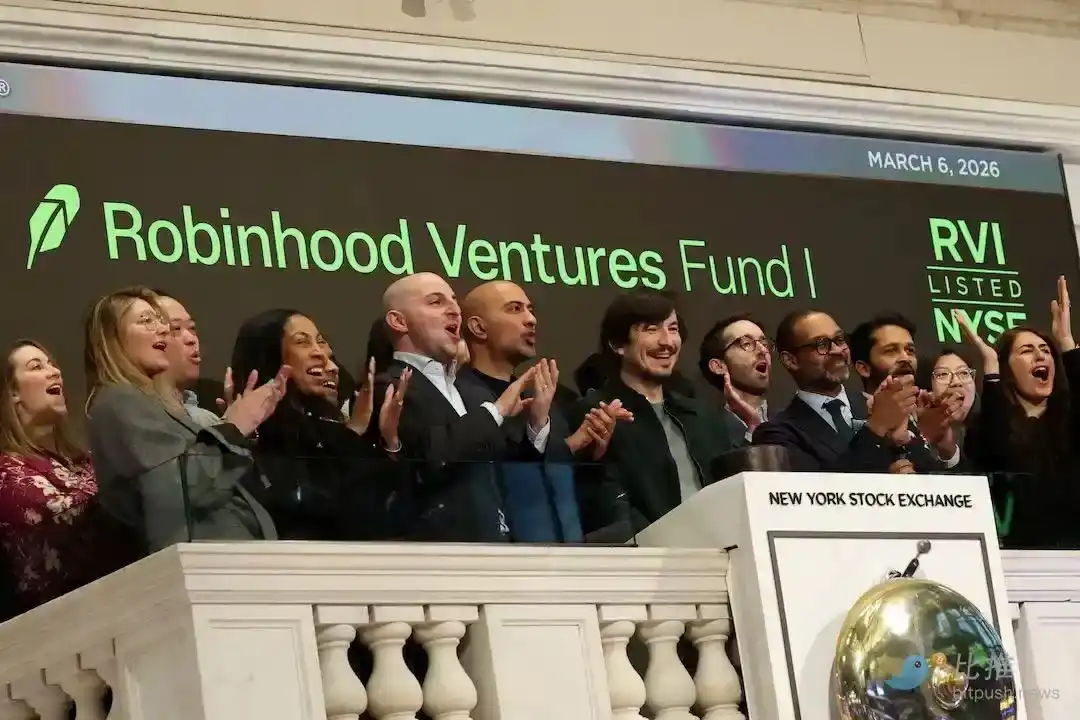
A few days later, Robinhood's Ventures Fund I listed on the New York Stock Exchange (NYSE), allowing retail investors direct access to a basket of private company equities.

These events are interconnected; they reflect a structural shift in how companies access capital, provide liquidity, and ultimately consider going public.

Why is that?

Let's start with Plaid.

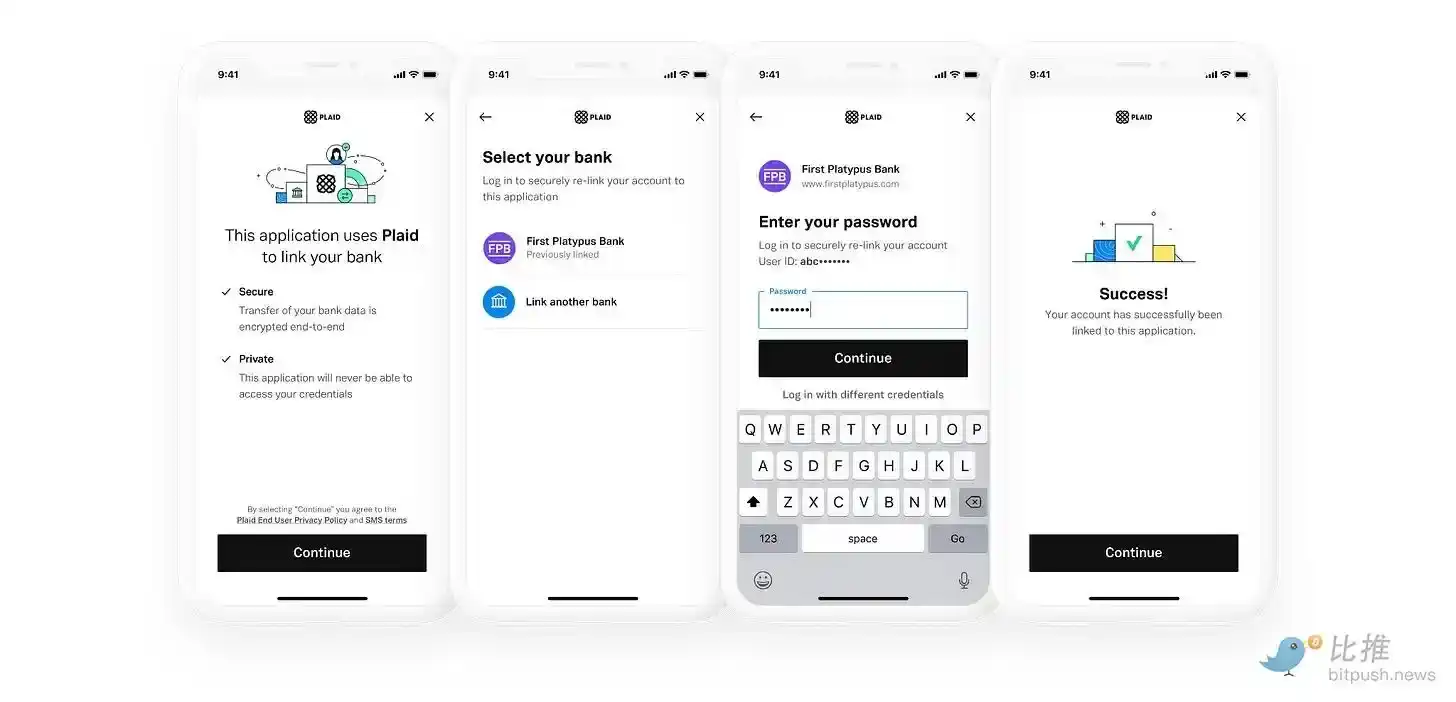
Founded in 2013, the company acts as an infrastructure layer connecting consumers' bank accounts to financial apps like Venmo, Robinhood, and Chime. Apps pay Plaid to let users seamlessly connect banks, verify credentials, and share account information. This is particularly valuable in the U.S., where regulations do not mandate banks to share information with third parties (unlike the UK's Open Banking and the EU's PSD2).

In fact, it's reported that half of all Americans have indirectly used Plaid's services through various financial apps. The company's valuation peaked at $13.4 billion in 2021, and it was once planned to be acquired by Visa for $5.3 billion, but regulators ultimately blocked the deal. After being repriced at $6.1 billion in April 2025, its latest $8 billion tender offer reflects a resurgence in momentum. Its revenue is projected to reach $430 million in 2025, with 20% of its new customers now being AI companies.
Meanwhile, Stripe is a payments behemoth founded in 2010 by brothers John and Patrick Collison.

Leveraging a decade of exponential e-commerce growth, the company recently reported stellar 2025 results. Total payment volume reached $1.9 trillion, a 34% year-over-year increase, equivalent to roughly 1.6% of global GDP. While revenue is undisclosed, sources estimate 2024 revenue to be at least $5 billion. Today, Stripe's revenue suite alone (including Stripe Billing, Invoicing, Tax, etc.) is on track to achieve $1 billion in annual recurring revenue (ARR).

Beyond payments, Stripe is actively positioning itself around cryptocurrency and agentic commerce, seeing them as catalysts for online consumption. It acquired stablecoin platform Bridge for $1.1 billion, bought wallet infrastructure provider Privy, and is building Tempo—an L1 blockchain focused on payments, currently being tested by Visa, Nubank, and Klarna. Its latest $159 billion tender offer price represents a 74% increase from last year.

A tender offer is a secondary transaction that allows new or existing investors to buy shares directly from employees and early shareholders. It provides liquidity without diluting the company's equity or incurring the regulatory and structural burdens of an IPO.

Stripe and Plaid are part of a larger trend: companies successfully bypassing public markets in favor of private transactions.

Anthropic is reportedly exploring a tender offer valuing it over $350 billion, while Revolut recently completed an employee share sale at a $75 billion valuation.

In 2025, private secondary market transactions surged to $240 billion, up from $162 billion in 2024. In comparison, global capital raised through traditional IPOs was about $140 billion.
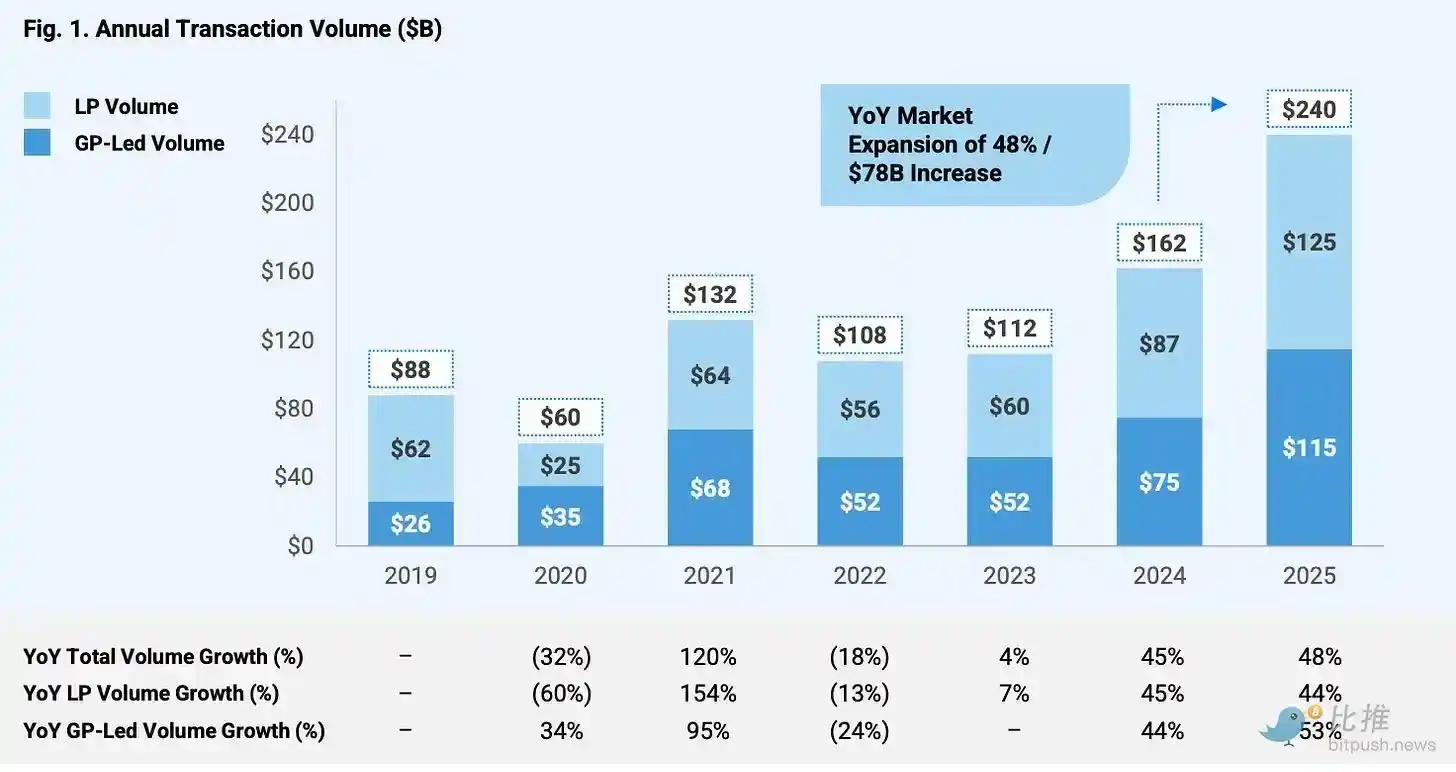
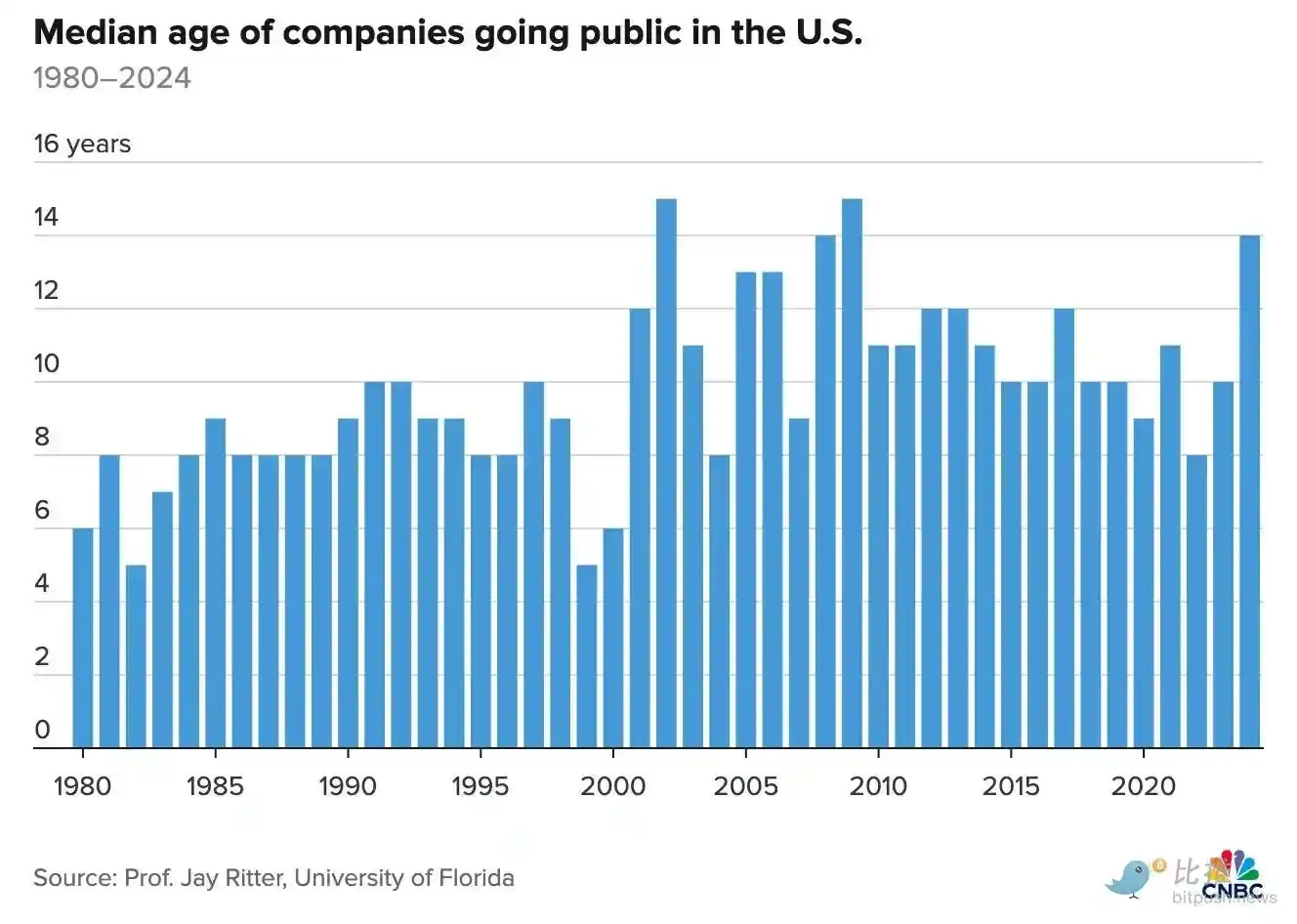
As private capital markets boom, the pace of companies entering public markets has slowed. Companies now wait an average of 16 years to go public, 33% longer than a decade ago. Over the past 12 years, total private market assets have more than doubled to $22 trillion. Some of the world's most valuable companies, including SpaceX and OpenAI, remain private, with valuations large enough to rival or exceed those of major public companies.
This has led to two key market developments:

First, the birth of a new capital market infrastructure layer. We recently analyzed the rise of platforms like Forge and EquityZen, which facilitate secondary trading of private company stock. Charles Schwab acquired Forge for $660 million in November, while Morgan Stanley acquired EquityZen in October (amount undisclosed).

Second, the opening of private markets to retail investors. Robinhood's newly formed Ventures Fund I listed on the NYSE last Friday, raising $658 million and holding shares in large private companies like Ramp, Stripe, and Revolut. This isn't the first; Destiny Tech100 listed in March 2024, offering a portfolio of 100 VC-backed companies, including SpaceX and OpenAI. But Robinhood can distribute directly to its 28 million users, and as with its performance in public stocks, it has a proven track record of popularizing asset classes historically reserved for institutional investors.
Beyond this, the Trump administration signed an executive order last summer paving the way for $8.7 trillion in 401(k) retirement accounts to invest in alternative assets like cryptocurrency and private markets.

We see these as major catalysts for further growth, but they also expose some hidden risks.

One is the structural complexity behind purchasing private stock. Brokers often bundle these stocks into their own special purpose vehicles (SPVs) and charge fees, and these SPVs sometimes hold positions in other vehicles. These overlapping counterparty risks and fees can obscure what assets investors actually own. The next macroeconomic downturn will be accompanied by the unraveling of SPV positions and ensuing litigation.

Then there's the issue of valuation transparency. Valuations of private companies are often anchored to the most recent funding round, which may only happen once or twice a year. This limits price discovery and creates a gap between the reported net asset value (NAV) and the price public markets are willing to pay.

The Financial Times recently reported that Robinhood's Ventures Fund I fell 11% on its first day of trading. Meanwhile, Destiny Tech 100 once traded at nearly 20 times its NAV. This unpredictability is not ideal for retirement savings accounts.
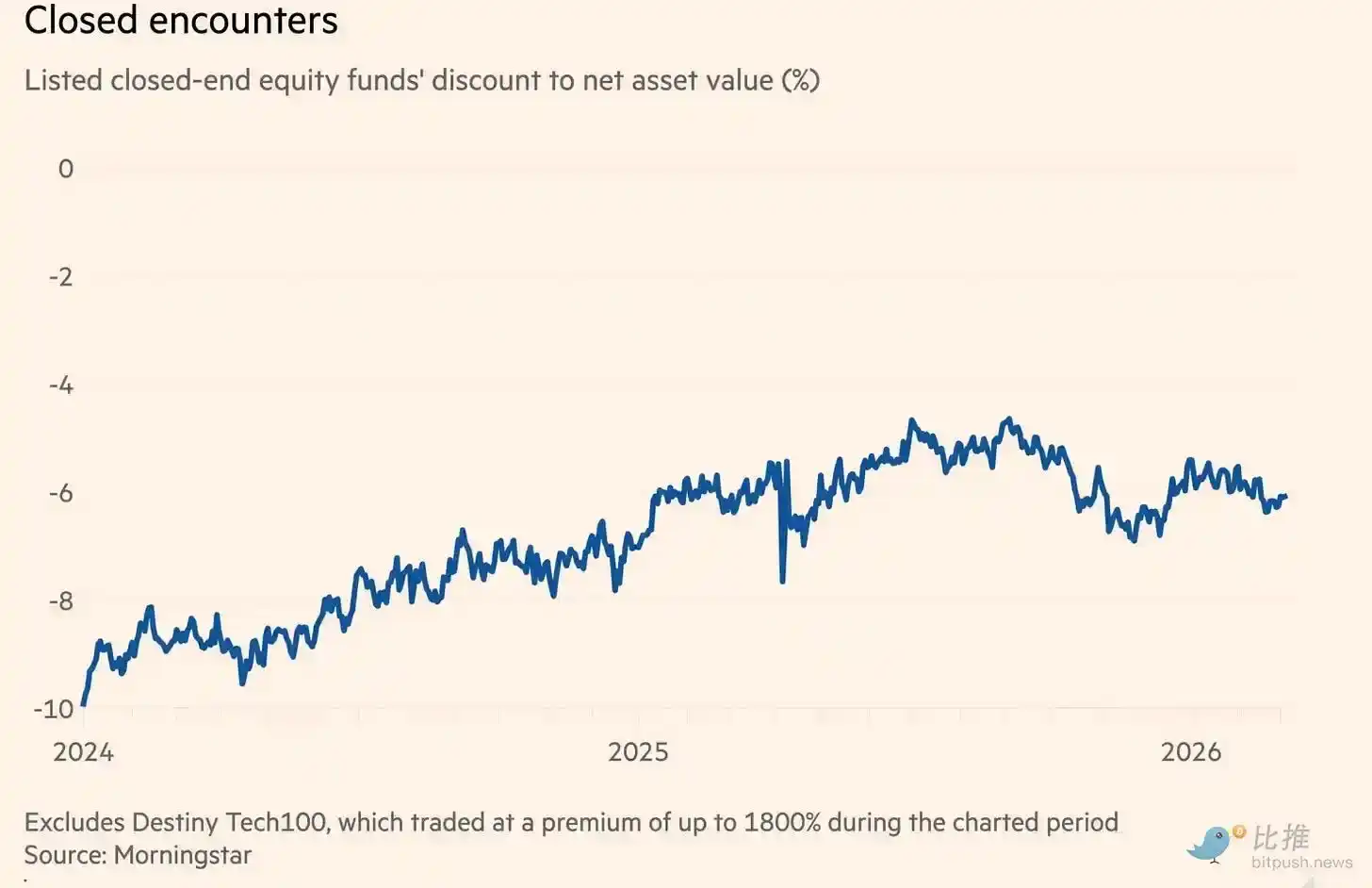
Meanwhile, regulators are beginning to push for reforms to make public markets more attractive. SEC Commissioner Hester Peirce expressed concerns about private markets in a February speech: the pressure for companies to go public has diminished, but private markets lack equivalent price discovery, accessibility, and liquidity.

SEC Chairman Paul Atkins recently proposed a three-pillar plan to "make IPOs great again" (his words) by easing disclosure requirements and reforming securities litigation. Whether these reforms will materialize remains to be seen.

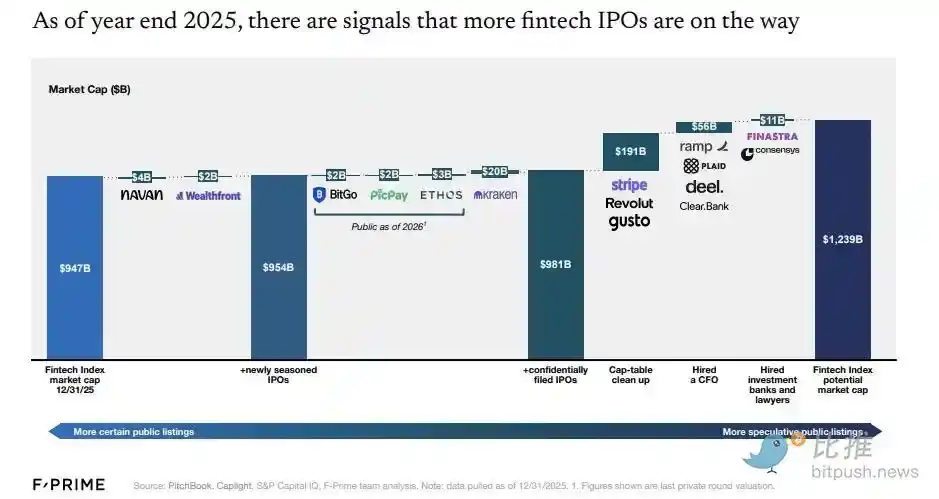
Private transactions aside, IPOs did see a significant rebound in 2025. Eleven VC-backed fintech companies, including Circle and Klarna, have gone public, with more on the way. Kraken and Bitgo have filed confidentially, while companies like Ramp and Gusto are preparing by cleaning up cap tables, hiring new CFOs, or engaging investment banks. F-Prime estimates the total market cap of fintech could grow from $947 billion to $1.2 trillion.
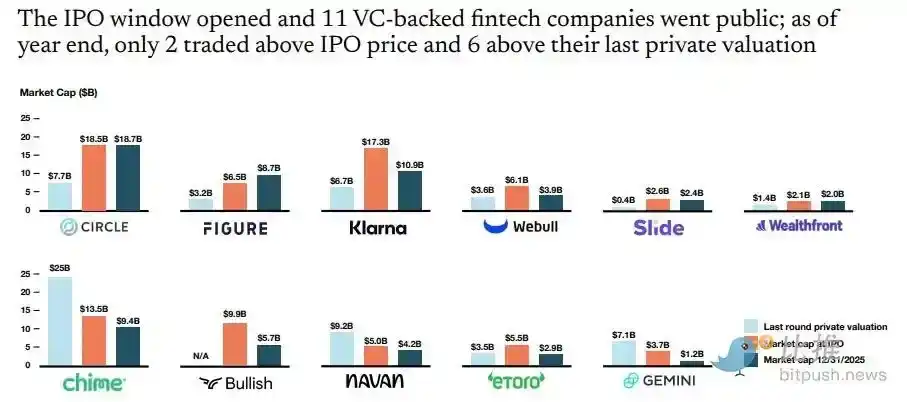
Whether these companies can get their desired price is another matter. By year-end, only 2 of the 11 companies were trading above their IPO price. Chime, once privately valued at $25 billion, went public at $13.5 billion. Klarna listed at $17.3 billion but ended the year at $10.9 billion.

With heightened geopolitical tensions and an uncertain macro outlook, companies still on the sidelines may find that the tender offer playbook is the path of least resistance. For now, at least, liquidity in private markets remains ample enough to absorb the supply of these unicorns.


İlgili Sorular

QWhat is a Tender Offer and why are companies like Stripe and Plaid using it instead of an IPO?

AA Tender Offer is a secondary transaction that allows new or existing investors to buy shares directly from employees and early shareholders. Companies like Stripe and Plaid use it because it provides liquidity without diluting the company's equity and avoids the regulatory and structural burdens of an Initial Public Offering (IPO).

QWhat are the key risks associated with investing in private company stocks through vehicles like SPVs, as mentioned in the article?

AThe key risks include structural complexity, where brokerages bundle stocks into Special Purpose Vehicles (SPVs) that charge fees and may hold positions in other instruments, creating overlapping counterparty risk. There is also a lack of valuation transparency, as private company valuations are infrequently updated, leading to a gap between reported Net Asset Value (NAV) and the price public markets are willing to pay.

QHow has the average time to IPO changed for companies, and what does this trend indicate about the private market?

AThe average time to IPO has increased to 16 years, which is 33% longer than a decade ago. This trend indicates a structural shift where companies are staying private for much longer, fueled by the abundance of capital and liquidity available in the private markets, which have more than doubled in size to $22 trillion over the past 12 years.

QWhat recent development has helped open up private market investments to retail investors, according to the article?

AA key development is the launch of funds like Robinhood's Ventures Fund I, which listed on the NYSE and allows retail investors to gain exposure to a basket of private company stocks. Additionally, a Trump administration executive order last summer paved the way for 401(k) retirement accounts to invest in alternative assets like private markets.

QDespite the rise of private market transactions, what evidence does the article provide that the IPO market is still active in 2025?

AThe article states that the IPO market saw a significant rebound in 2025, with 11 venture-backed fintech companies going public, including Circle and Klarna. Furthermore, other companies like Kraken, Bitgo, Ramp, and Gusto are preparing for potential public listings by cleaning up their cap tables, hiring new CFOs, or engaging investment banks.

İlgili Okumalar

The Verdict in Choi Tae-won's Divorce Case: Revealing the Inheritance Undercurrent Behind SK Hynix's Trillion-Won Empire

SK Group Chairman Chey Tae-won's high-profile divorce case, involving a record 1.38 trillion won settlement, has drawn attention to the succession plans for Korea's second-largest conglomerate, especially its crown jewel, SK hynix. Unlike traditional chaebol scripts centered on the eldest son, Chey's three children from his marriage to former President Roh Tae-woo's daughter, Roh Soh-yeong, are carving distinct, non-traditional paths. Eldest daughter Chey Yun-jung (b. 1989) is seen as the most evident successor. With a scientific and consulting background, she holds executive roles at SK bioscience and SK Inc.'s growth support department, focusing on future strategy and biopharma. Her marriage is to an AI infrastructure entrepreneur, not a traditional business alliance. Second daughter Chey Min-jung (b. 1991) took a unique route, voluntarily serving as a South Korean naval officer, including an anti-piracy deployment. She later worked on policy and strategy for SK hynix in Washington D.C. before co-founding an AI-driven healthcare startup. She married a former U.S. Marine Corps officer, connecting her to U.S. defense and policy circles—networks crucial for a global semiconductor giant. The only son, Chey In-geun (b. 1995), who studied physics like his father, worked briefly at SK E&S before joining McKinsey. Despite fitting the traditional "heir" profile as the eldest son, he remains silent and holds no public position or shares in SK, suggesting the old succession playbook is obsolete. As SK hynix's valuation soars, becoming a geopolitical asset in the AI era, the heirs' legitimacy is no longer automatic. They must prove themselves in fields like AI biotech, global policy, and strategic consulting. Their marriages also reflect new elite networks in tech and defense, not old political alliances. Their inheritance is the complex challenge of navigating a globalized, tech-driven world, not just a corporate throne.

marsbit9 saat önce

The Verdict in Choi Tae-won's Divorce Case: Revealing the Inheritance Undercurrent Behind SK Hynix's Trillion-Won Empire

marsbit9 saat önce

From OpenSea to OpenRouter: Is Alex Atallah Repeating His 'Exit at the Peak' Playbook?

From OpenSea to OpenRouter: Is Alex Atallah Repeating His "Exit at the Peak" Playbook? According to the Wall Street Journal, payments giant Stripe is in talks to acquire the AI model aggregation platform OpenRouter in a potential deal valuing the company near $100 billion. This would mark founder Alex Atallah's second creation of a company reaching a $100 billion valuation, following his co-founding of NFT marketplace OpenSea. OpenRouter, founded just over three years ago, has grown rapidly by acting as a unified gateway for developers to access over 400 AI models. It currently has about 10 million users and processes over 200 trillion tokens monthly. While the platform's annualized revenue is around $50 million, its valuation has skyrocketed from $1.3 billion in March 2026. The potential acquisition by Stripe, a company OpenRouter's founder once likened it to, represents a major expansion into AI infrastructure for the payments leader. This move echoes Atallah's previous timing with OpenSea, where he departed before the NFT market's significant downturn. For OpenRouter, selling now may be strategic. Despite its scale, its business model—charging a 5-5.5% fee on AI inference calls—faces pressure from competition, open-source models, and potential price wars among model providers, limiting its profitability narrative for an IPO. A key asset for potential acquirers like Stripe is OpenRouter's vast repository of real-world AI usage data, which offers unique insights into model performance and developer preferences that are difficult to replicate. Whether this potential deal signifies a new valuation benchmark for AI infrastructure or another market peak signal remains to be seen.

链捕手10 saat önce

From OpenSea to OpenRouter: Is Alex Atallah Repeating His 'Exit at the Peak' Playbook?

链捕手10 saat önce

İşlemler

Spot
活动图片




