Why Could Coinbase Halt the CLARITY Act Voting Agenda with a Single Statement?

marsbit2026-01-20 tarihinde yayınlandı2026-01-20 tarihinde güncellendi

Özet

This article details how Coinbase CEO Brian Armstrong's public opposition led to the abrupt postponement of a key U.S. Senate committee vote on the proposed "Clarity Act," a comprehensive cryptocurrency regulation bill. Armstrong argued the current draft would be worse than the existing regulatory framework, specifically objecting to provisions that could ban interest payments on stablecoins and grant excessive authority to the Securities and Exchange Commission (SEC). The event underscores Coinbase's significant and growing political influence in Washington, D.C., amplified by the pro-crypto stance of the Trump administration. The company has invested heavily in political action committees (PACs) to support crypto-friendly lawmakers. The article contrasts the current environment with the previous Biden administration, under which the SEC sued Coinbase. The Trump administration has since dropped that lawsuit, and the industry is pushing for legislation to cement a favorable regulatory landscape. The delayed vote highlights the intense lobbying battle between the crypto industry, which seeks lighter regulation, and traditional banking interests advocating for stricter rules, particularly on stablecoin offerings that compete with bank deposits. Negotiations are ongoing.

Editor's Note: The Clarity Act, which was about to enter a critical vote, was urgently halted due to public opposition from Coinbase CEO Brian Armstrong. The contentious issues revolve around restrictions on stablecoin interest payments and the boundaries of the SEC's authority. In fact, with the shift in regulatory direction following Trump's administration, the crypto industry has gradually transformed from being "the regulated" to "rule negotiators." This intervention not only altered the voting process but also exposed the real power struggles behind crypto legislation.

Original text:
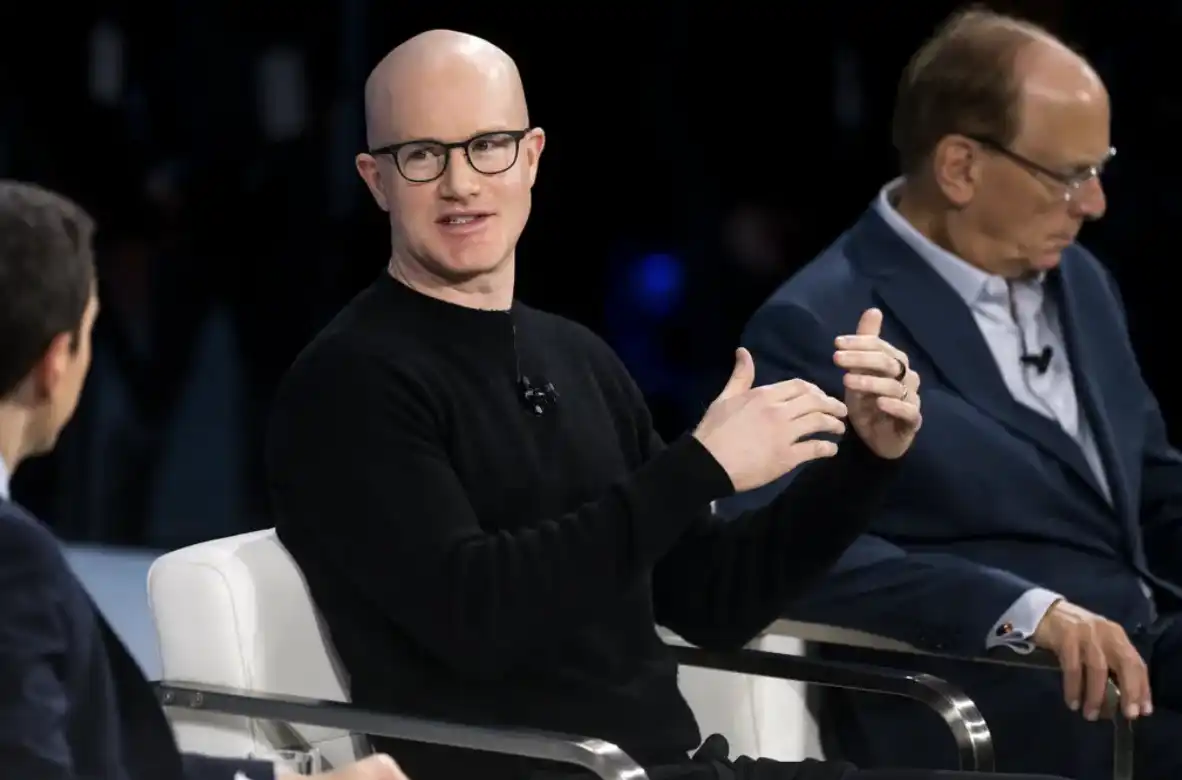
After months of negotiations, a significant cryptocurrency bill was originally scheduled to enter a committee vote in the Senate on Thursday, a crucial step in the legislative process.

But then, the top executive of the largest U.S. crypto company spoke out on social media. Coinbase CEO Brian Armstrong wrote on X on Wednesday evening: "Unfortunately, Coinbase cannot support the bill in its current text. This version would be significantly worse than the current regulatory state. We would rather have no bill than a bad bill."

Hours later, the Senate vote was canceled.

Typically, the outcome of a controversial legislative vote depends on a few key moderate lawmakers caught in partisan tug-of-war. But the shift in this milestone crypto bill this week highlights the immense influence Coinbase now wields in Washington—especially as the crypto industry's status rapidly rises under President Trump's administration.

Over the past few months, congressional staff have been advancing the drafting of the Clarity Act. This nearly 300-page bill aims to establish a regulatory framework for almost all key aspects of the crypto industry, with many rules shaped by industry participation and advocacy. However, at the last minute, Armstrong objected to a proposed wording, arguing that it could risk banning one of Coinbase's products; he also stated that the bill would grant excessive power to the U.S.'s top financial regulator, the Securities and Exchange Commission (SEC).

Coinbase's decisive move is backed by years of the company building political influence in Washington. As a publicly traded company with a market cap nearing $70 billion, Coinbase funds a network of political action committees (PACs) that have invested over $130 million in the 2024 congressional elections to support the election of more pro-crypto lawmakers.

This wave of intensive political spending sends an unmistakable message to Congress: anyone who opposes the crypto industry could become a target.

Now, leading companies in the industry have enough leverage to push for their interests. Todd Phillips, a financial expert at Georgia State University, said: "Coinbase played this move very well." A Coinbase spokesperson declined to comment.

Founded in 2012, Coinbase provides users with a platform to buy, sell, and store cryptocurrencies like Bitcoin and Ethereum. Anyone can log into its app and complete a purchase with a few clicks.

But not long ago, the company faced a much tougher environment in Washington. In 2023, the SEC sued Coinbase, accusing it of operating as an "unregistered exchange," part of the Biden administration's broader crackdown on the crypto industry. Armstrong, as a co-founder of Coinbase, criticized the SEC at the time for adopting a "regulation by enforcement" approach and called for clearer crypto regulatory rules.

The election of President Trump in 2024 completely changed the landscape. Shortly before taking office, Trump and his sons launched a crypto business, and Trump publicly declared that he would make the U.S. the "crypto capital of the world."

Within weeks of Trump taking office, the SEC dropped lawsuits against Coinbase and other crypto companies. Subsequently, the crypto industry pushed for legislation to codify this regulatory "rollback," preventing future administrations from restarting harsh crackdowns on the industry.
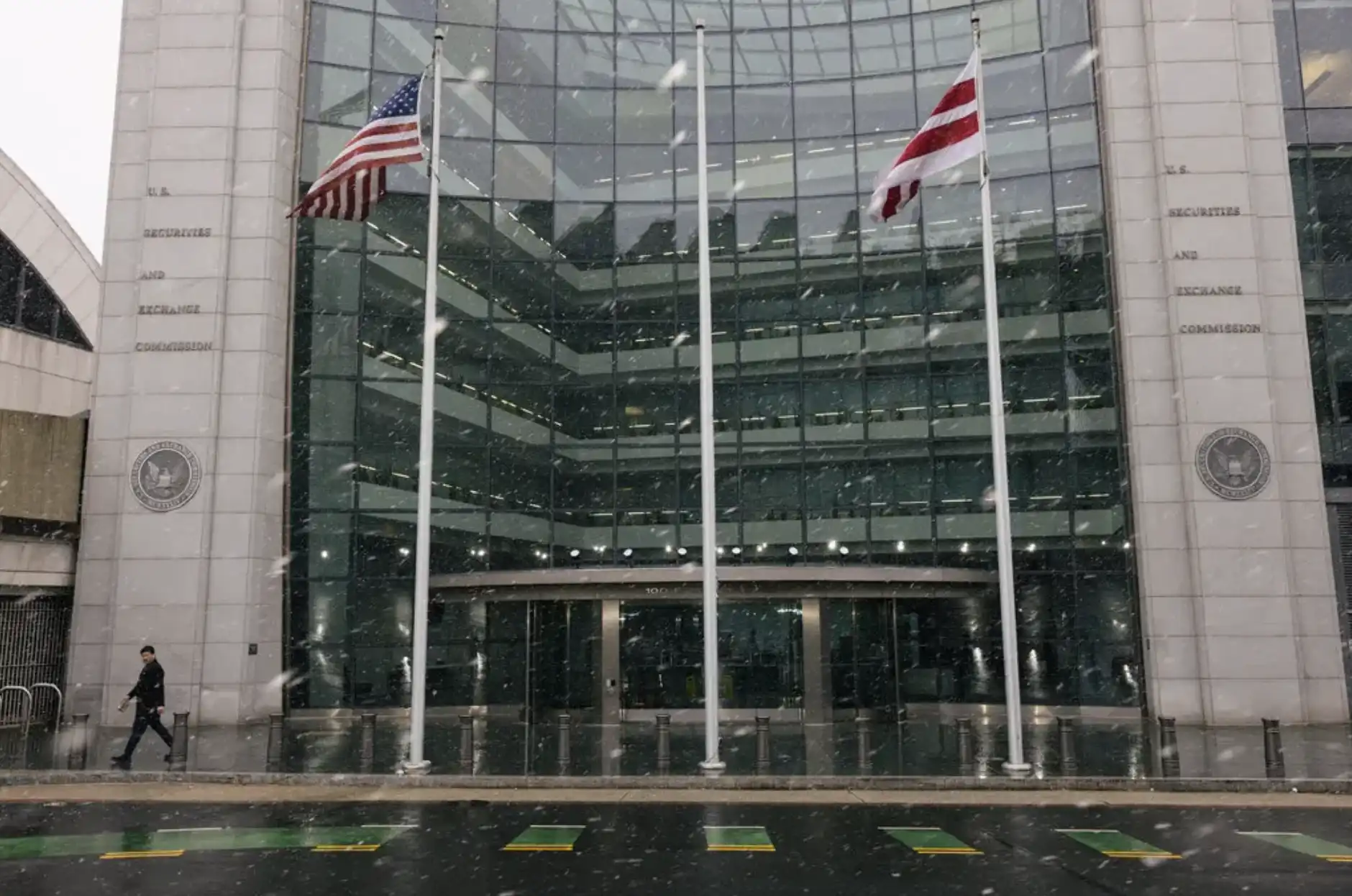
In July of this year, with government support, the House passed its version of the Clarity Act, largely adopting the crypto industry's vision for a new regulatory system. The bill would make it easier for crypto companies like Coinbase to argue that digital currencies are not securities, thus avoiding federal securities regulations designed to protect investors and markets.

But the bill encountered resistance in the Senate. Last fall, Senate Democrats proposed strict regulations for decentralized finance (DeFi), a branch of the crypto领域, sparking strong opposition from the industry.

At the same time, banking lobby groups pushed for provisions in the bill to prohibit crypto trading platforms like Coinbase from paying interest to holders of stablecoins. Stablecoins are a type of digital currency designed to maintain a price of $1. The banking industry argues that such "interest-bearing products" offered by crypto platforms would undermine banking business by competing with traditional deposit accounts.

This issue quickly became a key concern for Coinbase. A ban on interest payments could affect one of its revenue streams. Kara Calvert, Coinbase's head of policy, said: "Offering these incentive programs is crucial for competition."

The latest draft of the Clarity Act in the Senate was released near midnight on Monday. Congressional staff and crypto industry executives immediately intensified their review of the text, aiming to complete it before the scheduled Senate committee meeting on Thursday. This meeting, known as a "markup," is when senators have the opportunity to propose amendments. As the markup approached, while other crypto executives continued to express support for the bill on social media, Armstrong announced he would withdraw his support.

On Wednesday evening, South Carolina Republican Senator Tim Scott, chairman of the Senate Banking Committee, announced that the markup would be postponed, with no new date set yet. In a statement, he said: "All parties continue to communicate in good faith. Our goal is to establish clear 'rules of the road' that protect consumers, strengthen national security, and ensure the future of finance is built in the United States."


İlgili Sorular

QWhy was the vote on the Clarity Act in the Senate postponed?

AThe vote was postponed after Coinbase CEO Brian Armstrong publicly opposed the current version of the bill on social media, stating it would be worse than the current regulatory state and that Coinbase would prefer no bill over a bad one.

QWhat were Coinbase's main objections to the Clarity Act?

ACoinbase objected to a proposed provision that could potentially prohibit one of its products (likely interest payments on stablecoins) and argued that the bill would grant the SEC excessive regulatory power.

QHow has the political landscape for crypto companies like Coinbase changed with the Trump administration?

AThe political landscape shifted significantly. The SEC dropped lawsuits against Coinbase and other crypto companies, and the industry gained substantial influence, moving from being regulated to actively negotiating rules, with the administration pledging to make the U.S. a 'global crypto hub'.

QWhat role did banking lobbyists play in shaping the Clarity Act?

ABanking lobbyists pushed for provisions in the bill to ban crypto trading platforms from paying interest on stablecoin holdings, arguing that these interest-bearing products compete with traditional bank deposit accounts.

QHow has Coinbase built its political influence in Washington?

ACoinbase built its influence over years by funding a network of Political Action Committees (PACs) that spent over $130 million in the 2024 election cycle to support the election of pro-crypto lawmakers, sending a clear message to Congress.

İlgili Okumalar

Within Strategy's Framework, STRC's Dividend Yield Remains at 12% as Share Price Stays Below Par Value

Michael Saylor, Executive Chairman of Strategy (MSTR), confirmed that the dividend rate for its STRC perpetual preferred shares will remain at 12.00% through August 2026. The rate has increased from 9% at its July 2025 launch to the current high via a "ratchet" mechanism, which permanently raises the rate by 0.5% whenever the share price falls below $95. This mechanism is intended to push the price back toward its $100 par value and support Strategy's "at-the-market" (ATM) program for issuing new shares to fund Bitcoin purchases. However, the mechanism has not worked as intended. STRC shares closed at $89.46 on July 31, remaining about 10-11% below par value despite the record-high dividend. Competition from rival Strive's higher-yielding SATA securities has pressured demand. The persistent discount has forced Strategy to suspend new STRC issuances via its ATM program, limiting this funding channel for Bitcoin acquisitions. STRC's struggles reflect Bitcoin's own volatility, as the preferred shares historically move in tandem. Analysts have warned the ratchet structure carries long-term, one-way risk. A law firm is investigating Strategy's ability to maintain dividend payments if Bitcoin's price stays low. Retail investors own roughly 83% of outstanding STRC shares, a group seen as prone to panic selling during downturns. In response, Strategy has established financial reserves, including a liquidity cushion covering about 26 months of dividend/interest obligations, and a $2 billion share buyback program alongside a Bitcoin monetization framework, though the company emphasized it is not obligated to sell any Bitcoin.

cryptonews.ru13 dk önce

Within Strategy's Framework, STRC's Dividend Yield Remains at 12% as Share Price Stays Below Par Value

cryptonews.ru13 dk önce

Analyst: Bitcoin's Price Will Drop to $60k in August, Then Rebound to $70k

Financial analyst Andrey Poroshin has provided a new forecast for Bitcoin's price dynamics in August. Poroshin, an analyst at the Bitbanker exchange, expects the cryptocurrency market to experience a downturn this month, with prices retesting the $60,000 level due to a lack of supportive macroeconomic catalysts. He noted that the recent US Federal Reserve decision to hold interest rates did not significantly impact the market, while inflation remains above the 2% target. Poroshin stated that Bitcoin is ending July under pressure from moderate volatility and a lack of new macroeconomic stimuli, leading to continued market caution. According to his base scenario, Bitcoin will drop to a range of $60,000 to $62,000 before recovering to $70,000. He pointed out that even $70,000 remains below the cost of mining in the US, which has prompted some miners to shift towards AI data center operations. Poroshin cited the winding down of BitMEX's operations as a potential catalyst for a price rebound, suggesting the exit of weaker players often coincides with market reversals and reduced short-term selling pressure. He believes Bitcoin is currently less susceptible to geopolitical shocks, such as the Iran-US conflict, and does not expect significant market changes in August related to the pending CLARITY Act. Looking ahead, Poroshin forecasts that September will bring more active price fluctuations driven by potential Fed rate decisions and possible discussions or approval of the CLARITY Act.

cryptonews.ru13 dk önce

Analyst: Bitcoin's Price Will Drop to $60k in August, Then Rebound to $70k

cryptonews.ru13 dk önce

İşlemler

Spot
活动图片




