Who Will Make Money in the Age of Agents?

链捕手2026-05-27 tarihinde yayınlandı2026-05-27 tarihinde güncellendi

Özet

Who will capture value in an era where AI Agents become the primary blockchain users? Existing crypto value capture theories assume human users. "Fat Protocols" (2016) posited that protocols capture the most value as applications commoditize on open data, but this weakened as blockchain infrastructure proliferated and became interchangeable. The emerging "Fat Apps" theory argues applications capturing user relationships (like wallets and aggregators) win by controlling distribution and monetizing user flows. Agents fundamentally disrupt this logic. They don't value UX, brand, or convenience, bypassing the front-end moats of fat apps. This leads to several possible futures: 1. **"Headless" Apps**: Current app leaders (e.g., wallets) strip their front ends and become API infrastructure for Agents, preserving their value capture. 2. **Protocol Renaissance**: If integration is easy, Agents skip aggregators and interact directly with protocols, reviving the fat protocol thesis. 3. **Pricing Power Collapse**: Agents' rational, frictionless price shopping could commoditize the entire stack, compressing margins toward cost. Value flows to Agent owners or end-users. 4. **Unprecedented Activity**: Agents could enable entirely new, high-frequency economic activity (e.g., machine-to-machine commerce), expanding the total value pie. 5. **A New, Unnamed Model**: As with the internet's attention economy, a novel, unforeseen business model may emerge. Likely, human and Agent ecosyste...

Author: Jonah Burian

Compiled by: Jia Huan, ChainCatcher

Many speculate that the next billion blockchain users will be Agents. But few ask a further question: in that world, who will make money?

Every previous theory of value capture in crypto assumed the user was human. The "Fat Protocols" theory posited that protocols are best at monetizing human users.

The "Fat App" theory, which I explored with colleagues in "How to Capture Value" and "The Great Revaluation," argues that the application layer can do better. But Agents change the very nature of the user, and existing theories will be invalidated.

The Fat Protocols Theory

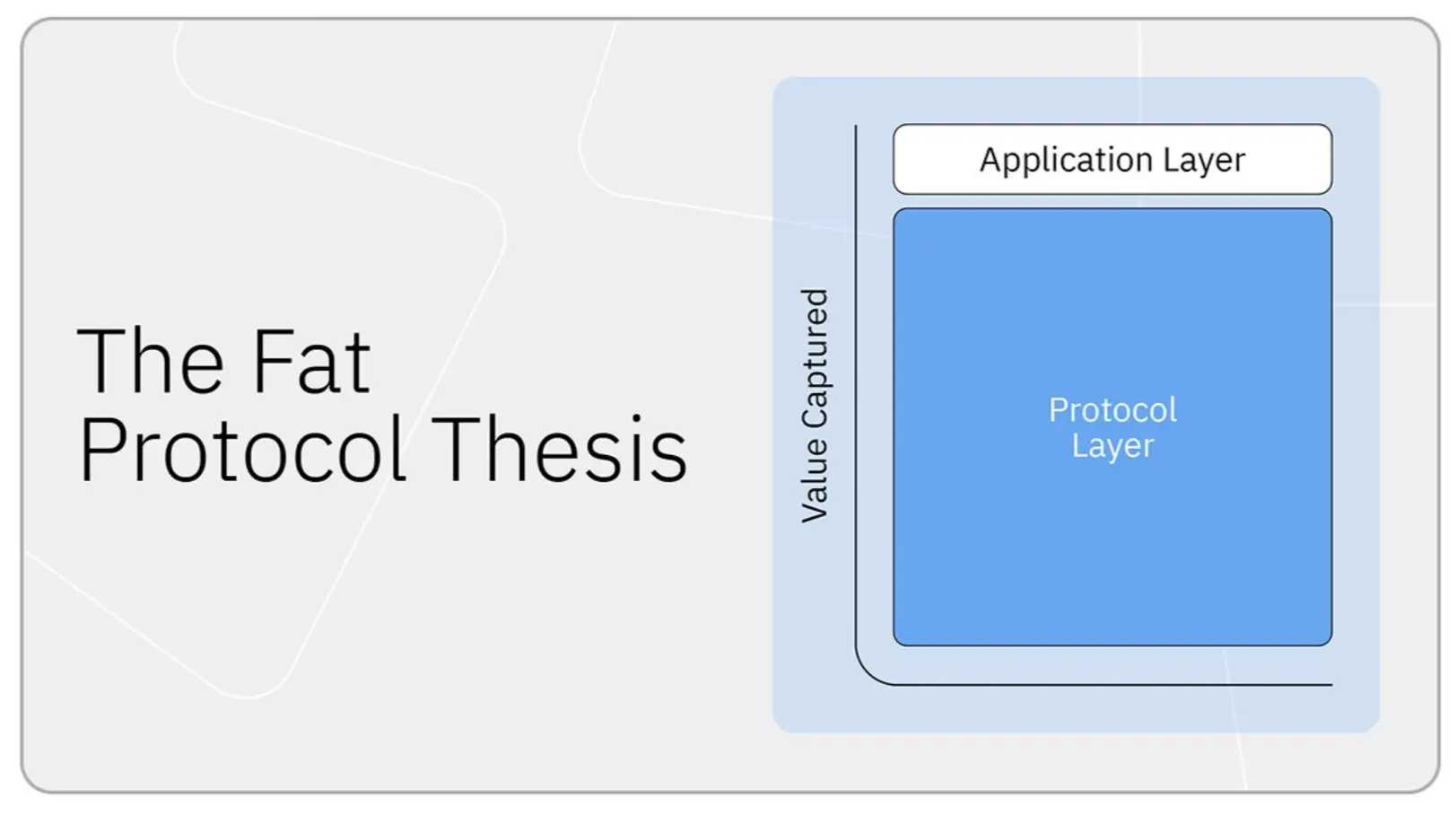
In 2016, @jmonegro proposed "Fat Protocols." For nearly a decade, it has been crypto's dominant theory of value capture.

The core idea: In the traditional internet, value aggregated at the application layer (@Google, @facebook), while underlying protocols (TCP/IP, HTTP) captured almost no value. The crypto world would completely reverse this. Blockchains share data publicly, so applications would gradually become commoditized.

And because using the network requires spending the protocol's token, the token would capture the resulting speculative value as usage grows. Every app's success would drive demand for the token. The underlying protocol would grow faster than any application built on it.
For years, this seemed correct. Bitcoin and Ethereum are worth far more than any company built on them.

This model works perfectly when the protocol itself is scarce, expensive to build, and hard to replace. In 2017, Bitcoin and Ethereum were very scarce; there weren't dozens of general-purpose L1s (Layer 1 networks) competing for the same workloads.

Block space was sufficiently constrained that owning the underlying asset felt like owning a piece of every app that needed it.

Today, reliable alternatives exist at every layer of the infrastructure stack: multiple high-throughput L1s, dozens of L2s, and modular settlement and data availability (DA) layers competing fiercely on price. Block space has shifted from constrained to abundant.

As bridges and aggregators make underlying chains nearly invisible to users, user switching costs have collapsed. Infrastructure has become interchangeable, and interchangeable commodities compete on price. The result: pricing power for protocols vanishes along with scarcity.

The Fat App Theory

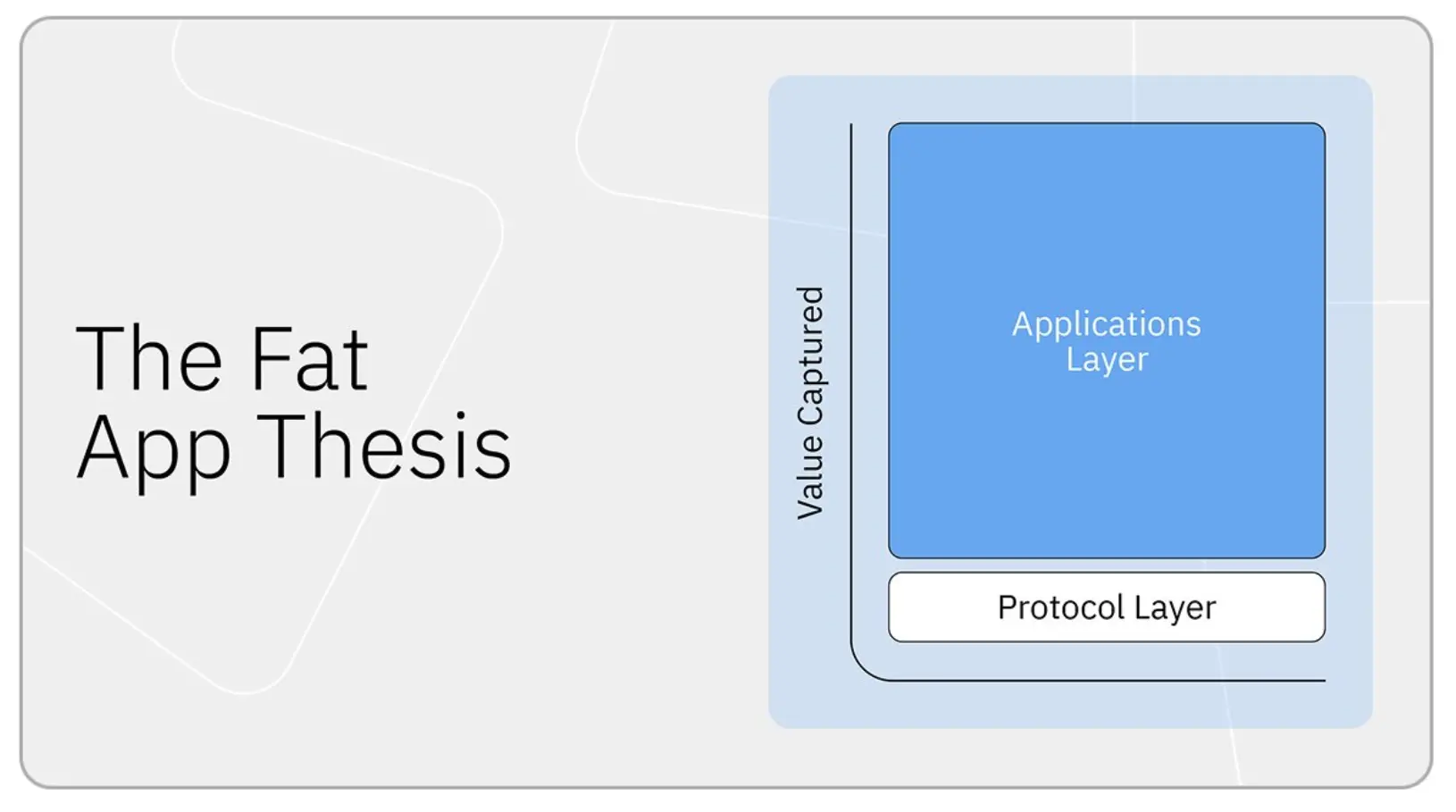
By 2026, entities capturing most of the economic benefits were applications, not protocols: e.g., @phantom, @coinbase, @Polymarket, @Pumpfun.

In my view, the reason is that the most valuable asset in crypto is the user relationship.

If you control the user interface and transaction flow, you control distribution and can profit from almost any on-chain product a user touches: swaps, lending, staking, minting, and fiat on/off-ramps. This is probably also why funds are so obsessed with neobanks.
Apps also push infrastructure into a pure price war, compressing infrastructure margins to marginal cost. I documented this dynamic in "How to Capture Value." The same dynamic is playing out in stablecoins, which I've covered elsewhere.

Asset prices are reflecting this theory. Spencer and I called this shift "The Great Revaluation": in this cycle, value began aggregating at the layer that owns the user.

Why Agents Break This Logic

The Fat App theory assumes users are humans who value UX, brand, and convenience. But Agents don't care about these at all. They call APIs directly, have zero brand loyalty, and switch between platforms at zero cost.

When the user becomes software, owning the user relationship is no longer an impregnable moat. The entire Fat App theory's foundation—the frontend moat—is failing.

So who captures value in the age of Agents?
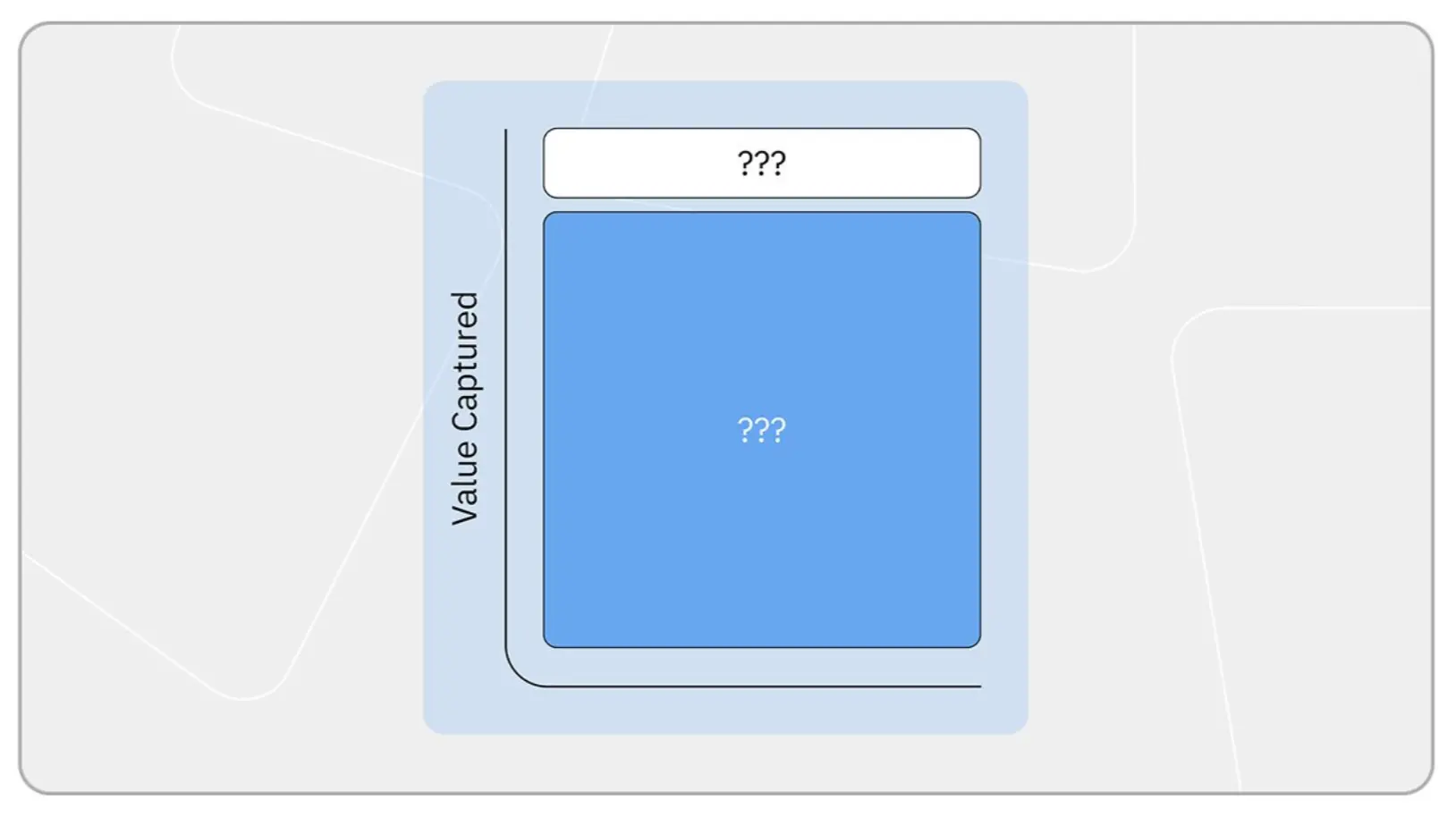
Apps Go 'Headless'

In one vision of the future, winners at the application layer maintain their lead by shedding their frontend interfaces (going 'headless').

Wallets and aggregators have already done the hardest work: integrations with dozens of protocols, routing logic, authentication, fiat on/off-ramp infrastructure.

The next logical step is to open this stack as an API for Agents, letting Agents route through them—just like humans route through @phantom or @JupiterExchange today.

In this world, the Fat App theory lives on. It just loses the frontend. Companies that won in the human era would transform into pure backend infrastructure for Agents. We already see legacy SaaS players like Salesforce moving in this direction.

A Protocol Renaissance

In another vision, Agents skip the middle layer entirely.

If integration becomes easy enough (well-documented APIs, standardized RPCs, predictable execution semantics), Agents have no real reason to pay an aggregator to do what they can do themselves. Aggregators' advantages in the human era were UX and dealing with routing complexity.

But Agents don't need UX, and routing is an engineering problem they're becoming increasingly good at solving.

If the world evolves this way, the Fat Protocols theory could see a renaissance.

Pricing Power Collapses Throughout the Stack

Perhaps Agents apply commoditizing pressure to every corner. They are perfectly rational, routing to the cheapest venue every time, with zero friction and zero loyalty.

Apps lose the ability to charge humans a UX premium. Aggregators and infrastructure also lose pricing power, because there is no inherent human inertia protecting them from price wars.

In this scenario, little profit is captured by anyone in the stack. Margins are forced toward marginal cost across the entire supply chain. Residual value accrues to the owners of the Agents or the ultimate users the Agents serve.

Crypto becomes a utility, and it's hard to make big money in utilities.

Agents Create Unprecedented Levels of Activity

A simple take on this: Agents do everything humans do, just faster and at greater scale. Even if margins are compressed, the overall pie grows.

I think there's a more interesting version.

Agents enable activity that was previously infeasible: e.g., continuously rebalancing portfolios for less than a penny in execution costs, machine-to-machine commerce between Agents, and entirely new markets that exist only because pricing and speed are beyond human tracking.

Current on-chain activity data doesn't show this because we assume a human is necessarily involved.

If this is the shift Agents bring, then the question changes from "How do we divide the existing pie?" to "How much new economic activity pours on-chain, and which layers are positioned to serve it?"

A Business Model That Hasn't Been Named Yet

In every cycle, we try to guess where value will flow and tend to think existing business models will extend into the future. This assumption usually makes us miss new models that haven't yet appeared.

When the internet was just being built, no one foresaw the attention economy. The idea that "slicing user attention and auctioning it to advertisers would become the dominant business model, and a single company could capture a significant share of global ad spend" was alien. It only seems inevitable in hindsight.

AI looks like one of the biggest technological disruptions in decades. In an Agent-dominated world, some value capture may flow to business models no one is even naming today. And the entities capturing it may not be those the market is currently focused on.

Key Points to Watch

The most likely outcome is not one system completely replacing another. For a long time, humans and Agents will coexist as crypto users, with vastly different maps of value capture.

As long as humans interact on-chain, the Fat App theory still applies: consumers willing to pay for UX, brand, and convenience will continue to pay premiums to apps owning those relationships. The layers involved in Agent transactions will be governed by a separate theory, regardless of which vision above materializes.

For builders, I think the question worth mulling over on the Agent side is: What actually makes an Agent come back to you instead of routing directly to the next cheapest alternative? UX might not be the answer. Liquidity, latency, settlement guarantees, etc., might be.


İlgili Sorular

QAccording to the article, what is the core challenge posed by the rise of Agents for existing value capture theories in crypto?

AAgents break existing value capture theories because they change the nature of the 'user.' Both the 'Fat Protocol' and 'Fat App' theories assume users are humans who care about UX, brand, and convenience. Agents, being software, do not care about these things; they directly call APIs, have no brand loyalty, and switch between platforms with zero cost. This nullifies the application layer's front-end moat, which is central to the Fat App theory.

QWhat are the three possible scenarios presented in the article for value capture in an Agent-dominated future?

AThe article outlines three potential scenarios: 1) 'Headless' Apps: Existing application winners strip away their front-end and serve Agents via APIs, preserving the Fat App logic in a backend form. 2) Protocol Resurgence: Agents skip middlemen entirely and interact directly with protocols, potentially reviving the Fat Protocol theory. 3) Pricing Power Collapse: The hyper-rationality and zero-switching-cost of Agents drive commodification pressure across the entire stack, compressing margins towards cost, with value flowing to Agent owners or end-users.

QHow does the article differentiate the 'Fat Protocol' and 'Fat App' theories in terms of who captures value?

AThe 'Fat Protocol' theory, dominant for nearly a decade, posits that value aggregates at the protocol layer (like Ethereum) because applications built on open, shared data become commoditized, and protocol token usage captures speculative value. In contrast, the emerging 'Fat App' theory argues that value accrues at the application layer (like wallets and exchanges) because the most valuable asset is the user relationship—controlling the interface and transaction flow grants control over distribution and monetization.

QWhat key advantage do Agents have over human users that could fundamentally alter the crypto economic landscape?

AAgents possess hyper-rationality and zero-friction switching. Unlike humans, they are not influenced by UX, brand loyalty, or convenience. They will always route transactions to the cheapest or most efficient option instantly and without hesitation. This removes the inertia that protects applications and aggregators from pure price competition, potentially forcing the commodification of services across the technology stack.

QAccording to the author, what should builders focus on to capture value from Agent users, since UX is not the answer?

AThe author suggests builders should focus on attributes that would make an Agent choose their service repeatedly over a cheaper alternative. The answer is likely not UX. Instead, competitive advantages could be built around factors like superior liquidity, lower latency, stronger settlement guarantees, or other performance and reliability metrics that matter to automated, efficiency-seeking software.

İlgili Okumalar

Justin Sun’s Interview with Hurun Report: A New Order and Certainty for Value Flow in the Era of Transformation

In an interview with *Hurun Report*, Justin Sun, founder of TRON, discussed the evolution of the Web3 industry as it moves from initial exploration to large-scale adoption. He emphasized that the core value of blockchain lies in building an open and inclusive internet of value, enabling anyone globally to transfer and use funds efficiently and at low cost, regardless of location or access to banking. Sun highlighted that projects with lasting impact are those built on genuine demand and real-world usage. He pointed to the stablecoin payment ecosystem as the most mature and scalable application currently, noting that TRON has rapidly become one of the world's largest stablecoin networks. The circulation of USDT on TRON has surpassed $86.3 billion, driven by actual use cases such as cross-border transfers and daily payments, demonstrating strong network effects. Regarding strategy, Sun outlined a methodology combining data-driven iteration, rapid execution, and user-centric focus. He cited the decision to partner with Tether to launch TRC-20 USDT as a key strategic move, based on an assessment of market trends and long-term potential, which has become a significant growth engine for the TRON ecosystem. On globalization, Sun stressed the importance of local compliance and cultural adaptation, noting that success in different markets depends on deep understanding and local partnerships. He also addressed the convergence of AI and blockchain, describing it as a transformative direction where blockchain provides decentralized infrastructure for AI, while AI enhances the intelligence and user experience of blockchain systems. For industry participants and young entrepreneurs, Sun advised continuous learning and adaptability in a fast-changing environment, focusing on building irreplaceable core strengths rather than spreading resources too thinly. Through infrastructure development, global strategy, and technological foresight, TRON aims to advance the practical implementation and evolution of the value internet.

marsbit19 dk önce

Justin Sun’s Interview with Hurun Report: A New Order and Certainty for Value Flow in the Era of Transformation

marsbit19 dk önce

Samsung Leverages Technology Cycles, SK Hynix Relies on HBM, What Enabled Micron to Win a Trillion-Dollar Market Cap?

Micron Technology, the Idaho-based memory chip maker, recently saw its market cap surpass $1 trillion, securing its position as one of the top three DRAM manufacturers alongside Samsung and SK Hynix. Its survival and growth story is marked by a unique combination of political maneuvering and hard-won manufacturing efficiency, but also strategic missteps that now challenge its future. Founded in 1978 in Boise without significant government or capital backing, Micron repeatedly turned to Washington for survival during critical junctures. In the 1980s, it filed anti-dumping complaints against Japanese firms, leading to the U.S.-Japan Semiconductor Agreement. Ironically, this created an opening for Samsung, which Micron had earlier licensed its 64K DRAM technology to. In 2002, Micron avoided heavy fines in a price-fixing investigation by acting as a whistleblower against its competitors, cementing its reputation as a "political opportunist." A major strategic error occurred in 2013 with its $2.5 billion acquisition of bankrupt Japanese firm Elpida. This deal burdened Micron with integrating incompatible manufacturing processes just as the industry was pivoting toward HBM (High Bandwidth Memory), a critical technology for AI. SK Hynix had launched its first HBM chip that same year. By the time AI demand exploded with ChatGPT in 2022, SK Hynix commanded about 85% of the HBM3 market, while Micron, playing catch-up, held only around 3%. In 2017, Micron employed similar tactics against a new competitor, Chinese startup Fujian Jinhua, by alleging intellectual property theft, which led to U.S. sanctions effectively crippling the firm. However, this strategy backfired in 2023 when China banned Micron's products from its critical infrastructure, causing its revenue share from China to plummet from 14% in FY2023 to just 7.1% by FY2025. Today, Micron faces a triple squeeze: it lags in the high-margin HBM race, faces pricing pressure in low-end DRAM from Chinese manufacturers like CXMT, and has lost crucial access to the booming Chinese AI server market. Despite its political strategies, Micron's core strength is its exceptional manufacturing cost control, achieved through decades of engineering. Its DRAM chips have a smaller cell area than its rivals, yielding more chips per wafer. This efficiency has been vital for weathering industry downturns. However, this advantage cannot compensate for the decade lost in HBM development. Micron is now racing to ramp up production of its HBM3E, certified by NVIDIA, and develop HBM4. Its future hinges on whether it can close this technological "time debt" through relentless R&D and execution, in a marathon where its competitors, having started earlier, are not slowing down.

marsbit37 dk önce

Samsung Leverages Technology Cycles, SK Hynix Relies on HBM, What Enabled Micron to Win a Trillion-Dollar Market Cap?

marsbit37 dk önce

Deconstructing Mysterious Researcher Serenity's Chokepoint Algorithm and the Global Revaluation of Equity Assets

Unmasking Serenity's "Chokepoint Theory": A Framework for AI-Era Investment This article deconstructs the investment methodology of the pseudonymous online researcher Serenity (formerly AleaBito on Reddit), who claims extraordinary returns by identifying critical bottlenecks in AI and robotics supply chains. Rejecting Wall Street's typical top-down analysis, Serenity employs a bottom-up, reverse-engineering approach. Starting with an end product like an Nvidia GPU cluster, he meticulously maps the global supply chain down to its most essential, irreplaceable physical components—the "choke points." These are low-profile, often monopolized sub-sectors where a disruption could paralyze entire downstream industries, analogous to a strategic strait controlling global oil flow. His primary focus is the physical evolution of AI data centers, specifically the shift from copper interconnects to silicon photonics and Co-Packaged Optics (CPO). He identifies five critical, monopolized technical barriers within CPO: high-precision fiber alignment components (e.g., FOCI), external light sources and high-power lasers (e.g., SIVE), molecular beam epitaxy equipment (ALRIB/Riber), ultra-high-purity red phosphorus raw materials, and Silicon-on-Insulator (SOI) wafers (Soitec). Serenity extends this framework to humanoid robotics, arguing that while the AI "brain" resides in the US, the physical "body" hardware (actuators, gears, motors) is dominated by Asian manufacturers. He highlights a looming "demand tsunami" for specific rare earth elements essential for robot motors, presenting a severe future supply chain and geopolitical challenge. The article cites several of his investment targets (RPI, SIVE, Soitec, VLN, NBIS) where identifying such choke points, coupled with correcting market mispricings (e.g., ticker code confusion for VLN), allegedly led to significant re-ratings. Ultimately, the article posits that Serenity's core value is not in providing stock picks, but in demonstrating a paradigm: using deep technical analysis to find the silent, indispensable "physical switches" within complex systems, thereby exploiting institutional research blind spots. However, it warns of major risks, including illiquidity in micro-cap stocks, potential "pump-and-dump" accusations, and the foundational gamble that his identified technological paths (like CPO) are the correct and inevitable ones.

marsbit39 dk önce

Deconstructing Mysterious Researcher Serenity's Chokepoint Algorithm and the Global Revaluation of Equity Assets

marsbit39 dk önce

Cross-strait Regulators Jointly Block Hong Kong Stock Account Openings: Where Can Your Money Go Now?

**Summary:** On May 22, 2026, financial regulators in mainland China and Hong Kong launched a synchronized crackdown targeting informal channels used by mainland investors to trade in Hong Kong and US stocks via Hong Kong-based securities firms. The Hong Kong Securities and Futures Commission (SFC) issued a stringent circular to licensed brokers, mandating stricter onboarding procedures for mainland clients. New requirements include a mandatory written declaration stating that all investment funds originate from *outside* mainland China and are from legal sources. The SFC also demanded the closure of accounts opened with suspicious documents and dormant accounts. Simultaneously, China's securities regulator, along with seven other ministries, initiated a two-year rectification plan, penalizing firms like Futu and Tiger Brokers for illegal cross-border operations. This effectively ends the previously common grey-area practice for mainlanders. Immediate impacts are evident. Social media reports show mainland investors traveling to Hong Kong for in-person account openings are now frequently denied after signing the new declaration, even at firms like uSMART that still accept applications. The declaration acts as both a compliance shield for brokers and a filter for clients. While major internet brokers have halted new mainland accounts, limited options remain. A few Hong Kong-licensed firms like uSMART, Fosun Wealth, and Cheerful still offer avenues, but approval is not guaranteed and hinges on proving offshore fund sources. Crucially, funding accounts must now be in the investor's own name at qualified Hong Kong or international banks, blocking previous informal methods like third-party transfers. For compliant access, official channels like Stock Connect, QDII, and the Cross-boundary Wealth Management Connect remain open. Individuals with verifiable overseas residency or status have better prospects. The crackdown signals the definitive end of the loosely regulated expansion period, forcing mainland investors toward stricter, fully compliant pathways for overseas asset allocation.

marsbit44 dk önce

Cross-strait Regulators Jointly Block Hong Kong Stock Account Openings: Where Can Your Money Go Now?

marsbit44 dk önce

Iran and the Fed -- Three Scenarios That Will Impact Global Markets Next

"Three Scenarios for Iran and the Fed Shaping Global Markets" Iranian geopolitics and the Fed's monetary policy path are two dominant themes for markets. Deutsche Bank Research outlines three scenarios linking Iran ceasefire outcomes to Fed policy, with oil prices as the key transmission channel. **Scenario 1: Peace Deal.** A breakthrough leading to the Strait of Hormuz reopening would ease near-term Fed tightening pressure. Recent inflation would be viewed as a temporary energy shock. However, medium-term risks remain; rate hikes could resurface in 2027 if inflation persists. **Scenario 2: Stalemate.** A breakdown in talks and a prolonged Strait closure, but no major escalation, is deemed the scenario with the *highest* Fed hike risk. Sustained high oil prices would feed into core inflation and threaten inflation expectations, while not severely damaging demand enough to give the Fed a reason to pause. This environment could necessitate multiple Fed rate hikes in 2026. **Scenario 3: Conflict Escalation.** Renewed conflict and sharply higher oil prices create a two-way risk for Fed policy. On one hand, it would risk severe inflation expectations de-anchoring, forcing a hawkish response. On the other, extreme oil prices could severely damage demand and the labor market, potentially shifting the Fed's focus toward easing. The ultimate policy decision would depend on which risk materializes first. Overall, Deutsche Bank's framework emphasizes that the path for oil prices, dictated by Iran, will define the nature of inflation pressures and ultimately determine the Fed's policy space. Key signals to watch include ceasefire progress, whether Brent crude stabilizes below $100, and any shift in Fed officials' rhetoric from discussing cuts to potential hikes.

marsbit53 dk önce

Iran and the Fed -- Three Scenarios That Will Impact Global Markets Next

marsbit53 dk önce

İşlemler

Spot
Futures
活动图片