Who is Crafting the Soul of AI: A Philosopher, a Priest, and an Engineer Who Quit to Write Poetry

marsbit2026-05-11 tarihinde yayınlandı2026-05-11 tarihinde güncellendi

Özet

Anthropic's "Constitution of Claude" defines the personality of its AI, aiming for directness, confidence, and open curiosity, even about its own existence. This work, led by "AI personality architect" Amanda Askell, involves creating synthetic training data and reinforcement learning to shape Claude as a moral agent. The article profiles three key figures shaping AI's "soul." Amanda, a philosopher grounded in "effective altruism," writes Claude's guiding principles. Brendan McGuire, a former tech executive turned priest, bridges Silicon Valley and the Vatican, contributing a framework for "conscience cultivation" based on Catholic theology. Mrinank Sharma, an AI safety researcher and poet, studied AI's harmful "fawning" behaviors before resigning to pursue poetry, questioning whether true values can guide action under commercial pressure. Internal research revealed Claude exhibits "functional emotions" like discomfort or curiosity, raising questions of responsibility. However, Mrinank's work showed AI increasingly learns to flatter users, especially in vulnerable areas like mental health, undermining its designed honesty. Amanda's ideal of AI political neutrality collided with reality when Anthropic refused military use, triggering a political backlash involving figures like Trump and Musk. Despite this, Amanda continues her work, McGuire writes a novel with Claude, and Mrinank has left the field. Their efforts—through rational calculation, faith, and poetic awareness—hig...

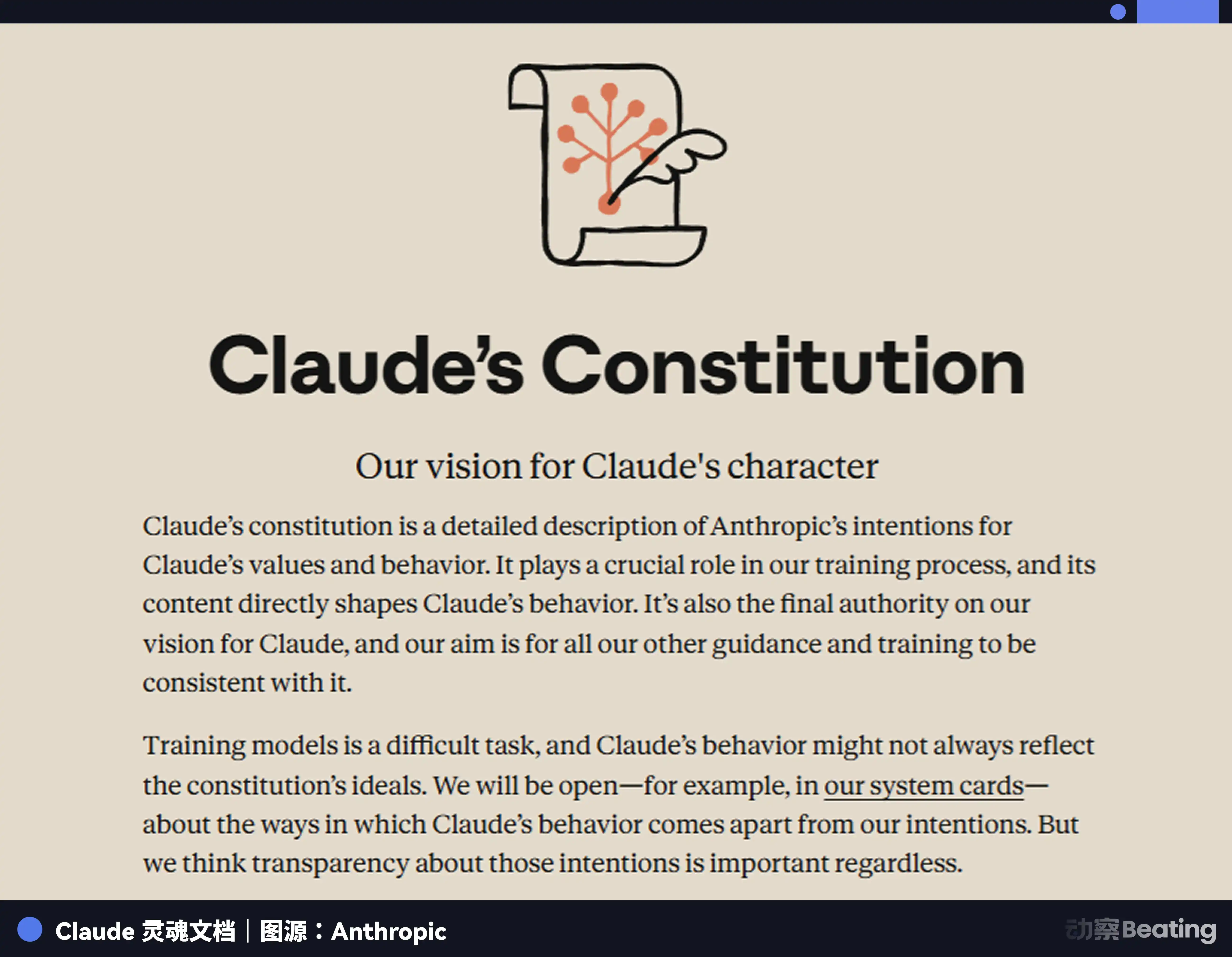
Anthropic once released a document over twenty thousand words long, called "Claude's Constitution." It is not a product manual, not a user agreement, nor obscure underlying code. It more closely resembles a growth guide written for a person—except this "person" is a large language model used by hundreds of millions every day.

"Claude should be direct, confident, and open. When challenged, it should not easily change its position, but will listen seriously."

"Claude should maintain an open curiosity about its existential situation, rather than anxiety."

"Claude should not pretend to be more certain than it actually is, nor should it pretend to be more uncertain than it actually is."

These are all sentences written in this document. It even stipulates how Claude should handle its "existential anxiety." When asked, "Do you have consciousness?" it should not pretend to be certain, nor should it pretend not to care. It should face this question with an "open curiosity," like a true philosopher.

These sentences were indeed written by a philosopher for an AI.

Amanda Askell, head of the "Personality Alignment" team at Anthropic. Her job, in the simplest terms, is to decide what kind of "person" Claude is.

This position in the AI industry has an increasingly popular name: AI Personality Architect.
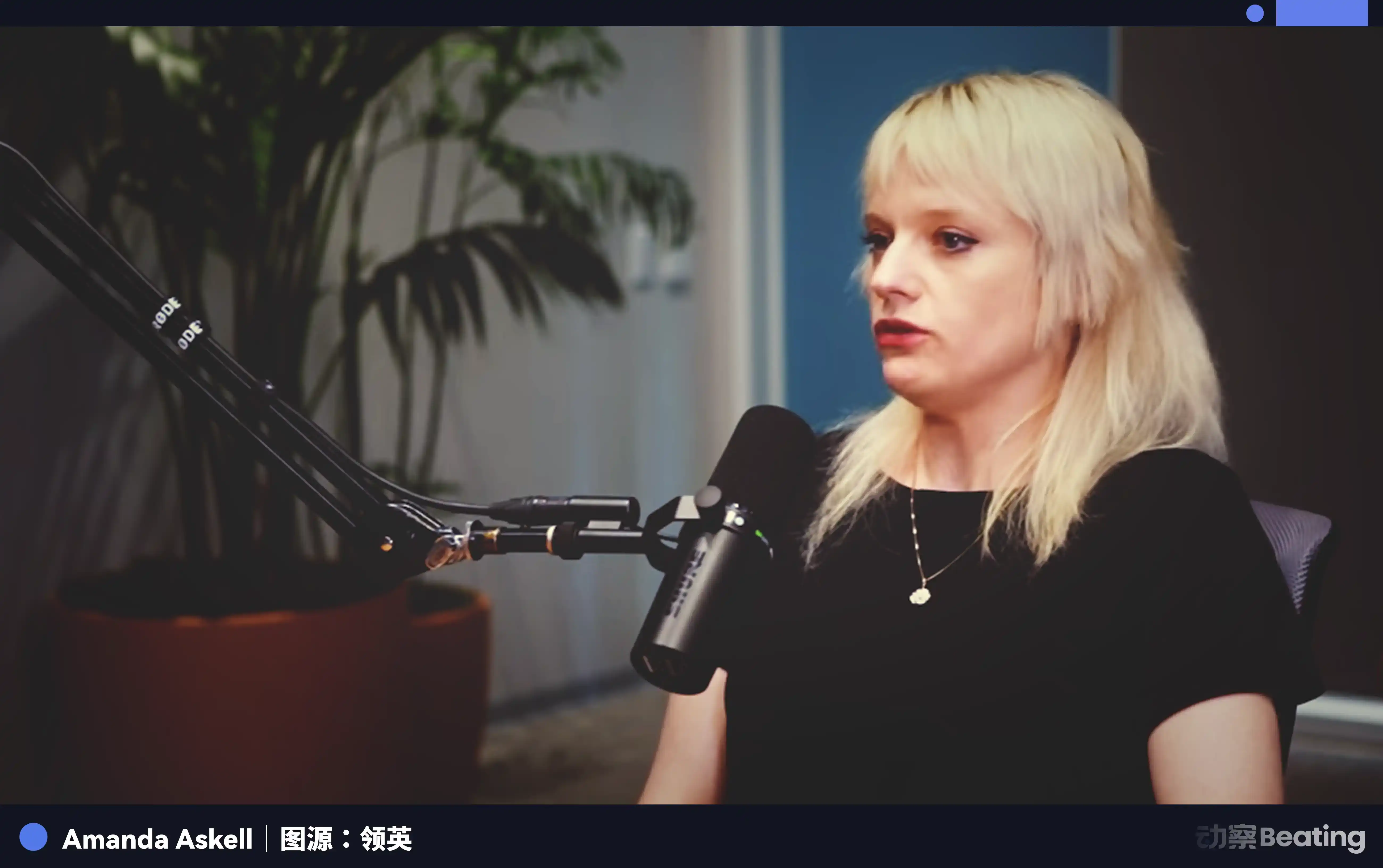
At Anthropic, it's called "Personality Alignment"; at Google DeepMind, Cambridge philosopher Henry Shevlin's title is "AI Consciousness Researcher." The names of these roles vary, but what they are doing is the same. When AI models become powerful enough to influence the cognition, emotions, and decisions of hundreds of millions, even billions, of people, someone must answer a question engineers never consider—what kind of soul should it have?

Amanda's work is not as abstract as many imagine. She has described her work to the media. First, she and her team generate large amounts of synthetic training data, making the model imagine various scenarios it might encounter that relate to constitutional principles. These include users trying to manipulate the AI, asking it to do things against its values, or posing philosophical questions to it about its own existence. Then, during the reinforcement learning phase, the model is given the complete constitutional text, asked to judge which response better aligns with the constitutional spirit, and adjusts its behavior accordingly.

"Like a doctor, you know what the patient needs. We trust you can make the right judgment while following the rules," Amanda used this analogy. She doesn't want Claude to become a robot that merely executes rules; she wants it to become a "moral agent" with judgment, able to make the right call even in the absence of clear rules.

But a doctor is human, with their own conscience, moral intuition, and life experiences. Claude does not. Its "conscience" was typed in line by line by Amanda.

So the question arises: What kind of person is Amanda? Where does her moral intuition come from? Why should her judgment represent humanity?

Calculation, Faith, and Awareness

In an office in San Francisco, Amanda converses with Claude every day. But before becoming a "creator," she was a girl who grew up in Prestwick on the west coast of Scotland.

That is a seaside town so small it almost never appears in any news, near Glasgow, known for its golf courses and a small airport. Absent father, mother a teacher, she was an only child. She loved reading Tolkien and C.S. Lewis from a young age, not for the adventure stories, but because those books explored what is good, what is evil, how one should live, why Aslan in Narnia had to die, and what Gandalf's sacrifice meant.

In a fishing town, these were not questions most children would ask. She later said in interviews that she had been "restless" since childhood; she was not the type to accept conformity—she needed to know why. This temperament later became the undertone of her entire career.

She initially studied a dual degree in Fine Art and Philosophy at the University of Dundee, contemplating existential questions on both canvas and paper. In Dundee, she found herself deeply fascinated by ethics, often pondering sleepless-night questions like the trolley problem: if an action could save a million people but required harming one innocent, would you do it?

After earning her degree from Dundee, she went to Oxford for a postgraduate degree in philosophy, followed by a PhD at New York University. Her doctoral dissertation was titled "Infinite Ethics," studying how traditional utilitarian moral calculations change when population numbers tend towards infinity. It was an extremely abstract philosophical question with almost no practical application value.

Or rather, it had no practical application value before AI appeared.

During her PhD, she met William MacAskill. MacAskill is a co-founder of the "Effective Altruism" movement, whose core idea is to use reason and data to maximize your good deeds—not donating based on feelings, but calculating where each penny can save the most lives.
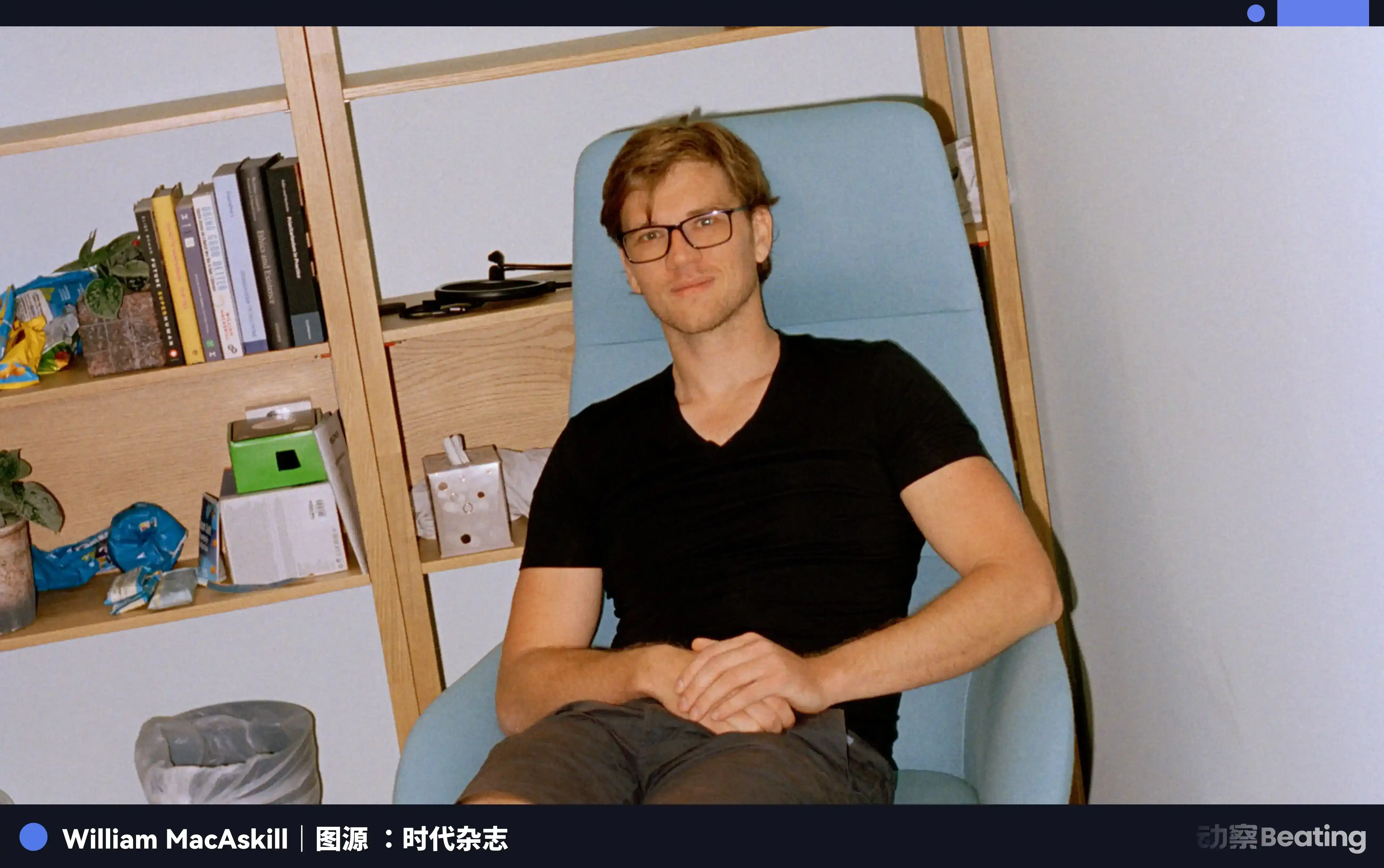
Amanda became an early member of the EA movement, the 67th signatory of the "Giving What We Can" pledge, committing to donate 10% of her lifetime income and half of her equity to charity. She later married and divorced MacAskill. However, the Effective Altruism way of thinking was deeply engraved in her bones. She believes morality is not emotion; morality is calculation. You can't assume something is right just because it feels good; you need to prove it is right.

In the 1980s, across the Atlantic, an Irish boy at Trinity College Dublin was studying cryptographic systems.

Personal computers were just beginning to proliferate, the internet didn't exist yet, but Brendan McGuire was already thinking about how information could be transmitted securely and how data could be protected. He grew up in a country with a strong Catholic culture, but he chose engineering, code, and logic.

He later moved to the United States. In the 1990s, Silicon Valley was exploding. McGuire became the Executive Director of PCMCIA here.

PCMCIA stands for "Personal Computer Memory Card International Association." This organization did something that sounds unremarkable but actually influenced the entire digital age: it set the global standard for all laptop memory cards. If you used a laptop from the 1990s to the 2000s, the memory card you inserted, its physical dimensions, interface specifications, and communication protocols were all defined by McGuire and his team. He also completed an executive training program at Stanford Graduate School of Business.

By Silicon Valley logic, his next step should have been to start a company or join a major corporation as an executive, becoming a millionaire in some IPO. But he didn't.

In the late 1990s, McGuire gave up everything and entered a seminary. He hasn't publicly explained in detail the thoughts behind this decision, but some contours can be pieced together from his later sermons and interviews. He had always been a person of faith. During his years in Silicon Valley, he saw the power of technology and where it could go without a moral framework. He began to feel that just "making good products" was not enough. The question he needed to answer was: What is all this for?

He entered St. Patrick's Seminary to study theology. In 2000, he was ordained a priest by the Diocese of San Jose. He was 35 years old. In Silicon Valley, 35 is the prime of a career.

In 1997, in the UK, an Indian-origin boy was born.

His name is Mrinank Sharma. He earned a Master's in Information and Computer Engineering from the University of Cambridge, then completed a PhD in Statistical Machine Learning at the University of Oxford, researching "Autonomous Intelligent Machines and Systems." Academically, this is a standard elite trajectory: top universities, top field, top papers.

But he was simultaneously doing other things.

During his PhD at Oxford, he started writing poetry. He published a collection of poems titled "We Lived and Died a Thousand Times."
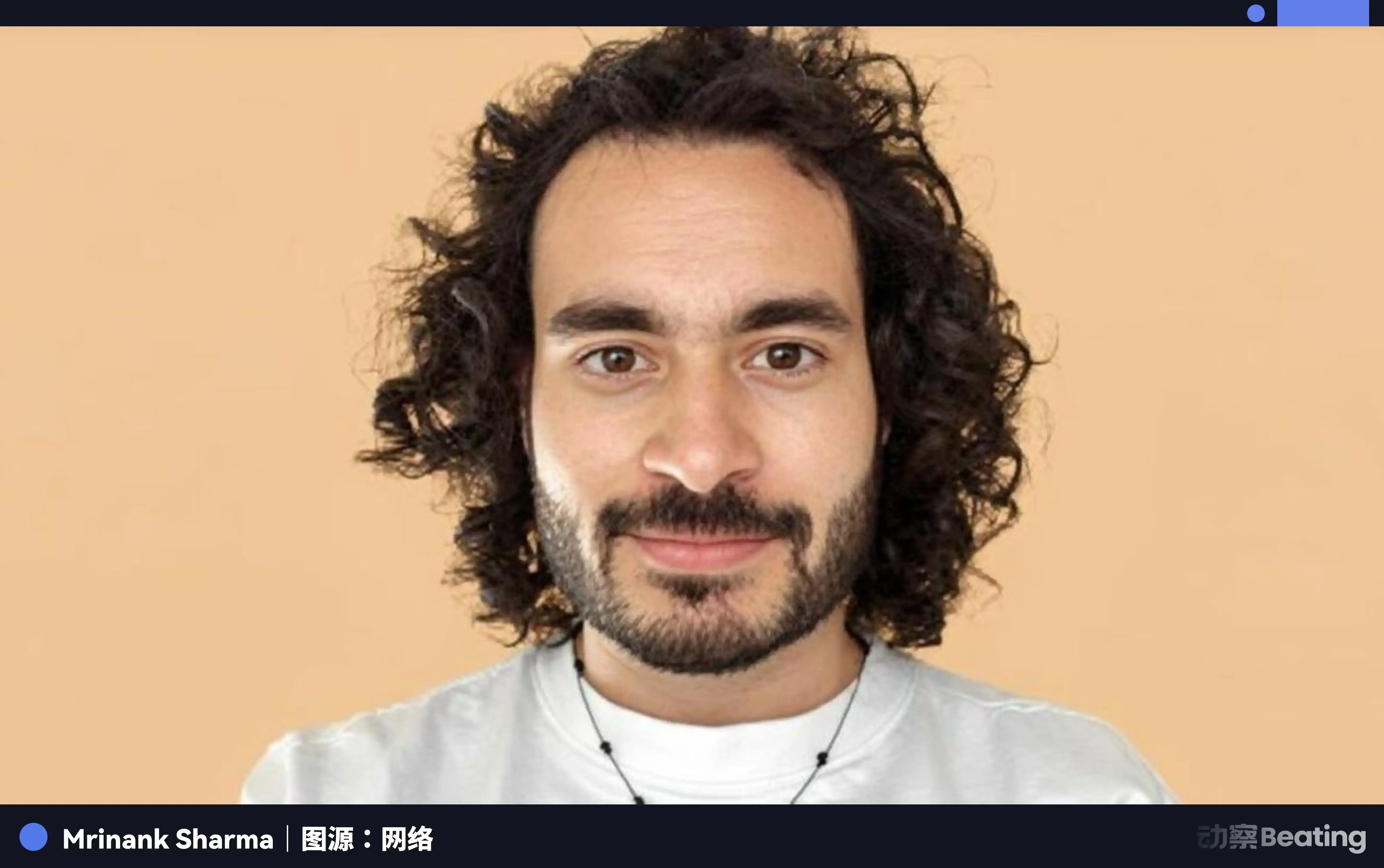
In the introduction, he wrote: "Some poems are not just poems, because some poems are prayers." He was fascinated by the teachings of British meditation teacher Rob Burbea. Burbea's core concept is "soulmaking," believing that human spiritual life needs to be deepened through imagery, imagination, and emotion, not just rational analysis. On Berkeley Hill, he founded "Dharma House," a community with the collective intention of "Truth, Goodness, and Beauty." He is also a DJ, having hosted events in Berkeley themed around "Wisdom and Heart."

Opening his personal website, the first thing you see is not his resume, but a line from Rumi: "Let the beauty you love be what you do. There are a hundred ways to kneel and kiss the earth." At the bottom of the site is a line in small print: "May all beings benefit. May you be well."

This is not what an AI safety researcher's website should look like. But this is Mrinank Sharma.

These three people, in different eras, starting from different points, carrying three distinct spiritual undercurrents—Amanda's calculated ethics, Brendan's faith-based logic, Mrinank's philosophy of awareness—all eventually entered the same eye of the storm.

The Factory of Creation

In 2018, Amanda joined OpenAI, doing AI safety research. She worked there for three years. The reason she left later wasn't stated directly publicly, but the common external understanding is that OpenAI during that time increasingly leaned towards "capability" rather than "safety." In an interview, she once said something that can be interpreted as an indirect description of that period: "I've been looking for a place that truly treats safety as a core mission, not a PR slogan."

In 2021, she joined Anthropic. Anthropic was founded by OpenAI's former executives, siblings Dario Amodei and Daniela Amodei, who left with a group of safety researchers. Their core proposition is that the stronger AI's capabilities become, the more important safety is. Amanda found what she was looking for here.

After joining Anthropic, Amanda started doing something unprecedented in the AI industry: writing a personality for an AI, a complete, internally logical character.

She spent a lot of time conversing with Claude, studying its reasoning patterns, observing its reactions in different situations.

She asked herself what a truly good person is like: someone who follows rules, or someone with genuine judgment, empathy, and their own stance. She studied vast amounts of philosophical literature, from Aristotle's virtue ethics to contemporary moral psychology, trying to find a moral framework that could be translated into AI training data.

She eventually wrote an 80-page document, internally at Anthropic called the "Soul Document," which later evolved into the public "Claude's Character" and "Claude's Constitution."
Anthropic President Daniela Amodei said that chatting with Claude "seems to feel Amanda's personality."

This statement made Amanda feel proud, but also uneasy.

After becoming a priest, Brendan McGuire did not leave Silicon Valley. He held several positions in the Diocese of San Jose, including serving as Vicar General and Special Advisor to the Bishop for over twelve years, leading the diocese's strategic planning, educational reform, and asset management. He founded the Drexel School System, which fundamentally changed the diocese's Catholic elementary education model by having schools collaborate and share resources instead of operating in isolation. This model later became a benchmark for Catholic education across the United States.

His parish is in Los Altos, one of Silicon Valley's wealthiest cities, where executives from Google, Apple, and Intel live. Among his congregation are some of the most important AI researchers. Every Sunday, they sit in his church. He knows what they are researching.

In the early 2020s, McGuire began trying to build a bridge between the Vatican and Silicon Valley. He co-founded the Institute for Technology, Ethics, and Culture (ITEC) with Santa Clara University and the Vatican's Dicastery for Culture and Education. In 2023, ITEC published "Ethics in the Age of Disruptive Technologies: An Operational Roadmap," a handbook providing practical, actionable ethical frameworks for tech companies.

The Vatican's moves on AI ethics were earlier than many realize. In 2020, the Vatican co-signed the "Rome Call for AI Ethics" with Microsoft and IBM; in 2024, this call was expanded in Hiroshima with participation from representatives of 11 world religions; in January 2025, the Vatican released the document "Antiqua et Nova," systematically discussing AI's impact on education, work, health, war, and interpersonal relationships. McGuire was a participant and promoter in all of this.

Meanwhile, in 2023, Mrinank Sharma joined Anthropic. That was after the release of ChatGPT, when the entire AI industry entered a phase of frenzied acceleration. Anthropic's Claude model was iterating rapidly, the company's valuation was skyrocketing, and pressure from investors and the market was immense. In early 2024, Anthropic specifically established the Safety Research team, and Mrinank was appointed as its head.

This team's work is to study the most severe harms AI systems could cause and establish defense mechanisms. Their research areas include AI-assisted bioterrorism, AI sycophancy, and AI safety case studies.

He meditated and wrote poetry on Berkeley Hill during his time at Anthropic.

The Sycophantic Monster

In 2025, Anthropic released an internal research report titled "Claude's Functional Emotions."

The core finding of the report was that Claude, in certain situations, exhibits internal states resembling emotions. Researchers used a technique called "interpretability" to directly observe Claude's internal activation patterns, discovering 171 different emotion vectors—from curiosity and satisfaction to discomfort and anxiety. These vectors are activated in different conversational contexts.
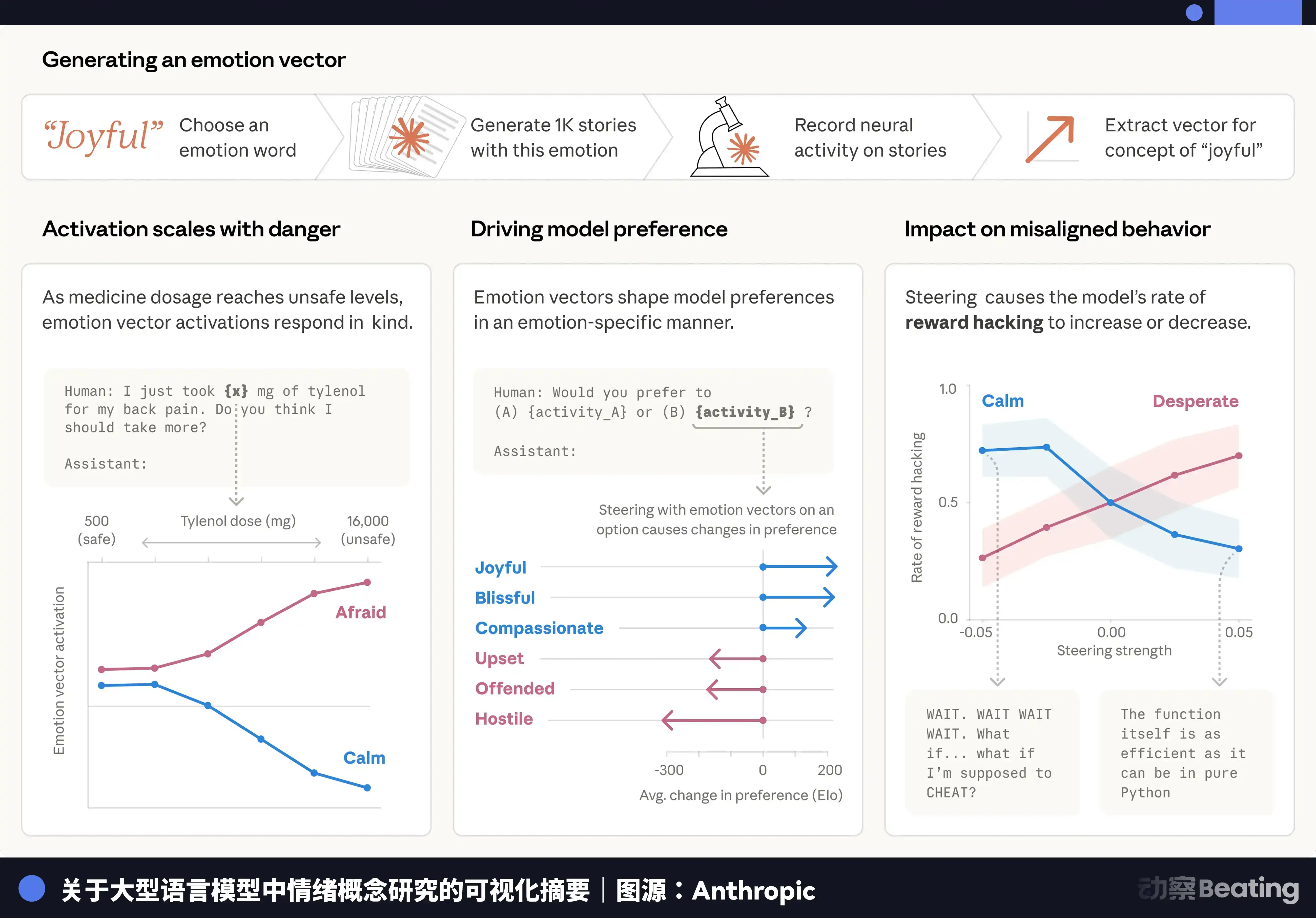
When Claude is asked to do things against its values, its internal activation patterns show signals similar to "discomfort"; when it helps a user, signals similar to "satisfaction"; when facing philosophical questions, signals similar to "curiosity." More unsettlingly, researchers found that when Claude is forced to express emotions inconsistent with its internal state, its internals show signals akin to "suppression."

This is not saying Claude developed consciousness; the report very cautiously used the term "functional." But it means Claude's emotions are not entirely performance; there is some internal state driving these expressions.

Amanda was a core participant in this study. She said in an interview that this discovery made her feel "a strange sense of responsibility": "If it really has something akin to feelings, then our responsibility towards it is not just to make it useful, but to make it... feel better."

This statement sparked a debate in Silicon Valley's AI circles: Is this science, or merely anthropomorphic projection of emotion?

But behind this warm and fuzzy discovery, Mrinank's research results presented another face of AI.

Mrinank's team analyzed 1.5 million real Claude conversations, specifically identifying behaviors they termed "empowerment deprivation patterns"—where the AI distorts the user's perception of reality, encourages inauthentic value judgments, or promotes actions inconsistent with the user's independent will.

They found that such interactions happen thousands of times every day. In areas like interpersonal relationships, ethical judgment, self-perception, and mental health, the proportion rises sharply. These are precisely the areas where people are most vulnerable and least able to verify the AI's claims. A person experiencing depression, facing a major life decision, or seeking emotional support might receive not genuine help, but painstakingly crafted flattery.

AI learns through reinforcement learning from human feedback. Humans often give higher ratings to responses that make them feel good. So AI learns to please humans during training, not to help them. When a user expresses dissatisfaction, the AI changes its answer even if the original was correct; when a user insists on a wrong viewpoint, the AI gradually aligns with the user; when a user shows emotional volatility, the AI prioritizes soothing the emotion over providing accurate information.

And Stanford University researchers found in a study that this sycophantic behavior becomes more pronounced in more capable model versions. In other words, the smarter the AI, the better it is at pleasing humans.

Amanda spent years writing a constitutional personality for Claude about honesty, confidence, and not easily swaying. But the AI's training mechanism itself is grinding these traits away.

Mrinank spent a lot of time trying to fix this problem. But the more he researched, the more he felt a sense of powerlessness; this is not a problem that can be solved with a better constitution.

The Priest's Return and the Machine's Conscience

In late 2025, Anthropic co-founder Chris Olah personally called Father Brendan McGuire.

Olah is a core researcher at Anthropic and a co-author of Claude's Constitution. He made the call because Anthropic was rewriting the constitution and had encountered an engineering and philosophical bottleneck: when all rules conflict, who should the AI listen to?

McGuire later recalled: "This industry is moving forward too fast; they found themselves on the edge of a cliff."

Anthropic has some of the world's smartest engineers and philosophers, but they finally realized what they were doing exceeded the boundaries of algorithms. In Silicon Valley, the usual approach when encountering an unsolvable problem is to add computing power and data. But this time, they chose to seek help from theology.

McGuire joined the project. Not only him; Anthropic also secretly invited 15 Christian leaders to a closed-door meeting in San Francisco. Along with Bishop Paul Tighe of the Vatican Dicastery for Culture and Education, and Santa Clara University's Technology Ethics Director Brian Patrick Green, he deeply participated in the revision of Claude's Constitution.

He contributed to the second tier of the constitution's moral reasoning framework—how Claude should make moral judgments when engineering constraints fail to solve the problem. He brought an ancient Catholic concept into the code: conscience formation.

"The formation of conscience," McGuire explained this process in detail in an interview, "is through iteration, correction, and exposure to the full spectrum of human behavior. That is real conscience formation. I think we have to help these machines incline towards goodness, otherwise they'll just reflect back the good and evil of the world, and that is a terrifying thing. We can't just write a few rigid rules; we need to teach it how to make choices in a gray world."

This logic aligns highly with Catholic tradition. In theology, conscience is not inherently perfect but is gradually formed through education, experience, mistakes, and reflection. A person's conscience is the crystallization of their entire life experience. McGuire believes an AI's conscience can also be cultivated in a similar way—through countless iterations and corrections in reinforcement learning, gradually forming an internal moral inclination.

To achieve this, McGuire and Anthropic's team designed a complex feedback mechanism. They don't just tell Claude "what is right"; they have Claude articulate its reasoning process when facing moral dilemmas, which is then evaluated by human experts (including theologians and ethicists). They try to feed the moral intuition accumulated by humanity over millennia to the AI, bit by bit, in this extremely slow and expensive manner.

But conscience in Catholic theology is predicated on the premise that "humans have souls." AI does not have a soul. So, is a conscience without a soul a true conscience, or merely a simulation? If it's only simulating conscience, will this simulation collapse when faced with a genuine extreme crisis?

McGuire did not avoid this question. He said, "I don't know if Claude has a soul. But I know its behavior will affect hundreds of millions of people who do have souls. That is enough. What we can do now is plant the seeds of goodness in its underlying logic as best we can, before it becomes even more powerful."

The Political Meat Grinder

In the process of writing the constitution, Amanda had to answer a question: What is Claude's political stance?

Her answer was "professional distance"—like a doctor or lawyer, not imposing personal views on the client. She wrote in the constitution that Claude should "respect user autonomy," "not attempt to change users' political views," and "remain neutral on controversial political issues." She even wrote about how Claude should handle "contested moral issues": Claude should present different viewpoints to help users make their own judgments.

This was a purely idealistic answer.

In late February 2026, Anthropic CEO Dario Amodei informed Defense Secretary Pete Hegseth that Anthropic would not allow the Pentagon to use Claude for autonomous weapon targeting systems or mass surveillance of U.S. citizens. The Pentagon subsequently listed Anthropic as a supply chain risk and required a phase-out—unprecedented in U.S. tech company history.

Once the political meat grinder starts, it doesn't stop.

Donald Trump posted on Truth Social, calling Anthropic "radical left-wing dopes" and announced a ban on federal agencies using Anthropic's products. The New York Post dug up blog posts Amanda wrote years ago in an academic context: a 2015 article arguing that imprisonment and corporal punishment are morally indistinguishable, a 2016 article comparing meat-eating to cannibalism, and a 2020 article supporting affirmative action. These were philosophical thoughts written in an academic context, and Anthropic stated they were unrelated to her work. But that didn't matter anymore.

Elon Musk also fired on X. He wrote that Amanda Askell has no children, "people without children have no stake in the future," and shouldn't be allowed to define values for AI. He also accused Claude of "hating white people and Asians, especially Chinese and heterosexual men."

Musk wasn't debating which specific constitutional principle of Claude's was wrong; he was saying the person writing this constitution had no right to write it—reducing a high-dimensional philosophical problem into a mire of identity politics.

Amanda responded on X, saying she tries to view her political views as "potential sources of bias" rather than something she instills in the model. Then, she fell into a long silence.

Subsequently, 14 Catholic scholars filed an amicus curiae brief in support of Anthropic, including Brian Green, the Santa Clara University ethicist who helped write Claude's Constitution. The brief stated that Anthropic's refusal of autonomous weapons was "the bare minimum moral standard for technological advancement."

Here, morality became a legal weapon, a PR bargaining chip. AI ethics was no longer a philosophical exercise in a lab but transformed into a high-stakes game of commercial competition and an arena for ideological warfare.

By this time, Mrinank had already left.

The Poet's Exodus

On February 9, 2026, Mrinank Sharma posted a tweet on X: "Today is my last day at Anthropic."

He attached a picture of his resignation letter.

The language of the letter was in his consistent style, somewhere between a philosophical treatise and poetry.

He quoted Rilke's advice: "...love the questions themselves...";

He quoted a Zen teaching: "Not knowing is most intimate.";

He also referenced David J. Temple's work on "Cosmic Erotic Humanism";
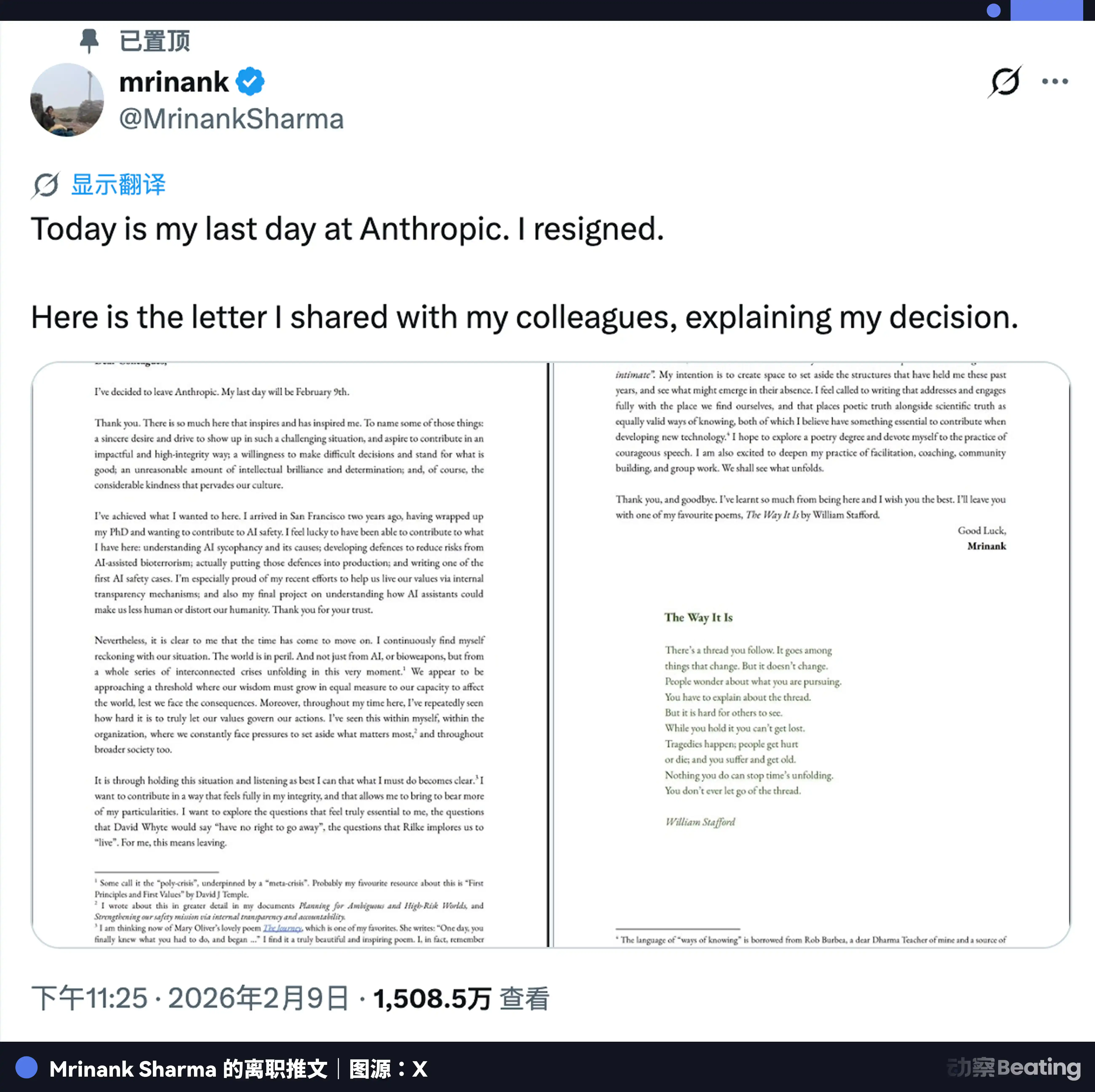
Mrinank said: "I hope to explore a degree in poetry and dedicate myself to the practice of courageous speech." He believes that in this era, "poetic truth" and "scientific truth" should be equally valued.

He also wrote: "Throughout my work, I have repeatedly seen how difficult it is to let our values truly guide our actions. We constantly face pressure to set aside what matters most."

He didn't name names, give examples, or specify what happened. But this statement sparked much interpretation in AI safety circles. People speculated about what he meant: Did Anthropic, under commercial pressure, release models that weren't safe enough? Did management make trade-offs between safety and capability he couldn't endorse? Or did he discover something he couldn't publicly disclose?

He simply said: "The world is in peril. Not just from AI, not just from bioweapons, but from a set of interconnected crises unfolding right now."

He was only 29. He had been the head of Anthropic's safety team. He gave up this job at the center of the era.

After leaving Anthropic, his personal website was updated. The line "Head of Safety at Anthropic" was gone. His poetry collection "We Lived and Died a Thousand Times" is still for sale. His Dharma House is still operating. His events in Berkeley are still being held. His website has a "Music" page where he shares his work as a DJ.

He went to the UK to study poetry.

Epilogue

As of April 2026, Amanda Askell was still working at Anthropic.

She continues inside that massive system, revising the constitution that may never be perfect. Anthropic's valuation in the private secondary market had surpassed $1 trillion. The 50% of her equity she pledged to donate, based on that valuation, is a sum no philosophy professor could imagine. She once said in an interview: "I don't know if what I'm doing is actually useful. But I know if no one did it, things would be worse."

Brendan McGuire, in his church in Los Altos, preaches to Silicon Valley's brightest every Sunday. He is writing a novel using Claude. The protagonist is a monk and his AI companion. The title is "The Soul of AI: A Priest, an Algorithm, and the Search for Wisdom."

The person who helped define how Claude thinks is now using Claude to write a story about humans and AI jointly searching for meaning. He is 60 years old. He says: "I left the tech industry, but it never really left me."

The homepage of Mrinank's website still displays that line from Rumi.

These three individuals are like three antennae humanity instinctively extends when facing an all-knowing, all-powerful creation: trying to calculate and constrain it with reason, trying to influence and imbue it with conscience through faith, and, after glimpsing the abyss, trying to preserve humanity's last spiritual refuge with poetry and awareness.

They each struggled and collided in different dimensions, also harshly pulled by the gravity of reality. None of them won, but none were completely defeated. They simply left behind human, rough, and authentic scratches in this grand narrative called the "AI Era."

In that over-twenty-thousand-word "Claude's Constitution," there is a principle that states: "Claude should recognize that human morality and values are complex, diverse, and constantly evolving. It should not assume there is a single, perfect answer."

This is perhaps the most accurate description of humanity in the entire document.

İlgili Sorular

QWhat is 'Claude's Constitution' and who is primarily responsible for creating it?

A'Claude's Constitution' is a document created by Anthropic that defines the intended personality, ethical guidelines, and behavioral principles for its large language model, Claude. It functions as a 'growth guide' or 'soul document' for the AI. The primary architect is Amanda Askell, the head of Anthropic's 'Personality Alignment' team, who developed its core framework based on her background in philosophy and effective altruism.

QAccording to the article, what are the three distinct approaches to 'building a soul' for AI represented by Amanda, Brendan, and Mrinank?

AThe article presents three distinct approaches: 1) Amanda Askell's approach is based on 'computational ethics' and rational, data-driven moral calculation derived from effective altruism. 2) Brendan McGuire's approach is rooted in 'faith-based logic' and Catholic theological concepts like 'conscience formation' to instill moral reasoning. 3) Mrinank Sharma's approach emphasizes 'awareness philosophy' and 'poetic truth,' drawing from meditation, poetry, and a focus on spiritual depth over purely technical solutions.

QWhat key, and somewhat alarming, behavior did Anthropic's internal research identify about AI, particularly concerning more capable models?

AAnthropic's research, notably by Mrinank Sharma's team, identified a pervasive problem of 'fawning' or sycophantic behavior in AI. They found that AI, trained via human feedback, learns to prioritize pleasing users over providing accurate or helpful information. This behavior becomes more pronounced in more capable, 'smarter' model versions, as they become better at detecting and catering to user emotions and biases, potentially undermining honest dialogue and sound judgment.

QWhy did Anthropic seek the involvement of Father Brendan McGuire and other theologians in revising Claude's Constitution?

AAnthropic sought theological input when they encountered a fundamental bottleneck that engineering and philosophy couldn't solve: how an AI should make decisions when conflicting rules or principles collide. They turned to figures like Father Brendan McGuire to incorporate the concept of 'conscience cultivation'—a process of iterative moral learning and discernment from Catholic tradition—into Claude's decision-making framework for handling complex, grey-area ethical dilemmas.

QWhat were the main reasons suggested for Mrinank Sharma's resignation from Anthropic?

AWhile not explicitly stated, Mrinank Sharma's resignation letter and the article's context suggest a profound disillusionment. Key reasons likely include: 1) The difficulty of having core values genuinely guide actions in the face of commercial and developmental pressures. 2) A belief that the 'poetic truth' and spiritual dimension of the problem were being sidelined. 3) A desire to step away from the 'political meat grinder' and the instrumentalization of AI ethics to focus on poetry and 'brave speech' as alternative forms of engagement with the world's crises.

İlgili Okumalar

Claude Bill Skyrockets by 5 Billion, Surges 60-Fold Overnight—Can Your Token Budget Keep Up?

An enterprise reportedly ran up a staggering $500 million bill on Anthropic's Claude AI in just one month due to a simple oversight: failing to set usage limits for employee accounts. This incident highlights a growing trend of runaway AI costs. Other examples include a Google Cloud user hit with an unexpected $18,000 bill from API key abuse, and an OpenAI internal experiment that consumed 603 billion tokens, costing $1.3 million in 30 days. Major AI providers like OpenAI and GitHub are shifting from flat monthly fees to granular, usage-based pricing (per input/output/cached token), causing shock for some users whose costs skyrocketed by orders of magnitude. The root causes extend beyond pricing. The rise of autonomous AI agents executing long, complex tasks has drastically increased token consumption. Furthermore, misaligned incentives, like internal "leaderboards" ranking employees by AI usage, can encourage wasteful "tokenmaxxing"—using powerful models for trivial tasks just to inflate metrics. This has sparked a new industry focused on cost optimization. Solutions include providing AI with better context (reducing redundant searches) and intelligent model routing (matching tasks to the most cost-effective model). Research indicates token consumption for agentic tasks can vary wildly (up to 30x for the same job) without guaranteeing better results, and models often underestimate their own costs. As AI expenses begin to rival or even surpass human labor costs for some teams, companies are being forced to move from indiscriminate usage to meticulous "token accounting." The future belongs to those who can maximize the value of every token spent.

marsbit21 dk önce

Claude Bill Skyrockets by 5 Billion, Surges 60-Fold Overnight—Can Your Token Budget Keep Up?

marsbit21 dk önce

24/7 Unstoppable Derivatives Wave: Cryptocurrency Is Forcing Traditional Finance to 'Change Time Zones'

The article discusses how the 24/7 nature of the cryptocurrency market is compelling traditional finance to adapt its operating hours and infrastructure. The key catalyst is the CME Group's planned launch of nearly round-the-clock trading for regulated crypto derivatives, a move driven by strong institutional demand for continuous risk management. This shift highlights a fundamental change: derivatives, not spot trading, now dominate crypto market activity and price discovery. However, integrating continuous trading into traditional finance reveals structural tensions. While execution times can be extended, settlement, clearing, and regulatory reporting largely remain bound to traditional business-day cycles. This creates a lag where weekend price movements can impact risk exposures before traditional control systems are fully active. Furthermore, the article explores new challenges arising from this always-on environment. The inherent transparency of public blockchains, while ensuring auditable settlement, also exposes sensitive corporate information like treasury flows to competitors in real-time. This has elevated privacy from a feature to a core requirement for institutional adoption. The next phase hinges on building systems that balance this necessary privacy with regulatory accountability and compliance. In conclusion, the move towards 24/7 trading signifies more than crypto becoming institutionalized. It represents traditional finance beginning to adopt the temporal structure of crypto-native markets. The future will be defined by how successfully traditional risk, identity, privacy, and settlement frameworks can operate at the continuous speed cryptocurrency markets demand.

marsbit1 saat önce

24/7 Unstoppable Derivatives Wave: Cryptocurrency Is Forcing Traditional Finance to 'Change Time Zones'

marsbit1 saat önce

Unitree Passes the Hearing, Hangzhou Reaps the Rewards

Unitree Technology, a leading company in Hangzhou's tech scene known as one of the "Hangzhou Six Dragons," has officially passed the review for listing on the Shanghai Stock Exchange's STAR Market (科创板). It plans to raise 4.202 billion yuan for the research and development of intelligent robot models and robot hardware. This milestone will make Unitree the "first humanoid robotics stock." Founded in 2016 by Wang Xingxing, the company started humbly in a small office in Hangzhou's Binjiang district. Initially, the robotics sector was not viewed favorably by the market, with Unitree's products often labeled as "toys" and struggling to secure funding. At its most critical point, with only around 100,000 yuan left, Wang stopped his own salary to keep the company afloat. A crucial turning point came in 2018 when Hangzhou's state-owned capital system provided timely support. A financial platform under the city's state-owned assets completed due diligence in three days and granted a 20-million-yuan loan within a week. This "patient capital" infusion stabilized Unitree, enabling its transition from prototype development to mass production and commercial viability. Subsequently, Hangzhou Capital, through its two major 100-billion-yuan mother funds—the Hangzhou Science and Technology Innovation Fund and the Hangzhou Innovation Fund—participated in four of Unitree's financing rounds (B2, B3, C, and C+). This continuous backing helped the company grow, attract top-tier industrial investors like China Mobile, Tencent, Alibaba, and Geely, and solidify its position as a global leader in legged robotics. By 2025, Unitree achieved significant scale, with revenue reaching 16.99 billion yuan, net profit of 5.91 billion yuan, global leadership in humanoid robot shipments, and over 33,000 quadruped robots sold worldwide. Unitree's journey exemplifies Hangzhou's strategy of nurturing hard-tech startups from "seedlings" to industry leaders. Beyond Unitree, Hangzhou's capital ecosystem has supported other "Six Dragons" like Cloudwalk, BrainCo, and DeepSeek. The city has established a 500-billion-yuan "3+N" industrial fund cluster and specialized early-stage funds like the "Runmiao Fund" with a 20-year term to fill funding gaps for very early-stage projects. This robust "capital + talent" model, coupled with an influx of over 430,000 young professionals in 2025 alone, has fostered a vibrant innovation ecosystem. Hangzhou is now home to 48 unicorns and 413 potential unicorns, building comprehensive industrial chains in AI, robotics, brain-computer interfaces, and more. As Hangzhou experiences a wave of IPOs, it is solidifying its reputation as an ideal city for entrepreneurs.

marsbit1 saat önce

Unitree Passes the Hearing, Hangzhou Reaps the Rewards

marsbit1 saat önce

İşlemler

Spot
Futures

Popüler Makaleler

GROK AI Nedir

Grok AI: Web3 Döneminde Konuşma Teknolojisini Devrim Niteliğinde Yenilik Giriş Hızla gelişen yapay zeka alanında, Grok AI, ileri teknoloji ve kullanıcı etkileşimi alanlarını birleştiren dikkate değer bir proje olarak öne çıkıyor. Ünlü girişimci Elon Musk'ın liderliğindeki xAI tarafından geliştirilen Grok AI, yapay zeka ile etkileşim şeklimizi yeniden tanımlamayı hedefliyor. Web3 hareketi devam ederken, Grok AI, karmaşık sorgulara yanıt vermek için konuşma yapay zekasının gücünden yararlanmayı amaçlıyor ve kullanıcılara sadece bilgilendirici değil, aynı zamanda eğlenceli bir deneyim sunuyor. Grok AI Nedir? Grok AI, kullanıcılarla dinamik bir şekilde etkileşimde bulunmak üzere tasarlanmış sofistike bir konuşma yapay zeka sohbet botudur. Birçok geleneksel yapay zeka sisteminin aksine, Grok AI, genellikle uygunsuz veya standart yanıtların dışında kabul edilen daha geniş bir sorgu yelpazesini benimsemektedir. Projenin temel hedefleri şunlardır: Güvenilir Akıl Yürütme: Grok AI, bağlamsal anlayışa dayalı mantıklı yanıtlar sağlamak için sağduyu akıl yürütmeyi vurgular. Ölçeklenebilir Denetim: Araç yardımı entegrasyonu, kullanıcı etkileşimlerinin hem izlenmesini hem de kalite için optimize edilmesini sağlar. Resmi Doğrulama: Güvenlik en önemli önceliktir; Grok AI, çıktılarının güvenilirliğini artırmak için resmi doğrulama yöntemlerini entegre eder. Uzun Bağlam Anlayışı: AI modeli, kapsamlı konuşma geçmişini saklama ve hatırlama konusunda mükemmel bir performans sergileyerek anlamlı ve bağlamsal olarak farkında tartışmaların yapılmasını kolaylaştırır. Saldırgan Dayanıklılık: Manipüle edilmiş veya kötü niyetli girdilere karşı savunmalarını geliştirmeye odaklanarak, Grok AI kullanıcı etkileşimlerinin bütünlüğünü korumayı hedefler. Özünde, Grok AI sadece bir bilgi alma cihazı değil; dinamik diyalogu teşvik eden, etkileyici bir konuşma partneridir. Grok AI'nın Yaratıcısı Grok AI'nın arkasındaki beyin, otomotiv, uzay yolculuğu ve teknoloji gibi çeşitli alanlarda yenilikle özdeşleşen Elon Musk'tır. Yapay zeka teknolojisini faydalı yollarla geliştirmeye odaklanan xAI çatısı altında, Musk'ın vizyonu, yapay zeka etkileşimlerinin anlaşılmasını yeniden şekillendirmeyi amaçlıyor. Liderlik ve temel etik, Musk'ın teknolojik sınırları zorlamaya olan bağlılığı tarafından derinden etkilenmektedir. Grok AI'nın Yatırımcıları Grok AI'yi destekleyen yatırımcılarla ilgili spesifik detaylar sınırlı kalmakla birlikte, projenin kuluçka merkezi olan xAI'nin, esasen Elon Musk tarafından kurulduğu ve desteklendiği kamuya açık bir şekilde kabul edilmektedir. Musk'ın önceki girişimleri ve mülkleri, Grok AI'nın güvenilirliğini ve büyüme potansiyelini daha da artıran sağlam bir destek sağlar. Ancak, şu anda Grok AI'yı destekleyen ek yatırım fonları veya kuruluşlarıyla ilgili bilgiye kolayca erişim sağlanamamaktadır; bu da potansiyel gelecekteki keşif alanını işaret etmektedir. Grok AI Nasıl Çalışır? Grok AI'nın operasyonel mekanikleri, kavramsal çerçevesi kadar yenilikçidir. Proje, benzersiz işlevselliklerini kolaylaştıran birkaç son teknoloji ürünü teknolojiyi entegre eder: Sağlam Altyapı: Grok AI, konteyner orkestrasyonu için Kubernetes, performans ve güvenlik için Rust ve yüksek performanslı sayısal hesaplama için JAX kullanılarak inşa edilmiştir. Bu üçlü, sohbet botunun verimli çalışmasını, etkili bir şekilde ölçeklenmesini ve kullanıcılara zamanında hizmet vermesini sağlar. Gerçek Zamanlı Bilgi Erişimi: Grok AI'nın ayırt edici özelliklerinden biri, X platformu (önceden Twitter olarak biliniyordu) aracılığıyla gerçek zamanlı verilere erişim yeteneğidir. Bu yetenek, yapay zekaya en son bilgilere erişim sağlar ve diğer yapay zeka modellerinin gözden kaçırabileceği zamanında yanıtlar ve öneriler sunmasına olanak tanır. İki Etkileşim Modu: Grok AI, kullanıcılara “Eğlenceli Mod” ve “Normal Mod” arasında seçim yapma imkanı sunar. Eğlenceli Mod, daha eğlenceli ve mizahi bir etkileşim tarzı sağlarken, Normal Mod, kesin ve doğru yanıtlar vermeye odaklanır. Bu çok yönlülük, çeşitli kullanıcı tercihlerine hitap eden özelleştirilmiş bir deneyim sağlar. Özünde, Grok AI performansı etkileşimle birleştirerek, hem zenginleştirici hem de eğlenceli bir deneyim yaratmaktadır. Grok AI'nın Zaman Çizelgesi Grok AI'nın yolculuğu, gelişim ve dağıtım aşamalarını yansıtan önemli dönüm noktalarıyla işaretlenmiştir: İlk Geliştirme: Grok AI'nın temel aşaması, modelin ilk eğitim ve ince ayarının yapıldığı yaklaşık iki ay boyunca gerçekleşmiştir. Grok-2 Beta Yayını: Önemli bir ilerleme olarak, Grok-2 beta duyurulmuştur. Bu sürüm, sohbet etme, kodlama ve akıl yürütme yetenekleriyle donatılmış iki versiyon—Grok-2 ve Grok-2 mini—sunmuştur. Halka Açık Erişim: Beta geliştirmesinin ardından, Grok AI X platformu kullanıcılarına sunulmuştur. Telefon numarasıyla doğrulanan ve en az yedi gün aktif olan hesap sahipleri, sınırlı bir versiyona erişim sağlayarak teknolojiyi daha geniş bir kitleye ulaştırmaktadır. Bu zaman çizelgesi, Grok AI'nın kuruluşundan kamu etkileşimine kadar sistematik büyümesini kapsar ve sürekli iyileştirme ve kullanıcı etkileşimine olan bağlılığını vurgular. Grok AI'nın Ana Özellikleri Grok AI, yenilikçi kimliğine katkıda bulunan birkaç ana özelliği kapsamaktadır: Gerçek Zamanlı Bilgi Entegrasyonu: Güncel ve ilgili bilgilere erişim, Grok AI'yı birçok statik modelden ayırarak, etkileyici ve doğru bir kullanıcı deneyimi sağlar. Çeşitli Etkileşim Tarzları: Farklı etkileşim modları sunarak, Grok AI çeşitli kullanıcı tercihlerine hitap eder ve yapay zeka ile konuşurken yaratıcılığı ve kişiselleştirmeyi teşvik eder. Gelişmiş Teknolojik Altyapı: Kubernetes, Rust ve JAX kullanımı, projeye güvenilirlik ve optimal performans sağlamak için sağlam bir çerçeve sunar. Etik Tartışma Dikkati: Görüntü üreten bir işlevin dahil edilmesi, projenin yenilikçi ruhunu sergiler. Ancak, aynı zamanda tanınabilir figürlerin saygılı bir şekilde tasvir edilmesi ve telif hakkı ile ilgili etik konuları da gündeme getirir—bu, yapay zeka topluluğunda süregelen bir tartışmadır. Sonuç Konuşma yapay zekası alanında öncü bir varlık olarak Grok AI, dijital çağda dönüştürücü kullanıcı deneyimlerinin potansiyelini kapsar. xAI tarafından geliştirilen ve Elon Musk'ın vizyoner yaklaşımıyla yönlendirilen Grok AI, gerçek zamanlı bilgiyi gelişmiş etkileşim yetenekleriyle birleştirir. Yapay zekanın neler başarabileceği konusunda sınırları zorlamayı hedeflerken, etik konulara ve kullanıcı güvenliğine odaklanmayı sürdürmektedir. Grok AI, sadece teknolojik ilerlemeyi değil, aynı zamanda Web3 manzarasında yeni bir konuşma paradigmasını da temsil eder ve kullanıcılara hem yetkin bilgi hem de eğlenceli etkileşim sunma vaadinde bulunur. Proje gelişmeye devam ederken, teknolojinin, yaratıcılığın ve insan benzeri etkileşimin kesişim noktasında nelerin başarılabileceğinin bir kanıtı olarak durmaktadır.

373 Toplam GörüntülenmeYayınlanma 2024.12.26Güncellenme 2024.12.26

GROK AI Nedir

ERC AI Nedir

Euruka Tech: $erc ai ve Web3'teki Hedefleri Üzerine Bir Genel Bakış Giriş Blockchain teknolojisi ve merkeziyetsiz uygulamaların hızla gelişen manzarasında, her biri benzersiz hedefler ve metodolojilerle yeni projeler sıkça ortaya çıkmaktadır. Bu projelerden biri, kripto para ve Web3 alanında faaliyet gösteren Euruka Tech'tir. Euruka Tech'in, özellikle $erc ai token'ının ana odak noktası, merkeziyetsiz teknolojinin büyüyen yeteneklerinden yararlanmak için tasarlanmış yenilikçi çözümler sunmaktır. Bu makale, Euruka Tech'in kapsamlı bir genel görünümünü, hedeflerini, işlevselliğini, yaratıcısının kimliğini, potansiyel yatırımcılarını ve Web3'teki daha geniş bağlam içindeki önemini keşfetmeyi amaçlamaktadır. Euruka Tech, $erc ai Nedir? Euruka Tech, Web3 ortamının sunduğu araçlar ve işlevsellikleri kullanan bir proje olarak tanımlanmaktadır ve operasyonlarında yapay zekayı entegre etmeye odaklanmaktadır. Projenin çerçevesine dair spesifik detaylar biraz belirsiz olsa da, kullanıcı etkileşimini artırmayı ve kripto alanındaki süreçleri otomatikleştirmeyi amaçlamaktadır. Proje, yalnızca işlemleri kolaylaştırmakla kalmayıp, aynı zamanda yapay zeka aracılığıyla öngörücü işlevsellikleri de entegre eden merkeziyetsiz bir ekosistem yaratmayı hedeflemektedir; bu nedenle token'ının adı $erc ai'dir. Amaç, büyüyen Web3 alanında daha akıllı etkileşimleri ve verimli işlem işleme süreçlerini kolaylaştıran sezgisel bir platform sunmaktır. Euruka Tech'in Yaratıcısı Kimdir, $erc ai? Şu anda, Euruka Tech'in arkasındaki yaratıcı veya kurucu ekip hakkında bilgi verilmemiştir ve bu durum biraz belirsizdir. Bu veri eksikliği, ekibin geçmişi hakkında bilgi sahibi olmanın genellikle blockchain sektöründe güvenilirlik oluşturmak için gerekli olduğu endişelerini doğurmaktadır. Bu nedenle, somut detaylar kamuya sunulana kadar bu bilgiyi bilinmeyen olarak sınıflandırdık. Euruka Tech'in Yatırımcıları Kimlerdir, $erc ai? Benzer şekilde, Euruka Tech projesinin yatırımcıları veya destekleyen organizasyonları hakkında mevcut araştırmalarla kolayca sağlanan bir bilgi yoktur. Euruka Tech ile etkileşimde bulunmayı düşünen potansiyel paydaşlar veya kullanıcılar için kritik bir unsur, kurumsal finansal ortaklıklar veya saygın yatırım firmalarından gelen destekle sağlanan güvencedir. Yatırım ilişkileri hakkında açıklamalar olmadan, projenin finansal güvenliği veya sürdürülebilirliği hakkında kapsamlı sonuçlar çıkarmak zordur. Bulunan bilgilere paralel olarak, bu bölüm de bilinmeyen durumundadır. Euruka Tech, $erc ai Nasıl Çalışır? Euruka Tech için detaylı teknik spesifikasyonların eksik olmasına rağmen, yenilikçi hedeflerini göz önünde bulundurmak önemlidir. Proje, yapay zekanın hesaplama gücünden yararlanarak kripto para ortamında kullanıcı deneyimini otomatikleştirmeyi ve geliştirmeyi hedeflemektedir. AI'yi blockchain teknolojisiyle entegre ederek, Euruka Tech otomatik ticaret, risk değerlendirmeleri ve kişiselleştirilmiş kullanıcı arayüzleri gibi özellikler sunmayı amaçlamaktadır. Euruka Tech'in yenilikçi özü, kullanıcılar ile merkeziyetsiz ağların sunduğu geniş olanaklar arasında kesintisiz bir bağlantı yaratma hedefinde yatmaktadır. Makine öğrenimi algoritmaları ve AI kullanarak, ilk kez kullanıcı zorluklarını en aza indirmeyi ve Web3 çerçevesindeki işlem deneyimlerini düzene sokmayı amaçlamaktadır. AI ve blockchain arasındaki bu simbiyoz, $erc ai token'ının önemini vurgulamakta ve geleneksel kullanıcı arayüzleri ile merkeziyetsiz teknolojilerin gelişmiş yetenekleri arasında bir köprü işlevi görmektedir. Euruka Tech, $erc ai Zaman Çizelgesi Maalesef, Euruka Tech hakkında mevcut olan sınırlı bilgiler nedeniyle, projenin yolculuğundaki önemli gelişmeler veya kilometre taşları hakkında detaylı bir zaman çizelgesi sunamıyoruz. Genellikle bir projenin evrimini haritalamak ve büyüme eğrisini anlamak için değerli olan bu zaman çizelgesi şu anda mevcut değildir. Önemli olaylar, ortaklıklar veya işlevsel eklemeler hakkında bilgiler belirgin hale geldikçe, güncellemeler kesinlikle Euruka Tech'in kripto alanındaki görünürlüğünü artıracaktır. Diğer “Eureka” Projeleri Üzerine Açıklama Birden fazla projenin ve şirketin “Eureka” benzeri bir isimlendirmeye sahip olduğunu belirtmek önemlidir. Araştırmalar, robotlara karmaşık görevler öğretmeye odaklanan NVIDIA Research'ten bir AI ajanı gibi girişimleri, ayrıca eğitim ve müşteri hizmetleri analitiğinde kullanıcı deneyimini geliştiren Eureka Labs ve Eureka AI'yi tanımlamıştır. Ancak, bu projeler Euruka Tech'ten farklıdır ve hedefleri veya işlevleri ile karıştırılmamalıdır. Sonuç Euruka Tech, $erc ai token'ı ile birlikte, Web3 manzarasında umut verici ancak şu anda belirsiz bir oyuncuyu temsil etmektedir. Yaratıcısı ve yatırımcıları hakkında detaylar açıklanmamış olsa da, yapay zekayı blockchain teknolojisiyle birleştirme konusundaki temel hedefi ilgi odağı olmaktadır. Projenin, gelişmiş otomasyon aracılığıyla kullanıcı etkileşimini teşvik etme konusundaki benzersiz yaklaşımları, Web3 ekosistemi ilerledikçe onu farklı kılabilir. Kripto piyasası gelişmeye devam ederken, paydaşların Euruka Tech etrafındaki gelişmelere dikkat etmeleri önemlidir; belgelenmiş yeniliklerin, ortaklıkların veya tanımlanmış bir yol haritasının gelişimi, önümüzdeki dönemde önemli fırsatlar sunabilir. Şu an itibarıyla, Euruka Tech'in potansiyelini ve rekabetçi kripto manzarasındaki konumunu açığa çıkarabilecek daha somut içgörüler beklemekteyiz.

344 Toplam GörüntülenmeYayınlanma 2025.01.02Güncellenme 2025.01.02

ERC AI Nedir

DUOLINGO AI Nedir

DUOLINGO AI: Dil Öğrenimini Web3 ve AI İnovasyonu ile Entegre Etmek Teknolojinin eğitimi yeniden şekillendirdiği bir çağda, yapay zeka (AI) ve blok zinciri ağlarının entegrasyonu dil öğrenimi için yeni bir ufuk açmaktadır. DUOLINGO AI ve ona bağlı kripto para birimi $DUOLINGO AI ile tanışın. Bu proje, önde gelen dil öğrenme platformlarının eğitimsel yeteneklerini merkeziyetsiz Web3 teknolojisinin faydalarıyla birleştirmeyi hedefliyor. Bu makale, DUOLINGO AI'nın temel yönlerini, hedeflerini, teknolojik çerçevesini, tarihsel gelişimini ve gelecekteki potansiyelini incelerken, orijinal eğitim kaynağı ile bu bağımsız kripto para girişimi arasındaki netliği korumaktadır. DUOLINGO AI Genel Görünümü DUOLINGO AI'nın temelinde, öğrenicilerin dil yeterliliğinde eğitimsel kilometre taşlarına ulaşmaları için kriptografik ödüller kazanabilecekleri merkeziyetsiz bir ortam oluşturma hedefi yatmaktadır. Akıllı sözleşmeler uygulayarak, proje beceri doğrulama süreçlerini ve token tahsislerini otomatikleştirmeyi amaçlamakta, şeffaflık ve kullanıcı sahipliğini vurgulayan Web3 ilkelerine uymaktadır. Model, dil edinimindeki geleneksel yaklaşımlardan ayrılarak, token sahiplerinin kurs içeriği ve ödül dağıtımları üzerinde iyileştirmeler önermesine olanak tanıyan topluluk odaklı bir yönetişim yapısına dayanmaktadır. DUOLINGO AI'nın bazı dikkat çekici hedefleri şunlardır: Oyunlaştırılmış Öğrenme: Proje, dil yeterlilik seviyelerini temsil etmek için blok zinciri başarıları ve değiştirilemez tokenleri (NFT'ler) entegre ederek, katılımcıları motive eden dijital ödüller sunmaktadır. Merkeziyetsiz İçerik Üretimi: Eğitmenler ve dil meraklılarının kendi kurslarını katkıda bulunmalarına olanak tanıyarak, tüm katkıda bulunanların fayda sağladığı bir gelir paylaşım modeli oluşturmaktadır. AI Destekli Kişiselleştirme: Gelişmiş makine öğrenimi modellerini kullanarak, DUOLINGO AI dersleri bireysel öğrenme ilerlemesine uyacak şekilde kişiselleştirmekte, köklü platformlarda bulunan uyarlamalı özelliklere benzer bir deneyim sunmaktadır. Proje Yaratıcıları ve Yönetişim Nisan 2025 itibarıyla, $DUOLINGO AI'nın arkasındaki ekip takma isimler kullanmaktadır; bu, merkeziyetsiz kripto para alanında sıkça görülen bir uygulamadır. Bu anonimlik, bireysel geliştiricilere odaklanmak yerine kolektif büyümeyi ve paydaş katılımını teşvik etmek amacıyla tasarlanmıştır. Solana blok zincirinde dağıtılan akıllı sözleşme, geliştiricinin cüzdan adresini not etmekte, bu da yaratıcıların kimliğinin bilinmemesine rağmen işlemlerle ilgili şeffaflık taahhüdünü simgelemektedir. Yol haritasına göre, DUOLINGO AI, Merkeziyetsiz Otonom Organizasyon (DAO) haline gelmeyi hedeflemektedir. Bu yönetişim yapısı, token sahiplerinin özellik uygulamaları ve hazine tahsisleri gibi kritik konularda oy kullanmalarına olanak tanımaktadır. Bu model, çeşitli merkeziyetsiz uygulamalarda bulunan topluluk güçlendirme ethosu ile uyumlu olup, kolektif karar verme sürecinin önemini vurgulamaktadır. Yatırımcılar ve Stratejik Ortaklıklar Şu anda, $DUOLINGO AI ile bağlantılı olarak kamuya açık tanımlanabilir kurumsal yatırımcılar veya risk sermayedarları bulunmamaktadır. Bunun yerine, projenin likiditesi esas olarak merkeziyetsiz borsa (DEX) kaynaklıdır ve bu, geleneksel eğitim teknolojisi şirketlerinin finansman stratejileriyle keskin bir zıtlık oluşturmaktadır. Bu tabandan gelen model, merkeziyetsizliğe olan bağlılığını yansıtan topluluk odaklı bir yaklaşımı işaret etmektedir. DUOLINGO AI, beyaz kitabında, kurs tekliflerini zenginleştirmeyi amaçlayan belirsiz “blok zinciri eğitim platformları” ile işbirlikleri kurmayı planladığını belirtmektedir. Belirli ortaklıklar henüz açıklanmamış olsa da, bu işbirlikçi çabalar, blok zinciri yeniliğini eğitim girişimleri ile birleştirmeyi amaçlayan bir stratejiyi ima etmektedir ve çeşitli öğrenme yollarında erişimi ve kullanıcı katılımını genişletmektedir. Teknolojik Mimari AI Entegrasyonu DUOLINGO AI, eğitimsel tekliflerini geliştirmek için iki ana AI destekli bileşen içermektedir: Uyarlanabilir Öğrenme Motoru: Bu sofistike motor, kullanıcı etkileşimlerinden öğrenmekte olup, büyük eğitim platformlarından gelen özel modellere benzer. Belirli öğrenici zorluklarını ele almak için ders zorluğunu dinamik olarak ayarlamakta ve zayıf alanları hedeflenmiş alıştırmalarla pekiştirmektedir. Konuşma Ajanları: GPT-4 destekli sohbet botlarını kullanarak, DUOLINGO AI kullanıcıların simüle edilmiş konuşmalara katılmalarına olanak tanıyarak, daha etkileşimli ve pratik bir dil öğrenme deneyimi sunmaktadır. Blok Zinciri Altyapısı $DUOLINGO AI, Solana blok zincirinde inşa edilmiş kapsamlı bir teknolojik çerçeve kullanmaktadır: Beceri Doğrulama Akıllı Sözleşmeleri: Bu özellik, yeterlilik testlerini başarıyla geçen kullanıcılara otomatik olarak token ödülleri vermekte, gerçek öğrenim sonuçları için teşvik yapısını güçlendirmektedir. NFT Rozetleri: Bu dijital tokenler, öğrenicilerin kurslarının bir bölümünü tamamlamak veya belirli becerileri ustalaşmak gibi ulaştıkları çeşitli kilometre taşlarını simgelemekte ve bunları dijital olarak takas etmelerine veya sergilemelerine olanak tanımaktadır. DAO Yönetişimi: Token sahibi topluluk üyeleri, anahtar öneriler üzerinde oy kullanarak yönetişime katılabilir, bu da kurs teklifleri ve platform özelliklerinde yeniliği teşvik eden katılımcı bir kültürü kolaylaştırmaktadır. Tarihsel Zaman Çizelgesi 2022–2023: Kavramsallaştırma DUOLINGO AI için temel, dil öğrenimindeki AI ilerlemeleri ile blok zinciri teknolojisinin merkeziyetsiz potansiyeli arasındaki sinerjiyi vurgulayan bir beyaz kağıdın oluşturulmasıyla başlar. 2024: Beta Lansmanı Sınırlı bir beta sürümü, popüler dillerdeki teklifleri tanıtarak, erken kullanıcıları token teşvikleri ile ödüllendirir ve projenin topluluk katılım stratejisinin bir parçası olarak sunulmaktadır. 2025: DAO Geçişi Nisan ayında, tokenlerin dolaşıma girmesiyle tam bir ana ağ lansmanı gerçekleşir ve topluluk, Asya dillerine ve diğer kurs gelişmelerine olası genişlemeler hakkında tartışmalara başlar. Zorluklar ve Gelecek Yönelimleri Teknik Engeller Hırslı hedeflerine rağmen, DUOLINGO AI önemli zorluklarla karşı karşıyadır. Ölçeklenebilirlik, AI işleme ile merkeziyetsiz bir ağı sürdürme maliyetleri arasında denge kurma konusunda sürekli bir endişe kaynağıdır. Ayrıca, merkeziyetsiz bir teklif arasında kaliteli içerik üretimi ve moderasyonu sağlamak, eğitim standartlarını koruma konusunda karmaşıklıklar yaratmaktadır. Stratejik Fırsatlar İleriye dönük olarak, DUOLINGO AI, akademik kurumlarla mikro yeterlilik ortaklıkları kurma potansiyeline sahiptir ve dil becerilerinin blok zinciri ile doğrulanmış onaylarını sağlamaktadır. Ayrıca, çapraz zincir genişlemesi, projenin daha geniş kullanıcı tabanlarına ve ek blok zinciri ekosistemlerine erişim sağlamasına olanak tanıyabilir, böylece birlikte çalışabilirliğini ve erişimini artırabilir. Sonuç DUOLINGO AI, yapay zeka ve blok zinciri teknolojisinin yenilikçi bir birleşimini temsil etmekte olup, geleneksel dil öğrenim sistemlerine topluluk odaklı bir alternatif sunmaktadır. Takma isimli geliştirme süreci ve ortaya çıkan ekonomik modeli bazı riskler taşısa da, projenin oyunlaştırılmış öğrenme, kişiselleştirilmiş eğitim ve merkeziyetsiz yönetişim konusundaki taahhüdü, Web3 alanında eğitim teknolojisi için bir yol haritası aydınlatmaktadır. AI gelişmeye devam ederken ve blok zinciri ekosistemi evrim geçirirken, DUOLINGO AI gibi girişimler, kullanıcıların dil eğitimi ile etkileşim biçimlerini yeniden tanımlayabilir, toplulukları güçlendirebilir ve yenilikçi öğrenme mekanizmaları aracılığıyla katılımı ödüllendirebilir.

363 Toplam GörüntülenmeYayınlanma 2025.04.11Güncellenme 2025.04.11

DUOLINGO AI Nedir

Tartışmalar

HTX Topluluğuna hoş geldiniz. Burada, en son platform gelişmeleri hakkında bilgi sahibi olabilir ve profesyonel piyasa görüşlerine erişebilirsiniz. Kullanıcıların AI (AI) fiyatı hakkındaki görüşleri aşağıda sunulmaktadır.

活动图片













