White House Crypto Adviser To Banks: Don’t Panic Over Stablecoin Returns

bitcoinist2026-02-14 tarihinde yayınlandı2026-02-14 tarihinde güncellendi

Özet

White House crypto adviser Patrick Witt advises banks not to panic over stablecoin yield programs, arguing they are not an existential threat. He suggests banks and crypto firms can coexist by offering similar products, and a compromise on rewards is possible. The core dispute over allowing platforms to pay rewards is holding up the CLARITY Act, a key crypto bill defining regulatory roles for the SEC and CFTC. Lawmakers face a narrowing window to reach a deal before the midterm elections potentially fracture the bipartisan coalition. The White House is pushing for a solution to provide legal certainty and unlock institutional capital currently waiting for clearer rules.

Patrick Witt, a senior White House crypto adviser, told reporters that banks should not see stablecoin yield programs as an existential threat.

He argued that banks and crypto firms can both offer similar products to customers and that the controversy over rewards is fixable through compromise.

Reports note he made the comments in a sit-down with Yahoo Finance as lawmakers and industry groups continue talks.

Banks Can Offer Similar Products

Big lenders have options, and some are already moving to use them. According to meetings and follow-ups, several banks are seeking OCC charters and exploring ways to provide stablecoin-style accounts to customers, which undercuts the idea that yield programs automatically steal deposits from traditional banks.

That dynamic helped bring both sides into a recent White House convening, but the talks did not settle the core dispute over whether platforms should be allowed to pay rewards to holders.

Stablecoin Yields Hold Up Legislation

At the center of the fight is the CLARITY Act, a bill meant to draw lines between the SEC and the CFTC while creating a basic asset taxonomy for cryptocurrencies.

Reports say the debate over rewards and interest has become a major hold-up, with senators and industry groups trading proposals and pushbacks as they try to hash out workable language. SEC and CFTC are both part of the tug-of-war over who gets to police different tokens and services.

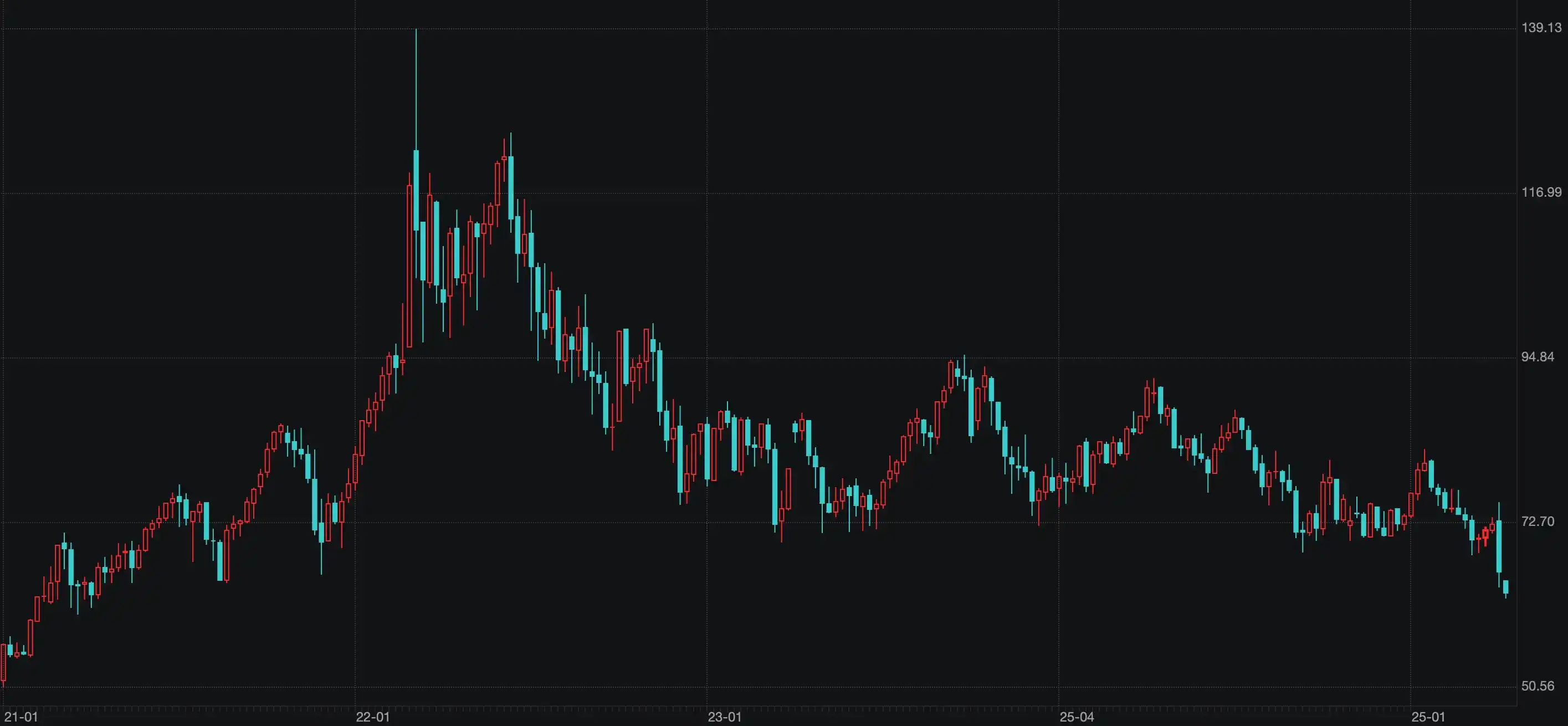
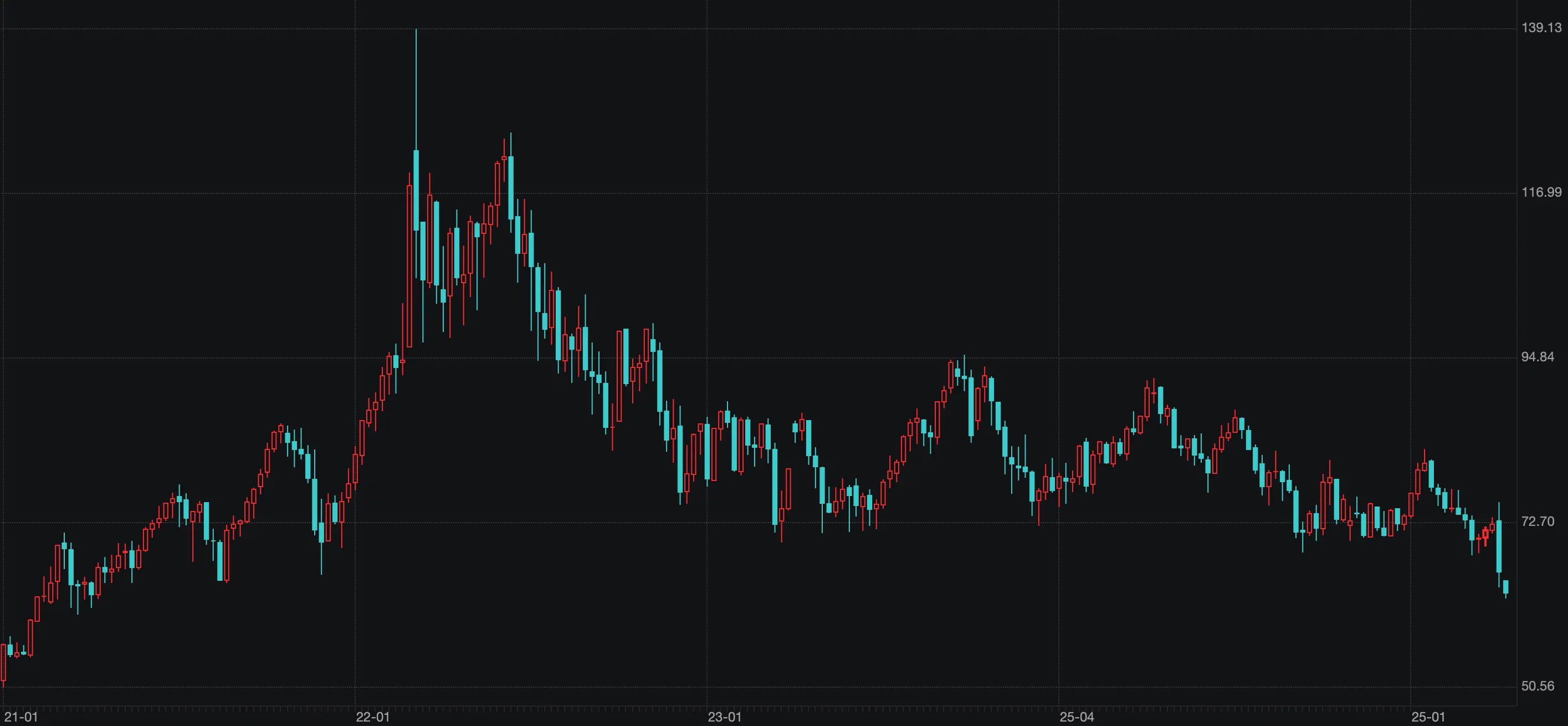
BTCUSD now trading at $69,818. Chart: TradingView

A Race Against The Calendar

Pressure to finish a deal is rising because lawmakers face an election calendar that could change the political math. US Treasury Secretary Scott Bessent warned that if Democrats win back the House the bipartisan coalition working on the bill could fracture, making rapid progress less likely.

That warning is echoed around Capitol Hill by lobbyists and some industry leaders, who say the current window to pass a compromise is dwindling.

A Narrow Window To Act

The White House has signaled it wants a solution before the fall slog of midterm politics takes hold. White House advisers have urged both sides to find middle ground, saying a functioning framework would unlock large pools of institutional capital now sitting on the sidelines.

Reports have disclosed that these investors are reluctant to deploy funds until the rules are clearer, which is one reason the administration is pressing for movement.

The debate is not only technical; it is political and strategic. Lawmakers will need to balance banks’ worries about deposits with crypto firms’ demand to preserve business models that rely on customer rewards.

For consumers, the immediate effect will depend on how any compromise treats protections, transparency and how rewards are funded.

For markets, the bigger prize is legal certainty — and that prize is getting harder to win as the calendar tightens.

Featured image from Unsplash, chart from TradingView

Trend Kriptolar

İlgili Sorular

QWhat did White House crypto adviser Patrick Witt say about banks' view on stablecoin yield programs?

APatrick Witt told reporters that banks should not see stablecoin yield programs as an existential threat.

QWhat are some banks doing in response to stablecoin competition, according to the article?

ASeveral banks are seeking OCC charters and exploring ways to provide stablecoin-style accounts to customers.

QWhat legislation is at the center of the stablecoin regulatory debate?

AThe CLARITY Act, a bill meant to draw lines between the SEC and the CFTC while creating a basic asset taxonomy for cryptocurrencies.

QWhy is there pressure to finish a regulatory deal quickly, according to the article?

ALawmakers face an election calendar that could change the political math, and the current window to pass a compromise is dwindling.

QWhat is the bigger prize for markets in this regulatory debate, as stated in the article?

AThe bigger prize for markets is legal certainty regarding cryptocurrency regulations.

İlgili Okumalar

Market Trend (June 19): US-Iran Deal Drives Out Geopolitical Premium; Chip Stocks Soar to New Highs; Energy Sector Leads Declines

U.S. Market Trends (June 19): U.S.-Iran Deal Eases Tensions, Chip Stocks Soar, Energy Sector Leads Declines. U.S. stocks rallied on Thursday as the signing of a temporary U.S.-Iran deal in Geneva de-escalated Middle East tensions, with Saudi oil tankers transiting the Strait of Hormuz. This geopolitical relief helped markets recover from recent Fed-driven volatility. The S&P 500 rose over 1%, the Nasdaq gained nearly 2%, and the Dow Jones Industrial Average closed at another record high. The Philadelphia Semiconductor Index surged over 6% to a historic peak. Chip stocks were the standout performers. Reports of an Apple-Intel design and foundry deal for certain products, alongside mentions of potential Nvidia and SpaceX collaborations with Intel, propelled the sector. Intel surged ~10.5%, while memory chip makers like Micron also saw significant gains, highlighting sustained confidence in long-term AI capital expenditure. In contrast, the energy sector was the day's sole loser, with the S&P 500 energy sub-index declining as WTI crude fell ~2% to around $74.29/barrel. The reopening of key shipping routes erased prior geopolitical risk premiums. SpaceX extended losses for a second day on news of a potential large bond offering. Market volatility (VIX) dropped sharply, indicating a swift reversal of post-Fed jitters. Treasury yields dipped slightly but remained elevated. The focus now shifts to upcoming economic data, including next week's PCE inflation report and Micron's earnings, which will serve as a key test for the AI trade's durability.

marsbit4 dk önce

Market Trend (June 19): US-Iran Deal Drives Out Geopolitical Premium; Chip Stocks Soar to New Highs; Energy Sector Leads Declines

marsbit4 dk önce

Will MicroStrategy Fall Into a Death Spiral? How Will the Macro Outlook Evolve in the Second Half of the Year?

**Summary:** The discussion centers on recent Bitcoin price declines and the evolving financial strategy of MicroStrategy (MSTR). The core argument is that the primary pressure is not from one-off Bitcoin sales by MSTR, but from the market's new expectation that MSTR may need to engage in *sustained, small-scale* Bitcoin sales to cover cash flow obligations for its growing portfolio of preferred shares and debt instruments (like STRC). This shift is driven by its stated goal of maintaining "bitcoins per share neutrality." The market is now testing whether it can absorb this potential ongoing selling pressure without entering a severe "death spiral" with Bitcoin's price. A resolution may involve MSTR softening its approach to avoid damaging both its stock and Bitcoin. The conversation then explores the parallel rise of AI-related stocks. The guest posits that AI is fundamentally restructuring labor, with "tokens" (representing access to AI models/compute) becoming a new form of capital and a substitute for human execution. This drives corporate efficiency and profits, benefiting upstream hardware providers (semiconductors, data centers), which explains the sustained rally. This represents the early stages of a "machine economy." Regarding crypto exchanges offering US stock trading, this is seen as a natural evolution. With few crypto-native assets generating lasting value, exchanges are pivoting to distribute valuable real-world assets (RWAs). This doesn't necessarily harm crypto's long-term prospects, as blockchain infrastructure may become crucial for future machine-to-machine economies. The analysis concludes that the era of rampant altcoin speculation is likely over, heavily damaged by the liquidity shock of the "1011" event (likely referring to a major market crash). Meme-driven capital has largely migrated to US equities. Looking ahead, macroeconomic uncertainty is rising due to potential large IPOs (e.g., SpaceX) and the US elections. While short-term market corrections are possible, the long-term trends of AI-driven productivity gains and the maturation of blockchain towards real-world utility and institutional adoption remain intact.

marsbit8 dk önce

Will MicroStrategy Fall Into a Death Spiral? How Will the Macro Outlook Evolve in the Second Half of the Year?

marsbit8 dk önce

Will MicroStrategy Fall into a Death Spiral? What Will the Macro Trend Be in the Second Half of the Year?

The podcast features investor Didier discussing the recent Bitcoin downturn and the evolving strategy of MicroStrategy (MSTR). He argues the core pressure is not macro factors or ETF outflows, but the market pricing in an expectation that MSTR will engage in continuous, small-scale Bitcoin sales to fund its increasing preferred stock and debt obligations under its "bitcoin-per-share neutrality" principle. This creates a structural headwind. However, he is cautiously optimistic a "death spiral" is avoidable without new major shocks, as market support is likely to emerge at a certain price point. Didier then posits that the AI-driven bull market in US stocks (semiconductors, data centers) is fundamentally driven by AI agents and tokens becoming the "new labor force," displacing human roles and boosting corporate margins. This shift toward a machine economy is still in its early stages. He comments on crypto exchanges adding US stock trading, viewing it as a natural move toward valuable real-world assets as truly valuable crypto-native assets remain scarce. For crypto-native traders, he suggests existing strategies (e.g., meme-chasing or value investing) can translate to similar assets in US markets. The discussion notes the severe liquidity damage from the "1011 event" (likely referring to a major market crash) has essentially ended the altcoin cycle, with speculative momentum shifting to the more liquid US stock market. Regarding the macroeconomic outlook for H2 2024, Didier expresses increased caution due to potential market pressure from upcoming mega-IPOs (e.g., SpaceX) and US midterm election risks. Long-term, he remains bullish on AI's productivity gains and its convergence with blockchain/Web3, which he sees maturing into a more institutional, real-asset-focused phase.

链捕手10 dk önce

Will MicroStrategy Fall into a Death Spiral? What Will the Macro Trend Be in the Second Half of the Year?

链捕手10 dk önce

Dylan Patel: Founder of SemiAnalysis, Praised by Jensen Huang, is a 'Beekeeper' and 'Forum Enthusiast'

Dylan Patel, founder of the independent research firm SemiAnalysis, has an unconventional background. A former beekeeper from rural Georgia, he entered the semiconductor world as a self-taught "forum warrior," discussing chip technology anonymously online from a young age. He launched the SemiAnalysis blog in May 2020, which later transitioned to a paid subscription model. The firm has grown from a one-person operation to a global team of around 60, with a dedicated teardown lab. Its detailed, technically-focused analysis on semiconductor supply chains, AI infrastructure, and products has earned significant industry recognition. Notably, NVIDIA founder Jensen Huang has publicly cited their reports. In a landmark case, a critical 2024 report on AMD's MI300X GPU software stack led to a 90-minute call with AMD CEO Lisa Su, who thanked him for the constructive feedback. SemiAnalysis later acknowledged AMD's improvements. The firm's influence on markets was seen when a report on NVIDIA's Rubin memory configuration was partially shared, affecting memory stock prices. Dylan Patel emphasized the importance of context, contrasting the shared excerpt with the report's actual title. SemiAnalysis, now a multi-faceted consultancy with revenue projected to reach $100 million, is known for its deep technical insights that influence major industry players and investment decisions.

marsbit1 saat önce

Dylan Patel: Founder of SemiAnalysis, Praised by Jensen Huang, is a 'Beekeeper' and 'Forum Enthusiast'

marsbit1 saat önce

Dylan Patel: SemiAnalysis, Praised by Jensen Huang, is Founded by a 'Beekeeper and Forum Warrior'

Dylan Patel, founder of the independent research firm SemiAnalysis, has an unconventional background. Growing up in rural Georgia, he later worked as a beekeeper in Minnesota. His entry into semiconductors began as a self-taught "forum warrior," engaging anonymously in online tech communities from a young age. In May 2020, he started the SemiAnalysis blog on WordPress, later moving it to Substack as a paid subscription service. The firm has since evolved from a one-person operation into a global company with around 60 employees, featuring a dedicated chip teardown lab. Its revenue, reaching $20 million last year, is projected to surpass $100 million this year. SemiAnalysis is highly regarded in the AI and semiconductor industry for its deep technical analysis. NVIDIA founder Jensen Huang has publicly praised its reports. In a notable instance, a critical report on AMD's MI300X GPU software shortcomings prompted a 90-minute call with CEO Lisa Su, who thanked Patel for the "constructive feedback." A later report acknowledged AMD's subsequent improvements. The firm's analyses have significant market impact. For example, a June report discussing potential memory configuration changes in NVIDIA's next-generation servers was cited as a factor in pressure on memory-related stocks. Patel plans to establish a venture capital firm, having already made personal investments in about 20 startups. SemiAnalysis combines roles as a consultancy, model platform, and tech lab, focusing on the practical bottlenecks in AI infrastructure.

Odaily星球日报1 saat önce

Dylan Patel: SemiAnalysis, Praised by Jensen Huang, is Founded by a 'Beekeeper and Forum Warrior'

Odaily星球日报1 saat önce

İşlemler

Spot
Futures

Popüler Makaleler

HOUSE Nasıl Satın Alınır

HTX.com’a hoş geldiniz! Housecoin (HOUSE) satın alma işlemlerini basit ve kullanışlı bir hâle getirdik. Adım adım açıkladığımız rehberimizi takip ederek kripto yolculuğunuza başlayın. 1. Adım: HTX Hesabınızı OluşturunHTX'te ücretsiz bir hesap açmak için e-posta adresinizi veya telefon numaranızı kullanın. Sorunsuzca kaydolun ve tüm özelliklerin kilidini açın. Hesabımı Aç2. Adım: Kripto Satın Al Bölümüne Gidin ve Ödeme Yönteminizi SeçinKredi/Banka Kartı: Visa veya Mastercard'ınızı kullanarak anında Housecoin (HOUSE) satın alın.Bakiye: Sorunsuz bir şekilde işlem yapmak için HTX hesap bakiyenizdeki fonları kullanın.Üçüncü Taraflar: Kullanımı kolaylaştırmak için Google Pay ve Apple Pay gibi popüler ödeme yöntemlerini ekledik.P2P: HTX'teki diğer kullanıcılarla doğrudan işlem yapın.Borsa Dışı (OTC): Yatırımcılar için kişiye özel hizmetler ve rekabetçi döviz kurları sunuyoruz.3. Adım: Housecoin (HOUSE) Varlıklarınızı SaklayınHousecoin (HOUSE) satın aldıktan sonra HTX hesabınızda saklayın. Alternatif olarak, blok zinciri transferi yoluyla başka bir yere gönderebilir veya diğer kripto para birimlerini takas etmek için kullanabilirsiniz.4. Adım: Housecoin (HOUSE) Varlıklarınızla İşlem YapınHTX'in spot piyasasında Housecoin (HOUSE) ile kolayca işlemler yapın.Hesabınıza erişin, işlem çiftinizi seçin, işlemlerinizi gerçekleştirin ve gerçek zamanlı olarak izleyin. Hem yeni başlayanlar hem de deneyimli yatırımcılar için kullanıcı dostu bir deneyim sunuyoruz.

351 Toplam GörüntülenmeYayınlanma 2025.04.27Güncellenme 2026.06.02

HOUSE Nasıl Satın Alınır

Tartışmalar

HTX Topluluğuna hoş geldiniz. Burada, en son platform gelişmeleri hakkında bilgi sahibi olabilir ve profesyonel piyasa görüşlerine erişebilirsiniz. Kullanıcıların HOUSE (HOUSE) fiyatı hakkındaki görüşleri aşağıda sunulmaktadır.

活动图片