When Faith Becomes a Cage: The Sunk Cost Trap in the Crypto Era

深潮2025-12-12 tarihinde yayınlandı2025-12-12 tarihinde güncellendi

Özet

In the crypto era, the "sunk cost trap" describes how past investments—whether in skills, relationships, or digital assets—can become psychological prisons that prevent people from moving on, even when they know their current path is no longer beneficial. The author reflects on personal experiences in poker and crypto, noting how early beliefs in Bitcoin and smart contracts have now materialized (e.g., Bitcoin ETFs, institutional adoption), yet many remain stuck due to emotional or financial commitments. The article categorizes crypto believers into four camps: Bitcoin-only (Green), crypto-but-not-Bitcoin (Red), both (Brown), and neither (White), each split into (a) those who still see upside and (b) those who don’t. Only true believers (e.g., Red (a)) should fully commit time and resources; others should diversify or plan exits. As crypto becomes mainstream (e.g., Robinhood using Arbitrum), opportunities may lie elsewhere (e.g., equities, AI). The key is to avoid mistaking sunk costs for future potential and to cultivate skills beyond crypto for a softer landing. Freedom requires courage to walk away from the "cave" of past investments.

Written by: Evanss6

Compiled by: AididiaoJP, Foresight News

At any point in the past, this might have been good advice when talking about cryptocurrency: hoard Bitcoin, or at least mainstream coins, do some staking, try new products with rewards, trade contracts without getting liquidated—chances are you would have made money. Behind this are two core beliefs: Bitcoin will become a more mainstream non-sovereign store of value, and smart contracts will become the infrastructure of finance.
I won’t go into detail about how these judgments have been validated, because we need to talk about this "cage." Just two facts:

Bitcoin ETFs have seen inflows of $49 billion, Ethereum ETFs have seen inflows of $4.3 billion, and more altcoin ETFs are just getting started. Michael Saylor himself has bought over $40 billion, and many companies are gradually buying in.

Robinhood just announced that it will use Arbitrum's tech stack to build an EVM chain as the backend financial infrastructure for its platform, and will also list the most popular product in cryptocurrency: perpetual contracts.

Cryptocurrency is increasingly resembling traditional finance. It’s being bought by the previous generation in brokerage accounts, promoted by Larry Fink, and used by companies like Robinhood. What many of us imagined a decade ago is coming true.

So what exactly is the "sunk cost cage"?

Simply put, it’s sticking with something because of past investments. This can appear in many places: your skills, investments you still hold, your relationships, a job you’re afraid to quit, or spending all your time on cryptocurrency.

  • "I don’t want to leave her because our past is too deep."

  • "I don’t want to change careers because I’ve spent too much time on this."

  • "I don’t want to sell Ethereum because I bought it early, and it’s been good to me."

These are all sunk cost fallacies. Not realizing you’re thinking this way is a form of self-sabotage, making you continue doing things you know deep down are no longer beneficial.

The sunk cost cage is the modern version of Plato’s allegory of the cave.
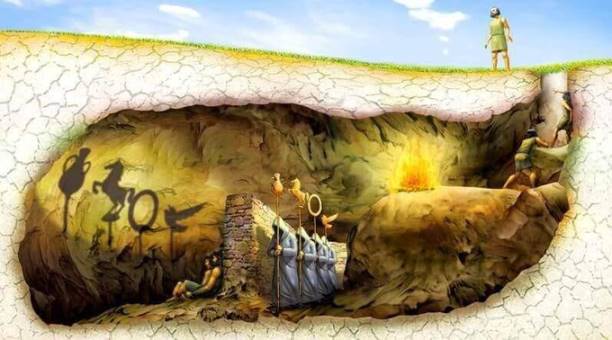
The prisoners only know the shadows on the wall, unaware of where the shadows come from or that there’s a larger world outside.

In Plato’s allegory, the prisoners stay in the cave because they mistake the shadows for reality, unaware that there is a "more real" world outside. In the modern version, we stay not out of ignorance but because we’ve invested too much in the shadows. That job that no longer fits, the career you no longer believe in, the identity built on long hours and silent endurance—these are the costs paid. The more time, education, and reputation you’ve invested, the harder it is to leave. The illusion is no longer just external; it’s internalized as responsibility, logic, and "the reasonable thing to do."

But freedom isn’t cheap. Escaping the sunk cost cage means admitting that what you’ve built may no longer serve you. Past efforts cannot justify staying. Like the prisoner turning toward the light, this requires not only courage but also betraying the part of yourself that is overly loyal to your self-investment. The hardest part isn’t seeing the truth but saying goodbye to the self that stayed too long, believed too deeply, and paid the price for the cage.

My Experience

I stayed in the cage for a long time myself.

As a teenager, I fell in love with poker. In the back row of high school classes, I was always calculating bankroll expectations in my notebook, not listening to lectures or taking notes. Within two years, I went from micro-stakes ($0.01/$0.02) to high-stakes tables. Over time, I enjoyed playing less and less, seeing it only as a way to make money, always thinking, "I’ll quit in a couple of years."

But a decade passed, and nothing changed. I was still playing, still winning, but always felt the money wasn’t enough to "do something else." Worse, I didn’t even know what else I could do, and I saw clearly: poker is a declining game, and I had to work harder and harder to keep up. But I told myself I should continue because I’d spent so much time getting good, it paid better than other options, I had no other viable path, and no time to think—staying a consistent winner in high-stakes online games was exhausting enough: studying strategy, finding good games, avoiding cheaters and shady platforms...
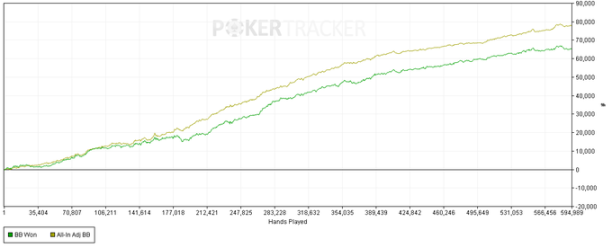
Honestly, this "can’t easily switch careers because it makes money" is a luxurious problem. But as it became harder to find better games, I knew the days were numbered.

First Encounter with Cryptocurrency

I encountered cryptocurrency early through my previous career. In 2012, I first read about Bitcoin on a poker forum called TwoPlusTwo. Back then, the Bitcoin sub-section had been open for over a year.
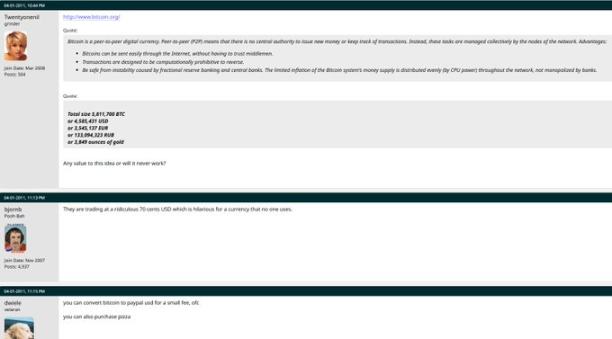
The first reply was hilarious: "This thing is worth 70 cents now? A currency no one uses can reach this price, lol." The second reply said you could actually exchange it for dollars or buy pizza—this was the early use case of what later became a $2 trillion asset. Scrolling down a few more replies:
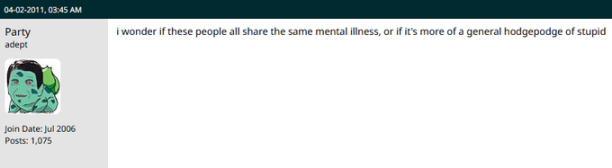
"Really missed an era." Anyway, I noticed it because some poker sites started using it. At the time, I thought its $2 billion market cap was outrageous. If it was for black/gray markets, maybe it was worth that; if it could go mainstream, its value would multiply endlessly.

By 2016-17, as my investments became substantial, I spent more and more time on cryptocurrency (especially ICOs). This diversion of time was my first step out of the cage. But it wasn’t until the rise of DeFi in 2020, when it actually became profitable, that I fully jumped in.

Back then, I knew nothing about trading and had to learn on the go. I studied economics and math in college, but my only real skill was poker. Fortunately, poker is excellent training for trading: it gives you ruthless real-time feedback on decisions, forces you to manage risk, price correctly, develop overall strategy, and builds emotional resilience and soft skills to endure bad runs—all essential for independent trading.

In the end, I’m grateful and lucky that I spent a lot of time from 2013-2019 exploring these curiosities, which put me in the best position when opportunity arose. If I’d focused more on poker those years, I might have played better, but following my intuition to create a transition/exit plan was truly fortunate.

How does this "cage" apply today?

In recent years, financial nihilism has become increasingly evident in the crypto space. More and more people no longer believe in the ideals that drew them in initially. The goal has become "making money," going all-in, grinding hard, and "exiting" once you’ve made enough.
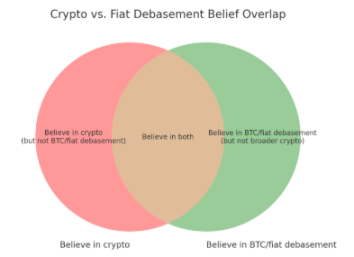
Roughly, there are four camps:

  • Green Camp (believe in Bitcoin, not other cryptocurrencies)

  • Red Camp (believe in cryptocurrency, not Bitcoin)

  • Brown Camp (believe in both)

  • White Camp (believe in neither)

Add two scenarios to each camp, and it becomes eight types:

  • (a) Believe there is still upside, worth the risk

  • (b) Believe the upside has been taken by early buyers

I think only those in 2(a) should devote all their time to cryptocurrency. If you’re in 1(b), 2(b), 3(b), or 4(b), you’re better off starting to diversify your time and make an exit plan. If you’re in 1(a) or 4(a), just hold Bitcoin and don’t pay much attention to anything else. 3(a) can hold some Bitcoin and other assets, splitting time and energy between crypto and non-crypto. If you’ve seen my account and posts, you can probably tell that I, who was mostly in 2(a) from 2015-2023, am now somewhat oscillating between 1(a), 3(a), and 3(b).

Let’s talk about the Red Camp. It’s been painful here the past few years.
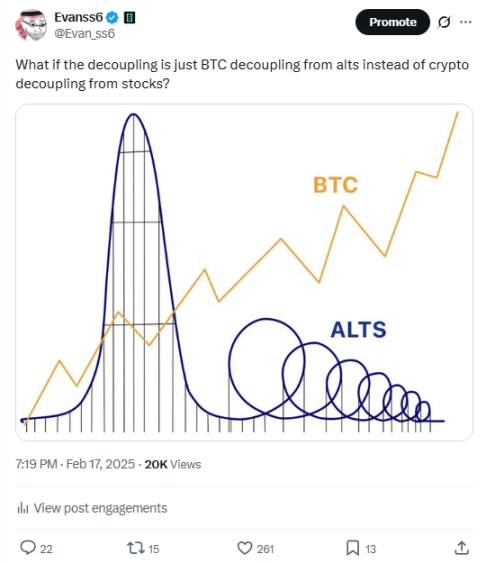
We’ve basically been in a situation where Bitcoin dominance keeps rising, even as the crypto system overall becomes more adopted. Even if you accurately predicted that Ethereum ETFs would see over $4 billion in net inflows, predicted that giants like Robinhood would use its technology, predicted that Trump would win, reform the SEC, end OCP2.0, and create a pro-crypto environment. From the day the ETFs launched, your Ethereum investment is still down. And today, Ethereum is around $2,600—2015 investors are up 2,000 to 8,600 times.

So the Answer

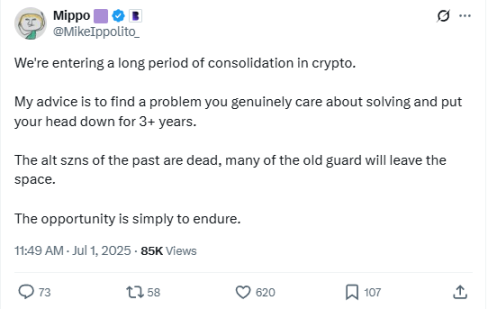
I doubt whether "enduring," as Mippo said in the tweet at the beginning of this article, is really the right path or the biggest opportunity. Everything you dreamed of has either already happened or is on its way. In 2017, if Robinhood announced building on Ethereum, the price would have jumped 10% immediately, but now it’s different. The move now is to buy HOOD stock. I believe there are still opportunities in crypto, but the trend of opportunities being captured by non-crypto assets (stocks) or insiders (teams/private investors—look at Celestia Finance) isn’t friendly to dreamers. If you really want to "endure," you need to invest early in these projects or build them yourself. So Mippo isn’t wrong; solving real problems in crypto is still an opportunity. But don’t assume that just because crypto technology is being adopted, current coin prices will necessarily rise (especially compared to other assets you could invest in).

Unless you’re a true Red Camp diehard 2(a), "enduring" is choosing to stay in the cave watching shadows on the wall while people outside are working on AI and robots.

You’d better ask yourself honestly: Which camp are you in? Do you even like cryptocurrency? Regardless, try to develop some skills that are useful elsewhere, so if it doesn’t work out, you have a fallback. At the very least, you won’t be unhappy spending all your time on something you’re already tired of. And if you’re wrong, you have a soft landing place.

The door of the sunk cost cage isn’t locked; what traps you is your own thoughts. All you need to do is open the door from time to time and walk out. Life is beautiful, and the world is full of possibilities.


Trend Kriptolar

İlgili Sorular

QWhat is the 'sunk cost trap' in the context of the crypto era, as described in the article?

AThe 'sunk cost trap' refers to the tendency to persist with an endeavor, such as investing in or working within the cryptocurrency space, primarily because of the significant time, money, or effort already invested in the past, even when it may no longer be the best or most beneficial path forward.

QAccording to the author, what are the two core beliefs that underpinned the common crypto advice of 'HODLing' Bitcoin or major altcoins?

AThe two core beliefs were that Bitcoin would become a more mainstream non-sovereign store of value and that smart contracts would become the foundational infrastructure for finance.

QHow does the author relate the 'sunk cost trap' to Plato's Allegory of the Cave?

AThe author describes the 'sunk cost trap' as a modern version of the allegory. In the original, prisoners stay in the cave because they mistake shadows for reality. In the modern version, people stay (e.g., in a job or investment) not out of ignorance, but because they have invested too much in the 'shadows'—the past efforts, time, and identity built around that pursuit, making it difficult to leave.

QBased on the author's framework, which group of people should dedicate all their time to cryptocurrency?

AAccording to the author's framework, only those in group 2(a)—people who believe in crypto (but not Bitcoin) AND believe there is still significant upside potential and it's worth the risk—should put all their time into cryptocurrency.

QWhat advice does the author give to someone who might be in a 'sunk cost cage' within crypto?

AThe author advises individuals to honestly assess which of the four camps (Green, Red, Brown, White) and two sub-categories (a or b) they fall into. They should consider developing skills transferable outside of crypto to have a 'soft landing' and an exit plan. The key is to recognize that the cage door isn't locked and that one can choose to walk away from a path that is no longer fulfilling or beneficial.

İlgili Okumalar

Senior Trader's Confession: How to Trade Market's False Expectations?

Veteran trader's case study: trading the market's "wrong expectations". This trade centered on a textbook "expectation error" after a weak CPI report. While the market initially priced in broad monetary easing (sending Nasdaq to 30,060), the crucial 30-year real yield hit a 20-year high. This signaled a fractured transmission mechanism: short-term rates eased, but long-term funding costs (vital for tech valuations) refused to fall. The trader executed five short positions on the Nasdaq (NQ) as it fell from 30,060 to 28,768. The core methodology: don't just trade the data, but analyze the market's implied causal chain and identify where it breaks. In this case, the chain was: Weak CPI → Policy Easing → Lower Long-Term Funding Costs → NQ Valuation Expansion. The break occurred between policy easing and long-term rates. The "veto variable" – long-term real yields – refused to confirm the bullish narrative. Trades were structured around "fast variables" (price) temporarily repairing while "slow variables" (funding conditions) remained broken. The article outlines a repeatable framework: 1) Map the market's implied causal chain. 2) Identify the veto variable. 3) Observe if it rejects the narrative. 4) Enter when price still follows the old script. 5) Choose the cleanest asset expression (e.g., short NQ, not broad S&P). 6) Define both invalidation and fulfillment exit conditions. The key insight: Alpha often comes not from an information edge, but from a "reaction function edge" – recognizing when the market is applying an outdated causal logic to new data. The critical question: What causal chain is the market's first reaction relying on, and is that chain still valid today?

marsbit20 dk önce

Senior Trader's Confession: How to Trade Market's False Expectations?

marsbit20 dk önce

Opinion: The Hedging Relationship Between U.S. Treasuries and Stocks Has Broken Down, and BTC, as a Risk Asset, Is Under Dual Pressure

For the past 20 years, U.S. investors relied on a free insurance policy: when stocks fell, bonds rose, cushioning portfolio losses. This reliable inverse correlation underpinned entire financial strategies. However, this mechanism broke down around 2020 and has not recovered. Currently, the two-month rolling correlation between the S&P 500 and 10-year Treasury yields is at -0.69, its lowest level since 1996, indicating stocks and bonds are moving in sync to an unprecedented degree, eliminating the traditional portfolio shock absorber. The失效 of this hedge is not simply due to lost confidence in U.S. debt. The key driver is the shift from growth-dominated to inflation-dominated market narratives. When growth fears prevail, stocks and bonds move inversely. Since 2022, persistent inflation volatility has been the dominant factor, causing both asset classes to suffer simultaneously from higher inflation expectations. Investors now seek safety without duration risk, favoring cash, dollars, and short-term Treasuries while selling long-duration bonds. Record U.S. deficits, rising net interest payments, and waning foreign demand (e.g., from Japan) are pressuring long-term yields, with the 30-year yield surpassing 5%. This environment places Bitcoin, as a risk asset on the far end of the risk curve, under dual pressure. Higher risk-free rates increase the opportunity cost of holding non-yielding assets like Bitcoin, while falling equities reduce overall risk appetite. Bitcoin's performance has become highly sensitive to macro conditions such as real yields, dollar strength, and financial conditions. While its long-term thesis as a fixed-supply asset outside the sovereign credit system is strengthened by these fiscal trends, the same conditions hurt it in the short term. The return of bonds as a effective hedge requires inflation volatility to subside, growth risks to retake dominance, and the Fed to have room to ease policy. Until then, Bitcoin trades in a market where the deepest asset class no longer absorbs shocks, removing the safety floor for all risk assets, especially those that pay nothing to wait.

marsbit20 dk önce

Opinion: The Hedging Relationship Between U.S. Treasuries and Stocks Has Broken Down, and BTC, as a Risk Asset, Is Under Dual Pressure

marsbit20 dk önce

Funding Weekly | Crypto.com Secures $400M Investment, CeFi and Stablecoin Sectors Continue to Attract Capital

Crypto Weekly Investment Recap: Funds Converge on CeFi, Stablecoins, and AI Last week's crypto and AI investment landscape saw significant capital concentration, with a few large deals dominating. **Crypto/Web3 Highlights (July 13-19):** Total investment exceeded **$812 million** across 17 deals. Key trends: * **Centralized Finance (CeFi) & Stablecoins** remained a major magnet, led by **Crypto.com**'s massive **$400 million** raise from Citadel Securities, valuing the exchange at $20B. * **Infrastructure & Tools** saw 7 deals, including **Cyclops** ($20M for stablecoin payments) and **ADI Chain** ($50M for stablecoin settlement infrastructure). * **DeFi** had 2 deals, such as AI-native DEX **Quote Trade** ($4M). * Other notable raises: API broker **Alpaca** ($135M), cross-border platform **Flex** ($70M), treasury firm **ORANGE JUICE** ($40M), and prediction market **Pascal** ($9M). * **Acquisitions:** Keyrock bought BlockFills' trading unit, SBI Holdings acquired Singapore exchange Coinhako, and MoonPay bought startup Glide. **AI & Robotics Highlights:** Investment momentum in AI remained very strong. * Nvidia-backed AI cloud service **Fireworks** raised a massive **$1.5 billion** at a $17.5B valuation. * In robotics, **Walden Robotics** (spun out from Toyota) secured **$300 million**, and Chinese humanoid firm ****逐际动力** **(Climax Dynamics) raised nearly **$200 million** in a Pre-IPO round. * Other significant AI raises included Indian programming platform **Emergent** ($130M) and drone company **Brinc** ($125M), backed by Sam Altman. Overall, the trend shows capital flowing heavily into established crypto financial services, stablecoin infrastructure, and large-scale AI/robotics commercialization.

marsbit1 saat önce

Funding Weekly | Crypto.com Secures $400M Investment, CeFi and Stablecoin Sectors Continue to Attract Capital

marsbit1 saat önce

The Gentlest Bear Market? BTC Bears Exit, ARK and Bitwise Collectively Bullish

**Title: The Mildest Bear Market? BTC Shorts Exit, ARK and Bitwise Collectively Bullish** Bitcoin continues to consolidate around $75,000 while Ethereum struggles near $1,900. Market data shows $116 million in liquidations over 24 hours, with $62.7 million from short positions, and the Fear & Greed Index remains at 35 (Fear). According to Polymarket, there's a 33% probability BTC falls below $50,000 this year. ARK Invest's Q2 2026 Bitcoin report notes technical weakness but identifies potential bottoming signals, including a record high in long-term holder supply, suggesting selling exhaustion. Bitwise's Juan Leon calls this the "structurally mildest bear market" on record, with a ~50% drawdown from highs, less severe than past cycles. He highlights institutional accumulation and a shift in investor dialogue from survival to entry points. Technical analysis from Bit suggests a potential C-wave low may have formed, with an ideal bottoming range between $50,000-$55,000. However, glassnode's CryptoVizArt warns that failure to break $66,000 could signal a local top, as new buyer accumulation is concentrated there. Analyst Darkfost identifies a critical support band between $59,000-$70,000, where 50% of BTC's circulating supply has changed hands. Notably, trader Doctor Profit announced closing all crypto short positions—including BTC shorts from $115k-$125k and over 100 altcoin shorts—for significant profit. He has begun a phased accumulation of Bitcoin spot starting at $64,000, reversing his previous $40k-$50k target, citing structural positives like regulatory clarity and institutional adoption. He argues the anticipated September/October bottom may arrive earlier than the herd expects.

Foresight News2 saat önce

The Gentlest Bear Market? BTC Bears Exit, ARK and Bitwise Collectively Bullish

Foresight News2 saat önce

İşlemler

Spot

Popüler Makaleler

O Nasıl Satın Alınır

HTX.com’a hoş geldiniz! O1 exchange (O) satın alma işlemlerini basit ve kullanışlı bir hâle getirdik. Adım adım açıkladığımız rehberimizi takip ederek kripto yolculuğunuza başlayın. 1. Adım: HTX Hesabınızı OluşturunHTX'te ücretsiz bir hesap açmak için e-posta adresinizi veya telefon numaranızı kullanın. Sorunsuzca kaydolun ve tüm özelliklerin kilidini açın. Hesabımı Aç2. Adım: Kripto Satın Al Bölümüne Gidin ve Ödeme Yönteminizi SeçinKredi/Banka Kartı: Visa veya Mastercard'ınızı kullanarak anında O1 exchange (O) satın alın.Bakiye: Sorunsuz bir şekilde işlem yapmak için HTX hesap bakiyenizdeki fonları kullanın.Üçüncü Taraflar: Kullanımı kolaylaştırmak için Google Pay ve Apple Pay gibi popüler ödeme yöntemlerini ekledik.P2P: HTX'teki diğer kullanıcılarla doğrudan işlem yapın.Borsa Dışı (OTC): Yatırımcılar için kişiye özel hizmetler ve rekabetçi döviz kurları sunuyoruz.3. Adım: O1 exchange (O) Varlıklarınızı SaklayınO1 exchange (O) satın aldıktan sonra HTX hesabınızda saklayın. Alternatif olarak, blok zinciri transferi yoluyla başka bir yere gönderebilir veya diğer kripto para birimlerini takas etmek için kullanabilirsiniz.4. Adım: O1 exchange (O) Varlıklarınızla İşlem YapınHTX'in spot piyasasında O1 exchange (O) ile kolayca işlemler yapın.Hesabınıza erişin, işlem çiftinizi seçin, işlemlerinizi gerçekleştirin ve gerçek zamanlı olarak izleyin. Hem yeni başlayanlar hem de deneyimli yatırımcılar için kullanıcı dostu bir deneyim sunuyoruz.

174 Toplam GörüntülenmeYayınlanma 2026.06.19Güncellenme 2026.06.29

O Nasıl Satın Alınır

PROS Nasıl Satın Alınır

HTX.com’a hoş geldiniz! Pharos (PROS) satın alma işlemlerini basit ve kullanışlı bir hâle getirdik. Adım adım açıkladığımız rehberimizi takip ederek kripto yolculuğunuza başlayın. 1. Adım: HTX Hesabınızı OluşturunHTX'te ücretsiz bir hesap açmak için e-posta adresinizi veya telefon numaranızı kullanın. Sorunsuzca kaydolun ve tüm özelliklerin kilidini açın. Hesabımı Aç2. Adım: Kripto Satın Al Bölümüne Gidin ve Ödeme Yönteminizi SeçinKredi/Banka Kartı: Visa veya Mastercard'ınızı kullanarak anında Pharos (PROS) satın alın.Bakiye: Sorunsuz bir şekilde işlem yapmak için HTX hesap bakiyenizdeki fonları kullanın.Üçüncü Taraflar: Kullanımı kolaylaştırmak için Google Pay ve Apple Pay gibi popüler ödeme yöntemlerini ekledik.P2P: HTX'teki diğer kullanıcılarla doğrudan işlem yapın.Borsa Dışı (OTC): Yatırımcılar için kişiye özel hizmetler ve rekabetçi döviz kurları sunuyoruz.3. Adım: Pharos (PROS) Varlıklarınızı SaklayınPharos (PROS) satın aldıktan sonra HTX hesabınızda saklayın. Alternatif olarak, blok zinciri transferi yoluyla başka bir yere gönderebilir veya diğer kripto para birimlerini takas etmek için kullanabilirsiniz.4. Adım: Pharos (PROS) Varlıklarınızla İşlem YapınHTX'in spot piyasasında Pharos (PROS) ile kolayca işlemler yapın.Hesabınıza erişin, işlem çiftinizi seçin, işlemlerinizi gerçekleştirin ve gerçek zamanlı olarak izleyin. Hem yeni başlayanlar hem de deneyimli yatırımcılar için kullanıcı dostu bir deneyim sunuyoruz.

180 Toplam GörüntülenmeYayınlanma 2026.06.22Güncellenme 2026.06.29

PROS Nasıl Satın Alınır

VERONA Nedir

I. Proje Tanıtımı VERONA, zincir soyutlaması aracılığıyla herkes için, her yerde inşa edilmiş bir blok zinciridir. Genel Soyutlama katmanını kullanarak, VERONA, hesaplar, imzalar ve birlikte çalışabilirlik gibi karmaşık blok zinciri işlevlerini doğrudan protokol seviyesinde entegre ederek kendini ayırt eder. Bu yaklaşım, temel teknolojileri anlamaya gerek kalmadan blok zinciri uygulamalarıyla etkileşimde bulunmayı sağlar.1) Temel Bilgiler İsim: VERONA (VERONA)III. İlgili Bağlantılar Resmi web sitesi bağlantısı: https://xion.burnt.com/ Whitepaper: https://xion.burnt.com/whitepaper.pdf Keşif Araçları: https://explorer.burnt.com/ Sosyal Medya: https://x.com/burnt_xion Not: Proje tanıtımı, resmi proje ekibi tarafından yayımlanan veya sağlanan materyallerden alınmıştır, yalnızca referans içindir ve yatırım tavsiyesi teşkil etmez. HTX, ortaya çıkan doğrudan veya dolaylı kayıplardan sorumluluk kabul etmez.

170 Toplam GörüntülenmeYayınlanma 2026.06.22Güncellenme 2026.06.22

VERONA Nedir

Tartışmalar

HTX Topluluğuna hoş geldiniz. Burada, en son platform gelişmeleri hakkında bilgi sahibi olabilir ve profesyonel piyasa görüşlerine erişebilirsiniz. Kullanıcıların A (A) fiyatı hakkındaki görüşleri aşağıda sunulmaktadır.

活动图片