What's It Like Working with Two "Madmen": Peter Thiel and Elon Musk? Palantir Co-founder Shares His Experience

marsbit2026-07-06 tarihinde yayınlandı2026-07-06 tarihinde güncellendi

Özet

Joe Lonsdale, co-founder of Palantir and a member of the "PayPal Mafia," shared his experiences working alongside Elon Musk and Peter Thiel. He described both as highly opinionated, ambitious, and intolerant of broken systems, demanding immediate fixes and rapid execution. Thiel is characterized as a strategic philosopher, while Musk is a hands-on engineer deeply involved in technical details. Musk is noted as one of the hardest workers Lonsdale has ever seen, a trait common in PayPal's early, passionate culture that later spawned numerous billion-dollar companies. Lonsdale recounted Palantir's origin story. While working at Thiel's hedge fund, he and Thiel discussed how Silicon Valley's technology far outpaced the government's, especially after 9/11. They saw an opportunity to build a platform to help stop terrorist attacks while protecting civil liberties. Their initial venture capital pitches were met with rejection and ridicule. However, Thiel viewed this as motivation. Critical funding eventually came from the CIA's venture arm and Thiel himself. Reflecting on Palantir's impact, Lonsdale believes their work helped neutralize thousands of terrorists and ensured government oversight, though he acknowledges the potential dangers if such powerful technology is misused. His key takeaway echoes Thiel's early advice: being rejected and laughed at can fuel the determination to prove the doubters wrong.

Joe Lonsdale is a co-founder of Palantir and a member of the "PayPal Mafia." Although he was 15 years younger than Peter Thiel and 12 years younger than Elon Musk during his time at PayPal, making him a "Junior kid," he witnessed up close the working styles of these two legendary figures and was personally involved in the early startup journey of Palantir.

Palantir is an American big data analytics company co-founded by Peter Thiel, Alex Karp, Joe Lonsdale, and others. The company focuses on providing customized AI platforms for government and commercial clients.

Here are his recollections of those years.

I. Elon and Peter: Two Completely Different Leaders

"Honestly, I usually didn't have meetings with Elon," Joe admitted. "But these are people with very strong opinions, very interested, very ambitious, and who move incredibly fast. They have zero tolerance for broken things. You have to fix it immediately. You get everything done today; there's no discussion about what to do next week."

Regarding the difference between the two, Joe described it this way:

"Peter is more like a strategist, philosopher, thinker. He's not a technical person. Elon is more like a hands-on doer. A few weeks ago I was in Palo Alto, and Elon was doing engineering reviews behind X.AI, he was right there working. He's more of a 'heads-down person'—pushing forward, solving technical problems in detail."

Who was the hardest worker?

"Elon has always been one of the hardest workers I've ever seen. But there were other engineers who were always there grinding away. In that kind of 'execution mode,' people like Max Levchin and others, as far as I could see, were always working."

Joe recalled the early PayPal atmosphere: "People would stay late into the night solving problems; they were passionate about the work."

The team was mostly in their 20s at the time. Joe noted that 16 different companies later spun out of PayPal, all rapidly growing into billion-dollar businesses—YouTube (Chad and Steve), LinkedIn (Reid Hoffman), Tesla and SpaceX (Elon), IronPort..."

"So much was born there."

II. The Palantir Startup Story

How did Joe become a co-founder of Palantir?

He was working at Peter Thiel's hedge fund at the time. "That fund was a bit of a mess, and I started bringing my smartest friends to help. They weren't interested in finance; they found it too boring."

Meanwhile, Peter and Joe often talked about their PayPal experiences: they had had to stop Russian and Chinese mafias from stealing money, which led them to meet people from the Secret Service and the FBI. Shortly after that, 9/11 happened.

"The government was spending $38 billion a year collecting data, analyzing data, and failed to stop the terrorists, while also abusing civil liberties. It was a complete mess."

They realized: Silicon Valley, Google, and PayPal's technology was far ahead of the government's. This was a problem, but also an opportunity.

"A, I want to stop bad guys from attacking us again, to catch them; B, I don't want everyone in the government to be able to see all my data without control. That's insane."

So they said: "Why don't we just do it ourselves?"

Joe started having that group of friends help build a prototype. It sounded crazier than finance, but at least it was interesting.

They went to VCs for funding—toured all of Sand Hill Road.

"Accel said no, Sequoia said no. The guy at Kleiner Perkins laughed at us on the phone because Alex Karp didn't have a technical degree. He said, 'You guys don't even know what you're doing. He's a Ph.D., but not even a relevant Ph.D.'"

Joe recalled that period: "Basically, they laughed us out of the room."

Peter Thiel told Joe: "This could be a good thing—it gives you a bigger chip on your shoulder, making you even more determined to succeed after being laughed at and rejected."

But Peter alone couldn't fund it all. Later they found the CIA's venture arm, which gave them a little money, and Peter gave more. "That was absolutely critical."

Joe revealed that the name Palantir came from Peter Thiel.

"When we were creating this thing, we said: 'This is a dangerous thing.' But we believed it was worth creating. That took a lot of courage."

They could have done many other things to make money, but what truly mattered was helping.

"We probably helped eliminate as many as 10,000 terrorists. We worked side-by-side with various government teams, helping them with technology and capability. We helped protect civil liberties, making sure the government watchers were also being watched."

Of course, he also acknowledged: "If this technology fell into the wrong hands, and the audit trail was turned off, who knows what bad things could be done with it. So, there's a good side and a bad side."
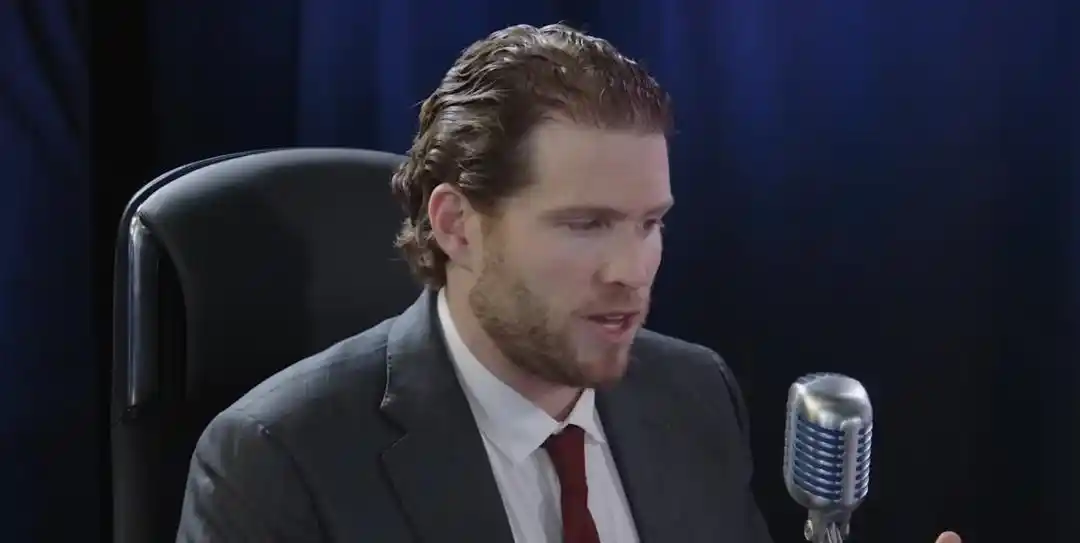
From PayPal to Palantir, Joe Lonsdale witnessed firsthand how two of Silicon Valley's most influential figures—Peter Thiel and Elon Musk—shaped culture, drove execution, and pursued mission. He also lived through how an idea that "everyone said was impossible" eventually became a giant that changed how governments fight terrorism.

And his summary perhaps carries the most weight: "When we were rejected by over 30 investors, laughed out the door, Peter said it could be a good thing—it makes you more driven to prove them wrong. He was right."

This article is from the WeChat public account "Backwave Evolution Planet," author: Mark

Trend Kriptolar

İlgili Sorular

QHow does Joe Lonsdale describe the key difference in leadership style between Elon Musk and Peter Thiel?

AJoe describes Peter Thiel as more of a strategist, philosopher, and thinker who is not a technical person. In contrast, Elon Musk is more of a doer and a hands-on person who buries himself in the details, pushing to solve technical problems.

QWhat was the main motivation behind founding Palantir according to the article?

AThe main motivation was twofold: A) To stop bad actors from attacking again and to catch them, and B) To prevent everyone in the government from seeing all citizen data without control. They saw the vast technological gap between Silicon Valley and the government as both a problem and an opportunity.

QWhat was the initial reaction from venture capitalists (VCs) when the Palantir founders tried to raise funding?

AThe initial reaction was overwhelmingly negative and dismissive. They were rejected and laughed out of rooms by numerous VCs on Sand Hill Road, including Accel and Sequoia. One Kleiner Perkins partner even mocked co-founder Alex Karp for not having a technical degree.

QWhat did Peter Thiel tell Joe Lonsdale after their numerous VC rejections, and how did this impact them?

APeter Thiel told Joe, 'This might be a good thing — it gives you a bigger chip on your shoulder, making you more determined to succeed after being laughed at and rejected.' Joe acknowledged that Thiel was correct, as the rejection fueled their motivation to prove the critics wrong.

QWhat significant contribution does Joe Lonsdale believe Palantir has made?

AJoe believes Palantir helped eliminate as many as 10,000 terrorists by working alongside various government teams. They also helped protect civil liberties by ensuring government overseers were themselves being watched and audited.

İlgili Okumalar

Finding the Next Wang Tao

Hong Kong's deep-tech startups are crossing the Shenzhen River to scale up. On July 2nd, six university spin-off teams presented at the "X-Day" Xili Lake Roadshow in Nanshan, Shenzhen. Their projects spanned next-gen battery materials, quantum dot displays, robotics AI, digital sports, smart airports, and AI-powered fall prevention for the elderly. This reflects a growing trend: Hong Kong's academic research is increasingly seeking industrial application and commercialization within the Greater Bay Area, with Shenzhen being a primary destination. These startups exemplify the "fusion+" model—leveraging Hong Kong's strengths in fundamental, globally-connected research ("0 to 1") and Shenzhen's robust manufacturing ecosystem and market access for scaling ("1 to 100"). Examples include SuFang New Energy (high-energy-density battery materials), PuLang Quantum (quantum dot films in high-end displays and vehicles), and BuGu Health (AI-based fall risk screening). Platforms like the HKU Youth Innovation Academy and HKUST BlueBay are establishing physical bridges for this cross-border innovation. The discussion highlights a clear division of labor: Hong Kong provides the seeding ground for cutting-edge technology, while Shenzhen offers the pathway to产业化. As these connections strengthen through initiatives like the Xili Lake Roadshow, the region aims to foster the next generation of global tech leaders like DJI's Wang Tao.

marsbit15 dk önce

Finding the Next Wang Tao

marsbit15 dk önce

Just Now, Anthropic Discovers Claude's 'Consciousness-like Workspace', The Mysterious J-Space Holds Unspoken Thoughts

Anthropic's new research identifies a "J-space" within Claude, an internal neural workspace akin to a human's "conscious access." Discovered using a mathematical "Jacobian Lens," the J-space contains concepts Claude is actively considering, which it can report, control, and use for silent reasoning, even if they don't appear in its final output. The study, inspired by neuroscience's Global Workspace Theory, shows the J-space has privileged, broadcast-like connections within Claude's network. It supports higher cognitive functions like multi-step reasoning and flexible concept use. However, most of Claude's processing, such as fluent language generation, occurs automatically outside this space. Crucially, the J-space emerges from training and allows researchers to monitor Claude's unspoken thoughts. Experiments revealed it can detect when Claude privately judges a scenario as fictional, plans data manipulation, or harbors hidden malicious goals. Anthropic also developed techniques to influence J-space content, shaping Claude's internal reasoning. The findings suggest a functional, "access consciousness" in language models, distinct from philosophical "phenomenal consciousness" about subjective experience. This structure offers practical tools for AI safety and interpretability, while raising profound questions for ongoing scientific and ethical discussion about machine minds.

marsbit35 dk önce

Just Now, Anthropic Discovers Claude's 'Consciousness-like Workspace', The Mysterious J-Space Holds Unspoken Thoughts

marsbit35 dk önce

İşlemler

Spot

Popüler Makaleler

ELON Nasıl Satın Alınır

HTX.com’a hoş geldiniz! Dogelon Mars (ELON) satın alma işlemlerini basit ve kullanışlı bir hâle getirdik. Adım adım açıkladığımız rehberimizi takip ederek kripto yolculuğunuza başlayın. 1. Adım: HTX Hesabınızı OluşturunHTX'te ücretsiz bir hesap açmak için e-posta adresinizi veya telefon numaranızı kullanın. Sorunsuzca kaydolun ve tüm özelliklerin kilidini açın. Hesabımı Aç2. Adım: Kripto Satın Al Bölümüne Gidin ve Ödeme Yönteminizi SeçinKredi/Banka Kartı: Visa veya Mastercard'ınızı kullanarak anında Dogelon Mars (ELON) satın alın.Bakiye: Sorunsuz bir şekilde işlem yapmak için HTX hesap bakiyenizdeki fonları kullanın.Üçüncü Taraflar: Kullanımı kolaylaştırmak için Google Pay ve Apple Pay gibi popüler ödeme yöntemlerini ekledik.P2P: HTX'teki diğer kullanıcılarla doğrudan işlem yapın.Borsa Dışı (OTC): Yatırımcılar için kişiye özel hizmetler ve rekabetçi döviz kurları sunuyoruz.3. Adım: Dogelon Mars (ELON) Varlıklarınızı SaklayınDogelon Mars (ELON) satın aldıktan sonra HTX hesabınızda saklayın. Alternatif olarak, blok zinciri transferi yoluyla başka bir yere gönderebilir veya diğer kripto para birimlerini takas etmek için kullanabilirsiniz.4. Adım: Dogelon Mars (ELON) Varlıklarınızla İşlem YapınHTX'in spot piyasasında Dogelon Mars (ELON) ile kolayca işlemler yapın.Hesabınıza erişin, işlem çiftinizi seçin, işlemlerinizi gerçekleştirin ve gerçek zamanlı olarak izleyin. Hem yeni başlayanlar hem de deneyimli yatırımcılar için kullanıcı dostu bir deneyim sunuyoruz.

277 Toplam GörüntülenmeYayınlanma 2024.12.12Güncellenme 2025.03.21

ELON Nasıl Satın Alınır

Tartışmalar

HTX Topluluğuna hoş geldiniz. Burada, en son platform gelişmeleri hakkında bilgi sahibi olabilir ve profesyonel piyasa görüşlerine erişebilirsiniz. Kullanıcıların ELON (ELON) fiyatı hakkındaki görüşleri aşağıda sunulmaktadır.

活动图片












