What Were Crypto KOLs Talking About in the Last 24 Hours!

比推2026-02-14 tarihinde yayınlandı2026-02-14 tarihinde güncellendi

Özet

Summary of "What Were Crypto KOLs Talking About in the Last 24 Hours!" The article compiles trending discussions among crypto influencers, primarily from X (formerly Twitter), covering several key topics: 1. **False Rumor About Eileen Gu**: A claim that the athlete Eileen Gu joined Benchmark was debunked. Comments highlighted her controversial public perception, dual identity, and the fact that, as a U.S. citizen, she is subject to U.S. global taxation on her earnings. 2. **KOLs' Bitcoin Buying Range**: Many Key Opinion Leaders (KOLs) identified $40,000-$50,000 as an ideal range to buy Bitcoin. Replies expressed that a drop to this level would be reasonable based on historical patterns, but a further decline could shatter market confidence. Some were skeptical, predicting targets would shift lower if prices fell. 3. **Ethereum's Stagnant Price**: The phrase "Eight years later, still $1900" was used to describe Ethereum's perceived lack of progress, causing frustration among its supporters ("Ethereum soldiers"). 4. **Hong Kong Conference Insights**: The article included multiple images from a Hong Kong crypto conference, though the specific content of the discussions was not detailed in the text. 5. **Prevailing Market Sentiment**: A mood of pessimism was noted in the industry, with some participants choosing to leave the market while others advocated for patience and waiting for a market reversal ("mean reversion"). A comment pointed out the increasing "siphoning effect...

Editor's Note: The following discussions are personal opinions and do not constitute investment advice. Information compiled from X.

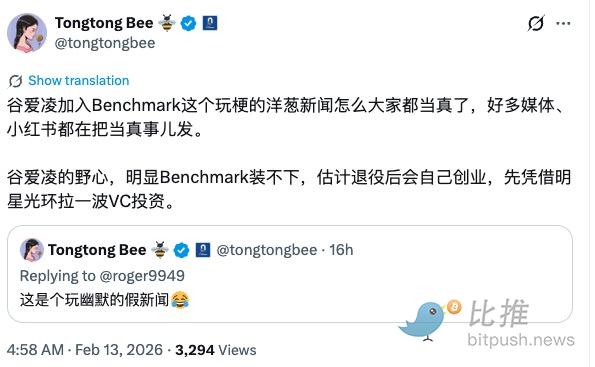
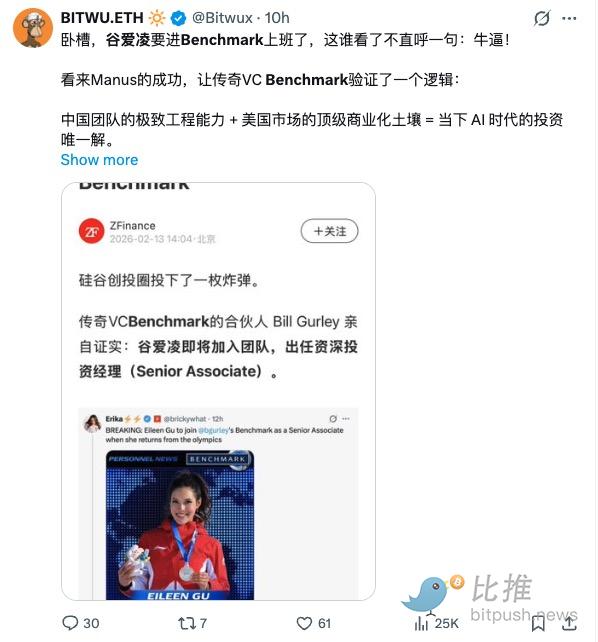
Eileen Gu Joining Benchmark? Fake!
Popular Replies:

Next step: HTX Co-CEO, TRON Global Ambassador lol

She's been getting roasted these past few days—criticized in Chinese circles, called out in English circles, one moment representing Americans, the next representing Chinese!

Fun fact: Eileen Gu is a U.S. citizen, and the U.S. government taxes globally. So, 40% of every dollar she earns in China goes to the U.S. government!

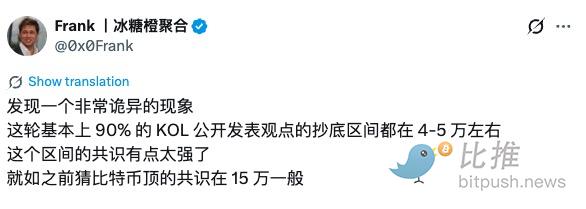
90% of KOLs' Bottom-Buying Range is $40K-$50K?
Popular Replies:

You're right on point. Actually, if it really drops to $40K-$50K, it would be reasonable. History is there, everyone gets it. The fear is if it drops to $20K-$30K or even lower—that would shatter all faith.

Hahaha, a couple of months ago they were shouting $60K. If it really drops to $40K-$50K, they'll start yelling $30K-$40K.

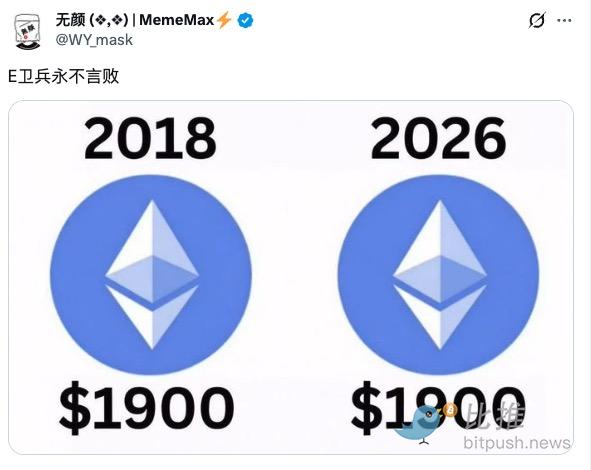
"Eight Years, Still $1900"—ETH Maximalists Collective Meltdown
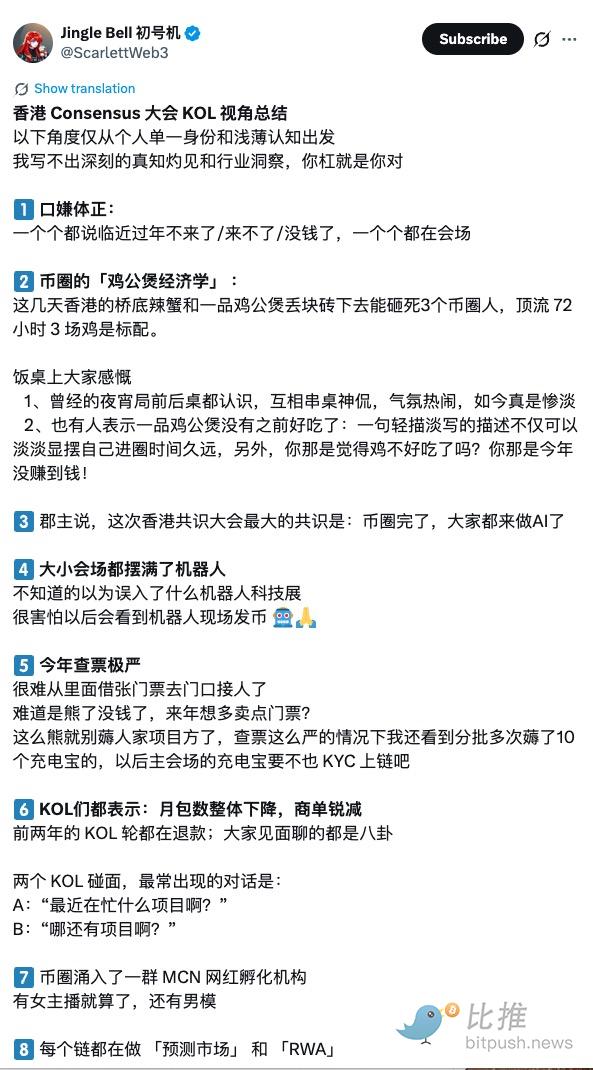
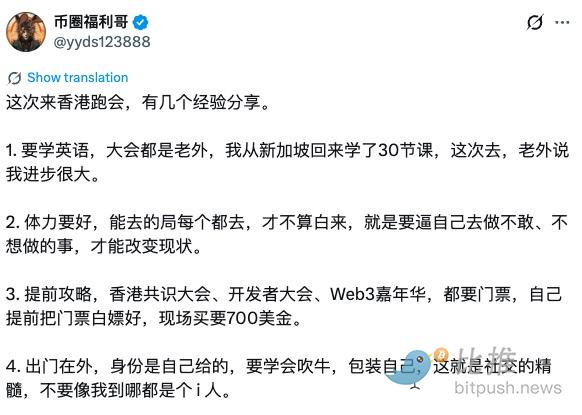
Hong Kong Conference Essay Extravaganza

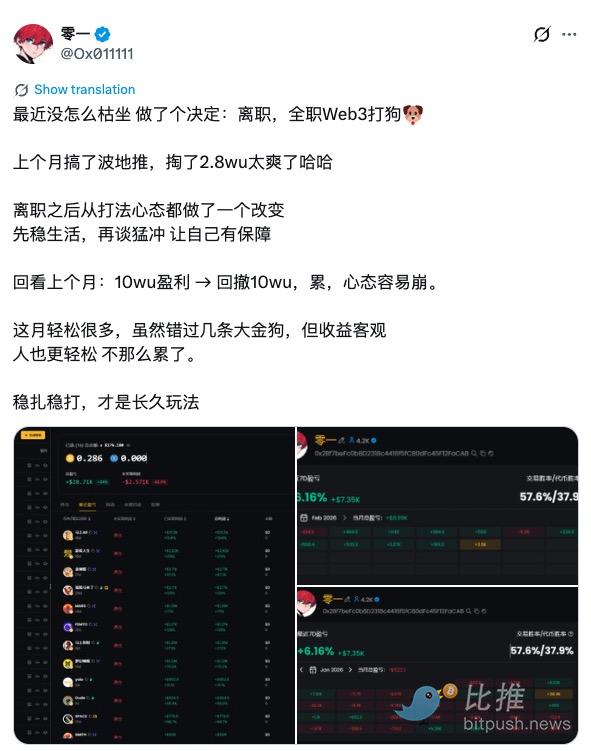
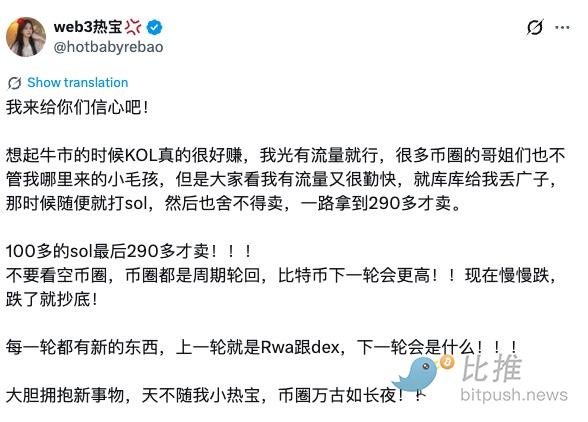
Pessimism Pervades the Industry—Some Flee, Others Hold Firm
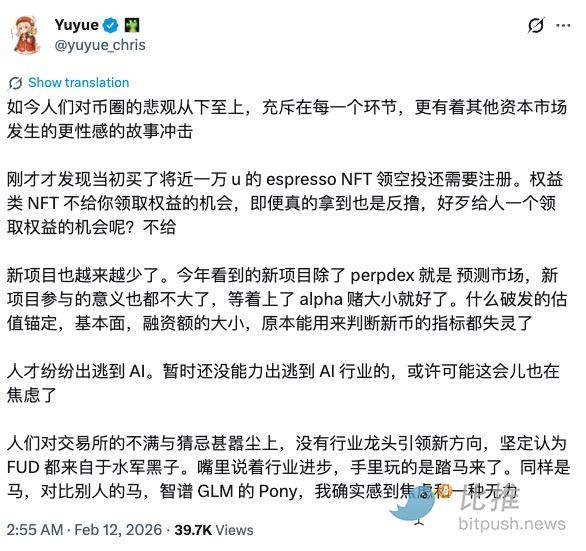
Popular Replies:

Extremes reverse—wait for the mean reversion. Right now, it's about resting. The sooner you rest up, the more advantage you'll have;

Just wait it out;

The AI circle's siphon effect should become particularly strong this year.


Twitter:https://twitter.com/BitpushNewsCN

Bitpush TG Discussion Group:https://t.me/BitPushCommunity

Bitpush TG Subscription: https://t.me/bitpush

Original link:https://www.bitpush.news/articles/7612025

İlgili Okumalar

In Jinjiang, Fujian, a Storage Super Unicorn Lies Quiet

In Fujian's Jinjiang, a city known for sportswear, lies a quiet semiconductor giant: Fujian Jinhua Integrated Circuit Co. (JHICC). Once a promising domestic DRAM manufacturer alongside Yangtze Memory and ChangXin Memory Technologies (CXMT), its journey was derailed in 2018 when the U.S. placed it on an Entity List and filed criminal charges for alleged trade secret theft. This halted production for years. A turning point came in February 2024 when a U.S. federal court found JHICC not guilty. However, it had lost crucial time. While CXMT soared to become a top-valued A-share company in 2024, JHICC, with an estimated valuation of 80 billion RMB, was just restarting. Its current output is primarily customized DDR4 chips, not the advanced DDR5/HBM demanded for AI, but it still benefits from the broader memory chip upcycle. JHICC's story is tied to Chen Zhengkun, a veteran engineer who left Micron to lead the venture. Founded in 2016 with state-backed funding, JHICC partnered with Taiwan's UMC to develop DRAM technology. Rapid progress was cut short by the U.S. actions, which Micron initiated, partly due to its heavy reliance on the Chinese market. Post-sanctions, Chen's team worked to rebuild the production line with reduced reliance on U.S. technology. According to its records, JHICC achieved small-scale production and revenue growth under immense pressure. It now focuses on the stable "niche" DRAM market (e.g., TVs, routers) with a monthly capacity of ~40,000 wafers, aiming for 60,000 by 2026. It holds over 1,000 patents but remains on the Entity List. For Jinjiang, investing in JHICC was a bold industrial leap. The local government provided unwavering financial and logistical support during the crisis, helping the company survive. JHICC has become the anchor for a growing local semiconductor cluster. Though its scale lags behind domestic peers, JHICC's persistence symbolizes a hard-won foothold in a global market long dominated by Samsung, SK Hynix, and Micron. Having missed one boom, it seeks a place in the new AI-driven memory supercycle.

marsbit2 saat önce

In Jinjiang, Fujian, a Storage Super Unicorn Lies Quiet

marsbit2 saat önce

İşlemler

Spot
活动图片