Author: Zen, PANews
Original Title: The Secret to Enduring Cycles: Survival Lessons from Century-Old Football Clubs for Web3
If we view European century-old football clubs as long-term case studies of "community products," what is truly astonishing is not the number of trophies they have won, but their ability to make generations of people from different backgrounds, social classes, and even nationalities continuously invest time, money, and emotion over a hundred years to protect the same community.
This precisely addresses the core challenge of Web3 startups: the industry excels at discussing growth, incentives, tokens, and governance, but often lacks a sense of belonging and trust that can endure through cycles. Hype comes and goes swiftly; many projects are like meteors streaking across the night sky—here one moment and gone the next, fading into silence almost instantly. Many DAO experiments begin as utopian ideals but end in conflicts of self-interest.
If we turn back the clock to the era when football clubs were first established, we find a simpler, more long-term logic: clubs were initially created not to serve the commercial will of an owner, but to represent the community and fans. This aligns perfectly with the "community-driven" ethos repeatedly emphasized in the Web3 industry. Therefore, returning to the origins of these century-old clubs may provide a more reliable reference for Web3 community building.
Identity and Cultural Belonging
In 1878, cheers erupted one day in a workers' pub on the outskirts of Manchester, England. Several railway workers, who often gathered there after their shifts, excitedly discussed the idea of formally establishing a football team. Soon after, these railway workers founded a team in Newton Heath, adopting the green and gold colors of the railway company as their kit and even renting a nearby pub as their changing room. Thus, a team created by ordinary workers was born—this was the precursor to Manchester United, now a top-tier Premier League powerhouse.
Such stories are not unique to Manchester United. Across Europe, many century-old clubs are deeply rooted in working-class communities and local cultural soil. From its inception, football was deeply embedded in the grassroots communities of industrial cities.
In Spain in 1899, a young Swiss man named Hans Gamper, who was living abroad and wanted to find people to play football with, placed an advertisement in a local sports magazine seeking like-minded individuals to form a team. This advertisement became the "true starting moment" for FC Barcelona: a small international group of Swiss, Catalans, English, and Germans gathered at the Solé Gymnasium and founded FC Barcelona.
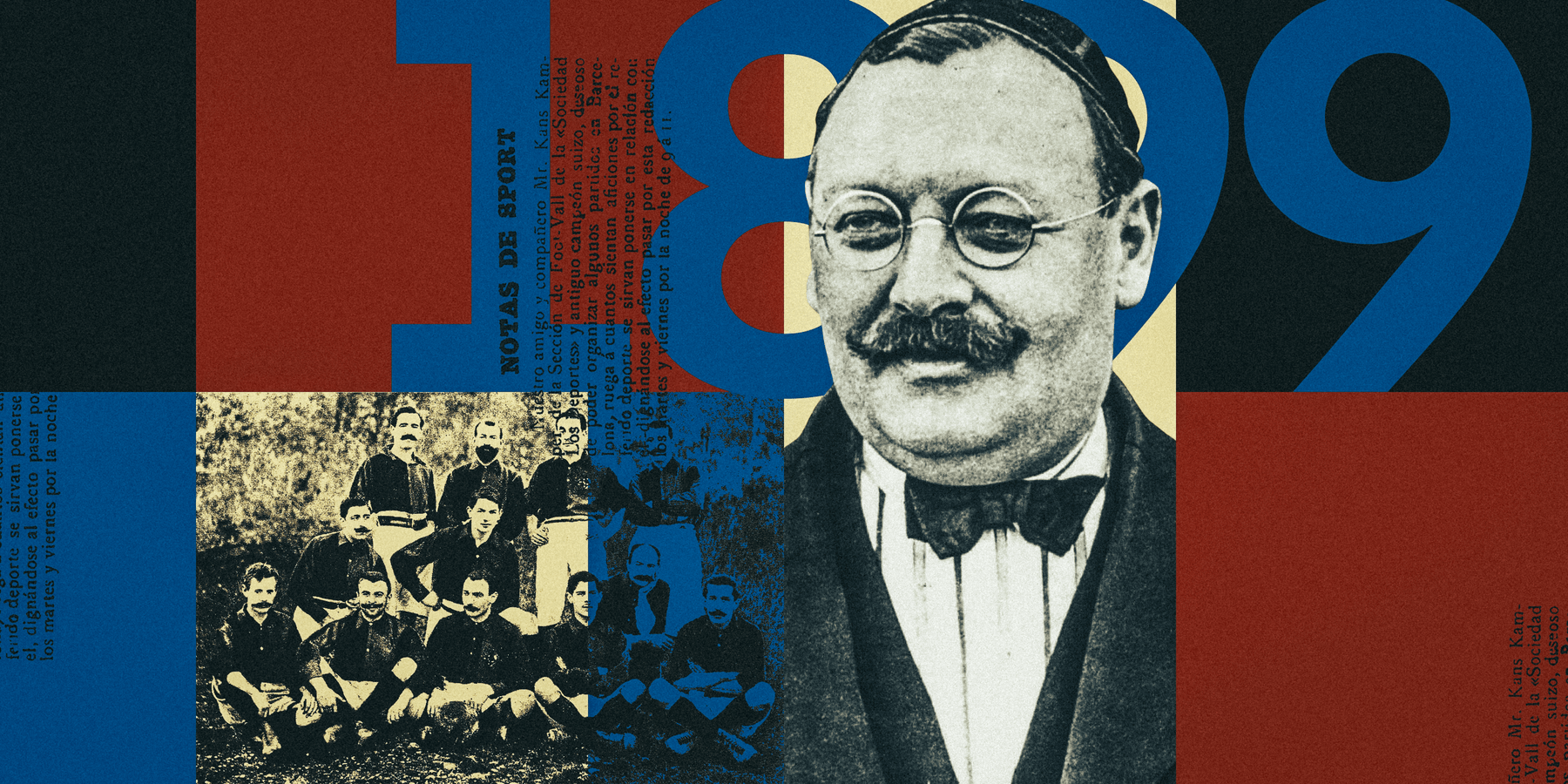
Gamper aimed to create an organization open to all, regardless of background, where people could speak freely. He envisioned a club that would promote social integration and be democratically managed by its members. To express his gratitude to Catalonia, which had welcomed him, Gamper infused the essence of Catalan cultural identity into FC Barcelona, a essence that has since defined the club's image.
Similarly, the story of Juventus, which recently rejected a acquisition offer from stablecoin company Tether, is also deeply community-oriented. Juventus officially describes this history simply and directly: in 1897, a group of high school students in Turin came up with the idea of forming a team on a bench in the city center, and thus the club was born. But what Juventus offers even more worth learning is how it transcended the geographical limits of a "city club." Juventus enjoys nationwide support in Italy, partly due to the migration of southern populations—immigrant groups saw supporting Juventus as part of integrating into urban life.
Looking back at the history of Europe's old clubs, it is not difficult to see that during their grassroots community-building phase, identity symbols and a sense of ritual played crucial roles. The team's colors, name, home ground location, and more all reinforced community identity, and they were adept at using symbols and stories to add identity labels, making ordinary people identify with and take pride in them.
For example, in 1883, when Blackburn Olympic became the first working-class team to win the FA Cup, ordinary people across northern England celebrated, viewing it as a symbol of the grassroots triumphing over the upper class. This underdog narrative further ignited the passion of fans everywhere, and the club gained its first batch of die-hard supporters, growing like a snowball.
For Web3 startup communities, the path taken by century-old football clubs in founding and nurturing communities is also instructive. By fully leveraging cultural soil and grassroots power, projects can clarify their identity, cultural belonging, and sense of mission from the very beginning. Just as industrial-era workers came together due to shared interests, cities, and class identities, Web3 communities can also unite users through shared values or visions.
Web3 projects similarly need to find their own identity positioning and core users in the early stages. Taking a leaf from football clubs, startup teams should distill clear identity symbols and stories for their communities. Communities need to find a "spiritual home" that resonates with users, such as a belief in decentralization, a subcultural identity, or a mission to solve real-world problems, to serve as the cultural soil. By emphasizing this sense of identity and cultural belonging, they can attract like-minded early participants to gather spontaneously, laying a solid foundation for future growth.
Respecting and Believing in the Power of Community
The century-long journey of football clubs has not been smooth sailing. Whether facing financial crises, management turmoil, or external storms, what has truly kept many old clubs standing is often not a wealthy owner or politician, but the united community behind them. When crises strike, it is often these ordinary people, who see the club as part of their lives, that step up to protect it.
"In a football club, there's a holy trinity - the players, the manager and the supporters. Directors don't come into it." Bill Shankly, the legendary Liverpool manager, once emphasized the essence of football in this way.
In the late 2000s, Liverpool was mired in heavy debt under its former American owners, with both performance and finances on the brink of collapse. Fans spontaneously formed the "Spirit Of Shankly" (SOS) organization, named after the iconic manager, calling for protests against the top management's misguided governance. Between 2008 and 2010, large-scale fan demonstrations erupted inside and outside Anfield, with banners, sit-ins after matches, and even trips to the High Court in London to support litigation.
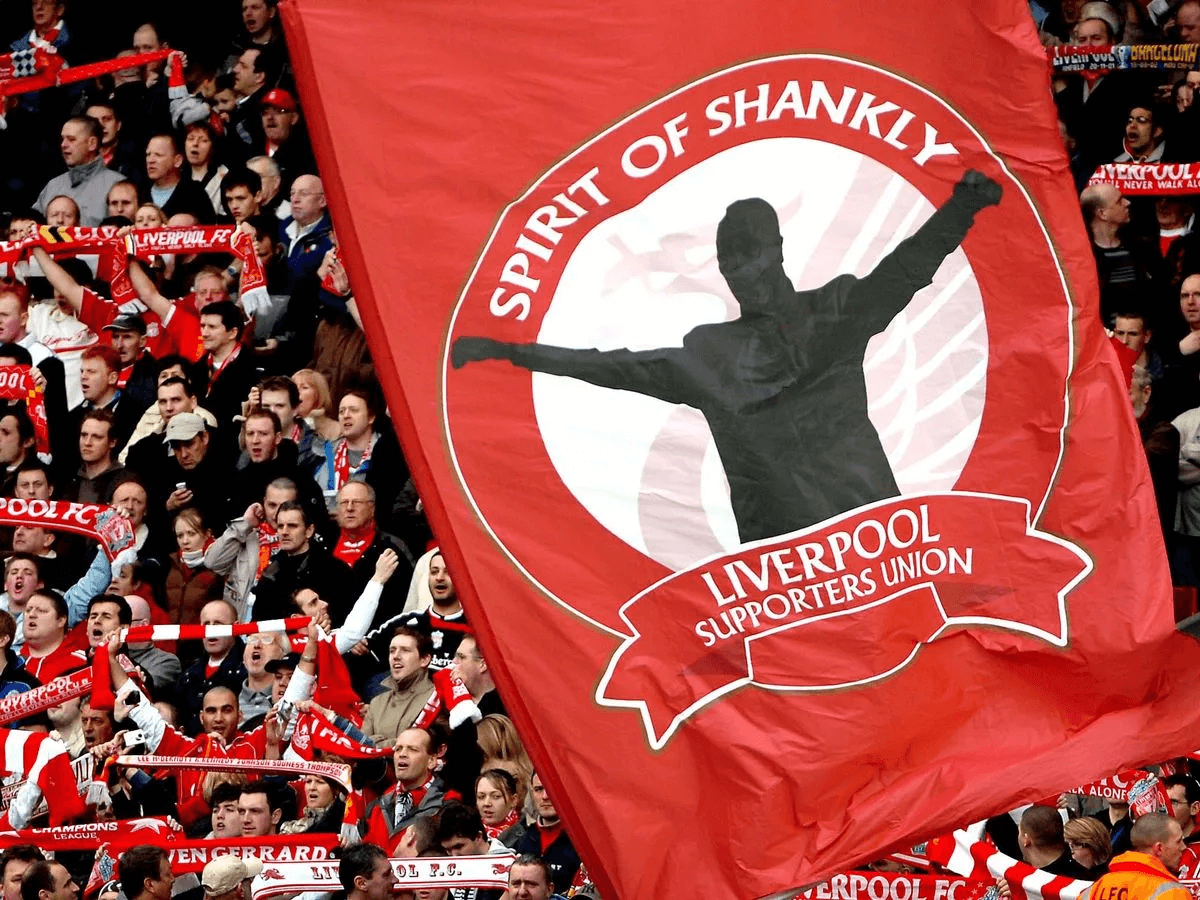
Ultimately, the fans' resolute attitude forced the unpopular owners to sell the club. The new ownership immediately stabilized the situation. "The unique bond of this club is the sacred relationship between the fans and the team, it is the beating heart of our existence," the new management apologized and promised changes in an open letter to fans, subsequently freezing ticket prices for years to rebuild fan trust. These scenes demonstrate that when a club loses its way, it is the collective power of the community that pulls it back on track.
Another example is Borussia Dortmund in the mid-2010s. After overspending, the club was saddled with debt and teetered on the brink of bankruptcy in 2005. At this critical juncture, Dortmund's fan organizations launched demonstrations and the "We Are Dortmund" movement, calling for help from all sectors of the city. Tens of thousands of yellow-and-black supporters sang team songs outside the home ground and raised funds for self-rescue, while players also took a voluntary 20% pay cut to overcome the difficulties together.
Finally, with the efforts of the local government, businesses, and fans, the club survived the crisis and was reborn. Dortmund, rising from the ashes, turned this experience into a new culture: the club adopted the slogan "Echte Liebe" (True Love), emphasizing the unconditional support that defines Dortmund's spirit. A Dortmund midfielder stated: "Echte Liebe means unconditional love—that is the spirit of Dortmund, our strength."
Thus, in times of crisis, what truly enables clubs to overcome difficulties is the unbreakable bond between them and their community. This power stems from the inner identification of every ordinary supporter; they see the club as a common cause and honor. When the external environment is turbulent, the fan community acts like an indestructible backbone supporting the team's future.
Moreover, some clubs institutionally integrate the community into their governance structure, thereby enhancing their resilience to risks. Spain's Barcelona and Real Madrid至今 maintain a membership system with no shareholder dividends, and the club president is elected by all "Socios" members. Barcelona has over 150,000 members, making it the largest member-owned club in the world. This dispersed ownership makes the club less susceptible to control by a single consortium, and major decisions must consider the interests of the broad membership. For example, during financial difficulties in the mid-2010s, Barcelona rejected external capital acquisition, protected by the votes of tens of thousands of members safeguarding the club's independence.
Similarly, most clubs in Germany adhere to the "50+1" rule, ensuring that fans and members hold the majority of voting rights. Such institutional design makes clubs more like public property. Once storms hit, fans do not stand idly by but participate in decision-making as stakeholders to overcome difficulties together.
Web3 projects, which inherently emphasize community, naturally possess the technical advantage of allowing community participation in governance and shared benefits. They can draw inspiration from century-old clubs to build more resilient community governance and incentive mechanisms.
First, advocate for genuine community co-construction and co-governance. Just as member-owned clubs give votes to fans, Web3 projects can use tokens or DAO mechanisms to allow users to participate in voting on important proposals, enhancing a sense of belonging and responsibility. When a project hits a low point or faces crises like hacker attacks, these deeply engaged members are more likely to step up and contribute rather than walk away.
Second, design reasonable token incentives to align interests. For example, referencing sports clubs' season tickets and equity, issue tokens with governance rights or profit-sharing mechanisms, granting more rights to long-term holders and active participants. When community members are invested both economically and emotionally, they are more likely to choose to continue holding and help improve the project during bear market downturns rather than selling off and leaving.
Furthermore, emphasizing spiritual incentives is the most important and hardest-to-replicate aspect. Football fans' support is often an emotional investment without expecting returns. Web3 communities should also foster this spiritual bond. For instance, during difficult times, communicate sincerely with the community, like Liverpool's new owners did by admitting mistakes and expressing respect and gratitude to users. When users feel the project's sincerity and a sense of shared identity, they often become more steadfast, even actively calling on others to support the project through tough times.
Legendary Figures and Spiritual Symbols
Over the long years, football clubs have often shaped one legendary figure after another. They may be heroic players who turned the tide on the field, or renowned managers who built dynasties behind the scenes. These vivid personal images become shared memories and talking points for the fan community, and even more, anchors and spiritual symbols woven into the club's narrative.
In Liverpool of the 1960s, manager Bill Shankly not only led the team back to the top flight and won championships but also deeply impressed fans with his highly charismatic personality. Born into a Scottish miner's family, he believed in a socialist football philosophy, advocating team-first and shared glory. It is said that Shankly often told players in the locker room: "I'm just an ordinary fan on the stands, only with coaching duties. You think the same way as the fans, we are family." Many of his quotes are still remembered by Reds fans today.
Shankly wrote in his autobiography: "From the start of my managerial career, I tried to show the fans that they are the most important. You must know how to treat them and win their support." Shankly thought this way and acted accordingly. In April 1973, when Shankly and the team displayed the league championship trophy to fans on the Kop stand at Anfield, he saw a policeman throw a Liverpool scarf tossed to him aside. Shankly immediately picked up the scarf, put it around his neck, and said to the policeman: "Don't do that, this is precious."
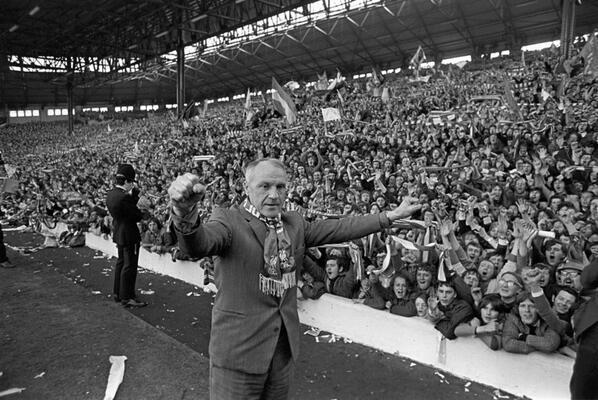
Shankly emphasized the importance of communicating with fans, using the public address system to explain team lineup adjustments and his views on the previous game. He personally replied to fans' letters using an old typewriter. He would not hesitate to get match tickets for fans he thought deserved help and wrote in his autobiography that he would give anything, as long as it was reasonable.
When Shankly passed away in 1981, thousands of fans spontaneously took to the streets to see him off. From then on, Shankly was not only a famous coach in the team's history but also became a spiritual symbol of the city of Liverpool. Therefore, when Liverpool fans established an organization to protest against bad owners, they did not hesitate to name it "Spirit Of Shankly"—drawing on the power of this legendary figure to call for unity. This demonstrates the enormous influence of star leaders on community narratives: their personalities and stories are sublimated into symbols that guide and inspire the entire community.
On the player side, every major club also has "iconic figures" worshipped by fans. Sir Matt Busby and Sir Alex Ferguson at Manchester United, two generations of managerial patriarchs who built the Red Devils dynasty, their passion and wisdom became legends in the hearts of fans; Dutch star Johan Cruyff at Barcelona, a meritorious player in his era and later the coach who开创 the "Dream Team" era, establishing Barcelona's aesthetically pleasing tiki-taka style.
It can be said that the story of every great club is vividly brought to life by the presence of these influential figures. The actions of star players tug at the heartstrings of the community, their highlight moments become collective memories, and they transform into narrative carriers and spiritual coordinates for the community.
In Web3 communities, although the场景 is different from football, skillfully using "key figures" to shape community narratives is equally important. Core team members or project spokespersons can enhance community cohesion through personal charisma. This is not to advocate personality cults, but sometimes, by leveraging the values and stories of leaders, clear spiritual guidance can be provided for the community.
Accordingly, these key figures should also adhere to ethical and professional standards, must actively interact with the community, maintain transparency and sincerity, and, like Shankly respecting fans, genuinely respect and cherish the community from the heart. Based on this, cleverly utilizing the influence of stars and core members can provide powerful narrative anchors for Web3 communities,激发 members' emotional resonance and long-term loyalty, much like century-old clubs use legendary stories to tightly connect generations of fans.
It is important to note that over-reliance on a single star figure also carries risks. Therefore, while leveraging star power, Web3 teams should also focus on cultivating the overall sense of community belonging, ensuring that even if key figures leave, the spirit of the star can be inherited through systems and culture, allowing the community narrative to continue.
Twitter:https://twitter.com/BitpushNewsCN
Bitpush TG Discussion Group:https://t.me/BitPushCommunity
Bitpush TG Subscription: https://t.me/bitpush