What Are the Key Variables Determining the AI Bull Market?

marsbit2026-05-27 tarihinde yayınlandı2026-05-27 tarihinde güncellendi

Özet

Title: What Determines the AI Bull Market? Key Variables Revealed Despite rising oil prices above $100/barrel, persistent inflation, and fragile Fed rate cut expectations—a traditionally hostile environment for high-valuation tech stocks—the AI sector continues to drive the market to new highs. According to analysts, the current AI boom is in a phase of "rational fervor": while bubbles exist, they are not yet out of control. The crucial shift is the emergence of Agentic AI, which is evolving from an assisting tool (Copilot) to an autonomous execution tool (Autopilot), creating a clearer commercial path from investment to revenue. This shift accelerates Token consumption and inference computing demand while boosting revenue forecasts for leading firms. The market is now rewarding capital expenditure as it transforms from a burden into a competitive moat, supporting hardware chains like GPUs, optical modules, and storage. However, valuations have already priced in growth expectations for 2027-2028. The forward P/E ratio for the "Magnificent Seven" tech giants is about 35x, compared to 25x for the rest of the S&P 500. This premium implies AI adoption must occur 5 to 8 times faster than past technological revolutions—a scenario with little room for error. The sustainability of the AI bull market hinges on three key variables: 1. **Short-term liquidity shocks**: Risks include sustained high oil prices, resurgent inflation, rising interest rates, and potential unwinding of the...

Author: Zhao Ying

Source: Wall Street News

Oil prices are hovering above $100 per barrel, the Strait of Hormuz has not yet returned to normal operations, inflationary and interest rate pressures are re-emerging, and expectations for Federal Reserve rate cuts have become more fragile. According to traditional macroeconomic frameworks, this is not the most comfortable environment for high-valuation tech stocks. Yet, U.S. stocks have reached new highs, and the AI supply chain continues to attract capital.

In a research report dated May 25, Song Xuetao, a macro analyst at Guojin Securities, pointed out: "The current AI market is in a phase of rational fervor, with bubbles present but not out of control." The key to this statement lies not in "bubbles," but in "rational" fervor: Agentic AI evolving from an assistive tool to an autonomous execution tool allows the market to see more clearly for the first time the commercial loop from AI "burning cash" to "making money."

The rational side is that the proliferation of Agent applications has led to rapid growth in Token consumption, inference computing demand, and ARR of leading companies; the fervent side is that valuations have already priced in growth expectations for 2027-2028. As of May 20, the forward price-to-earnings ratio of the "Magnificent Seven" in the U.S. stock market is about 35 times, while the remaining 493 companies in the S&P 500 are about 25 times. This premium implies not ordinary growth stock logic, but the expectation that AI penetration must reach 5 to 8 times the speed of past technological revolutions.

However, what truly determines whether the AI bull market can continue is not a single quarter's performance or a single killer application, but three variables: in the short term, watch for liquidity shocks, especially from oil prices, inflation, interest rates, and unwinding of yen carry trades; in the medium term, watch for industry realization - whether AI penetration speed can match current valuations; in the long term, watch for harder constraints like energy, power grids, employment, social resistance, and hardware technology disruptions.

Agents Shift from "Co-pilot" to "Pilot," Market Begins to Reward Capex

In the past round of AI trading, the market's greatest concern was the speed at which giants spent money: massive investments in data centers, GPUs, and cloud infrastructure, with unclear paths to revenue recovery. The change with Agentic AI is that it is no longer just a Copilot-style assistive tool but is evolving towards an Autopilot-style autonomous execution tool.

This brings two results.

First, Token consumption is reaccelerating. The initial wave of demand after GPT's emergence came from improved model capabilities. The second wave after Agent deployment comes from the explosion in inference computing. Autonomous task execution means longer context, more complex steps, and more frequent model calls. Inference is no longer a byproduct after training but becomes the main battleground for sustained computing power consumption.

Second, revenue expectations are being revised upward. Following the proliferation of representative Agent applications like Openclaw and Claude Cowork, Annual Recurring Revenue for model vendors has grown rapidly. Mid-year estimates cited in the material show Anthropic's full-year ARR expectation has been raised from $90 billion at the start of the year to $440 billion, doubling on average every six weeks. If this trend continues, ARR could exceed $3 trillion next year.

This explains why the market no longer simply punishes Capex. As long as revenue growth is fast enough, capital expenditure shifts from a burden to a moat. Therefore, companies like Nvidia, Broadcom, as well as hardware chains like optical modules and storage, regain support.

Why Can AI Assets Still Rise with Oil Above $100?

The rise of AI assets despite rising oil prices is not because macroeconomic risks have disappeared, but because several forces have temporarily outweighed the risks.

First is the diffusion of industrial chain demand. The inference stage requires not only GPUs but also pulls CPUs, optical modules, and storage into the high-growth logic. 800G/1.6T optical modules are tight, and demand for high-end storage is rising. Light Counting predicts that 800G transceiver shipments will more than double by 2026, 1.6T port shipments will grow from a small base in 2025 to tens of millions, and 1.6T chipset sales will exceed $2 billion in 2026, maintaining high growth for the next three years.

Second is the exceptionally strong earnings of tech giants. The first-quarter S&P 500 EPS growth was about 27.1%, the highest since Q4 2021, with Meta, Alphabet, and Amazon contributing 70% of the index's profit increment. As long as these heavyweights continue to earn, the suppressing effect of oil price shocks on the index will be delayed.
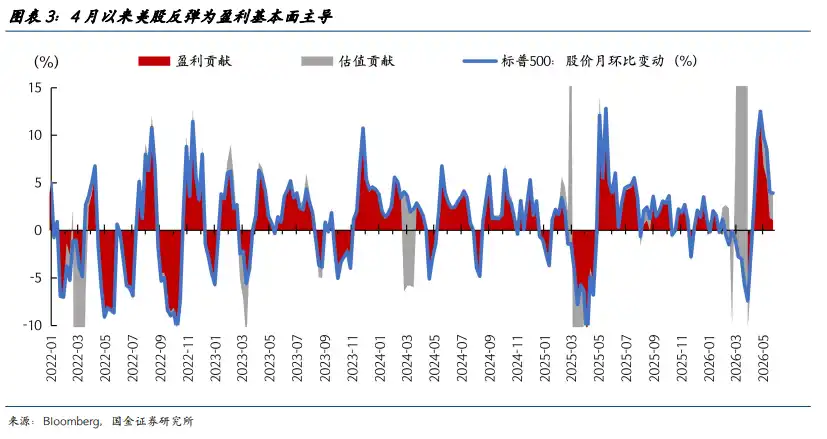
Third, U.S. growth has become more reliant on AI infrastructure investment. In the past few quarters, AI infrastructure investment has contributed over half of U.S. GDP growth. Aggregate data like non-farm payrolls and retail sales remain acceptable. Although employment structure has diverged, as long as aggregate data doesn't weaken significantly, the market struggles to immediately shift to stagflation trades.

There's also a more direct factor: large tech companies are less sensitive to oil prices than industries like airlines, delivery, railroads, chemicals, automobiles, and tourism. They fear electricity prices more than oil prices. When traditional real economy sectors are squeezed by oil prices, capital is more likely to flock to AI assets, blending "safe-haven" trades with growth trades.

Valuations Have Already Eaten the Good Days of 2027-2028

The danger of the AI market lies not in the lack of industrial support, but in how quickly the market is pricing it.

The Magnificent Seven's 35x forward P/E vs. the remaining 493 S&P 500 companies' 25x. Behind this valuation gap lies a very smooth future: AI infrastructure continues to expand over the next 3 to 5 years, maintaining high demand for computing power, cloud, data centers, and semiconductors; AI continues to penetrate scenarios like advertising, search, cloud services, office software, code generation, financial risk control, customer service, investment research, and content; both revenue contribution and efficiency improvements materialize simultaneously.

But technological revolutions are rarely this smooth. Electricity took about 40 years from invention to large-scale application in assembly lines, computers about 25 years. The diffusion speed at which AI is currently priced by the market requires it to be 5 to 8 times faster than these general-purpose technologies.

This isn't impossible, but the margin for error is thin. As long as AI application commercialization lags behind capital expenditure, inference demand fails to meet training demand, or depreciation and electricity costs begin to erode profit margins, valuations will react first. The industrial direction being correct does not mean stock prices can be brought forward indefinitely.

The Biggest Short-term Risk: Interest Rates Rising Faster than ARR

The real short-term pressure comes from liquidity.

If the Strait of Hormuz remains closed long-term, keeping oil prices above $100 or even pushing them higher, inflation will spread from energy prices to services, transportation, and raw materials. U.S. PPI in April rose 9.8% year-on-year, the highest since October 2022. Once inflation solidifies, the Federal Reserve's policy path will be forced to be rewritten.

Swap markets are pricing in about 0.8 Fed rate hikes this year, while the ECB and Bank of England are pricing in over 2 hikes. Simultaneously, challenges to Fed independence due to leadership changes and increased internal FOMC divisions are also weakening market confidence in future easing.
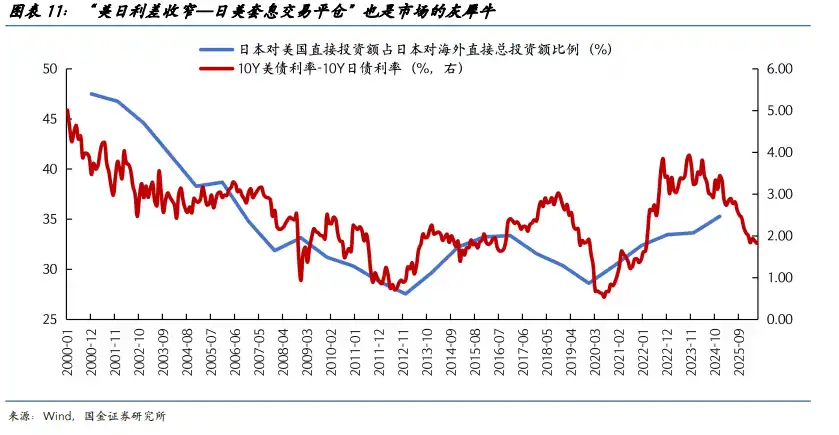
Japan is also a gray rhino. Japan has long been the global funding pool for leveraged trades, but yen depreciation and inflationary pressures are forcing the Bank of Japan to signal tightening, with 30-year JGB yields rising above 4%. If Japan's funding costs continue to rise, triggering global carry trade unwinding, high-valuation AI assets will find it hard to remain unscathed.

A preview occurred on May 15: 10-year U.S. Treasury yields broke 4.5%, 30-year yields broke 5%, high-crowding momentum trades cooled, the Philadelphia Semiconductor Index fell about 4% in a single day, and the Nasdaq fell about 1.5%. This isn't evidence of a trend reversal but indicates crowded trades are extremely sensitive to rates.

The most crucial short-term comparison is simple: Can the speed of ARR (Annual Recurring Revenue) upward revisions outpace the speed of interest rate hikes? If not, capital may first retreat to hardware segments with higher certainty; if liquidity worsens further and AI revenue expectations cannot be revised higher, valuation pressures will significantly amplify.

The Tougher Mid-to-Long-Term Issues: Organization, Power, Employment, and Hardware Roadmaps

The mid-term test is industry realization. General-purpose technology revolutions are typically not linear but follow a pattern of "accelerate, decelerate, re-accelerate." First comes the capital wave, then organizational磨合, and finally productivity release. The early internet also experienced investment booms, capital expenditure expansion, and asset bubbles, with true productivity improvements emerging gradually years later.

The current difficulty in pricing AI is that it almost demands rapid adaptation of corporate organizational structures, quick retraining of workers, rapid validation of business models, and no strong social resistance. This speed is not common in human history.
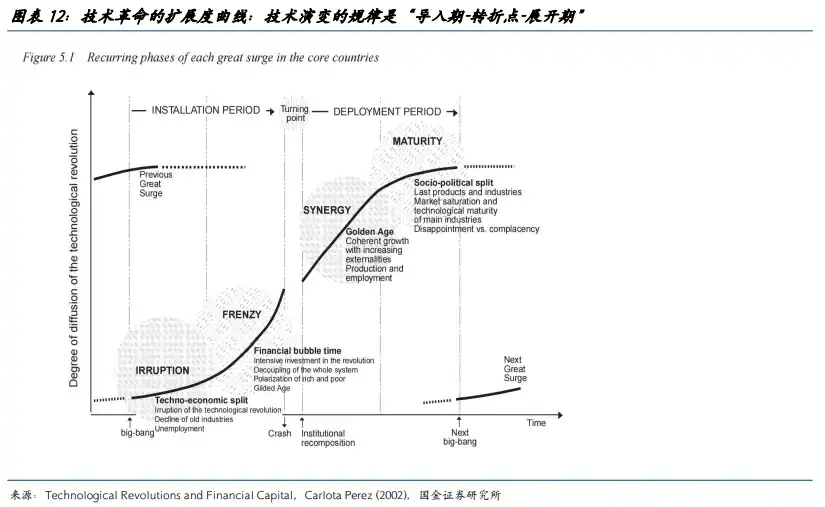
Long-term constraints are even harder.

First is energy and infrastructure. AI data centers require massive electricity and cooling water. Grid expansion, transformers, and energy storage are not variables in a PPT but real bottlenecks. If AI infrastructure continues to push up overall societal electricity costs, regulatory and social pushback will intensify.

Second is employment and consumption. AI can boost corporate efficiency in the short term, reducing demand for jobs like engineers and customer service. But if technological unemployment outpaces new job creation, household consumption power will be weakened. B-side efficiency gains ultimately rely on C-side purchasing power for realization. If non-AI sectors fall into recession, AI cannot flourish alone long-term.

Third is social acceptance. China saw a frenzy of everyone installing Openclaw earlier this year, but in the U.S., public resentment towards data centers pushing up electricity prices and technological unemployment is rising. This will affect AI penetration speed.

Fourth is hardware technology disruption. If an engineering breakthrough similar to a "DeepSeek moment" occurs, dramatically improving computing power, storage, and transmission efficiency, then the hardware segments in shortest supply today could suddenly become oversupplied. The high-growth logic of the hardware chain is not unassailable.

The long-term outlook for the AI industry remains optimistic. If one disregards social矛盾 arising from technological unemployment and production relations restructuring, AI does have the potential to enhance total factor productivity and help the economy escape stagflation pressures. Even if financial markets experience deleveraging mid-journey, the data centers, low-cost technologies, and validated application scenarios left behind could form the foundation for the next round of industrial expansion.

But stock pricing is not the industrial vision itself. What this AI bull market most needs to verify is whether the ARR, ROI, and technology penetration speed currently bet on by the market can continue to be realized in an environment where oil prices, inflation, interest rates, and social constraints are all tightening. The correct direction only explains why there is a bull market; the realization speed determines whether the bubble goes out of control.


İlgili Sorular

QAccording to the article, what are the three key variables that will determine whether the AI bull market can continue?

AThe three key variables are: short-term liquidity shocks (oil prices, inflation, interest rates, Yen carry trade unwinding); medium-term industrial realization (whether the speed of AI penetration matches current valuations); and long-term hard constraints (energy/power grid, employment, social resistance, and hardware technology mutations).

QWhat is the fundamental change brought about by Agentic AI that is making the market reward capital expenditures?

AAgentic AI is evolving from a Copilot-style auxiliary tool to an Autopilot-style autonomous execution tool. This leads to increased token consumption and explosive growth in inference computing power demand, while also driving up revenue expectations and the Annual Recurring Revenue (ARR) of leading model companies. This makes capital expenditure a moat rather than a burden.

QWhy can AI assets continue to rise even with oil prices above $100 per barrel, as explained in the article?

ASeveral forces temporarily outweigh the macro risk: 1) Demand diffusion across the AI industrial chain, including CPUs, optical modules, and storage. 2) Exceptionally strong earnings from tech giants, contributing heavily to S&P 500 profits. 3) Increasing U.S. GDP growth dependence on AI infrastructure investment. 4) Large tech companies are more sensitive to electricity prices than oil prices, so capital flocks to AI assets as a form of 'safe-haven' trade.

QWhat is the short-term risk that could pressure the high valuations of AI stocks?

AThe main short-term risk is liquidity and interest rates. If geopolitical events keep oil prices high, inflation could become entrenched, forcing the Fed to delay cuts or even consider hikes. The unwinding of the Japanese Yen carry trade could also tighten global liquidity. High-valuation, crowded momentum trades like AI are very sensitive to rising rates. The key comparison is whether ARR (Annual Recurring Revenue) growth can outpace the speed of interest rate increases.

QWhat are the long-term, hard constraints on the AI industry mentioned in the article?

AThe long-term hard constraints are: 1) Energy and infrastructure: AI data centers require massive electricity and water for cooling, posing challenges for power grid expansion. 2) Employment and consumption: If AI-induced job displacement outpaces the creation of new roles, consumer purchasing power could weaken. 3) Social acceptance: Public resistance to data centers raising electricity costs and causing technological unemployment could slow AI adoption. 4) Hardware technology mutations: A breakthrough in engineering could dramatically improve computing efficiency, potentially disrupting the current high-demand hardware cycle.

İlgili Okumalar

After Three Consecutive Quarters of Decline, Can the Crypto Market Find a Window for Stabilization in Q3?

The cryptocurrency market has just concluded its worst-performing quarter since 2022, with total capitalization dropping 12.6% to $2.1 trillion. All core metrics indicate capital is leaving the sector, not just rotating within it. Bitcoin fell 14.2% and Ethereum dropped 25.4% in Q2, breaking their previous correlation with US tech stocks. A key driver is the reversal in US spot Bitcoin ETF flows, which saw a net outflow of approximately $4.67 billion in Q2, including a record monthly outflow near $4.5 billion in June. While recent data suggests long-term holders are accumulating again, sustained ETF outflows mean continued selling pressure. Market focus is now singularly on the Federal Reserve. The upcoming July FOMC meeting is seen as the most critical event for Q3. A dovish signal could support Bitcoin reclaiming a $68,000-$84,000 range, while a hawkish stance might establish a new trading band around $50,000-$56,000. Additionally, regulatory uncertainty persists, with the progress of the crucial *CLARITY Act* stalling in the Senate, reducing its perceived 2026 passage probability to 40-45%. Despite the broad downturn, a few sectors showed growth. Prediction markets saw nominal volume surge 48.7% year-over-year to $113.8 billion, and tokenized collectibles transaction volume rose 143% quarterly to $1.4 billion. The Real-World Asset (RWA) tokenization sector also continued steady growth, now representing ~$28.1 billion in on-chain value. The market's foundation for an extreme crash appears limited, with Bitcoin price hovering near its 200-week moving average. However, the trading paradigm has shifted from narrative-driven speculation to decisions based on price action, policy developments, and interest rate expectations, making a broad sentiment-driven rally unlikely in the near term.

marsbit1 saat önce

After Three Consecutive Quarters of Decline, Can the Crypto Market Find a Window for Stabilization in Q3?

marsbit1 saat önce

BIT Trading Moment: BTC Still Suppressed by Weekly 200 EMA, Rejection May Restart Decline; Storage and Semiconductors that Surged Last Night Begin Falling in Evening Trading

**Crypto & Stock Market Wrap: Bitcoin Tests Resistance, Stocks Retreat After AI Surge** Bitcoin consolidates around $66,000, facing key resistance near $68,000—an area seen as a major psychological and technical hurdle where previous rallies have failed. Analysts note the cryptocurrency is caught between its 200-week moving average (~$63,333) and 200-week EMA (~$68,328). A clear break above $68k is needed to signal a stronger bullish trend, while a rejection could lead to a retest of $63k support. Market sentiment remains cautious, with low futures open interest pointing to a low-liquidity rebound rather than a full bull market. Bitcoin spot ETFs saw another $203 million inflow. US stock futures pointed lower after a strong Tuesday session led by a massive rebound in semiconductors and memory stocks. The rally was fueled by renewed optimism about AI-driven hardware demand, with Micron, SanDisk, and SK Hynix surging. However, those gains reversed in pre-market trading. Super Micro Computer (SMCI) soared over 20% after hours on strong guidance and a record backlog. Other standouts included Rocket Lab and nuclear energy plays Oklo and X-Energy. Rising oil prices (Brent above $91) and climbing Treasury yields (10-year near 4.64%), however, are reigniting inflation concerns and acting as a headwind for equities. In Asia, markets were mixed. South Korea's KOSPI pared early gains to close slightly higher as semiconductor stocks like SK Hynix gave back initial surges. Japan's Nikkei edged lower as the yen hit a fresh 38-year low against the dollar, raising fears of potential market intervention. Key events to watch include the Samsung Galaxy launch, AMD's AI event, and a slew of major tech earnings from Alphabet, Tesla, and IBM after the close on Wednesday, followed by the ECB meeting and Intel's earnings on Thursday.

marsbit1 saat önce

BIT Trading Moment: BTC Still Suppressed by Weekly 200 EMA, Rejection May Restart Decline; Storage and Semiconductors that Surged Last Night Begin Falling in Evening Trading

marsbit1 saat önce

Former CFTC Chairman, Circle President Tarbert: Preaching Long-Termism While Cashing Out $30 Million Himself

Former CFTC Chairman and Circle President Heath Tarbert has consistently advocated for a long-term vision in public, urging patience from investors as Circle’s stock price has fallen significantly from its peak. However, it has been revealed that since Circle’s IPO, Tarbert has continuously sold his CRCL shares through pre-arranged trading plans, cashing out approximately $30 million, without making any public market purchases. This contrast between his public messaging and personal actions has drawn criticism. Tarbert joined Circle in July 2023 as Chief Legal Officer, leveraging his regulatory experience to help guide the company through its IPO and expansion. Despite promoting stablecoins as long-term infrastructure, he established a 10b5-1 trading plan just before Circle went public, leading to substantial stock sales over the following year. In March 2026, he initiated another plan to sell more shares. His career trajectory highlights a pattern of moving between high-level regulatory roles and influential positions in the financial sector. After resigning as CFTC Chairman in early 2021, he joined Citadel Securities as Chief Legal Officer just 27 days later, during a period of intense regulatory scrutiny for the firm. He later joined Circle, aiding its efforts to navigate regulatory challenges for its public listing. While Tarbert's expertise in policy and compliance is valuable to companies like Circle, his actions—advocating long-term confidence while personally divesting—raise questions about the alignment between his public statements and his private financial decisions, leaving investors who followed his advice to bear the market risks.

marsbit1 saat önce

Former CFTC Chairman, Circle President Tarbert: Preaching Long-Termism While Cashing Out $30 Million Himself

marsbit1 saat önce

Gate Research Institute: The 'Wall Street-ization' Wave of Crypto Financial Products – Competition or Integration?

The article titled "Gate Research Institute: Are Crypto Financial Products Sparking a 'Wall Street' Wave—Competition or Convergence?" explores the evolving relationship between the crypto ecosystem and traditional finance (TradFi). The piece begins by reflecting on Bitcoin's original 2009 vision of decentralization, disintermediation, and moving away from banks. It then contrasts this with the 2024 landscape, where key crypto assets like Bitcoin are increasingly held through Wall Street products like ETFs issued by giants like BlackRock. The article questions whether this signifies that TradFi is systematically taking over the rights to issue, price, custody, and distribute crypto financial assets. The core argument is that this is not a zero-sum takeover but rather a bidirectional convergence where each side addresses the other's weaknesses. Crypto offers 24/7 global markets, programmable settlement, and open access but lacks compliant channels, institutional-grade custody, deep fiat liquidity, and mainstream distribution. TradFi possesses these but is constrained by legacy systems, limited operating hours, and slow settlement. Two primary convergence paths are highlighted: * **Path A (CEX to TradFi):** Exemplified by Gate, which has progressed from offering tokenized stocks and CFDs to providing direct, real stock trading (US, Hong Kong, South Korea) within its platform, using USDT. * **Path B (TradFi to Crypto):** Exemplified by Robinhood, which has integrated crypto trading, acquired exchanges like Bitstamp, and is moving traditional assets like stocks onto the blockchain via tokenization and its own Layer 2. Both paths are ultimately competing to become the next-generation, unified financial account—a "super account" where users can seamlessly trade cryptocurrencies, stocks, ETFs, RWA (Real World Assets), and tokenized treasury products in one interface. The growth of RWA and tokenized treasuries (e.g., BlackRock's BUIDL) is presented as the asset-layer fusion, providing stable, yield-bearing assets on-chain and acting as a bridge between the two worlds. In conclusion, the "Wall Street-ization" of crypto is framed as a mutual transformation. Decentralized ideals persist in the protocol layer, while at the application layer, a more efficient, global, and accessible unified capital market is emerging from this convergence. The future competition lies not between crypto exchanges and stockbrokers, but between platforms vying to offer the most comprehensive asset coverage, liquidity, and user experience within a single account.

marsbit1 saat önce

Gate Research Institute: The 'Wall Street-ization' Wave of Crypto Financial Products – Competition or Integration?

marsbit1 saat önce

İşlemler

Spot
活动图片




