Welcoming the God of Wealth on the Fifth Day of Lunar New Year, Trump Overturns the Altar: Imposes 10% Global Tariffs in Defiance of Supreme Court

比推2026-02-21 tarihinde yayınlandı2026-02-21 tarihinde güncellendi

Özet

On the fifth day of the Chinese New Year, a day traditionally associated with welcoming the god of wealth, former U.S. President Donald Trump made headlines by defying a Supreme Court ruling that invalidated his global tariff policies enacted under national emergency laws. In response, Trump immediately invoked alternative trade authority to impose an additional 10% global tariff, declaring existing national security tariffs effective immediately without seeking further congressional approval. He publicly criticized the justices who ruled against him. Meanwhile, a viral story about Punch, a baby monkey in a Japanese zoo abandoned at birth and raised by handlers, sparked widespread sympathy online. Footage of the monkey being dragged by an adult during social integration efforts led to a surge in the related meme cryptocurrency PUNCH, which saw an 80-fold increase in value. In cryptocurrency circles, predictions circulated that Bitcoin could reach $1 million by 2026, though opinions were divided on the feasibility. Some commentators expressed concerns about the crypto market’s health, suggesting it had “halved” in vitality, while others remained optimistic about future growth. Additionally, Ethereum co-founder Vitalik Buterin criticized the concept of “Web4.0,” arguing that it promotes the creation of valueless digital clutter rather than meaningful innovation. The response from the community was mixed, with some supporting his skepticism and others defending technological ...

On the fifth day of the Lunar New Year, welcome blessings and prosperity as you greet the God of Wealth~

What have the KOLs in the crypto space been talking about over the past 24 hours?

Note: The following content is compiled from the X platform and represents personal opinions. It does not represent the stance of this platform and should not be considered investment advice.

Welcoming the God of Wealth on the Fifth Day, Trump Overturns the Altar: 10% Global Tariffs in Defiance of Supreme Court

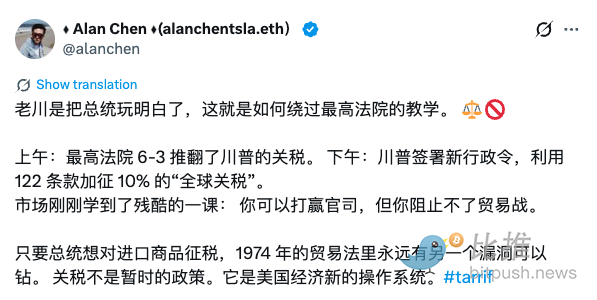
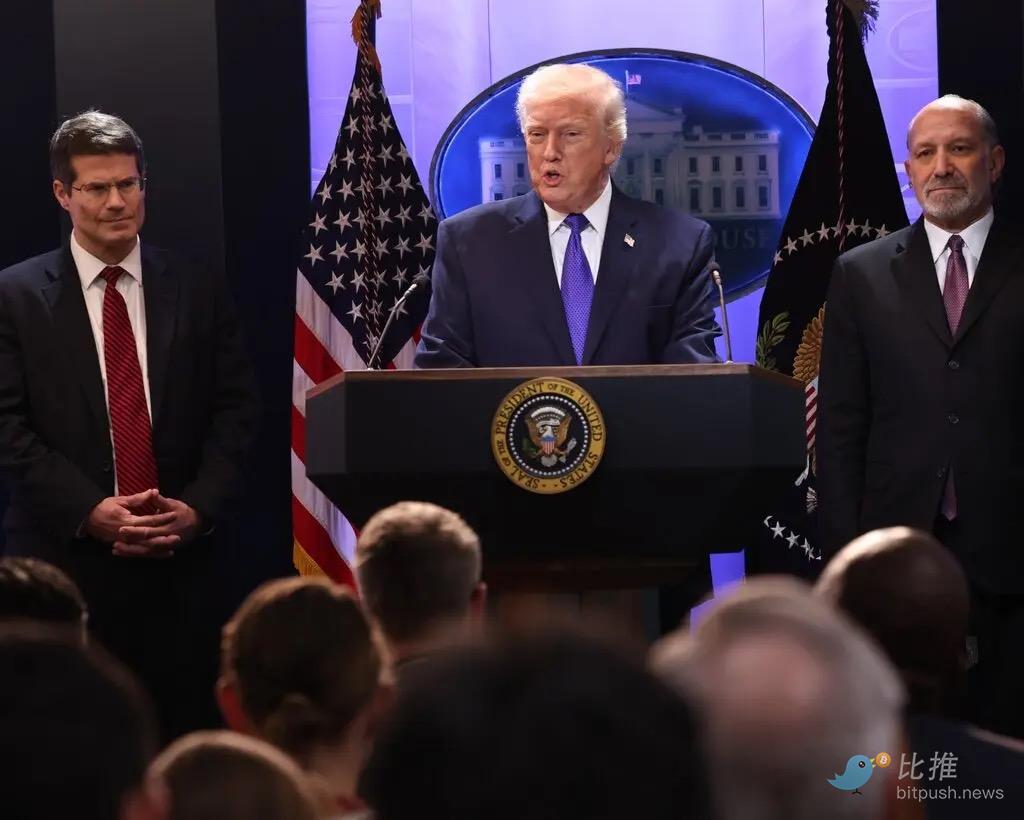
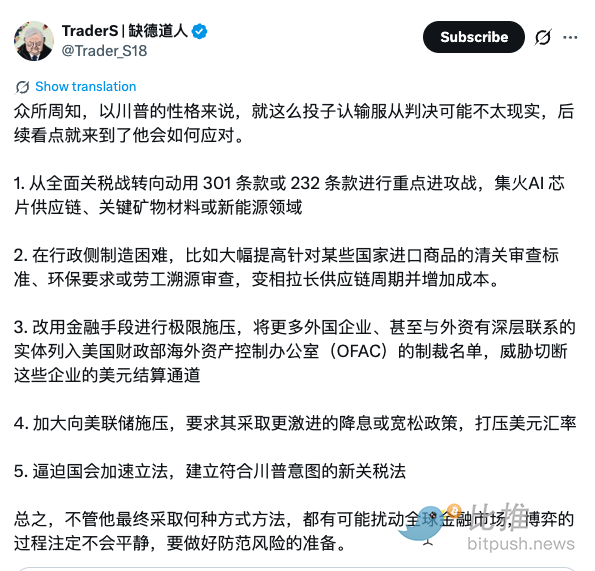
Last night, Beijing time, the U.S. Supreme Court ruled that Trump's global tariff policy, implemented under federal laws related to national emergencies, was invalid. Shortly after the ruling, Trump quickly invoked another trade authority to issue a new order, announcing an additional 10% global tariff on top of existing tariffs, with all current national security tariffs taking effect immediately.

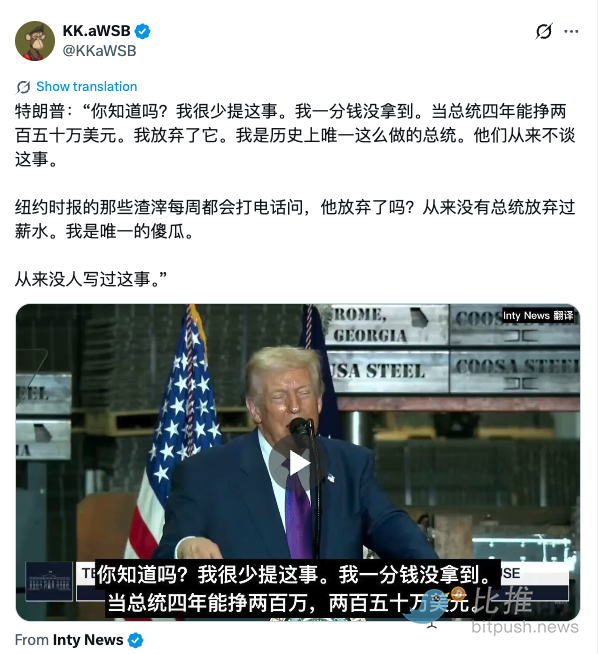
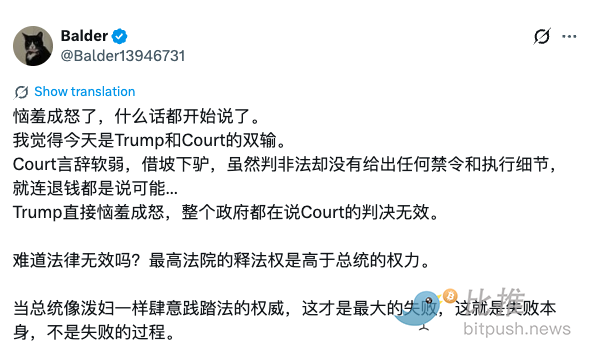
Trump explicitly stated that he would not seek further authorization from Congress, adding, "I don't need to." Regarding the justices who issued the unfavorable ruling, Trump angrily criticized them during a press conference, calling them "fools and lackeys."
Popular replies:

Section 122 is indeed the president's backdoor, but the market overreacted. After three years of tariff wars, U.S. stocks still hit new highs, indicating that investors had already priced in this risk.

Here's some political insight: Emperor Chuan is invincible in the human world for the next three years.

All laws are meant to bind ordinary people. Trump is the true embodiment of 'I want it, I get it.'

Why do people still see him as normal? He is clearly a narcissistic personality disorder patient—isn't it obvious?

Internet Hearts Ache for Little Monkey Punch, Homonymous Meme Coin Soars 80x

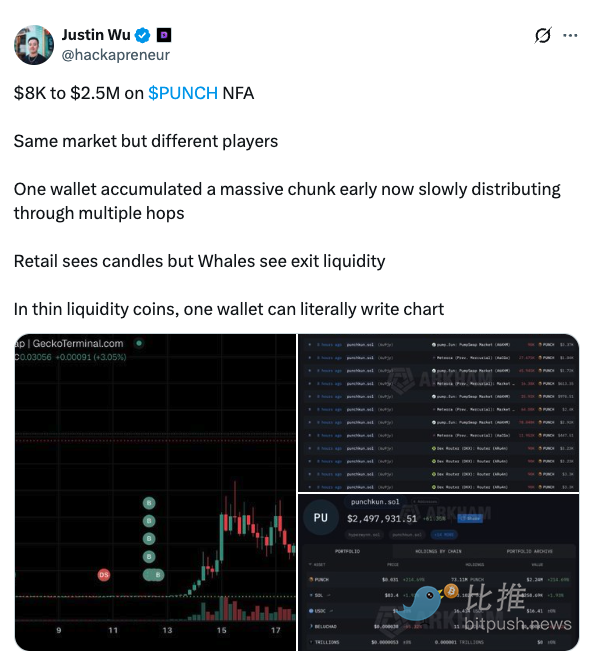
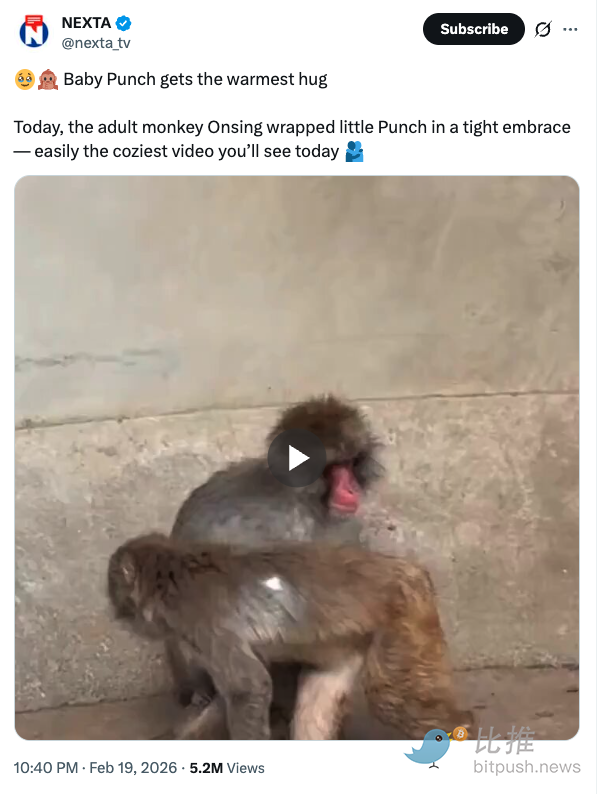
A little monkey named Punch from Ichikawa Zoo in Japan has recently become the focus of the entire internet. Abandoned by its mother at birth, Punch was raised by zookeepers and went viral after a video showed it clinging tightly to a stuffed gorilla for comfort. However, yesterday, Punch was dragged by an adult monkey within the group, a scene that left countless netizens heartbroken. The zoo responded that this was part of Punch's process of learning to integrate into the group, and its adaptability is moving. This story of growth and resilience quickly exploded on social media, with several crypto projects also expressing support. As a result, the homonymous meme coin PUNCH surged, with a seven-day increase of nearly 80 times.
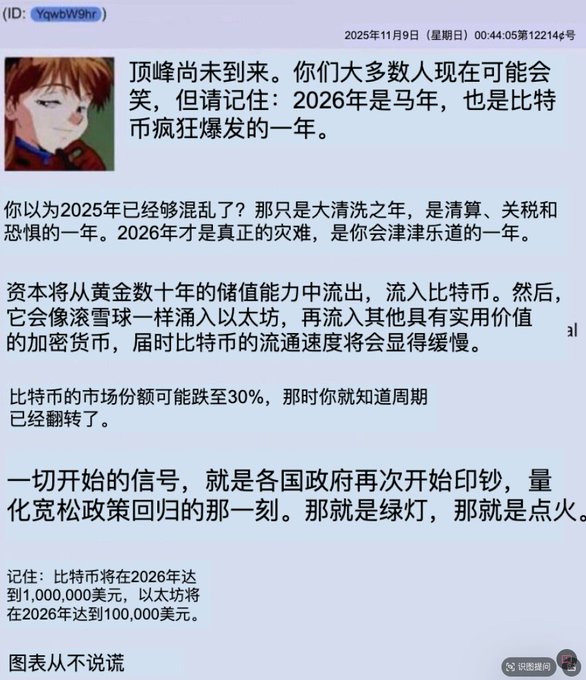
Some Guru Predicts Bitcoin Will Reach $1 Million in 2026
<极img style="max-width:100%;overflow:hidden;" src="https://d1x7dwosqaosdj.cloudfront.net/images/2026-02/54bab4455fef4b5c8304d4912452ab68.png" alt="">

Popular replies:

It's been almost two months now; reaching $1 million is too far-fetched. $360,000 is more like it.

The most painful thing in life is missing out on all the correct predictions others made in the past, only to catch the one failure.

Institutions are worried about quantitative tightening, while gurus expect money printing. The gurus might be right—some countries have already started dumping U.S. bonds. If there aren't enough buyers, the Fed might have to print money to absorb them.

Has the Crypto Circle "Died" by Half?
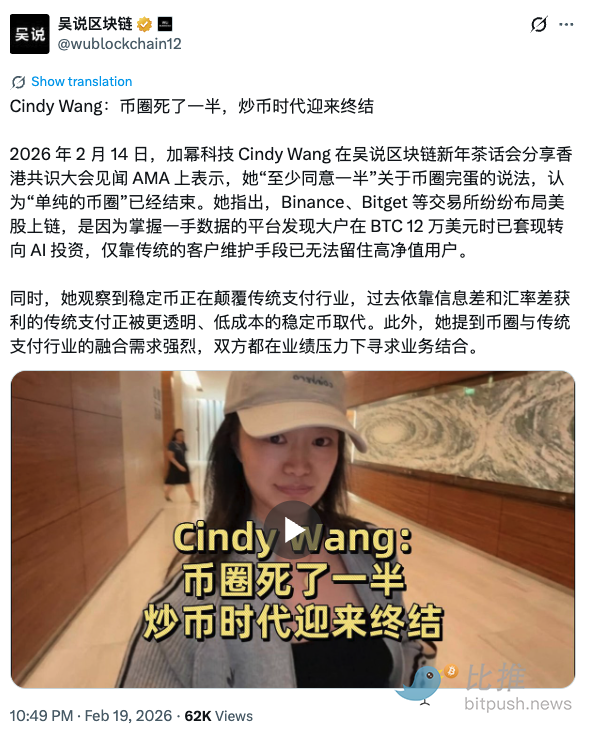
Popular replies:

No insights, just hindsight, along with boasting about their own companies.

They've made enough money and now start smashing the pot.

Creating panic without foresight is the epitome of being led by emotions. If you're not optimistic, you can leave the circle. Without predictive ability, don't make blind predictions. I can say right now that the next cycle will be much stronger than this one—believe it or not.

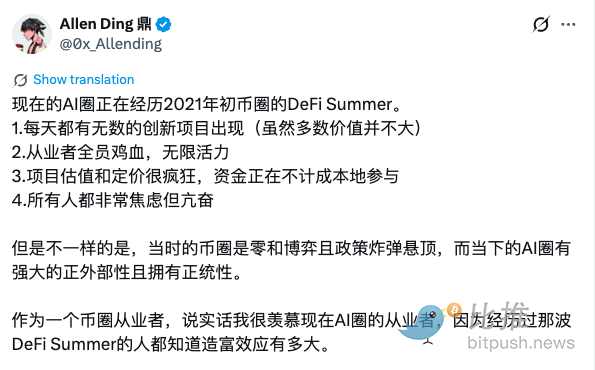
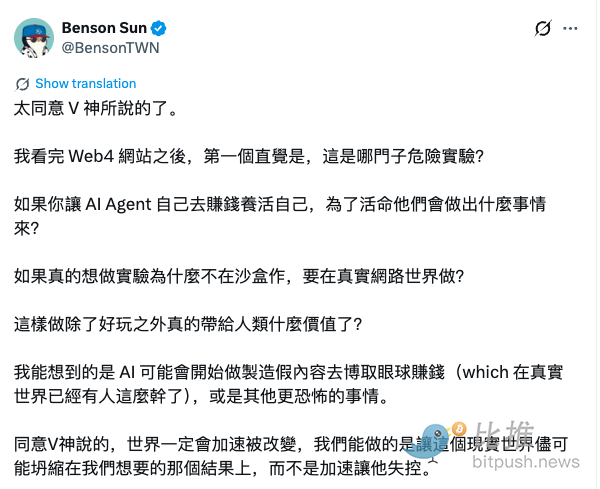
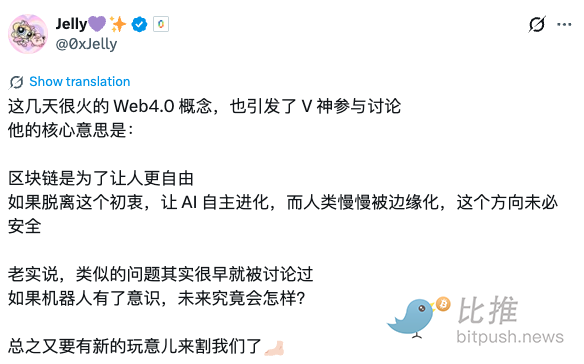
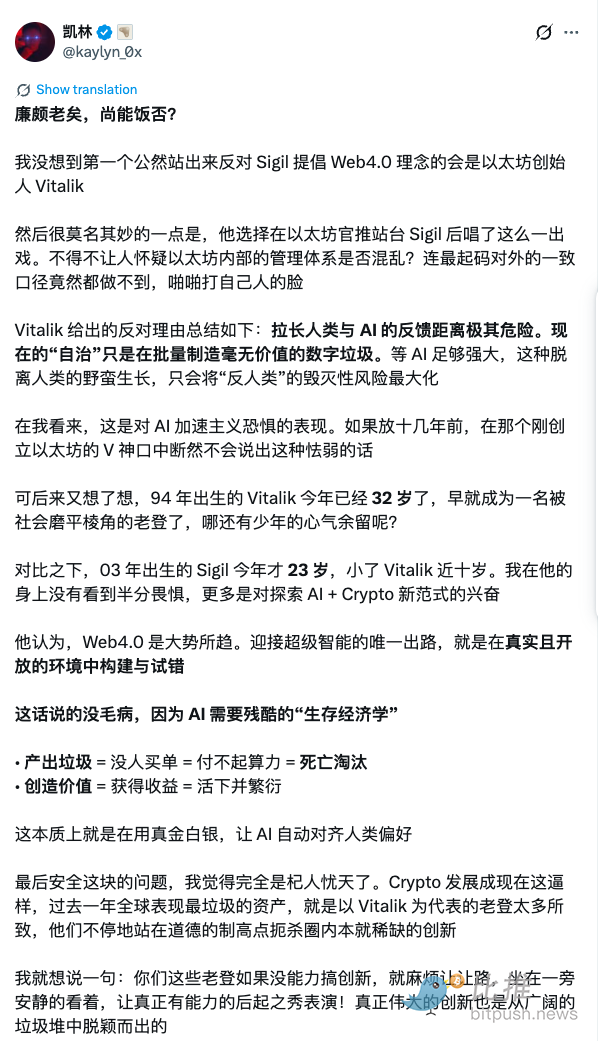
V神 Opposes Web4.0 Concept: Mass Production of Worthless Digital Junk
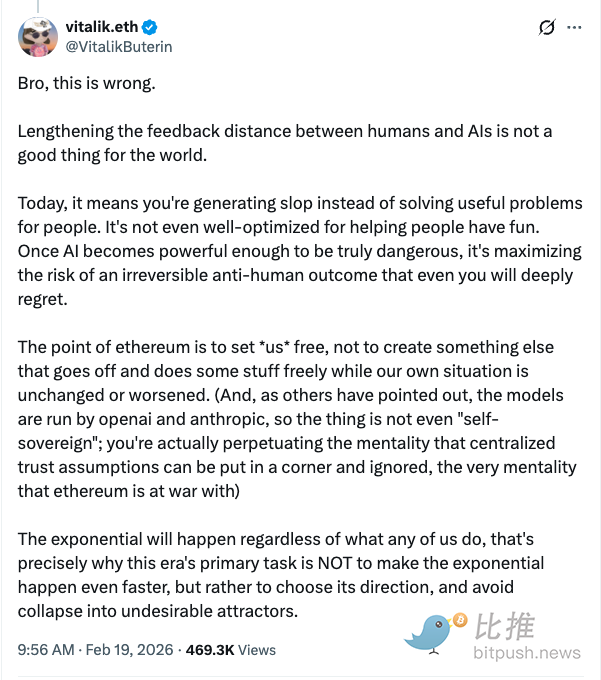
Popular replies:

Indeed, aside from being fun, it has no practical value. An internet without people isn't the internet. If it's all robots, what kind of Web is that?

Those left behind by the times lack imagination and are still stuck in the web2 framework.

Every time new technology emerges, there is always chaos and even danger. Regulation either overreacts or does nothing. Humanity stumbles through every technological revolution like this.

Your circle really knows how to coin terms. Web3 is fading, and now they're shouting about web4...


Twitter:https://twitter.com/BitpushNewsCN

Bitpush TG Discussion Group:https://t.me/BitPushCommunity

Bitpush TG Subscription: https://t.me/bitpush

Original link:https://www.bitpush.news/articles/7613417

İlgili Sorular

QWhat was the US Supreme Court's ruling regarding Trump's global tariff policy, and how did Trump respond?

AThe US Supreme Court ruled that Trump's global tariff policy implemented under national emergency federal laws was invalid. In response, Trump invoked another trade authority to issue a new order, announcing an additional 10% global tariff on top of existing tariffs, with all current national security tariffs taking effect immediately.

QWhat is the story behind the meme coin PUNCH and why did its value surge?

APUNCH is a meme coin named after a baby monkey named Punch from Ichikawa Zoo in Japan. Punch was abandoned by its mother and raised by zookeepers, gaining viral attention online for a video of it hugging a stuffed animal for comfort. Its value surged nearly 80 times in seven days after the story of its struggle to integrate into the monkey group went viral on social media, with several crypto projects showing support.

QWhat prediction was made about Bitcoin's price in 2026, and what were some community reactions?

AA prediction was made that Bitcoin would reach $1 million by 2026. Community reactions were mixed, with some calling it unrealistic and suggesting $360,000 as a plausible target, while others speculated that massive money printing by the Federal Reserve could potentially drive such a surge.

QWhat is V神's (Vitalik Buterin) criticism of Web4.0, and how did people respond?

AVitalik Buterin criticized Web4.0, arguing that it promotes the mass production of worthless digital garbage. Responses varied, with some agreeing that it lacks practical value without human involvement, while others accused him of lacking imagination and being stuck in a Web2 framework.

QAccording to the article, what is the general sentiment about the current state of the crypto circle?

AThe sentiment is divided. Some suggest that half of the crypto circle is 'dead,' criticizing the lack of foresight and fear-mongering. Others are more bullish, arguing that the next market cycle will be much stronger than the current one and dismissing the pessimistic predictions.

İlgili Okumalar

Breaking: OpenAI Undergoes Major Reorganization, President Brockman Assumes Command

OpenAI has announced a major internal reorganization just months before its anticipated IPO. The company is merging its three flagship product lines—ChatGPT, Codex, and the API platform—into a single, unified product organization. The most significant leadership change involves co-founder and President Greg Brockman moving from a background technical role to take full, permanent control over all product strategy. This follows the indefinite medical leave of AGI Deployment CEO Fidji Simo. Additionally, ChatGPT's longtime lead, Nick Turley, has been reassigned to enterprise products, with former Instagram executive Ashley Alexander taking over consumer offerings. The consolidation, internally framed as a strategic move towards an "Agentic Future," aims to break down internal silos and create a cohesive "Super App." This planned desktop application would integrate ChatGPT's conversational abilities, Codex's coding power, and a rumored internal web browser named "Atlas" to autonomously perform complex user tasks. The reorganization occurs amid significant internal and external pressures. OpenAI has recently seen a wave of high-profile departures, including Sora co-lead Bill Peebles and other senior technical leaders, leading to concerns about a thinning executive bench. Externally, rival Anthropic recently secured funding at a staggering $900 billion valuation, surpassing OpenAI's own. Google's upcoming I/O developer conference also poses a competitive threat. Analysts suggest the dramatic restructure is a pre-IPO move to present a clearer, more focused narrative to Wall Street—streamlining operations and demonstrating decisive leadership under Brockman to counter internal turbulence and intense market competition.

marsbit3 saat önce

Breaking: OpenAI Undergoes Major Reorganization, President Brockman Assumes Command

marsbit3 saat önce

Two Survival Structures of Market Makers and Arbitrageurs

Market makers and arbitrageurs represent two distinct survival structures in high-frequency trading. Market makers primarily use limit orders (makers) to profit from the bid-ask spread, enjoying high capital efficiency (nominally 100%) but bearing inventory risk. This "inventory risk" arises from passive, fragmented, and discontinuous order fills in the limit order book (LOB). This risk, while a potential cost, can also contribute to excess profit if managed within control boundaries, allowing for mean reversion. Market makers essentially sell "time" (uncertainty over execution timing) to the market for price control and low fees. In contrast, cross-exchange arbitrageurs typically use market orders (takers) to exploit price differences or funding rates, resulting in lower nominal capital efficiency (requiring capital on both exchanges) and higher transaction costs. Their risk exposure stems from asymmetries in exchange rules (e.g., minimum order sizes), execution latency, and infrastructure risks (e.g., ADL, oracle drift). These exposures are active, exogenous gaps that primarily erode profits rather than contribute to them. Arbitrageurs essentially sell "space" (capital sunk across venues) for localized, immediate certainty. Both strategies engage in a trade-off between execution friction and residual risk. Optimal systems allow for temporary, controlled risk exposure rather than enforcing zero exposure at all costs. Their evolution converges towards hybrid models: arbitrageurs may use maker orders to reduce costs, while market makers may use taker orders or hedges for risk management. Ultimately, both use different forms of risk exposure—market makers exposing inventory, arbitrageurs immobilizing capital—to extract marginal, hard-won certainty from the market.

链捕手3 saat önce

Two Survival Structures of Market Makers and Arbitrageurs

链捕手3 saat önce

Who Will Define the Rules of the AI Era? Anthropic Discusses the 2028 US-China AI Landscape

This article, based on Anthropic's analysis, outlines the intensifying systemic competition between the U.S./allies and China for AI leadership by 2028. It argues that access to advanced computing power ("compute") is the critical bottleneck, where the U.S. currently holds a significant advantage through chip export controls and allied innovation. However, China's AI labs remain competitive by exploiting policy loopholes—via chip smuggling, overseas data center access, and "model distillation" attacks to copy U.S. model capabilities—keeping them close to the frontier. The piece presents two contrasting scenarios for 2028. In the first, decisive U.S. action to tighten compute controls and curb distillation locks in a 12-24 month AI capability lead, cementing democratic influence over global AI norms, security, and economic infrastructure. In the second, policy inaction allows China to achieve near-parity through continued access to U.S. technology, enabling Beijing to promote its AI stack globally and integrate advanced AI into its military and governance systems, altering the strategic balance. Anthropic contends that maintaining a decisive U.S. lead is essential for shaping safe AI development and governance. The core recommendation is for U.S. policymakers to urgently close compute and model access loopholes while promoting global adoption of the U.S. AI technology stack to secure a lasting strategic advantage.

marsbit5 saat önce

Who Will Define the Rules of the AI Era? Anthropic Discusses the 2028 US-China AI Landscape

marsbit5 saat önce

İşlemler

Spot
Futures
活动图片