Wall Street Shorts ETH: Vitalik Knew and Front-Ran, Tom Lee Still Deluded

marsbit2026-03-07 tarihinde yayınlandı2026-03-07 tarihinde güncellendi

Özet

Culper Research, a Wall Street short-selling firm, has announced a short position on ETH and related securities, including Bitmine (BMNR). The firm argues that Ethereum's token economic model was broken following the Fusaka upgrade in December 2025. They claim that Vitalik Buterin and developers miscalculated Layer 1 demand elasticity using outdated models, leading to a 90% drop in gas fees instead of the predicted 10-30%. This has allegedly enabled a surge in low-value on-chain activity, such as address poisoning and dusting attacks, which now account for 22.5% of all Ethereum transactions. Culper asserts that Vitalik is aware of these issues and is selling his ETH, while prominent bull Tom Lee continues to incorrectly attribute the network's growth to genuine adoption. The report also highlights a decline in validator earnings, a loss of developer talent to Solana, and shrinking market share.

Source:Culper Research

Compiled by: Azuma, Odaily Planet Daily

Editor's Note: On March 6th, Wall Street short-selling firm Culper Research suddenly published an article announcing it is shorting ETH and related securities like BMNR. Culper Research's logic is that Vitalik and other developers miscalculated Ethereum's demand elasticity before the Fusaka upgrade, leading to the upgrade damaging ETH's token economic model. Culper Research also mentioned that Vitalik is well aware of this and is actively front-running with actions, while the deluded Tom Lee is heading towards a dead end.

In response to the firm's massive shorting, Vitalik himself and Tom Lee have not yet responded, but Vitalik's father, Dmitry Buterin (dima.eth), responded by saying: 'When you see the phrase "Vitalik knows this and is selling," you don't need to read further. They are clowns craving attention, not researchers.'

Below is the original content from Culper Research, compiled by Odaily Planet Daily. Compiling this article does not mean we agree with Culper Research's views, but is only to present the perspective and market agitation from some Wall Street institutions regarding ETH.

Latest disclosure: We are shorting ETH and ETH-related stocks, including Bitmine (BMNR).

We believe that after the Fusaka upgrade in December 2025, ETH's token economic model has been broken. Vitalik knows it and is selling; while ETH's staunchest bull, Tom Lee, continues to add ineffective investments. ETH will continue to fall.

Tom Lee's Bitmine has been defending ETH, claiming that "ETH is not in a death spiral because utility is increasing." He cited the surge in active addresses and transaction numbers on Ethereum after the Fusaka upgrade as evidence of so-called "improving fundamentals" and institutional adoption, but he is completely wrong.
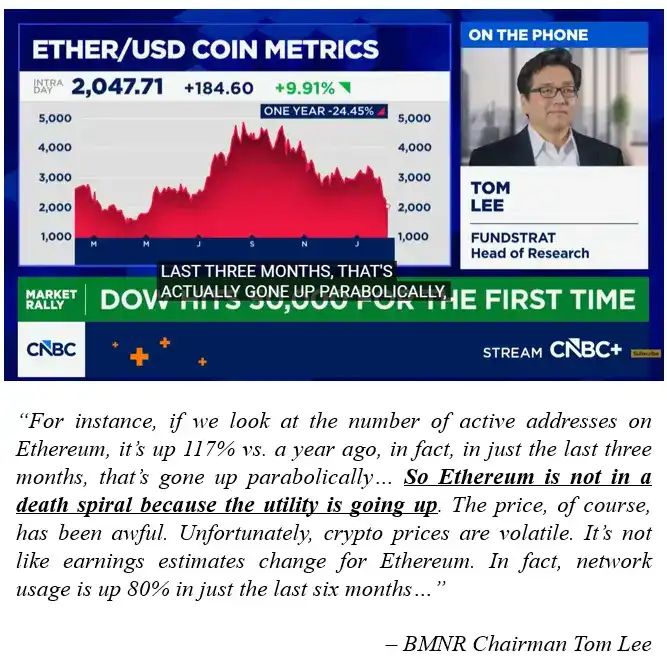
By Tom Lee's own logic, if on-chain activity on Ethereum does not reflect real usage growth and fundamental improvement, then ETH is indeed in a death spiral.

And our research shows that this is exactly what is happening.

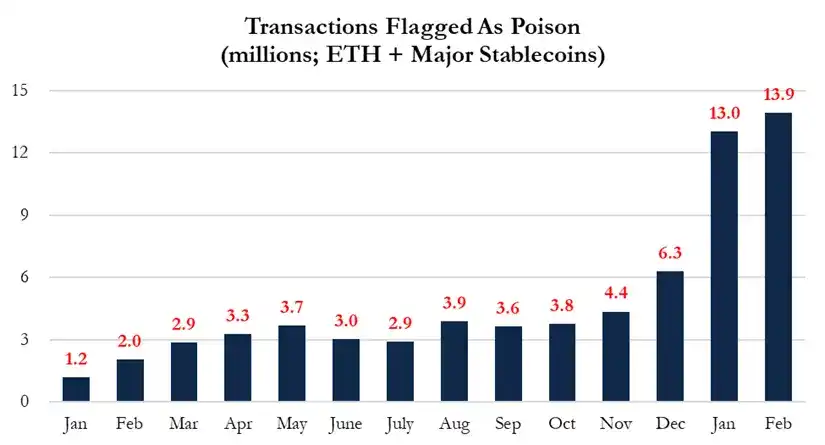
Our comprehensive analysis of on-chain data from January 2025 to February 2026 shows that what Lee calls "activity growth from institutional adoption" can actually be explained by a large number of low-value address poisoning and wallet dusting activities. These activities were triggered by the excess block space after the Fusaka upgrade.
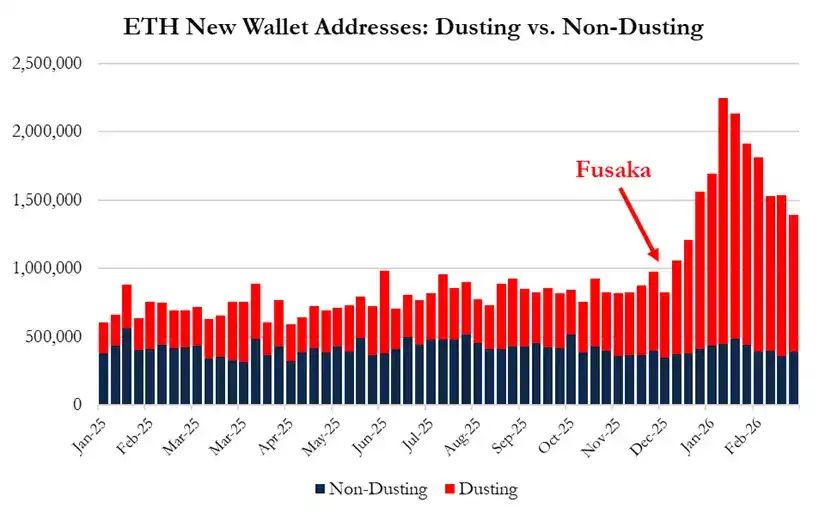
After the Fusaka upgrade:

  • 95% of new wallet growth came from newly created dust addresses;
  • Address poisoning attacks increased by more than 3 times;
  • Poisoning behavior explains over 50% of Ethereum's transaction growth;
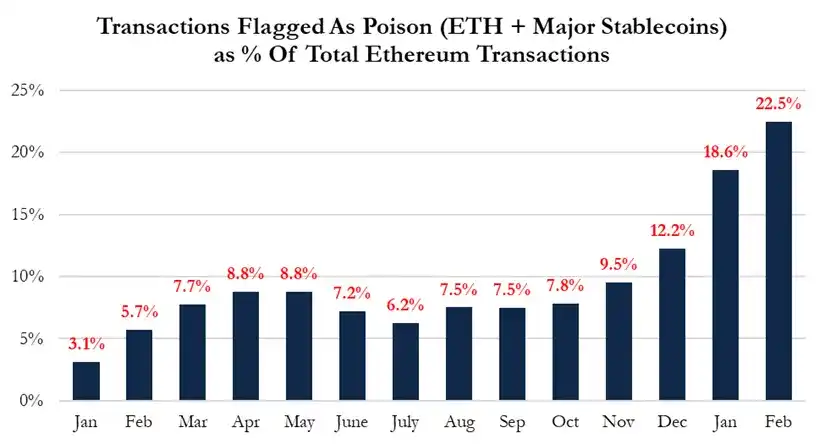
  • Poisoning transactions now account for 22.5% of all Ethereum transactions;
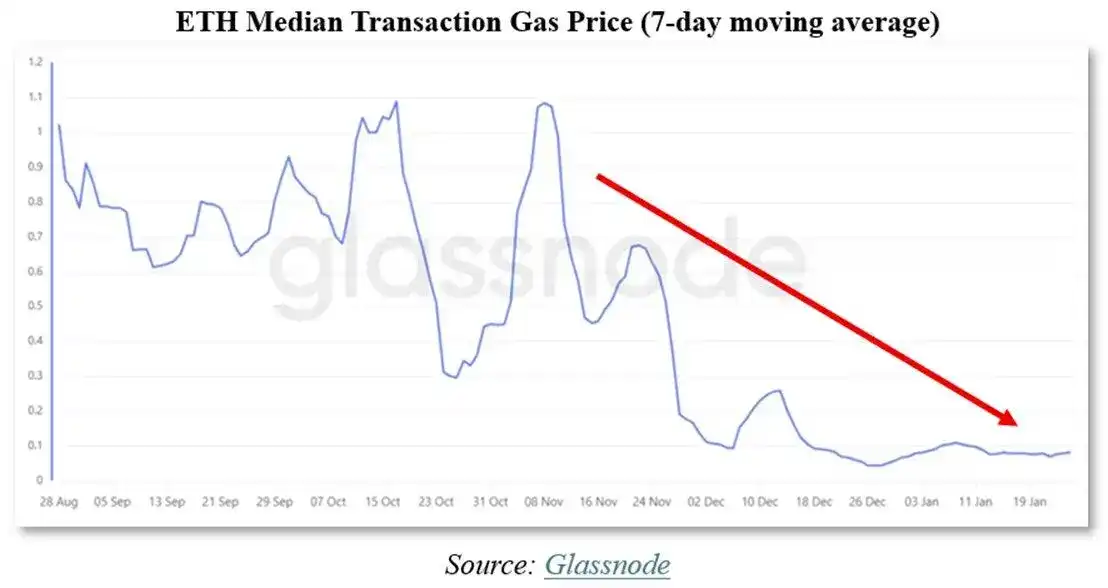
The Fusaka upgrade increased the gas limit from 45M to 60M, aiming to expand Ethereum Layer1 capacity. Vitalik and the protocol team previously预计 gas fees would drop by 10%–30%, but the reality is that gas fees dropped by about 90%.

极速飞艇

Vitalik and the validators made a serious miscalculation regarding Layer1 demand elasticity. They used outdated mathematical models (based on assumptions from before EIP-1559 and before the emergence of Layer2), thereby overestimating Layer1 demand by 3 to 9 times. This is also why we believe Vitalik is selling large amounts of ETH. On January 30th, Vitalik事先 announced he would sell 16,384 ETH to fund the Ethereum Foundation's "austerity period," but since then, he has sold over 19,300 ETH and is still selling.

Vitalik understands something Tom Lee does not — ETH's token economic model has been broken.

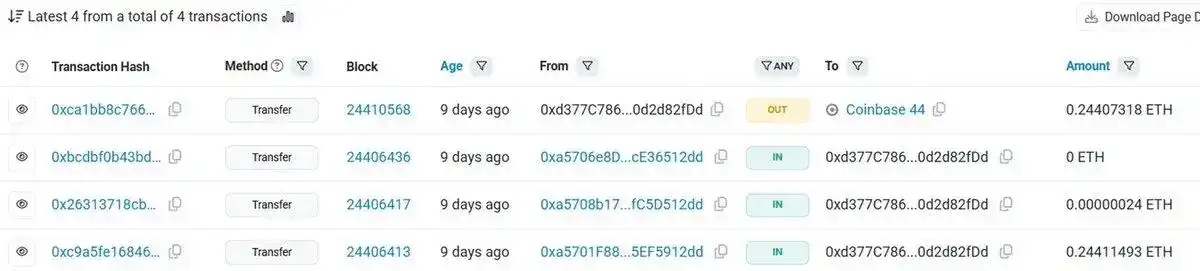
We personally recorded address poisoning on the Ethereum network. We created two new addresses and transferred between them. Within 5 minutes, we were subjected to an address poisoning attack. We encourage readers to verify this phenomenon themselves. Currently, the rate of loss due to poisoning attacks is more than 8 times higher than before the Fusaka upgrade.
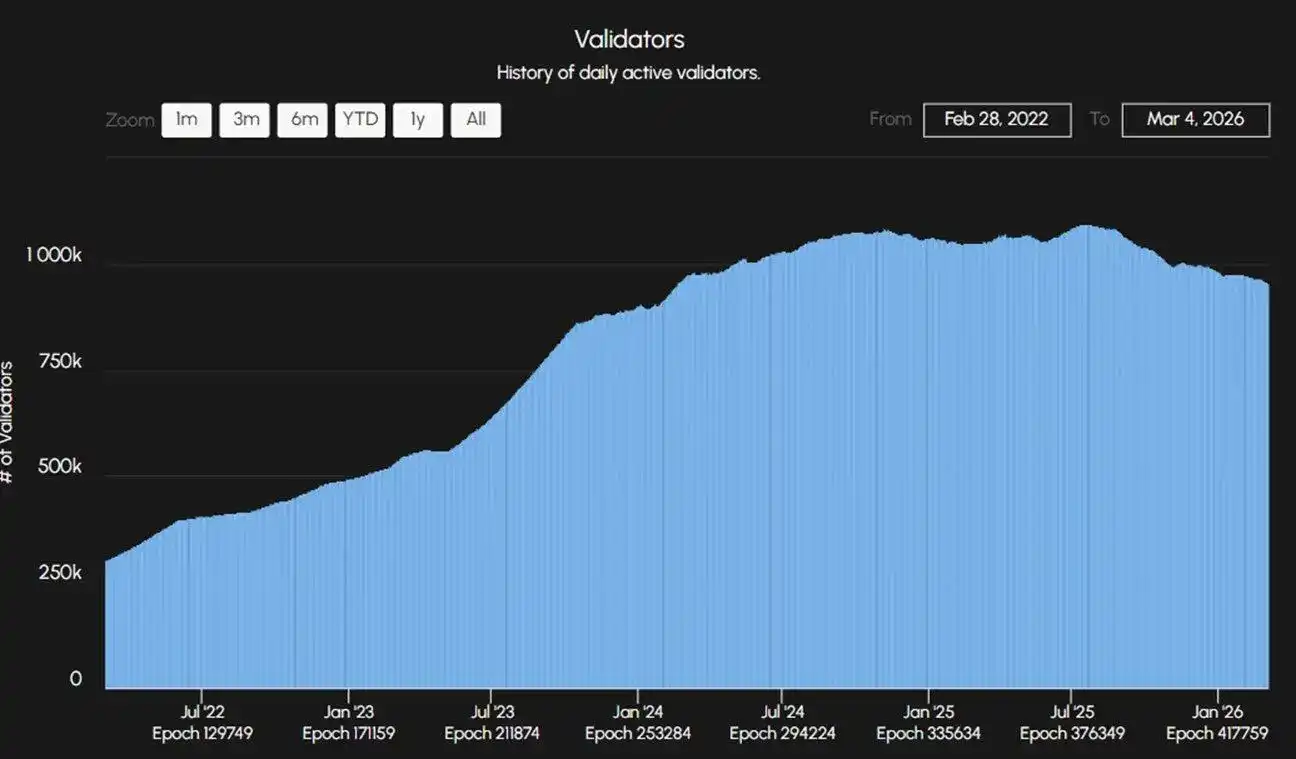
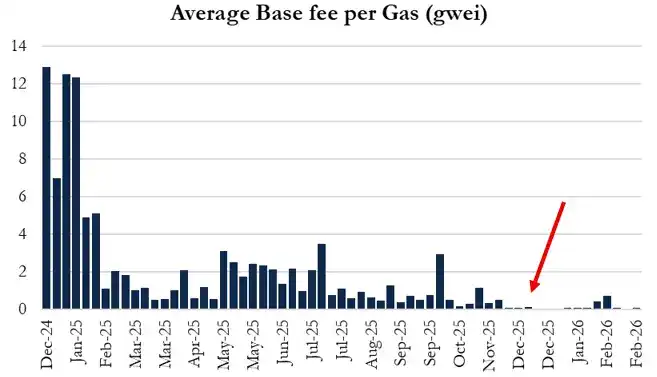
Furthermore, the increase in the gas limit has hit Ethereum's validators群体, whose tip income per unit of gas has now decreased by 40%–50%. Falling yields will weaken staking demand and high-value transaction activity, further undermining institutional adoption. This flywheel has now started to reverse.
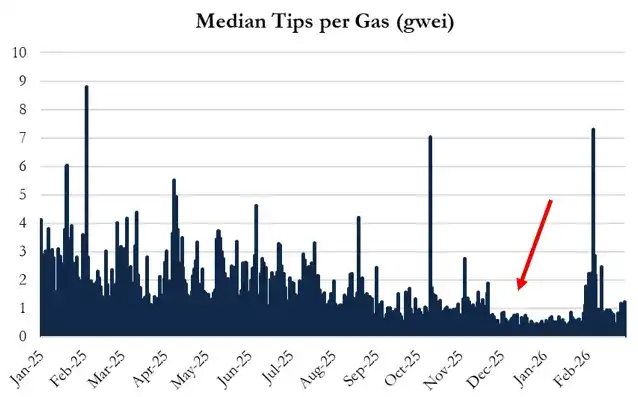
Meanwhile, Ethereum continues to lose market share to Solana and its own Layer2 networks.

  • Solana developer count grew by 29% in 2025;
  • Ethereum developer growth was only 6%;
  • Talent is leaving the Ethereum ecosystem;
  • Institutions like Visa and Citigroup have chosen Solana for DeFi applications;
  • Solana DEX trading volume is already more than 2 times that of Ethereum.

During the dot-com bubble era, Netscape and Nokia dominated the market for over 10 years, but the real winners were Google and Apple. We believe Ethereum's situation is similar — we think Ethereum's token economic model has collapsed, Tom Lee is trapped in his own position, and the price of ETH will continue to fall.


İlgili Sorular

QWhat is the main argument presented by Culper Research for shorting ETH?

ACulper Research argues that the Fusaka upgrade in December 2025 broke Ethereum's token economic model. They claim the upgrade created a massive oversupply of block space, leading to a 90% drop in gas prices. This, in turn, has incentivized a surge in low-value, spam-like activity such as address poisoning and dusting attacks, which artificially inflate on-chain metrics. They conclude that the fundamental value of ETH is deteriorating, leading to their short position.

QAccording to the report, what specific on-chain activity does Culper Research claim is responsible for the perceived growth in Ethereum transactions?

ACulper Research claims that a significant portion of the post-Fusaka transaction growth is not genuine organic activity but is instead driven by malicious or spam-like behavior. They specifically cite address poisoning and wallet dusting attacks, which they say account for over 50% of the transaction growth and now represent 22.5% of all Ethereum transactions.

QWhat does the article claim about Vitalik Buterin's actions and his awareness of the situation?

AThe article claims that Vitalik Buterin is aware that the token economic model is broken and is 'front-running' the market by selling his ETH holdings. It states that after announcing a sale of 16,384 ETH to fund the Ethereum Foundation, he has actually sold over 19,300 ETH and continues to sell.

QHow does Culper Research counter Tom Lee's bullish argument about Ethereum's fundamentals?

ACulper Research counters Tom Lee's argument by asserting that the increased on-chain activity he points to as evidence of improved fundamentals and adoption is largely artificial. They argue that the data shows this growth is primarily from spam attacks (address poisoning and dusting) rather than legitimate use cases or institutional adoption, meaning the network's health is not actually improving.

QWhat negative consequences does the report attribute to the increased gas limit from the Fusaka upgrade?

AThe report attributes several negative consequences to the increased gas limit: a dramatic 90% drop in gas fees (far more than the predicted 10-30%), a severe reduction in validator tip income (down 40-50%), which disincentivizes staking, and the enabling of a massive increase in spam attacks that clog the network and distort metrics.

İlgili Okumalar

Must-Watch Events Next Week|CLARITY Act Could Face Senate Vote; SpaceX, Circle to Report Earnings (8.3-8.9)

**Summary: Key Events and Developments to Watch (August 3-9)** The upcoming week is marked by significant financial disclosures, key legislative deadlines, and notable product updates. **Major Financial Events:** Several companies are scheduled to release their Q2 2026 earnings. American Bitcoin (ABTC) will report on August 3, followed by SpaceX and Hut 8 Mining Corp. on August 4, and Circle on August 5. Notably, a significant portion of SpaceX shares (up to 12% of total shares) will be unlocked on August 6 following their earnings release. **Key Legislative Deadline:** The U.S. Senate faces an August 7 deadline to secure 60 votes for the CLARITY Act, a bipartisan bill aiming to establish a federal regulatory framework for cryptocurrencies. The Senate may hold a full vote on the bill during the week. **Economic Data:** The U.S. July Non-Farm Payrolls report will be released on August 7, providing crucial labor market data. **Technology & Product Updates:** * **Shutdowns:** DeFi portfolio tracker Zapper and wallet app Ctrl Wallet will cease operations on August 3. * **Upgrades:** LayerZero will deprecate its v1 relayers on August 3. XRP Ledger's new version 3.3.0, featuring five new functions, is expected next week. * **AI:** Elon Musk announced that the advanced Grok 4.6 AI model is set for release around August 7. * **Bitcoin:** The BIP-110 forced signaling for a potential Bitcoin network change is scheduled to begin around August 8. **Other Notable Events:** Chinese robotics firm Unitree Tech has set its preliminary price inquiry for its IPO for August 5. South Korean exchange Upbit will delist AQT and AERGO tokens on August 3.

marsbit57 dk önce

Must-Watch Events Next Week|CLARITY Act Could Face Senate Vote; SpaceX, Circle to Report Earnings (8.3-8.9)

marsbit57 dk önce

Stocks Are Plummeting More Sharply Than Cryptocurrencies. Where Has the Money Gone?

Stock Markets Plunge Deeper Than Cryptocurrencies: Where Did the Money Go? In late July, Seoul's Kospi index triggered circuit breakers for two consecutive days, plummeting over 40% from its June high. The collapse was led by heavyweight stocks like SK Hynix, whose record profits still disappointed investors, and devastating leveraged ETFs, with one major product losing over 83% of its value. This signaled a global, forced deleveraging targeting the most crowded trades. Interestingly, while stocks exhibited extreme volatility akin to crypto markets, Bitcoin rose nearly 15% in July after a prior steep drop. Analysis shows the money fleeing equities did not flow into Bitcoin. Instead, Bitcoin had already absorbed its sell-off in May-June, when U.S. spot Bitcoin ETFs saw historic outflows. The true safe-haven beneficiary was gold, whose price rose over 20% year-on-year, highlighting a decoupling between Bitcoin and gold as "digital gold." The sell-off was a targeted unwinding of leveraged positions in tech and semiconductors, accelerated by broker-dealer risk management and shifts in the AI narrative, including new competition from Chinese memory chipmakers. The retreat path was clear: from high-valuation tech stocks to cash and U.S. Treasuries, then to gold. For Bitcoin to attract sustained institutional inflows, conditions like eased global liquidity pressure, a "soft-landing" Fed rate cut, and U.S. regulatory clarity via legislation like the stalled CLARITY Act are needed. Currently, Bitcoin is not a safe haven but an already-cleared asset. Its low correlation with tech stocks, however, makes it a potential diversification play for institutional portfolios once the storm passes. The money isn't here yet, but the positioning is underway.

marsbit57 dk önce

Stocks Are Plummeting More Sharply Than Cryptocurrencies. Where Has the Money Gone?

marsbit57 dk önce

In Conversation with Ray Dalio: We Are Currently in an AI Bubble, with 1% of My Portfolio in Bitcoin

Ray Dalio, founder of Bridgewater Associates, warns in an interview that the current AI boom shows classic bubble characteristics, which could lead to significant economic downturns as seen in past cycles like 1929 or 2000. He explains that speculative enthusiasm, fueled by debt and overvaluation, often precedes a crash when rising rates or taxation force asset sales, causing widespread losses and recession. Dalio also outlines his "Big Cycle" theory, describing an approximate 80-year pattern where widening wealth gaps, massive government deficits, and shifting geopolitical power (like China's rise) create internal conflict and global instability. He emphasizes that we are in a late-cycle, transitional phase where traditional powers like the US and UK face decline. For personal wealth protection, Dalio advises diversification beyond cash into assets like stocks, bonds, real estate, and particularly gold, which he prefers over Bitcoin. While he holds about 1% of his portfolio in Bitcoin as a non-printable hard asset, he views gold as more secure from technological or governmental threats. Regarding AI's impact, Dalio believes it will disproportionately benefit capital owners, worsening inequality by replacing both physical and cognitive labor. He suggests that human intuition and emotional intelligence, combined with AI, will be key for future workers. On taxation, Dalio argues that wealth taxes are impractical and risk triggering asset sell-offs, reducing productive investment. He points to the UK as a cautionary example of debt, low productivity, and political strife. Geopolitically, Dalio foresees a more regionalized world, with the US showing weakness in prolonged conflicts like with Iran, akin to past imperial declines. The ideal outcome, he suggests, is coexisting powerful blocs (e.g., Americas, China-Asia Pacific) without major war.

marsbit4 saat önce

In Conversation with Ray Dalio: We Are Currently in an AI Bubble, with 1% of My Portfolio in Bitcoin

marsbit4 saat önce

İşlemler

Spot
活动图片