Wall Street Shorts ETH: Vitalik Knew and Front-Ran, Tom Lee Still Deluded

Odaily星球日报2026-03-06 tarihinde yayınlandı2026-03-06 tarihinde güncellendi

Özet

Wall Street short-selling firm Culper Research has initiated a short position on ETH and related securities, including Bitmine (BMNR). The firm argues that Ethereum’s token economic model was fundamentally broken following the Fusaka upgrade in December 2025, which increased the gas limit from 45M to 60M. Contrary to initial expectations of a 10–30% drop, gas fees fell by approximately 90%, leading to a surge in low-value on-chain activity such as address poisoning and dust attacks. These activities now account for a significant portion of transaction growth and new wallet creation, distorting metrics often cited as signs of organic adoption. Culper alleges that Vitalik Buterin and core developers severely miscalculated Layer 1 demand elasticity using outdated models, overestimating real demand by 3–9 times. The report claims Vitalik is aware of these issues and has been selling ETH, exceeding previously announced sales targets. Meanwhile, Tom Lee of Bitmine continues to defend ETH based on misleading on-chain activity growth. Additionally, validators are earning 40–50% less in tips per unit of gas, reducing staking yields and potentially weakening institutional interest. Ethereum is also losing developer and market share to Solana, which has attracted major institutional DeFi adoption. Culper concludes that Ethereum’s tokenomics are irreparably damaged and expects further price declines.

This article is from:Culper Research

Compiled by | Odaily Planet Daily (@OdailyChina); Translator | Azuma (@azuma_eth)

Editor's Note: On March 6, Wall Street short-selling firm Culper Research suddenly published an article announcing it is shorting ETH and related securities like BMNR. Culper Research's logic is that Vitalik and other developers miscalculated Ethereum's demand elasticity before the Fusaka upgrade, leading to the upgrade damaging ETH's token economic model. Culper Research also mentioned that Vitalik is well aware of this and is actively front-running with practical actions, while the deluded Tom Lee is heading towards a dead end.

In response to the firm's massive shorting, Vitalik himself and Tom Lee have not yet responded, but Vitalik's father, Dmitry Buterin (dima.eth), responded by saying: "When you see the phrase 'Vitalik knows this and is selling,' you don't need to read further. They are clowns craving attention, not researchers."

Below is the original content from Culper Research, compiled by Odaily Planet Daily. Compiling this article does not mean we agree with Culper Research's views, but is only to present the perspective and market煽动 of some Wall Street institutions regarding ETH.

Latest disclosure: We are shorting ETH and ETH-related stocks, including Bitmine (BMNR).

We believe that after the Fusaka upgrade in December 2025, ETH's token economic model has been broken. Vitalik knows this and is selling; while ETH's staunchest bull, Tom Lee, continues to add ineffective investments. ETH will continue to fall.

Tom Lee's Bitmine has consistently defended ETH, claiming that "ETH is not in a death spiral due to increasing utility." He cited the surge in active addresses and transaction numbers on Ethereum after the Fusaka upgrade as evidence of so-called "improved fundamentals" and institutional adoption, but he is completely wrong.
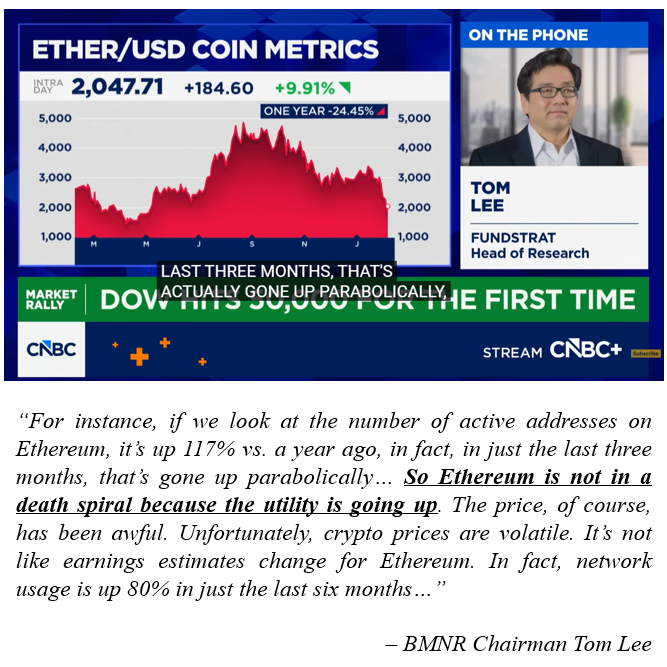
By Tom Lee's own logic, if on-chain activity on Ethereum does not reflect real usage growth and fundamental improvement, then ETH is indeed in a death spiral.

And our research shows that this is exactly what is happening.

We conducted a comprehensive analysis of on-chain data from January 2025 to February 2026, and the results show that what Lee calls "institutional adoption driving Ethereum's activity growth" can actually be explained by a large number of low-value address poisoning and wallet dusting behaviors. These behaviors were triggered by the excess block space after the Fusaka upgrade.
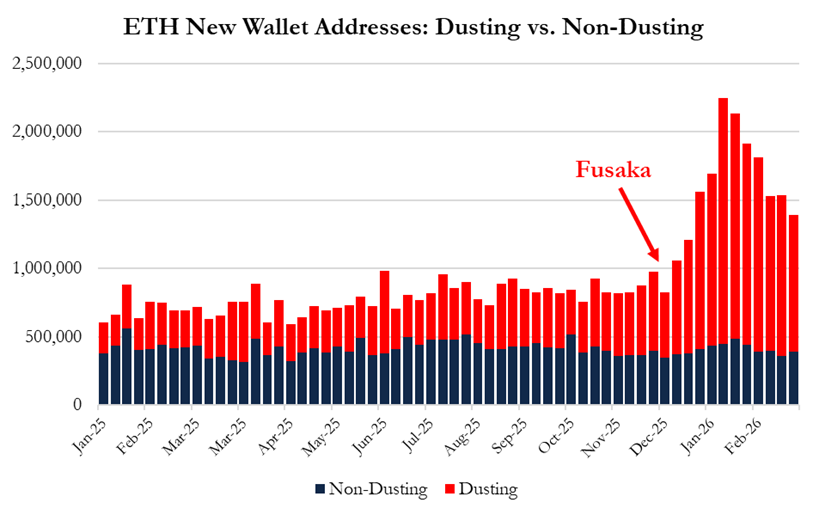
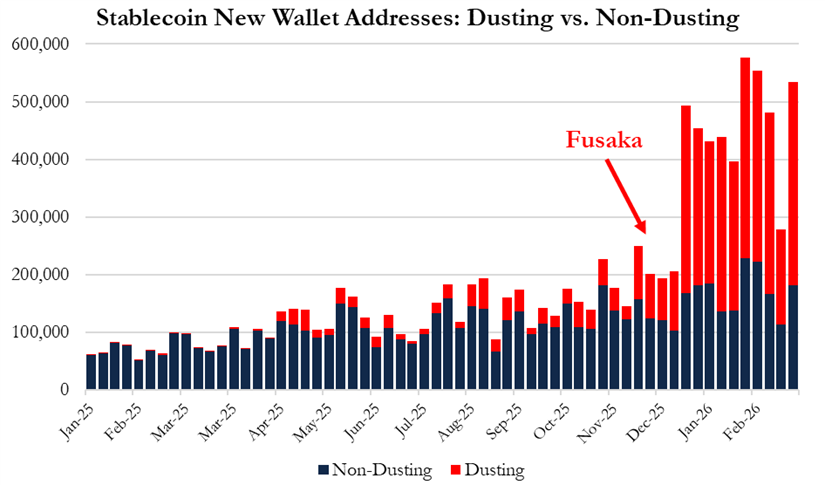
After the Fusaka upgrade:

  • 95% of new wallet growth comes from newly created dust addresses;
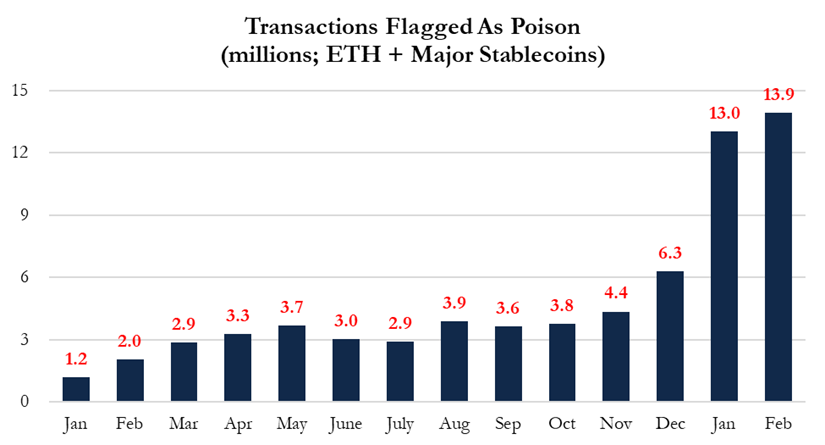
  • Address poisoning attacks have increased by more than 3 times;
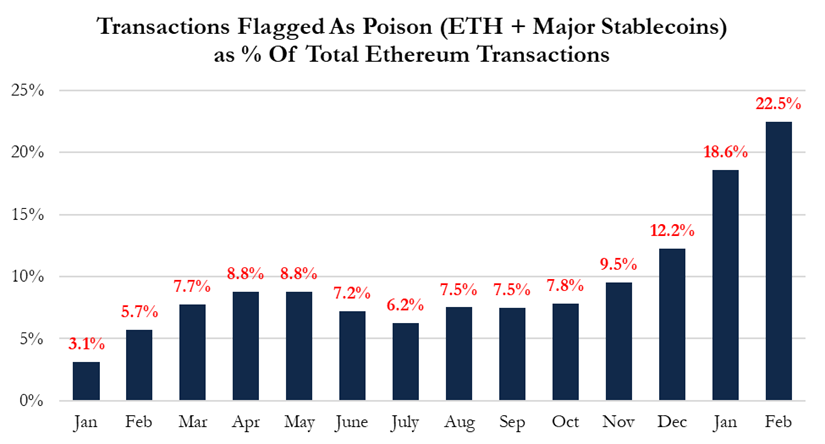
  • Poisoning behavior explains over 50% of Ethereum's transaction growth;
  • Poisoning transactions now account for 22.5% of all Ethereum transactions;
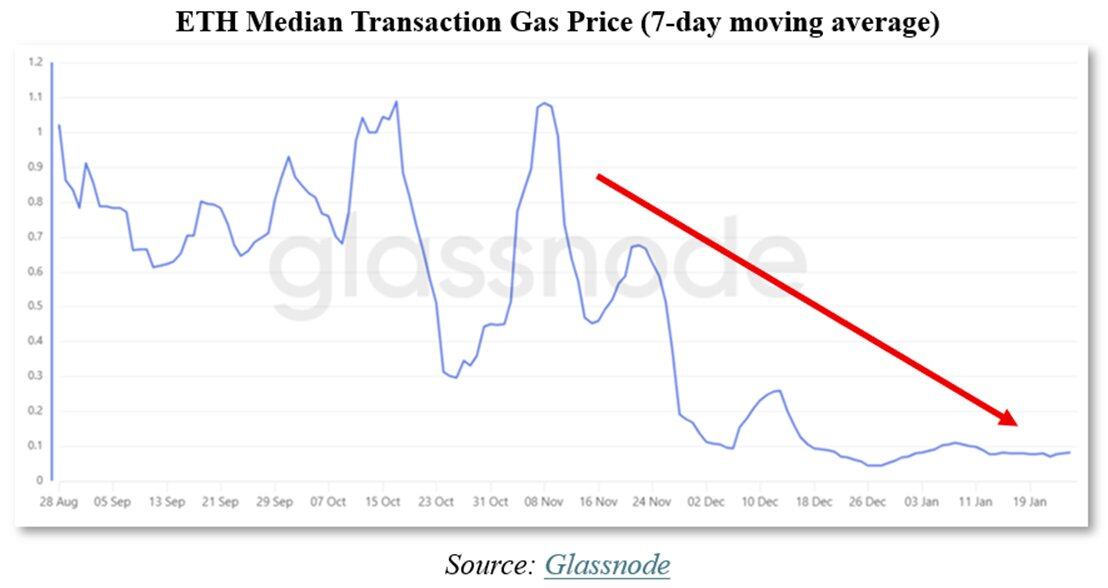
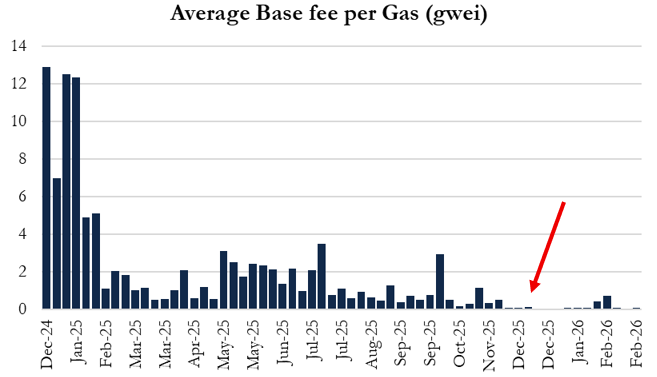
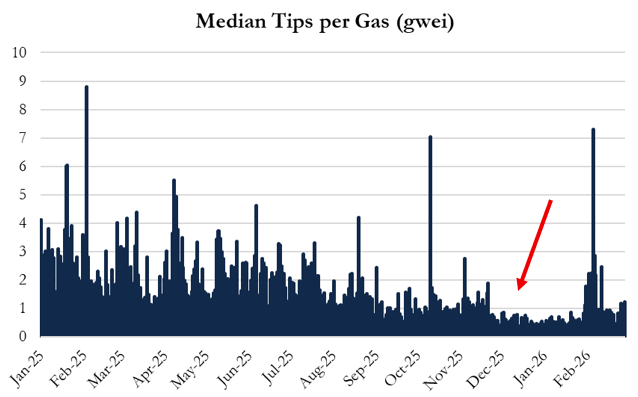
The Fusaka upgrade increased the gas limit from 45M to 60M, aiming to expand Ethereum Layer1 capacity. Vitalik and the protocol team previously predicted gas fees would drop by 10%–30%, but the reality is that gas fees dropped by about 90%.

Vitalik and the validators made a serious miscalculation in Layer1 demand elasticity. They used outdated mathematical models (based on assumptions from before EIP-1559 and before Layer2 emerged), thereby overestimating Layer1 demand by 3 to 9 times. This is also why we believe Vitalik is selling large amounts of ETH. On January 30, Vitalik announced in advance that he would sell 16,384 ETH to fund the Ethereum Foundation's "austerity period," but since then, he has sold over 19,300 ETH and is still selling.

Vitalik understands something Tom Lee does not — ETH's token economic model has been broken.

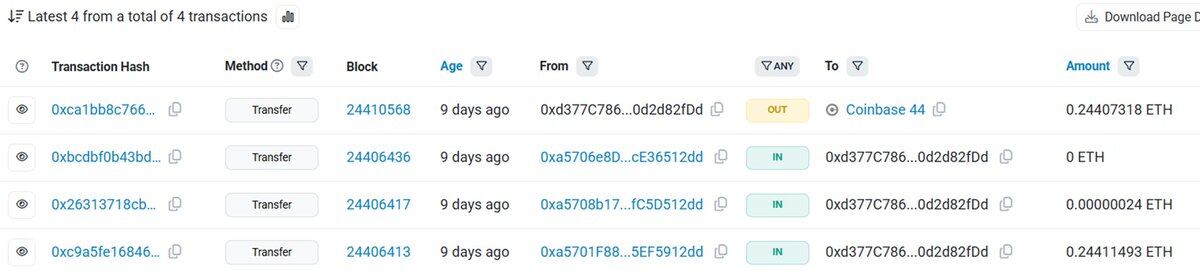
We personally documented Ethereum network address poisoning. We created two new addresses and transferred between them. Within 5 minutes, we were subjected to an address poisoning attack. We encourage readers to verify this phenomenon themselves. Currently, the rate of losses due to poisoning attacks is 8 times higher than before the Fusaka upgrade.
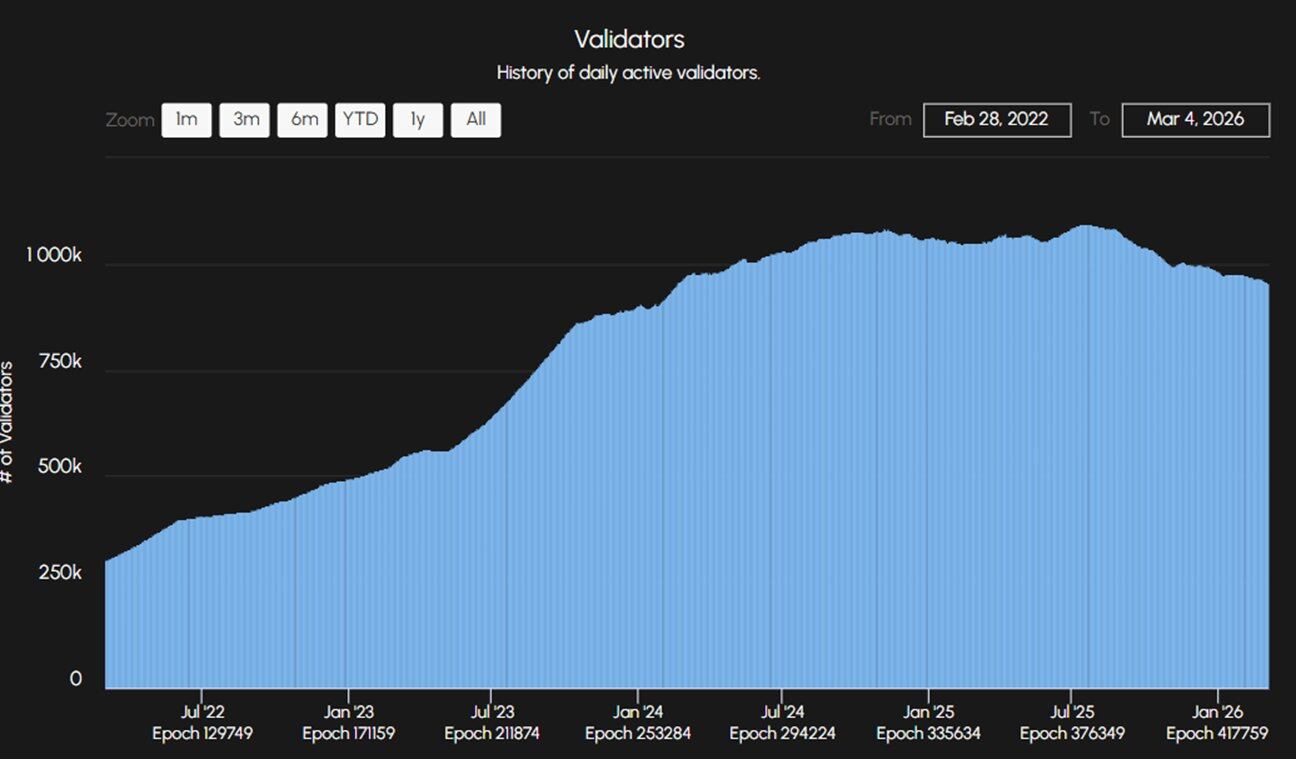
Furthermore, the increase in the gas limit has hit Ethereum's validators群体, as validators now see a 40%–50% decline in tip income per unit of gas. Falling yields will weaken staking demand and high-value transaction activity, further undermining institutional adoption. This flywheel has now started to reverse.
Meanwhile, Ethereum continues to lose market share to Solana and its own Layer2 networks.

  • Solana developer count grew 29% in 2025;
  • Ethereum developer growth was only 6%;
  • Talent is leaving the Ethereum ecosystem;
  • Institutions like Visa and Citigroup have chosen Solana for DeFi applications;
  • Solana DEX trading volume is already more than double that of Ethereum.

In the dot-com bubble era, Netscape and Nokia dominated the market for over 10 years, but the real winners were Google and Apple. We believe Ethereum's situation is similar — we think Ethereum's token economic model has collapsed, Tom Lee is trapped in his own position, and ETH's price will continue to fall.


İlgili Sorular

QWhat is the main argument presented by Culper Research for shorting ETH?

ACulper Research argues that the Fusaka upgrade in December 2025 broke Ethereum's token economic model by significantly increasing block space, which caused gas fees to drop by ~90% instead of the projected 10-30%. This led to a surge in low-value spam activities (address poisoning and dusting attacks) that artificially inflate on-chain metrics, while validators' earnings and institutional adoption declined. They claim Vitalik Buterin is aware of this and selling ETH, while Tom Lee remains incorrectly bullish.

QWhat specific on-chain data does Culper Research cite to support their claim that Ethereum's activity growth is not organic?

ACulper Research cites data showing that 95% of new wallet growth post-Fusaka comes from dust addresses, address poisoning attacks increased over 3x, poisoning explains over 50% of transaction growth, and poisoning transactions now constitute 22.5% of all Ethereum transactions. They also note that gas fees dropped ~90% due to miscalculated demand elasticity.

QWhy does Culper Research claim Vitalik Buterin is selling ETH, and what evidence do they provide?

ACulper Research claims Vitalik is selling ETH because he knows the tokenomics are broken post-Fusaka. They note he announced selling 16,384 ETH on January 30 to fund Ethereum Foundation's 'austerity period' but has since sold over 19,300 ETH and continues selling, indicating insider awareness of the model's failure.

QHow does Culper Research argue that the Fusaka upgrade negatively impacted Ethereum validators?

AThey state that the gas limit increase from 45M to 60M reduced validators' tip earnings per unit of gas by 40-50%, lowering yields and weakening staking demand and high-value transaction activity, which further undermines institutional adoption.

QWhat comparisons does Culper Research make between Ethereum and Solana, and what trends do they highlight?

ACulper Research highlights Solana's growth compared to Ethereum: Solana developer count increased 29% in 2025 vs. Ethereum's 6%, institutions like Visa and Citigroup chose Solana for DeFi, Solana DEX volume is over 2x Ethereum's, and talent is leaving Ethereum. They analogize Ethereum to past giants like Netscape and Nokia that were disrupted.

İlgili Okumalar

Annual Salary of Millions Competing for Electricians, Meta Rushes to Open Its Own Technical School

The AI boom is facing an unexpected bottleneck: a severe shortage of skilled construction workers and electricians. As tech giants like Meta, OpenAI, and Alphabet race to build massive data centers—such as OpenAI's $16 billion "Stargate" project—they are hitting a critical labor wall. The U.S. needs an estimated 130,000 more electricians, 240,000 construction workers, and 150,000 supervisors by 2030 for AI infrastructure alone, but tens of thousands of electrician jobs go unfilled each year. While AI companies offer high premiums, with electricians earning up to $280,000 annually, worker scarcity still causes massive losses—delays on a single project can cost $14.2 million per month. The complexity of building AI data centers, which require immense power (equivalent to powering hundreds of thousands of homes), sophisticated electrical systems, and advanced liquid cooling solutions, demands highly skilled technicians who are in short supply. To combat this, companies are investing heavily in training. Meta has committed $115 million to a free training school offering tuition, housing, and stipends, targeting 5,000 new workers. OpenAI is partnering with unions to secure skilled labor. These efforts are paying off, with a significant rise in Gen Z interest in trade schools over college. However, the power demands are staggering. AI data centers are driving a rapid surge in electricity consumption, projected to account for up to 12% of U.S. power use by 2028 and raising costs for consumers. Furthermore, the construction boom is project-based, leading to a potential future glut of trained workers once building peaks, which could depress wages industry-wide. The race for AI supremacy now depends as much on skilled hands as on advanced chips.

marsbit9 dk önce

Annual Salary of Millions Competing for Electricians, Meta Rushes to Open Its Own Technical School

marsbit9 dk önce

OpenAI No Longer Sells Its Most Expensive Model for Profit

OpenAI is shifting its business strategy away from promoting its most expensive, flagship models for every task. Recent price cuts—80% for GPT-5.6 Luna and 20% for Terra—signal a deeper change: the company now actively advises users that many tasks don't require the most powerful model. Instead, OpenAI recommends a tiered approach: use the high-end GPT-5.6 Sol for complex planning and analysis, then delegate execution to cheaper models like Luna. This mirrors moves by Anthropic, which recently launched Claude Opus 5 at half the price of its top model, Fable 5. Both companies are de-emphasizing flagship models as primary revenue drivers, using them instead for brand prestige and technological showcases. The industry is entering a "mass-market" phase, similar to automotive, where high-volume, cost-effective models handle daily operations and drive scale. OpenAI's price reductions are partly enabled by AI models themselves optimizing underlying code and infrastructure, creating a self-reinforcing cycle of efficiency gains and cost reduction. Competition is shifting from "who is smartest" to "who offers the best value." The goal is no longer selling individual models but fostering widespread API adoption and ecosystem lock-in. By making AI calls cheap and ubiquitous, companies like OpenAI aim to become the indispensable, utility-like infrastructure powering automated workflows—the "water and electricity" of software, quietly embedded everywhere.

marsbit9 dk önce

OpenAI No Longer Sells Its Most Expensive Model for Profit

marsbit9 dk önce

Will the Fed Definitely Raise Interest Rates in September? How Will Crypto and U.S. Stocks Withstand the Pressure?

The market's expectation for a September Fed rate hike surged dramatically in early August, jumping from under 50% to over 80% within a week. This shift followed a contentious July FOMC meeting, where a 9-3 vote to hold rates revealed growing dissent from hawkish members advocating for an immediate hike to combat persistent inflation. The primary catalyst for this repricing is rising oil prices, driven by renewed geopolitical tensions around the Strait of Hormuz, which threaten global supply. Energy costs directly influence inflation metrics, making the upcoming July CPI report (due August 12th) a critical data point. If it shows inflation reaccelerating, the probability of a September hike will solidify. For Bitcoin and crypto assets, this is typically bearish news. Bitcoin continues to behave as a high-beta, liquidity-sensitive risk asset. A rate hike raises the opportunity cost of holding non-yielding assets and could drive capital toward money markets, pressuring crypto prices in the short term. However, historical patterns suggest that if a hike is perceived as the end of a tightening cycle rather than the start, any negative price impact may be brief. U.S. stocks, particularly crypto-linked equities like Coinbase and growth-oriented tech stocks, are also vulnerable. Higher rates increase discount rates in valuation models, putting pressure on high-multiple companies. This coincides with a pivotal tech earnings season where investor focus has shifted from massive AI capital expenditure to tangible revenue and cash flow generation. Companies with negative cash flow and weak growth narratives could face heightened volatility if borrowing costs rise in September. In summary, a September Fed hike has evolved into a mainstream market scenario. Key factors to watch are oil prices, the July CPI report, and Fed communications, which will determine the final decision and its impact on volatile crypto and equity markets.

marsbit20 dk önce

Will the Fed Definitely Raise Interest Rates in September? How Will Crypto and U.S. Stocks Withstand the Pressure?

marsbit20 dk önce

İşlemler

Spot
活动图片