Author: YQ
Compiled by: Saoirse, Foresight News
Since 2015, I have been deeply involved in scaling technology research, studying all iterative solutions from sharding, Plasma, App Chains to Rollup. I have in-depth collaborations with every mainstream Rollup tech stack and team in the ecosystem. Therefore, I always pay close attention when Vitalik publishes content that can fundamentally reshape our understanding of Layer2 (L2). The post he published on February 3rd is such a key piece of content.
What Vitalik did is not easy — admitting that the core assumptions from 2020 did not materialize as expected. This kind of candor is something most leaders avoid. The "Rollup-centric" roadmap back then was built on the premise that "L2s would act as Ethereum's 'branded shards'." But four years of market data paint a different picture: L2s have evolved into platforms with independent economic incentives, and Ethereum Layer1's scaling speed has far exceeded expectations. The original vision has long been disconnected from reality.
In fact, it would have been easier to continue defending the old narrative — for example, by强行 pushing teams towards a vision the market had already否决. But this is not the mark of good leadership. The truly wise approach is to acknowledge the gap between expectations and reality, propose a new direction, and move towards a brighter future. And this post does exactly that.
The Problems Vitalik Actually Diagnosed
The post points out two core realities requiring strategic adjustment:
First, the decentralization of L2s is much slower than expected. Currently, only 3 mainstream L2s (Arbitrum, OP Mainnet, Base) have reached the first stage of decentralization; some L2 teams have explicitly stated that, due to regulatory requirements or business model limitations, they may never pursue full decentralization. This is not a moral "failure," but a reflection of economic reality — for L2 operators, sequencer revenue is the core business model.
Second, Ethereum L1 has achieved significant scaling. Current L1 fees are low, the Pectra upgrade doubled data blob capacity, and there are plans to continuously increase the Gas limit through 2026. When the Rollup roadmap was designed, "high L1 costs and network congestion" were the basic premises; this premise no longer holds. L1 can now handle a large number of transactions at reasonable costs, which also transforms the value proposition of L2s from "a necessity for ensuring availability" to "an optional solution for specific use cases."
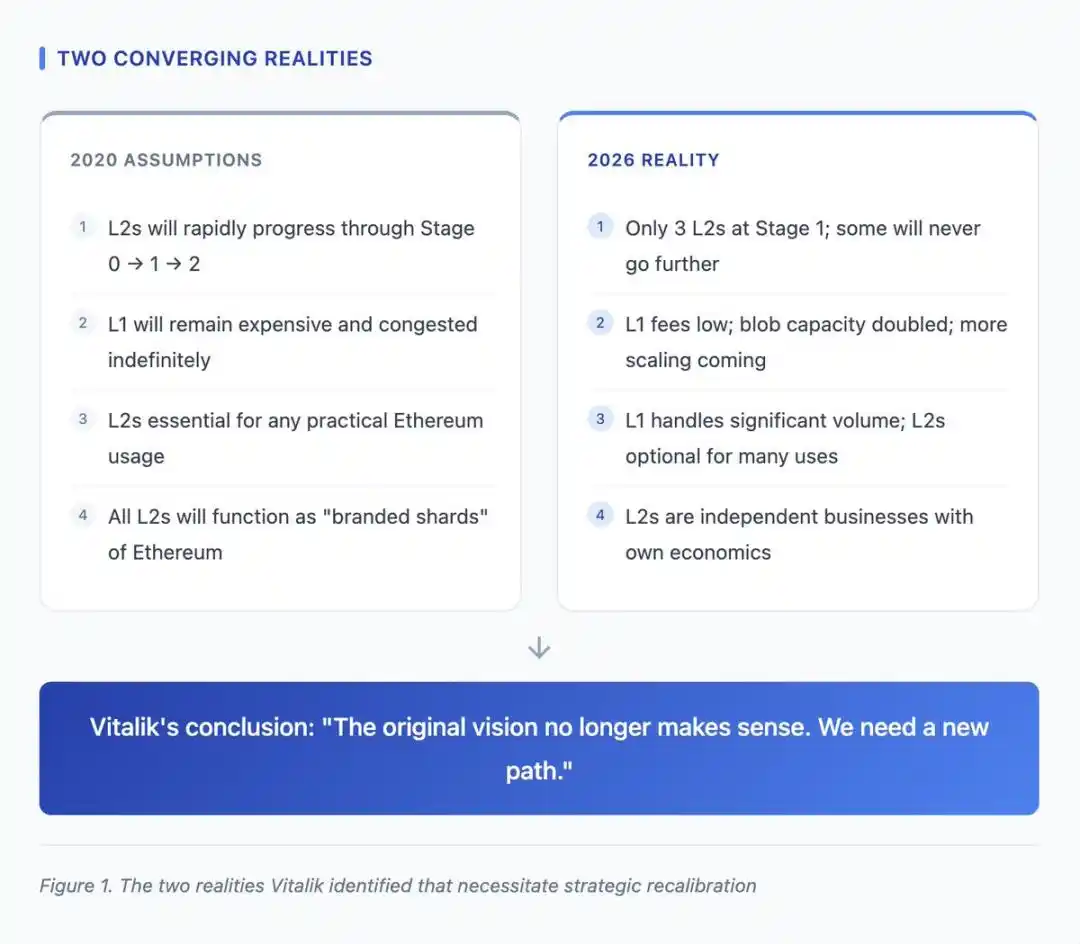
The two realities requiring strategic adjustment as pointed out by Vitalik
Restructuring the Trust Spectrum
Vitalik's most core conceptual contribution is liberating L2s from the framework of a "single category, uniform obligations" and redefining them as "diverse entities existing on a trust spectrum." The previous metaphor of "branded shards"默认 all L2s needed to pursue Stage 2 decentralization and, as extensions of Ethereum, bear the same value and security commitments as L1. The new framework acknowledges: different L2s have different purposes, and for projects with specific needs, Stage 0 or Stage 1 decentralization can be a perfectly reasonable end goal.
The strategic significance of this reframing is that it breaks the implicit judgment that "an L2 not pursuing full decentralization is a failure." For example, a regulated L2 serving institutional clients that requires asset freezing functionality is not a "flawed Arbitrum," but a "differentiated product for a different market." By endorsing this "trust spectrum," Vitalik allows L2s to be upfront about their positioning, without having to make promises of "decentralization" lacking economic incentive support.
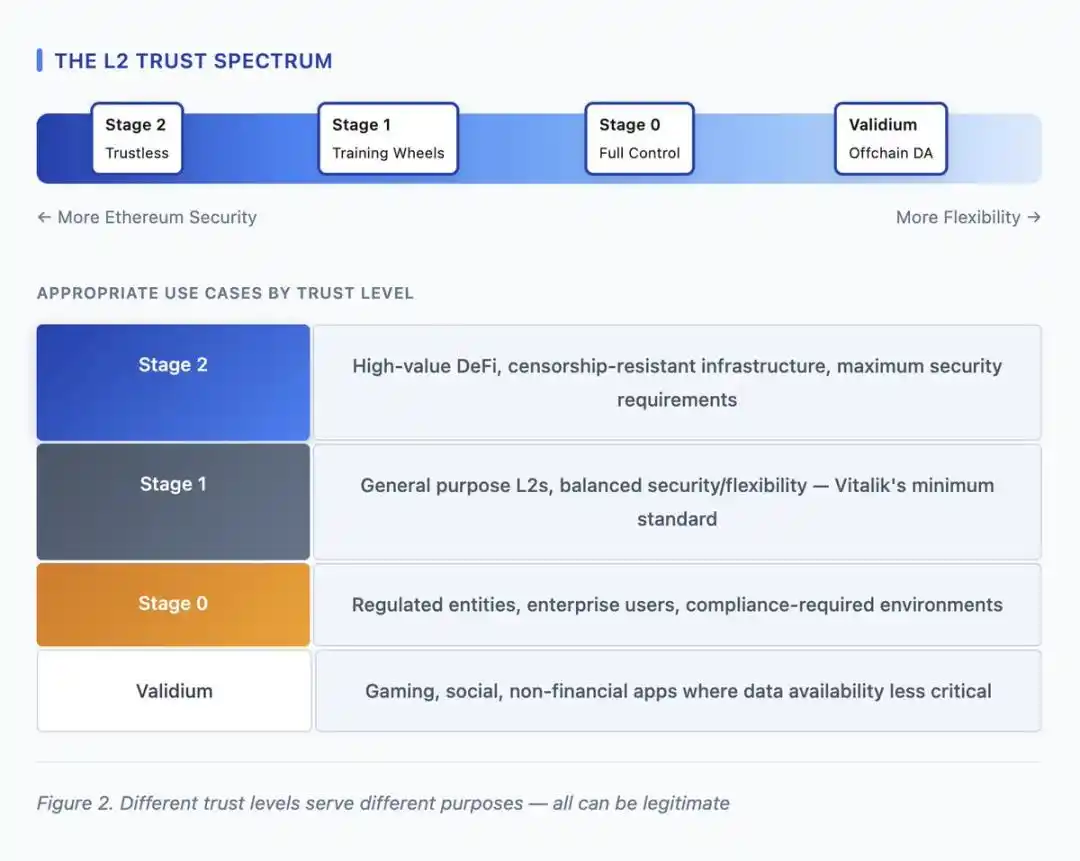
Different trust levels correspond to different uses — all levels can reasonably exist
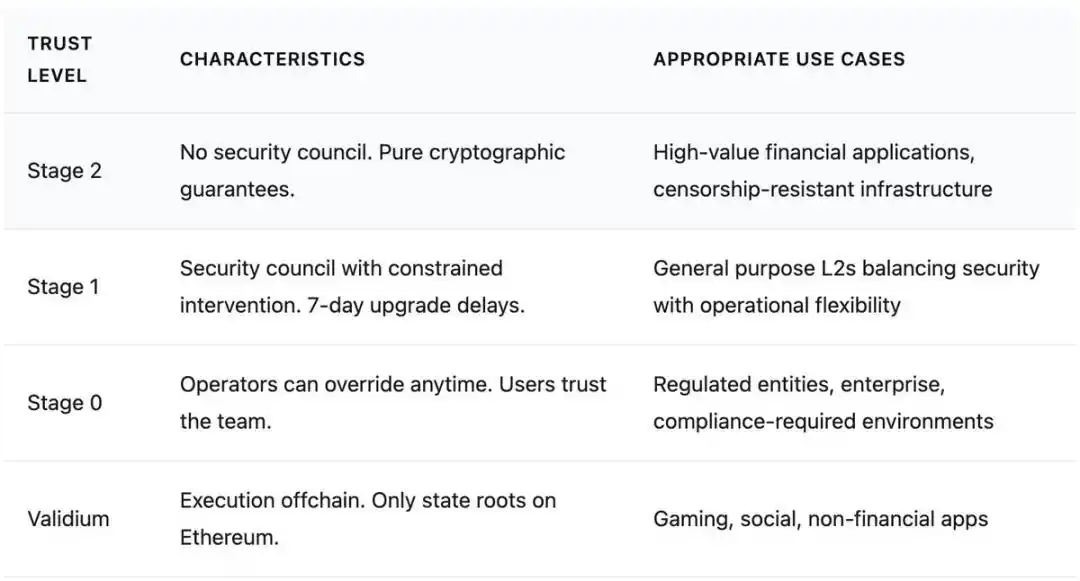
Classification table of trust levels for Ethereum L2s
Native Rollup Precompile Proposal
The technical core of Vitalik's post is the "Native Rollup Precompile" proposal. Currently, each L2 needs to independently build a system for "proving state transitions to Ethereum": Optimistic Rollups use fraud proofs with a 7-day challenge period, while ZK Rollups use validity proofs based on custom circuits. These implementations not only require independent audits but may also contain vulnerabilities, and need to be updated synchronously when Ethereum hard forks cause changes in EVM (Ethereum Virtual Machine) behavior. This "fragmented" status quo brings security risks and maintenance burdens to the entire ecosystem.
The "Native Rollup Precompile" involves building a function for "verifying EVM execution" directly into Ethereum. Then, each L2 would no longer need to maintain custom provers, but only need to call this shared infrastructure. The advantages are significant: only 1 codebase needs auditing (instead of dozens), automatic compatibility with Ethereum upgrades, and once the precompile functionality is battle-tested, it might even allow for the removal of security councils.
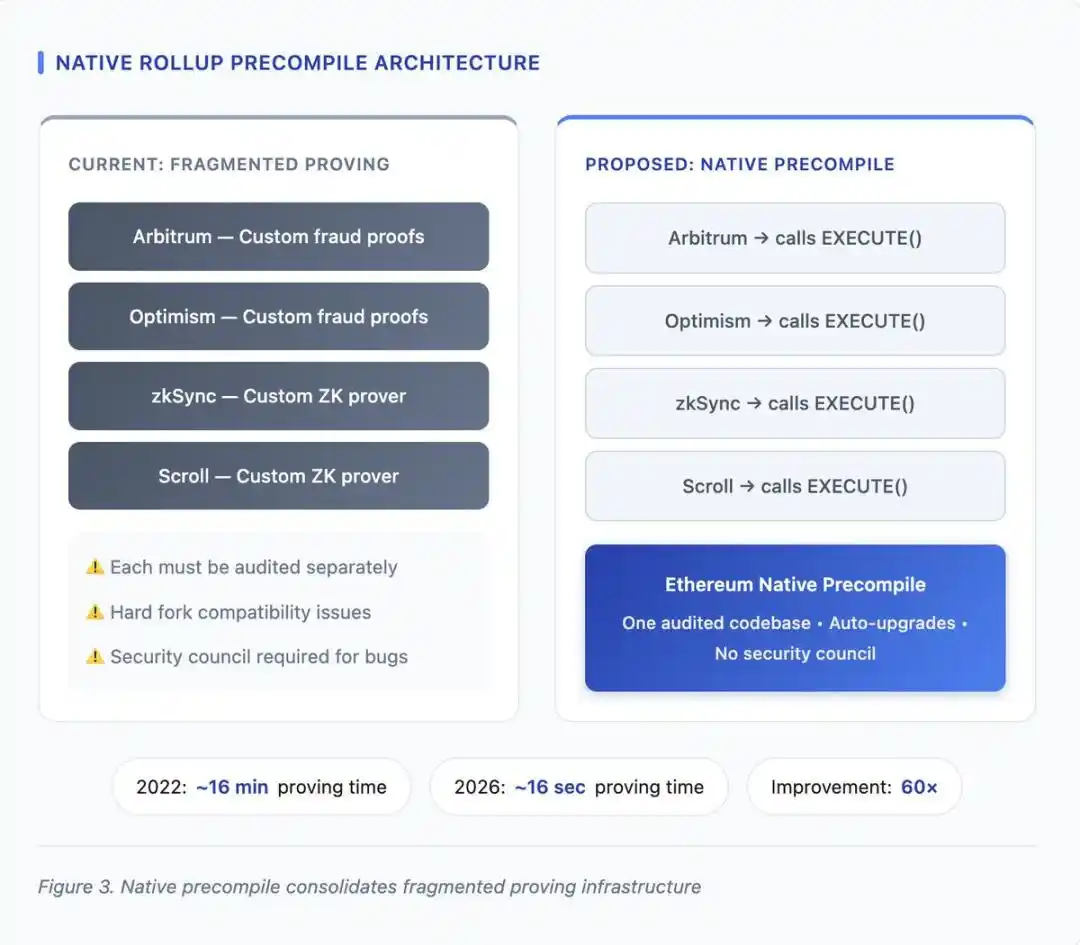
Before and after comparison of Ethereum Native Rollup Precompile architecture
Synchronous Composability Vision
In his post on ethresear.ch, Vitalik detailed a mechanism to achieve "synchronous composability" between L1 and L2. Currently, transferring assets or executing logic across L1 and L2 either requires waiting for final confirmation (7 days for Optimistic Rollups, hours for ZK Rollups) or relies on fast bridges with counterparty risk. "Synchronous composability" would allow transactions to "atomically use L1 and L2 state" — reading and writing data across layers within the same transaction, either completely succeeding or completely rolling back.
The mechanism designs three types of blocks:
- Regular Sequencing Blocks: For processing low-latency L2 transactions;
- Slot End Blocks: Mark the boundary of a time window;
- Base Blocks: Blocks that can be built permissionlessly after the Slot End Block is generated.
During the window for Base Blocks, any block builder can create blocks that interact with both L1 and L2 states simultaneously.
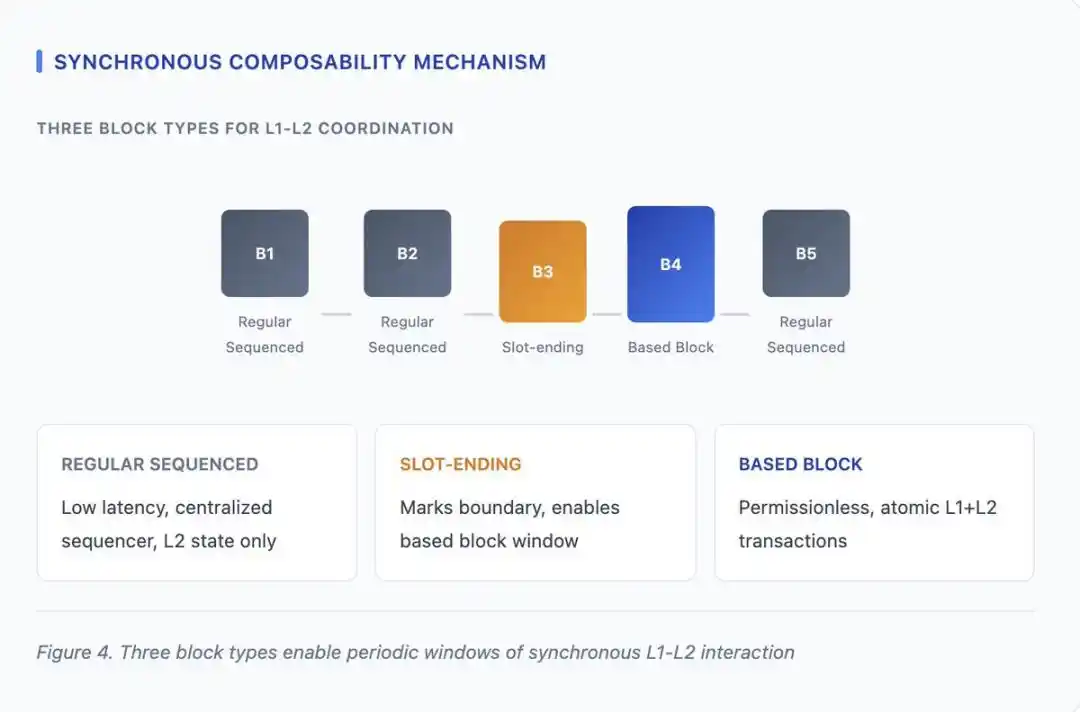
Three types of blocks support periodic synchronous interaction between L1 and L2
Responses from L2 Teams
Mainstream L2 teams responded within hours, showing a healthy strategic diversity —这正是 Vitalik's "trust spectrum" framework intended to achieve: different teams can choose different positioning without pretending to march towards the same finish line.
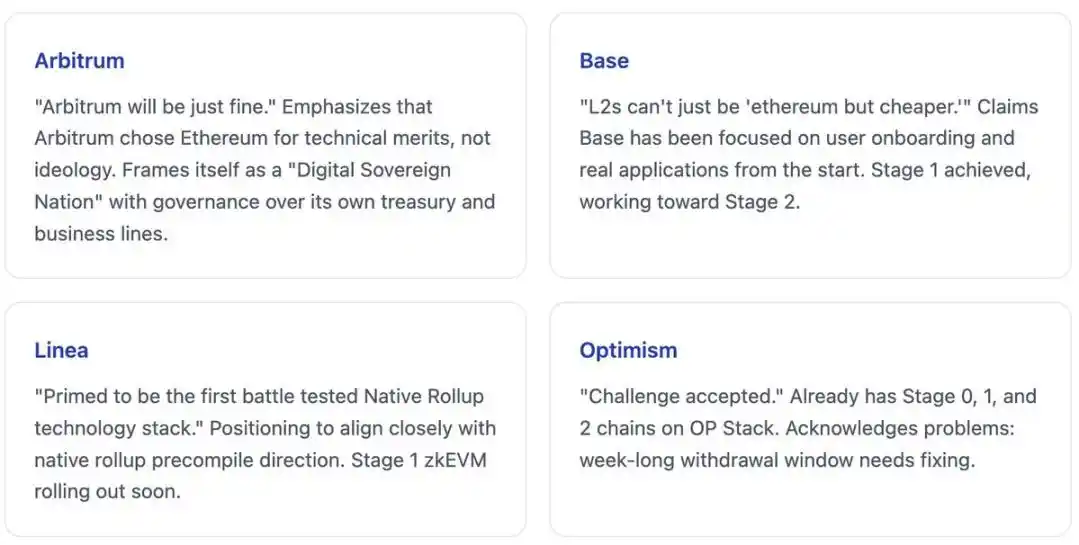
Differentiated responses from four mainstream Ethereum L2 projects to Vitalik's "L2 Reset" proposal
This diversity in response is healthy:
- Arbitrum: Emphasizes independence and self-sufficiency;
- Base: Focuses on applications and users;
- Linea: Closely aligns with the Native Rollup direction proposed by Vitalik;
- Optimism: Acknowledges current challenges while宣称持续推进改进 (claiming continued progress on improvements).
These positions are not right or wrong, just strategic choices for different market segments —这正是 the "trust spectrum" framework recognizes as reasonable.
The L2 Economic Reality Acknowledged by Vitalik
One significant meaning of Vitalik's post is the implicit acknowledgment of L2s' economic attributes. When he mentions that "some L2s may 'never progress beyond Stage 1 decentralization' due to 'regulatory requirements' (need to retain ultimate control),". he is essentially admitting: L2s are not idealized "branded shards," but commercial entities with legitimate economic interests. Sequencer revenue is real, regulatory compliance requirements are real — expecting L2s to abandon these interests to cater to ideology was unrealistic from the start.
L2s retain most fee revenue — this economic reality determines the incentive direction for decentralization
The Future Path Outlined by Vitalik
Vitalik's post is not just about "diagnosing problems" but also focuses on "solving problems." He outlines several concrete directions for those L2s that want to maintain value in the context of continued L1 scaling. These are not mandatory requirements, but suggested paths for L2s to differentiate themselves when "cheaper Ethereum" is no longer the core competitive advantage.
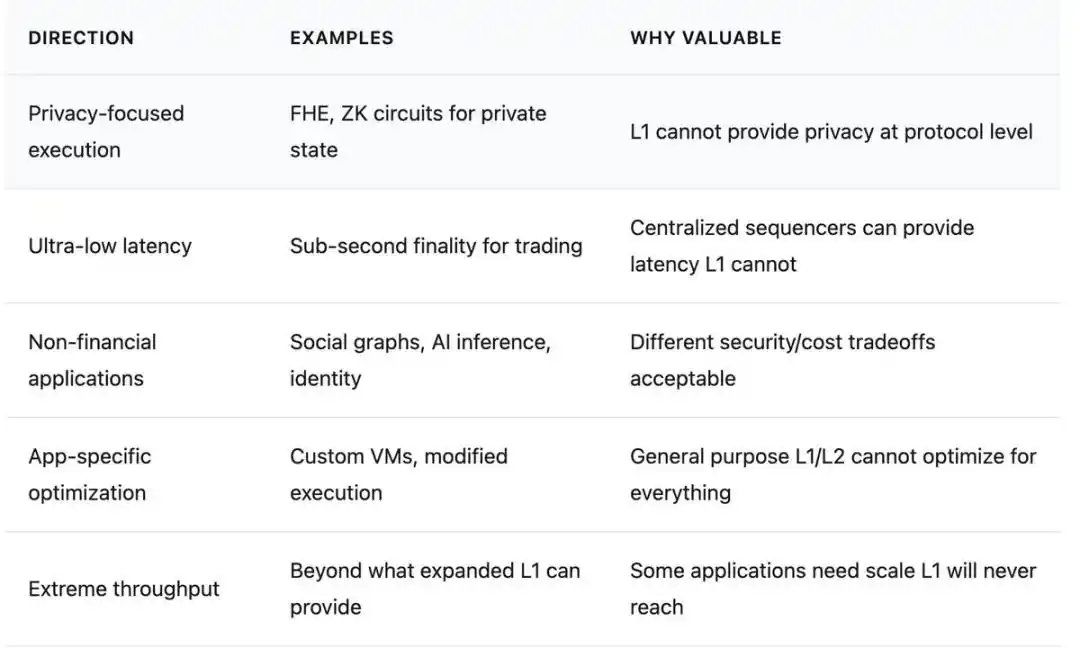
Table of differentiated value directions for Ethereum L2s
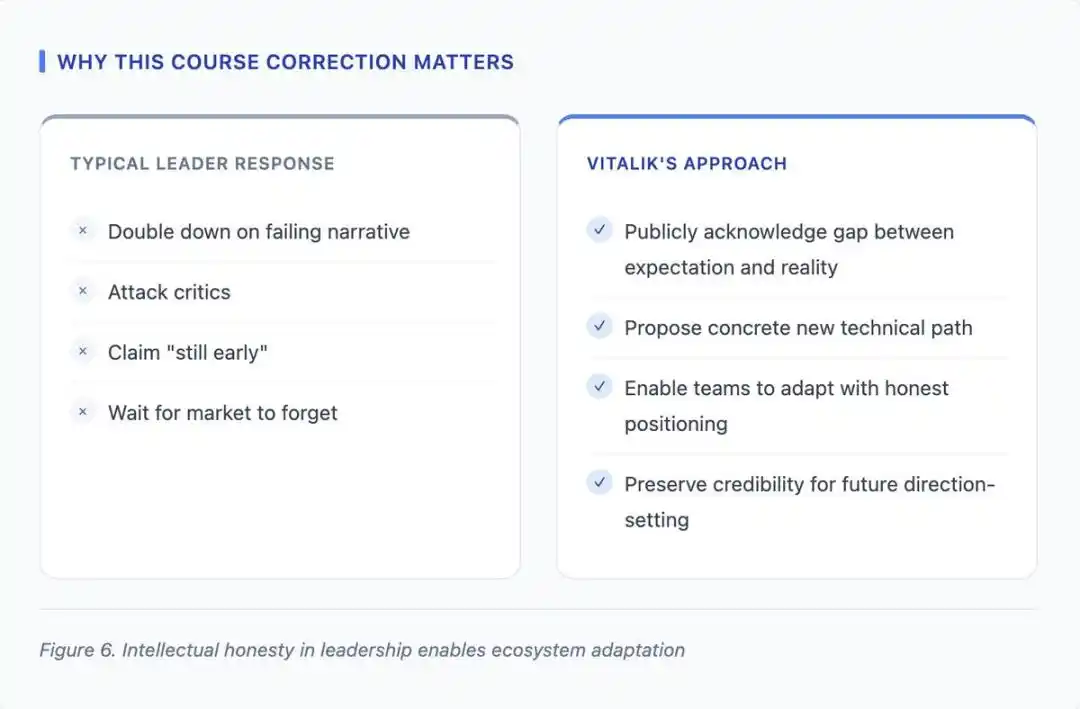
Rational candor in leadership enables adaptive development for the ecosystem
Summary
In February 2026, the post published by Vitalik Buterin marked a key calibration of Ethereum's strategy towards L2s. Its core insight is: L2s have evolved into independent platforms with legitimate economic interests, rather than "branded shards" with obligations to Ethereum. Vitalik did not fight this reality but proposed embracing it by: endorsing differentiated paths through the "trust spectrum," strengthening collaboration efficiency for those willing to participate in L1-L2 integration through "native Rollup infrastructure," and enabling cross-layer interaction through "synchronous composability mechanisms."
The response from the L2 ecosystem shows healthy diversity: Arbitrum emphasizes independence, Base focuses on applications, Linea aligns with the Native Rollup direction, Optimism acknowledges challenges and pushes for improvements. This diversity is precisely the expected result of the "trust spectrum" framework: different teams can pursue different strategies without pretending to be on the same path.
For Ethereum, this course correction maintains its credibility by "acknowledging reality" rather than "defending outdated assumptions." Considering the maturity of ZK-EVM technology, the related technical proposals are feasible; and the strategic proposals create space for the ecosystem to evolve efficiently. This is the embodiment of "adaptive leadership" in the technology field: realizing the environment has changed, then proposing a new path, rather than stubbornly sticking to a strategy the market has already否决.
Having been deeply involved in scaling research for a decade and operating a Rollup infrastructure company for four years, I have seen too many leaders refuse to adjust when facts change — often with poor results. Vitalik's choice this time was not easy: publicly admitting that the 2020 vision needed updating. But it was the right choice. Clinging to a narrative the market has abandoned benefits no one. The way forward is now clearer than it was a week ago — that in itself is tremendously valuable.
Trend Kriptolar














İlgili Sorular
QWhat are the two core realities that Vitalik's post identifies as requiring strategic adjustment for Ethereum's Layer2?
AThe two core realities are: 1) The decentralization of L2s is progressing much slower than expected, with only a few major L2s reaching the first stage of decentralization. 2) Ethereum L1 has achieved significant scaling, with lower fees and increased data capacity, which changes the value proposition of L2s from a necessity for availability to an optional solution for specific use cases.
QWhat is the key conceptual contribution of Vitalik's new framework regarding L2s?
AThe key conceptual contribution is reframing L2s from a 'single category with uniform obligations' to a 'diverse existence on a spectrum of trust.' This acknowledges that different L2s have different purposes and that achieving stage 0 or stage 1 decentralization can be a reasonable endpoint for projects with specific needs, rather than a failure.
QWhat is the technical core proposal in Vitalik's post to address the current fragmentation in L2 implementations?
AThe technical core proposal is the 'Native Rollup Precompile.' This involves building a function for 'verifying EVM execution' directly into Ethereum. This shared infrastructure would allow L2s to call this function instead of maintaining their own custom provers, reducing security risks and maintenance burdens.
QHow does the proposed 'synchronous composability' mechanism aim to improve interaction between L1 and L2?
AThe 'synchronous composability' mechanism aims to allow transactions to atomically use both L1 and L2 states within a single transaction, ensuring it either fully succeeds or fully rolls back. It proposes three types of blocks (regular sequencing blocks, slot-end blocks, and base blocks) to enable this cross-layer interaction without the delays or risks associated with current methods like waiting for finality or using fast bridges.
QHow did major L2 teams like Arbitrum, Base, Linea, and Optimism respond to Vitalik's proposal, and what does this indicate?
AThe responses showed healthy strategic diversity: Arbitrum emphasized independence and self-sufficiency, Base focused on applications and users, Linea closely aligned with the native Rollup direction, and Optimism acknowledged current challenges while committing to ongoing improvements. This diversity indicates the success of the 'trust spectrum' framework, allowing different teams to pursue different strategic positions for their respective markets without pretending to move toward the same endpoint.
İlgili Okumalar





İşlemler
Popüler Makaleler
$S$ Nedir
SPERO'yu Anlamak: Kapsamlı Bir Genel Bakış SPERO'ya Giriş İnovasyonun manzarası gelişmeye devam ederken, web3 teknolojilerinin ve kripto para projelerinin ortaya çıkışı dijital geleceği şekillendirmede önemli bir rol oynamaktadır. Bu dinamik alanda dikkat çeken projelerden biri SPERO, $$s$$ olarak adlandırılmaktadır. Bu makale, SPERO hakkında ayrıntılı bilgi toplamak ve sunmak amacıyla, meraklılar ve yatırımcıların web3 ve kripto alanlarındaki temellerini, hedeflerini ve yeniliklerini anlamalarına yardımcı olmayı amaçlamaktadır. SPERO,$$s$$ Nedir? SPERO,$$s$$, kripto alanında merkeziyetsizlik ve blok zinciri teknolojisi ilkelerini kullanarak etkileşimi, faydayı ve finansal kapsayıcılığı teşvik eden bir ekosistem yaratmayı amaçlayan benzersiz bir projedir. Proje, kullanıcıların yenilikçi finansal çözümler ve hizmetler sunarak eşler arası etkileşimleri yeni yollarla kolaylaştırmayı hedeflemektedir. SPERO,$$s$$'nin temel amacı, bireyleri güçlendirmek ve kripto para alanındaki kullanıcı deneyimini artıran araçlar ve platformlar sağlamaktır. Bu, daha esnek işlem yöntemlerini mümkün kılmayı, topluluk odaklı girişimleri teşvik etmeyi ve merkeziyetsiz uygulamalar (dApp'ler) aracılığıyla finansal fırsatlar yaratmayı içermektedir. SPERO,$$s$$'nin temel vizyonu kapsayıcılık etrafında dönmekte olup, geleneksel finansal sistemlerdeki boşlukları kapatmayı ve blok zinciri teknolojisinin faydalarından yararlanmayı hedeflemektedir. SPERO,$$s$$'nin Yaratıcısı Kimdir? SPERO,$$s$$'nin yaratıcısının kimliği bir miktar belirsizdir, çünkü kurucusu(ları) hakkında ayrıntılı arka plan bilgisi sağlayan sınırlı kamuya açık kaynaklar bulunmaktadır. Bu şeffaflık eksikliği, projenin merkeziyetsizlik taahhüdünden kaynaklanabilir—birçok web3 projesinin paylaştığı bir etik anlayışı, bireysel tanınmanın yerine kolektif katkıları önceliklendirmektedir. Topluluk ve onun kolektif hedefleri etrafında tartışmaları merkezileştirerek, SPERO,$$s$$, belirli bireyleri öne çıkarmadan güçlendirme özünü taşımaktadır. Bu nedenle, SPERO'nun etik anlayışını ve misyonunu anlamak, tek bir yaratıcının kimliğini belirlemekten daha önemlidir. SPERO,$$s$$'nin Yatırımcıları Kimlerdir? SPERO,$$s$$, kripto sektöründe yeniliği teşvik etmeye adanmış girişim sermayedarlarından melek yatırımcılara kadar çeşitli yatırımcılar tarafından desteklenmektedir. Bu yatırımcıların odak noktası genellikle SPERO'nun misyonuyla uyumlu olup, toplumsal teknolojik ilerlemeyi, finansal kapsayıcılığı ve merkeziyetsiz yönetimi vaat eden projeleri önceliklendirmektedir. Bu yatırımcı temelleri, yalnızca yenilikçi ürünler sunan projelere değil, aynı zamanda blok zinciri topluluğuna ve ekosistemlerine olumlu katkılarda bulunan projelere de ilgi duymaktadır. Bu yatırımcıların desteği, SPERO,$$s$$'yi hızla gelişen kripto projeleri alanında dikkate değer bir rakip haline getirmektedir. SPERO,$$s$$ Nasıl Çalışır? SPERO,$$s$$, onu geleneksel kripto para projelerinden ayıran çok yönlü bir çerçeve kullanmaktadır. İşte benzersizliğini ve yeniliğini vurgulayan bazı temel özellikler: Merkeziyetsiz Yönetim: SPERO,$$s$$, kullanıcıların projenin geleceğiyle ilgili karar alma süreçlerine aktif olarak katılmalarını sağlayan merkeziyetsiz yönetim modellerini entegre etmektedir. Bu yaklaşım, topluluk üyeleri arasında sahiplik ve hesap verebilirlik duygusunu teşvik etmektedir. Token Kullanımı: SPERO,$$s$$, ekosistem içinde çeşitli işlevler sunmak üzere tasarlanmış kendi kripto para token'ını kullanmaktadır. Bu token'lar, işlemleri, ödülleri ve platformda sunulan hizmetlerin kolaylaştırılmasını sağlayarak genel etkileşimi ve faydayı artırmaktadır. Katmanlı Mimari: SPERO,$$s$$'nin teknik mimarisi, modülerlik ve ölçeklenebilirliği destekleyerek projenin evrimi sırasında ek özelliklerin ve uygulamaların sorunsuz bir şekilde entegrasyonuna olanak tanımaktadır. Bu uyum sağlama yeteneği, sürekli değişen kripto manzarasında geçerliliği sürdürmek için hayati öneme sahiptir. Topluluk Katılımı: Proje, işbirliği ve geri bildirim teşvik eden mekanizmalar kullanarak topluluk odaklı girişimlere vurgu yapmaktadır. Güçlü bir topluluk oluşturarak, SPERO,$$s$$, kullanıcı ihtiyaçlarını daha iyi karşılayabilir ve piyasa trendlerine uyum sağlayabilir. Kapsayıcılığa Odaklanma: Düşük işlem ücretleri ve kullanıcı dostu arayüzler sunarak, SPERO,$$s$$, daha önce kripto alanında yer almamış bireyler de dahil olmak üzere çeşitli bir kullanıcı tabanını çekmeyi hedeflemektedir. Bu kapsayıcılık taahhüdü, erişilebilirlik yoluyla güçlendirme misyonuyla uyumludur. SPERO,$$s$$ Zaman Çizelgesi Bir projenin tarihini anlamak, gelişim yolculuğu ve kilometre taşları hakkında kritik bilgiler sağlar. Aşağıda, SPERO,$$s$$'nin evriminde önemli olayları haritalayan önerilen bir zaman çizelgesi bulunmaktadır: Kavram Geliştirme ve Fikir Aşaması: SPERO,$$s$$'nin temelini oluşturan ilk fikirler, blok zinciri endüstrisindeki merkeziyetsizlik ve topluluk odaklılık ilkeleriyle yakından uyumlu olarak geliştirildi. Proje Beyaz Kağıdının Yayınlanması: Kavramsal aşamayı takiben, SPERO,$$s$$'nin vizyonunu, hedeflerini ve teknolojik altyapısını ayrıntılı bir şekilde açıklayan kapsamlı bir beyaz kağıt yayımlandı ve topluluk ilgisini ve geri bildirimini toplamak amacıyla sunuldu. Topluluk Oluşturma ve Erken Katılımlar: Projenin hedefleri etrafında tartışmalar yürüterek destek toplamak ve erken benimseyenler ile potansiyel yatırımcılar için bir topluluk oluşturmak amacıyla aktif iletişim çabaları gerçekleştirildi. Token Üretim Etkinliği: SPERO,$$s$$, yerel token'larını erken destekçilere dağıtmak ve ekosistem içinde başlangıç likiditesini sağlamak amacıyla bir token üretim etkinliği (TGE) gerçekleştirdi. İlk dApp'in Yayınlanması: SPERO,$$s$$ ile ilişkili ilk merkeziyetsiz uygulama (dApp) faaliyete geçti ve kullanıcıların platformun temel işlevleriyle etkileşimde bulunmalarını sağladı. Sürekli Gelişim ve Ortaklıklar: Projenin tekliflerine sürekli güncellemeler ve iyileştirmeler yapılmakta olup, blok zinciri alanındaki diğer oyuncularla stratejik ortaklıklar, SPERO,$$s$$'yi rekabetçi ve gelişen bir oyuncu haline getirmiştir. Sonuç SPERO,$$s$$, web3 ve kripto paranın finansal sistemleri devrim niteliğinde dönüştürme ve bireyleri güçlendirme potansiyelinin bir kanıtıdır. Merkeziyetsiz yönetime, topluluk katılımına ve yenilikçi tasarlanmış işlevselliğe olan bağlılığıyla, daha kapsayıcı bir finansal manzaraya doğru bir yol açmaktadır. Hızla gelişen kripto alanındaki herhangi bir yatırımda olduğu gibi, potansiyel yatırımcılar ve kullanıcılar, SPERO,$$s$$ içindeki devam eden gelişmelerle ilgili olarak kapsamlı bir araştırma yapmaları ve düşünceli bir şekilde katılmaları teşvik edilmektedir. Proje, kripto endüstrisinin yenilikçi ruhunu sergileyerek, sayısız olasılığını keşfetmeye davet etmektedir. SPERO,$$s$$'nin yolculuğu hala devam ederken, temel ilkeleri, teknoloji, finans ve birbirimizle etkileşim biçimimizi etkileyebilir.
194 Toplam GörüntülenmeYayınlanma 2024.12.17Güncellenme 2024.12.17

AGENT S Nedir
Agent S: Web3'te Otonom Etkileşimin Geleceği Giriş Web3 ve kripto para dünyasında sürekli gelişen manzarada, yenilikler bireylerin dijital platformlarla etkileşim biçimlerini sürekli olarak yeniden tanımlıyor. Bu tür öncü projelerden biri olan Agent S, açık ajans çerçevesi aracılığıyla insan-bilgisayar etkileşimini devrim niteliğinde değiştirmeyi vaat ediyor. Otonom etkileşimlerin yolunu açarak, Agent S karmaşık görevleri basitleştirmeyi ve yapay zeka (AI) alanında dönüştürücü uygulamalar sunmayı hedefliyor. Bu detaylı inceleme, projenin karmaşıklıklarına, benzersiz özelliklerine ve kripto para alanındaki etkilerine dalacaktır. Agent S Nedir? Agent S, bilgisayar görevlerinin otomasyonunda üç temel zorluğu ele almak üzere özel olarak tasarlanmış çığır açıcı bir açık ajans çerçevesidir: Alan Spesifik Bilgi Edinimi: Çerçeve, çeşitli dış bilgi kaynaklarından ve iç deneyimlerden akıllıca öğrenir. Bu çift yönlü yaklaşım, alan spesifik bilgi açısından zengin bir veri havuzu oluşturmasını sağlar ve görev yürütmedeki performansını artırır. Uzun Görev Ufukları Üzerinde Planlama: Agent S, karmaşık görevlerin verimli bir şekilde parçalanmasını ve yürütülmesini kolaylaştıran deneyim artırımlı hiyerarşik planlama kullanır. Bu özellik, çoklu alt görevleri etkili ve verimli bir şekilde yönetme yeteneğini önemli ölçüde artırır. Dinamik, Homojen Olmayan Arayüzlerle Başlama: Proje, ajanlar ve kullanıcılar arasındaki etkileşimi geliştiren yenilikçi bir çözüm olan Ajan-Bilgisayar Arayüzü'ni (ACI) tanıtmaktadır. Çok Modlu Büyük Dil Modellerini (MLLM'ler) kullanarak, Agent S çeşitli grafik kullanıcı arayüzlerini sorunsuz bir şekilde gezinebilir ve manipüle edebilir. Bu öncü özellikler aracılığıyla, Agent S, makinelerle insan etkileşimini otomatikleştirmede karşılaşılan karmaşıklıkları ele alan sağlam bir çerçeve sunarak, AI ve ötesinde birçok uygulama için zemin hazırlıyor. Agent S'nin Yaratıcısı Kimdir? Agent S'nin kavramı temelde yenilikçi olsa da, yaratıcısı hakkında spesifik bilgiler belirsizliğini koruyor. Yaratıcı şu anda bilinmiyor, bu da projenin yeni aşamasını veya kurucu üyeleri gizli tutma stratejik tercihini vurguluyor. Anonimlikten bağımsız olarak, odak çerçevenin yetenekleri ve potansiyeli üzerinde kalıyor. Agent S'nin Yatırımcıları Kimlerdir? Agent S, kriptografik ekosistemde oldukça yeni olduğundan, yatırımcıları ve finansal destekçileri hakkında ayrıntılı bilgiler açıkça belgelenmemiştir. Projeyi destekleyen yatırım temelleri veya organizasyonları hakkında kamuya açık bilgilerdeki eksiklik, finansman yapısı ve gelişim yol haritası hakkında sorular doğuruyor. Destekleyicilerin anlaşılması, projenin sürdürülebilirliğini ve potansiyel pazar etkisini değerlendirmek için kritik öneme sahiptir. Agent S Nasıl Çalışır? Agent S'nin temelinde, çeşitli ortamlarda etkili bir şekilde çalışmasını sağlayan son teknoloji bir sistem yatmaktadır. İşleyiş modeli birkaç ana özellik etrafında inşa edilmiştir: İnsan Benzeri Bilgisayar Etkileşimi: Çerçeve, bilgisayarlarla etkileşimleri daha sezgisel hale getirmeyi amaçlayan gelişmiş AI planlaması sunar. Görev yürütmedeki insan davranışını taklit ederek, kullanıcı deneyimlerini yükseltmeyi vaat eder. Anlatı Belleği: Yüksek düzeyde deneyimlerden yararlanmak için kullanılan Agent S, görev geçmişlerini takip etmek amacıyla anlatı belleğini kullanarak karar verme süreçlerini geliştirir. Episodik Bellek: Bu özellik, kullanıcılara adım adım rehberlik sağlayarak, çerçevenin görevler gelişirken bağlamsal destek sunmasına olanak tanır. OpenACI Desteği: Yerel olarak çalışabilme yeteneği ile Agent S, kullanıcıların etkileşimleri ve iş akışları üzerinde kontrol sağlamasına olanak tanır ve Web3'ün merkeziyetsiz felsefesiyle uyumlu hale gelir. Dış API'lerle Kolay Entegrasyon: Çeşitli AI platformlarıyla uyumluluğu ve çok yönlülüğü, Agent S'nin mevcut teknolojik ekosistemlere sorunsuz bir şekilde entegre olmasını sağlar ve geliştiriciler ile organizasyonlar için cazip bir seçenek haline getirir. Bu işlevsellikler, Agent S'nin kripto alanındaki benzersiz konumuna katkıda bulunarak, karmaşık, çok aşamalı görevleri minimum insan müdahalesi ile otomatikleştirir. Proje geliştikçe, Web3'teki potansiyel uygulamaları dijital etkileşimlerin nasıl gelişeceğini yeniden tanımlayabilir. Agent S'nin Zaman Çizelgesi Agent S'nin gelişimi ve kilometre taşları, önemli olaylarını vurgulayan bir zaman çizelgesinde özetlenebilir: 27 Eylül 2024: Agent S'nin kavramı, “Bilgisayarları İnsan Gibi Kullanan Açık Bir Ajans Çerçevesi” başlıklı kapsamlı bir araştırma makalesi ile tanıtıldı ve projenin temelini sergiledi. 10 Ekim 2024: Araştırma makalesi arXiv'de kamuya açık olarak yayınlandı ve çerçevenin derinlemesine bir incelemesini ve OSWorld benchmark'ına dayalı performans değerlendirmesini sundu. 12 Ekim 2024: Agent S'nin yetenekleri ve özellikleri hakkında görsel bir içgörü sağlayan bir video sunumu yayımlandı ve potansiyel kullanıcılar ve yatırımcılarla daha fazla etkileşim sağlandı. Bu zaman çizelgesindeki işaretler, sadece Agent S'nin ilerlemesini değil, aynı zamanda şeffaflık ve topluluk katılımına olan bağlılığını da göstermektedir. Agent S Hakkında Ana Noktalar Agent S çerçevesi gelişmeye devam ederken, birkaç ana özellik öne çıkmakta ve yenilikçi doğasını ve potansiyelini vurgulamaktadır: Yenilikçi Çerçeve: İnsan etkileşimine benzer bir bilgisayar kullanımı sağlamak üzere tasarlanan Agent S, görev otomasyonuna yeni bir yaklaşım getiriyor. Otonom Etkileşim: GUI aracılığıyla bilgisayarlarla otonom olarak etkileşim kurabilme yeteneği, daha akıllı ve verimli hesaplama çözümlerine doğru bir sıçrama anlamına geliyor. Karmaşık Görev Otomasyonu: Sağlam metodolojisi ile karmaşık, çok aşamalı görevleri otomatikleştirerek süreçleri daha hızlı ve daha az hata payı ile gerçekleştirebilir. Sürekli İyileştirme: Öğrenme mekanizmaları, Agent S'nin geçmiş deneyimlerden öğrenmesini sağlar ve sürekli olarak performansını ve etkinliğini artırır. Çok Yönlülük: OSWorld ve WindowsAgentArena gibi farklı işletim ortamlarında uyumlu olması, geniş bir uygulama yelpazesine hizmet edebilmesini sağlar. Agent S, Web3 ve kripto alanında kendini konumlandırırken, etkileşim yeteneklerini artırma ve süreçleri otomatikleştirme potansiyeli, AI teknolojilerinde önemli bir ilerlemeyi temsil etmektedir. Yenilikçi çerçevesi aracılığıyla, Agent S dijital etkileşimlerin geleceğini örneklemekte ve çeşitli sektörlerde kullanıcılar için daha sorunsuz ve verimli bir deneyim vaat etmektedir. Sonuç Agent S, AI ve Web3'ün birleşiminde cesur bir sıçramayı temsil ediyor ve teknoloji ile etkileşim biçimimizi yeniden tanımlama kapasitesine sahip. Henüz erken aşamalarında olmasına rağmen, uygulama olanakları geniş ve çekici. Kritik zorlukları ele alan kapsamlı çerçevesi ile Agent S, otonom etkileşimleri dijital deneyimin ön plana çıkmasına taşımayı hedefliyor. Kripto para ve merkeziyetsizlik alanlarına daha derinlemesine girdikçe, Agent S gibi projelerin teknoloji ve insan-bilgisayar işbirliğinin geleceğini şekillendirmede önemli bir rol oynayacağı kesin.
667 Toplam GörüntülenmeYayınlanma 2025.01.14Güncellenme 2025.01.14
S Nasıl Satın Alınır
HTX.com’a hoş geldiniz! Sonic (S) satın alma işlemlerini basit ve kullanışlı bir hâle getirdik. Adım adım açıkladığımız rehberimizi takip ederek kripto yolculuğunuza başlayın. 1. Adım: HTX Hesabınızı OluşturunHTX'te ücretsiz bir hesap açmak için e-posta adresinizi veya telefon numaranızı kullanın. Sorunsuzca kaydolun ve tüm özelliklerin kilidini açın. Hesabımı Aç2. Adım: Kripto Satın Al Bölümüne Gidin ve Ödeme Yönteminizi SeçinKredi/Banka Kartı: Visa veya Mastercard'ınızı kullanarak anında Sonic (S) satın alın.Bakiye: Sorunsuz bir şekilde işlem yapmak için HTX hesap bakiyenizdeki fonları kullanın.Üçüncü Taraflar: Kullanımı kolaylaştırmak için Google Pay ve Apple Pay gibi popüler ödeme yöntemlerini ekledik.P2P: HTX'teki diğer kullanıcılarla doğrudan işlem yapın.Borsa Dışı (OTC): Yatırımcılar için kişiye özel hizmetler ve rekabetçi döviz kurları sunuyoruz.3. Adım: Sonic (S) Varlıklarınızı SaklayınSonic (S) satın aldıktan sonra HTX hesabınızda saklayın. Alternatif olarak, blok zinciri transferi yoluyla başka bir yere gönderebilir veya diğer kripto para birimlerini takas etmek için kullanabilirsiniz.4. Adım: Sonic (S) Varlıklarınızla İşlem YapınHTX'in spot piyasasında Sonic (S) ile kolayca işlemler yapın.Hesabınıza erişin, işlem çiftinizi seçin, işlemlerinizi gerçekleştirin ve gerçek zamanlı olarak izleyin. Hem yeni başlayanlar hem de deneyimli yatırımcılar için kullanıcı dostu bir deneyim sunuyoruz.
1.8k Toplam GörüntülenmeYayınlanma 2025.01.15Güncellenme 2026.06.02

