Vietnam Begins 5-Year Crypto Licensing Pilot To Regulate Exchanges

bitcoinist2026-01-22 tarihinde yayınlandı2026-01-22 tarihinde güncellendi

Özet

Vietnam has launched a five-year pilot program to license and regulate cryptocurrency exchanges, moving the sector from a legal "gray area" into a formal framework. The Ministry of Finance began accepting applications under new rules requiring exchanges to meet strict capital and operational criteria. These include a minimum charter capital of ~$380 million, with significant institutional ownership, and specific staffing and experience requirements for executives and technical personnel. Major financial and tech firms have already announced partnerships and preparations to enter the newly regulated market.

Vietnam has launched a pilot program to license cryptocurrency exchanges, aiming to bring the rapidly growing market into a formal legal framework after years of regulatory uncertainty.

Vietnam’s Crypto Licensing Pilot Begins

On Tuesday, Vietnam began its pilot licensing regime to officially regulate crypto trading platforms in the country for the first time, in an effort to gradually move the sector from the shadows into a properly supervised framework under the local financial authorities.

According to local reports, the Ministry of Finance issued Decision No. 96/QD-BTC on January 20, introducing procedures necessary for the implementation of Government Resolution No. 05/2025/NQ-CP.

The three new administrative procedures cover the issuance, modification, and revocation of licenses for entities operating crypto asset trading platforms. The Ministry announced that it began accepting applications from businesses seeking to offer crypto asset trading services.

For context, the country’s cryptocurrency market lacked a clear legal framework, existing in an unsupervised, “gray area.” Last year, the National Assembly passed the “Law on Digital Technology Industry,” which took effect on January 1, 2026, to create a foundation for authorities to develop suitable management policies.

In September, Vietnam’s Deputy Prime Minister Ho Duc Phoc signed Government Resolution No. 05/2025/NQ-CP, allowing a five-year pilot program for the issuance and trading of crypto assets.

As reported by Bitcoinist, under Resolution No. 05, organizations seeking to provide services for crypto trading markets must be registered with the financial authorities and fully comply with a strict set of rules, including a minimum contributed charter capital of VND10 trillion, worth around $380.66 million.

Notably, at least 65% of the charter capital must be held by institutional investors, with more than 35% contributed by at least two institutions such as commercial banks, securities companies, fund management companies, insurance companies, or technology enterprises.

The general director must have at least two years of experience in finance, while the CTO must have at least five years of experience in information technology. Moreover, firms must hire at least 10 technology staff with cybersecurity certificates and at least 10 staff with securities practice certificates working in other departments.

Financial Institutions Dive Into Digital Assets

Following the issuance of Resolution No. 05, major financial players, including securities companies and banking institutions, have announced their intention to participate in the pilot and enter the sector, noted the report.

In June, two SSI’s subsidiaries, SSI Digital Technology JSC and SSI Asset Management Company Limited, signed Memorandums of Understanding with Tether, U2U Network, and Amazon Web Services to develop a digital financial ecosystem in Vietnam based on blockchain and cloud computing platforms.

In addition, VIX Securities contributed capital to establish the VIX Crypto Asset Exchange and partnered with tech giant FPT Corp. to prepare its technology infrastructure.

Meanwhile, the banking sector saw MBBank enter a technical cooperation agreement with Dunamu, the operator of the Korean exchange Upbit, to establish a crypto exchange in Vietnam while jointly developing the legal framework and investor protection mechanisms.

Techcombank also established the Techcom Crypto Asset Exchange with a charter capital of several hundred billion VND. Similarly, VPBank stated it is fully prepared to begin operations as soon as it receives regulatory approval.
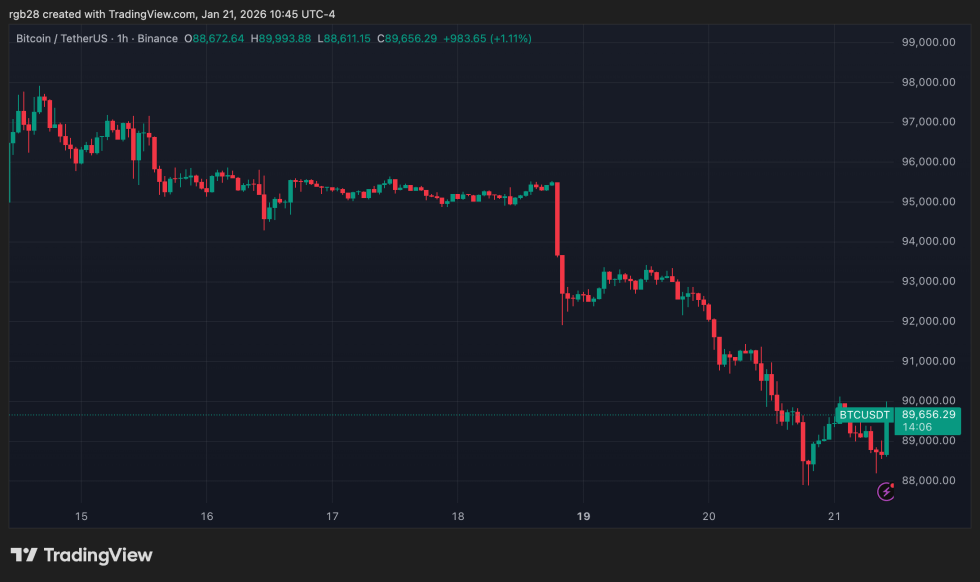
Bitcoin (BTC) trades at $89,656 in the one-week chart. Source: BTCCUSDT on TradingView


İlgili Sorular

QWhat is the main purpose of Vietnam's new pilot program for cryptocurrency exchanges?

AThe main purpose is to bring the rapidly growing cryptocurrency market into a formal legal framework and regulate crypto trading platforms under the supervision of local financial authorities, moving the sector out of its previous unregulated 'gray area'.

QWhat is the minimum charter capital requirement for an organization to provide crypto trading services under Resolution No. 05?

AThe minimum charter capital requirement is VND10 trillion, which is worth approximately $380.66 million.

QWhat are the key experience requirements for the leadership of a licensed crypto exchange in Vietnam?

AThe general director must have at least two years of experience in finance, and the Chief Technology Officer (CTO) must have at least five years of experience in information technology.

QWhich major financial institutions have announced plans to participate in Vietnam's crypto pilot program?

AMajor players include SSI's subsidiaries (SSI Digital Technology JSC and SSI Asset Management Company Limited), VIX Securities, MBBank, Techcombank, and VPBank, which have partnered with companies like Tether, U2U Network, Amazon Web Services, FPT Corp., and Dunamu.

QWhat law created the foundation for Vietnam to develop management policies for the digital technology industry, including cryptocurrencies?

AThe 'Law on Digital Technology Industry' was passed by the National Assembly last year and took effect on January 1, 2026, creating the foundation for authorities to develop suitable management policies.

İlgili Okumalar

20 Billion Valuation, Alibaba and Tencent Competing to Invest, Whose Money Will Liang Wenfeng Take?

DeepSeek, an AI startup founded by Liang Wenfeng, is reportedly in talks with Alibaba and Tencent for an external funding round that could value the company at over $20 billion. This marks a significant shift, as DeepSeek had previously relied solely on funding from its parent company,幻方量化 (Huanfang Quantitative), and had resisted external investment. The potential valuation would place DeepSeek among the top-tier AI model companies in China, comparable to competitors like MoonDark (valued at ~$18 billion) and ahead of recently listed firms like MiniMax and Zhipu. The funding—which could range from $600 million (for a 3% stake) to $2 billion (for 10%)—is seen as a move to secure resources for model development, retain talent, and support infrastructure needs, particularly as competition in inference models and AI agents intensifies. Both Alibaba and Tencent are eager to invest, not only for financial returns but also to integrate DeepSeek into their broader AI ecosystems. However, DeepSeek’s leadership is cautious about maintaining independence and may prefer financial investors over strategic ones to avoid being locked into a specific tech ecosystem. Alternative options, such as state-backed funds, offer longer-term capital and policy support but may come with slower decision-making and potential constraints on global expansion. With competing AI firms accelerating their IPO plans, DeepSeek’s window for securing optimal terms may be narrowing. The final decision will reflect a trade-off between capital, resources, and strategic independence.

marsbit1 saat önce

20 Billion Valuation, Alibaba and Tencent Competing to Invest, Whose Money Will Liang Wenfeng Take?

marsbit1 saat önce

After Losing 97% of Its Market Value, iQiyi Attempts to Use AI to Forcefully Extend Its Lifespan

After losing 97% of its market value since its 2018 peak, iQiyi is aggressively pivoting to AI in a desperate attempt to survive. At its 2026 World Conference, CEO Gong Yu announced an "AI Artist Library" with over 100 virtual performers and a new AIGC platform, "NaDou Pro," promising faster production and lower costs. This shift comes as the company faces severe financial distress: its market cap sits near delisting thresholds at $1.36 billion, with significant losses, declining membership revenue, and depleted cash flow. The AI strategy has sparked controversy. Top actors have issued legal threats against unauthorized digital replicas, while in Hengdian, over 134,000 background actors are seeing their already scarce job opportunities vanish as AI replaces them for background roles. iQiyi's move represents a fundamental shift from being a high-cost content buyer to a landlord" to becoming a "platform capitalist" that transfers production risk to creators. This contrasts with competitors like Douyin (TikTok's Chinese counterpart), which is investing heavily in *real* actor-led short dramas, betting that authentic human connection retains users better than AI-generated content. The article draws a parallel to the 1920s transition to "talkies," which made cinema musicians obsolete but ultimately enriched the art form. In contrast, iQiyi's AI drive is framed not as an artistic evolution but as a cost-cutting measure that could degrade storytelling, replacing genuine human emotion with algorithmically calculated stimulation and potentially numbing audiences' capacity for empathy. The core question remains: can a company focused solely on financial survival preserve the art of storytelling?

marsbit1 saat önce

After Losing 97% of Its Market Value, iQiyi Attempts to Use AI to Forcefully Extend Its Lifespan

marsbit1 saat önce

İşlemler

Spot
Futures
活动图片