US Treasury Sec To Wall Street: If You Hate Crypto Rules, El Salvador Is Waiting

bitcoinist2026-02-07 tarihinde yayınlandı2026-02-07 tarihinde güncellendi

Özet

U.S. Treasury Secretary Scott Bessent warned crypto firms resistant to clear regulations to “move to El Salvador” during a Senate Banking Committee hearing. His comments highlighted a deepening divide between regulators and parts of the crypto industry, particularly as lawmakers debated the Digital Asset Market Clarity Act. Bessent criticized what he called a “nihilist” segment of crypto that opposes regulatory compromise. The hearing grew heated, with senators raising concerns about stablecoins threatening bank deposits, while crypto advocates warned that strict rules could hinder innovation. Bessent’s remark underscores a choice: operate under U.S. regulations or seek looser oversight elsewhere. Although El Salvador adopted Bitcoin as legal tender, it has since made its use voluntary and maintains a regulated approach, contradicting the idea of a “no rules” environment. Market participants are closely watching the debate, as regulatory clarity could reduce volatility and shape the future of crypto services in the U.S.

Treasury Secretary Scott Bessent put a spotlight on the growing rift between regulators and parts of the crypto industry this week, telling lawmakers that those who resist clear rules “should move to El Salvador.”

The line landed hard during a Senate Banking Committee hearing and was repeated across multiple news outlets as a sign the administration is pushing for firm oversight rather than tolerance for gray areas in markets.

Bessent’s Warning To Industry

Based on reports, Bessent called out what he described as a “nihilist” wing of crypto that would rather scuttle compromise than accept a legal framework.

His remarks came as senators debated the Digital Asset Market Clarity Act, a bill meant to spell out how digital assets fit into existing banking and securities rules.

The episode followed recent moves by major players — including a high-profile platform stepping back from support for the bill — which lawmakers say complicates chances for a quick fix.
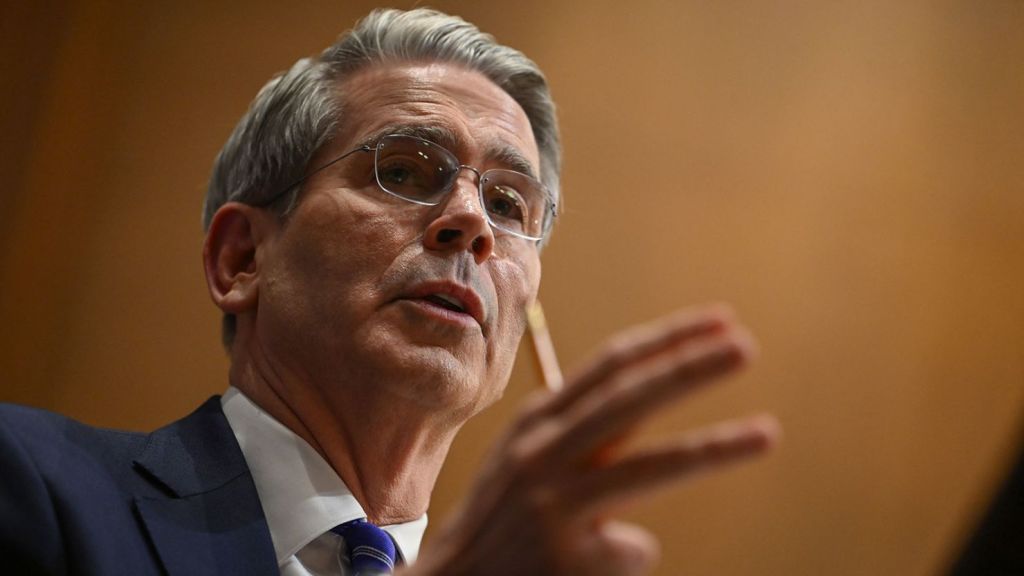
US Treasury Secretary Scott Bessent. Image: Andrew Caballero-Reynolds/AFP/Getty Images

Lawmakers And Lobbyists Take Sides

The hearing did not stay polite for long. Voices rose. Accusations flew. Some senators warned that unchecked stablecoin products could pull deposits out of banks, while crypto advocates argued that heavy-handed rules would stifle innovation.

Bessent suggested that if firms prefer places with looser oversight they can seek them out, naming El Salvador as an example. That rhetorical nudge is more than a talking point — it’s a signal about market access: do business under US guardrails, or accept limits on participation.

BTCUSD currently trading at $65,930. Chart: TradingView

What El Salvador Actually Offers

Reports note that El Salvador’s crypto stance has shifted since it became the first country to make bitcoin legal tender. Lawmakers there approved changes to make Bitcoin acceptance voluntary as part of an IMF-backed deal last year.

The move reduced the mandatory use of Bitcoin while the government said it would still hold and, on occasion, add to its reserves. Those choices mean El Salvador is not a simple “no rules” refuge, even if it appears friendlier to some crypto actors than the US.

Markets And Messaging

Traders watch words like these. Markets respond to certainty, and clarity tends to calm them. When policymakers argue publicly, volatility can spike.

At the same time, a clear path for regulation would let banks plan products and let crypto firms design services that can be sold widely, not just in select jurisdictions.

Some industry executives are lobbying for carve-outs; others want full regulatory recognition. The tension is real and it will shape who stays and who sails elsewhere.

Featured image from Unsplash, chart from TradingView

İlgili Sorular

QWhat did US Treasury Secretary Scott Bessent suggest to crypto firms that resist clear regulations?

AHe suggested that those who resist clear rules should move to El Salvador.

QDuring which congressional hearing did Secretary Bessent make his remarks about crypto regulations?

AHe made the remarks during a Senate Banking Committee hearing.

QWhat is the name of the bill that aims to clarify how digital assets fit into existing financial rules?

AThe bill is called the Digital Asset Market Clarity Act.

QHow has El Salvador's stance on Bitcoin changed since initially making it as legal tender?

AEl Salvador approved changes to make Bitcoin acceptance voluntary as part of an IMF-backed deal, reducing its mandatory use.

QAccording to the article, what is a potential market effect of public arguments among policymakers on crypto regulation?

APublic arguments among policymakers can cause market volatility to spike.

İlgili Okumalar

Why Hasn't the U.S. Seen the Rise of 'Huabei' or 'Jiebei'?

The article explores why the U.S. lacks large-scale consumer credit products like China's "Huabei" and "Jiebei," despite having a developed financial sector. Key reasons include: 1. **Structural Barriers**: A fragmented federal and state regulatory system, reinforced by post-2008 reforms like the Dodd-Frank Act, raises compliance costs and protects traditional banks, stifling fintech innovation. 2. **Credit Card Dominance**: Credit cards, used by 70-80% of adults, form a $1.28 trillion debt market with high APRs (avg. 22.3%). This system cross-subsidizes users who pay in full with those carrying balances, creating a predatory yet entrenched ecosystem. 3. **Data Privacy Laws**: Strict regulations (e.g., FCRA, CCPA) prevent tech giants from leveraging behavioral data for credit scoring, unlike in China where such data fuels fintech models. 4. **Capital Market Disincentives**: Wall Street penalizes tech firms entering finance due to lower valuations associated with heavy regulation and risk, as seen in Apple’s failure with Apple Card. 5. **Banking Oligopoly**: Major banks control consumer lending, leveraging lobbying power and consumer habits to maintain high-cost credit, while alternatives like payday loans (400% APR) or "unbanked" services remain niche or exploitative. Ultimately, regulatory, structural, and corporate interests collectively block the emergence of accessible, low-cost digital lending in the U.S.

Odaily星球日报36 dk önce

Why Hasn't the U.S. Seen the Rise of 'Huabei' or 'Jiebei'?

Odaily星球日报36 dk önce

More and More 'Model Supermarkets' Are Opening: ByteDance, Alibaba, and Tencent Compete to Integrate

Chinese tech giants like ByteDance, Alibaba, and Tencent are accelerating the rollout of integrated AI model subscription services—dubbed “model supermarkets”—to provide developers with bundled access to multiple leading domestic large language models (LLMs). ByteDance’s Volcengine recently upgraded its "Coding Plan" by adding newer models like GLM-5.1, Minimax M2.7, and Kimi k2.6, allowing subscribers to use various top models under a single monthly fee starting at ¥40. However, user feedback reveals significant issues, including rapid consumption of usage limits (e.g., hitting caps within hours), frequent server errors (like HTTP 429), and slow response times during peak hours. Complaints about misleading deduction rates—where calls to advanced models consume more quota—are also common. The trend is industry-wide: Alibaba, Tencent, and Baidu have all launched similar multi-model coding plans. While these platforms reduce trial costs for developers, they also expose challenges in balancing affordability with service quality and computational stability. Amid this shift, independent AI companies like Zhipu, MiniMax, and Moonlight Face (Kimi) are developing strategies to avoid becoming mere “pipes” in this ecosystem—focusing on vertical applications, autonomous agents, and long-context models to retain competitiveness. Analysts suggest that, while platform aggregation may pressure model firms in the short term, specialized and vertical AI capabilities will remain differentiated in the long run.

marsbit39 dk önce

More and More 'Model Supermarkets' Are Opening: ByteDance, Alibaba, and Tencent Compete to Integrate

marsbit39 dk önce

İşlemler

Spot
Futures
活动图片