U.S.-Israel-Iran Conflict Surpasses 100 Days: Is Asset Unfreezing a Key to Reconciliation?

marsbit2026-06-10 tarihinde yayınlandı2026-06-10 tarihinde güncellendi

Özet

**Title: U.S.-Israel-Iran Conflict Surpasses 100 Days; Key to Reconciliation Lies in Unfreezing Assets?** **Summary:** As the conflict between the U.S./Israel and Iran enters its 103rd day, peace talks remain stalled. A central sticking point in the negotiations is the fate of approximately $240 billion in Iranian assets frozen by the United States. This includes around $1 billion in cryptocurrency assets, such as USDT, BTC, and ETH, which were seized as part of U.S. sanctions. Iran has outlined a four-phase plan for a potential deal, with the second phase demanding the immediate unfreezing of at least 50% of its assets upon signing an initial agreement, and the remainder within one to two months. However, the U.S., particularly President Trump, has firmly rejected any preemptive release of funds, viewing them as crucial leverage for future negotiations on Iran's nuclear program. The Trump administration's approach is described as unpredictable, mixing tough rhetoric with offers of talks. Meanwhile, the U.S. is reportedly considering using the frozen Iranian assets to fund reconstruction in affected Gulf countries. While both sides express a desire to end the conflict, the deep-seated issue of the frozen assets, alongside broader geopolitical tensions, suggests a prolonged period of "fighting while talking" is likely to continue. The article concludes that the conflict's primary impact on cryptocurrency markets is macro-level, with minimal direct selling pressure on spec...

Original | Odaily Planet Daily (@OdailyChina)

Author | Wenser (@wenser 2010 )
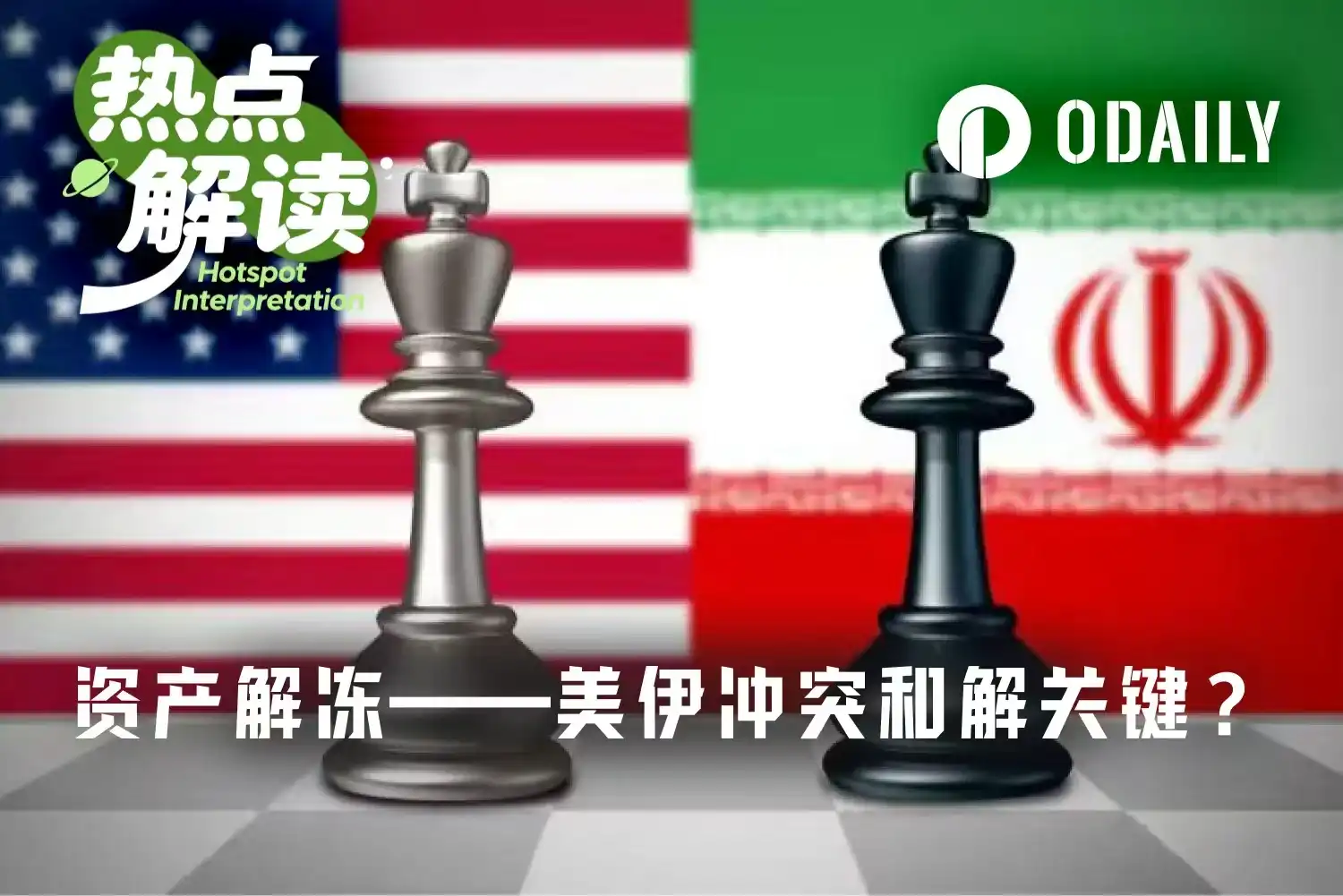
June 10th, the 103rd day since the outbreak of the U.S.-Israel-Iran war, U.S.-Iran negotiations remain difficult with no conclusion in sight.

Today, following Israel's strike against Iran, according to U.S. officials, the U.S. has also launched its third round of strikes against Iran, which concluded swiftly. Behind this century-long conflict, the key to reconciliation lies not only in deeper issues of Iranian nuclear weapons and uranium enrichment materials, but also in a major current sticking point: the frozen Iranian assets held by the U.S., totaling $24 billion, including approximately $1 billion in cryptocurrency assets.

Where do these assets come from? What cryptocurrency assets are included? Can the U.S. and Iran reach an agreement on this matter? These are the main topics of discussion in this article.

Trump's Baffling 'Hot and Cold' Approach: Toughness and Compromise Coexist

Whether the U.S.-Iran conflict can end through negotiations naturally hinges on key figure U.S. President Trump. However, Trump, a businessman by background, is particularly shrewd and, compared to politician-type presidents, more focused on practical benefits. Therefore, his public image is also extremely contradictory: on one hand, his public statements vary between tough and soft; on the other hand, he is accustomed to sowing confusion, using talks of negotiation, reconciliation, and "imminent agreement" as excuses to mislead Iran and even global news media, thereby achieving goals such as "manipulating capital markets" and other undisclosed objectives.

According to CNN reports, since the outbreak of the Iran conflict on February 28th, Trump has made statements similar to "a U.S.-Iran agreement is about to be reached" over 30 times on social media, in public appearances, and in telephone interviews with media journalists (Odaily Planet Daily Note: some sources say at least 37 times).

In light of this, Iran has not harbored illusions of a "one-step" negotiation but has envisioned it as a four-stage plan.

On June 4th, according to Iranian media Fars News, Iran outlined a four-stage plan for reaching an agreement with the United States:

  • The first stage focuses on a comprehensive cessation of military operations on all fronts, including Iran, the U.S., and the Axis of Resistance;
  • The core of the second stage is implementing measures on four key issues, including: the Strait of Hormuz and related mechanisms, lifting the blockade, canceling oil restrictions and sanctions, and unfreezing part of Iran's assets;
  • The third stage will initiate broader negotiations on sanctions and nuclear issues after objective and verifiable measures are implemented;
  • The fourth stage involves establishing a supervisory committee to oversee the implementation of the agreement and track compliance by all parties.

Previously, the U.S. and Iran had already ceased hostilities, but efforts in the first stage were temporarily broken due to Israel's renewed attacks on Iran and the turbulent situation in Lebanon; the second stage is now the main sticking point in the U.S.-Iran negotiations.

Specific Amount of Frozen Iranian Assets: Iran Claims $24 Billion, U.S. Confiscated $1 Billion in Crypto Assets

Previously, according to CNN, a U.S. official familiar with the negotiations stated that one of the remaining key sticking points in the U.S.-Iran talks is the issue of economic compensation, as Trump is eager to reach a deal perceived as superior to the one reached during the Obama administration.

The official stated that Iran has conveyed to mediators that once both sides agree on a preliminary memorandum of understanding, they want to receive some form of economic compensation as quickly as possible, rather than postponing it to a future date. However, officials in the Trump administration worry that unfreezing funds at such an early stage could alleviate the economic damage inflicted on Iran—this might remove, or at least weaken, a key leverage Washington holds over Tehran. This leverage would be crucial for the U.S. entering the second stage of negotiations to discuss specific details of Iran's nuclear program. Trump has made it clear to his team that he wants any agreement to appear much tougher than the 2015 deal and to avoid any action that could be interpreted as "delivering large amounts of cash"—a phrase Trump used to criticize Obama's decision to provide economic compensation to Iran.

On June 6th, media reports indicated that a potential U.S.-Iran agreement depends on whether the U.S. agrees to release $24 billion in frozen Iranian assets. This figure was later confirmed by Iranian officials.

That same day, according to Iran's Tasnim News Agency, Iran's Deputy Foreign Minister for Legal and International Affairs, Kazem Gharibabadi, stated that at least 50% of Iran's frozen financial assets must be unfrozen immediately upon signing any memorandum of understanding with the United States. He added that the remaining funds should be "unfrozen within a limited period of one to two months after the agreement is signed." Gharibabadi stated that these assets belong to Iran and were "illegally frozen" by the U.S., and unfreezing them is a core requirement of any potential understanding. He said the remaining details of the fund access mechanism, including technical and financial arrangements, would be negotiated further during the 60-day implementation period following the signing of the memorandum.

However, this demand was promptly met with strong rejection from Trump, who stated he would not unfreeze Iranian assets or lift any sanctions in advance as part of any agreement.

In late May, U.S. Treasury Secretary Scott Bessent stated in an interview with Fox News that the U.S. had seized approximately $1 billion in Iranian cryptocurrency assets. Bessent said the action was part of sanctions against the Iranian regime and its proxy networks, and the related funds had been frozen. This includes about $344 million worth of USDT stablecoins frozen by stablecoin issuer Tether in April this year, as well as other cryptocurrencies like BTC and ETH.

He stated that before the U.S. Treasury intervened, the Iranian regime was stealing $400 to $500 million monthly, distributing this money to dozens of senior officials. "We are working with allies across Europe to seize various villas, houses, and properties," Bessent explained. "And this money was actually stolen from the Iranian people." Additionally, according to Bitcoin News analysis, the figure Bessent initially disclosed in late April was "close to $500 million," while the latest figure as of May 29th had surpassed the $1 billion mark, indicating that the enforcement intensity of the operation, codenamed "Operation Economic Fury," continues to increase.

It is worth noting that, according to Wikipedia, the U.S. previously even seized a Manhattan skyscraper belonging to the Iranian government (valued at over $1 billion) and its accumulated rent (approximately $50 million).

Furthermore, according to the latest media reports, the U.S. is considering using frozen Iranian assets to fund reconstruction and repair work in Gulf countries affected by the "U.S.-Israel-Iran conflict." According to informed sources, U.S. Treasury Secretary Scott Bessent has directed relevant teams to assess the damage caused by Iran to Gulf allies. Additionally, the U.S. is also considering using frozen Iranian assets to compensate for potential future losses.

Based on the above information, although Trump stated last night that he is "very close to reaching a very good, strong, and powerful agreement," it remains difficult for the U.S., Israel, and Iran to achieve reconciliation before determining compensation and how to handle the frozen assets.

As for the impact on cryptocurrency assets, it is mainly focused on the macro-situation's influence on the overall cryptocurrency market, with minimal direct selling pressure on specific coins like BTC and ETH.

For the foreseeable future, although both sides wish to end this conflict quickly, constrained by disputes of interest and the international situation, "fighting while talking, talking while fighting" may remain the norm for the U.S., Iran, and perhaps Israel.


İlgili Sorular

QWhat is one of the key obstacles to a US-Iran peace agreement according to the article?

AOne key obstacle is the handling of frozen Iranian assets, totaling $240 billion, including around $10 billion in crypto assets. Iran demands these be unfrozen, while the US is reluctant to release this economic leverage early in negotiations.

QHow many phases did Iran outline for a potential agreement with the United States?

AIran outlined a four-phase plan for a potential agreement with the United States.

QWhat specific cryptocurrency assets did the US Treasury reportedly seize from Iran?

AThe US Treasury reportedly seized about $344 million in USDT stablecoins from Tether, along with other cryptocurrencies like BTC and ETH.

QAccording to the article, why is the US hesitant to unfreeze Iranian assets early in the negotiation process?

AThe US is hesitant because officials fear that unfreezing funds early would reduce the economic pressure on Iran, weakening a key bargaining chip needed for later negotiations on details like Iran's nuclear program.

QWhat potential alternative use for the frozen Iranian assets is mentioned in the article?

AThe article mentions that the US is considering using the frozen Iranian assets to fund reconstruction and repair work in Gulf countries affected by the conflict.

İlgili Okumalar

As Consensus Accelerates, What Are Young Investors Betting On?

Title: As Consensus Forms Faster, What Are Young Investors Betting On? In the rapid evolution of tech investment, a new generation of young investors is navigating a landscape where AI, robotics, commercial aerospace, and quantum computing are advancing simultaneously. Traditional investment logic based on financial models is giving way to a need for deep technical understanding and the ability to act before industry consensus forms. An analysis of trends from the "WAIC FUTURE TECH" list of young investment leaders reveals key shifts in focus. The first major trend is the movement of AI from the digital screen into the physical world. Investment is shifting from large language models and chatbots towards embodied AI, robotics, AI hardware, and edge computing. While demonstrations generate excitement, the real challenge lies in achieving scalable, reliable, and cost-effective delivery in complex real-world environments like factories and logistics. Success depends not just on algorithms but on the integration of sensors, actuators, and control systems. Second, the competitive focus for large models is moving beyond raw capability toward building an "intelligence flywheel." The goal is to create self-reinforcing systems where user interaction generates data, improving the model, which in turn enhances the user experience and attracts more engagement. Companies that successfully embed AI into workflows to create these closed-loop systems can build lasting value that isn't easily erased by the next model upgrade. Third, facing a potential bottleneck in high-quality human-generated data, investors are looking at new underlying technologies. Reinforcement learning and self-play, as demonstrated by AlphaGo Zero, offer paths for AI to generate its own experience. Scientific foundation models, which aim to build general AI capabilities for fields like life sciences and materials discovery, represent a non-consensus direction that could unlock new frontiers of knowledge and data. Finally, in deep-tech areas like quantum computing, commercial aerospace, and space-based infrastructure, patient capital is essential. These fields have long, uncertain development and validation cycles involving complex engineering, supply chains, and regulations. Investment here requires a long-term view, focusing on foundational team capabilities and the eventual emergence of market demand, even if commercial returns are distant. Collectively, these trends illustrate how young investors are adapting to a new era. They are learning to make earlier, technically-informed judgments, balance hype with real-world viability, and provide the patient capital needed to build the deep-tech foundations of the future.

marsbit5 dk önce

As Consensus Accelerates, What Are Young Investors Betting On?

marsbit5 dk önce

Can Japan Buy Growth with AI? Will the Bond Market Believe It?

Japan's cabinet has introduced the 2026 Basic Policy on Economic and Fiscal Management and Reform, shifting its primary fiscal target. The new framework moves away from the traditional annual primary balance goal and instead prioritizes a stable reduction of the debt-to-GDP ratio. This change is tied to a strategy of increased "responsible proactive fiscal" spending, aiming to boost long-term growth through investments in strategic sectors like AI, semiconductors, energy, and robotics. The government estimates total public and private investment in 62 key technologies could exceed 370 trillion yen by 2040. The market reaction has been mixed and cautious. While equity markets may respond to policy signals, bond markets are focused on fiscal credibility. Concerns center on whether the weakening of the clear primary balance anchor could lead to looser fiscal discipline. If investors doubt that these strategic investments will generate sufficient productivity gains, tax revenue, and nominal growth to outpace rising interest costs, they may demand higher yields on Japanese Government Bonds (JGBs). Recent volatility in the yen and JGB yields, with the 10-year yield briefly reaching 2.9%, reflects this skepticism. The success of this new framework hinges on two factors: whether Japan can achieve a nominal growth rate consistently higher than its long-term interest rates, and whether future budgets demonstrate disciplined control over bond issuance. The government's narrative is that strategic investment is essential to break Japan's cycle of low growth, aging, and labor shortages. However, the bond market will continuously assess the credibility of this plan, pricing the risk that it may represent fiscal expansion rather than a viable growth strategy.

marsbit42 dk önce

Can Japan Buy Growth with AI? Will the Bond Market Believe It?

marsbit42 dk önce

Misjudged A-Shares: Resilience, Expectations, and Confidence

China's A-share market recently faced selling pressure, especially in tech sectors, initially triggered by a global tech sell-off that began in South Korea. However, the article argues this is a case of "mistaken injury" and highlights the market's underlying resilience. This resilience stems from three main pillars: **1) Tech Sector Fundamentals:** Unlike Korea's market dominated by a few memory chip stocks, China's tech sector is diversified across computing, communications, electronics, and semiconductors, supported by dual narratives of global AI supply chains and domestic substitution. Core areas like optical modules and fiber optics continue to show strong earnings growth. **2) "National Team" Support:** State-backed institutions and large corporations have made significant market purchases and announced buybacks, providing liquidity and signaling confidence. This is seen as a stabilizing policy signal, often associated with market bottoms. **3) Broader Market Pillars:** Other major sectors are showing endogenous recovery momentum. Consumer stocks benefit from stabilizing CPI and signs of sector recovery (e.g., liquor price hikes). Cyclical sectors like aluminum have high earnings, potential price increases due to tight supply, and low valuations. The financial sector offers stable dividends and low valuations. The conclusion is that the sell-off was driven by external contagion, not a collapse in fundamentals. With strong policy support and recovering momentum across key sectors, the A-share market possesses the toughness to regain stability.

marsbit1 saat önce

Misjudged A-Shares: Resilience, Expectations, and Confidence

marsbit1 saat önce

İşlemler

Spot
活动图片




