U.S. Crypto Reserves Shrink by 26%: No 'Strategy' for Purchases, Only Shrinking 'Reserves'

比推2026-03-06 tarihinde yayınlandı2026-03-06 tarihinde güncellendi

Özet

A year after former US President Donald Trump signed an executive order establishing a "Strategic Bitcoin Reserve" and a "US Digital Asset Reserve," the value of the US government's cryptocurrency holdings has fallen by 26%, from over $30 billion to approximately $22.39 billion. The reserves, which consist primarily of seized assets and are not involve new purchases, include about 328,272 Bitcoin (valued at roughly $22 billion), as well as Ethereum, USDC, wrapped Bitcoin, and BNB. The government has not increased its Bitcoin holdings since the order was issued and has no plans to use taxpayer funds for additional acquisitions. Officials emphasize that market volatility does not change the administration's commitment to US leadership in crypto, but critics warn that a lack of transparency and a clear framework could distort markets and erode public trust.

Author: Cointelegraph

Compiled by: AididiaoJP, Foresight News

Original title: U.S. Still Has No Plans to Advance Bitcoin Strategic Reserve


One year ago, U.S. President Trump signed an executive order to establish a U.S. Strategic Cryptocurrency Reserve. Now, a year later, the reserve's value has shrunk by billions of dollars.

Early in his administration, Trump established a special task force to study how the government could better implement and regulate cryptocurrencies, including plans for Bitcoin and cryptocurrency reserves.

Over the past year, the Trump administration has introduced multiple macroeconomic and policy adjustments. Among them, friendly regulatory policies from Washington have been beneficial for cryptocurrencies, but punitive tariffs and escalating geopolitical tensions have had negative impacts.

Currently, the number of tokens in the U.S. cryptocurrency reserve has remained largely unchanged since its establishment.

Trump's Crypto Reserve Largely Unchanged

On March 6, Trump established the "Strategic Bitcoin Reserve" and the "U.S. Digital Asset Reserve" via executive orders. The Bitcoin Reserve contains only Bitcoin, while the Digital Asset Reserve includes various altcoins. Before the order was issued, Trump had stated that the reserve would include XRP, Solana, and Cardano.
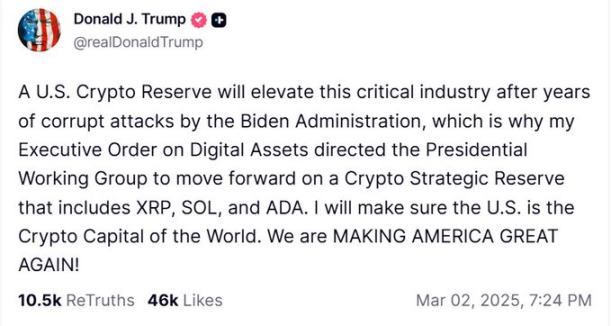
Source: Donald Trump

These two reserves "will not acquire additional assets by any means other than forfeiture proceedings."

This executive order essentially consolidated previously scattered seized assets from multiple federal regulatory and law enforcement agencies. The order stated that centralizing ownership, control, and management of these assets within the federal government would ensure proper oversight, accurate tracking, and a unified approach to managing the government's cryptocurrency holdings.

The government has not disclosed specific details of the Bitcoin Reserve and Digital Asset Reserve, but blockchain analytics company Arkham Research has identified multiple blockchain wallets associated with the U.S. government.

As of press time, the total value of cryptocurrencies held by the U.S. government is approximately $22.39 billion, with Bitcoin alone accounting for about $22 billion. Other major holdings include the stablecoin USDC, Ether, Wrapped Bitcoin (WBTC), and BNB.
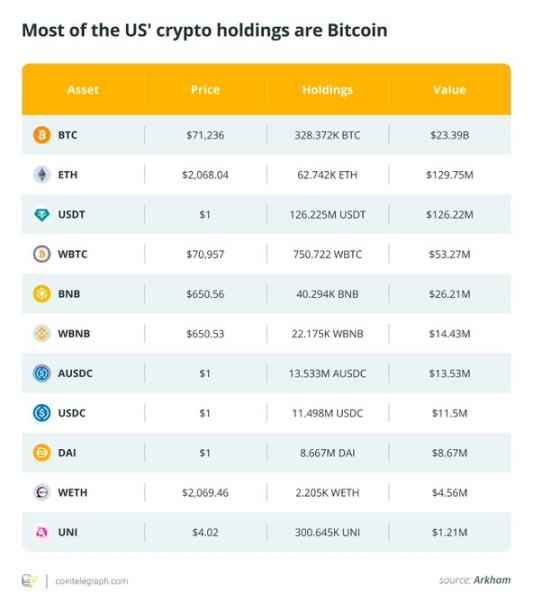
(Data collected on March 4)

It is currently unclear how much of these assets belong to the formal reserve, and whether and how these assets have been transferred. However, the dollar value of the reserve has significantly decreased. Arkham data shows that when Trump signed the executive order, the total value of crypto assets held by the U.S. was over $30 billion. As of press time, this figure has dropped to $22 billion, a decline of 26%.
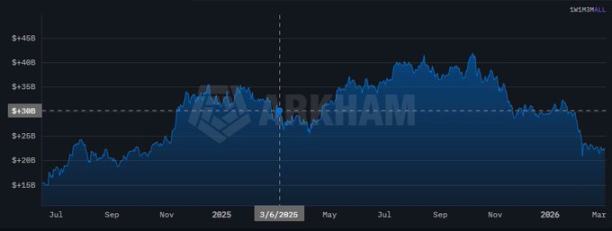
Significant decline in the value of the U.S. crypto asset portfolio since March 2025. Source: Arkham

The White House does not appear to be swayed by this. Deputy Press Secretary Kush Desai, commenting on the recent price drop, said: "In a free market, the government does not set prices. Market volatility does not change the Trump administration's determination to ensure U.S. dominance in cryptocurrency and other frontier technologies."

Bitcoin Holdings Unchanged, No Purchase Plans Yet

Despite hopes from staunch Bitcoin supporters that the U.S. government would start buying Bitcoin, the amount of Bitcoin held by the government has not changed. Since the executive order was signed, the U.S. government has held approximately 328,272 Bitcoin.
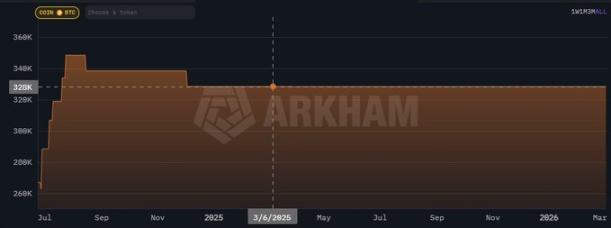
U.S. Bitcoin holdings have remained constant since the reserve's establishment. Source: Arkham

Ether is the second-largest crypto asset held by the U.S. government. Its quantity decreased after the executive order was signed, possibly due to exchanges or transfers. However, after April 2025, Ether holdings have remained largely stable.
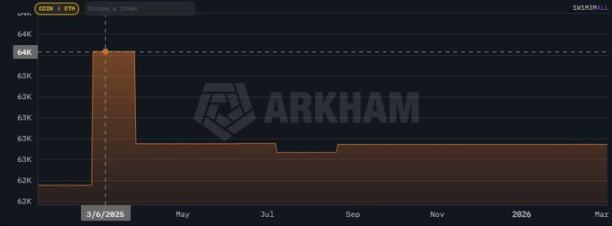
Changes in Ether holdings. Source: Arkham

Tether's USDT is the largest stablecoin held by the U.S. government. It saw a significant increase of over 200 million tokens in May 2025, before falling back to pre-March 2026 levels.
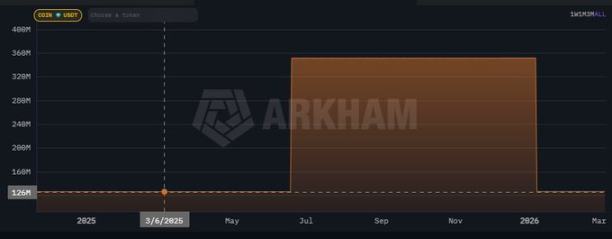
Changes in USDT holdings. Source: Arkham

These buying and selling patterns are not entirely clear. As mentioned, the government has not publicly disclosed specific transaction volumes.

The new crypto reserve strategy does not completely rule out the possibility of the government buying Bitcoin, but requires that any purchases must be made in a way that "does not impact the budget." Commissioner for AI and Crypto Affairs David Sacks said last year: "Cannot increase the deficit, cannot increase debt, cannot tax the American people."

"Not a single penny from taxpayers. But if the Treasury Secretaries can find a way to accumulate more Bitcoin without burdening taxpayers, they can do so."

A year on, it is unclear whether the government has developed such a strategy, or how it would be implemented.

Jason Yanowitz, co-founder of crypto company Blockworks, told the BBC last year that a crypto reserve containing a variety of different assets could negatively impact the market. "Without a clear framework, arbitrarily selecting assets can distort markets and lead to a loss of public trust," he said. "Ensuring transparency through independent audits and public reporting is crucial for fostering innovation and avoiding favoritism."

Following the success of software company-turned-Bitcoin investment vehicle Strategy, the idea of establishing Bitcoin reserves gained traction last year, both at the state and corporate levels. The narrative of Bitcoin as "digital gold" made holding the asset attractive for government budgets.

According to data from tracking website BitcoinTreasuries.net, 10 countries including the United States, China, Ukraine, El Salvador, the United Kingdom, and North Korea currently hold Bitcoin.

At the corporate level, analysts expect industry consolidation as the bear market continues. Wojciech Kasicki, Chief Strategy Officer of crypto infrastructure and treasury company BTCS, previously told Cointelegraph that companies with Bitcoin treasury values below net asset value might be acquired by operating businesses.

Bitcoin reserves remain a new concept and have not yet been tested through a full crypto winter.


Twitter:https://twitter.com/BitpushNewsCN

Bitpush TG Discussion Group:https://t.me/BitPushCommunity

Bitpush TG Subscription: https://t.me/bitpush

Original link:https://www.bitpush.news/articles/7617407

İlgili Sorular

QWhat was the total value of the US government's cryptocurrency holdings when the strategic reserve was established, and what is it now?

AWhen the strategic reserve was established, the US government's cryptocurrency holdings were valued at over $30 billion. As of the article's publication, that value has decreased to approximately $22.39 billion, a decline of 26%.

QAccording to the executive order, how can the US government acquire additional assets for its crypto reserves?

AAccording to the executive order, the US government can only acquire additional assets for its crypto reserves through forfeiture proceedings, not through purchases or any other means.

QWhat is the government's position on the recent price decline of its crypto assets, as stated by the deputy press secretary?

AThe deputy press secretary, Kush Desai, stated that in a free market, the government does not set prices, and market volatility does not change the Trump administration's determination to ensure US dominance in cryptocurrency and other frontier technologies.

QWhat was the condition set by Commissioner David Sacks for the government to potentially purchase more Bitcoin?

ACommissioner David Sacks stated that any purchase of Bitcoin must be done in a way that is 'budget-neutral,' meaning it cannot add to the deficit, increase debt, or tax the American people. Taxpayers should not spend a single penny.

QWhich other countries, besides the US, are listed as holding Bitcoin according to BitcoinTreasuries.net?

AAccording to BitcoinTreasuries.net, the countries that hold Bitcoin, besides the US, are China, Ukraine, El Salvador, the United Kingdom, and North Korea, among others, for a total of 10 nations.

İlgili Okumalar

Within Strategy's Framework, STRC's Dividend Yield Remains at 12% as Share Price Stays Below Par Value

Michael Saylor, Executive Chairman of Strategy (MSTR), confirmed that the dividend rate for its STRC perpetual preferred shares will remain at 12.00% through August 2026. The rate has increased from 9% at its July 2025 launch to the current high via a "ratchet" mechanism, which permanently raises the rate by 0.5% whenever the share price falls below $95. This mechanism is intended to push the price back toward its $100 par value and support Strategy's "at-the-market" (ATM) program for issuing new shares to fund Bitcoin purchases. However, the mechanism has not worked as intended. STRC shares closed at $89.46 on July 31, remaining about 10-11% below par value despite the record-high dividend. Competition from rival Strive's higher-yielding SATA securities has pressured demand. The persistent discount has forced Strategy to suspend new STRC issuances via its ATM program, limiting this funding channel for Bitcoin acquisitions. STRC's struggles reflect Bitcoin's own volatility, as the preferred shares historically move in tandem. Analysts have warned the ratchet structure carries long-term, one-way risk. A law firm is investigating Strategy's ability to maintain dividend payments if Bitcoin's price stays low. Retail investors own roughly 83% of outstanding STRC shares, a group seen as prone to panic selling during downturns. In response, Strategy has established financial reserves, including a liquidity cushion covering about 26 months of dividend/interest obligations, and a $2 billion share buyback program alongside a Bitcoin monetization framework, though the company emphasized it is not obligated to sell any Bitcoin.

cryptonews.ru10 dk önce

Within Strategy's Framework, STRC's Dividend Yield Remains at 12% as Share Price Stays Below Par Value

cryptonews.ru10 dk önce

Analyst: Bitcoin's Price Will Drop to $60k in August, Then Rebound to $70k

Financial analyst Andrey Poroshin has provided a new forecast for Bitcoin's price dynamics in August. Poroshin, an analyst at the Bitbanker exchange, expects the cryptocurrency market to experience a downturn this month, with prices retesting the $60,000 level due to a lack of supportive macroeconomic catalysts. He noted that the recent US Federal Reserve decision to hold interest rates did not significantly impact the market, while inflation remains above the 2% target. Poroshin stated that Bitcoin is ending July under pressure from moderate volatility and a lack of new macroeconomic stimuli, leading to continued market caution. According to his base scenario, Bitcoin will drop to a range of $60,000 to $62,000 before recovering to $70,000. He pointed out that even $70,000 remains below the cost of mining in the US, which has prompted some miners to shift towards AI data center operations. Poroshin cited the winding down of BitMEX's operations as a potential catalyst for a price rebound, suggesting the exit of weaker players often coincides with market reversals and reduced short-term selling pressure. He believes Bitcoin is currently less susceptible to geopolitical shocks, such as the Iran-US conflict, and does not expect significant market changes in August related to the pending CLARITY Act. Looking ahead, Poroshin forecasts that September will bring more active price fluctuations driven by potential Fed rate decisions and possible discussions or approval of the CLARITY Act.

cryptonews.ru10 dk önce

Analyst: Bitcoin's Price Will Drop to $60k in August, Then Rebound to $70k

cryptonews.ru10 dk önce

İşlemler

Spot
活动图片