US Banks’ Push To Ban Stablecoin Rewards Could Hand Global Advantage To China, Execs Warn

bitcoinist2026-01-01 tarihinde yayınlandı2026-01-01 tarihinde güncellendi

Özet

Crypto industry leaders warn that U.S. banks' efforts to ban interest payments on stablecoins could undermine the competitiveness of the U.S. dollar and hand a strategic advantage to global rivals like China. This follows China's announcement that it will pay interest on its Digital Yuan (e-CNY) starting in 2026, granting it similar status to bank deposits. Coinbase’s Chief Policy Officer, Faryar Shirzad, cautioned that such a prohibition could weaken the impact of the recently passed GENIUS Act, which aims to solidify the dominance of U.S. dollar stablecoins. Other executives, including Coinbase CEO Brian Armstrong and Variant CLO Jake Chervinsky, echoed that this is not just a regulatory issue but a matter of national security, arguing that limiting stablecoin rewards could diminish the global role of the dollar and strengthen China's position in the digital currency landscape.

After China’s latest move with its Digital Yuan, multiple crypto industry executives have cautioned that the US banks’ push to prohibit all interest payments on stablecoins could give a major advantage to their global rivals.

US Risks Giving China A Major Global Advantage

On Tuesday, Coinbase’s Chief Policy Officer (CPO), Faryar Shirzad, warned the US Congress that banning interest payments on the digital assets could risk diminishing the legislative efforts and victories obtained this year with the Guiding and Establishing National Innovation for U.S. Stablecoins (GENIUS) Act.

In an X post, Shirzad affirmed that “tokenization is the future and the GENIUS Act was a visionary move by POTUS and Congress to ensure US dollar stablecoins issued under US rules would be the primary settlement instrument of the future.”

However, Shirzad noted that the “sobering and timely” announcement by the People’s Bank of China of its plan to pay interest on the Digital Yuan could pose a bigger problem to the US than investors think.

As reported by Bitcoinist, China is about to start paying interest on its Digital Yuan (e-CNY). Deputy Governor at the People’s Bank of China, Lu Lei, recently shared a new framework that will redefine the rules of virtual currency, giving it the same legal status as deposits held at banks.

Under the new framework, commercial banks that manage Digital Yuan wallets will be able to pay interest to clients based on the amount of e-CNY they hold, starting from January 1, 2026.

Based on this, Shirzad cautioned that “If this issue is mishandled in Senate negotiations on the market structure bill, it could hand our global rivals a big assist in giving non-US stablecoins and CBDCs a critical competitive advantage at the worst possible time.”

Stablecoin Rewards: A ‘Matter Of National Security’

Coinbase’s CPO added that although “lobbyists for entrenched incumbents will always fight change,” it’s crucial for Congress to “protect the primacy of the US dollar and the US financial system, “not just incumbent interests.”

Similarly, other crypto executives agreed with Shirzad’s statement, including Coinbase’s Chief Executive Officer (CEO) Brian Armstrong and Variant’s Chief Legal Officer (CLO) Jake Chervinsky.

Armstrong emphasized that US “stablecoins must remain competitive on a global stage. Meanwhile, Chervinsky asserted that banks’ push to ban stablecoin rewards “isn’t just a matter of incumbents seeking a regulatory moat. It’s a matter of national security.”

To the lawyer, revisiting the issue of interest payments on USD-pegged tokens would weaken the victory that the GENIUS Act gave to US dollar dominance worldwide and “hand that win to China.”

Notably, the banking sector has criticized the US’s landmark stablecoin legislation over the past few months, arguing that it has loopholes that could pose risks to the financial system.

The crypto framework, which was signed into law by President Trump in July, prohibits interest payments on the holding or use of payment-purpose stablecoins. Nonetheless, the prohibition only addresses issuers, meaning that it could be “easily circumvented” by exchanges or affiliates providing rewards.

Earlier this year, multiple banking associations across the US sent a joint letter to the Senate Banking Committee urging Congress to amend the law. The banking groups claimed that interest payments would distort market dynamics and could affect credit creation. Therefore, they suggested extending the prohibition to include digital asset exchanges, brokers, dealers, and related entities.

Shirzad, alongside multiple crypto industry players, has rejected these concerns over the past several months, stating that the banking sector’s proposals could threaten to create an uncompetitive environment for USD-denominated tokens.

In October, Coinbase’s CPO slammed the financial institution’s narrative that stablecoins would destroy bank lending, concluding that it “ignores reality” and misreads the crucial moment.
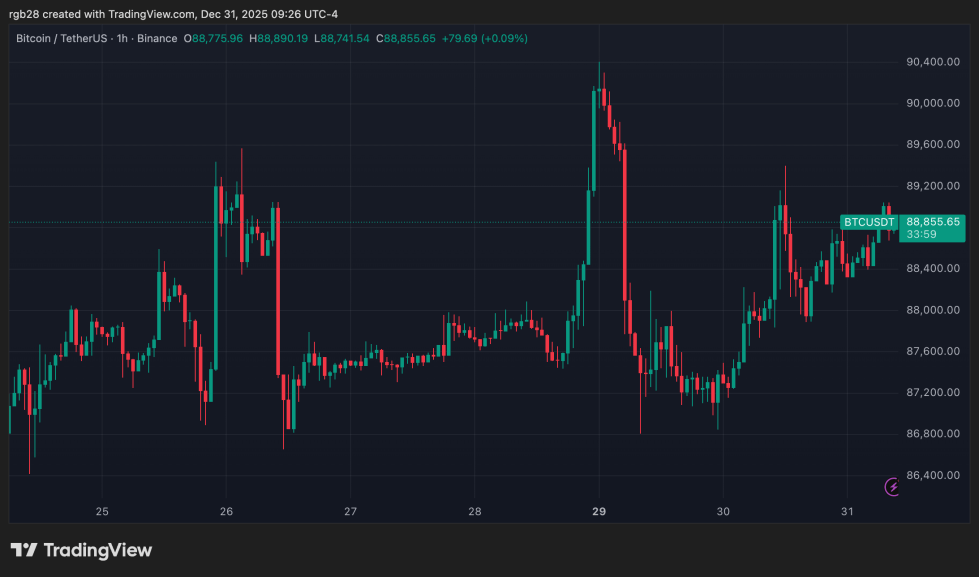
Bitcoin (BTC) trades at $88,855 in the one-week chart. Source: BTCUSDT on TradingView.


İlgili Sorular

QWhat is the main concern raised by crypto industry executives regarding the US banks' push to ban stablecoin interest payments?

ACrypto industry executives warn that the US banks' push to ban all interest payments on stablecoins could hand a major global advantage to rivals like China, potentially undermining the US dollar's primacy and the competitiveness of US financial systems.

QWhat specific action did the People's Bank of China announce that is seen as a competitive threat?

AThe People's Bank of China announced a plan to pay interest on the Digital Yuan (e-CNY), giving it the same legal status as bank deposits and allowing commercial banks to pay interest based on the amount held, starting from January 1, 2026.

QWhy do banking associations in the US want to extend the prohibition on interest payments to include exchanges and related entities?

ABanking associations argue that interest payments on stablecoins could distort market dynamics, affect credit creation, and pose risks to the financial system, so they want to extend the ban to digital asset exchanges, brokers, dealers, and related entities to prevent circumvention.

QHow does Coinbase's CPO, Faryar Shirzad, view the GENIUS Act and its relation to US dollar stablecoins?

AFaryar Shirzad views the GENIUS Act as a visionary move to ensure that US dollar stablecoins issued under US rules become the primary settlement instrument of the future, reinforcing the dominance of the US dollar globally.

QWhat is Jake Chervinsky's perspective on the push to ban stablecoin rewards?

AJake Chervinsky, Variant's Chief Legal Officer, asserts that the push to ban stablecoin rewards is not just about incumbents seeking a regulatory advantage but is a matter of national security, as it could weaken US dollar dominance and benefit rivals like China.

İlgili Okumalar

The Waged Worker Driven to Poverty by AI Subscriptions

"AI Membership: The Hidden Cost Pushing Workers Toward 'Poverty'" The widespread corporate push for AI adoption is creating a hidden financial burden for employees. Companies, from giants like Alibaba to small firms, are mandating AI use, often tying token consumption to KPIs, but frequently refuse to cover the costs. Workers are forced to pay for subscriptions out of pocket to stay competitive and avoid being replaced. Front-end developer Long Shen spends up to 2000 RMB monthly on tools like Cursor and ChatGPT Plus, seeing it as a necessary 3% salary investment to handle 90% of his coding tasks. While it boosted his performance and led to promotions, he now faces idle time at work, pretending to be busy. Designer Peng Peng navigates strict company firewalls by using personal devices and accounts for AI image generation tools like Midjourney, spending hundreds monthly without reimbursement, while her boss demands faster, more numerous revisions. The pressure creates workplace anxiety and suspicion. Programmer Li Huahua, after a friend's experience of raised KPIs following AI success, fears being branded a "traitor" for using it yet worries about falling behind if she doesn't. The dynamic allows management to demand results without understanding the tools or covering expenses, treating employees like AI "agents." While some, like entrepreneur Jin Tu, find high value in paid AI, building entire systems and winning competitions, for most, it's a trap. Free tools like Kimi and Doubao are introducing fees, closing off alternatives. The initial efficiency gains individual advantage, but as AI becomes ubiquitous, the personal edge disappears, workloads increase, and a cycle of dependency begins. Workers like Long Shen realize they cannot maintain AI-generated code without AI, making stopping harder than continuing to pay. The tool promising liberation is instead becoming a compulsory, costly chain in the modern workplace.

marsbit37 dk önce

The Waged Worker Driven to Poverty by AI Subscriptions

marsbit37 dk önce

SK Hynix's Trillion-Won Empire: The Successors

"SK Hynix's Trillion-Won Empire and Its Heirs" explores the unconventional succession narrative within SK Group, South Korea's second-largest conglomerate, following SK Hynix's dramatic market rise. Unlike traditional chaebol scripts prioritizing the eldest son, ownership, and political marriages, Chairman Choi Tae-won's three children from his first marriage are charting distinct paths. The eldest daughter, Choi Yun-jeong, is considered the most visible candidate. With a background in biology, consulting, and a PhD, she holds executive roles at SK Bioscience and SK Inc.'s growth strategy unit, focusing on biopharma and new businesses. Her marriage is to an AI infrastructure entrepreneur, not a traditional chaebol heir. The second daughter, Choi Min-jeong, took a unique route by voluntarily serving as a South Korean naval officer, including a tour in the Gulf of Aden. She later worked on policy and strategy for SK Hynix in Washington D.C. before co-founding an AI-driven healthcare startup in San Francisco. She married a former U.S. Marine Corps officer, connecting the family to U.S. defense and policy networks. The son, Choi In-geun, who has Type 1 diabetes, followed a more classic preparatory path with a physics degree and a stint at SK E&S but left to join McKinsey's Seoul office. He remains publicly silent and holds no SK shares, defying the traditional "crown prince" archetype. Their paths unfold against the backdrop of their parents' high-profile, contentious divorce and a record-setting asset division lawsuit. The article argues that as SK Hynix becomes a geopolitical asset in the AI era, the conventional rules of chaebol inheritance are changing. The heirs are being groomed not simply to take over, but to navigate a complex global landscape defined by AI, biotech, geopolitics, and policy, forging legitimacy through their own expertise and networks rather than birth order alone.

marsbit45 dk önce

SK Hynix's Trillion-Won Empire: The Successors

marsbit45 dk önce

BitMart Research Institute Weekly Highlights: A Comprehensive Review of Macro Environment, Crude Oil, AI Tech Stocks, and Crypto Market

**Weekly Market Review: Macro, Oil, AI Tech Stocks & Crypto Market** **Macroeconomic & Traditional Finance** The April U.S. Non-Farm Payrolls report of 115K new jobs exceeded expectations, but the data's quality was questioned. Growth was heavily concentrated in healthcare, while other sectors contracted, and manufacturing employment turned negative. A statistical model accounted for a large portion of the gains, conflicting with household survey data showing a loss of 226K jobs. Meanwhile, AI's impact on jobs is emerging, with information sector roles declining, though overall unemployment remains at ~4.3%. Oil prices hovered near $100 per barrel. Global oil buffer inventories have drawn down significantly, supporting prices, but high costs are suppressing demand. China's recent reduction in crude imports acted as a market stabilizer. Geopolitically, the U.S. and Iran are likely to reach a tentative agreement to keep the Strait of Hormuz open and avoid price spikes. For AI tech stocks, short-term prospects are mixed. A potential SpaceX IPO in June could pressure current index heavyweights like Nvidia, while smaller components might benefit. The mid-term focus shifts to Q2 earnings, emphasizing AI's return on investment. Long-term risks include potential election policy shifts and massive IPOs from companies like OpenAI, which could test the sector's sustainability. **Crypto Market & Ecosystem** Crypto markets rose moderately, with BTC climbing from ~$77K to ~$82K, driven by improved risk sentiment. Spot trading volumes remain low, but buying pressure is evident. ETF inflows continued (~$791M last week). However, institutional purchases of BTC and ETH were more modest than expected. The derivatives market shows lingering bearish bets, particularly on alts and ETH. A key trend is the "dual-track" model where projects pursue public listings for traditional funding while also building their own blockchains/tokens to capture crypto liquidity, as seen with Circle's ARC chain. Stablecoins and institutional chains present significant future opportunities. *Disclaimer: This is market analysis, not investment advice.*

marsbit1 saat önce

BitMart Research Institute Weekly Highlights: A Comprehensive Review of Macro Environment, Crude Oil, AI Tech Stocks, and Crypto Market

marsbit1 saat önce

İşlemler

Spot
Futures

Popüler Makaleler

PUSH Nasıl Satın Alınır

HTX.com’a hoş geldiniz! Push Protocol (PUSH) satın alma işlemlerini basit ve kullanışlı bir hâle getirdik. Adım adım açıkladığımız rehberimizi takip ederek kripto yolculuğunuza başlayın. 1. Adım: HTX Hesabınızı OluşturunHTX'te ücretsiz bir hesap açmak için e-posta adresinizi veya telefon numaranızı kullanın. Sorunsuzca kaydolun ve tüm özelliklerin kilidini açın. Hesabımı Aç2. Adım: Kripto Satın Al Bölümüne Gidin ve Ödeme Yönteminizi SeçinKredi/Banka Kartı: Visa veya Mastercard'ınızı kullanarak anında Push Protocol (PUSH) satın alın.Bakiye: Sorunsuz bir şekilde işlem yapmak için HTX hesap bakiyenizdeki fonları kullanın.Üçüncü Taraflar: Kullanımı kolaylaştırmak için Google Pay ve Apple Pay gibi popüler ödeme yöntemlerini ekledik.P2P: HTX'teki diğer kullanıcılarla doğrudan işlem yapın.Borsa Dışı (OTC): Yatırımcılar için kişiye özel hizmetler ve rekabetçi döviz kurları sunuyoruz.3. Adım: Push Protocol (PUSH) Varlıklarınızı SaklayınPush Protocol (PUSH) satın aldıktan sonra HTX hesabınızda saklayın. Alternatif olarak, blok zinciri transferi yoluyla başka bir yere gönderebilir veya diğer kripto para birimlerini takas etmek için kullanabilirsiniz.4. Adım: Push Protocol (PUSH) Varlıklarınızla İşlem YapınHTX'in spot piyasasında Push Protocol (PUSH) ile kolayca işlemler yapın.Hesabınıza erişin, işlem çiftinizi seçin, işlemlerinizi gerçekleştirin ve gerçek zamanlı olarak izleyin. Hem yeni başlayanlar hem de deneyimli yatırımcılar için kullanıcı dostu bir deneyim sunuyoruz.

509 Toplam GörüntülenmeYayınlanma 2024.12.13Güncellenme 2025.03.21

PUSH Nasıl Satın Alınır

Tartışmalar

HTX Topluluğuna hoş geldiniz. Burada, en son platform gelişmeleri hakkında bilgi sahibi olabilir ve profesyonel piyasa görüşlerine erişebilirsiniz. Kullanıcıların PUSH (PUSH) fiyatı hakkındaki görüşleri aşağıda sunulmaktadır.

活动图片