US Banks’ Push To Ban Stablecoin Rewards Could Hand Global Advantage To China, Execs Warn

bitcoinist2026-01-01 tarihinde yayınlandı2026-01-01 tarihinde güncellendi

Özet

Crypto industry leaders warn that U.S. banks' efforts to ban interest payments on stablecoins could undermine the competitiveness of the U.S. dollar and hand a strategic advantage to global rivals like China. This follows China's announcement that it will pay interest on its Digital Yuan (e-CNY) starting in 2026, granting it similar status to bank deposits. Coinbase’s Chief Policy Officer, Faryar Shirzad, cautioned that such a prohibition could weaken the impact of the recently passed GENIUS Act, which aims to solidify the dominance of U.S. dollar stablecoins. Other executives, including Coinbase CEO Brian Armstrong and Variant CLO Jake Chervinsky, echoed that this is not just a regulatory issue but a matter of national security, arguing that limiting stablecoin rewards could diminish the global role of the dollar and strengthen China's position in the digital currency landscape.

After China’s latest move with its Digital Yuan, multiple crypto industry executives have cautioned that the US banks’ push to prohibit all interest payments on stablecoins could give a major advantage to their global rivals.

US Risks Giving China A Major Global Advantage

On Tuesday, Coinbase’s Chief Policy Officer (CPO), Faryar Shirzad, warned the US Congress that banning interest payments on the digital assets could risk diminishing the legislative efforts and victories obtained this year with the Guiding and Establishing National Innovation for U.S. Stablecoins (GENIUS) Act.

In an X post, Shirzad affirmed that “tokenization is the future and the GENIUS Act was a visionary move by POTUS and Congress to ensure US dollar stablecoins issued under US rules would be the primary settlement instrument of the future.”

However, Shirzad noted that the “sobering and timely” announcement by the People’s Bank of China of its plan to pay interest on the Digital Yuan could pose a bigger problem to the US than investors think.

As reported by Bitcoinist, China is about to start paying interest on its Digital Yuan (e-CNY). Deputy Governor at the People’s Bank of China, Lu Lei, recently shared a new framework that will redefine the rules of virtual currency, giving it the same legal status as deposits held at banks.

Under the new framework, commercial banks that manage Digital Yuan wallets will be able to pay interest to clients based on the amount of e-CNY they hold, starting from January 1, 2026.

Based on this, Shirzad cautioned that “If this issue is mishandled in Senate negotiations on the market structure bill, it could hand our global rivals a big assist in giving non-US stablecoins and CBDCs a critical competitive advantage at the worst possible time.”

Stablecoin Rewards: A ‘Matter Of National Security’

Coinbase’s CPO added that although “lobbyists for entrenched incumbents will always fight change,” it’s crucial for Congress to “protect the primacy of the US dollar and the US financial system, “not just incumbent interests.”

Similarly, other crypto executives agreed with Shirzad’s statement, including Coinbase’s Chief Executive Officer (CEO) Brian Armstrong and Variant’s Chief Legal Officer (CLO) Jake Chervinsky.

Armstrong emphasized that US “stablecoins must remain competitive on a global stage. Meanwhile, Chervinsky asserted that banks’ push to ban stablecoin rewards “isn’t just a matter of incumbents seeking a regulatory moat. It’s a matter of national security.”

To the lawyer, revisiting the issue of interest payments on USD-pegged tokens would weaken the victory that the GENIUS Act gave to US dollar dominance worldwide and “hand that win to China.”

Notably, the banking sector has criticized the US’s landmark stablecoin legislation over the past few months, arguing that it has loopholes that could pose risks to the financial system.

The crypto framework, which was signed into law by President Trump in July, prohibits interest payments on the holding or use of payment-purpose stablecoins. Nonetheless, the prohibition only addresses issuers, meaning that it could be “easily circumvented” by exchanges or affiliates providing rewards.

Earlier this year, multiple banking associations across the US sent a joint letter to the Senate Banking Committee urging Congress to amend the law. The banking groups claimed that interest payments would distort market dynamics and could affect credit creation. Therefore, they suggested extending the prohibition to include digital asset exchanges, brokers, dealers, and related entities.

Shirzad, alongside multiple crypto industry players, has rejected these concerns over the past several months, stating that the banking sector’s proposals could threaten to create an uncompetitive environment for USD-denominated tokens.

In October, Coinbase’s CPO slammed the financial institution’s narrative that stablecoins would destroy bank lending, concluding that it “ignores reality” and misreads the crucial moment.
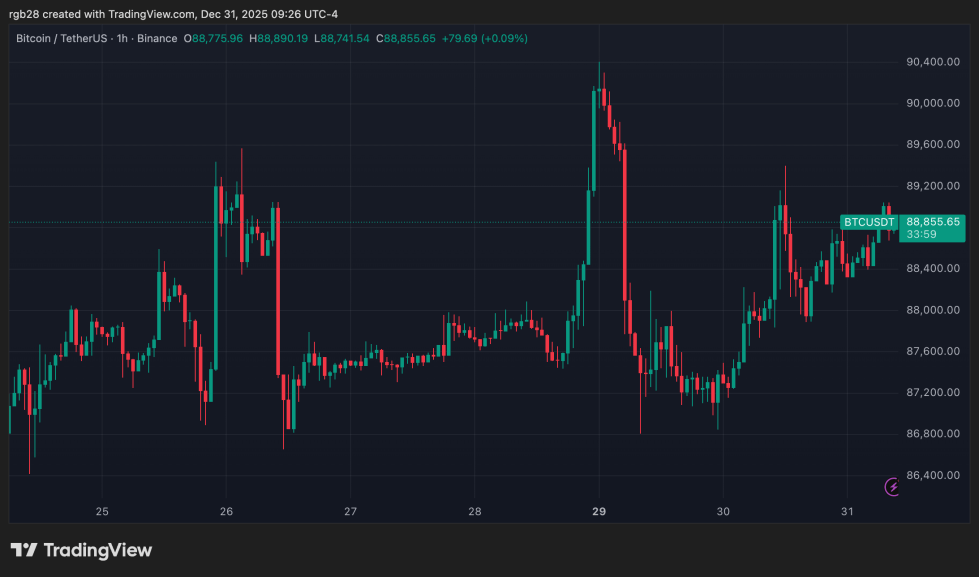
Bitcoin (BTC) trades at $88,855 in the one-week chart. Source: BTCUSDT on TradingView.


Trend Kriptolar

İlgili Sorular

QWhat is the main concern raised by crypto industry executives regarding the US banks' push to ban stablecoin interest payments?

ACrypto industry executives warn that the US banks' push to ban all interest payments on stablecoins could hand a major global advantage to rivals like China, potentially undermining the US dollar's primacy and the competitiveness of US financial systems.

QWhat specific action did the People's Bank of China announce that is seen as a competitive threat?

AThe People's Bank of China announced a plan to pay interest on the Digital Yuan (e-CNY), giving it the same legal status as bank deposits and allowing commercial banks to pay interest based on the amount held, starting from January 1, 2026.

QWhy do banking associations in the US want to extend the prohibition on interest payments to include exchanges and related entities?

ABanking associations argue that interest payments on stablecoins could distort market dynamics, affect credit creation, and pose risks to the financial system, so they want to extend the ban to digital asset exchanges, brokers, dealers, and related entities to prevent circumvention.

QHow does Coinbase's CPO, Faryar Shirzad, view the GENIUS Act and its relation to US dollar stablecoins?

AFaryar Shirzad views the GENIUS Act as a visionary move to ensure that US dollar stablecoins issued under US rules become the primary settlement instrument of the future, reinforcing the dominance of the US dollar globally.

QWhat is Jake Chervinsky's perspective on the push to ban stablecoin rewards?

AJake Chervinsky, Variant's Chief Legal Officer, asserts that the push to ban stablecoin rewards is not just about incumbents seeking a regulatory advantage but is a matter of national security, as it could weaken US dollar dominance and benefit rivals like China.

İlgili Okumalar

Must-Watch Events Next Week|CLARITY Act Could Face Senate Vote; SpaceX, Circle to Report Earnings (8.3-8.9)

**Summary: Key Events and Developments to Watch (August 3-9)** The upcoming week is marked by significant financial disclosures, key legislative deadlines, and notable product updates. **Major Financial Events:** Several companies are scheduled to release their Q2 2026 earnings. American Bitcoin (ABTC) will report on August 3, followed by SpaceX and Hut 8 Mining Corp. on August 4, and Circle on August 5. Notably, a significant portion of SpaceX shares (up to 12% of total shares) will be unlocked on August 6 following their earnings release. **Key Legislative Deadline:** The U.S. Senate faces an August 7 deadline to secure 60 votes for the CLARITY Act, a bipartisan bill aiming to establish a federal regulatory framework for cryptocurrencies. The Senate may hold a full vote on the bill during the week. **Economic Data:** The U.S. July Non-Farm Payrolls report will be released on August 7, providing crucial labor market data. **Technology & Product Updates:** * **Shutdowns:** DeFi portfolio tracker Zapper and wallet app Ctrl Wallet will cease operations on August 3. * **Upgrades:** LayerZero will deprecate its v1 relayers on August 3. XRP Ledger's new version 3.3.0, featuring five new functions, is expected next week. * **AI:** Elon Musk announced that the advanced Grok 4.6 AI model is set for release around August 7. * **Bitcoin:** The BIP-110 forced signaling for a potential Bitcoin network change is scheduled to begin around August 8. **Other Notable Events:** Chinese robotics firm Unitree Tech has set its preliminary price inquiry for its IPO for August 5. South Korean exchange Upbit will delist AQT and AERGO tokens on August 3.

marsbit4 dk önce

Must-Watch Events Next Week|CLARITY Act Could Face Senate Vote; SpaceX, Circle to Report Earnings (8.3-8.9)

marsbit4 dk önce

Stocks Are Plummeting More Sharply Than Cryptocurrencies. Where Has the Money Gone?

Stock Markets Plunge Deeper Than Cryptocurrencies: Where Did the Money Go? In late July, Seoul's Kospi index triggered circuit breakers for two consecutive days, plummeting over 40% from its June high. The collapse was led by heavyweight stocks like SK Hynix, whose record profits still disappointed investors, and devastating leveraged ETFs, with one major product losing over 83% of its value. This signaled a global, forced deleveraging targeting the most crowded trades. Interestingly, while stocks exhibited extreme volatility akin to crypto markets, Bitcoin rose nearly 15% in July after a prior steep drop. Analysis shows the money fleeing equities did not flow into Bitcoin. Instead, Bitcoin had already absorbed its sell-off in May-June, when U.S. spot Bitcoin ETFs saw historic outflows. The true safe-haven beneficiary was gold, whose price rose over 20% year-on-year, highlighting a decoupling between Bitcoin and gold as "digital gold." The sell-off was a targeted unwinding of leveraged positions in tech and semiconductors, accelerated by broker-dealer risk management and shifts in the AI narrative, including new competition from Chinese memory chipmakers. The retreat path was clear: from high-valuation tech stocks to cash and U.S. Treasuries, then to gold. For Bitcoin to attract sustained institutional inflows, conditions like eased global liquidity pressure, a "soft-landing" Fed rate cut, and U.S. regulatory clarity via legislation like the stalled CLARITY Act are needed. Currently, Bitcoin is not a safe haven but an already-cleared asset. Its low correlation with tech stocks, however, makes it a potential diversification play for institutional portfolios once the storm passes. The money isn't here yet, but the positioning is underway.

marsbit5 dk önce

Stocks Are Plummeting More Sharply Than Cryptocurrencies. Where Has the Money Gone?

marsbit5 dk önce

In Conversation with Ray Dalio: We Are Currently in an AI Bubble, with 1% of My Portfolio in Bitcoin

Ray Dalio, founder of Bridgewater Associates, warns in an interview that the current AI boom shows classic bubble characteristics, which could lead to significant economic downturns as seen in past cycles like 1929 or 2000. He explains that speculative enthusiasm, fueled by debt and overvaluation, often precedes a crash when rising rates or taxation force asset sales, causing widespread losses and recession. Dalio also outlines his "Big Cycle" theory, describing an approximate 80-year pattern where widening wealth gaps, massive government deficits, and shifting geopolitical power (like China's rise) create internal conflict and global instability. He emphasizes that we are in a late-cycle, transitional phase where traditional powers like the US and UK face decline. For personal wealth protection, Dalio advises diversification beyond cash into assets like stocks, bonds, real estate, and particularly gold, which he prefers over Bitcoin. While he holds about 1% of his portfolio in Bitcoin as a non-printable hard asset, he views gold as more secure from technological or governmental threats. Regarding AI's impact, Dalio believes it will disproportionately benefit capital owners, worsening inequality by replacing both physical and cognitive labor. He suggests that human intuition and emotional intelligence, combined with AI, will be key for future workers. On taxation, Dalio argues that wealth taxes are impractical and risk triggering asset sell-offs, reducing productive investment. He points to the UK as a cautionary example of debt, low productivity, and political strife. Geopolitically, Dalio foresees a more regionalized world, with the US showing weakness in prolonged conflicts like with Iran, akin to past imperial declines. The ideal outcome, he suggests, is coexisting powerful blocs (e.g., Americas, China-Asia Pacific) without major war.

marsbit3 saat önce

In Conversation with Ray Dalio: We Are Currently in an AI Bubble, with 1% of My Portfolio in Bitcoin

marsbit3 saat önce

Daily 7.2 Trillion KRW: Foreign Capital's Record Net Buying on Friday! Wall Street Says Headwinds for Korean Stock Fund Flows Have Subsided

South Korean stock market sees a dramatic shift in fund flows. On July 31, foreign investors made a record net purchase of approximately KRW 7.2 trillion in KOSPI stocks, marking a fundamental reversal from the persistent large-scale net outflows seen in previous months. This contributed to a significant narrowing of foreign net selling in July to KRW 9.8 trillion, down sharply from KRW 48.4 trillion in June and KRW 44.5 trillion in May. Simultaneously, domestic institutional pressure eased. South Korean pension funds and asset managers turned to a net buying position in July, purchasing KRW 1.0 trillion worth of KOSPI shares, contrasting with net sales in May and June. Market volatility is expected to be dampened by new financial regulations. Effective July 31, the Financial Services Commission tightened access for retail investors to single-stock leveraged ETFs by raising the minimum cash deposit requirement. Trading volumes for these products subsequently dropped to about 50% of their monthly average. Citigroup Research maintains its year-end KOSPI target of 10,000 points. The firm cites several supportive factors: the substantial easing of headwinds from capital outflows, a robust fundamental outlook for the semiconductor sector, historically low market valuations, strong economic fundamentals, and the potential for policy support from financial authorities if needed.

marsbit3 saat önce

Daily 7.2 Trillion KRW: Foreign Capital's Record Net Buying on Friday! Wall Street Says Headwinds for Korean Stock Fund Flows Have Subsided

marsbit3 saat önce

İşlemler

Spot

Popüler Makaleler

PUSH Nasıl Satın Alınır

HTX.com’a hoş geldiniz! Push Protocol (PUSH) satın alma işlemlerini basit ve kullanışlı bir hâle getirdik. Adım adım açıkladığımız rehberimizi takip ederek kripto yolculuğunuza başlayın. 1. Adım: HTX Hesabınızı OluşturunHTX'te ücretsiz bir hesap açmak için e-posta adresinizi veya telefon numaranızı kullanın. Sorunsuzca kaydolun ve tüm özelliklerin kilidini açın. Hesabımı Aç2. Adım: Kripto Satın Al Bölümüne Gidin ve Ödeme Yönteminizi SeçinKredi/Banka Kartı: Visa veya Mastercard'ınızı kullanarak anında Push Protocol (PUSH) satın alın.Bakiye: Sorunsuz bir şekilde işlem yapmak için HTX hesap bakiyenizdeki fonları kullanın.Üçüncü Taraflar: Kullanımı kolaylaştırmak için Google Pay ve Apple Pay gibi popüler ödeme yöntemlerini ekledik.P2P: HTX'teki diğer kullanıcılarla doğrudan işlem yapın.Borsa Dışı (OTC): Yatırımcılar için kişiye özel hizmetler ve rekabetçi döviz kurları sunuyoruz.3. Adım: Push Protocol (PUSH) Varlıklarınızı SaklayınPush Protocol (PUSH) satın aldıktan sonra HTX hesabınızda saklayın. Alternatif olarak, blok zinciri transferi yoluyla başka bir yere gönderebilir veya diğer kripto para birimlerini takas etmek için kullanabilirsiniz.4. Adım: Push Protocol (PUSH) Varlıklarınızla İşlem YapınHTX'in spot piyasasında Push Protocol (PUSH) ile kolayca işlemler yapın.Hesabınıza erişin, işlem çiftinizi seçin, işlemlerinizi gerçekleştirin ve gerçek zamanlı olarak izleyin. Hem yeni başlayanlar hem de deneyimli yatırımcılar için kullanıcı dostu bir deneyim sunuyoruz.

715 Toplam GörüntülenmeYayınlanma 2024.12.13Güncellenme 2026.06.02

PUSH Nasıl Satın Alınır

Tartışmalar

HTX Topluluğuna hoş geldiniz. Burada, en son platform gelişmeleri hakkında bilgi sahibi olabilir ve profesyonel piyasa görüşlerine erişebilirsiniz. Kullanıcıların PUSH (PUSH) fiyatı hakkındaki görüşleri aşağıda sunulmaktadır.

活动图片












