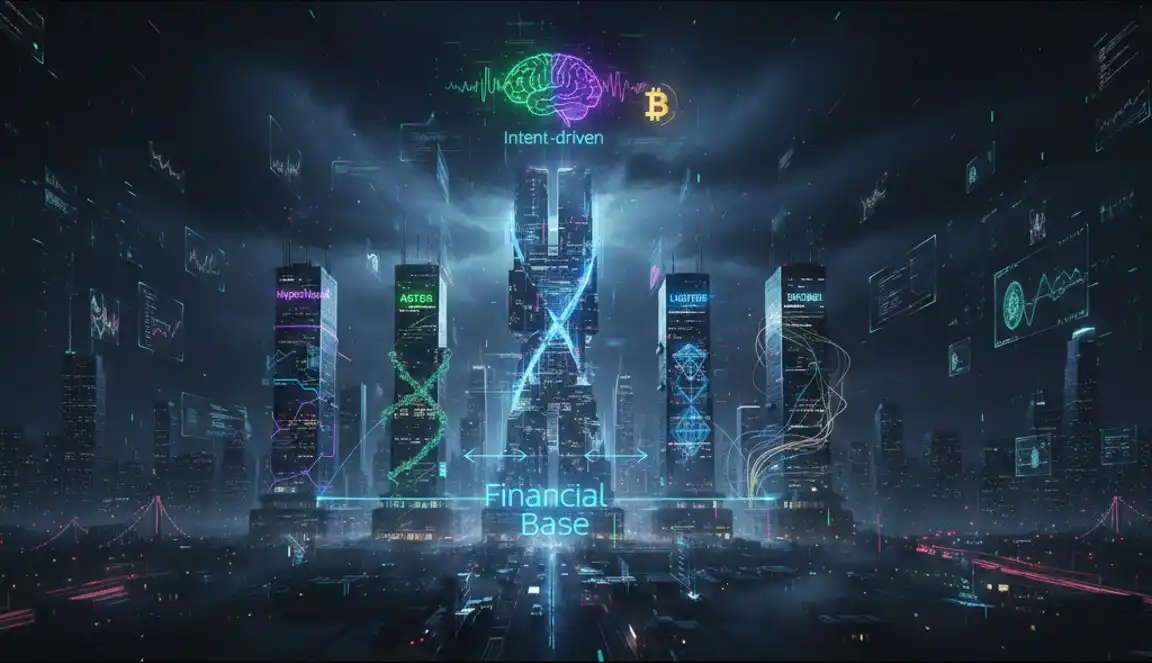
United Stables ($U) is a USD-pegged stablecoin project issued by United Stables Limited (registered in the British Virgin Islands), aiming to serve as a unified stablecoin liquidity layer that connects fragmented liquidity across exchanges, DeFi, payment networks, and AI-driven systems. The project emphasizes seamless value flow between humans and AI, supporting transactions, payments, institutional settlements, and autonomous systems. $U operates on the BNB Chain, with the same circulating supply and an unlimited maximum supply. The project has integrated with platforms such as Binance, Venus Protocol, and Cobo, and launched zero-fee trading pairs on Binance on January 13, 2026.
II. Project Introduction
United Stables aims to address the fragmentation issues in the current stablecoin market by creating a unified liquidity layer to connect different ecosystems. The project is positioned as a next-generation stablecoin, supporting various application scenarios from trading to AI autonomous systems, including global market base currency, on-chain yield generation, institutional settlements, cross-border payments, and machine-to-machine commerce. It adopts an inclusive reserve model for stablecoins, accepting fiat and trusted stablecoins as reserves to accelerate minting and unify liquidity. The project emphasizes inclusivity, catering to users from developing countries to Silicon Valley, as well as humans and AI agents, supporting privacy-enhancing features and programmable money. By sharing ecosystem rewards with partners, the project aims to build an open global financial network that fosters collective growth.
III. Product and Technology
The core product of $U is a stablecoin backed 1:1 by fiat (USD) and high-quality stablecoins, with reserves held in segregated, auditable custodial accounts. Key features include gasless transfers (enabled by EIP-3009), support for gas payments on TokenPocket, and zero-fee trading pairs for U/USDT and U/USDC on Binance. Technologically, it is based on the BNB Chain and integrates with PancakeSwap (v2, v3, v4 CLAMM) and Uniswap v4. The project supports AI-ready programmable functions for autonomous trading and machine-to-machine commerce, as well as enterprise-grade privacy-enhanced confidential balances. Institutions can mint $U using fiat or stablecoins after KYB verification, while users can lend and earn yields through DeFi platforms like Venus Protocol.
Additionally, $U adopts a "stablecoin pool" approach: only mainstream USD stablecoins with the highest market depth and most rigorous audits (USDT, USDC, USD1) are whitelisted as collateral. On-chain contracts scan prices and supply daily, automatically rebalancing weights to ensure the underlying assets remain highly liquid and risk-diversified. AI integration is embedded at the protocol layer: through EIP-3009 and x402 proxy payments, AI models can complete gasless micro-payments in milliseconds; developers can preset "on-chain budgets" for each AI address, automatically halting operations when the budget is depleted to prevent infinite fees; once zero-knowledge balance interfaces are launched in the future, AI enterprises can prove to external parties that they "have sufficient U to complete transactions" without revealing specific amounts, balancing compliance and commercial privacy.
IV. Economic Model
- Issuance Mechanism
$U is minted only when USD or whitelisted stablecoins are received, with the smart contract minting the corresponding amount of U; during redemption, the contract burns U and returns USD or stablecoins. The entire process is recorded on-chain, ensuring the circulating supply ≤ reserve amount.
- Fee Structure
Minting is free; on-chain transfers incur standard gas fees; redemption incurs a 0.1% fee, all of which is injected into the insurance fund to cover deficits in extreme scenarios.
- Insurance Fund
The target size is 1% of the circulating supply, funded by redemption fees, node slashing proceeds, and partner rebates; the fund can be used to purchase deficit assets when the reserve ratio is <100% and cannot be immediately replenished.
- Governance Mechanism
Currently, the United Stables board of directors is responsible for parameter adjustments (whitelisted assets, fee rates, insurance fund caps, etc.). A transition to a two-tier governance model is planned for Q4 2026: institutional nodes will form a "Consensus Committee" to manage reserves, while token holders can vote on fee adjustments and asset whitelisting.
V. Team and Investors
- Core Team
Limited public information is available; the official disclosure states that core members come from traditional banking clearing, crypto custody, and payment gateway sectors, with the CTO having previously worked in SWIFT and JPMorgan Chase's cross-border payment division.
- Investors
No public funding rounds have been announced; based on CZ's social media attention and BNB Chain's official预热, the market speculates strategic support from Binance / YZi Labs, but this has not been officially confirmed.
- Custodial Partners
Ceffu (formerly Binance Custody) handles cold storage of on-chain assets; on the banking side, Wallet Trust Limited, registered in Bermuda, acts as the trustee to achieve bankruptcy remoteness.
VI. Roadmap
- 2026 Q1 – Launch on Ethereum mainnet, open institutional whitelist for minting; – Release mobile SDK, supporting one-click integration of gasless transfers for wallets.
- 2026 Q2 – Integrate with Polygon and Arbitrum, achieving interoperability across four chains; – Launch "Instant Swap" feature, allowing users to swap U with USDC/USDT at 1:1 with zero slippage within the same contract.
- 2026 Q3 – Launch testnet for enterprise privacy balances, initially inviting hedge funds and payment companies; – Partner with Visa crypto cards to launch a U physical card, supporting 80 million merchants globally.
- 2026 Q4 – Transition to hybrid DAO governance, open node applications; – Target a circulating supply of 1 billion tokens and a reserve fund size of $10 million.
VII. Risks and Opportunities
In terms of opportunities, $U's zero-fee trading integration with Binance and gas support on BNB Chain enhance accessibility and efficiency, potentially enabling expansion in DeFi and AI systems. The unified liquidity model could attract institutional and retail users, offering low-cost cross-border payments (below 1.5%) and on-chain yield opportunities. AI integration opens new applications for autonomous systems and machine commerce. Risks include typical stablecoin challenges, such as reserve asset volatility, liquidity fragmentation, and regulatory uncertainty (the project is not registered under MiCA, Hong Kong's stablecoin regulations, or U.S. law). Additionally, reliance on partner ecosystems may pose integration risks, while the unlimited supply could impact long-term stability.
VIII. Summary
United Stables ($U) is positioned as an innovative stablecoin project focused on unifying fragmented liquidity and supporting applications for the AI era, building a sustainable network through 1:1 reserves and ecosystem incentive mechanisms. Although it excels in technology and product aspects, limited details about the team and roadmap may require further observation of its execution and regulatory compliance progress. Early integration within the BNB Chain ecosystem shows potential, but the inherent risks of the stablecoin market must be weighed.
About Us
Hotcoin Research, as the core investment research institution of Hotcoin Exchange, is dedicated to transforming professional analysis into your practical tool. We analyze market trends through "Weekly Insights" and "In-Depth Research Reports"; with the exclusive column "Hotcoin Select" (dual-filtered by AI and experts), we identify potential assets for you, reducing trial-and-error costs. Every week, our researchers also engage with you face-to-face through live streams, interpreting hot topics and predicting trends. We believe that warm companionship and professional guidance can help more investors navigate cycles and seize value opportunities in Web3.
Risk Disclaimer
The cryptocurrency market is highly volatile, and investing carries inherent risks. We strongly advise investors to fully understand these risks and invest within a strict risk management framework to ensure capital security.
Website:https://lite.hotcoingex.cc/r/Hotcoinresearch
X: x.com/Hotcoin_Academy
Mail:[email protected]