Under the Curse of TGE Peaking, Which Tokens Defied the Trend and Rose?

比推2025-12-31 tarihinde yayınlandı2025-12-31 tarihinde güncellendi

Özet

Amid the prevailing trend of tokens peaking at their Token Generation Event (TGE) and declining thereafter in 2025, a few exceptions managed to sustain price increases post-launch. Tokens like ASTER, FOLKS, AVICI, and SENTIS demonstrated resilience, driven by genuine buying support rather than temporary spikes. Key factors contributing to their success include fair token distribution (e.g., AVICI with 0% team allocation, SENTIS with activity-based emissions), reasonable initial valuations that allowed for market re-rating, observable product usage or adoption (such as Aster’s Perp volume and Avici’s real-world spending), transparent and linear unlock schedules, and strategic exchange listings that amplified rather than dictated performance. These tokens highlight a market shift towards valuing structural integrity—healthy circulation, fair launches, and tangible utility—over mere narrative potential, emphasizing survival through sound tokenomics and adoption in an increasingly competitive landscape.

Author: Stacy Muur

Compiled by: CryptoLeo

Original title: What Are the Characteristics and Commonalities of Tokens That Performed Well After TGE in 2025?


Last week, I compiled a research post by Solus Group titled "Over 80% of New Tokens Peak at TGE: The Root Cause and Cure for Web3's False Prosperity," which analyzed the post-TGE performance of 113 tokens in 2025. The vast majority of these tokens peaked at TGE, with their prices starting to decline the day after launch, despite having conditions such as high financing, community support, and exchange listings.

Today's shared article is from crypto researcher Stacy Muur, who compiled several tokens from 2025 that showed significant price increases compared to their TGE prices and analyzed what advantages/conditions these projects possessed. In contrast, the previous article presented a statistical result based on data, while this article focuses more on the projects themselves. In summary: In today's overly homogeneous and expanding crypto market, project tokens need to meet multiple conditions to survive/succeed in the market. Odaily Planet Daily has compiled it as follows:

If you've been keen on trading tokens that TGE'd in 2025, the results so far are clear: tokens are hot in the first week after launch, then gradually cool down, and finally, it's tacitly accepted that "the issuance price is the peak." Most newly launched tokens perform poorly, or even plummet, as the market always treats tokenomics and liquidity as fundamentals.
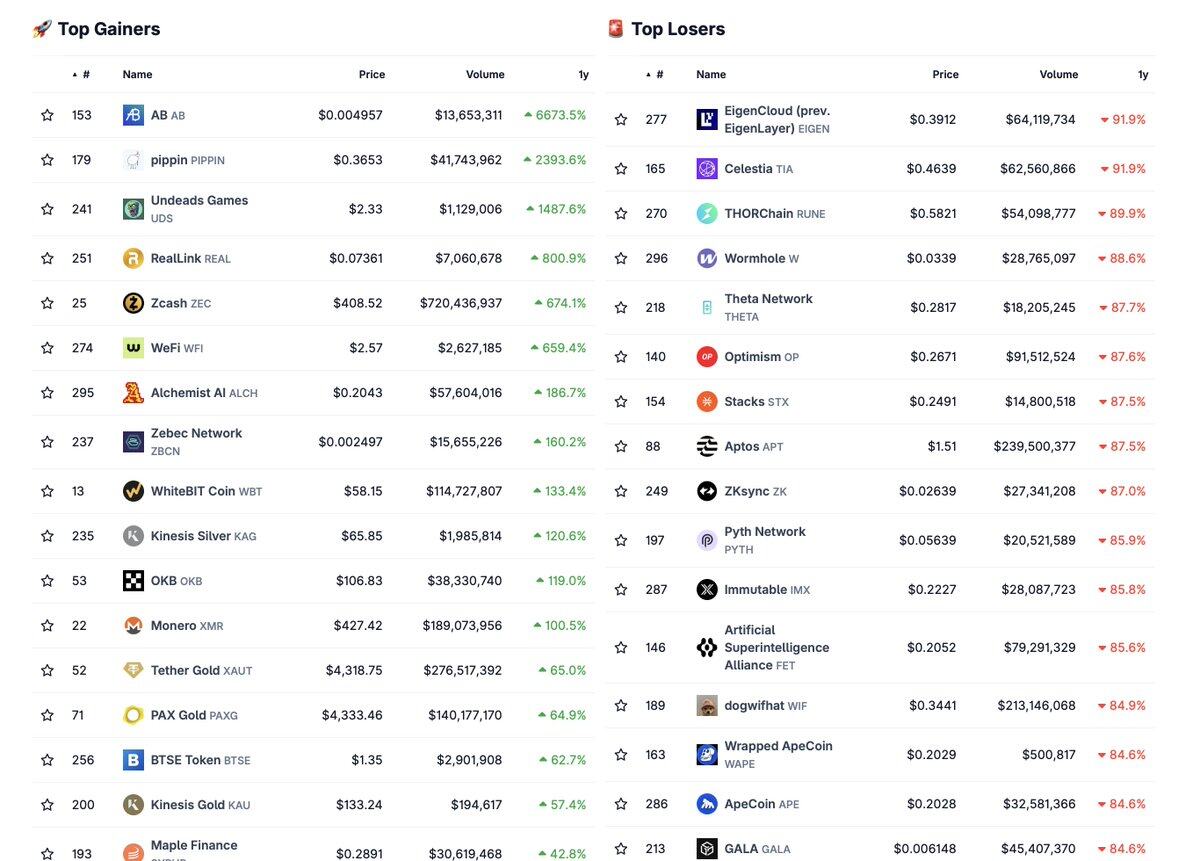
Despite this, a few tokens in 2025 maintained price increases relative to their TGE, not in the sense of "rebounding after a price crash" or "buying at the market bottom," but in a way that indicates genuine buying support.

Here are the truly rising tokens from 2025 TGE that I've compiled: ASTER, FOLKS, AVICI, and SENTIS (there are also some "barely passing" tokens like IRYS/FHE/CORN). They don't look exactly the same, but they all share certain characteristics.

The Best Rising Tokens from 2025 TGE

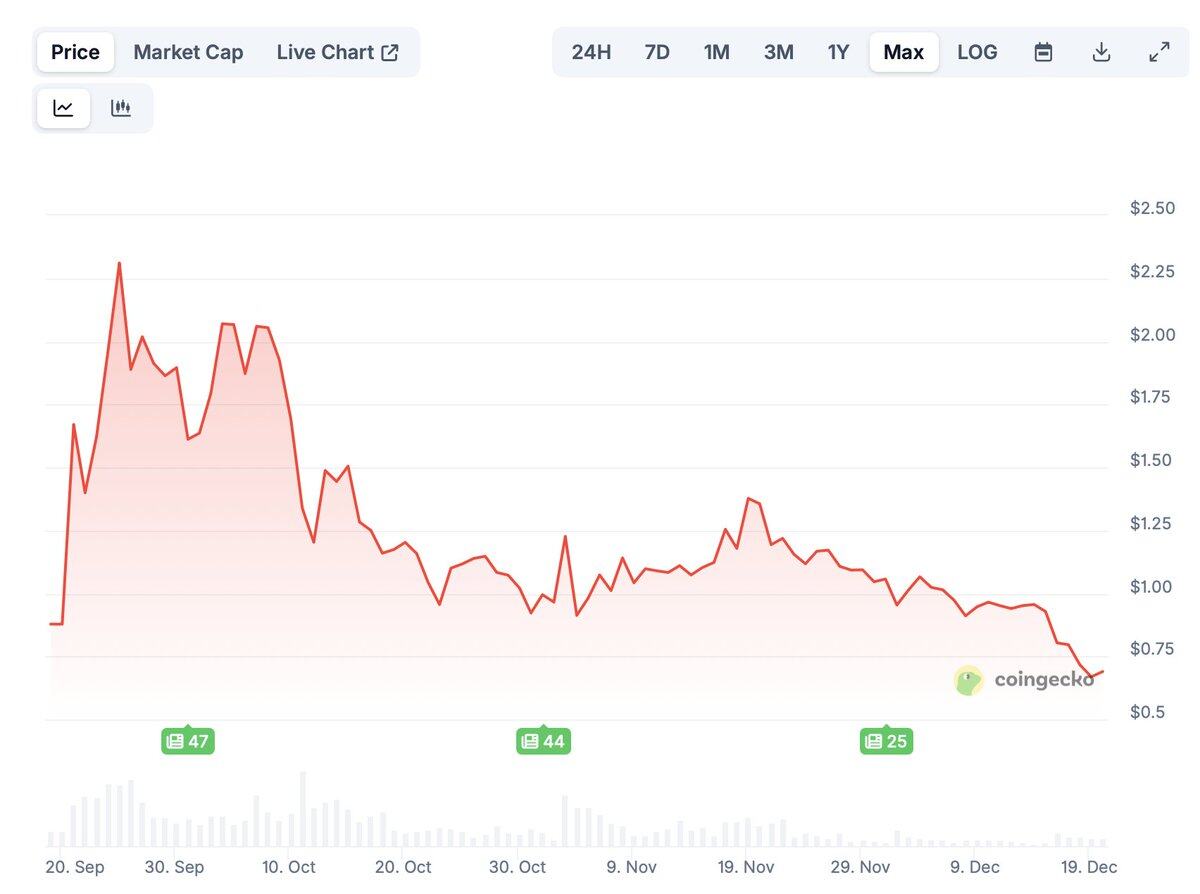
Aster is a typical example. ASTER got everything the project needed on its first day: major exchange listing, deep liquidity, and the widely accepted "Perp DEX" narrative. The story circulating throughout the year was basically: "Binance-backed Perp DEX with privacy features."

ASTER's price action was controversial (you could call it ZK-related, CZ shadow gaming, or simply better execution strategy). But nonetheless, it was one of the few projects that didn't experience an "immediate sell-off" at TGE.
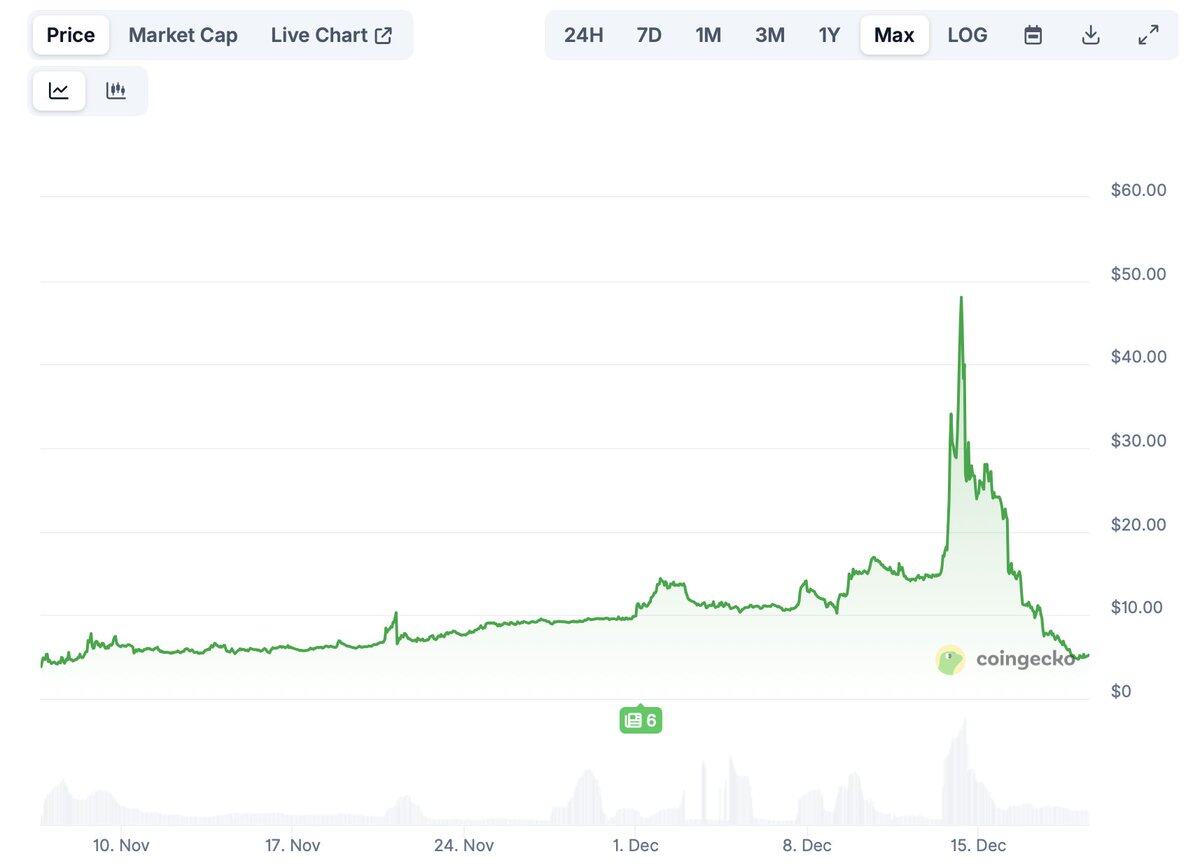
FOLKS is different: it's a lending token, seen as Alpha in "such a garbage year." The formula: "Binance and Kraken showed support from day one, cross-chain pools kept growing, no obvious massive unlock." The last point is very important. It performed well until the token unlock on December 15th.
AVICI is different from the first two. AVICI is on this list not because it has the most cutting-edge technology, but because it provided the clearest narrative for CT: "Fair launch, truly usable product." It emphasized not tokenomics but usage: "decent neobank app, Visa card, real spending." In a market flooded with endogenous "utility," AVICI was refreshing, both thinking outside the box and being practical. AVICI might be one of the best TGE tokens of the year.
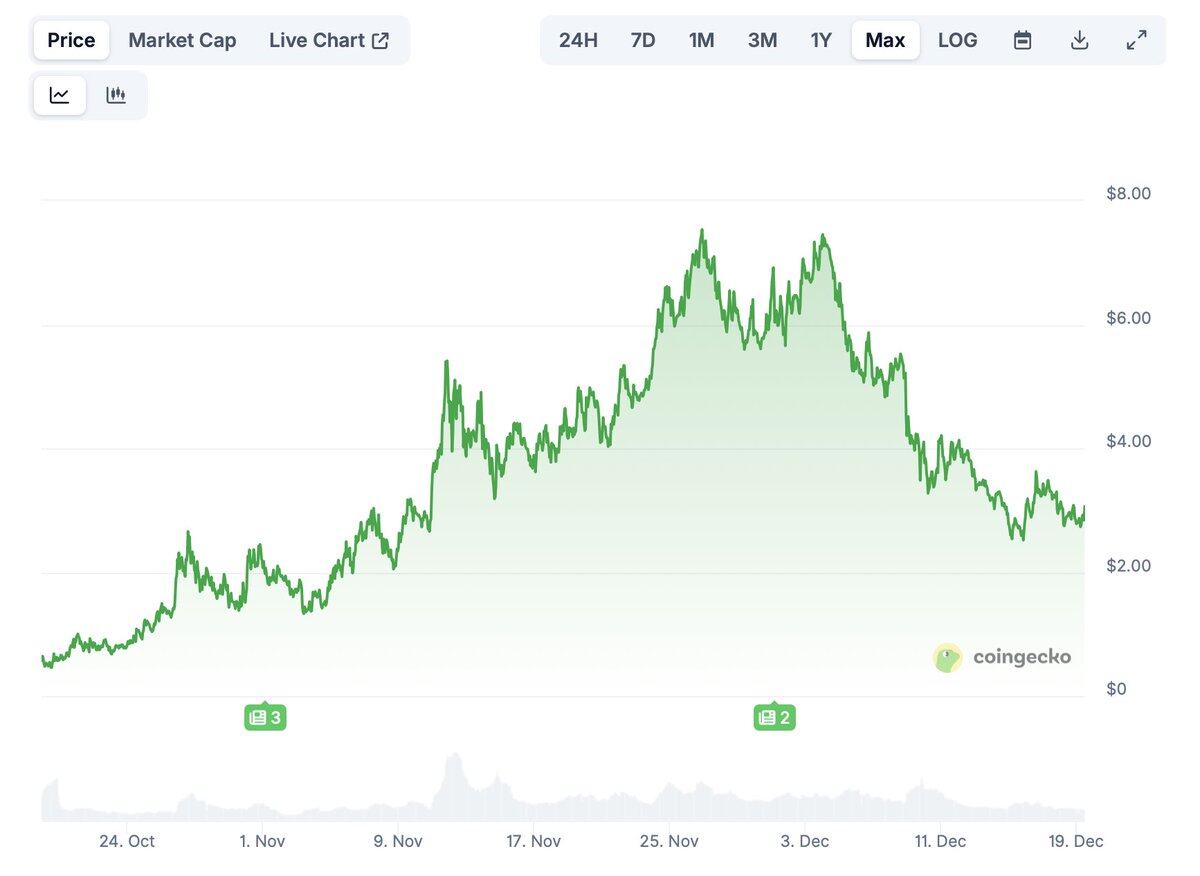
When Tokens Rise for a Reason, Their Prices Tend to Be More Stable

Looking now, the token with the strongest performance post-TGE is SENTIS. Its support points are simple and clear: AI Agent narrative + continuous incentive distribution + exchange listing. In CT, the dominant framework remains consistent: "AI Agent is the next DeFi automation layer," providing traders with a simple mental model as an anchor.

Mechanically, SENTIS doesn't rely on a one-time listing pump. The token's continuous distribution mechanism (tasks/retrodrop/participation rewards) maintains a steady level of user participation, which often translates into sustained spot demand as participants prepare for future distributions and ecosystem milestones. This dynamic can support the price even before more meaningful on-chain adoption appears.

"Barely Passing" Tokens

IRYS and FHE belong to the "AI infrastructure and private transactions" field: both benefited from the AI boom, stayed above their initial ranges, and both maintained sufficient liquidity to avoid a price crash. If these projects can translate their narratives into on-chain usage, they can survive. Relying solely on narrative support is not enough.

Then there's CORN. CORN isn't very volatile and is relatively stable compared to its peers, but CORN is more of a "structured product." In 2025, that's not a bad thing. When the market "punishes" overdevelopment, survivability becomes important.

What Characteristics Do the Well-Performing Tokens of 2025 Share?

Stripping away the narratives and vibes, some clear structural patterns emerge:

1. Token distribution is more important than hype

The strongest performing projects avoided large internal liquidity at TGE. AVICI (0% team allocation), SENTIS (activity-based emissions).

Lesson: At project launch, who holds the tokens is more important than who invested privately.

2. Reasonable launch valuation beats perfect token launch timing

Many of the best-performing tokens didn't launch at the peak of market hype, but at reasonable valuations, allowing the market to re-rate them upwards.

AVICI launched a working product with an FDV of around $3.5 million, offering asymmetric upside relative to FDV.

Lesson: Tokens that "grow into" their valuation perform better than those that start overvalued.

3. Project usage (or credible near-term usage) is reflected in the price

Aster's Perp trading volume, Folks' lending scale, Avici's credit card spending—these aren't just whitepaper promises but observable signals.

Sentis started early but also linked token emissions to on-chain activity, creating a feedback loop between usage and price.

Lesson: The market is now impatient. Utility > Vision.

4. Unlock structure > Unlock size

Linear and transparent token unlocks matter, as their dilution effect is digested by the market. For example, SENTIS releases tokens gradually through participation mechanisms.

Elsewhere, what destroys user confidence isn't dilution itself, but risky cliff unlocks.

Lesson: Predictable token unlocks are bearable; unexpected ones are not.

5. Exchange listing is necessary, but not sufficient

Almost every token had decent exchange access, but this alone doesn't determine anything. Listings amplify results: they help strong tokens accelerate upward, while weak tokens get sold off faster. AVICI's token performance wasn't that bad even without a Binance listing.

Lesson: Exchange liquidity is an accelerator, not a foundation.

Key Takeaways

Overall, the situation for 2025 TGE tokens marks a shift.

The market no longer rewards "potential" but instead rewards "structure":

- Healthy circulating supply

>- Fair token distribution

>- Reliable adoption

>- Controlled unlock mechanisms

The "rising tokens" of 2025 aren't perfect projects; they were just built to survive their launch. If 2024 was about narrative, then 2025 is about token design under pressure. And this is a lesson most projects haven't yet learned during their TGE.


Twitter:https://twitter.com/BitpushNewsCN

Bitpush TG Discussion Group:https://t.me/BitPushCommunity

Bitpush TG Subscription: https://t.me/bitpush

Original link:https://www.bitpush.news/articles/7599438

İlgili Sorular

QAccording to the article, what are the key characteristics of tokens that maintained a price increase after TGE in 2025?

AThe key characteristics are: healthy token distribution, fair token allocation, verifiable adoption or credible near-term usage, controlled and transparent unlock mechanisms, and reasonable initial valuations that allow for market re-rating.

QWhich token was cited as a prime example of a successful TGE due to its 'Perp DEX' narrative and exchange support?

AASTER was cited as the prime example, benefiting from the 'Binance-backed Perp DEX' narrative with privacy features.

QWhat was the unique approach of the AVICI token that contributed to its post-TGE success?

AAVICI's unique approach was a fair launch (0% team allocation), a focus on a real, usable product (a functional neobank app with a Visa card for real spending), and a low initial FDV that created asymmetric upside potential.

QHow did the token distribution model of SENTIS help support its price stability?

ASENTIS used a continuous distribution mechanism tied to on-chain activities (tasks, retrodrops, participation rewards), which created steady user engagement and translated into consistent spot demand in anticipation of future allocations.

QWhat is the main shift in the market's focus for evaluating new tokens in 2025, as described in the article's conclusion?

AThe market shifted from rewarding 'potential' and narrative' to rewarding 'structure,' which includes healthy circulation, fair distribution, reliable adoption, and controlled unlock mechanisms.

İlgili Okumalar

ETFs Are Just the Ticket: The True Institutionalization of Bitcoin Is Happening Where You Can't See It

Beyond the Bitcoin ETF spotlight, a deeper institutionalization is underway, leveraging Bitcoin as a foundational financial primitive. Institutions are using Bitcoin for purposes long reserved for assets like U.S. Treasuries and gold: as collateral for loans, insurance reserves, and the backbone of rated bonds. Examples include a Barbados-based insurer capitalizing with $40M in Bitcoin reserves and Ledn's $188M securitization of Bitcoin-backed loans, which received the first-ever investment-grade rating (BBB-) from S&P for a digital asset-backed security. This structure was stress-tested during a 27% price drop in early 2026, triggering automatic liquidations that functioned as designed but revealed the systemic risk of synchronized selling across leveraged positions. Infrastructure is evolving to support this, with platforms like Anchorage Digital's Atlas network enabling secure, institutional-grade settlement and collateral management. Strategies like basis trades and corporate treasuries (exemplified by companies like MicroStrategy issuing billions in equity and debt to fund Bitcoin acquisitions) further integrate Bitcoin into financial mechanics. While ETFs solved "how to own" Bitcoin, these developments answer "what to do with it," embedding the asset into the working machinery of finance—as collateral upon which loans, derivatives, and structured products are built. The real, enduring institutional shift is happening in these largely invisible plumbing and financing systems.

marsbit3 dk önce

ETFs Are Just the Ticket: The True Institutionalization of Bitcoin Is Happening Where You Can't See It

marsbit3 dk önce

ZEC Co-Founder Responds to Orchard Vulnerability: No Signs of Theft, Orchard Pool to Be Sealed

ZEC Co-Founder Addresses Orchard Vulnerability: No Signs of Theft, Plans to Sunset Orchard Pool A security vulnerability was recently discovered in Zcash's Orchard shielded pool, raising key concerns. The primary questions are whether the flaw was exploited, if user funds are safe, whether users can verify the total ZEC supply, and if other similar vulnerabilities exist. Analysis suggests the vulnerability was likely not exploited prior to its discovery. It was found proactively by a researcher using specialized tools, not due to an active breach. The development team and mining pools acted quickly to contain the issue. Typical financially-motivated attacks would likely have left visible on-chain evidence, which has not been observed. User funds in Orchard are considered safe and should be recoverable, assuming no prior exploitation. If the flaw was never used, all legitimate funds can be withdrawn. The article outlines risks associated with moving funds to transparent addresses or other pools, but concludes that leaving assets in place is a reasonable option. Currently, users cannot independently verify that the total ZEC supply hasn't been inflated due to this bug. However, the planned Ironwood network upgrade is designed to resolve this. It will permanently close the Orchard pool to new deposits and internal transfers, allowing only withdrawals. This mechanism will cap total withdrawals at the amount of legitimately deposited funds, enabling anyone to cryptographically verify the supply post-upgrade. Multiple teams, including Shielded Labs, have conducted extensive audits focused on counterfeiting vulnerabilities, assisted by advanced AI tools. No additional flaws of this type have been found so far, increasing confidence that no other similar undisclosed vulnerabilities exist. In summary, evidence indicates the Orchard bug was probably not used, user funds are secure, and no other counterfeiting flaws are currently known. The upcoming Ironwood upgrade will restore users' ability to independently verify the total ZEC supply, closing this chapter.

Foresight News8 dk önce

ZEC Co-Founder Responds to Orchard Vulnerability: No Signs of Theft, Orchard Pool to Be Sealed

Foresight News8 dk önce

Microsoft Announces Commercial-Grade Quantum Computer to be Completed in Three Years: Will the Boots Land?

Microsoft announces plans to build a commercially viable quantum computer by 2029, a significant acceleration from the previous industry consensus of a decade. The breakthrough is fueled by their new Majorana 2 quantum chip, which boasts a record-breaking average qubit lifetime of 20 seconds—a 1,000-fold reliability improvement over its predecessor. This leap was achieved by leveraging topological qubits, a theoretically more stable technology using Majorana zero modes, and switching the core superconducting material from aluminum to lead. Crucially, Microsoft's "Discovery" agentic AI platform accelerated the R&D process. AI agents autonomously analyzed vast experimental data, optimized manufacturing parameters (like the lead alloy composition), and solved issues like "ghost noise," dramatically speeding up experimentation. While the 20-second coherence time is a landmark, challenges remain: scaling from 12 qubits to the millions needed for practical applications, managing compilation costs, and verifying quantum results. Skeptics call for peer-reviewed data, and questions persist about whether even 20 seconds is sufficient for complex algorithms like breaking RSA encryption. The race is on with other approaches (superconducting, trapped ions), but Microsoft's confidence in its topological roadmap signals a potential shortcut to a scalable quantum future.

marsbit26 dk önce

Microsoft Announces Commercial-Grade Quantum Computer to be Completed in Three Years: Will the Boots Land?

marsbit26 dk önce

İşlemler

Spot
Futures
活动图片





