Under Political Pressure, Is the Federal Reserve Still Independent?

marsbit2026-04-21 tarihinde yayınlandı2026-04-21 tarihinde güncellendi

Özet

Amidst political pressure from former President Trump and congressional scrutiny, Kevin Warsh, nominated as Federal Reserve chair, argued that public comments from elected officials on interest rates do not fundamentally threaten the Fed’s operational independence. Instead, he emphasized that the real risk to the Fed’s autonomy lies in its failure to control inflation, which could erode public trust. Warsh also cautioned against the Fed overstepping into fiscal or social policy domains beyond its mandate. His remarks come as the Fed faces external pressures, including a Justice Department investigation into a renovation project and persistent inflation above the 2% target, exacerbated by rising energy prices. Warsh stressed that the Fed’s focus on its core mission—price stability—is essential to maintaining its credibility and independence.

Editor's Note: At the confirmation hearing of the Senate Banking Committee, Kevin Warsh systematically articulated his understanding of the Federal Reserve's role and independence for the first time.

This hearing, while seemingly focused on interest rates and inflation, essentially pointed to a more core question: against the backdrop of escalating political pressure, how exactly are the boundaries of central bank independence defined, and can they be consistently maintained?

This discussion occurs within a highly intertwined reality. On one hand, Trump has repeatedly publicly pressured the Fed to cut interest rates and criticized the incumbent Chairman Jerome Powell with strong language; on the other hand, the U.S. Department of Justice's investigation into the Fed headquarters' $2.5 billion renovation project is seen by Powell as an indirect form of pressure. At the congressional level, Republican Senator Thom Tillis directly linked this investigation to personnel appointments, explicitly stating that he would block the nomination from proceeding to a full Senate vote until the investigation is concluded. Monetary policy, regulatory investigations, and political appointments are converging and amplifying at this juncture.

The macroeconomic environment offers no buffer either. Post-pandemic inflation once rose above 7% and currently remains significantly higher than the 2% policy objective; coupled with the Iran conflict driving up energy prices, price pressures may continue to rise in the coming months. With inflation not yet effectively subdued, the divergence over "whether to cut rates" quickly transformed from a technical discussion into a political issue.

In this context, Warsh's statements present a more realistic framework: on one hand, he "cools down" the public interventions from the President and Congress, arguing that expressing views on interest rates itself does not constitute a substantive erosion of independence; on the other hand, he points to the real risk being the Federal Reserve itself—if it fails to fulfill its core duty of controlling inflation, public trust will be weakened, and independence will lose its foundation.

Thus, the meaning of "central bank independence" is undergoing a subtle shift: it is no longer just an abstract principle at the institutional design level, but closer to a results-oriented credibility mechanism. Independence does not exist naturally; rather, it is continuously tested and reshaped under the triple pressures of inflation, politics, and the market.

The following is the original text:
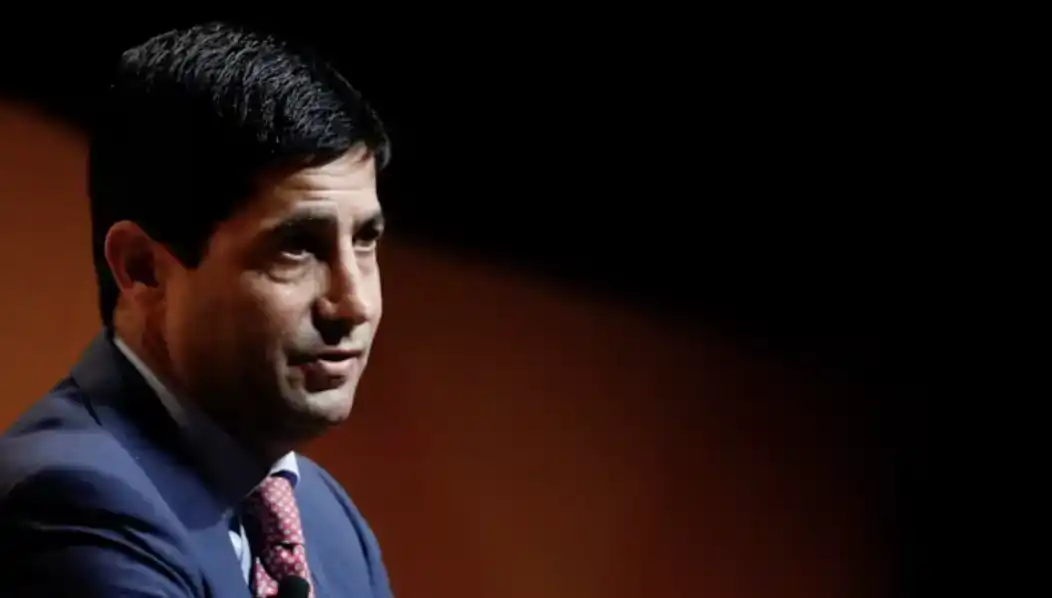
The candidate nominated by Trump for Federal Reserve Chair will tell Congress that the independence of the U.S. interest rate-setting body is "not particularly threatened" when politicians call for the central bank to adjust borrowing costs.

Kevin Warsh will state in his opening remarks to the powerful Senate Banking Committee on Tuesday: "I do not believe the operational independence of monetary policy is particularly threatened when elected officials — whether the president, senators or members of Congress — express their views on interest rates."

According to prepared remarks seen by the Financial Times, he will tell senators that "central bank officials must be strong enough to listen to diverse views from all sides," while also being "humble enough to be open to new ideas and new economic developments."

These comments come as Trump has repeatedly called for the Fed to cut interest rates. The U.S. President has called the incumbent Fed Chair Jerome Powell a "dope" and an "idiot," accusing him of failing to follow orders.

Powell has stated that the current U.S. Department of Justice investigation into a $2.5 billion renovation project at the Fed headquarters is a pretext to pressure the interest-rate setting body into lowering borrowing costs.

Republican Senator Thom Tillis of North Carolina, a member of the banking committee which reviews the Fed chair appointment, said he would block Warsh's nomination from proceeding to a full Senate vote until the investigation into Powell is concluded.

Warsh could succeed Powell as early as May 16th. He will make clear that the Fed's independence in setting interest rates is "vital" and key to controlling inflation.

However, the former Fed governor will also call for the Fed to "stick to its knitting," arguing that the central bank undermines its own independence when it "strays into fiscal and social policy realms for which it has neither mandate nor expertise."

"The Fed should not be a universal agency of the U.S. government, nor serve as the court of appeals for issues that should be debated and decided in other venues," he will say. The 56-year-old candidate will also spend considerable time outlining his qualifications for the role, telling lawmakers he would bring "the experience of an insider and the questioning spirit of an outsider," citing his education at Stanford University, his career on Wall Street, and his previous experience as a Fed governor.

Warsh also pointed out that "independence" is at its highest when conducting monetary policy, but this degree of independence does not apply to other functions the Fed undertakes under its congressional mandate. He told the committee: "In the management of public funds... or in bank regulation and prudential policy... and in matters involving international finance, Fed officials should not be accorded the same special deference."

The Fed plays a major role in bank regulation, but it already works with the U.S. Treasury and other regulators in setting regulatory rules and overseeing risks in the financial system.

Warsh also told senators that when the Fed fails in its duty to control inflation, it is actually undermining its own independence. He argued that this causes the public to "lose confidence in our system of economic governance, and thereby question whether monetary policy independence is as important as advertised."

After the COVID-19 pandemic, inflation rose to multi-decade highs, exceeding 7% in 2022. Inflation remains above the Fed's 2% target, and price pressures are expected to rise further in the coming months due to the Iran war driving up energy prices.

Warsh said: "The mission Congress has given the Fed is to ensure price stability — no excuses, no ambiguity, no arguing or obfuscating." He will also emphasize: "Inflation is a choice, and the Fed must be held accountable for it."


İlgili Sorular

QWhat is the core issue regarding the Federal Reserve's independence as discussed in the article?

AThe core issue is defining the boundaries of central bank independence and whether it can be sustained amid increasing political pressure, including public criticism from former President Trump, a Justice Department investigation, and congressional actions linking confirmations to ongoing probes.

QHow does Kevin Warsh view public expressions of opinion on interest rates by elected officials?

AKevin Warsh does not see such expressions as a particular threat to the operational independence of monetary policy, stating that Fed officials should be firm enough to listen to diverse views while remaining open to new ideas.

QWhat does the article identify as the real risk to the Federal Reserve's independence?

AThe real risk is the Fed's potential failure to fulfill its core mandate of controlling inflation, which would undermine public trust and erode the foundation of its independence.

QHow has political pressure manifested against the Federal Reserve and Chair Jerome Powell?

APolitical pressure includes public demands for rate cuts and harsh rhetoric from Trump, a Justice Department investigation into a Fed renovation project viewed as indirect pressure, and a senator blocking a nomination pending the investigation's conclusion.

QWhat is the current macroeconomic context affecting the debate over Fed independence?

AInflation remains above the 2% target after peaking over 7% post-pandemic, with energy price increases due to conflict in Iran potentially pushing prices higher, turning the 'whether to cut rates' debate into a political issue.

İlgili Okumalar

In Conversation with Ray Dalio: We Are Currently in an AI Bubble, with 1% of My Portfolio in Bitcoin

Ray Dalio, founder of Bridgewater Associates, warns in an interview that the current AI boom shows classic bubble characteristics, which could lead to significant economic downturns as seen in past cycles like 1929 or 2000. He explains that speculative enthusiasm, fueled by debt and overvaluation, often precedes a crash when rising rates or taxation force asset sales, causing widespread losses and recession. Dalio also outlines his "Big Cycle" theory, describing an approximate 80-year pattern where widening wealth gaps, massive government deficits, and shifting geopolitical power (like China's rise) create internal conflict and global instability. He emphasizes that we are in a late-cycle, transitional phase where traditional powers like the US and UK face decline. For personal wealth protection, Dalio advises diversification beyond cash into assets like stocks, bonds, real estate, and particularly gold, which he prefers over Bitcoin. While he holds about 1% of his portfolio in Bitcoin as a non-printable hard asset, he views gold as more secure from technological or governmental threats. Regarding AI's impact, Dalio believes it will disproportionately benefit capital owners, worsening inequality by replacing both physical and cognitive labor. He suggests that human intuition and emotional intelligence, combined with AI, will be key for future workers. On taxation, Dalio argues that wealth taxes are impractical and risk triggering asset sell-offs, reducing productive investment. He points to the UK as a cautionary example of debt, low productivity, and political strife. Geopolitically, Dalio foresees a more regionalized world, with the US showing weakness in prolonged conflicts like with Iran, akin to past imperial declines. The ideal outcome, he suggests, is coexisting powerful blocs (e.g., Americas, China-Asia Pacific) without major war.

marsbit1 saat önce

In Conversation with Ray Dalio: We Are Currently in an AI Bubble, with 1% of My Portfolio in Bitcoin

marsbit1 saat önce

Daily 7.2 Trillion KRW: Foreign Capital's Record Net Buying on Friday! Wall Street Says Headwinds for Korean Stock Fund Flows Have Subsided

South Korean stock market sees a dramatic shift in fund flows. On July 31, foreign investors made a record net purchase of approximately KRW 7.2 trillion in KOSPI stocks, marking a fundamental reversal from the persistent large-scale net outflows seen in previous months. This contributed to a significant narrowing of foreign net selling in July to KRW 9.8 trillion, down sharply from KRW 48.4 trillion in June and KRW 44.5 trillion in May. Simultaneously, domestic institutional pressure eased. South Korean pension funds and asset managers turned to a net buying position in July, purchasing KRW 1.0 trillion worth of KOSPI shares, contrasting with net sales in May and June. Market volatility is expected to be dampened by new financial regulations. Effective July 31, the Financial Services Commission tightened access for retail investors to single-stock leveraged ETFs by raising the minimum cash deposit requirement. Trading volumes for these products subsequently dropped to about 50% of their monthly average. Citigroup Research maintains its year-end KOSPI target of 10,000 points. The firm cites several supportive factors: the substantial easing of headwinds from capital outflows, a robust fundamental outlook for the semiconductor sector, historically low market valuations, strong economic fundamentals, and the potential for policy support from financial authorities if needed.

marsbit1 saat önce

Daily 7.2 Trillion KRW: Foreign Capital's Record Net Buying on Friday! Wall Street Says Headwinds for Korean Stock Fund Flows Have Subsided

marsbit1 saat önce

Thanks to Dice Rolls, Bitcoin Keys Are Stored Offline, But Not Everyone Will Do It

The article discusses using dice rolls to generate secure Bitcoin wallet seeds, providing entropy independent of potentially flawed hardware random number generators. It explains that each fair dice roll offers about 2.585 bits of entropy, with around 50 rolls needed for a standard 12-word seed phrase and 99+ recommended for higher security. This method gained attention after a vulnerability was revealed in some Coldcard hardware wallets, where a faulty firmware RNG (dating back to 2021) compromised generated keys. The analysis notes that while a dice-generated main seed was safe from this specific flaw, other Coldcard functions (like creating paper wallets, backup keys, or passwords) could still be vulnerable if they used the defective RNG. The piece argues that while dice-based entropy is technically robust, the manual process is error-prone, tedious, and unrealistic for most new users, who might make mistakes in recording or inputting rolls. It concludes that while manual entropy generation should remain an option for advanced users, the long-term goal is to develop reliable, user-friendly hardware and software that securely generates randomness without requiring specialized knowledge. Coldcard users are advised to check their firmware version and replace any secondary secrets (like paper wallet keys) created with vulnerable devices, while also considering multi-signature setups with devices from different manufacturers for added security.

cryptonews.ru6 saat önce

Thanks to Dice Rolls, Bitcoin Keys Are Stored Offline, But Not Everyone Will Do It

cryptonews.ru6 saat önce

İşlemler

Spot
活动图片




