UK House Of Lords Urges BoE To Ease Stablecoin Rules Over Competitiveness Concerns

bitcoinist2026-06-04 tarihinde yayınlandı2026-06-04 tarihinde güncellendi

Özet

The UK House of Lords has urged the Bank of England (BoE) to revise its proposed stablecoin regulations, warning that overly strict rules could harm the country's competitiveness. While supporting core principles like 1:1 backing, a parliamentary committee criticized specific proposals. These include a requirement for issuers to hold 40% of reserves as non-interest-bearing bank deposits and suggested caps on individual and corporate holdings. The committee argued these measures create operational burdens, hinder the growth of pound-based stablecoins, and could cause the UK to fall behind other jurisdictions with clearer regimes. The report follows industry pressure, and the BoE has indicated openness to easing its "overly conservative" plans, with final rules expected soon.

The House of Lords, the upper chamber of the UK parliament, has urged financial regulators to reconsider some of their controversial stablecoin proposals, warning that the country risks falling behind global leaders if regulation is not done right.

House Of Lords Outlines Concerns Over Stablecoin Rules

On Wednesday, the House of Lords’ Financial Services Regulation Committee published a report on the regulation of stablecoins, urging the Bank of England (BoE) to review some areas of its proposed rules “where the desired balance between supporting innovation and risk mitigation appears less appropriately calibrated.”

The committee affirmed its support for many of the central bank’s proposals, including the requirement that issuers back stablecoins 1:1 and the backstop lending facility. However, it noted that aspects of the proposals “need further consideration.”

Last year, the central bank proposed that systemic stablecoin issuers hold at least 40% of the reserves backing the token as unremunerated bank deposits to ensure “robust redemption” and “public confidence.”

It also suggested a temporary cap on stablecoin ownership, setting holding limits of £10,000 to £20,000 for individuals and £10 million for businesses. The measure resembled the BoE’s proposed approach to the digital pound, aiming to mitigate financial stability risks “stemming from large and rapid outflows of deposits from the banking sector.”

The policymakers consider that regulators should reevaluate the asset allocation and redemption requirements, citing the “considerable operational burdens this would create” and potential negative impact on the sustainability of stablecoin issuers and the UK’s global market competitiveness.

In addition, the report suggested that the holding limits should be reconsidered, arguing that they could unnecessarily hinder the expansion of pound-based stablecoins and prove impractical to implement.

It also shared concerns about the lack of clarity on the transition from the Financial Conduct Authority’s (FCA) regime to joint regulation alongside the BoE, and the uncertainty surrounding HM Treasury’s plans to determine whether stablecoins are systemic and to bring them into the payments regulatory perimeter.

UK At Risk Of Falling Behind

The Committee affirmed that the shape of the pound-denominated stablecoin market will be “strongly influenced by the direction of the regulatory regime,” and authorities must “create a level playing field so that stablecoins can compete with other forms of payment in the UK.”

Therefore, the regime must be flexible, responsive, and clear to accommodate future innovations, or the UK will risk “lagging behind global counterparts, where regulatory regimes are more established and provide clarity for market participants.”

The House of Lords’ report follows pressure from industry participants and other lawmakers to fight the controversial proposals. In December, members of the House of Lords, the House of Commons, and peers sent a letter to Chancellor Rachel Reeves asking her to oppose the BoE’s stablecoin rules, arguing that they could undermine the government’s efforts to position the UK as an industry leader.

Last month, BoE’s Deputy Governor for financial stability, Sarah Breeden, stated that the central bank was preparing to ease its regulatory plans. As reported by Bitcoinist, Breeden admitted that the proposals may have been “overly conservative.” She also shared that the financial regulator was “genuinely open” to revisiting the rules and establishing a better regime in which stablecoins can thrive.

Ultimately, the committee urged regulators to adhere to current timelines and ensure that the final regulatory regime is not delayed. A BoE spokesperson told Reuters that the central bank will publish its final policy and draft rules later this month.
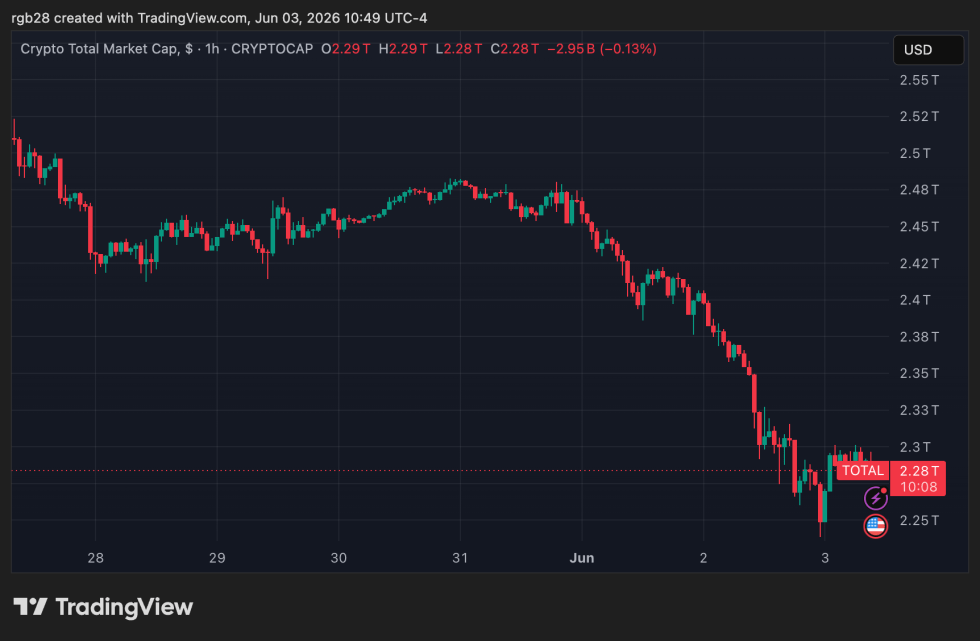
The total crypto market capitalization is at $2.28 trillion in the one-week chart. Source: TOTAL on Tradingview

Trend Kriptolar

İlgili Sorular

QWhat is the main concern raised by the UK House of Lords regarding the Bank of England's proposed stablecoin rules?

AThe UK House of Lords warned that the proposed rules, if not adjusted, risk making the UK fall behind global leaders in the stablecoin and digital finance sector due to overly restrictive regulations that could stifle innovation and competitiveness.

QWhich two specific aspects of the BoE's stablecoin proposals did the House of Lords committee suggest need further review?

AThe committee suggested a review of the requirement for systemic stablecoin issuers to hold at least 40% of reserves as unremunerated bank deposits and the proposed temporary caps on holdings (£10,000-£20,000 for individuals and £10 million for businesses).

QAccording to the report, why could the proposed holding limits for stablecoins be problematic?

AThe holding limits could unnecessarily hinder the expansion of pound-based stablecoins and prove impractical to implement, potentially limiting their adoption and utility.

QWhat did BoE Deputy Governor Sarah Breeden recently state regarding the initial regulatory proposals?

ASarah Breeden admitted that the proposals may have been 'overly conservative' and stated that the central bank was 'genuinely open' to revisiting the rules to establish a better regime for stablecoins to thrive.

QWhat is the committee's final urgent recommendation to the regulators?

AThe committee urged regulators to adhere to current timelines and ensure that the final regulatory regime for stablecoins is not delayed.

İlgili Okumalar

Just now, DeepSeek V4 updates with DSpark, improving inference speed by 80%

DeepSeek has updated its DeepSeek V4 model with the DSpark speculative decoding framework, achieving a significant 60-85% speedup in generation for Flash models and 57-78% for Pro models while maintaining the same overall throughput. This engineering-focused update, rather than a core architectural change, introduces DSpark to address latency and throughput bottlenecks in high-concurrency production environments. DSpark combines high-throughput parallel generation with adaptive load-aware verification. Its key innovations include a semi-autoregressive generation architecture to model dependencies within token blocks and a hardware-aware confidence-scheduled verification system. This system uses a confidence head to predict token acceptance probabilities, allowing it to dynamically optimize verification length per request and allocate compute only to tokens with the highest expected payoff. The asynchronous scheduler is designed for real-world deployment, ensuring zero-overhead scheduling and continuous CUDA graph replay while preserving the target model's output distribution. In tests across mathematical reasoning, code generation, and daily dialogue, DSpark outperformed state-of-the-art models like Eagle3 and DFlash, increasing average acceptance length by 26.7%-30.9% and 16.3%-18.4% respectively on Qwen3 target models. DeepSeek also open-sourced DeepSpec, a full-stack codebase for training and evaluating speculative decoding draft models, providing a standardized toolkit that includes data preparation tools, model implementations, training code, and evaluation scripts.

marsbit1 saat önce

Just now, DeepSeek V4 updates with DSpark, improving inference speed by 80%

marsbit1 saat önce

BIT Research: The 2028 Halving Is Not the End, the Real Shake-Up of the Bitcoin Mining Industry Is Just Beginning

The Bitcoin mining industry is undergoing its most complex structural adjustment since inception. Despite Bitcoin's price holding near $61,000 and the network hash rate approaching a record 1 ZH/s, miner profitability is deteriorating. The industry is operating close to its breakeven point, with the 2028 halving expected to accelerate consolidation. The challenges extend beyond the halving's subsidy reduction; the industry's revenue model has yet to successfully transition towards a fee-driven structure. Increasingly, mining companies are evolving from simple Bitcoin producers into infrastructure and energy operators, including providers of AI/HPC computing power. Competition is shifting from pure hash rate expansion to business model upgrades. Economic pressure is evident. The theoretical daily mining revenue at current prices is around $78 million, yet the actual figure is only about $33 million—a 136% gap. Transaction fees remain low at roughly $220k daily, far below historical implied levels. With a current estimated industry-wide breakeven price near $65,000, mining alone is struggling to generate ideal profits. The 2028 halving is projected to push the fundamental production cost floor to approximately $93,289. This will likely accelerate a shift towards consolidation among larger, well-capitalized miners with diversified revenue streams. Competitive advantage will belong to institutionalized players with access to low-cost energy, AI/HPC hosting operations, and stronger balance sheets. In essence, Bitcoin mining is transitioning from a "mining business" to an "infrastructure business." Future profitability and resilience will depend less on block rewards and more on diversified income sources like energy management and computational infrastructure services. For investors, the key question is not the halving itself, but which miners can successfully navigate this business model transformation.

marsbit2 saat önce

BIT Research: The 2028 Halving Is Not the End, the Real Shake-Up of the Bitcoin Mining Industry Is Just Beginning

marsbit2 saat önce

This is How God Karpathy Uses Claude?

Andrej Karpathy, a prominent figure in AI, has reportedly joined Anthropic, leading to a noticeable decrease in his open-source contributions and social media activity. A document claiming to be his personal "CLAUDE.md" file—a set of instructions for the Claude AI to follow within a specific codebase—has been circulating online. While its authenticity is unverified, the content aligns closely with Karpathy's publicly shared principles on effective AI-assisted programming. The document outlines key rules for AI coding assistants, emphasizing the importance of reading existing code thoroughly before writing new code to maintain consistency. It advises against over-engineering, advocating for simple, surgical modifications that match the project's existing style. Other guidelines include clarifying assumptions upfront, writing meaningful tests, thoughtful debugging, and carefully considering dependencies. The core message is that these principles help prevent common AI coding failures, such as introducing unnecessary abstractions, style drift, or making invisible architectural decisions. The community has noted that even experts like Karpathy require detailed instructions to guide AI effectively, akin to managing a junior developer. A related GitHub repository, "andrej-karpathy-skills," which encapsulates these ideas, is reported to significantly reduce Claude's code error rate. Ultimately, the advice stresses that the best CLAUDE.md is tailored to one's own tech stack and coding practices.

marsbit2 saat önce

This is How God Karpathy Uses Claude?

marsbit2 saat önce

İşlemler

Spot

Popüler Makaleler

HOUSE Nasıl Satın Alınır

HTX.com’a hoş geldiniz! Housecoin (HOUSE) satın alma işlemlerini basit ve kullanışlı bir hâle getirdik. Adım adım açıkladığımız rehberimizi takip ederek kripto yolculuğunuza başlayın. 1. Adım: HTX Hesabınızı OluşturunHTX'te ücretsiz bir hesap açmak için e-posta adresinizi veya telefon numaranızı kullanın. Sorunsuzca kaydolun ve tüm özelliklerin kilidini açın. Hesabımı Aç2. Adım: Kripto Satın Al Bölümüne Gidin ve Ödeme Yönteminizi SeçinKredi/Banka Kartı: Visa veya Mastercard'ınızı kullanarak anında Housecoin (HOUSE) satın alın.Bakiye: Sorunsuz bir şekilde işlem yapmak için HTX hesap bakiyenizdeki fonları kullanın.Üçüncü Taraflar: Kullanımı kolaylaştırmak için Google Pay ve Apple Pay gibi popüler ödeme yöntemlerini ekledik.P2P: HTX'teki diğer kullanıcılarla doğrudan işlem yapın.Borsa Dışı (OTC): Yatırımcılar için kişiye özel hizmetler ve rekabetçi döviz kurları sunuyoruz.3. Adım: Housecoin (HOUSE) Varlıklarınızı SaklayınHousecoin (HOUSE) satın aldıktan sonra HTX hesabınızda saklayın. Alternatif olarak, blok zinciri transferi yoluyla başka bir yere gönderebilir veya diğer kripto para birimlerini takas etmek için kullanabilirsiniz.4. Adım: Housecoin (HOUSE) Varlıklarınızla İşlem YapınHTX'in spot piyasasında Housecoin (HOUSE) ile kolayca işlemler yapın.Hesabınıza erişin, işlem çiftinizi seçin, işlemlerinizi gerçekleştirin ve gerçek zamanlı olarak izleyin. Hem yeni başlayanlar hem de deneyimli yatırımcılar için kullanıcı dostu bir deneyim sunuyoruz.

352 Toplam GörüntülenmeYayınlanma 2025.04.27Güncellenme 2026.06.02

HOUSE Nasıl Satın Alınır

Tartışmalar

HTX Topluluğuna hoş geldiniz. Burada, en son platform gelişmeleri hakkında bilgi sahibi olabilir ve profesyonel piyasa görüşlerine erişebilirsiniz. Kullanıcıların HOUSE (HOUSE) fiyatı hakkındaki görüşleri aşağıda sunulmaktadır.

活动图片