Trump, the "Stock Market Manipulator" in U.S. Stocks, Lifts Up the Entire Quantum Computing Sector

marsbit2026-05-27 tarihinde yayınlandı2026-05-27 tarihinde güncellendi

Özet

"Trump, the 'U.S. Stock Market Mastermind,' Boosts the Entire Quantum Computing Sector" This article details how former U.S. President Donald Trump's policies and public statements have significantly influenced the stock market, particularly in the quantum computing sector. A key example is the U.S. government's direct investment in Intel stock in August 2025, which yielded over $45 billion in gains within seven months. Trump publicly credited himself for this profit. Recently, the Trump administration announced a new $2 billion initiative. Through the Department of Commerce, funding from the CHIPS and Science Act will be provided to nine quantum computing companies in exchange for minority, non-controlling equity stakes. The recipients include IBM ($1B for its subsidiary Anderon), GlobalFoundries ($375M), and listed companies like D-Wave, Infleqtion, and Rigetti ($100M each). Private firms such as Atom Computing and PsiQuantum also received $100M. This "investment-for-equity" strategy marks a shift from pure subsidies to an "active investor" model under the CHIPS Act. The announcement immediately boosted quantum computing stocks. The article frames this as part of Trump's "America First" industrial policy, aimed at securing U.S. technological leadership, similar to past investments in semiconductors, rare earths, and lithium. The author suggests this pattern of government-backed market intervention, alongside Trump's personal stock endorsements, is a hallmark of his appro...

Original | Odaily Planet Daily (@OdailyChina)

Author | Wenser (@wenser 2010)
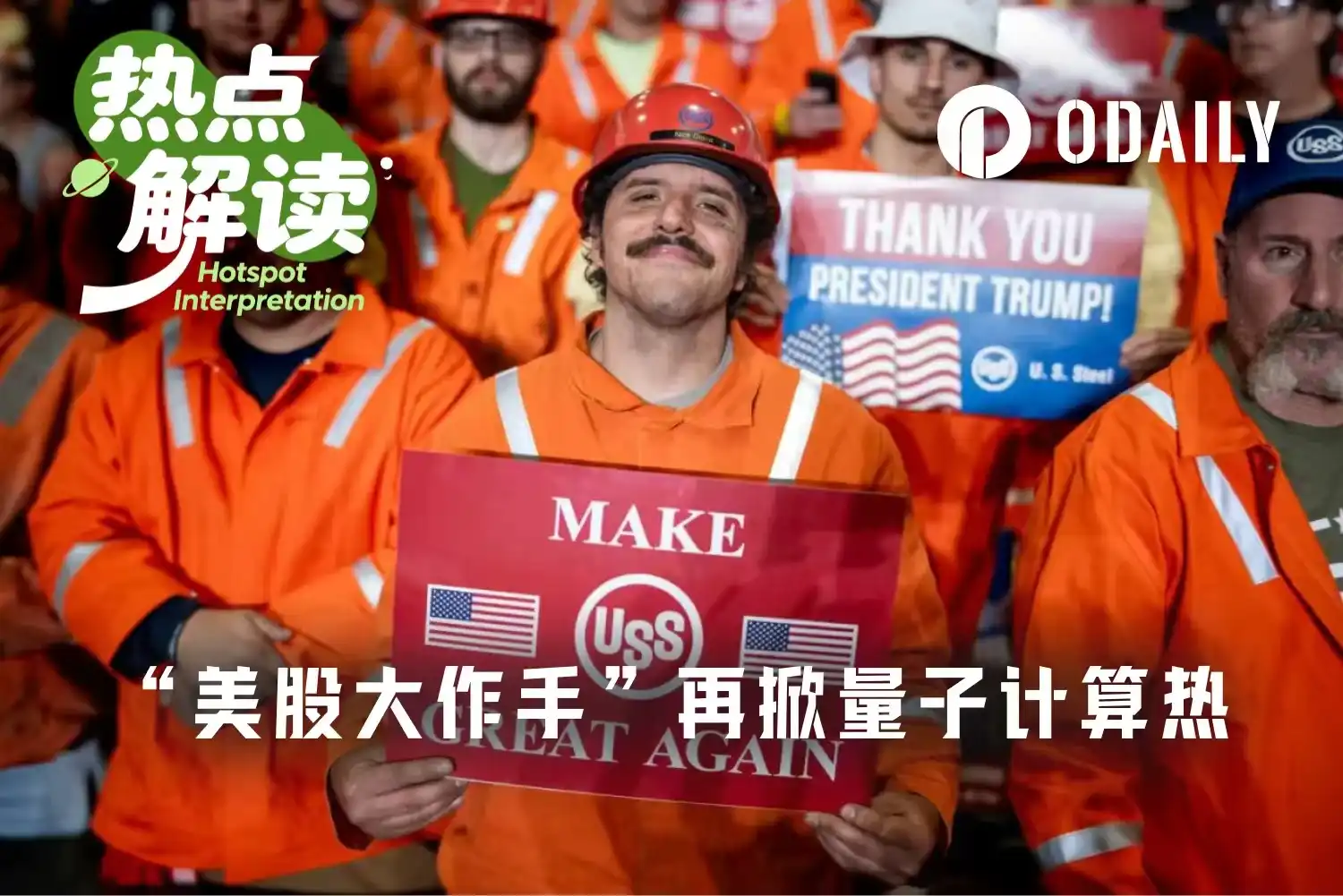
Last August, driven by Trump, the U.S. government completed the conversion of funds through the CHIPS Act, directly purchasing nearly 10% of Intel's newly issued original shares (approximately 433.3 million shares) at $20.47 per share. At that time, the value was less than $9 billion; by early May less than a year later, as Intel's stock price hit a record high, the total value of those shares had reached $54.1 billion, increasing by over $45 billion in just seven months.

Mentioning this, Trump could not hide his pride and posted: "I made the United States $45 billion in the past 8 months."

As a capital maestro who "manipulates the U.S. stock market by posting at a whim," Trump exerts an extraordinary influence on the rise and fall of U.S. stocks. Recently, he has started his performance again—providing a total of $2 billion in funding to 9 quantum computing companies through the U.S. Department of Commerce in exchange for equity. Odaily Planet Daily will provide a brief analysis in this article.

U.S. Government Acts Again, Investing $2 Billion in Quantum Computing Sector

On May 21, the Trump administration announced it would provide a total of $2 billion in funding to 9 quantum computing companies through the U.S. Department of Commerce, in exchange for partial equity. The specific allocation of funds is as follows:

  • $1 billion will be awarded to IBM (IBM) for the operation and development of its independent subsidiary, Anderon;
  • $375 million is allocated to chip manufacturer GlobalFoundries (GFS);
  • Listed companies such as D-Wave (QBTS), Infleqtion (INFQ), and Rigetti (RGTI) each receive $100 million;
  • Private companies such as Atom Computing, PsiQuantum, and Quantinuum (Honeywell-HON's independent subsidiary) each receive $100 million;
  • Startup Diraq is expected to receive $38 million.

According to official documents, this is part of the Trump administration's "active investor" industrial policy, with funding sourced from R&D appropriations under the 2022 CHIPS and Science Act. The Department of Commerce emphasized that this is a "portfolio" strategy, covering two quantum wafer foundries and 7 quantum computing companies, targeting various quantum modalities such as neutral atoms, silicon spin, superconductors, photons, and trapped ions, addressing critical engineering bottlenecks like device reproducibility, error rates, optical complexity, and cryogenic system integration.

On the day the news was released, the U.S. stock quantum computing sector surged at the market open. Among them, D-Wave Quantum rose 16%, Rigetti Computing rose 14%, Infleqtion stock rose 25%, Quantum Computing rose 9%, and IonQ rose 3.1%.

It is worth mentioning that among these companies receiving funds, only GlobalFoundries Inc. (GFS) revealed the equity exchange ratio is approximately 1%. For other companies, whether public or private, the equity is a minority, non-controlling stake, with specific ratios not yet disclosed. Final ratios will be disclosed after formal agreements are signed and filed with the SEC.

Capital Operations Under the "America First" Strategy

Examining this "investment-for-equity" operation, it remains an action under the Trump administration's "America First" strategy.

Previously, U.S. government investments in Intel (INTC), MP Materials (MP) (the only fully integrated U.S. rare earth producer), Trilogy Metals (TMQ), Lithium Americas (LAC), U.S. Steel, and others were also strategic moves to maintain the dominant position of the domestic semiconductor industry chain.

Especially the nearly $9 billion investment in Intel, the Trump administration explicitly stated that this move was to support domestic advanced semiconductor manufacturing in the U.S. and reduce dependence on TSMC (TSM). Therefore, the U.S. government's related holdings are passive, with no board seats, and it does not participate in the company's daily operations and management, largely following board votes on most matters.

However, the U.S. government's "equity investments" include not only financial support but also credit endorsement and multi-layered policy support (such as export licenses, tariff protection). Previously, after receiving U.S. government funding, Intel received strong support from U.S. Secretary of Commerce Lootnick, who met with Apple CEO Cook, Tesla CEO Musk, and NVIDIA CEO Jensen Huang multiple times over the past year, persuading them to cooperate with Intel successively. With Apple joining, Intel has now established relevant collaborations with all three companies mentioned.

Operational Shift Under the CHIPS and Science Act: From Grants to Equity Exchange

The $2 billion behind the investment in quantum computing companies stems from the CHIPS and Science Act, a landmark bipartisan bill introduced by the U.S. government in 2022, officially titled the "CHIPS and Science Act of 2022." The bill authorizes approximately $280 billion over 10 years to support semiconductor industry development and basic science and technology R&D. Its primary purpose is to revitalize U.S. semiconductor manufacturing, strengthen scientific research and innovation capabilities, and address competition from other nations in high-tech fields through massive investment.

However, unlike the fund grants or pure subsidy model during the Biden administration, the Trump administration's operational model is the aforementioned "active investor" model—switching to providing funding in exchange for minority, non-controlling equity. As of this May, the Act has attracted over $645 billion in private investment in semiconductor manufacturing, with over 140 projects, creating 525,000 new jobs.

It must be said that aside from personally manipulating and hyping stocks like Dell (DELL), Micron (MU), and Palantir (PLTR), Trump is also promoting U.S. stock market prosperity in the name of the U.S. government and its departments. No wonder he has repeatedly boasted, "The new highs in the stock market are mainly because of me."

Additionally, it is noteworthy that a previous investment announcement from the U.S. Department of Commerce stated, "The CHIPS Research and Development Office continues to solicit proposals from eligible applicants for research, prototyping, and commercial solutions in microelectronics technologies in the United States. Eligible applicants should submit applications via Announcement 2025-NIST-CHIPS-CRDO-01 on the www.grants.gov website." In other words, the U.S. government's "investment door" remains open. More information and funding announcements can be found in official sources.

Of course, the U.S. government invests in a wide range of company sectors, also involving critical minerals/rare earths, lithium batteries and other new energy sources, medical supplies, communication infrastructure, etc., such as Westinghouse Electric, Lithium Americas, Trilogy Metals, USA Rare Earth, Vulcan Elements, XLight, L3Harris Technologies, and others.

Furthermore, U.S. Secretary of Commerce Lootnick once revealed to the media that the current U.S. administration might take stakes in major defense contractors like Lockheed Martin (LMT).

In summary, the aforementioned numerous listed companies, key minerals/rare earths/battery material supply chains, nuclear energy/small modular reactors (SMRs) and advanced nuclear fuel, and other quantum computing targets may become directions for the Trump administration's continued investment in the second half of the year.


İlgili Sorular

QAccording to the article, what significant action did the Trump administration recently take regarding quantum computing companies?

AThe Trump administration announced it would provide a total of $2 billion in funding to nine quantum computing companies through the U.S. Department of Commerce in exchange for equity stakes.

QWhich specific company received the largest share of the $2 billion quantum computing funding mentioned in the article?

AIBM received the largest share, with $1 billion allocated to its independent subsidiary, Anderon.

QWhat is the source of the $2 billion funding for the quantum computing initiative as stated in the article?

AThe funding comes from the research and development appropriations of the 2022 CHIPS and Science Act.

QHow did the stock prices of quantum computing companies react to the news of the government funding?

AOn the day of the announcement, the quantum computing sector's stock prices rose sharply at market open. Specifically, D-Wave Quantum rose 16%, Rigetti Computing rose 14%, Infleqtion stock rose 25%, Quantum Computing rose 9%, and IonQ rose 3.1%.

QHow does the Trump administration's approach to implementing the CHIPS and Science Act differ from the previous administration's, as described in the article?

AUnlike the Biden administration's model of providing grants or pure subsidies, the Trump administration's approach is an 'active investor' model, where funding is provided in exchange for minority, non-controlling equity stakes.

İlgili Okumalar

Claude Code Introduces Dynamic Workflows: Enabling AI to Form Teams and Collaborate

Claude Code introduces dynamic workflows, enabling AI to coordinate teams of specialized agents for complex tasks. This transforms Claude from a code assistant into a programmable workbench. Workflows address key limitations of single-agent systems: agentic laziness (premature task completion), self-preferential bias (favoring own outputs), and goal drift (losing sight of original objectives). The system allows Claude to dynamically create execution frameworks using JavaScript. It can split tasks, dispatch parallel agents for isolated work (e.g., in separate worktrees), implement adversarial validation, run tournaments, and synthesize results. This multi-agent approach is valuable for tasks requiring deep research, factual verification, code migration, root cause analysis, large-scale triage, and qualitative sorting. Key patterns include: classify-and-route, fan-out-and-synthesize, adversarial verification, generate-and-filter, tournaments, and loop-until-done. While token usage is higher, workflows excel where tasks resemble programming—needing problem decomposition, isolated context, hypothesis testing, and handling many details. They extend Claude Code's utility beyond technical work to areas like business plan review, resume screening, and naming brainstorm. The feature is not a universal solution but points to a future where AI tool competitiveness depends on organizing reliable, reusable, and auditable execution flows for complex goals.

marsbit2 dk önce

Claude Code Introduces Dynamic Workflows: Enabling AI to Form Teams and Collaborate

marsbit2 dk önce

Hyperliquid, Wall Street's 24/7 Trading Convenience Store

Hyperliquid: The 24/7 Trading "Convenience Store" for Wall Street Hyperliquid, a decentralized cryptocurrency exchange, has become a go-to platform for Wall Street traders seeking to trade around the clock, especially during traditional market closures. Founded by Jeff Yan, a former quantitative trader, after the FTX collapse, the platform emphasizes user self-custody of assets. It offers a wide range of perpetual contracts—leveraged derivatives with no expiry—on assets from Bitcoin and crude oil to the S&P 500 and even pre-IPO companies like SpaceX. A notable example involves a hedge fund trader who capitalized on geopolitical news over a weekend, securing a 243% return on oil derivatives before markets reopened. The platform, run by just 11 employees, generated approximately $800 million in revenue last year, and its native token HYPE has seen significant growth. Its rise highlights the merging of traditional finance and crypto. While U.S. users are currently restricted, recent CFTC rule changes could open access. The platform is known for its transparency, having processed $10 billion in liquidations during a market crash while competitors faltered. Regulators warn of the high risks and complexity of perpetual contracts for retail investors. Key to its appeal is a strong community culture, direct engagement with founders, and a simple interface. Despite rules against VPN use, it attracts global users with its permissionless approach. Hyperliquid plans to expand into prediction markets and options, aiming to eventually host all financial activity.

marsbit3 dk önce

Hyperliquid, Wall Street's 24/7 Trading Convenience Store

marsbit3 dk önce

Who Funds the Agents?

**Summary: Who Funds AI Agents?** OpenAI recently shut down a feature allowing AI agents to shop for users, highlighting the challenge of creating a secure and regulated environment for agent-driven transactions. While payment infrastructure exists, a crucial governance layer—defining spending limits, fraud detection, tax handling, and return policies—is largely missing. The potential is enormous: AI agents already processed $73M across 176M transactions last year, with McKinsey forecasting this could grow to $3-5T in global consumer commerce by 2030. The core competition isn't just about processing payments, which can be very cheap (especially with crypto-based settlement), but about controlling the rules that govern agent spending. Key players like Stripe and Coinbase are racing to dominate this governance layer. Stripe's acquisition of wallet provider Privy allows it to set spending policies, identity checks, and human-in-the-loop approvals directly at the wallet level. Similarly, Coinbase's stack, including its x402 protocol and AgentKit, embeds governance rules. This vertical integration across settlement, wallet, and governance layers is becoming the dominant strategy. Control over the governance layer is where significant future value lies. If agents handle trillions in transactions, even a small fee for managing compliance, fraud prevention, and policy enforcement could generate billions in annual revenue. The companies that successfully integrate across the payment stack will capture value from idle agent balances, transaction fees, and governance services, positioning themselves as the foundational banks of the AI agent economy.

marsbit30 dk önce

Who Funds the Agents?

marsbit30 dk önce

İşlemler

Spot
Futures
活动图片




