Trump Signs Executive Order, Kraken, Coinbase and Others May Gain Access to Fed Payment Channels

marsbit2026-05-21 tarihinde yayınlandı2026-05-21 tarihinde güncellendi

Özet

President Trump has signed an executive order, "Incorporating Financial Technology Innovation into the Regulatory Framework," pressuring the Federal Reserve to reassess its rules on granting non-bank financial companies—including crypto and fintech firms—access to its payment systems, specifically master accounts that connect to the Fedwire settlement system. Currently, such accounts are primarily reserved for depository institutions. The order mandates a review to determine if broader access is permissible and to establish an application process. This move, supported by figures like Senator Cynthia Lummis, aims to reduce barriers to innovation and lower public payment costs by fostering fairer competition. It does not grant immediate access but could pave the way for companies like Kraken, Coinbase, Ripple, and Circle to reduce reliance on intermediary banks, lowering costs and speeding up settlements. A key precedent is the Kansas City Fed granting Kraken's parent company a restricted master account in March, offering limited payment services without interest or credit privileges. This model is seen as a potential template for allowing controlled access while mitigating systemic risk. Other firms like Anchorage, Paxos, and BitGo, which hold specialized banking charters, are also well-positioned to apply. The banking industry, represented by the American Bankers Association, opposes easing access, arguing any institution handling bank-like payments must meet the same stri...

Written by: Oluwapelumi Adejumo

Compiled by: Luffy, Foresight News

U.S. President Trump has formally pressured the Federal Reserve to re-evaluate the highly controversial access rules within the U.S. financial sector, escalating the industry battle over whether crypto firms and fintech companies can directly connect to the central bank's payment systems.

On May 19, Trump signed an executive order directing the Federal Reserve to assess its policies regarding granting payment account access to nonbank financial companies, including those engaged in digital assets, blockchain services, and other fintech businesses.

Titled "Modernizing the Regulatory Framework to Facilitate Financial Innovation," the order requires major federal regulatory agencies to review existing rules and eliminate redundant regulatory provisions that hinder financial innovation.

This order does not immediately grant crypto firms direct access to Federal Reserve payment channels. However, it explicitly authorizes the Federal Reserve to examine whether existing laws permit broader access and, if so, to clarify the application process.

The outcome of this review is crucial, as it will directly determine whether companies like Kraken, Ripple, Coinbase, Circle, Anchorage, Wise, Paxos, and BitGo can reduce their reliance on intermediary banks and move closer to core U.S. dollar wholesale clearing financial infrastructure.
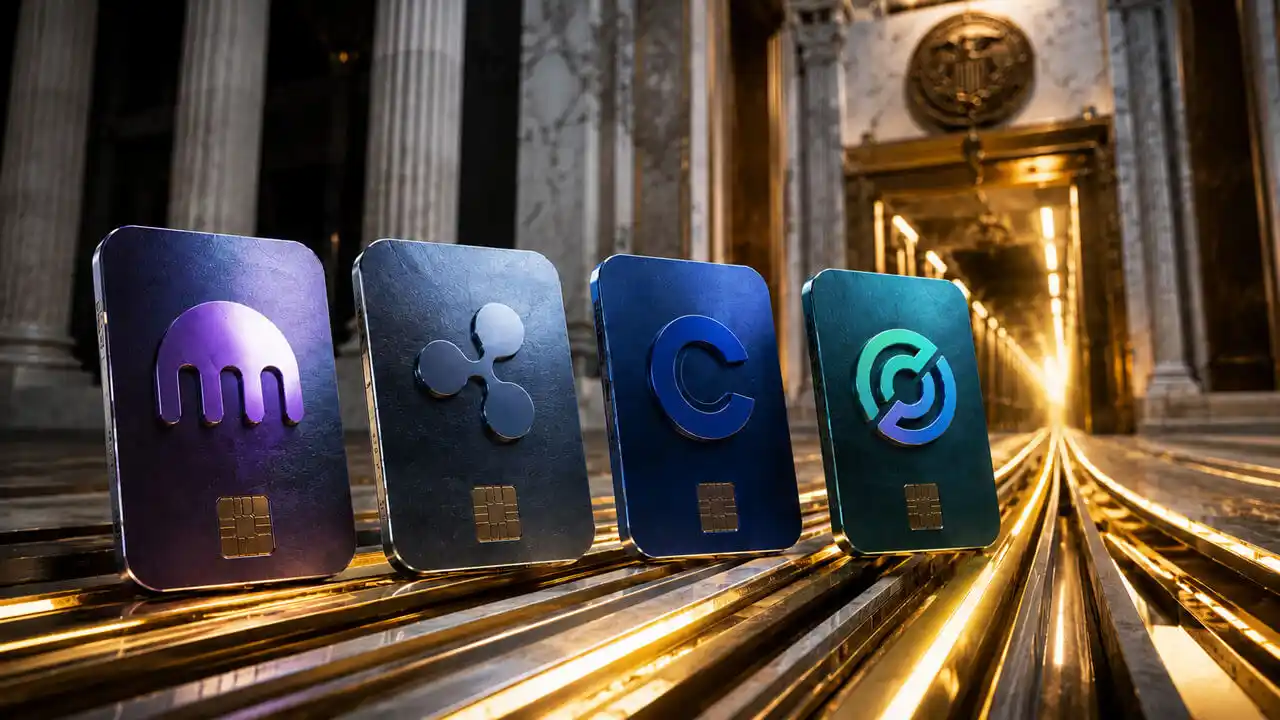
Policy Shift for Fed Master Account Access

The core focus of this executive order is the Federal Reserve master account. Institutions holding such an account gain direct access to the full suite of Federal Reserve payment services, including the interbank large-dollar U.S. funds transfer system, Fedwire.

Under current Fed rules, such accounts are, in principle, only open to depository banking institutions. Consequently, many crypto firms have had to pursue special-purpose banking charters or national trust bank charters in their quest for direct connection eligibility.

Trump's order now requires the Federal Reserve to comprehensively review the access rules for central bank payment accounts, while also clarifying whether the 12 regional Federal Reserve Banks have the statutory authority to independently approve or reject institution account applications.

In March of this year, the Federal Reserve Bank of Kansas City took the lead by approving a restricted master account for Kraken's parent company, Payward, setting the industry's first precedent and making this issue of access increasingly urgent.

In addition, the order instructs regulators to conduct a comprehensive review of barriers to the development of the fintech industry, covering charter licensing rules, third-party risk management guidance, and policies restricting cross-border collaboration between banks and tech companies.

U.S. Senator Cynthia Lummis stated that this new policy corrects the long-standing restricted access situation for the fintech industry. Traditional legacy financial institutions have monopolized core payment channel resources, while emerging tech companies have long been excluded. This order aims to create a level playing field, stimulate industry vitality, and reduce payment costs for the public.

Coinbase Chief Legal Officer Paul Grewal also expressed support for the move. He argued that current payment access rules and third-party risk control guidelines are outdated, favoring traditional financial giants and suppressing innovation, and that regulatory rules urgently need renewal.

This echoes a common demand within the crypto industry: access to the central bank's core payment network has become a competitive barrier. Firms unable to connect directly must rely on bank intermediaries, which not only increases operational costs and slows settlement efficiency but also imposes the additional operational risks of their partner banks.

Kraken Provides a Feasible Model for Crypto Companies

Kraken has provided a practical example for the industry to expand access. In March, the Kansas City Fed granted a master account to its financial entity, Kraken Financial, allowing access to the core U.S. dollar large-value clearing payment channels. This enables the platform to handle institutional user deposits and withdrawals more efficiently, particularly facilitating rapid transfers of large funds between the trading platform, custodians, and partner banks.

However, this account comes with clear limitations: it does not offer the full range of financial services available to regular insured banks, does not earn interest on reserve balances, and cannot access Federal Reserve credit facilities.

This restricted design can reduce central bank systemic risk while allowing crypto firms moderate access to mainstream payment infrastructure. It is likely to become a universal template promoted by regulators in the future—granting firms U.S. dollar transfer and clearing permissions while strictly prohibiting access to high-sensitivity financial privileges like overdraft lending, reserve interest, and emergency liquidity assistance.

Custodia Bank CEO Caitlin Long welcomed the new policy. Her institution has sought access to the Federal Reserve system for years but was rejected in 2023, with the Fed ruling that its crypto-focused business model did not meet statutory access requirements, highlighting the extreme difficulty licensed crypto institutions previously faced in gaining full access.

The implementation of Kraken's restricted account has fundamentally shifted the regulatory stance. Regulators no longer have only the options of "full access" or "complete rejection." Through a tiered permission model, they can gradually guide crypto firms into the mainstream payment system while firmly maintaining risk control bottom lines.

Ripple, Coinbase, and Circle are Prepared for the Next Phase

Ripple, Coinbase, and Circle are among the most direct beneficiaries of this policy relaxation. Ripple has already applied for a Federal Reserve master account and actively supports implementing a lightweight restricted account mechanism that allows non-bank institutions to conveniently use basic payment services without touching the Fed's core financial privileges.

Once successfully implemented, this would significantly boost its RLUSD stablecoin business, enabling efficient reserve fund transfers and user redemption operations. For stablecoin issuers, the efficiency of reserve clearing and fund redemption stability directly determine market confidence. Direct or restricted access to a Federal Reserve account would greatly reduce reliance on bank intermediaries, allowing more flexible U.S. dollar liquidity management during periods of concentrated redemptions or market volatility.

Coinbase and Circle, through their USDC stablecoin businesses and own payment ecosystems, also have strong needs for access. Both institutions have established federal trust bank structures, which not only further integrate them into the federal unified regulatory system but also pave the way for applying for Federal Reserve payment accounts.

Meanwhile, other companies are also waiting in line. Anchorage Digital is already a federally chartered crypto bank; Paxos, BitGo, and Fidelity Digital Assets have successively obtained national trust bank-related approvals from the Office of the Comptroller of the Currency. While such qualifications do not directly translate into Federal Reserve payment account access, they significantly narrow the gap between these firms and compliance standards.

Industry demands are clear: crypto exchanges seek fast fiat currency settlement, stablecoin issuers want autonomous control over reserve funds, asset custodians aim to optimize institutional client fund flow efficiency, and payment companies are eager to reduce heavy reliance on cross-border clearing banks.

Galaxy Digital Head of Research Alex Thorn stated bluntly that it is not only deposit-taking and lending banking institutions that are qualified to conduct wire transfer business; this is a threshold set by modern regulation, not an immutable rule of the financial industry. With multiple forces now competing, traditional banks are actually fighting to maintain their monopoly in the payments industry. The prevailing industry view is that payment channel access eligibility should be determined based on a firm's business attributes, compliance and regulatory rigor, and risk management capabilities, rather than rigidly adhering to traditional banking business models.

Traditional Banks Warn: Access Must Meet Bank-Level Standards

Facing calls for industry openness, the American Bankers Association has clearly expressed opposition. The association believes that any institution conducting bank-like business must be subject to the same stringent regulatory standards and consumer protection rules as traditional banks.

ABA President and CEO Rob Nichols stated publicly: "Without full industry-wide high-standard regulation, the entire financial system and ordinary consumers will face direct risks. Regarding this White House financial innovation executive order, we urge regulatory agencies to uphold the bottom line of safety and soundness of the financial system while promoting innovation, and not to lower access thresholds."

This is the core concern of the banking industry. Direct access to the Federal Reserve payment system is not merely a business privilege; it comes with a suite of high-intensity regulations, including deposit insurance systems, capital adequacy assessments, liquidity controls, and regular business reviews. From the banks' perspective, allowing crypto firms with lightweight licenses and limited business scopes, which lack equivalent compliance obligations and risk management capabilities, to connect to the core payment network could easily sow the seeds of systemic risk.

The Fedwire system is the core hub for global U.S. dollar clearing. Any cyber-attacks, operational failures, compliance breaches, or liquidity crises at an接入 institution could cause settlement disruptions with impacts far beyond the firm's own business scope. Simultaneously, banks invest heavily in compliance areas such as anti-money laundering, customer fund monitoring, and suspicious transaction reporting. Regulators also need to confirm that crypto firms possess equivalent compliance capabilities before allowing them to engage in diverse businesses like trading, asset custody, stablecoin issuance, and payments.

Liquidity diversion is another key concern for banks. If stablecoin issuers and fintech firms can efficiently hold and transfer funds through the Federal Reserve system, they will likely divert existing funds from the traditional banking system.

The restricted account rules proposed by the Fed, by removing benefits like interest and credit, somewhat alleviate this concern, but the banking industry will not readily acquiesce to this shift in the industry landscape.

Although specialized restricted accounts can avoid most risks through permission demarcation, they also raise new regulatory questions: At what point does the level of payment business access granted to a non-bank institution make its operations equivalent to those of a formal bank? This will become a core point of contention for regulators in defining future access boundaries.


İlgili Sorular

QWhat was the main objective of the executive order signed by former President Trump regarding financial innovation and cryptocurrency companies?

AThe executive order aimed to pressure the Federal Reserve to reassess its policies on granting payment account access to non-bank financial companies, including those in digital assets, blockchain, and fintech. It required federal regulators to review existing rules to eliminate redundant regulations hindering financial innovation and to clarify whether broader access to the Federal Reserve's payment systems is legally permissible for such companies.

QHow does the Federal Reserve's Master Account benefit financial institutions, and what was the previous limitation for crypto companies?

AA Federal Reserve Master Account allows institutions direct access to the Fed's full suite of payment services, including the Fedwire system for large-scale dollar transfers between banks. Previously, such accounts were typically restricted to depository banking institutions, forcing crypto companies to seek special-purpose banking charters or national trust bank licenses to qualify for direct access.

QWhat precedent did the Federal Reserve Bank of Kansas City set for crypto companies in March, and what were the limitations of this account?

AIn March, the Federal Reserve Bank of Kansas City approved a restricted master account for Payward, Inc., the parent company of Kraken. This account, granted to its special-purpose depository institution Kraken Financial, allowed direct access to core dollar payment channels but with key limitations: it did not grant full banking services, did not pay interest on reserves, and did not provide access to Federal Reserve credit facilities.

QWhy are companies like Ripple, Coinbase, and Circle particularly interested in gaining access to Federal Reserve payment channels?

ACompanies like Ripple, Coinbase, and Circle are keen to access Federal Reserve payment channels to reduce reliance on intermediary banks. This would lower operational costs, speed up settlement times, and mitigate risks associated with partner banks. For stablecoin issuers like Circle (USDC) and Ripple (RLUSD), direct access would enhance the efficiency of managing reserve funds and processing redemptions, which is crucial for maintaining market confidence, especially during periods of high volatility or concentrated withdrawals.

QWhat are the primary concerns raised by traditional banks, as represented by the American Bankers Association, regarding expanding access to the Federal Reserve's payment systems?

ATraditional banks, through the American Bankers Association, argue that any institution performing bank-like activities must be subject to the same stringent regulatory standards as traditional banks, including robust consumer protection rules, capital requirements, liquidity management, and anti-money laundering compliance. They warn that allowing crypto firms with lighter regulatory burdens to connect to core payment networks like Fedwire could introduce systemic risks, such as operational failures or compliance gaps, and potentially drain liquidity from the traditional banking system.

İlgili Okumalar

Blocked Its Own Treasure, WeChat AI Steps Up

Tencent's stock surged over 10% on June 2nd amid reports that WeChat, with 1.43 billion monthly users, is finalizing tests for a native AI Agent. The reported feature, accessible by swiping right from the main interface, allows users to issue commands in natural language. The AI then decomposes tasks and automatically calls upon relevant Mini Programs within WeChat to complete actions like ordering food, booking tickets, or making payments, creating a closed-loop service execution system. This strategic shift follows the internal conflict and subsequent "blocking" of Tencent's standalone AI app, Yuanbao, by WeChat for violating sharing rules during a 2026 Spring Festival promotion. The incident highlighted a lack of internal consensus and exposed the weakness of competing in the standalone AI assistant arena against rivals like ByteDance's Doubao (345M MAU) and Alibaba's Qianwen. The new WeChat AI Agent aims to leverage WeChat's unique assets—its massive user base, standardized Mini Program APIs, WeChat Pay, and identity system—to move from simple content generation to actual task execution. Analysts note this changes the competitive landscape from model benchmarks to which AI can connect to more real-world services. However, success depends on key variables: the capability of Tencent's underlying Hunyuan model, managing massive inference costs, and redesigning incentives for Mini Program developers whose traffic might be bypassed. The move is seen as an attempt to keep user service intent within WeChat's ecosystem as AI begins to redefine how users access services.

marsbit56 dk önce

Blocked Its Own Treasure, WeChat AI Steps Up

marsbit56 dk önce

ByteDance Adopts Arm CPUs, Jensen Huang: So Sad I Didn't Buy Arm

**Summary:** At Computex 2026, Arm CEO Rene Haas announced that ByteDance and Oracle have adopted Arm's self-designed Arm AGI data center CPU. The company expects significant revenue growth from this product, projecting $20 billion in demand for the 2027/2028 fiscal years. Haas noted that restricting AI-capable CPUs from the US to China is nearly impossible due to their widespread applications. Arm's stock has surged dramatically this year, notably rising 16% after NVIDIA's Arm-based Vera CPU and RTX Spark announcements. A highlight was the informal, humorous on-stage conversation between Haas and NVIDIA CEO Jensen Huang. Huang joked about NVIDIA's failed attempt to acquire Arm and playfully lamented selling his Arm shares. Both executives showed a clear sense of camaraderie and shared regret over the missed merger. Key technical topics were discussed: 1. **AI PC Design:** Huang explained NVIDIA's RTX Spark superchip (with a 20-core Arm CPU) is designed for future AI agents that will autonomously run and use tools on PCs, blending local and cloud processing. 2. **Agent vs. OS:** Huang emphasized the operating system remains crucial, as AI agents rely on its APIs and tools to function. 3. **Growth Constraints:** He identified the shift to "useful AI" that generates profitable tokens as a primary driver for immense, almost limitless, computational demand. Haas outlined Arm's strategy across PC and data centers. For PCs, Arm collaborates with partners like NVIDIA and MediaTek, offering its compute subsystem (CSS) for custom SoCs. In data centers, its Arm AGI CPU (built on TSMC's 3nm process) has gained major partners including OpenAI, Meta, and now ByteDance and Oracle. Arm presented a multi-year roadmap for its in-house CPU line. The article concludes that while GPUs dominated the AI training race, the explosion of AI agents is shifting significant focus to CPUs for inference, state management, and tool orchestration. The industry is trending towards vertical integration, with companies like cloud providers designing chips and chip/IP firms offering full solutions, all competing to deliver more efficient computing per watt.

marsbit1 saat önce

ByteDance Adopts Arm CPUs, Jensen Huang: So Sad I Didn't Buy Arm

marsbit1 saat önce

New Wall Street Play: Yen Shorts Still Adding, But Japan Stocks Don't Rely on Carry Trade Unwinding

On June 3rd, USD/JPY hit 160.44, its highest level since July 2024, while the Nikkei 225 surged past 68,000 points. Contrary to popular narratives of an imminent "carry trade unwind" akin to August 2024, data reveals a more complex picture. Speculative net short positions in yen futures have actually increased, reaching -114,667 contracts by late May, suggesting traders are doubling down rather than retreating. Meanwhile, Japan's Finance Ministry conducted its largest-ever single-round FX intervention (11.73 trillion yen) in April-May but failed to hold the 160 yen line. The Nikkei's rally is not driven by carry trade dynamics. Foreign investors are aggressively buying Japanese stocks, with net purchases in 2026 running nearly 16 times higher than 2025 levels. This inflow is concentrated in AI and semiconductor-related stocks like SoftBank and Socionext, fueled by positive sector outlooks, rather than being a flight from unwinding yen shorts. Furthermore, the Nikkei has continued climbing despite the Bank of Japan's (BOJ) rate hikes to 0.75%. This disconnect exists because the current equity boom is fueled by AI-driven foreign investment, not reliant on cheap yen funding. However, this relationship remains fragile. Should the BOJ hike rates further (e.g., to 1.0%) while dollar weakness increases carry trade costs, the trajectories of the yen and Japanese stocks could reconverge, potentially triggering volatility.

marsbit1 saat önce

New Wall Street Play: Yen Shorts Still Adding, But Japan Stocks Don't Rely on Carry Trade Unwinding

marsbit1 saat önce

Broadcom's Q3 Guidance Misses Expectations by $12 Billion, After-Hours Trading Plummets Over 13%, AI Narrative "Cooling"?

On June 3, Broadcom released record Q2 FY26 results with revenue of $22.19B, up 48% YoY, and AI chip sales of $10.8B, up 143%. Adjusted EPS of $2.44 beat estimates. However, its Q3 AI semiconductor revenue guidance of $16B, while up over 200% YoY, fell roughly $1.2B (7%) short of analyst consensus expectations of $17.2B. This miss, coupled with slightly weaker-than-expected software revenue, triggered a severe market reaction. CEO Hock Tan maintained the FY26 AI revenue outlook of over $100B but did not raise it, disappointing investors who had priced in more robust growth. The stock plummeted over 13% in after-hours trading, erasing roughly $270B in market cap. The sell-off extended to peers like Marvell. A key concern for markets, particularly for Chinese optical module suppliers, was Tan's comment that the contribution of AI networking (e.g., Ethernet switches, optical interconnect chips) to AI revenue, currently near 40%, is expected to normalize to around 30% over time, signaling a potential peak in growth for that segment. Despite the guidance shortfall, Tan reiterated that AI demand remains "insatiable" and reaffirmed the long-term target of exceeding $100B in AI revenue by FY27. The reaction highlights the heightened sensitivity and premium valuation placed on AI-exposed stocks, where anything less than stellar guidance can prompt significant profit-taking. The broader question is whether this represents a cooling AI narrative or a correction in overstretched valuations.

marsbit1 saat önce

Broadcom's Q3 Guidance Misses Expectations by $12 Billion, After-Hours Trading Plummets Over 13%, AI Narrative "Cooling"?

marsbit1 saat önce

İşlemler

Spot
Futures

Popüler Makaleler

ORDER Nasıl Satın Alınır

HTX.com’a hoş geldiniz! Orderly (ORDER) satın alma işlemlerini basit ve kullanışlı bir hâle getirdik. Adım adım açıkladığımız rehberimizi takip ederek kripto yolculuğunuza başlayın. 1. Adım: HTX Hesabınızı OluşturunHTX'te ücretsiz bir hesap açmak için e-posta adresinizi veya telefon numaranızı kullanın. Sorunsuzca kaydolun ve tüm özelliklerin kilidini açın. Hesabımı Aç2. Adım: Kripto Satın Al Bölümüne Gidin ve Ödeme Yönteminizi SeçinKredi/Banka Kartı: Visa veya Mastercard'ınızı kullanarak anında Orderly (ORDER) satın alın.Bakiye: Sorunsuz bir şekilde işlem yapmak için HTX hesap bakiyenizdeki fonları kullanın.Üçüncü Taraflar: Kullanımı kolaylaştırmak için Google Pay ve Apple Pay gibi popüler ödeme yöntemlerini ekledik.P2P: HTX'teki diğer kullanıcılarla doğrudan işlem yapın.Borsa Dışı (OTC): Yatırımcılar için kişiye özel hizmetler ve rekabetçi döviz kurları sunuyoruz.3. Adım: Orderly (ORDER) Varlıklarınızı SaklayınOrderly (ORDER) satın aldıktan sonra HTX hesabınızda saklayın. Alternatif olarak, blok zinciri transferi yoluyla başka bir yere gönderebilir veya diğer kripto para birimlerini takas etmek için kullanabilirsiniz.4. Adım: Orderly (ORDER) Varlıklarınızla İşlem YapınHTX'in spot piyasasında Orderly (ORDER) ile kolayca işlemler yapın.Hesabınıza erişin, işlem çiftinizi seçin, işlemlerinizi gerçekleştirin ve gerçek zamanlı olarak izleyin. Hem yeni başlayanlar hem de deneyimli yatırımcılar için kullanıcı dostu bir deneyim sunuyoruz.

318 Toplam GörüntülenmeYayınlanma 2024.12.10Güncellenme 2026.06.02

ORDER Nasıl Satın Alınır

Tartışmalar

HTX Topluluğuna hoş geldiniz. Burada, en son platform gelişmeleri hakkında bilgi sahibi olabilir ve profesyonel piyasa görüşlerine erişebilirsiniz. Kullanıcıların ORDER (ORDER) fiyatı hakkındaki görüşleri aşağıda sunulmaktadır.

活动图片












