Trump-Linked Panel Examines Stablecoin Proposal For Postwar Gaza

bitcoinist2026-02-23 tarihinde yayınlandı2026-02-23 tarihinde güncellendi

Özet

Officials advising former President Donald Trump's "Board of Peace" are exploring the potential use of a US dollar-backed stablecoin to help rebuild Gaza's economy after the war with Israel. The proposal, still in early stages, would involve Gulf Arab and Palestinian companies with digital currency experience. Supporters argue a digital currency could reduce Hamas's access to physical cash and lessen dependence on Israeli control over currency flows. However, concerns have been raised that a separate Gaza digital system might deepen the economic divide with the West Bank by hindering easy payments between the two regions. The regulatory framework remains undecided, and the idea is currently exploratory.

Officials advising President Donald Trump’s US‐led “Board of Peace” are examining whether a dollar‐backed stablecoin could play a role in rebuilding Gaza’s shattered economy.

Gaza Stablecoin Plans

The idea, first reported by the Financial Times, is still in its early stages. Five individuals briefed on the talks said conversations about introducing a stablecoin remain preliminary, and key details have yet to be finalized.

Even so, the concept is being considered as part of a broader plan to revive economic life in the Palestinian enclave after two years of war between Israel and Hamas that left much of Gaza’s financial system crippled.

One person familiar with the project said the proposed stablecoin would be pegged to the US dollar and would likely involve Gulf Arab and Palestinian companies experienced in digital currency infrastructure.

According to the report, the Board of Peace and the 14‐member National Committee for the Administration of Gaza (NCAG) would ultimately determine the regulatory framework and access rules governing any stablecoin system, though “nothing definitive” has been agreed upon.

Potential Benefits And Risks

Supporters of the Gaza stablecoin initiative argue that reducing reliance on physical cash could limit the ability of Hamas to generate revenue. Another individual familiar with the talks described the goal as an effort to “dry Gaza from cash so Hamas can’t generate any.”

Advocates also contend that expanding digital payments would allow commerce to continue without being overly dependent on Israeli authorities’ control over currency flows into the territory.

However, others involved in the discussions have voiced concerns that a Gaza‐specific digital system could inadvertently deepen the economic divide between Gaza and the West Bank.

“It will be much more difficult to maintain economic links between Gaza and the West Bank if they have no means of easy payment between the two,” one person familiar with the talks said. “Gaza would be almost like a self‐contained economy. That would be a concern.” For now, the stablecoin proposal remains an exploratory concept.

The 1D chart shows the total crypto market cap dropping on Monday to $2.23 trillion. Source: TOTAL on TradingView.com

Featured image from OpenArt, chart from TradingView.com

İlgili Sorular

QWhat is the main purpose of the stablecoin proposal being examined for postwar Gaza?

AThe main purpose is to play a role in rebuilding Gaza's shattered economy and to reduce reliance on physical cash, which could limit Hamas's ability to generate revenue.

QWhich US-led advisory group is examining the stablecoin proposal for Gaza?

AOfficials advising President Donald Trump's US-led 'Board of Peace' are examining the stablecoin proposal.

QWhat is the proposed peg for the Gaza stablecoin and which entities might be involved in its infrastructure?

AThe proposed stablecoin would be pegged to the US dollar and would likely involve Gulf Arab and Palestinian companies experienced in digital currency infrastructure.

QWhat is one potential risk of implementing a Gaza-specific digital currency system mentioned in the article?

AOne potential risk is that it could inadvertently deepen the economic divide between Gaza and the West Bank by making it difficult to maintain economic links and easy payments between the two regions.

QWhat is the current status of the stablecoin proposal according to the report?

AThe stablecoin proposal is still in its early stages, conversations remain preliminary, key details are not finalized, and it is described as an exploratory concept with nothing definitive agreed upon.

İlgili Okumalar

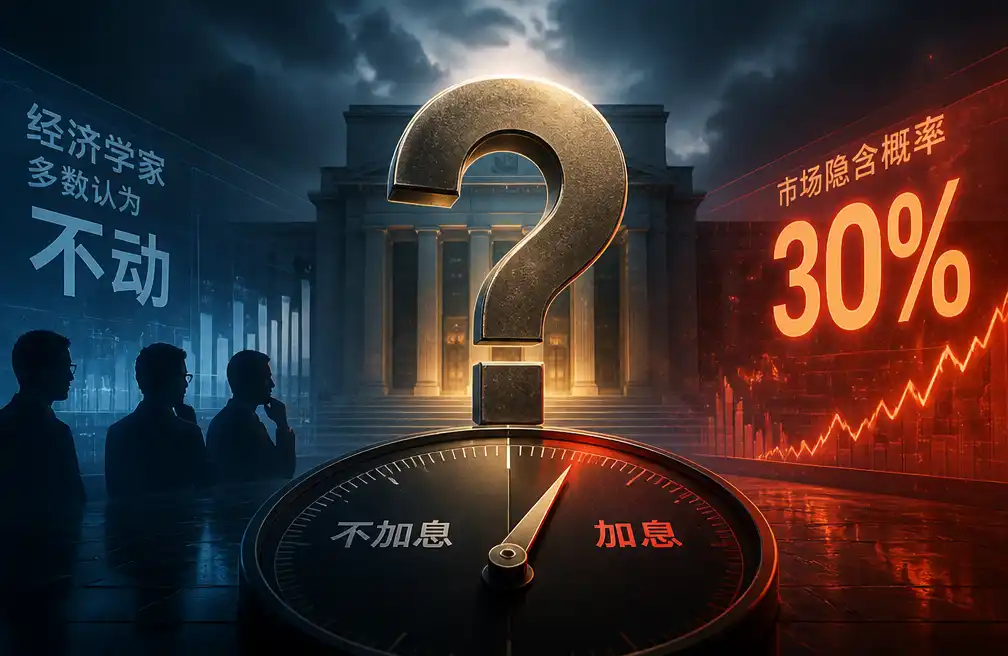
To Hike or Not Tonight: Economists Unanimous on 'No', Markets Price in a 30% Chance

Federal funds futures are repricing ahead of the July FOMC decision, as traders pay a higher premium for the risk of a surprise rate hike or more hawkish signals. This contrasts with economists, where a Reuters survey of 104 analysts unanimously expects rates to remain unchanged at 3.50%-3.75%, with 78 foreseeing no change through year-end. Yet, futures markets have priced in about a 30% probability of a 25-basis-point hike. The core debate, especially under new Fed Chair Kevin Warsh, centers on how the Fed will respond to the oil price shock from Middle East tensions. The market is not necessarily predicting a hike tonight but is hedging against two tail risks: an immediate rate increase, or a hold combined with communication that seriously opens the door for a September hike. This hedging activity has driven up open interest in Fed funds futures. Analysts are divided on how to weight the oil price surge in the Fed's reaction function. Hawkish voices (e.g., BofA) worry that completely dismissing the price pressure could challenge the Fed's inflation credibility in Warsh's first major test. Dovish views (e.g., Citi) argue the shock is primarily supply-driven and that overreacting with rate hikes could unnecessarily hurt growth, unless clear signs of secondary inflation emerge. Warsh's new tenure amplifies policy path uncertainty, as markets lack a stable baseline for his communication style. This environment forces traders to price in a wider range of outcomes, explaining the divergence between unanimous economist forecasts and market hedging. The key focus will be on Warsh's post-meeting commentary. If he downplays the oil shock and stresses anchored long-term expectations, hawkish pricing may recede. If he emphasizes the risk of broader price spillovers and prioritizes returning to 2% inflation, the market will interpret this as reopening the door for a September hike. This would sustain support for the USD, keep pressure on JPY (testing intervention thresholds), and challenge risk assets like stocks and crypto through higher discount rates and weaker sentiment. The baseline remains no action in July, but the communication will determine how far this repricing extends.

marsbit54 dk önce

To Hike or Not Tonight: Economists Unanimous on 'No', Markets Price in a 30% Chance

marsbit54 dk önce

İşlemler

Spot
活动图片