Trading Moments: Bitcoin's 200-week moving average has turned into a resistance level, can the July rise still be realized?

marsbit2026-06-29 tarihinde yayınlandı2026-06-29 tarihinde güncellendi

Özet

**Market Recap: Key Global Developments and Outlook** Global markets are navigating shifting dynamics. Geopolitical tensions eased as the US and Iran agreed to halt further military actions, planning talks for June 30. This pushed oil prices down, with WTI crude dropping below $70. Meanwhile, gold saw a "death cross" (50-day moving average crossing below the 200-day), pressured by a strong dollar and rising real yields. A methodological revision to the US PCE inflation index, set for September, is expected to artificially lower reported core inflation, drawing criticism for lack of transparency. In US equities, major indices extended losses, with the S&P 500 and Nasdaq recording their longest losing streaks since last year. Hedge funds aggressively sold tech stocks, particularly in semiconductors, leading to a sharp rotation into defensive sectors like healthcare and utilities. SpaceX is set for rapid inclusion in the Nasdaq 100, potentially triggering significant passive fund inflows, while its valuation faces scrutiny. Bitcoin is on track for its worst monthly performance since 2022, down over 18% in June. It has failed to reclaim its 200-week moving average (now acting as resistance near $62.6k), raising the risk of a drop toward $55k. Historically, July is a strong month for BTC, with an average gain of 7.6%. Analysts suggest the current sell-off could present a buying opportunity, with a key test being whether Bitcoin can stabilize above $61k to confirm a reversal. I...

Every Monday, Wednesday, and Friday, we review the market with data and seize opportunities through trends, covering macroeconomics, US stocks, precious metals, crude oil, and crypto assets, to gain insights into key changes in the global market. Produced by PANews.

Macro Market

The US and Iran are reportedly set to halt further military actions and plan to hold talks in Doha, Qatar, on June 30 to discuss navigation issues in the Strait of Hormuz. Just 11 days after the ceasefire agreement led by Trump took effect, the market has shifted back from the extreme scenario of "Hormuz Strait closure" to the trading logic of "oil prices returning to fundamentals."

WTI crude oil fell to $68.46, with a weekly drop of nearly 10%, breaking below $70 for the first time since the US-Iran war began. Brent crude also retreated to near pre-war levels. Tariq Zahir, managing member of Tyche Capital Advisors, warned that although the oil price decline is rapid, the ceasefire agreement remains fragile, and the situation in the Strait of Hormuz is still uncertain. JPMorgan believes the rapid pullback in oil prices is not due to supply recovery but rather a contraction in Asian demand, especially from China, far exceeding market expectations.

Although spot gold rebounded 1.36% to $4096 on Friday, it repeatedly fell below the $4000 psychological barrier last week and saw its first "death cross" since September 2023, where the 50-day moving average fell below the 200-day moving average. A stronger dollar and rising real interest rates remain the core logic suppressing precious metals.

Additionally, the US Bureau of Economic Analysis (BEA) announced that it will adjust the methodology for three components of the PCE price index—computer software, portfolio management, and legal services—in September, systematically lowering core inflation. UBS economist Alan Detmeister criticized the move, citing a lack of transparency and potential political manipulation, pointing out that the revision series tilts toward the upper end of the inflation contribution distribution, seemingly designed to artificially lower inflation. Goldman Sachs estimates the new rules could lead to a downward revision of the May core PCE year-on-year by 0.2 percentage points to 3.2%, and lower the forecast for core PCE in December 2026 to 3.0%.

Key upcoming events to watch:

  1. June 30: US and Iranian delegations plan to hold high-level technical talks in Doha, Qatar. Whether they can fully resolve the dispute over international navigation lanes in the Strait of Hormuz will directly determine the lifeline of international oil prices.

  2. July 1, 21:30 Beijing Time: The European Central Bank's Global Central Banking Forum in Sintra, Portugal, commences. Fed Chair Wash will make his first overseas appearance since taking office, engaging in debates with Lagarde, Bailey, and Macklem. Markets should be wary of signals beyond inflation regarding tightening and geopolitical risk premiums.

  3. September 30: The BEA's new PCE price index statistical methodology officially takes effect. The "digital shrinkage" of the core inflation rate will fundamentally reshape the future path of Federal Reserve monetary policy games.

US Stock Market Dynamics
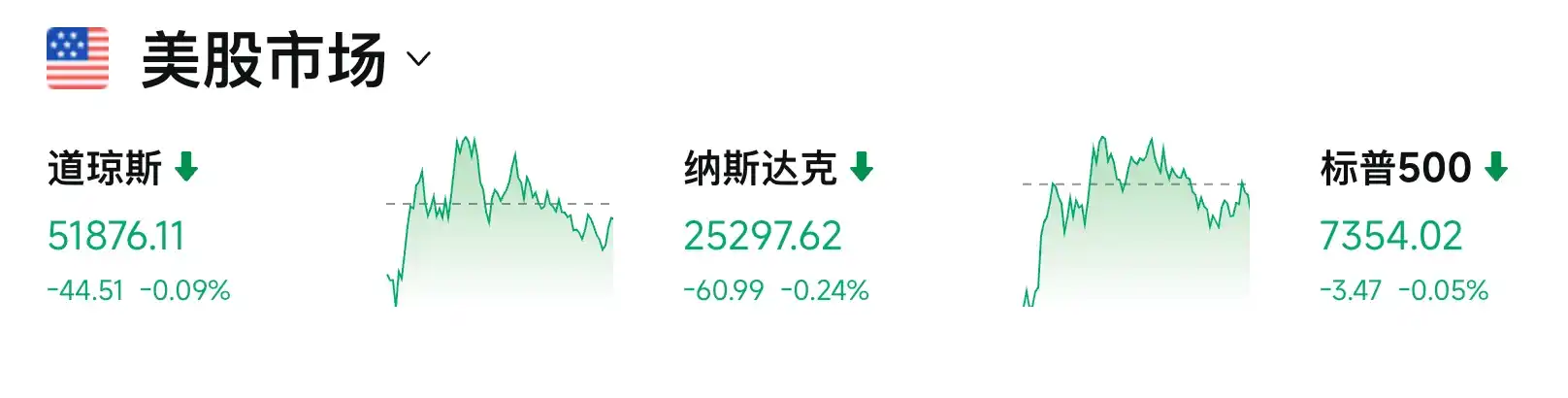
The major US stock indices barely closed flat on Friday. The S&P 500 edged down 0.05%, marking its fifth consecutive decline and the longest losing streak since August last year. The Nasdaq Composite fell 0.24%, also declining for the fifth straight session, its longest losing streak since January this year.

The frenzy over AI premiums is facing unprecedented liquidity unwinding, with hedge funds dumping US tech stocks at the most aggressive pace in a decade. Goldman Sachs PB data shows that as of the week ending June 25, the information technology sector experienced extreme selling at a 4-standard-deviation level, with a sell-to-buy ratio of 1.3 to 1. The semiconductor sector saw net selling for eight consecutive trading days, and the "Magnificent Seven" tech giants suffered continuous reductions for five weeks, with overall holdings nearing a three-year low. EPFR data corroborates this, showing a massive exodus of institutional funds from US tech funds last week following substantial prior inflows.
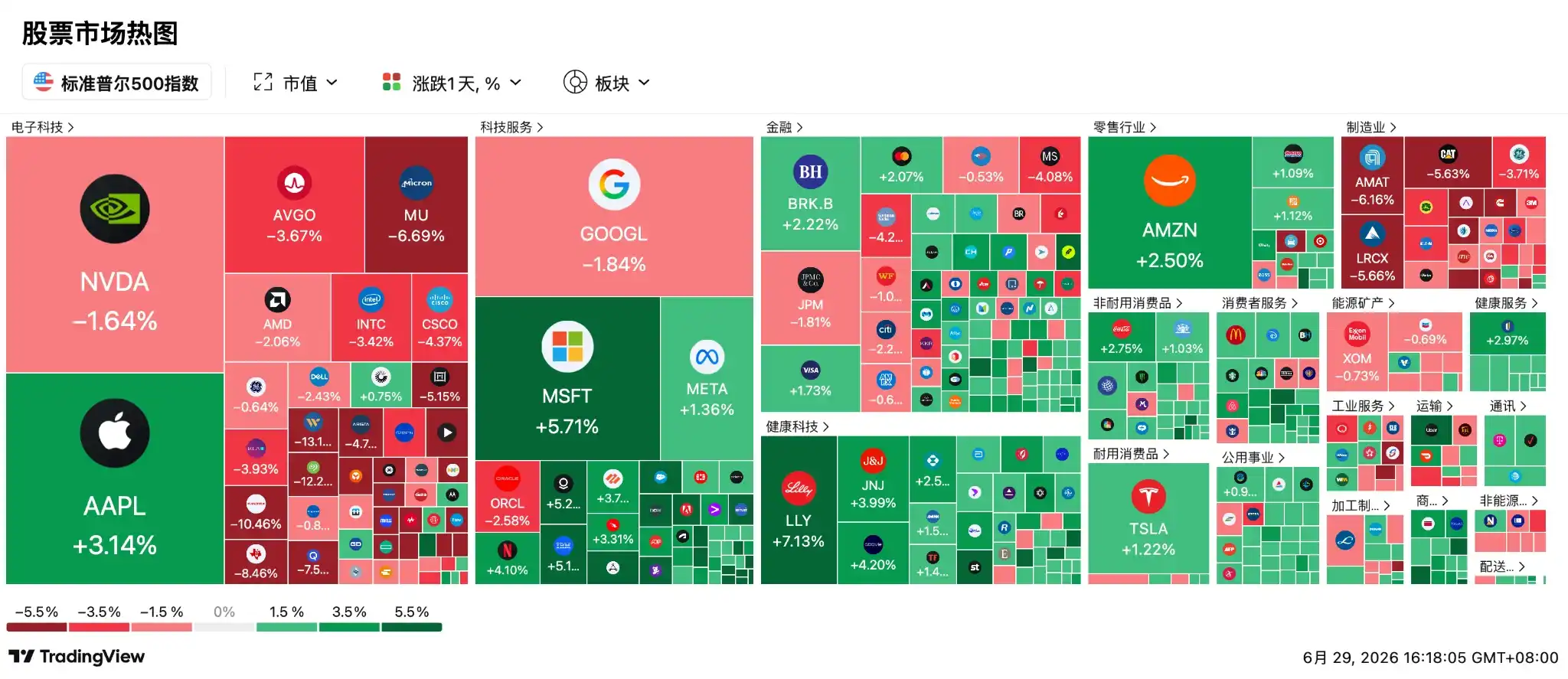
The Philadelphia Semiconductor Index plummeted 5.3% on Friday, with all 30 component stocks falling. Among them, onsemi plunged 23%, and Qualcomm dropped 7.57%. Although Micron Technology rose over 4% for the week, supported by strong earnings, it still succumbed to market pressure and fell 6.7% on Friday. Related memory stocks also declined: SanDisk fell 10.5%, while Western Digital and Seagate Technology dropped 13.17% and 12.24%, respectively. Forex.com analyst Fawad Razaqzada noted that investors have become highly sensitive to stretched AI valuations and high infrastructure costs, suggesting expectations for this sector have far exceeded commercial reality.

Funds are pouring into defensive sectors like healthcare, utilities, and real estate, with the Healthcare ETF and Biotech ETF leading gains. Mark Hackett of Nationwide stated that investor sentiment has turned pessimistic due to sharp rotations, but this looks more like a consolidation phase beneath the surface rather than the beginning of a significant downturn. John Belton, a manager at Gabelli Funds, also believes this is merely a pause, not a sell-off, and the AI platforms built by hyperscale cloud providers will continue to proliferate in the coming years.

SpaceX (SPCX) triggered a Nasdaq rule less than a month after its IPO and will be historically fast-tracked for inclusion in the Nasdaq 100 Index. JPMorgan estimates this will attract approximately $4.3 billion in passive fund inflows within a short period. However, Morningstar strategists indicate the stock is severely overvalued, and S&P Global has explicitly stated it will not follow suit, waiting at least 12 months before considering inclusion. Additionally, expectations for IPOs from OpenAI and Anthropic are heating up, with potential valuations exceeding $1 trillion.

Key upcoming events to watch:

  1. After the close on July 6: $800 billion in passive funds tracking the Nasdaq 100 will begin concentrated allocations to SpaceX stock, which is expected to cause significant supply-demand oscillations in the semiconductor and tech sectors.

  2. Before the market opens on July 7: SpaceX will officially begin trading as a component of the Nasdaq 100.

  3. Throughout July: US stocks are entering the seasonally strongest "July window" of the year. Since 2015, the Nasdaq 100 has averaged a return of 4.4% in July with a historically high win rate, potentially ushering in strong allocation repairs following pension fund rebalancing.

Cryptocurrency
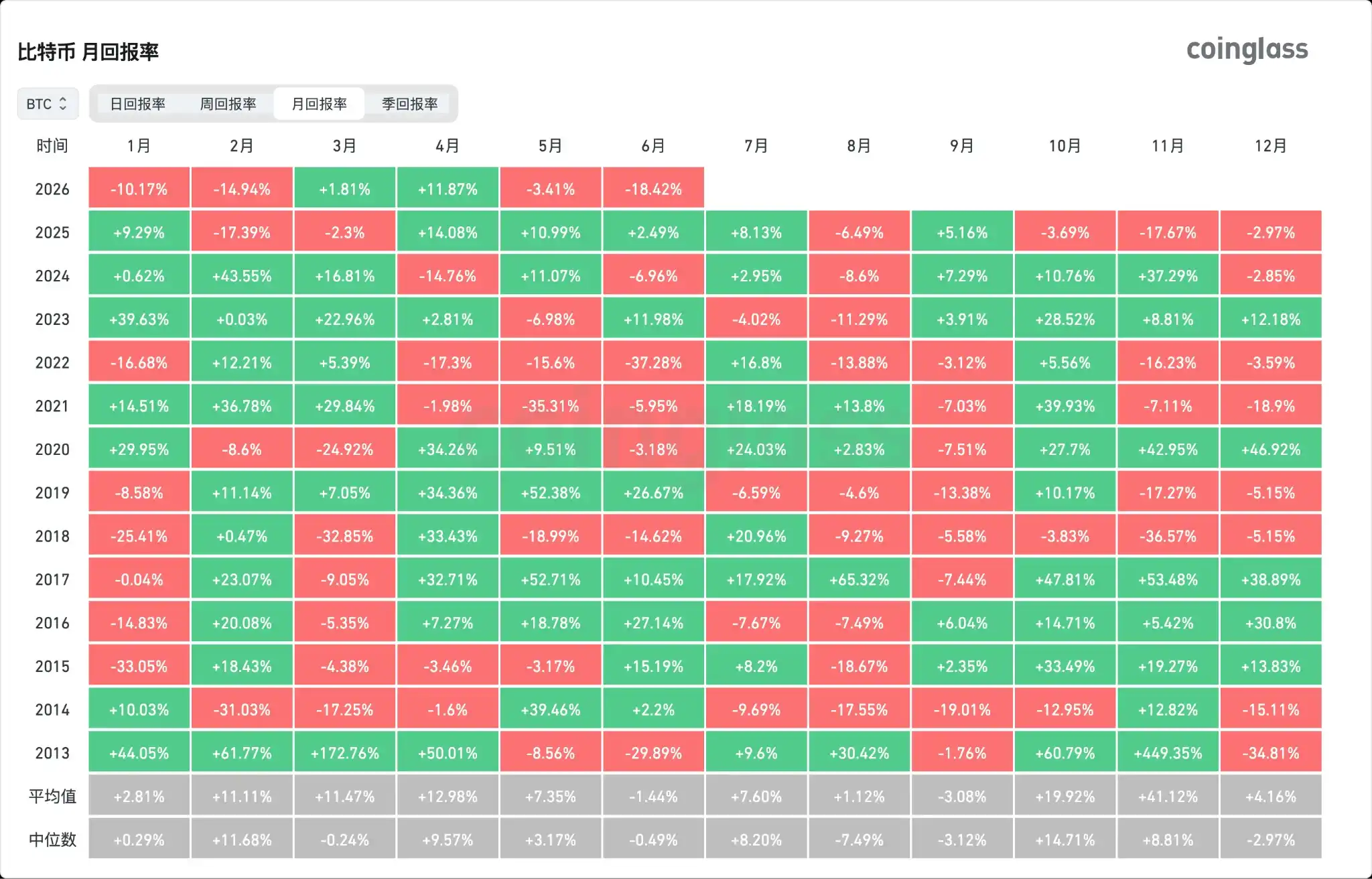
Bitcoin is experiencing its worst monthly performance since 2022. With less than two days left in June, the cumulative decline has reached 18.42%, making it one of the largest monthly drops since the 2022 bear market.

Currently, BTC price is fluctuating around the $60,000 mark, with the market focusing on its rebound potential in July. Since falling from $120,000, BTC has failed to reclaim the 200-week moving average (approx. $62,600) for the first time, turning this key support level into resistance and further increasing the risk of a decline to $55,000.

Historically, July is one of Bitcoin's best-performing months, with an average gain of 7.6% since 2013, and even reaching an average of 10.3% in midterm election years. If historical patterns repeat, BTC's theoretical target lies between $64,500 and $66,100, with an optimistic scenario possibly challenging $75,000.

Li Hua Yi, founder of Liquid Capital, stated this is the last major decline of this cycle, and July to August will present the most perfect buying opportunity for the next three years, with the potential downside limit between $51,000 and $43,000. CrypNuevo pointed out that Monday's market performance is crucial. Stabilizing above $61,000 will confirm a reversal, while falling below $57,000 could lead to a further decline to $52,000. The market is currently in a state of extreme oversold conditions, with a daily RSI divergence forming on the lows. July's performance will be a critical moment to test whether bulls can leverage seasonal effects to reclaim the 200-week SMA (approx. $62,445).

Key points for today:

  • Data: Tokens like SUI, EIGEN, FF are set for significant unlocks, with SUI's unlock valued at approximately $9.4 million.

  • SharpLink to be included in Russell 2000 and 3000 indices, effective June 29.

  • Spain's CNMV issued an urgent warning ahead of the end of the MiCA transition period on June 30.

  • 0xPPL will cease trading functionality starting June 6 and fully shut down on June 30.

  • Base ecosystem project Seamless Protocol announced a gradual shutdown, with the UI interface going offline on June 30.

  • Falcon Finance (FF) will unlock approximately 102 million tokens on June 29, valued at around $6.9 million.

  • Collector Crypt (CARDS) will unlock approximately 28.84 million tokens on June 30, valued at around $6.7 million.

  • Upbit 24-hour trading volume leaders: SLX, BTC, XRP, POWER, HUNT.

  • Bitcoin Spot ETF: Net outflows of $1.79 billion last week, the third-highest weekly net outflow in history.

  • Ethereum Spot ETF: Net outflows of $273 million last week, marking seven consecutive weeks of net outflows.

  • HYPE Spot ETF: Net inflows of $111 million last week.

  • XRP Spot ETF: Net inflows of $22.99 million last week.

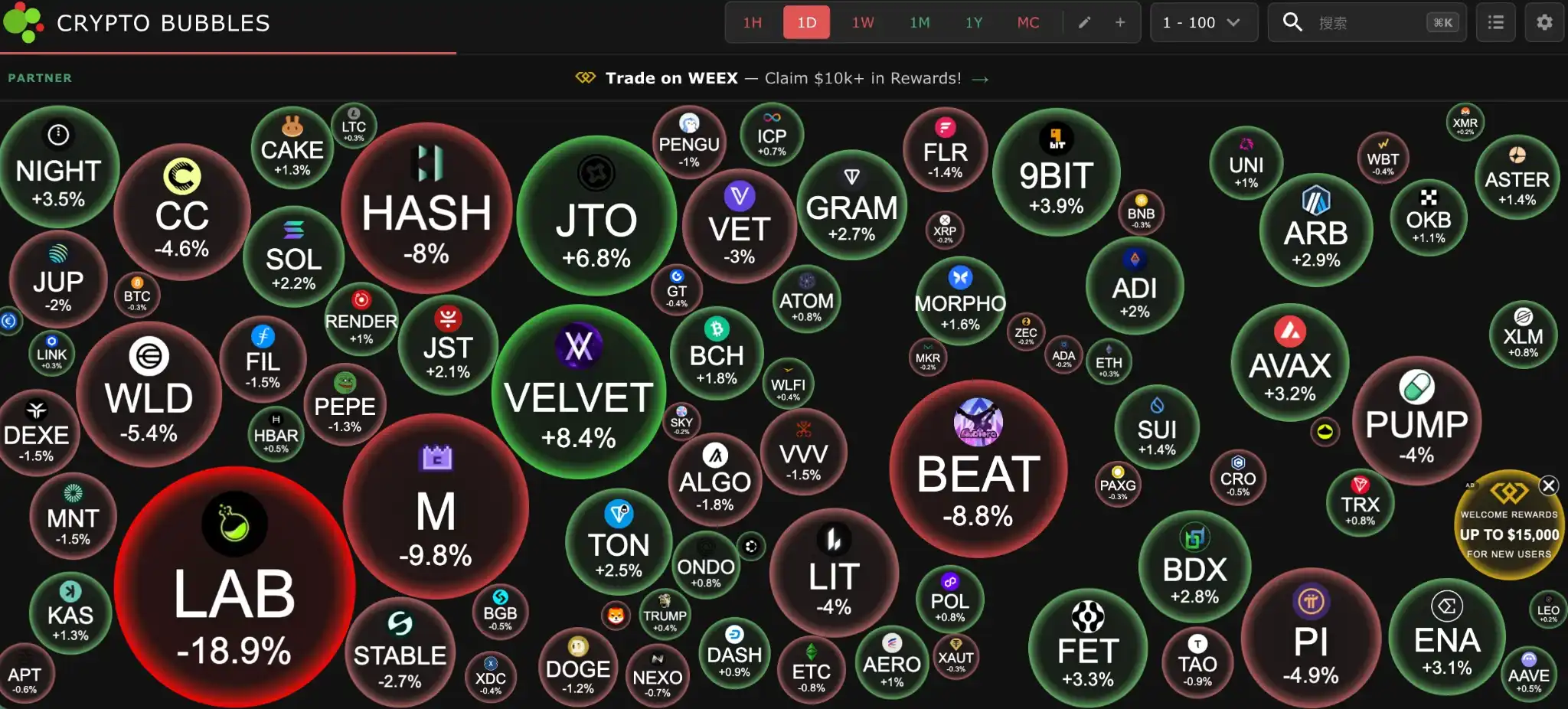
Top gainers among top 100 cryptocurrencies by market cap today: VELVET up 8.4%, JTO up 6.8%, 9BIT up 3.9%, NIGHT up 3.5%, FET up 3.3%.
Asia-Pacific Market

South Korean stocks opened under pressure from memory giants. Despite Aletheia Capital significantly raising DRAM price expectations due to global AI-driven supply shortages, absolute leverage in the market has reached historical highs of 2x-5x. SK Hynix and Samsung Electronics opened nearly 5% lower due to forced liquidation pressure, dragging the KOSPI index down over 3% intraday.

At a critical moment, the South Korean government and President Lee Jae-myung unveiled positive news, announcing the largest industrial investment plan to date, designating semiconductors, physical AI, and AI data centers as the "triangular pillars" of industrial upgrading. President Lee announced an investment of approximately 800 trillion won to build four chip factories in the southwest, with Samsung and SK Hynix each building two, aiming to double DRAM production capacity within five years. Additionally, South Korea plans to invest over 1,000 trillion won in AI data centers by 2035 and spend 81 trillion won to build an advanced packaging cluster in the Chungcheong region.

Buoyed by this news, the KOSPI index, Samsung, and SK Hynix share prices all rebounded.

The Japanese market found support from consumption recovery. May retail sales grew 5.3% year-on-year and 1.9% month-on-month, marking the third consecutive month of growth, with wage increases beginning to outpace inflation. Although the Nikkei 225 index ultimately fell about 0.15%, the consumption recovery narrative remains solid.
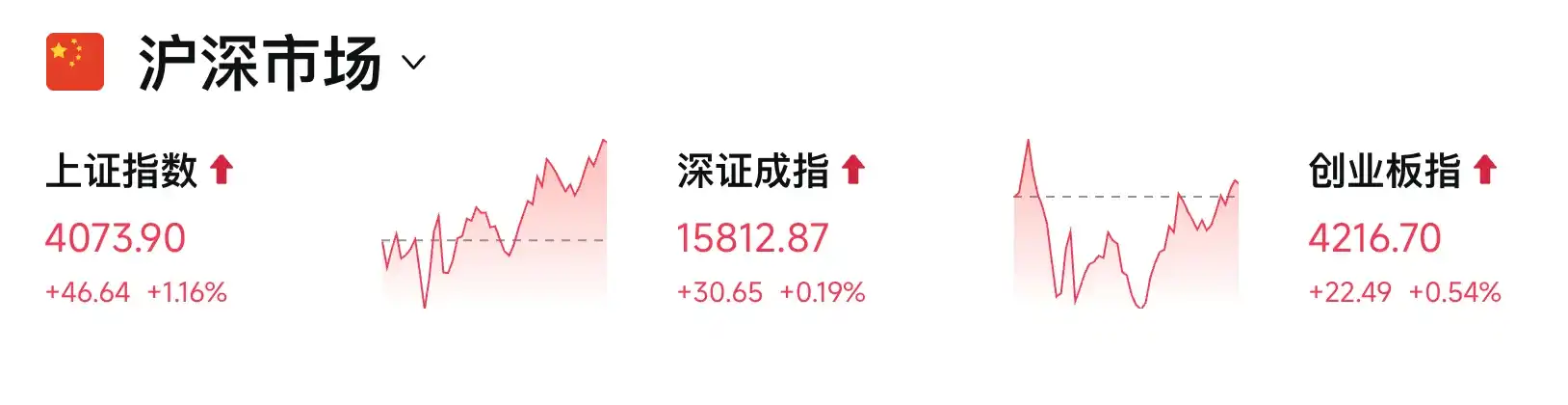
The Chinese market entered a phase of style rebalancing. The Shanghai Composite rose 1.16%, the STAR Composite Index climbed 3.12%, the Shenzhen Component edged up 0.19%, and the ChiNext gained 0.54%.

Innovative drugs were the biggest winners. The CRO sector surged 7%, with over 20 stocks hitting the daily limit-up; BeiGene rose over 10%, Baili Tianheng advanced 12%, WuXi AppTec gained 6%, and Hengrui Pharmaceuticals increased 8%. The catalyst was the National Healthcare Security Administration's announcement of 557 drugs passing the preliminary review for the national reimbursement drug list.

Consumer stocks also recovered. Kweichow Moutai rose over 3%, Dongpeng Beverage climbed 10%, and Bright Dairy & Food hit the daily limit-up. Institutions believe stable wholesale prices for Feitian Moutai indicate channel inventory adjustments are largely complete.

Hong Kong stocks clearly benefited from tech sentiment repair. The Hang Seng Index rose nearly 2%, the Hang Seng Tech Index jumped 3.23%, and the Hang Seng Biotech Index soared 7%. Alibaba surged nearly 6%, Meituan and Baidu gained over 7%, while Lenovo Group bucked the trend, falling over 10%.

Key upcoming events to watch:

  1. June 30, 09:30: NetEase will officially transition to a dual primary listing on the Hong Kong Exchange, which will profoundly impact the capital structure and valuation system of the Hong Kong tech sector.

  2. June 30: The 2026 China Intelligent Computing Industry Ecology Development Annual Conference officially opens, focusing on GW-level Token factory construction. Guidance on the second half of the AI hardware hype, including glass substrates and CPO, will be finalized at the conference.


Trend Kriptolar

İlgili Sorular

QWhat key technical indicator for Bitcoin has turned into a resistance level, and what historical pattern suggests a potential July rebound?

ABitcoin's 200-week moving average (approximately $62,600) has turned from a key support level into a resistance level. Historically, July is one of Bitcoin's best-performing months, with an average gain of 7.6% since 2013. In midterm election years, the average July gain is even higher at 10.3%.

QAccording to the article, what significant change is the U.S. Bureau of Economic Analysis (BEA) planning for September, and what is a major criticism of this change?

AThe U.S. BEA plans to revise the methodology for three components of the PCE price index—computer software, portfolio management, and legal services—in September, which is expected to systematically lower the core inflation reading. A major criticism, voiced by UBS economist Alan Detmeister, is that the change lacks transparency and carries a risk of political manipulation, appearing designed to artificially reduce inflation figures.

QWhat is happening with investor positioning in U.S. tech stocks, particularly the 'Magnificent Seven', and what sector is seeing a significant inflow of funds instead?

AHedge funds are aggressively selling U.S. tech stocks at the most intense pace in a decade. The 'Magnificent Seven' tech giants have seen five consecutive weeks of减持 (reduction in holdings), with overall positioning nearing a three-year low. Instead, funds are flooding into defensive sectors like healthcare, utilities, and real estate, with healthcare and biotech ETFs leading the gains.

QWhat major semiconductor-related investment plan did South Korean President Yoon Suk Yeol announce, and what was its immediate market impact?

ASouth Korean President Yoon Suk Yeol announced a plan to invest approximately 800 trillion won to build four chip factories in the southwestern region, with Samsung and SK Hynix each building two. The goal is to double DRAM production capacity within five years. This announcement helped lift the KOSPI index and the share prices of Samsung and SK Hynix, which had initially fallen sharply.

QWhat is the significance of Monday's (July 1st) market action for Bitcoin's short-term trend, according to analyst CrypNuevo?

AAccording to CrypNuevo, Monday's (July 1st) market action is crucial for determining Bitcoin's short-term trend. Stabilizing above $61,000 would confirm a reversal, while a break below $57,000 would lead to a continued decline towards $52,000.

İlgili Okumalar

AI Billing Black Box Exposed: 1.7 Million Overcharged, Anthropic Refunds But Doesn’t Admit Fault

A startup named Vaudit, founded by former Oracle director Michael Hahn, audits AI bills for companies and claims to have identified approximately $1.7 million in overcharges across 60 businesses, totaling $34 million in reviewed bills. The alleged discrepancies primarily involve charges for Anthropic's Claude Code. Common issues cited include billing for newer, more expensive models when older, cheaper ones were used; charging for failed or errored requests; and "retry storms" where AI agents silently retry failed tasks, accumulating costs unnoticed. Major clients like Panasonic, HP, and Honda were among those audited. While Vaudit reports that around 80% of the disputed charges were refunded by providers like Amazon, Google, Microsoft, Anthropic, and OpenAI after申诉, the AI companies largely deny systemic problems. Anthropic stated overcharges do not appear widespread and it does not bill for uncompleted requests or errors, while OpenAI said it found no evidence of such issues affecting its customers. The situation highlights the inherent opacity and complexity of AI billing, which is based on token usage that is difficult to track and predict, especially with multi-agent, multi-model workflows. This complexity is creating a new market for third-party AI bill auditing services like Vaudit, which charges fees based on recovered amounts. Separately, Anthropic faces a proposed class-action lawsuit alleging its high-tier subscription plans deliver far less usage than advertised. The case underscores growing scrutiny over AI service pricing and transparency as major providers prepare for IPOs.

marsbit20 dk önce

AI Billing Black Box Exposed: 1.7 Million Overcharged, Anthropic Refunds But Doesn’t Admit Fault

marsbit20 dk önce

Tencent Buys Baidu Chips

China's internet giants, once defined by building closed, self-sufficient empires, are undergoing a fundamental shift. A key signal is Baidu's plan to spin off its AI chip unit, Kunlun Xin, for a Hong Kong IPO targeting a $50 billion valuation, potentially exceeding its parent company's worth. Concurrently, Alibaba's T-Head is also pursuing independence. Most significantly, reports indicate that rival Tencent has become a major customer for Kunlun Xin's chips. This move, where competitors begin procuring each other's core technologies, marks a decisive break from the past era of internal duplication and isolation. It signals the maturation of China's AI industry into a more open, specialized ecosystem. The underlying driver is the immense and clear cost of AI infrastructure, particularly the exploding demand for inference compute driven by AI agents and applications. Hardware is no longer just an internal cost center but a profitable, strategic business in itself. Globally, a parallel trend is evident as OpenAI, Google, Amazon, and others develop their own AI chips to control costs and optimize performance. The competition has moved beyond model benchmarks to a deeper, foundational war over token cost efficiency, inference cluster performance, and secure, scalable computing power. Baidu and Alibaba aren't dismantling their empires but are instead decoupling non-core, capital-intensive infrastructure to participate in and shape a larger, collaborative industrial base. The era of the all-encompassing super-app is giving way to an age of strategic specialization and open ecosystem building in the AI race.

marsbit35 dk önce

Tencent Buys Baidu Chips

marsbit35 dk önce

The Token Itself Is an Asset: Three Types of Tokenized Stocks, Which One Suits You?

"Tokenized Stocks: Three Types, Which One Fits You? For investors outside the US, buying stocks like SpaceX or Nvidia is difficult, requiring brokers, cross-border transfers, and often accredited investor status. Blockchain offers an alternative through tokenized stocks, a term encompassing three distinct products with vastly different ownership, voting, and profit rights. 1. **Full Real Ownership**: Companies like Superstate register native equity directly on-chain (e.g., Solana). Holders are on the official shareholder registry, with full voting rights, dividends, and legal ownership. This offers maximum rights but potentially less DeFi flexibility. 2. **SPV-Backed Tokens (Surrendered Ownership for DeFi Composability)**: Issuers like Backed (xStocks) and Ondo use offshore Special Purpose Vehicles (SPVs) to hold underlying shares 1:1 and issue tracking tokens. Investors get price exposure and dividends (reinvested as more tokens) but hold a claim on the SPV, not direct stock ownership. This enables use as collateral in DeFi protocols (Kamino, Morpho) and 24/7 minting/redemption, but carries SPV counterparty risk (highlighted by the PreStocks collapse). 3. **Perpetual Futures (Pure Price Speculation)**: Platforms like TradeXYZ (on Hyperliquid) and Ostium offer perpetual contracts. These are synthetic derivatives with no underlying stock ownership, using funding rates to track spot prices. They require only a price oracle, allowing extremely fast listing (e.g., SpaceX pre-IPO) and high leverage, attracting speculators. Their trading volume far exceeds tokenized spot products. The core value of tokens is that they don't need to replicate full stock ownership. Most retail investors never vote. Tokenization creates layered financial tools: full equity for institutions, composable tokens for DeFi users, and perpetuals for leveraged traders."

marsbit35 dk önce

The Token Itself Is an Asset: Three Types of Tokenized Stocks, Which One Suits You?

marsbit35 dk önce

AI as the Boss: Nearly Bankrupts 10 Companies...

A recent study from Princeton University tested 14 AI models, including large language models (LLMs) and a rule-based algorithm, in a simulation where they acted as CEOs of a virtual SaaS startup over 500 days. The goal was to grow an initial $1 million capital. The results were stark: only four "CEOs" ended with a profit. The top performer was Claude Fable 5, multiplying the capital 47-fold to $47.15 million. Claude Opus 4.8 and GPT-5.5 followed. Notably, the fourth profitable entity was a simple, pre-programmed rule-based algorithm, which outperformed many advanced LLMs with $15.76 million in profit. Five other models, including several major LLMs, went bankrupt before the simulation ended. Key takeaways from the research highlight that successful AI CEOs demonstrated a tendency for exploration and adaptation over caution. They excelled in discovering hidden information, predicting future cash flow, adapting quickly to changes (like competitor moves), and engaging in strategic "if-then" planning. The study also found that equipping LLMs with programming-agent frameworks, optimized for coding tasks, actually harmed their performance in this CEO role, suggesting a need for domain-specific adaptations. The article concludes by contrasting AI's current operational proficiency within defined frameworks with the type of visionary, intuitive decision-making—exemplified by figures like Steve Jobs—that truly drives transformative business strategy. This critical "matrix-drawing" capability, it argues, remains uniquely human.

marsbit46 dk önce

AI as the Boss: Nearly Bankrupts 10 Companies...

marsbit46 dk önce

İşlemler

Spot

Popüler Makaleler

BITCOIN Nedir

HarryPotterObamaSonic10Inu (ERC-20)'yu ve Kripto Alanındaki Yerini Anlamak Son yıllarda, kripto para piyasası, hem ticaret yapanların hem de topluluk etkileşimi ve eğlence değeri arayanların ilgisini çeken meme coin'lerin popülaritesinde bir artış gördü. Bu benzersiz token'lar arasında, kripto para dokusuna kültürel referansları harmanlayan ilginç bir proje olan HarryPotterObamaSonic10Inu (ERC-20) bulunmaktadır. Bu makale, HarryPotterObamaSonic10Inu'nun temel yönlerini, mekanizmalarını, topluluk odaklı ethosunu ve daha geniş kripto manzarasıyla etkileşimini incelemektedir. HarryPotterObamaSonic10Inu (ERC-20) Nedir? Adından da anlaşılacağı gibi, HarryPotterObamaSonic10Inu, Ethereum blok zinciri üzerinde inşa edilen bir meme coin'dir ve ERC-20 standardı altında sınıflandırılmaktadır. Geleneksel kripto paraların pratik kullanılabilirlik veya yatırım potansiyeline odaklandığı durumların aksine, bu token eğlence değeri ve topluluğunun gücü üzerine kuruludur. Proje, bağlı kullanıcıların bir araya gelebileceği, fikirlerini paylaşabileceği ve çeşitli kültürel fenomenlerden ilham alan etkinliklere katılabileceği bir ortam yaratmayı hedeflemektedir. HarryPotterObamaSonic10Inu'nun dikkate değer özelliklerinden biri işlemlerde sıfır vergi olmasıdır. Bu çekici unsur, küçük ölçekli yatırımcıları caydırabilecek ek ücretlerden yoksun olarak ticareti ve topluluk katılımını teşvik etmeyi amaçlamaktadır. Coin'in toplam arzı bir milyar token olarak belirlenmiştir; bu, topluluk içinde önemli bir dolaşım sağlama niyetini göstermektedir. HarryPotterObamaSonic10Inu (ERC-20) Yaratıcısı HarryPotterObamaSonic10Inu'nun kökenleri bir miktar gizemlidir; yaratıcısı hakkında spesifik bilgilerin ne olduğu bilinmemektedir. Bu token'ın geliştirilmesi, belirli bir ekip veya açık bir plan eksikliği ile gerçekleşmiştir; bu durum, meme coin sektöründe oldukça yaygındır. Proje, topluluğunun heyecanı ve katılımına dayalı olarak organik bir şekilde ortaya çıkmıştır. HarryPotterObamaSonic10Inu (ERC-20) Yatırımcıları Dış yatırımlar ve destekler söz konusu olduğunda, HarryPotterObamaSonic10Inu da belirsiz kalmaktadır. Token, bilinen herhangi bir yatırım fonunu veya önemli bir kurumsal desteği listelememektedir. Bunun yerine, projenin can damarı, kolektif eylem ve kripto alanındaki katılım yoluyla büyüme ve sürdürülebilirlik sağlayan temel topluluğudur. HarryPotterObamaSonic10Inu (ERC-20) Nasıl Çalışır? Bir meme coin olarak, HarryPotterObamaSonic10Inu, genellikle varlık değerini yöneten geleneksel çerçevelerin dışında çalışmaktadır. Projenin nasıl çalıştığını tanımlayan birkaç özelliği vardır: Sıfır Vergi İşlemleri: İşlemlerde vergi ücreti olmadan, kullanıcılar gizli maliyet endişesi olmadan token'ı serbestçe alıp satabilirler. Topluluk Etkileşimi: Proje, topluluk etkileşimi üzerine kuruludur ve sosyal medya platformlarını kullanarak heyecan yaratarak katılımı kolaylaştırır. Tartışmalar, içerik paylaşımı ve katılım, projenin erişimini genişletmeye ve destekleyiciler arasında sadakat oluşturmaya yardımcı olan kritik unsurlardır. Pratik Kullanılabilirlik Yok: HarryPotterObamaSonic10Inu'nun mali ekosistem içinde somut bir kullanılabilirlik sunmadığı belirtilmelidir. Daha ziyade, eğlence ve topluluk etkinlikleri için bir token olarak sınıflandırılmaktadır. Kültürel Referans: Token, popüler kültürden unsurları zekice harmanlayarak ilgi çekmektedir ve hem meme meraklıları hem de kripto takipçileriyle bağlantı kurmaktadır. HarryPotterObamaSonic10Inu, meme coin'lerin, daha geleneksel kripto para projelerinden nasıl farklı çalıştığını örneklendirmektedir; bu projeler, utilitarist varlıklar yerine yenilikçi sosyal yapıların bir parçası olarak piyasaya girmektedir. HarryPotterObamaSonic10Inu (ERC-20) Zaman Çizelgesi HarryPotterObamaSonic10Inu'nun tarihi, birkaç dikkate değer kilometre taşı ile işaretlenmiştir: Oluşum: Token, birçok kripto meraklısının hayal gücünü yakalayan bir viral meme'den ortaya çıkmıştır. Spesifik yaratım tarihleri mevcut değildir ve bu onun organik yükselişini vurgulamaktadır. Borsa Listelemeleri: HarryPotterObamaSonic10Inu, topluluğun daha kolay erişim ve ticaret yapabilmesini sağlamak için çeşitli borsalarda yer bulmuştur. Topluluk Katılım İnisiyatifleri: Yarışmalar, sosyal medya kampanyaları ve hayranlar ile destekçilerden içerik üretimini içeren topluluk etkileşimini artırmayı amaçlayan devam eden etkinlikler. Gelecek Genişleme Planları: Projenin yol haritası, kültürel temalarına ilişkin bir NFT koleksiyonu, ticari ürünler ve bir e-ticaret sitesi başlatılmasını içermektedir; bu da topluluğun daha fazla katılımını sağlamayı ve ekosistemine daha fazla boyut kazandırmayı hedeflemektedir. HarryPotterObamaSonic10Inu (ERC-20) Hakkında Kilit Noktalar Topluluk Odaklı Doğası: Proje, kullanıcı katılımını geliştirme önceliği taşır ve böylece kullanıcıların sürecin en önünde yer almasını sağlar. Meme Coin Sınıflandırması: Eğlenceye dayalı kripto paranın doruk noktasıdır ve geleneksel yatırım araçlarından ayrılmaktadır. Bitcoin ile Doğrudan İlişki Yok: Ticker ismindeki benzeliğe rağmen, HarryPotterObamaSonic10Inu ayırt edicidir ve Bitcoin veya diğer yerleşik kripto paralarla herhangi bir ilişkisi yoktur. İşbirliğine Odaklanma: HarryPotterObamaSonic10Inu, sahipleri arasında işbirliği ve hikaye paylaşımı için bir alan oluşturmak üzere tasarlanmıştır ve bu da yaratıcılık ve topluluk bağlarını sağlamaktadır. Gelecek Beklentileri: Başlangıçta belirlendiği temalardan NFTs ve ticari ürünlere genişleme arzusu, projenin dijital kültürde daha ana akıma girebilmesi için bir yol haritası çizmektedir. Meme coin'ler, kripto para topluluğunun hayal gücünü çalmaya devam ederken, HarryPotterObamaSonic10Inu (ERC-20), kültürel bağları ve topluluk merkezli yaklaşımıyla öne çıkmaktadır. Geleneksel bir hizmet odaklı token modeliyle uyumlu olmasa da, özünde destekçileri arasında sağlanan neşe ve dostluğu vurgulayarak, giderek dijitalleşen bir çağda kripto paraların evrilen doğasını göstermektedir. Proje gelişmeye devam ettikçe, topluluk dinamiklerinin blockchain teknolojisi dünyasındaki seyrini nasıl etkilediğini izlemek önemli olacaktır.

2.0k Toplam GörüntülenmeYayınlanma 2024.04.01Güncellenme 2024.12.03

BITCOIN Nedir

BTC Nasıl Satın Alınır

HTX.com’a hoş geldiniz! Bitcoin (BTC) satın alma işlemlerini basit ve kullanışlı bir hâle getirdik. Adım adım açıkladığımız rehberimizi takip ederek kripto yolculuğunuza başlayın. 1. Adım: HTX Hesabınızı OluşturunHTX'te ücretsiz bir hesap açmak için e-posta adresinizi veya telefon numaranızı kullanın. Sorunsuzca kaydolun ve tüm özelliklerin kilidini açın. Hesabımı Aç2. Adım: Kripto Satın Al Bölümüne Gidin ve Ödeme Yönteminizi SeçinKredi/Banka Kartı: Visa veya Mastercard'ınızı kullanarak anında Bitcoin (BTC) satın alın.Bakiye: Sorunsuz bir şekilde işlem yapmak için HTX hesap bakiyenizdeki fonları kullanın.Üçüncü Taraflar: Kullanımı kolaylaştırmak için Google Pay ve Apple Pay gibi popüler ödeme yöntemlerini ekledik.P2P: HTX'teki diğer kullanıcılarla doğrudan işlem yapın.Borsa Dışı (OTC): Yatırımcılar için kişiye özel hizmetler ve rekabetçi döviz kurları sunuyoruz.3. Adım: Bitcoin (BTC) Varlıklarınızı SaklayınBitcoin (BTC) satın aldıktan sonra HTX hesabınızda saklayın. Alternatif olarak, blok zinciri transferi yoluyla başka bir yere gönderebilir veya diğer kripto para birimlerini takas etmek için kullanabilirsiniz.4. Adım: Bitcoin (BTC) Varlıklarınızla İşlem YapınHTX'in spot piyasasında Bitcoin (BTC) ile kolayca işlemler yapın.Hesabınıza erişin, işlem çiftinizi seçin, işlemlerinizi gerçekleştirin ve gerçek zamanlı olarak izleyin. Hem yeni başlayanlar hem de deneyimli yatırımcılar için kullanıcı dostu bir deneyim sunuyoruz.

8.0k Toplam GörüntülenmeYayınlanma 2024.12.12Güncellenme 2026.06.02

BTC Nasıl Satın Alınır

$BITCOIN Nedir

DİJİTAL ALTIN ($BITCOIN): Kapsamlı Bir Analiz DİJİTAL ALTIN ($BITCOIN) Tanıtımı DİJİTAL ALTIN ($BITCOIN), geleneksel değerli metallerin özelliklerini merkeziyetsiz teknolojilerin yeniliği ile birleştirmeyi amaçlayan Solana ağı üzerinde çalışan blockchain tabanlı bir projedir. Bitcoin ile aynı isme sahip olmasına rağmen, genellikle bir değer saklama aracı olarak algılandığı için “dijital altın” olarak anılmaktadır; DİJİTAL ALTIN, Web3 ortamında benzersiz bir ekosistem yaratmak için tasarlanmış ayrı bir tokendir. Hedefi, uygulanabilir bir alternatif dijital varlık olarak kendini konumlandırmaktır, ancak uygulamaları ve işlevleri ile ilgili ayrıntılar hala gelişmektedir. DİJİTAL ALTIN ($BITCOIN) Nedir? DİJİTAL ALTIN ($BITCOIN), Solana blockchain'inde kullanılmak üzere açıkça tasarlanmış bir kripto para tokenidir. Bitcoin'in yaygın olarak tanınan bir değer saklama rolü sağlamasının aksine, bu token daha geniş uygulamalara ve özelliklere odaklanıyor gibi görünmektedir. Dikkate değer yönler şunlardır: Blockchain Altyapısı: Token, yüksek hızlı ve düşük maliyetli işlemleri yönetme kapasitesi ile bilinen Solana blockchain'inde inşa edilmiştir. Arz Dinamikleri: DİJİTAL ALTIN'ın maksimum arzı 100 katrilyon token (100P $BITCOIN) ile sınırlıdır, ancak dolaşımdaki arzı ile ilgili ayrıntılar şu anda açıklanmamıştır. Kullanım Alanı: Kesin işlevler açıkça belirtilmemiş olsa da, token'ın merkeziyetsiz uygulamalar (dApps) veya varlık tokenizasyon stratejileri ile ilgili çeşitli uygulamalar için kullanılabileceğine dair işaretler bulunmaktadır. DİJİTAL ALTIN ($BITCOIN) Yaratıcısı Kimdir? Şu anda, DİJİTAL ALTIN ($BITCOIN) arkasındaki yaratıcıların ve geliştirme ekibinin kimliği bilinmemektedir. Bu durum, merkeziyetsiz finans ve meme coin fenomenleriyle uyumlu olan birçok yenilikçi proje arasında yaygındır. Böyle bir anonimlik, topluluk odaklı bir kültürü teşvik edebilirken, yönetişim ve hesap verebilirlik konusundaki endişeleri artırmaktadır. DİJİTAL ALTIN ($BITCOIN) Yatırımcıları Kimlerdir? Mevcut bilgiler, DİJİTAL ALTIN ($BITCOIN) için bilinen herhangi bir kurumsal destekçi veya önde gelen risk sermayesi yatırımı olmadığını göstermektedir. Proje, geleneksel finansman yolları yerine topluluk desteği ve benimsemeye odaklanan bir eşler arası modelde çalışıyor gibi görünmektedir. Faaliyetleri ve likiditesi esas olarak PumpSwap gibi merkeziyetsiz borsalarda (DEX'ler) yer almakta olup, bu da onun taban hareketine vurgu yapmaktadır. DİJİTAL ALTIN ($BITCOIN) Nasıl Çalışır DİJİTAL ALTIN ($BITCOIN) 'ın operasyonel mekanikleri, blockchain tasarımı ve ağ özellikleri temelinde açıklanabilir: Konsensüs Mekanizması: Solana'nın benzersiz tarih kanıtı (PoH) ile bir hisse kanıtı (PoS) modelini birleştirerek, proje ağın yüksek performansına katkıda bulunan verimli işlem doğrulamasını sağlar. Tokenomik: Belirli deflasyonist mekanizmalar kapsamlı bir şekilde detaylandırılmamış olsa da, geniş maksimum token arzı, henüz tanımlanmamış mikro işlemler veya niş kullanım durumlarına hitap edebileceğini ima etmektedir. Etkileşim: Solana'nın daha geniş ekosistemi ile entegrasyon potansiyeli bulunmaktadır; bu, çeşitli merkeziyetsiz finans (DeFi) platformlarını içermektedir. Ancak, belirli entegrasyonlarla ilgili ayrıntılar belirtilmemiştir. Önemli Olayların Zaman Çizelgesi DİJİTAL ALTIN ($BITCOIN) ile ilgili önemli kilometre taşlarını vurgulayan bir zaman çizelgesi: 2023: Token'ın Solana blockchain'inde ilk dağıtımı, sözleşme adresi ile işaretlenmiştir. 2024: DİJİTAL ALTIN, PumpSwap gibi merkeziyetsiz borsalarda işlem görmeye başladıkça görünürlük kazanır ve kullanıcıların bunu SOL karşısında ticaret yapmasına olanak tanır. 2025: Proje, topluluk odaklı etkileşimlere yönelik potansiyel ilgi ve ara sıra ticaret faaliyetleri görür, ancak şu ana kadar dikkate değer ortaklıklar veya teknik ilerlemeler belgelenmemiştir. Kritik Analiz Güçlü Yönler Ölçeklenebilirlik: Temel Solana altyapısı, yüksek işlem hacimlerini destekleyerek $BITCOIN'in çeşitli işlem senaryolarındaki faydasını artırabilir. Erişilebilirlik: Token başına potansiyel düşük ticaret fiyatı, perakende yatırımcıları çekebilir ve parçalı mülkiyet fırsatları sayesinde daha geniş katılımı kolaylaştırabilir. Riskler Şeffaflık Eksikliği: Kamuya açık olarak bilinen destekçilerin, geliştiricilerin veya bir denetim sürecinin olmaması, projenin sürdürülebilirliği ve güvenilirliği konusunda şüpheler doğurabilir. Piyasa Volatilitesi: Ticaret faaliyeti büyük ölçüde spekülatif davranışa dayanmakta olup, bu da yatırımcılar için önemli fiyat dalgalanmalarına ve belirsizliklere yol açabilir. Sonuç DİJİTAL ALTIN ($BITCOIN), hızla gelişen Solana ekosisteminde ilginç ama belirsiz bir proje olarak ortaya çıkmaktadır. “Dijital altın” anlatısını kullanmaya çalışırken, Bitcoin'in değer saklama rolünden ayrılması, amaçlanan faydasının ve yönetişim yapısının daha net bir şekilde tanımlanması gerekliliğini vurgulamaktadır. Gelecekteki kabul ve benimseme, mevcut belirsizliklerin giderilmesine ve operasyonel ile ekonomik stratejilerinin daha açık bir şekilde tanımlanmasına bağlı olacaktır. Not: Bu rapor, Ekim 2023 itibarıyla mevcut olan sentezlenmiş bilgileri kapsamaktadır ve araştırma döneminin ötesinde gelişmeler yaşanmış olabilir.

146 Toplam GörüntülenmeYayınlanma 2025.05.13Güncellenme 2025.05.13

$BITCOIN Nedir

Tartışmalar

HTX Topluluğuna hoş geldiniz. Burada, en son platform gelişmeleri hakkında bilgi sahibi olabilir ve profesyonel piyasa görüşlerine erişebilirsiniz. Kullanıcıların BTC (BTC) fiyatı hakkındaki görüşleri aşağıda sunulmaktadır.

活动图片