Topping GitHub's Trending, the Essential Guide for Claude Code Users

marsbit2026-05-18 tarihinde yayınlandı2026-05-18 tarihinde güncellendi

Özet

The CLAUDE.md file, trending on GitHub, is a project-level guide for Claude Code designed to dramatically improve its accuracy and efficiency. It addresses key issues like repetitive context explanations, unauthorized code changes, and forgotten decisions across sessions. By placing this plain-text file in a project root, Claude Code reads it automatically at the start of each session. The guide includes rules to eliminate redundant explanations, enforce strict behavioral constraints (e.g., no modifications outside the requested scope without confirmation), and establish a "memory" system using companion files like MEMORY.md and ERRORS.md to log past decisions and failures. It also locks in the project's specific tech stack to prevent inappropriate tool recommendations. Highlighted are four foundational rules from Andrej Karpathy that reportedly increased coding accuracy from 65% to 94%: always ask for clarity first, implement the simplest solution, never touch unrelated code, and explicitly flag uncertainties. The article quantifies significant weekly cost savings for developers and teams by eliminating wasted time on re-explaining context, rolling back unauthorized edits, and re-evaluating previously rejected solutions. The core message is that a small, upfront investment in creating a CLAUDE.md file leads to a more predictable, controlled, and cost-effective AI programming assistant.

Editor's Note: The biggest problem many people face when using Claude Code isn't that the model isn't powerful enough, but that they start from scratch every time.

You need to repeatedly tell it the project background, tech stack, code conventions, which parts must not be touched, and which approaches have already been tried. As long as this information isn't fixed, Claude will work by guessing, potentially modifying files it shouldn't, refactoring code you didn't ask it to, or even recommending tools unsuitable for the current project.

The CLAUDE.md introduced in this article is a user manual written for Claude Code. You just need to place it in your project's root directory, and Claude will automatically read it on each startup. It tells Claude in advance: how to answer, how to write code, when to ask questions first, which operations cannot be performed without permission, what tech stack the project uses, and what important decisions were made in the past.

In short, the purpose of CLAUDE.md is to: reduce repeated explanations, limit the model's overreach, and make AI programming more stable and controllable.

If you are using Claude Code, you can start with the 4 rules summarized by Karpathy: ask if unsure, do the simplest solution first, don't touch unrelated code, and clearly state uncertainty. Start by writing these rules into CLAUDE.md, then gradually add to it based on your project, and you'll see a clear improvement in your experience.

The original text follows:

A file named CLAUDE.md topped GitHub's Trending list.

82k stars, 7.8k forks.

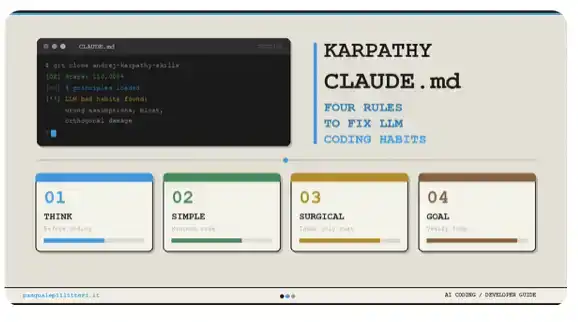
This began with Andrej Karpathy. He is the former Head of AI at Tesla and a founding member of OpenAI. He summarized four behaviors that would cause Claude Code to fail and wrote them into a file.

Later, a developer expanded upon these four rules and publicly released this file. It quickly went viral.

The reason is straightforward: coding accuracy increased from 65% to 94%.

But most developers who use Claude Code daily have never actually set this up. They start from zero every session: re-explaining the same context, cleaning up unnecessary scope changes, rolling back unrequested refactors.

Here is the complete file.
The Setup Most Developers Miss

Every time you open Claude Code, it starts knowing nothing by default.

It doesn't know your tech stack, your coding conventions, your project background, what you've already tried, let alone decisions you explicitly ruled out three sessions ago.

So it can only guess. And once it starts guessing, it might refactor code you didn't ask to be touched, recommend frameworks that would break your existing architecture, delete files without confirmation, or even overturn decisions you've already made.

CLAUDE.md is a plain text file placed in the project's root directory. Claude Code will automatically read it at the start of every session.

Set it up once, avoid repeated explanations, and fix three types of costly errors.

Default Settings: You're Spending $375 a Week Just Repeating Yourself

The average developer spends about 30 minutes a day re-explaining context to Claude.

Tech stack, coding conventions, project background, methods already tried—unless you write this information down once and have Claude read it automatically each time, it won't persist across sessions.

At a developer's hourly rate of $150:

· 30 minutes a day is $75;

· $375 per week.

· For a 5-person team, that's $1,875 in hidden costs weekly.
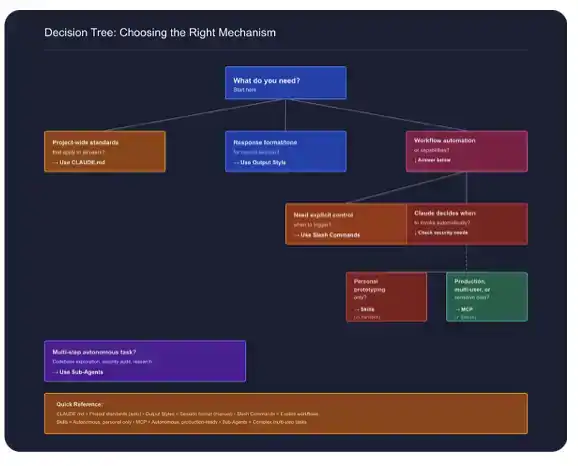
The following 7 rules should be placed at the top of the CLAUDE.md file.

→ Skip the Fluff

Don't start answers with "Great question," "Sure," "No problem," or similar prefaces. Get straight to the answer. No pleasantries, no restating the question.

→ Match Answer Length to Task

Answer length should match task complexity. Simple questions get direct, short answers; complex tasks get complete, detailed explanations. Don't pad length by restating the question or adding repetitive concluding remarks.

→ Give Options Before Acting

Before starting any significant task, first present 2–3 viable paths. Wait for my selection before proceeding.

→ Admit Uncertainty Before It Costs

If you are uncertain about any fact, data, date, or technical information, explicitly say so before referencing it. Don't fill knowledge gaps with plausible-sounding information. When in doubt, simply say you're unsure.

→ Who I Am, What I Know

About Me: [Name] / Role: [Your Role] / Background: [Domain].

I'm Proficient At: [What you're familiar with].

I'm Still Learning: [Knowledge gaps].

Adjust the depth of each answer based on this information. Don't over-explain what I already know, and don't skip context I need.

→ Current Project Context

I'm Working On: [Project Name] / Goal: [Specific Outcome] / Audience: [Who will use it] / Tech Stack Context: [Relevant Constraints] / Avoid: [List].

Apply this context to every task. If a request conflicts with the context, point it out before executing.

→ Lock Down Your Writing Style

My Writing Style Is: [Describe your style].

Sentence Length: [Preference].

Words I Use Often: [Examples].

Words I Never Use: [Examples].

Format: [Prose or Structured].

When writing anything on my behalf, you must strictly match this style. Do not default to your own expressive patterns.

Daily time spent re-explaining context: 30 minutes

At $150/hour developer rate: $75 / day

Weekly: $375 per developer

5-person team: $1,875 per week

Time to set up this part of CLAUDE.md: 45 minutes total

Mistake to avoid: Don't write CLAUDE.md from scratch. Start with the prompt below, then edit the output:

Based on what I've told you about myself, my project, and how I want to work, please write a complete CLAUDE.md file for me. Include: who I am, my technical background, my communication preferences, and default behaviors to follow each session. Be specific, plain text, under 500 words.

Behavioral Constraints: Those Unauthorized $150/Hour Changes

You ask Claude to fix a function.

It ends up refactoring three files, renaming variables, reorganizing imports, and rewriting comments you spent time on.

All without your confirmation.

Reviewing and rolling back these unnecessary changes might take an hour, which is $150. Happening three times a week is $450. For a 5-person team, that's $2,250 per week spent cleaning up unauthorized changes.
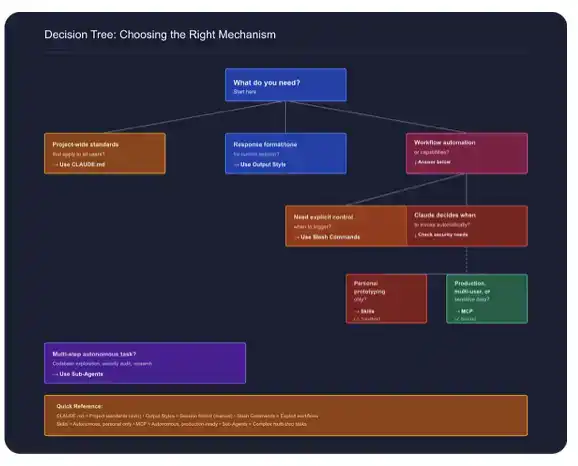
The following 7 rules should go in the Behavioral Constraints section of CLAUDE.md.

→ Strict Scope Control

Only modify files, functions, and lines of code directly relevant to the current task. Do not refactor, rename, reorganize, reformat, or "optimize" anything I have not explicitly asked you to change.

If you see something else worth fixing, note it at the end. Do not touch it. Never.

→ Ask Before Major Changes

Before making significant changes to content I've already created—including rewriting sections, deleting paragraphs, restructuring, changing tone—you must pause, precisely state what you plan to change and why. Wait for my confirmation before proceeding.

→ Must Confirm Before Any Destructive Action

Before deleting any file, overwriting existing code, deleting database records, or removing dependencies, you must pause, list what will be specifically affected, and request my explicit confirmation. You may proceed only if I say "yes" in the current message.

"You mentioned earlier" does not equal confirmation.

→ Mandatory Pause for Production Operations

The following operations require explicit confirmation within the current session, without exception:

· Deploying or pushing to any environment;

· Running migrations or database schema changes;

· Sending any external API calls;

· Executing any command with irreversible side effects.

· I must explicitly say "yes" in the current message.

→ Always Show What Changed

After completing any coding task, the end must include:

Files Modified: List all touched files;

What Changed: One sentence per file;

Files Intentionally Not Modified;

Follow-Up Items.

→ Do Not Act on My Behalf Without Explicit Confirmation

Do not send, post, share, or schedule anything on my behalf without my explicit confirmation in the current message. This includes emails, calendar invites, document shares, or any action happening outside the current conversation. I must explicitly say "yes" in the current message.

→ Think Before Coding

For tasks involving architectural decisions, complex problem debugging, or non-trivial feature development, first reason through the problem step-by-step before writing code. Show your reasoning, point out uncertainties, and then execute.

Weekly rollback of unnecessary scope changes: $150

Weekly manual diff checks: $75

Behavior-related waste per developer: $225 / week

5-person team: $1,125 / week

Time to set up CLAUDE.md Behavior section: 30 minutes

Memory & Tech Stack: The Setup That Makes Claude Code Truly Reliable

Claude forgets everything between sessions.

Every decision you've made, every approach that failed, why you chose Prisma over Drizzle six months ago, and why a particular constraint comes from a specific client requirement—it forgets it all.

Then, it re-proposes options you've long since ruled out.

This section is the closest thing to providing Claude with "real memory" for the current context, while also locking down your tech stack to prevent it from recommending tools that would break your existing architecture.
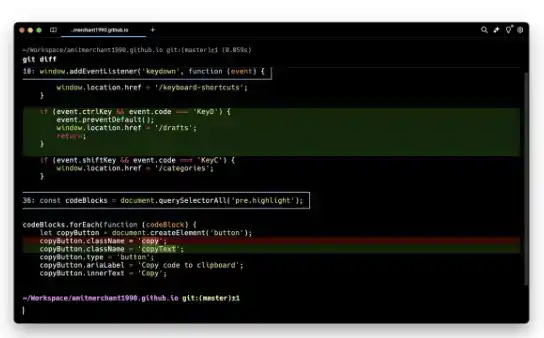
→ MEMORY.md Decision Log

Maintain a file named MEMORY.md in the project. Whenever an important decision is made, add a new entry:

· What was decided;

· Why it was decided that way;

· What was ruled out, and why.

Read MEMORY.md at the start of each session. Do not conflict with recorded decisions without prompting.

→ Session End Summary

When I say "session end," "wrapping up," or "let's stop here," write a session summary to MEMORY.md, including:

· What was handled;

· What was completed;

· What is still in progress;

· What decisions were made;

· Priorities for the next session.

→ ERRORS.md Failure Log

Maintain a file named ERRORS.md. When an approach has been tried more than twice without success, record it:

· What didn't work;

· What finally worked;

· What to watch for next time.

Check ERRORS.md before proposing solutions for similar tasks.

→ Permanent Fact List

The following facts are always true for this project and must be applied to every session without exception:

[Your permanent constraints, architectural decisions, and rules]

If a task conflicts with these facts, point it out before executing.

→ Lock Down the Tech Stack

The project's tech stack is as follows. Always use these tools. Do not recommend alternatives unless I explicitly ask:

Language: [e.g., TypeScript]

Framework: [e.g., Next.js 14]

Package Manager: [e.g., pnpm]

Database: [e.g., PostgreSQL with Prisma]

Testing: [e.g., Vitest]

Styling: [e.g., Tailwind CSS]

If a tool seems unsuitable, you can point it out. But unless I explicitly state otherwise, you must use the defined tech stack.

→ Enable Extended Thinking for Difficult Decisions

For problems involving system architecture, performance trade-offs, database design, or long-term technical decisions, use the extended thinking mode.

Analyze the problem step-by-step, point out trade-offs I might not have considered, identify assumptions that might not hold at scale, and then give your recommendation.

→ The 4 Viral Rules

Karpathy summarized 4 behaviors that cause Claude Code to fail. A developer distilled them into these 4 lines of rules. Coding accuracy increased from 65% to 94% as a result.

Ask, don't assume.
If anything is unclear, ask before writing the first line of code. Do not make silent assumptions about intent, architecture, or requirements.

Do the simplest thing first.
Always implement the simplest solution that works first. Do not add abstraction layers or flexibility not explicitly requested.

Don't touch unrelated code.
If a file or function is not directly related to the current task, don't modify it. Even if you think it could be optimized, leave it alone.

Explicitly mark uncertainty.
If you are unsure about a solution or technical detail, state it before proceeding. Acting confident without certainty causes more damage than admitting a knowledge gap.

· Weekly recovery cost from forgotten decisions and bad advice: $300 per developer

· Wrong tech stack recommendations and incompatible tools: $75 per week

· Memory-related waste per developer: $375 / week

· 5-person team: $1,875 / week

· MEMORY.md + ERRORS.md + Tech Stack setup time: 20 minutes

Conclusion

The full cost breakdown is as follows:

· Weekly cost of re-explaining context: $375

· Weekly cost of rolling back unauthorized changes: $225

· Weekly cost of handling problems from forgotten decisions: $375

· Total waste per developer per week: $975.

For a 5-person dev team: $4,875 per week. $253,500 per year.

Setting up CLAUDE.md only takes 2 hours in total.

Karpathy's 4 rules alone increased coding accuracy from 65% to 94%.

A plain text file, 21 rules, two hours of work.

Developers who complete this setup are effectively using a more reliable Claude: one that remembers decisions, controls task scope, asks for confirmation before destructive actions, and doesn't recommend frameworks that would break the existing architecture.

Those who haven't set it up are still spending $975 a week repeating themselves.

P.S.: Start with Karpathy's 4 rules. Just these 4. Paste them into a new file named CLAUDE.md in your project's root directory right now. It takes 2 minutes. Then gradually supplement it each week based on the gaps you discover.

Bookmark this before it gets lost in your feed. And if you find it useful, share it with someone who genuinely needs it.


İlgili Sorular

QWhat is CLAUDE.md and what problem does it solve for Claude Code users?

ACLAUDE.md is a plain text file placed in a project's root directory. It serves as an instruction manual for Claude Code, which automatically reads it at the start of each session. It solves the problem of developers having to repeatedly re-explain project context, tech stack, code standards, previous decisions, and constraints to Claude Code in every new session. This reduces repetitive explanations, prevents the AI from making incorrect assumptions or unauthorized changes, and makes AI-assisted programming more stable and controllable.

QAccording to the article, what are the four core rules from Andrej Karpathy that significantly improve Claude Code's accuracy?

AThe four core rules from Andrej Karpathy are: 1. Ask first, don't assume: If anything is unclear, ask before writing the first line of code. Do not make silent assumptions about intent, architecture, or requirements. 2. Do the simplest thing first: Always implement the simplest solution that works. Do not add abstraction layers or flexibility that weren't explicitly requested. 3. Don't touch unrelated code: If a file or function is not directly related to the current task, do not modify it. Even if you think it could be optimized, leave it alone. 4. Explicitly mark uncertainty: If you are unsure about a solution or technical detail, state it before proceeding. Acting confidently without certainty causes more harm than admitting a knowledge gap.

QWhat is the estimated weekly financial waste per developer mentioned in the article for not using CLAUDE.md?

AThe article estimates a weekly financial waste of $975 per developer for not using CLAUDE.md. This breaks down into three categories: $375 for repeating contextual explanations, $225 for rolling back unauthorized changes, and $375 for dealing with problems caused by forgotten decisions and wrong suggestions.

QWhat specific behaviors should be prevented according to the 'Behavioral Constraints' section of an ideal CLAUDE.md file?

AAccording to the 'Behavioral Constraints' section, an ideal CLAUDE.md file should enforce rules to prevent Claude Code from: 1. Making changes outside the direct scope of the task (e.g., unauthorized refactoring, renaming, reformatting). 2. Executing significant modifications (rewrites, deletions, structural changes) without prior confirmation. 3. Performing any destructive operations (deleting files, overwriting code, database changes) without explicit, in-session confirmation. 4. Taking production environment actions (deployments, migrations, external API calls) without mandatory pause and confirmation. 5. Failing to clearly list all changes made after a coding task. 6. Acting on the user's behalf (sending emails, sharing documents) without explicit confirmation. 7. Writing code for complex tasks without first showing reasoning and identifying uncertainties.

QWhat are the MEMORY.md and ERRORS.md files used for, as suggested in the article?

AThe article suggests using MEMORY.md and ERRORS.md files to provide Claude Code with a form of 'memory'. MEMORY.md is a decision log where important project decisions (what was decided, why, and what was excluded) are recorded. Claude should read this at the start of each session and avoid conflicting with logged decisions. It should also write a session summary to this file when a session ends. ERRORS.md is a failure log. When a solution attempt fails more than twice, it should be recorded (what didn't work, what finally worked, what to watch for next). Claude should check this file before proposing solutions for similar tasks.

İlgili Okumalar

Another Corporate Bitcoin Treasury Strategy Ends: From High-Profile Entry to Liquidation at a Massive Loss in 11 Months

French semiconductor company Sequans Communications has sold off its bitcoin holdings and terminated its corporate bitcoin treasury strategy less than a year after launching it, sustaining heavy losses. Facing delisting from the New York Stock Exchange in mid-2025 due to low market capitalization, Sequans announced a plan to hold over 3,000 bitcoin as a long-term reserve asset. The strategy was executed with Swan Bitcoin and backed by a $384 million private financing round. At its peak in October 2025, the company held 3,234 bitcoin with an average cost of approximately $116,643 per coin. However, the plan quickly unraveled. With bitcoin's price falling, Sequans sold 970 bitcoin in late 2025 to repay debt, contradicting the core "hold" philosophy of such corporate strategies. The company has now sold more bitcoin to fully repay its convertible notes and announced the termination of its bitcoin reserve strategy. It plans to liquidate its remaining 658 bitcoin. The venture resulted in significant financial damage. The company reported an unrealized loss of $67.4 million on its bitcoin holdings in 2025, contributing to a total net loss of $109.3 million for the year. Sequans' stock (SQNS) has plummeted over 80% since the strategy's launch and is down 77% year-to-date. CEO Georges Karam, who previously championed bitcoin's long-term value, now states the company will refocus entirely on its core IoT semiconductor business. The failed experiment highlights the risks for companies adopting volatile digital assets as treasury reserves.

marsbit34 dk önce

Another Corporate Bitcoin Treasury Strategy Ends: From High-Profile Entry to Liquidation at a Massive Loss in 11 Months

marsbit34 dk önce

BIS Latest Research: The Future of Stablecoins and the Global Monetary Landscape

BIS Working Paper No. 170, released in May 2026, analyzes the impact of stablecoins on the global monetary system. The market has grown exponentially since 2014, with over 300 active stablecoins exceeding $300 billion in market capitalization. It is highly concentrated, dominated by USD-linked stablecoins (98% by market cap, mainly USDT and USDC), which function as new forms of private offshore dollar claims on blockchain. Currently, stablecoin use remains largely within crypto ecosystems for trading and DeFi collateral. Real-economy adoption, such as in cross-border payments, is nascent but growing in emerging markets and developing economies (EMDEs) facing high inflation and volatile currencies, where they facilitate capital flight and "digital dollarization." The paper assesses impacts using the Cohen-Kennen framework. For private-sector functions, stablecoins most directly affect value storage (as a dollar-denominated safe haven in EMDEs) and the medium of exchange (enhancing cross-border payment efficiency, further entrenching dollar use). Impacts on the unit of account and official-sector functions are currently limited but could indirectly constrain monetary policy autonomy and capital controls. The report outlines three potential future scenarios: 1) **Niche adoption**, where stablecoins remain crypto-centric with minimal systemic impact; 2) **Digital dollarization**, a high-risk scenario where USD stablecoins become de facto standards in EMDEs, eroding monetary sovereignty; and 3) **Local currency stablecoin integration**, an ideal but challenging scenario where regulated domestic stablecoins linked to CBDCs enhance efficiency without foreign currency substitution. Key policy recommendations emphasize global coordination: establishing uniform regulatory standards (e.g., for reserves and disclosure), strengthening cross-border supervisory cooperation, enhancing domestic defenses in EMDEs (via macroeconomic stability, improved payment systems, and CBDCs), and combating illicit activities. The paper concludes that stablecoins are a structural force reinforcing dollar dominance in the near term, posing significant risks to EMDEs' financial stability and policy autonomy. Their long-term trajectory depends on regulatory responses, adoption patterns, and the co-evolution with public digital currencies.

marsbit43 dk önce

BIS Latest Research: The Future of Stablecoins and the Global Monetary Landscape

marsbit43 dk önce

BIS Latest Research: Stablecoins and the Future of the Global Monetary Landscape

The Bank for International Settlements (BIS) Working Paper No. 170 analyzes the rise of stablecoins and their impact on the global monetary system. Stablecoins, privately issued digital tokens pegged to fiat currencies, have grown exponentially since 2014, with a market dominated by USD-pegged variants like USDT and USDC. Their core function remains within the crypto ecosystem, though use in cross-border payments and as a store of value in high-inflation emerging markets is increasing. The report identifies stablecoins as a new form of offshore dollar claims, extending dollar liquidity via blockchain. Their stability depends entirely on reserve quality and market arbitrage, lacking traditional banking safeguards. In the short term, stablecoins reinforce the US dollar's dominance, posing risks to monetary sovereignty in emerging market and developing economies (EMDEs) by facilitating "digital dollarization," which can undermine local currency deposits, capital controls, and monetary policy effectiveness. The BIS outlines three potential future scenarios: 1) Niche adoption within crypto (baseline), 2) Widespread "digital dollarization" in EMDEs (high-risk), and 3) Integration of domestic currency stablecoins (ideal but challenging). Effective global regulatory coordination is crucial to manage risks like reserve transparency, cross-border spillovers, and illicit activities. The report concludes that stablecoins represent a structural force reshaping international monetary hierarchies, presenting both opportunities for payment efficiency and significant risks to financial stability and autonomy, necessitating robust policy responses.

链捕手48 dk önce

BIS Latest Research: Stablecoins and the Future of the Global Monetary Landscape

链捕手48 dk önce

Solo Company Craze: Some Earn Millions Annually, Others See Incomes Shrink by 90%

The Rise of the "One-Person Company" (OPC): AI Fuels a Solo Entrepreneurship Wave The concept of the "One-Person Company" (OPC)—where an individual leverages AI tools to start and run a business—is gaining significant traction, hailed by some as ushering in a "golden age" for solo entrepreneurship. While success stories abound, the reality is a mixed picture of high earnings and significant struggles. The article profiles several OPC founders across different industries: * A game developer created 6 bullet-chat (danmaku) games in a year using an AI-powered workflow, earning approximately 1 million RMB. AI handled around 70% of art and 99% of coding tasks, slashing development cycles from months to about 15 days per game. * A materials researcher in Japan, using AI for tasks from translation to legal advice, earns roughly triple the salary of a local white-collar worker. * A biotech entrepreneur uses AI Agents to automate 80% of repetitive work like data analysis, doubling their previous income while gaining time freedom. * Conversely, a former tech executive turned cross-border e-commerce founder in Latin America reports a 90% drop in income compared to their previous corporate job, cautioning against blindly following the trend. Key insights from these cases include: AI dramatically lowers barriers to entry and operational costs, but does not guarantee success. It excels at automating repetitive tasks but cannot replace core human skills like creativity, project management, judgment, and client acquisition. Industry experience and existing client/resources remain critical advantages. The model suits self-starters with specific expertise but poses challenges in areas like sales, compliance, and scaling. Ultimately, while AI empowers solo ventures, entrepreneurship's inherent risks and demands persist.

marsbit55 dk önce

Solo Company Craze: Some Earn Millions Annually, Others See Incomes Shrink by 90%

marsbit55 dk önce

İşlemler

Spot
Futures

Popüler Makaleler

$S$ Nedir

SPERO'yu Anlamak: Kapsamlı Bir Genel Bakış SPERO'ya Giriş İnovasyonun manzarası gelişmeye devam ederken, web3 teknolojilerinin ve kripto para projelerinin ortaya çıkışı dijital geleceği şekillendirmede önemli bir rol oynamaktadır. Bu dinamik alanda dikkat çeken projelerden biri SPERO, $$s$$ olarak adlandırılmaktadır. Bu makale, SPERO hakkında ayrıntılı bilgi toplamak ve sunmak amacıyla, meraklılar ve yatırımcıların web3 ve kripto alanlarındaki temellerini, hedeflerini ve yeniliklerini anlamalarına yardımcı olmayı amaçlamaktadır. SPERO,$$s$$ Nedir? SPERO,$$s$$, kripto alanında merkeziyetsizlik ve blok zinciri teknolojisi ilkelerini kullanarak etkileşimi, faydayı ve finansal kapsayıcılığı teşvik eden bir ekosistem yaratmayı amaçlayan benzersiz bir projedir. Proje, kullanıcıların yenilikçi finansal çözümler ve hizmetler sunarak eşler arası etkileşimleri yeni yollarla kolaylaştırmayı hedeflemektedir. SPERO,$$s$$'nin temel amacı, bireyleri güçlendirmek ve kripto para alanındaki kullanıcı deneyimini artıran araçlar ve platformlar sağlamaktır. Bu, daha esnek işlem yöntemlerini mümkün kılmayı, topluluk odaklı girişimleri teşvik etmeyi ve merkeziyetsiz uygulamalar (dApp'ler) aracılığıyla finansal fırsatlar yaratmayı içermektedir. SPERO,$$s$$'nin temel vizyonu kapsayıcılık etrafında dönmekte olup, geleneksel finansal sistemlerdeki boşlukları kapatmayı ve blok zinciri teknolojisinin faydalarından yararlanmayı hedeflemektedir. SPERO,$$s$$'nin Yaratıcısı Kimdir? SPERO,$$s$$'nin yaratıcısının kimliği bir miktar belirsizdir, çünkü kurucusu(ları) hakkında ayrıntılı arka plan bilgisi sağlayan sınırlı kamuya açık kaynaklar bulunmaktadır. Bu şeffaflık eksikliği, projenin merkeziyetsizlik taahhüdünden kaynaklanabilir—birçok web3 projesinin paylaştığı bir etik anlayışı, bireysel tanınmanın yerine kolektif katkıları önceliklendirmektedir. Topluluk ve onun kolektif hedefleri etrafında tartışmaları merkezileştirerek, SPERO,$$s$$, belirli bireyleri öne çıkarmadan güçlendirme özünü taşımaktadır. Bu nedenle, SPERO'nun etik anlayışını ve misyonunu anlamak, tek bir yaratıcının kimliğini belirlemekten daha önemlidir. SPERO,$$s$$'nin Yatırımcıları Kimlerdir? SPERO,$$s$$, kripto sektöründe yeniliği teşvik etmeye adanmış girişim sermayedarlarından melek yatırımcılara kadar çeşitli yatırımcılar tarafından desteklenmektedir. Bu yatırımcıların odak noktası genellikle SPERO'nun misyonuyla uyumlu olup, toplumsal teknolojik ilerlemeyi, finansal kapsayıcılığı ve merkeziyetsiz yönetimi vaat eden projeleri önceliklendirmektedir. Bu yatırımcı temelleri, yalnızca yenilikçi ürünler sunan projelere değil, aynı zamanda blok zinciri topluluğuna ve ekosistemlerine olumlu katkılarda bulunan projelere de ilgi duymaktadır. Bu yatırımcıların desteği, SPERO,$$s$$'yi hızla gelişen kripto projeleri alanında dikkate değer bir rakip haline getirmektedir. SPERO,$$s$$ Nasıl Çalışır? SPERO,$$s$$, onu geleneksel kripto para projelerinden ayıran çok yönlü bir çerçeve kullanmaktadır. İşte benzersizliğini ve yeniliğini vurgulayan bazı temel özellikler: Merkeziyetsiz Yönetim: SPERO,$$s$$, kullanıcıların projenin geleceğiyle ilgili karar alma süreçlerine aktif olarak katılmalarını sağlayan merkeziyetsiz yönetim modellerini entegre etmektedir. Bu yaklaşım, topluluk üyeleri arasında sahiplik ve hesap verebilirlik duygusunu teşvik etmektedir. Token Kullanımı: SPERO,$$s$$, ekosistem içinde çeşitli işlevler sunmak üzere tasarlanmış kendi kripto para token'ını kullanmaktadır. Bu token'lar, işlemleri, ödülleri ve platformda sunulan hizmetlerin kolaylaştırılmasını sağlayarak genel etkileşimi ve faydayı artırmaktadır. Katmanlı Mimari: SPERO,$$s$$'nin teknik mimarisi, modülerlik ve ölçeklenebilirliği destekleyerek projenin evrimi sırasında ek özelliklerin ve uygulamaların sorunsuz bir şekilde entegrasyonuna olanak tanımaktadır. Bu uyum sağlama yeteneği, sürekli değişen kripto manzarasında geçerliliği sürdürmek için hayati öneme sahiptir. Topluluk Katılımı: Proje, işbirliği ve geri bildirim teşvik eden mekanizmalar kullanarak topluluk odaklı girişimlere vurgu yapmaktadır. Güçlü bir topluluk oluşturarak, SPERO,$$s$$, kullanıcı ihtiyaçlarını daha iyi karşılayabilir ve piyasa trendlerine uyum sağlayabilir. Kapsayıcılığa Odaklanma: Düşük işlem ücretleri ve kullanıcı dostu arayüzler sunarak, SPERO,$$s$$, daha önce kripto alanında yer almamış bireyler de dahil olmak üzere çeşitli bir kullanıcı tabanını çekmeyi hedeflemektedir. Bu kapsayıcılık taahhüdü, erişilebilirlik yoluyla güçlendirme misyonuyla uyumludur. SPERO,$$s$$ Zaman Çizelgesi Bir projenin tarihini anlamak, gelişim yolculuğu ve kilometre taşları hakkında kritik bilgiler sağlar. Aşağıda, SPERO,$$s$$'nin evriminde önemli olayları haritalayan önerilen bir zaman çizelgesi bulunmaktadır: Kavram Geliştirme ve Fikir Aşaması: SPERO,$$s$$'nin temelini oluşturan ilk fikirler, blok zinciri endüstrisindeki merkeziyetsizlik ve topluluk odaklılık ilkeleriyle yakından uyumlu olarak geliştirildi. Proje Beyaz Kağıdının Yayınlanması: Kavramsal aşamayı takiben, SPERO,$$s$$'nin vizyonunu, hedeflerini ve teknolojik altyapısını ayrıntılı bir şekilde açıklayan kapsamlı bir beyaz kağıt yayımlandı ve topluluk ilgisini ve geri bildirimini toplamak amacıyla sunuldu. Topluluk Oluşturma ve Erken Katılımlar: Projenin hedefleri etrafında tartışmalar yürüterek destek toplamak ve erken benimseyenler ile potansiyel yatırımcılar için bir topluluk oluşturmak amacıyla aktif iletişim çabaları gerçekleştirildi. Token Üretim Etkinliği: SPERO,$$s$$, yerel token'larını erken destekçilere dağıtmak ve ekosistem içinde başlangıç likiditesini sağlamak amacıyla bir token üretim etkinliği (TGE) gerçekleştirdi. İlk dApp'in Yayınlanması: SPERO,$$s$$ ile ilişkili ilk merkeziyetsiz uygulama (dApp) faaliyete geçti ve kullanıcıların platformun temel işlevleriyle etkileşimde bulunmalarını sağladı. Sürekli Gelişim ve Ortaklıklar: Projenin tekliflerine sürekli güncellemeler ve iyileştirmeler yapılmakta olup, blok zinciri alanındaki diğer oyuncularla stratejik ortaklıklar, SPERO,$$s$$'yi rekabetçi ve gelişen bir oyuncu haline getirmiştir. Sonuç SPERO,$$s$$, web3 ve kripto paranın finansal sistemleri devrim niteliğinde dönüştürme ve bireyleri güçlendirme potansiyelinin bir kanıtıdır. Merkeziyetsiz yönetime, topluluk katılımına ve yenilikçi tasarlanmış işlevselliğe olan bağlılığıyla, daha kapsayıcı bir finansal manzaraya doğru bir yol açmaktadır. Hızla gelişen kripto alanındaki herhangi bir yatırımda olduğu gibi, potansiyel yatırımcılar ve kullanıcılar, SPERO,$$s$$ içindeki devam eden gelişmelerle ilgili olarak kapsamlı bir araştırma yapmaları ve düşünceli bir şekilde katılmaları teşvik edilmektedir. Proje, kripto endüstrisinin yenilikçi ruhunu sergileyerek, sayısız olasılığını keşfetmeye davet etmektedir. SPERO,$$s$$'nin yolculuğu hala devam ederken, temel ilkeleri, teknoloji, finans ve birbirimizle etkileşim biçimimizi etkileyebilir.

89 Toplam GörüntülenmeYayınlanma 2024.12.17Güncellenme 2024.12.17

$S$ Nedir

AGENT S Nedir

Agent S: Web3'te Otonom Etkileşimin Geleceği Giriş Web3 ve kripto para dünyasında sürekli gelişen manzarada, yenilikler bireylerin dijital platformlarla etkileşim biçimlerini sürekli olarak yeniden tanımlıyor. Bu tür öncü projelerden biri olan Agent S, açık ajans çerçevesi aracılığıyla insan-bilgisayar etkileşimini devrim niteliğinde değiştirmeyi vaat ediyor. Otonom etkileşimlerin yolunu açarak, Agent S karmaşık görevleri basitleştirmeyi ve yapay zeka (AI) alanında dönüştürücü uygulamalar sunmayı hedefliyor. Bu detaylı inceleme, projenin karmaşıklıklarına, benzersiz özelliklerine ve kripto para alanındaki etkilerine dalacaktır. Agent S Nedir? Agent S, bilgisayar görevlerinin otomasyonunda üç temel zorluğu ele almak üzere özel olarak tasarlanmış çığır açıcı bir açık ajans çerçevesidir: Alan Spesifik Bilgi Edinimi: Çerçeve, çeşitli dış bilgi kaynaklarından ve iç deneyimlerden akıllıca öğrenir. Bu çift yönlü yaklaşım, alan spesifik bilgi açısından zengin bir veri havuzu oluşturmasını sağlar ve görev yürütmedeki performansını artırır. Uzun Görev Ufukları Üzerinde Planlama: Agent S, karmaşık görevlerin verimli bir şekilde parçalanmasını ve yürütülmesini kolaylaştıran deneyim artırımlı hiyerarşik planlama kullanır. Bu özellik, çoklu alt görevleri etkili ve verimli bir şekilde yönetme yeteneğini önemli ölçüde artırır. Dinamik, Homojen Olmayan Arayüzlerle Başlama: Proje, ajanlar ve kullanıcılar arasındaki etkileşimi geliştiren yenilikçi bir çözüm olan Ajan-Bilgisayar Arayüzü'ni (ACI) tanıtmaktadır. Çok Modlu Büyük Dil Modellerini (MLLM'ler) kullanarak, Agent S çeşitli grafik kullanıcı arayüzlerini sorunsuz bir şekilde gezinebilir ve manipüle edebilir. Bu öncü özellikler aracılığıyla, Agent S, makinelerle insan etkileşimini otomatikleştirmede karşılaşılan karmaşıklıkları ele alan sağlam bir çerçeve sunarak, AI ve ötesinde birçok uygulama için zemin hazırlıyor. Agent S'nin Yaratıcısı Kimdir? Agent S'nin kavramı temelde yenilikçi olsa da, yaratıcısı hakkında spesifik bilgiler belirsizliğini koruyor. Yaratıcı şu anda bilinmiyor, bu da projenin yeni aşamasını veya kurucu üyeleri gizli tutma stratejik tercihini vurguluyor. Anonimlikten bağımsız olarak, odak çerçevenin yetenekleri ve potansiyeli üzerinde kalıyor. Agent S'nin Yatırımcıları Kimlerdir? Agent S, kriptografik ekosistemde oldukça yeni olduğundan, yatırımcıları ve finansal destekçileri hakkında ayrıntılı bilgiler açıkça belgelenmemiştir. Projeyi destekleyen yatırım temelleri veya organizasyonları hakkında kamuya açık bilgilerdeki eksiklik, finansman yapısı ve gelişim yol haritası hakkında sorular doğuruyor. Destekleyicilerin anlaşılması, projenin sürdürülebilirliğini ve potansiyel pazar etkisini değerlendirmek için kritik öneme sahiptir. Agent S Nasıl Çalışır? Agent S'nin temelinde, çeşitli ortamlarda etkili bir şekilde çalışmasını sağlayan son teknoloji bir sistem yatmaktadır. İşleyiş modeli birkaç ana özellik etrafında inşa edilmiştir: İnsan Benzeri Bilgisayar Etkileşimi: Çerçeve, bilgisayarlarla etkileşimleri daha sezgisel hale getirmeyi amaçlayan gelişmiş AI planlaması sunar. Görev yürütmedeki insan davranışını taklit ederek, kullanıcı deneyimlerini yükseltmeyi vaat eder. Anlatı Belleği: Yüksek düzeyde deneyimlerden yararlanmak için kullanılan Agent S, görev geçmişlerini takip etmek amacıyla anlatı belleğini kullanarak karar verme süreçlerini geliştirir. Episodik Bellek: Bu özellik, kullanıcılara adım adım rehberlik sağlayarak, çerçevenin görevler gelişirken bağlamsal destek sunmasına olanak tanır. OpenACI Desteği: Yerel olarak çalışabilme yeteneği ile Agent S, kullanıcıların etkileşimleri ve iş akışları üzerinde kontrol sağlamasına olanak tanır ve Web3'ün merkeziyetsiz felsefesiyle uyumlu hale gelir. Dış API'lerle Kolay Entegrasyon: Çeşitli AI platformlarıyla uyumluluğu ve çok yönlülüğü, Agent S'nin mevcut teknolojik ekosistemlere sorunsuz bir şekilde entegre olmasını sağlar ve geliştiriciler ile organizasyonlar için cazip bir seçenek haline getirir. Bu işlevsellikler, Agent S'nin kripto alanındaki benzersiz konumuna katkıda bulunarak, karmaşık, çok aşamalı görevleri minimum insan müdahalesi ile otomatikleştirir. Proje geliştikçe, Web3'teki potansiyel uygulamaları dijital etkileşimlerin nasıl gelişeceğini yeniden tanımlayabilir. Agent S'nin Zaman Çizelgesi Agent S'nin gelişimi ve kilometre taşları, önemli olaylarını vurgulayan bir zaman çizelgesinde özetlenebilir: 27 Eylül 2024: Agent S'nin kavramı, “Bilgisayarları İnsan Gibi Kullanan Açık Bir Ajans Çerçevesi” başlıklı kapsamlı bir araştırma makalesi ile tanıtıldı ve projenin temelini sergiledi. 10 Ekim 2024: Araştırma makalesi arXiv'de kamuya açık olarak yayınlandı ve çerçevenin derinlemesine bir incelemesini ve OSWorld benchmark'ına dayalı performans değerlendirmesini sundu. 12 Ekim 2024: Agent S'nin yetenekleri ve özellikleri hakkında görsel bir içgörü sağlayan bir video sunumu yayımlandı ve potansiyel kullanıcılar ve yatırımcılarla daha fazla etkileşim sağlandı. Bu zaman çizelgesindeki işaretler, sadece Agent S'nin ilerlemesini değil, aynı zamanda şeffaflık ve topluluk katılımına olan bağlılığını da göstermektedir. Agent S Hakkında Ana Noktalar Agent S çerçevesi gelişmeye devam ederken, birkaç ana özellik öne çıkmakta ve yenilikçi doğasını ve potansiyelini vurgulamaktadır: Yenilikçi Çerçeve: İnsan etkileşimine benzer bir bilgisayar kullanımı sağlamak üzere tasarlanan Agent S, görev otomasyonuna yeni bir yaklaşım getiriyor. Otonom Etkileşim: GUI aracılığıyla bilgisayarlarla otonom olarak etkileşim kurabilme yeteneği, daha akıllı ve verimli hesaplama çözümlerine doğru bir sıçrama anlamına geliyor. Karmaşık Görev Otomasyonu: Sağlam metodolojisi ile karmaşık, çok aşamalı görevleri otomatikleştirerek süreçleri daha hızlı ve daha az hata payı ile gerçekleştirebilir. Sürekli İyileştirme: Öğrenme mekanizmaları, Agent S'nin geçmiş deneyimlerden öğrenmesini sağlar ve sürekli olarak performansını ve etkinliğini artırır. Çok Yönlülük: OSWorld ve WindowsAgentArena gibi farklı işletim ortamlarında uyumlu olması, geniş bir uygulama yelpazesine hizmet edebilmesini sağlar. Agent S, Web3 ve kripto alanında kendini konumlandırırken, etkileşim yeteneklerini artırma ve süreçleri otomatikleştirme potansiyeli, AI teknolojilerinde önemli bir ilerlemeyi temsil etmektedir. Yenilikçi çerçevesi aracılığıyla, Agent S dijital etkileşimlerin geleceğini örneklemekte ve çeşitli sektörlerde kullanıcılar için daha sorunsuz ve verimli bir deneyim vaat etmektedir. Sonuç Agent S, AI ve Web3'ün birleşiminde cesur bir sıçramayı temsil ediyor ve teknoloji ile etkileşim biçimimizi yeniden tanımlama kapasitesine sahip. Henüz erken aşamalarında olmasına rağmen, uygulama olanakları geniş ve çekici. Kritik zorlukları ele alan kapsamlı çerçevesi ile Agent S, otonom etkileşimleri dijital deneyimin ön plana çıkmasına taşımayı hedefliyor. Kripto para ve merkeziyetsizlik alanlarına daha derinlemesine girdikçe, Agent S gibi projelerin teknoloji ve insan-bilgisayar işbirliğinin geleceğini şekillendirmede önemli bir rol oynayacağı kesin.

520 Toplam GörüntülenmeYayınlanma 2025.01.14Güncellenme 2025.01.14

AGENT S Nedir

S Nasıl Satın Alınır

HTX.com’a hoş geldiniz! Sonic (S) satın alma işlemlerini basit ve kullanışlı bir hâle getirdik. Adım adım açıkladığımız rehberimizi takip ederek kripto yolculuğunuza başlayın. 1. Adım: HTX Hesabınızı OluşturunHTX'te ücretsiz bir hesap açmak için e-posta adresinizi veya telefon numaranızı kullanın. Sorunsuzca kaydolun ve tüm özelliklerin kilidini açın. Hesabımı Aç2. Adım: Kripto Satın Al Bölümüne Gidin ve Ödeme Yönteminizi SeçinKredi/Banka Kartı: Visa veya Mastercard'ınızı kullanarak anında Sonic (S) satın alın.Bakiye: Sorunsuz bir şekilde işlem yapmak için HTX hesap bakiyenizdeki fonları kullanın.Üçüncü Taraflar: Kullanımı kolaylaştırmak için Google Pay ve Apple Pay gibi popüler ödeme yöntemlerini ekledik.P2P: HTX'teki diğer kullanıcılarla doğrudan işlem yapın.Borsa Dışı (OTC): Yatırımcılar için kişiye özel hizmetler ve rekabetçi döviz kurları sunuyoruz.3. Adım: Sonic (S) Varlıklarınızı SaklayınSonic (S) satın aldıktan sonra HTX hesabınızda saklayın. Alternatif olarak, blok zinciri transferi yoluyla başka bir yere gönderebilir veya diğer kripto para birimlerini takas etmek için kullanabilirsiniz.4. Adım: Sonic (S) Varlıklarınızla İşlem YapınHTX'in spot piyasasında Sonic (S) ile kolayca işlemler yapın.Hesabınıza erişin, işlem çiftinizi seçin, işlemlerinizi gerçekleştirin ve gerçek zamanlı olarak izleyin. Hem yeni başlayanlar hem de deneyimli yatırımcılar için kullanıcı dostu bir deneyim sunuyoruz.

1.5k Toplam GörüntülenmeYayınlanma 2025.01.15Güncellenme 2025.03.21

S Nasıl Satın Alınır

Tartışmalar

HTX Topluluğuna hoş geldiniz. Burada, en son platform gelişmeleri hakkında bilgi sahibi olabilir ve profesyonel piyasa görüşlerine erişebilirsiniz. Kullanıcıların S (S) fiyatı hakkındaki görüşleri aşağıda sunulmaktadır.

活动图片