Top 9 exchanges to trade on in February 2026

ambcrypto2026-02-19 tarihinde yayınlandı2026-02-19 tarihinde güncellendi

Özet

Crypto trading in February 2026 emphasizes platform choice based on liquidity, fees, and features. The top 9 exchanges highlighted include BYDFi, known for its hybrid centralized-decentralized model and social trading tools; Swapuz, a non-custodial platform with advanced order types; Uphold, offering multi-asset swaps and transparent reserves; and BTCC, a long-standing exchange with strong growth and proof of reserves. Bitget reported significant volume growth and expanded into universal trading, while Coinbase integrated Deribit for derivatives and maintained its institutional bridge. WhiteBIT focused on institutional services, Kraken launched its Layer-2 network and expanded into futures, and LBank remained a hub for altcoin and memecoin discovery. The landscape is diverse, catering to both retail and institutional traders with varied needs.

Crypto trading hasn’t slowed down in February 2026; it’s simply matured. Daily volumes across spot and derivatives markets remain strong, and more traders are paying attention to where they execute their trades rather than just what they’re trading. Liquidity, fees, product variety, and ease of use all play a bigger role now, especially as the market continues to attract both retail participants and institutional capital.

At the epicentre of it all are crypto exchanges. The platforms that enable buying, selling, hedging, staking, and exploring new tokens. Some stand out for deep liquidity and advanced trading tools, others for simplicity and fiat access. With that in mind, here are the top 9 exchanges to trade on in February 2026.

1. BYDFi
BYDFi has changed quite a bit over the past year. After rebranding from BitYard, it’s been leaning into a model that tries to combine the best parts of centralized and decentralized trading. In simple terms, you still get the liquidity and execution speed of a traditional exchange, but you also get access to on-chain tokens, especially trending and meme assets, without having to jump between multiple wallets and platforms. That hybrid approach has become a big part of how the exchange portrays itself.

Furthermore, BYDFi continues to focus on social and automated trading heavily. Features like copy trading and grid bots are available for traders who want support, automation, or a second layer of insight alongside their own strategy. At the same time, BYDFi has been expanding its global visibility, from major industry events to high-profile sports partnerships, highlighting the team’s vision of thinking beyond the product itself and focusing more on creating a brand with a strong foothold in the market.

2. Swapuz
Launched in 2020, Swapuz has grown into a sizable non-custodial trading platform, now supporting more than 3,000 digital assets and millions of trading pairs. The exchange also features a multi-channel system, which routes trades through a mix of decentralized liquidity sources and exchange-style infrastructure to help users get competitive pricing with minimal slippage. The goal is simple: keep the efficiency people expect from major platforms, without taking custody of their funds.

Unlike basic swap services, Swapuz builds in features typically associated with centralized exchanges. Traders can place limit and stop-loss orders, choose between fixed or floating rates, and track their portfolios, all while maintaining control of their private keys. The platform also takes security very seriously with audited smart contracts, multi-signature setups, encryption layers, and continuous monitoring. There’s also a tiered affiliate program offering 0.3% to 0.7% BTC rewards based on referral activity.

3. Uphold
With over 10 million+ users in over 150 countries, with access to 300+ tokens and fiat pairs, Uphold is a multi-asset platform that does crypto very well. One practical detail traders tend to appreciate is that they can swap directly between assets, whether that is crypto to fiat, crypto to crypto, or even metals, all without having to convert everything into a base currency first.

Furthermore, the platform is built for different types of users, offering all the standard tools like limit orders, take-profit and stop-loss settings, as well as recurring transactions for those who prefer a more hands-off approach. What really sets it apart, though, is transparency. Uphold runs on a 100%+ reserve model and updates its proof of assets and liabilities every 30 seconds. In 2025, it introduced Uphold Vault, an assisted self-custody feature that gives users more control without cutting them off from the platform’s trading access. On top of that, a USD Interest Account is offering up to 4.9% APY on eligible balances.

4. BTCC
BTCC has been around since 2011, which in crypto years feels like several lifetimes. However, rather than simply relying on its history, the brand has been actively building on it. In Q2 2025 alone, it reported $957 billion in trading volume, and by late 2025, it had crossed 10 million users globally. This type of growth clearly highlights how the platform is a major player in the market that isn’t just surviving on its legacy status.

At the same time, the exchange has been expanding its markets, adding 80+ new spot pairs in one month, bringing the total to 300+ spot markets and 380+ futures pairs. A high-profile partnership with NBA All-Star Jaren Jackson Jr. and a $500,000 USDT trading competition added to its visibility push. Furthermore, transparency is a major part of the brand’s ethos. In its September 2025 Proof of Reserves update, BTCC disclosed a 143% total reserve ratio, meaning it holds more assets than it owes to users.

5. Bitget
Bitget’s growth through 2025 was difficult to ignore. In the first quarter, the exchange reported $2.08 trillion in total trading volume, alongside 159% quarter-over-quarter growth in spot trading, and a global user base that surpassed 120 million. In Q2, it completed a 30 million BGB token burn, valued at approximately $138 million, reinforcing the asset’s deflationary structure and long-term positioning within the platform’s ecosystem.

In September 2025, Bitget introduced its Universal Exchange (UEX) framework, bringing crypto, tokenized stocks, ETFs, forex, and real-world assets into a single account system. The idea was to reduce the friction that is typically associated with switching between asset classes. Around the same period, 440 million BGB tokens were transferred to the Morph Foundation, with half burned immediately, and the remainder locked to support ecosystem growth. Furthermore, BGB now also functions as the gas and governance token for the Morph chain, expanding its utility beyond exchange-based use cases.

6. Coinbase

As of February 2026, Coinbase looks very different from what it was just a couple of years ago. In August 2025, the platform completed its $2.9 billion acquisition of Deribit, giving it meaningful depth in derivatives alongside its established spot markets. Deribit was processing $185 billion in monthly volume last July with nearly $60 billion in open interest, and that liquidity now sits within Coinbase’s broader ecosystem. For U.S.-based traders in particular, it means access to spot, futures, perpetuals, and options under one regulated brand.

The platform continues to act as a bridge between traditional finance and crypto. Its Mag7 + Crypto Equity Index futures product remains part of that push, blending exposure to major tech names with crypto-linked assets. Institutional appetite hasn’t faded either, and a prior survey conducted with EY-Parthenon showed that 75% of global investors planned to increase crypto allocations, and that momentum is still visible in 2026. With expanded banking integrations, including connectivity with JPMorgan Chase, Coinbase continues to be one of the main entry points for U.S. users who want both regulatory clarity and broader market access.

7. WhiteBIT
WhiteBIT has been putting more emphasis on institutional services going into 2026. In September 2025, it introduced Portfolio Margin, aimed at professional traders such as market makers and hedge funds. The product allows crypto-backed borrowing with up to 10× leverage, without requiring users to sell their existing holdings. Around the same time, the exchange outlined additional institutional offerings, including OTC trading, custody solutions, and Crypto-as-a-Service integrations for larger partners.

The platform reports around $2.7 trillion in annual trading volume and carries an estimated $38.9 billion valuation in early 2025. Its native token, WBT, was one of the stronger performers last year, reaching a peak of $65.30 after posting triple-digit percentage gains. A sponsorship deal with Juventus, where WhiteBIT became the club’s official exchange partner, coincided with a 30%+ intraday rise in WBT at the time. As of February 2026, WhiteBIT is clearly positioning itself as a platform built not only for retail traders but also for institutions looking for deeper infrastructure.

8. Kraken
Kraken has long been known for its security, and that reputation still carries weight in 2026. The exchange reported $472 million in Q1 revenue, followed by $411.6 million in Q2, meaning that the platform has experienced a 19% year-over-year growth. Exchange volume in Q2 reached $186.8 billion, showing that activity has remained consistent even as the broader market matured.

What’s changed is how Kraken is positioning itself. In August 2025, it launched its Layer-2 network, Ink, built on Optimism’s OP Stack. Ink connects Kraken users more directly to DeFi applications, offering faster and lower-cost transactions while keeping the experience tied to the exchange. Since launch, Kraken has added features like direct withdrawals to Ethereum and dispute mechanisms through a security committee. The company also expanded beyond crypto with its $1.5 billion acquisition of NinjaTrader, extending into futures markets. With regulatory pressure easing after the U.S. SEC agreed to dismiss its civil case in early 2025, and a MiCA license secured for operations across 30 EU states, Kraken enters 2026 as a platform focused on stability.

9. LBank

LBank has been expanding its footprint, particularly among traders interested in newer altcoins and memecoins. s of September 2025, it accounted for roughly 3.1% of global 24-hour spot trading volume, and in Q2 its average daily volume reached around $4.98 billion, marking 24.5% quarter-over-quarter growth. That momentum has largely been tied to its strength in altcoin and memecoin listings.

The exchange now supports 930+ tokens, giving it one of the broadest selections among mid-sized centralized platforms. Its Launch IDO/EDGE section has become a frequent stop for early token releases, with several listings delivering triple- and even quadruple-digit moves shortly after launch. New pairs are added regularly, often centered around high-volatility themes, which reinforces its reputation as a discovery-focused venue. As of 2026, LBank is still viewed as a platform for traders who want early access and fast-moving markets.

Final thoughts

Crypto markets in February 2026 continue to offer no shortage of choice. From exchanges expanding into multi-asset trading and institutional infrastructure to platforms focused on early token discovery and social trading tools, the landscape has become more layered and competitive. Additionally, it’s important that users conduct their own research and assess their risk tolerance before committing capital.


Disclaimer. Readers are encouraged to do their own research. Ambcrypto is not liable for any outcomes related to the use of information, products, or services mentioned. This content may include affiliate or partner links.


Trend Kriptolar

İlgili Sorular

QWhat is the main reason BYDFi stands out among crypto exchanges in February 2026?

ABYDFi stands out for its hybrid model that combines centralized exchange liquidity and execution speed with access to on-chain tokens, especially trending and meme assets, without requiring users to switch between multiple platforms.

QHow does Swapuz differentiate itself from basic swap services?

ASwapuz differentiates itself by offering features typically associated with centralized exchanges, such as limit and stop-loss orders, fixed or floating rates, portfolio tracking, and multi-channel trade routing for competitive pricing, all while remaining non-custodial.

QWhat major acquisition did Coinbase complete in 2025, and how does it benefit traders?

ACoinbase completed a $2.9 billion acquisition of Deribit, giving it significant depth in derivatives markets. This provides U.S.-based traders access to spot, futures, perpetuals, and options under one regulated brand.

QWhat key feature did WhiteBIT introduce for institutional clients in September 2025?

AWhiteBIT introduced Portfolio Margin in September 2025, allowing professional traders like market makers and hedge funds to borrow with up to 10× leverage using crypto as collateral without selling their holdings.

QHow does LBank position itself in the crypto exchange landscape as of February 2026?

ALBank positions itself as a discovery-focused platform for traders interested in early access to new altcoins and memecoins, offering one of the broadest token selections among mid-sized exchanges with regular high-volatility pair additions.

İlgili Okumalar

Debate: Korean Workers Fear Unemployment, While Musk Envisions a Society 'Without Work'?

While South Korean auto workers fear job losses from robotics, Elon Musk envisions a future where AI and robots render most work optional. This article explores the growing tension between immediate anxieties over automation and long-term visions of a post-work society. The piece begins with recent strikes at Hyundai's Korean plants, where unions, amid standard wage negotiations, also sought job guarantees against advancing robotics—specifically mentioning Boston Dynamics' Atlas. This reflects how anxiety about technological displacement is emerging even before robots are fully capable of replacing skilled labor on assembly lines. The author argues that while current robotics still struggle with the nuanced, experiential knowledge of veteran workers, the *perception* of imminent replacement is fueling social conflict prematurely. This modern "Luddite" sentiment is compared to the 19th-century English textile workers who smashed machines. Historically, Luddites weren't simply anti-technology; they were protesting the rapid devaluation of their skills and the unequal distribution of productivity gains. Similarly, today's workers ask who will bear the cost of transition and share in the new wealth created by machines. In contrast, figures like Elon Musk propose an optimistic endpoint: with AI and robotics driving extreme abundance, the link between work and survival could break. He suggests concepts like "Universal High Income" could allow society to share the technological bounty, transforming work from a necessity into a choice. The core challenge, however, lies in the transition. The author notes that technology's benefits diffuse slowly, while its disruptive costs—job losses, skill obsolescence—can be concentrated and immediate. The risk is a painful interim period where productivity gains are captured by a few before new social contracts, safety nets, and retraining systems are established. The conclusion calls for proactive governance. Just as past industrial revolutions gave rise to labor standards and social safety nets, the robotics era needs its own frameworks. These should address job transition support, distribution of productivity gains, safety liability, and ethical deployment. Embracing such "constraints" is not opposition to progress but a necessary step to ensure technology benefits society broadly. The discussion sparked by Hyundai's workers, therefore, is not premature but essential.

marsbit10 dk önce

Debate: Korean Workers Fear Unemployment, While Musk Envisions a Society 'Without Work'?

marsbit10 dk önce

CATL Invests in a 00s Graduate from Harbin Institute of Technology

Contemporary Amperex Technology Co., Limited (CATL) has exclusively invested in the Pre-A round of RoboParty, a company founded by 22-year-old Huang Yi. A former student at Harbin Institute of Technology, Huang built a bipedal humanoid robot in his dorm room and later dropped out to launch RoboParty in Shanghai. The company focuses on developing a fully open-source platform for humanoid robots, combining self-developed hardware, operating systems (Party OS), and foundational models. RoboParty's strategy emphasizes open-source collaboration to accelerate development and build a developer ecosystem, positioning itself as foundational infrastructure for embodied AI. Since its 2025 founding, the team—composed largely of top-tier university graduates—has secured six funding rounds in eight months, with investors including Matrix Partners, Xiaomi, and now CATL. This investment by CATL's corporate venture arm signals strong industry confidence in RoboParty's potential for real-world manufacturing and complex scenarios. Huang Yi prioritizes technological excellence and developer community growth over rapid commercialization. The company has already garnered significant interest from developers and research institutions globally. With a focus on continuous, rapid iteration and open innovation, RoboParty aims to prove the versatility of humanoid robots and drive the field toward an open-source future.

marsbit13 dk önce

CATL Invests in a 00s Graduate from Harbin Institute of Technology

marsbit13 dk önce

Will SpaceX's First Quarterly Report Rescue Its Stock Price Under the Pressure of 1.2 Billion Shares Unlocking?

SpaceX is set to release its first quarterly earnings report since going public, a key test for its stock which has declined 20% from its IPO price. Approximately 9.12 billion shares are set to unlock on August 6, with an additional 3.19 billion following a week later, creating potential selling pressure from early investors. A strong report may be the only catalyst to reverse the downtrend. The report will cover three segments: Space, Connectivity (Starlink), and AI. The AI business, centered on the merged xAI, is the biggest uncertainty. While it generated $818 million in revenue last quarter, it also reported a $2.5 billion operating loss and $7.7 billion in capital expenditures. New data center rental agreements with Anthropic and Google, particularly the substantial $1.25 billion monthly deal with Anthropic, add significant revenue variability this quarter. Investors await guidance on AI's future outlook and the timeline for launching AI computing satellites via Starship. Starlink remains the stable profit driver, ending last quarter with 10.3 million subscribers. Key metrics will be user growth, average revenue per user (ARPU), and enterprise/government contract backlogs. The Space segment, which posted a $657 million operating loss last quarter, will be scrutinized for updates on Starship development following its 13th test flight and the pace of Falcon 9 launches, many of which support internal Starlink deployment. Wall Street expects Q2 revenue of around $6.9 billion and EBITDA of $2.1 billion. However, as this is the first earnings report, analyst forecasts lack a historical baseline and could see significant variance. With a current market cap of ~$1.4 trillion and a high valuation, the market's reaction post-earnings will hinge on the report's strength, the magnitude of post-lockup selling, and ongoing investor concerns.

marsbit14 dk önce

Will SpaceX's First Quarterly Report Rescue Its Stock Price Under the Pressure of 1.2 Billion Shares Unlocking?

marsbit14 dk önce

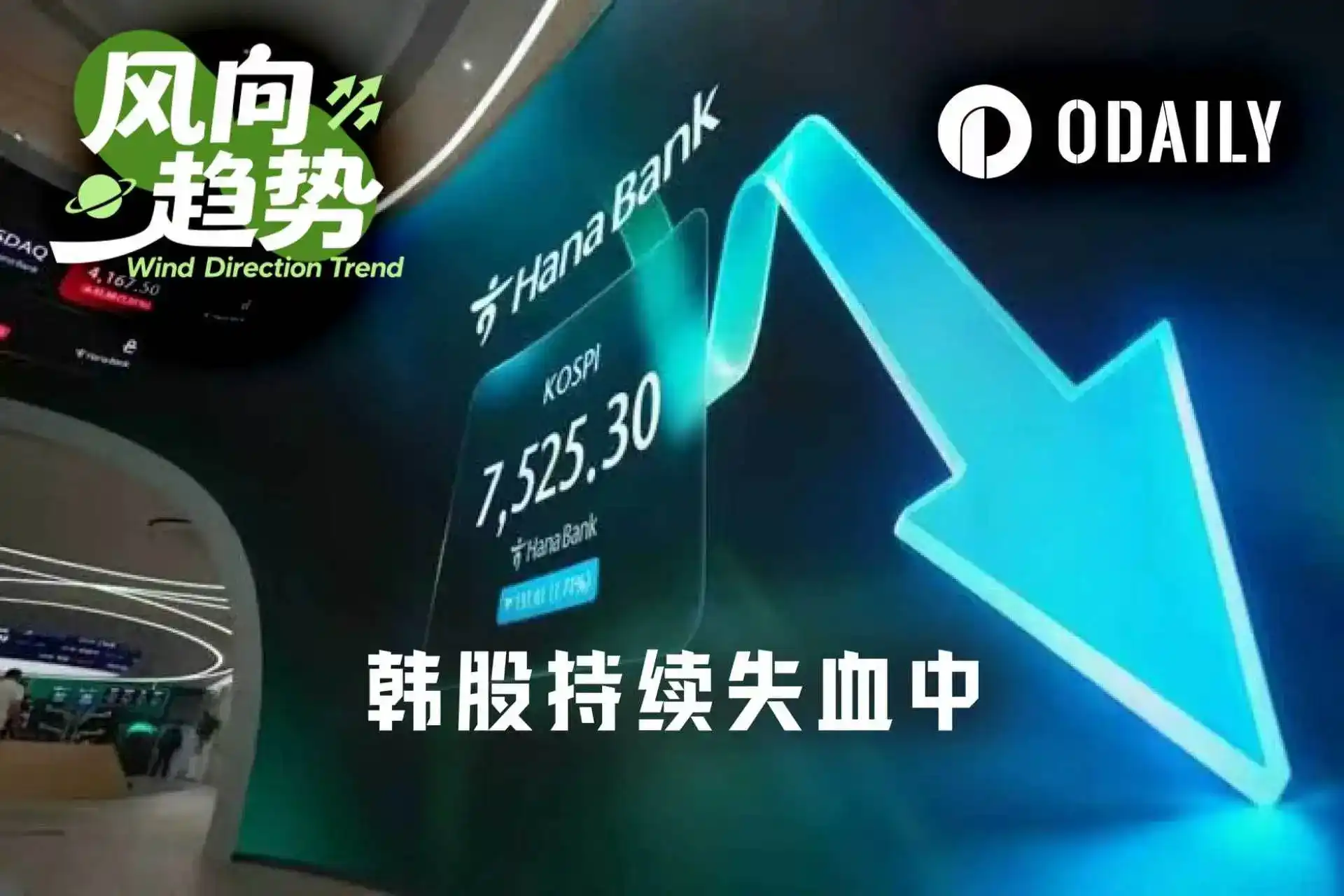
Soaring 20% Then Dropping 5%: When Will the Bottom of the Korean Stock Market Be?

"South Korean stocks face a turbulent period as the KOSPI index, after a 20% surge, fell 5% to 6257 points. The market is grappling with severe issues: over 500,000 leveraged retail accounts have been liquidated, and more than 24 trillion won has flowed from stocks into bank deposits for safety. This reflects a significant loss of market liquidity and shaken investor confidence. In response, Korean financial regulators are taking action. They have tripled the minimum保证金 (margin) requirement for single-stock leveraged ETF trades to 30 million won and are considering granting themselves "emergency intervention" powers. These could include capping leverage ratios and setting investment limits on these ETFs, seen by many as amplifying market volatility. Initial results show a 75% drop in these products' trading volume post-regulation. The market downturn has political repercussions, pushing President Yoon Suk-yeol's approval rating to a new low. Meanwhile, foreign investors made a record net purchase of 7.18 trillion won during a recent rebound, while domestic retail investors sold off massively. Morgan Stanley has upgraded South Korean stocks to "overweight," citing the ongoing "leverage unwinding" and potential for a 36% upside, with giants like Samsung Electronics and SK Hynix providing valuation support. However, analysts caution that the market's structure remains vulnerable to foreign capital flows, and the current low may not be the bottom."

marsbit29 dk önce

Soaring 20% Then Dropping 5%: When Will the Bottom of the Korean Stock Market Be?

marsbit29 dk önce

İşlemler

Spot

Popüler Makaleler

T Nasıl Satın Alınır

HTX.com’a hoş geldiniz! Threshold Network Token (T) satın alma işlemlerini basit ve kullanışlı bir hâle getirdik. Adım adım açıkladığımız rehberimizi takip ederek kripto yolculuğunuza başlayın. 1. Adım: HTX Hesabınızı OluşturunHTX'te ücretsiz bir hesap açmak için e-posta adresinizi veya telefon numaranızı kullanın. Sorunsuzca kaydolun ve tüm özelliklerin kilidini açın. Hesabımı Aç2. Adım: Kripto Satın Al Bölümüne Gidin ve Ödeme Yönteminizi SeçinKredi/Banka Kartı: Visa veya Mastercard'ınızı kullanarak anında Threshold Network Token (T) satın alın.Bakiye: Sorunsuz bir şekilde işlem yapmak için HTX hesap bakiyenizdeki fonları kullanın.Üçüncü Taraflar: Kullanımı kolaylaştırmak için Google Pay ve Apple Pay gibi popüler ödeme yöntemlerini ekledik.P2P: HTX'teki diğer kullanıcılarla doğrudan işlem yapın.Borsa Dışı (OTC): Yatırımcılar için kişiye özel hizmetler ve rekabetçi döviz kurları sunuyoruz.3. Adım: Threshold Network Token (T) Varlıklarınızı SaklayınThreshold Network Token (T) satın aldıktan sonra HTX hesabınızda saklayın. Alternatif olarak, blok zinciri transferi yoluyla başka bir yere gönderebilir veya diğer kripto para birimlerini takas etmek için kullanabilirsiniz.4. Adım: Threshold Network Token (T) Varlıklarınızla İşlem YapınHTX'in spot piyasasında Threshold Network Token (T) ile kolayca işlemler yapın.Hesabınıza erişin, işlem çiftinizi seçin, işlemlerinizi gerçekleştirin ve gerçek zamanlı olarak izleyin. Hem yeni başlayanlar hem de deneyimli yatırımcılar için kullanıcı dostu bir deneyim sunuyoruz.

703 Toplam GörüntülenmeYayınlanma 2024.12.10Güncellenme 2026.06.02

T Nasıl Satın Alınır

Tartışmalar

HTX Topluluğuna hoş geldiniz. Burada, en son platform gelişmeleri hakkında bilgi sahibi olabilir ve profesyonel piyasa görüşlerine erişebilirsiniz. Kullanıcıların T (T) fiyatı hakkındaki görüşleri aşağıda sunulmaktadır.

活动图片