To Robinhood: Don't Build a Memecoin Chain; Tokenized Stocks Are the Multi-Billion Dollar Business

marsbit2026-07-15 tarihinde yayınlandı2026-07-15 tarihinde güncellendi

Özet

**Summary: An Open Letter to Robinhood Leadership** The author, a former Robinhood investor, addresses Vlad and Johann (likely Robinhood's leadership) regarding the newly launched Robinhood Chain. While the chain has seen rapid initial growth—surpassing 300k daily active addresses and becoming a top DEX by volume—the author expresses concern that its ecosystem is overwhelmingly dominated by memecoins. They argue this focus risks harming users (as many memecoins lose significant value), damaging Robinhood's brand (reminiscent of the 2021 meme-stock frenzy), and missing a massive strategic opportunity. Instead, the letter urges Robinhood to prioritize Real World Assets (RWA), specifically tokenized stocks, on its chain. This aligns with Robinhood's mission of financial accessibility and offers a sustainable path for global growth. By enabling 24/7 trading of tokenized equities for international users, Robinhood Chain could attract over 100 million users by 2030, potentially generating $10 billion in consumer revenue and exceeding Wall Street expectations. The author warns against building a "memecoin chain" and advocates for focusing on durable, valuable financial applications like the tokenization of stocks and pre-IPO assets.

Author: Artemis Analytics

Compiled by: Deep Tide TechFlow

Deep Tide Introduction: Robinhood Chain has surged to the third spot in DEX trading volume just one month after its launch, but its wallets are filled with animal-themed coins and shitcoins. A longtime shareholder who invested in Robinhood back in 2019 is sounding the alarm: Don't repeat the mistakes of the 2021 meme stock frenzy. Tokenized stocks are the right path to break $10 billion in revenue by 2030 and serve 100 million global users.

Dear Vlad and Johann:

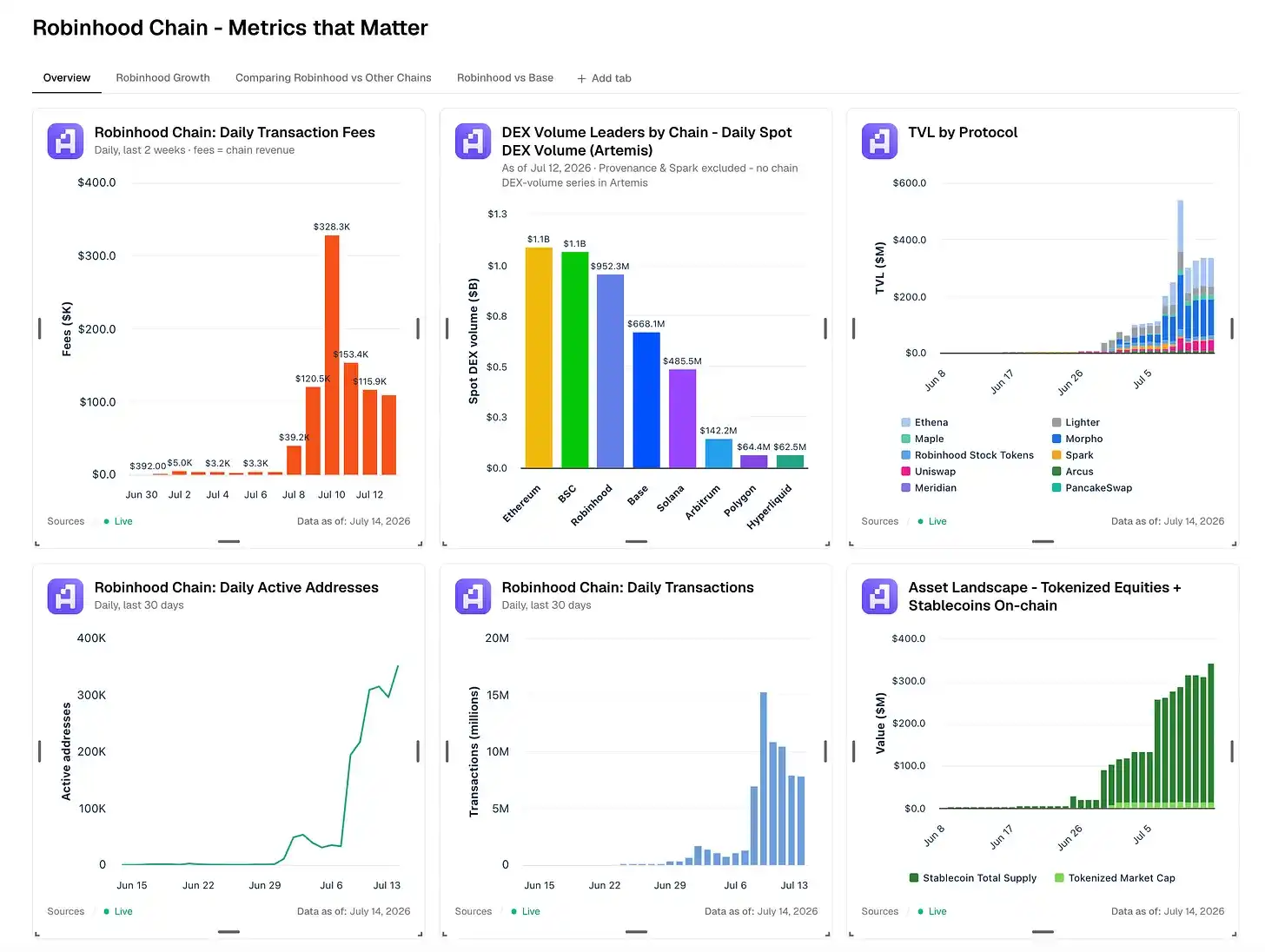
Robinhood Chain has had a fast start in "democratizing finance for all" less than a month after launch:

  • Over 300,000 daily active addresses
  • Spot DEX daily trading volume exceeding $1 billion (ranked #3 on-chain)
  • Stablecoin supply exceeding $300 million
  • On-chain daily fees annualized at over $40 million
  • TVL exceeding $3 billion, contributed by protocols like Morpho, Ethena, and Uniswap
I invested in Robinhood's pre-IPO round back in 2019 while at Whale Rock hedge fund and also covered Coinbase's IPO roadshow in 2020. I founded Artemis to focus people's attention on assets in crypto and stock markets with enduring value, not on trading memecoins.

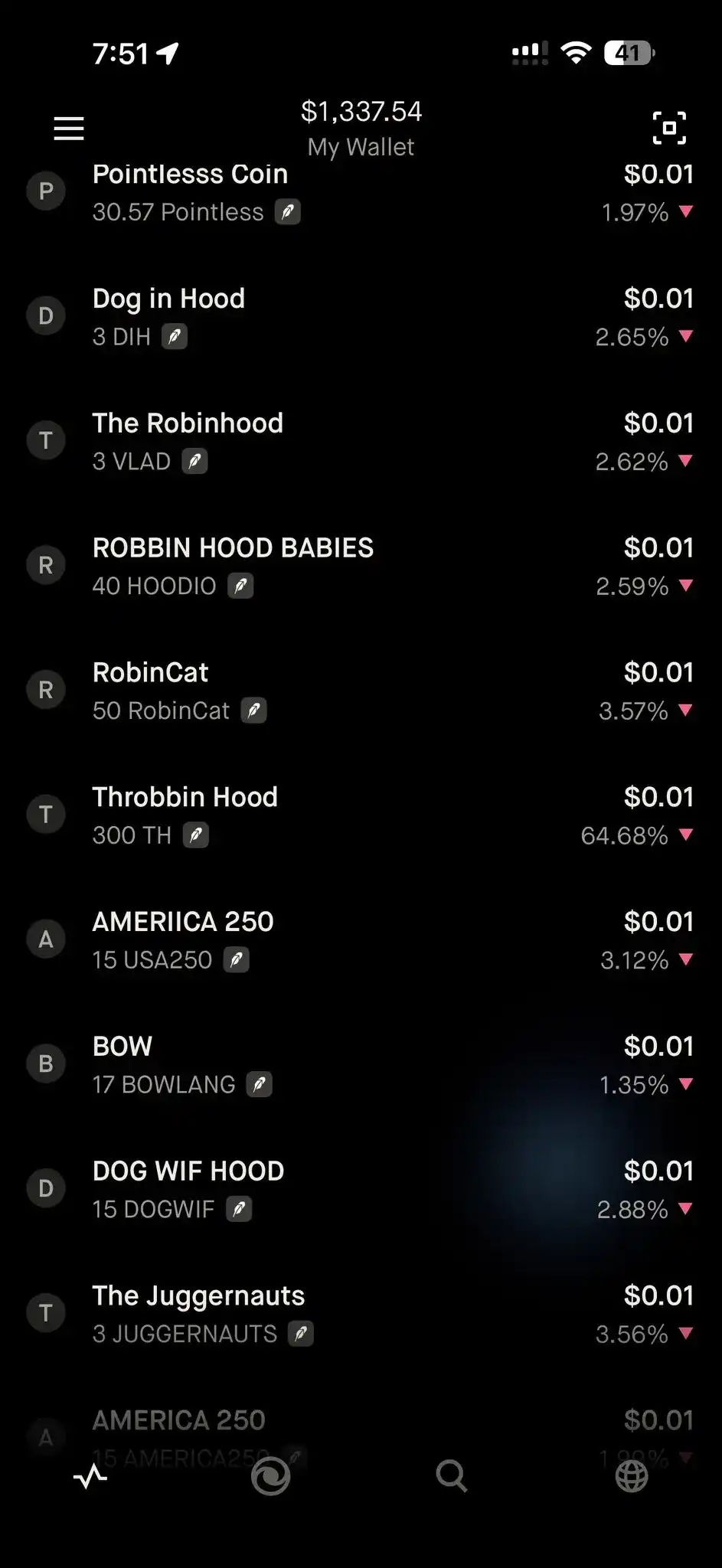
Last week, I was both shocked and saddened when I opened my Robinhood wallet—it essentially only allows trading of Memecoins. After buying some $CASCHAT just three days ago, I was airdropped a bunch of meaningless tokens, one of which was even called "Pointless Coin."
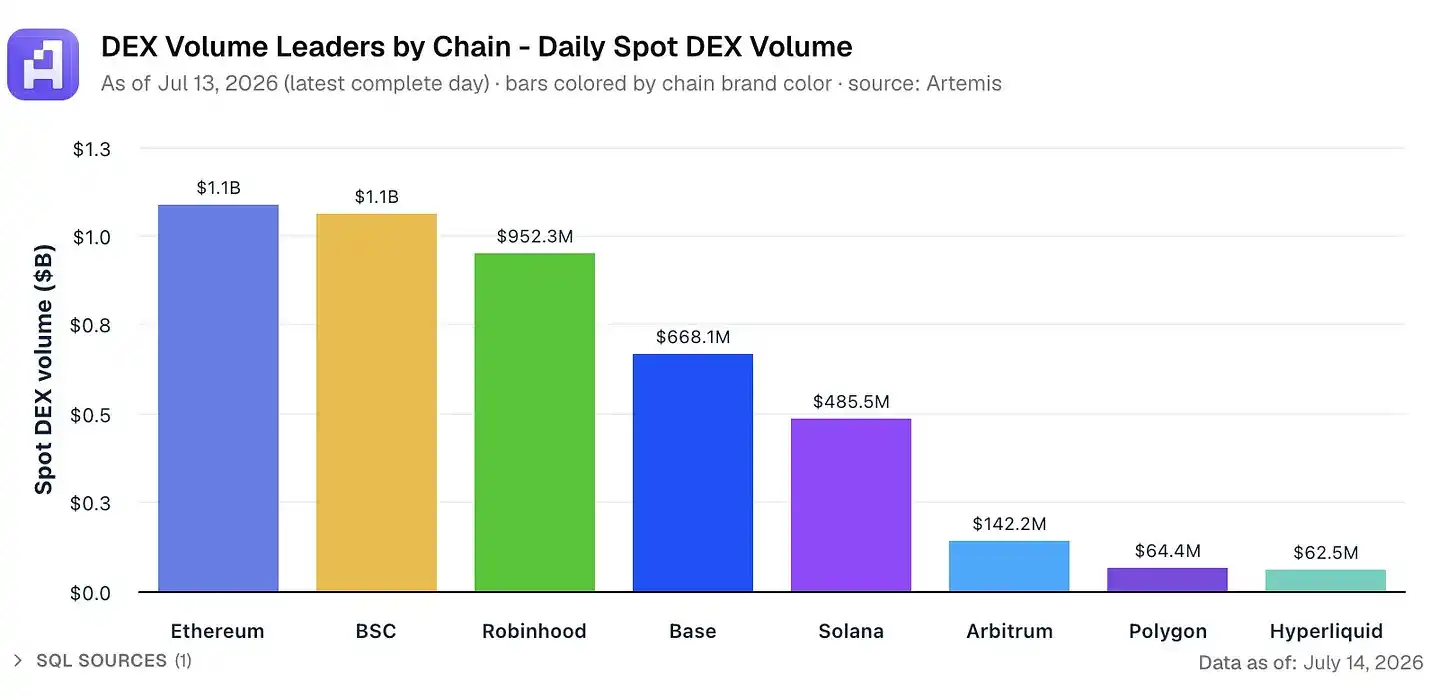
Yes, Robinhood is now the #3 spot DEX by trading volume.
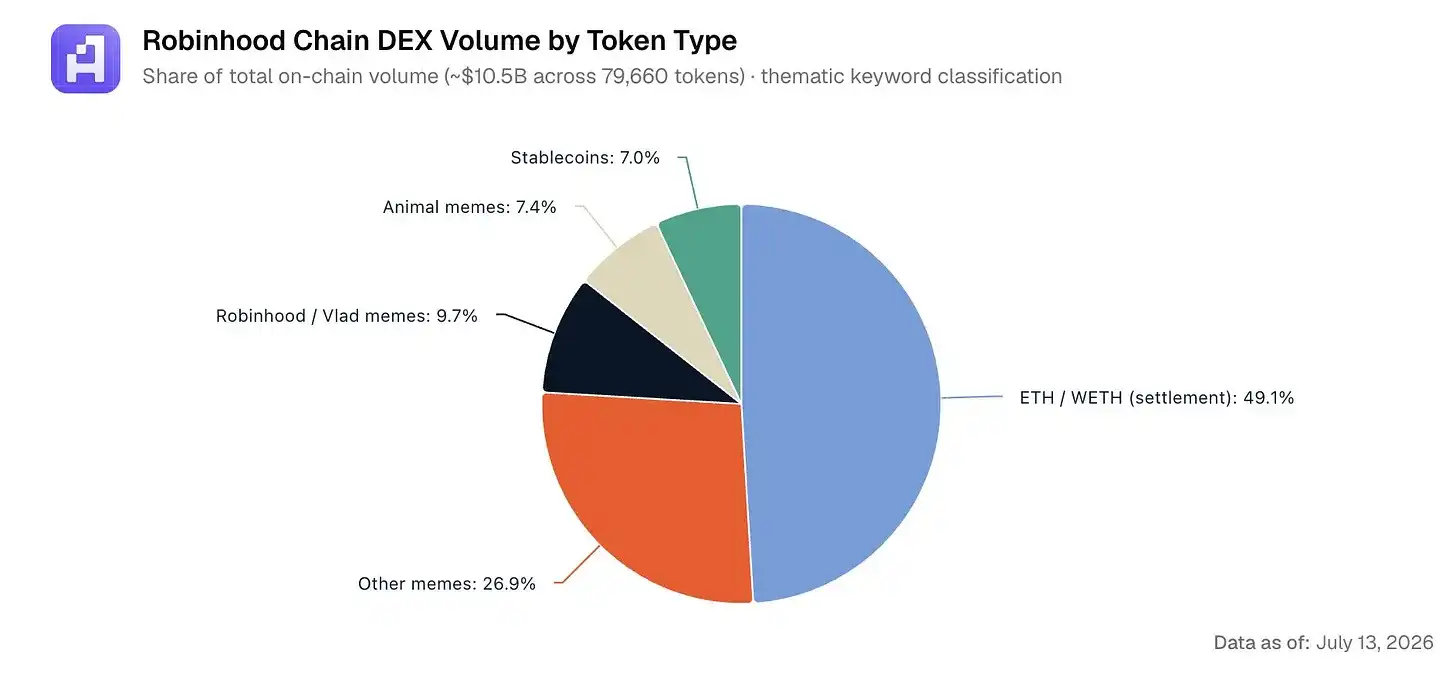
But the bulk of DEX volume is still Memecoins (animal coins, Vlad and Robinhood-themed coins, or other various memes). So please, Robinhood, don't become a memecoin chain.
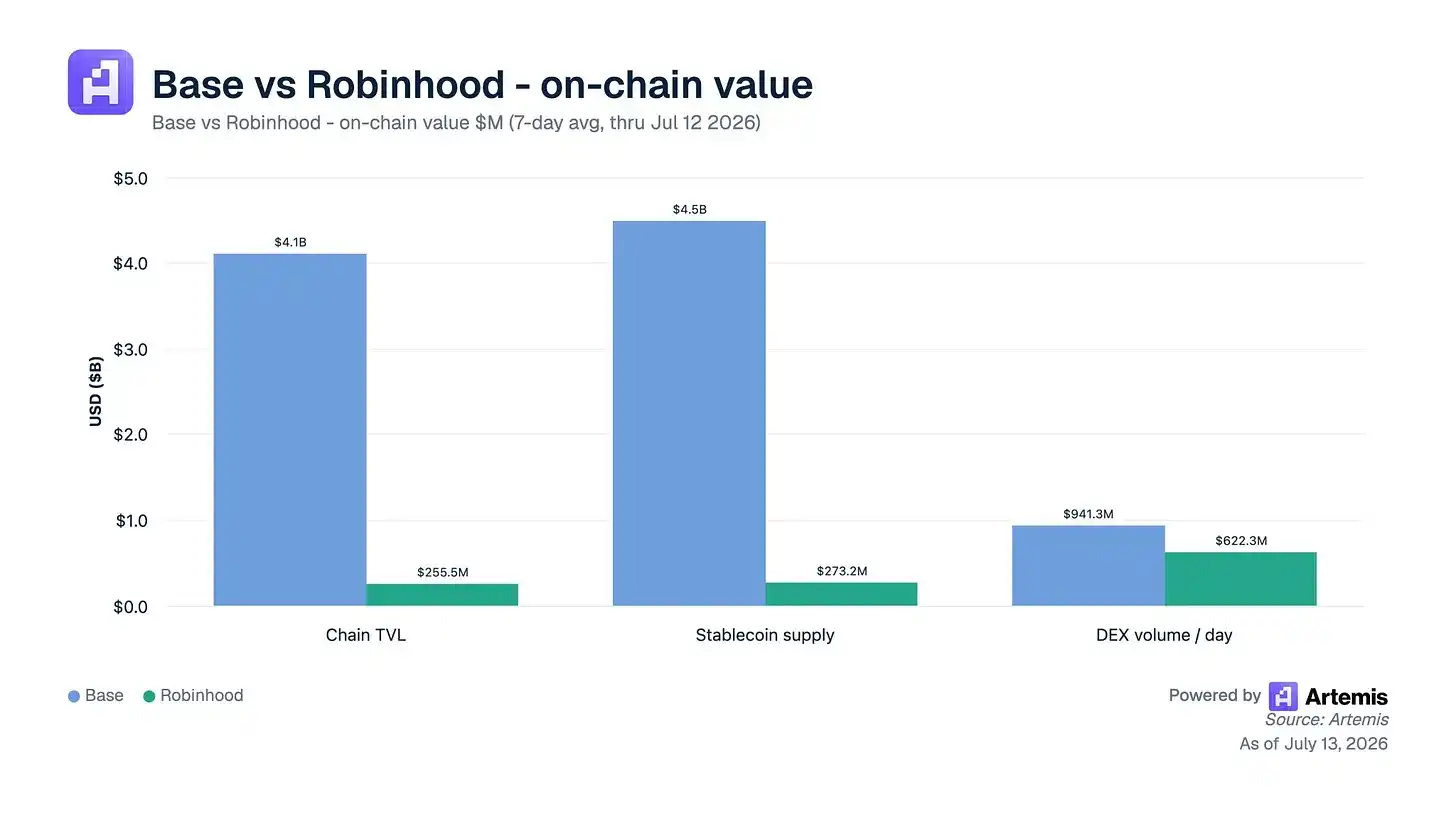
Robinhood Crypto can learn a lot from Coinbase's Base chain—Base is still a much larger chain today.
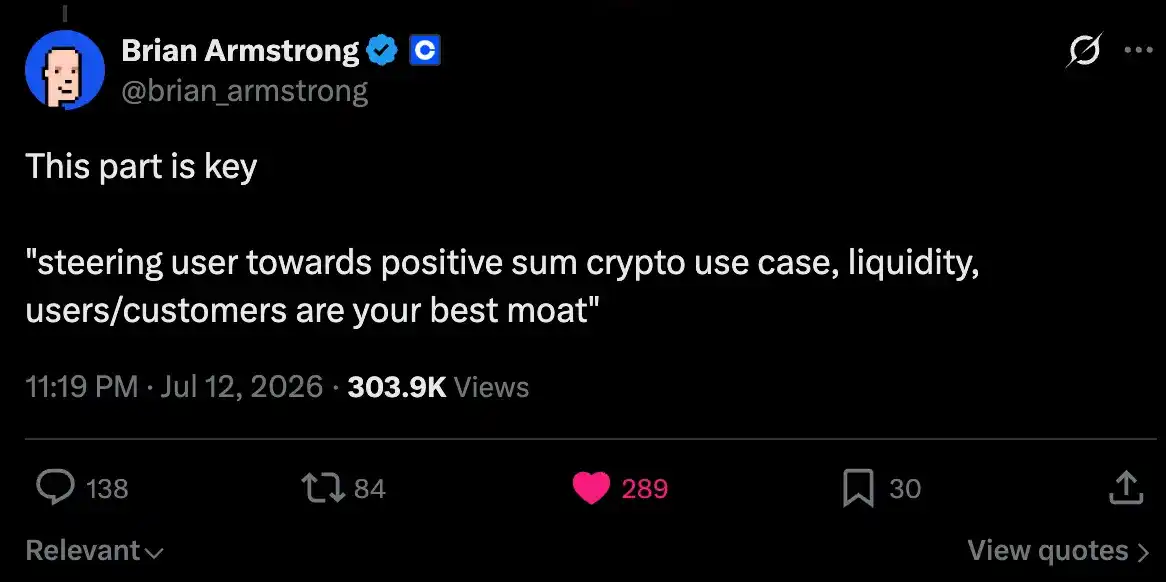
Brian Armstrong even doubled down in his reply, emphasizing the need to guide people towards truly lasting use cases.
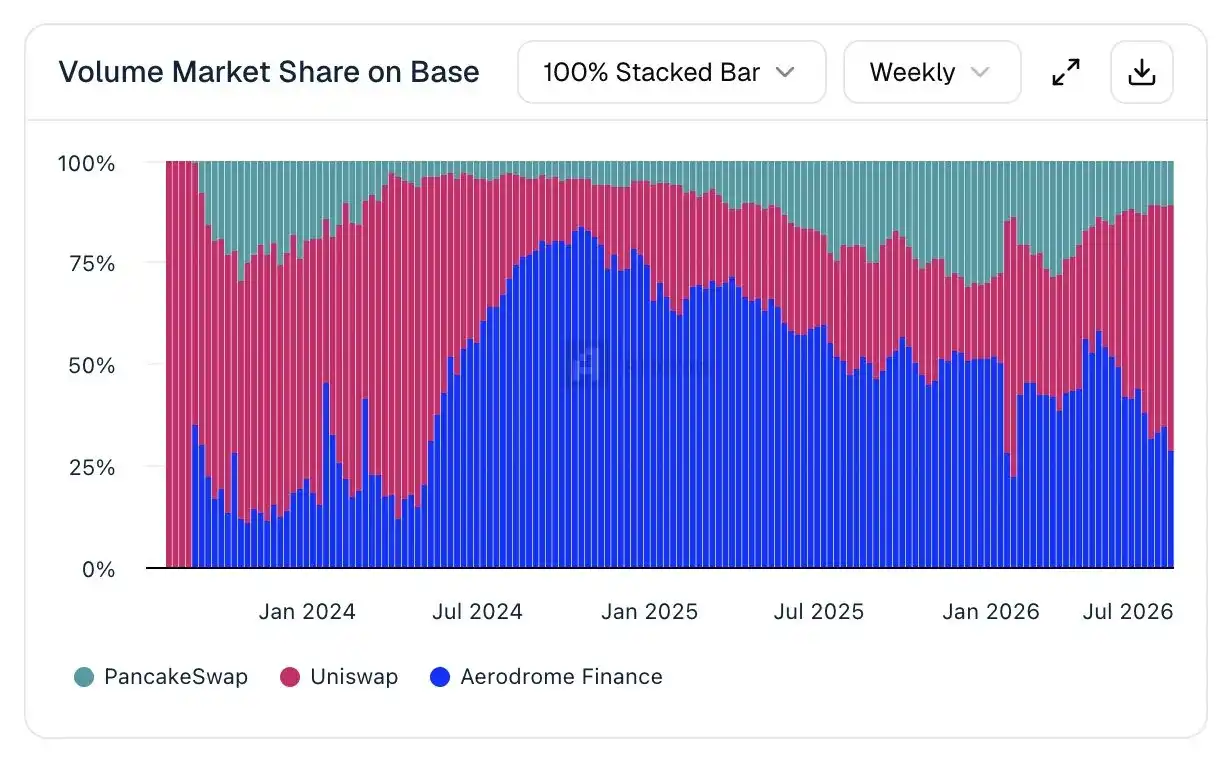
I understand the temptation—Memecoins are indeed a great way to attract early users and draw partners with liquidity and volume (come for the meme, stay for the real apps). Large independent projects like Aerodrome can thrive on Base, dominate volume, and build real business models.
But memecoins cause people to lose money and destroy trust.

Look at the memecoins launched on Base in early 2024—they're down another 90% this year, 99% from their 2024 peaks.
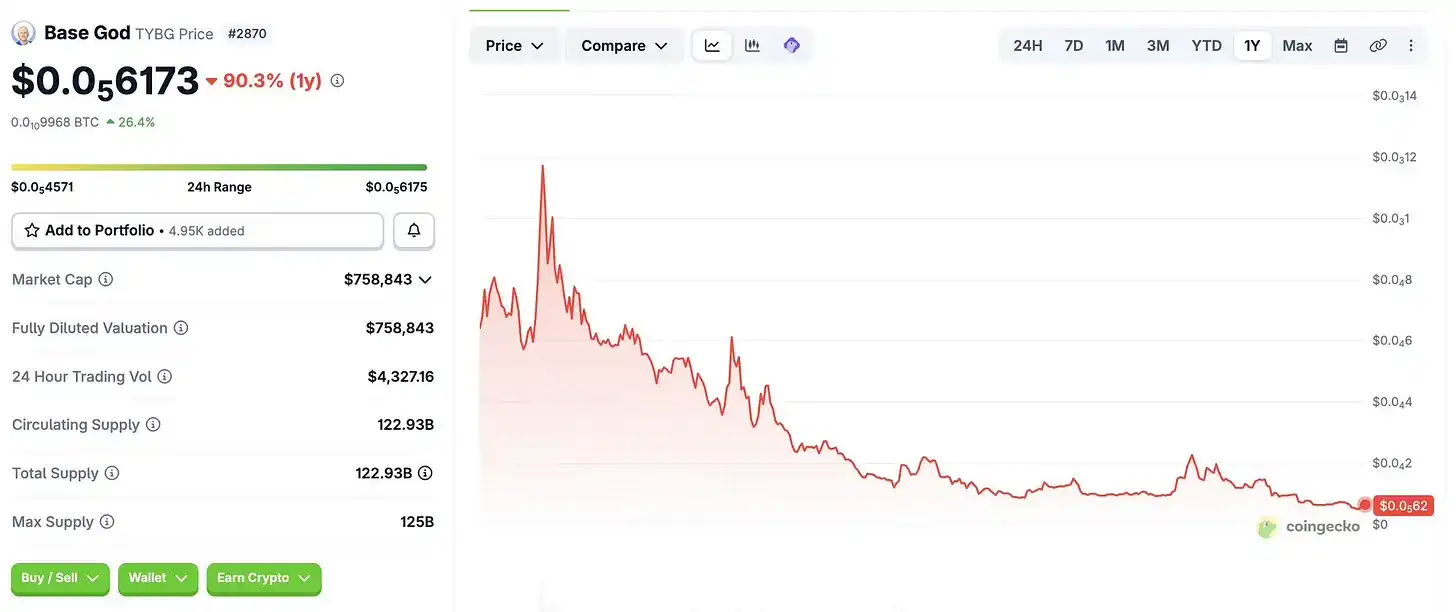
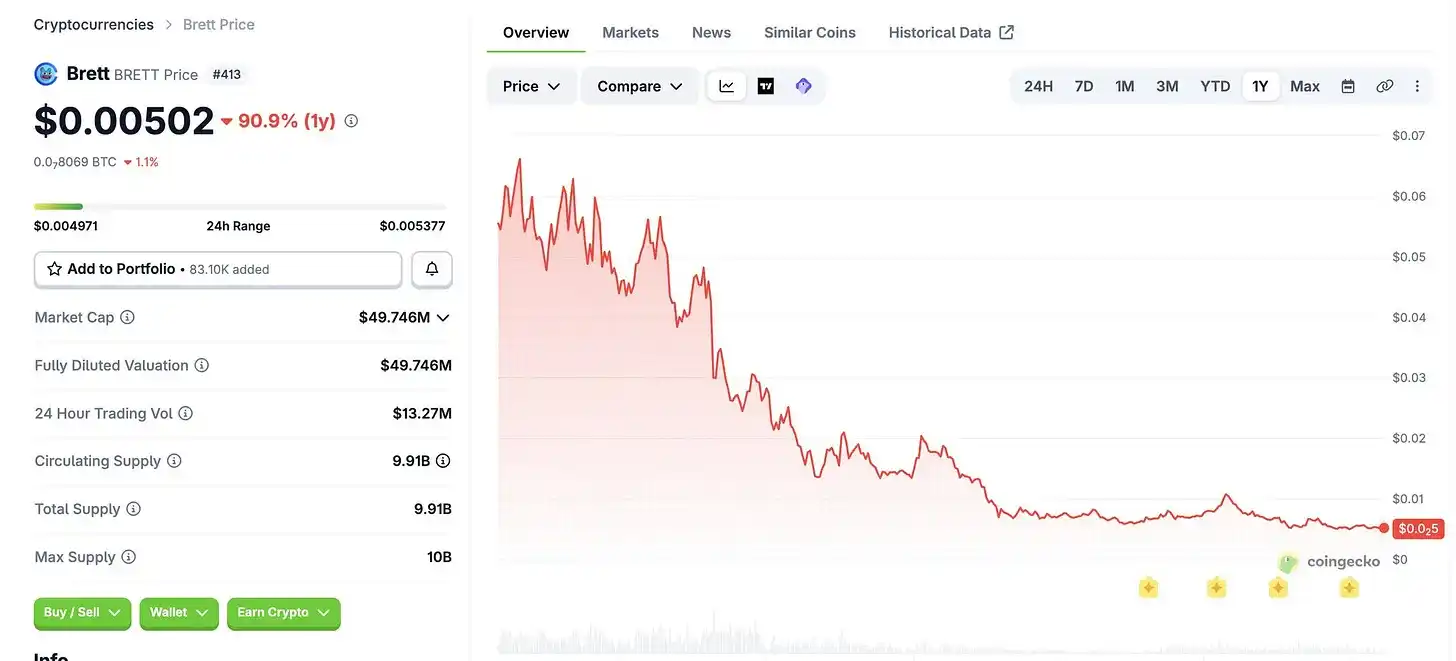
Memecoins are not durable, they hurt customers, and they push retail further away from blockchain.

Moreover, memecoins on Robinhood Chain would reinforce Wall Street's and hedge funds' stereotypes—that Robinhood is that trading app deeply entangled in the GME/meme stock frenzy of early 2021.

Tweets like this don't help:

Wall Street already struggles to understand Robinhood. Don't double down on the brand damage from 2021.

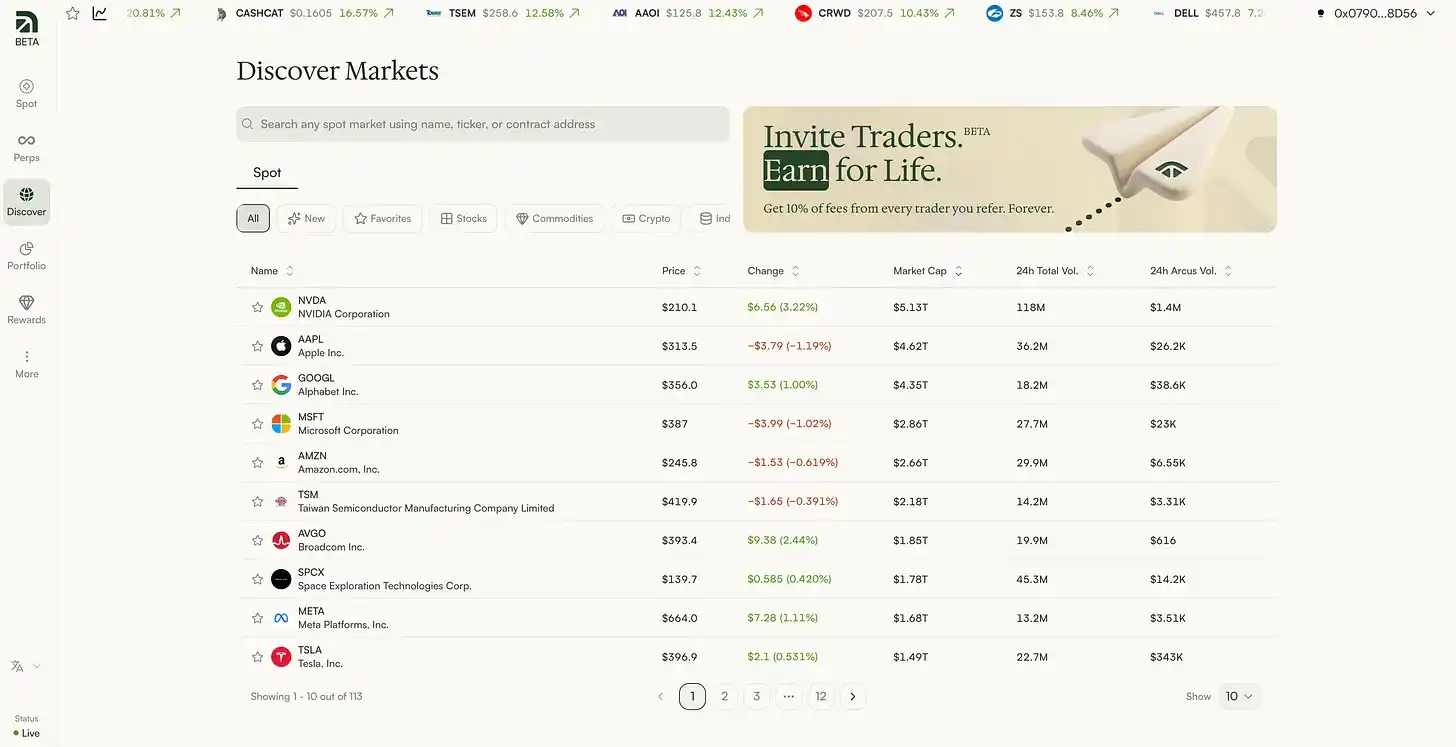
Instead, focus liquidity and attention on the Robinhood wallet and ecosystem, concentrating on Arcus (the former dYdX team, an early leading perpetual DEX) and tokenized stocks. I appreciate that Arcus today allows anyone globally to trade spot tokenized stocks.
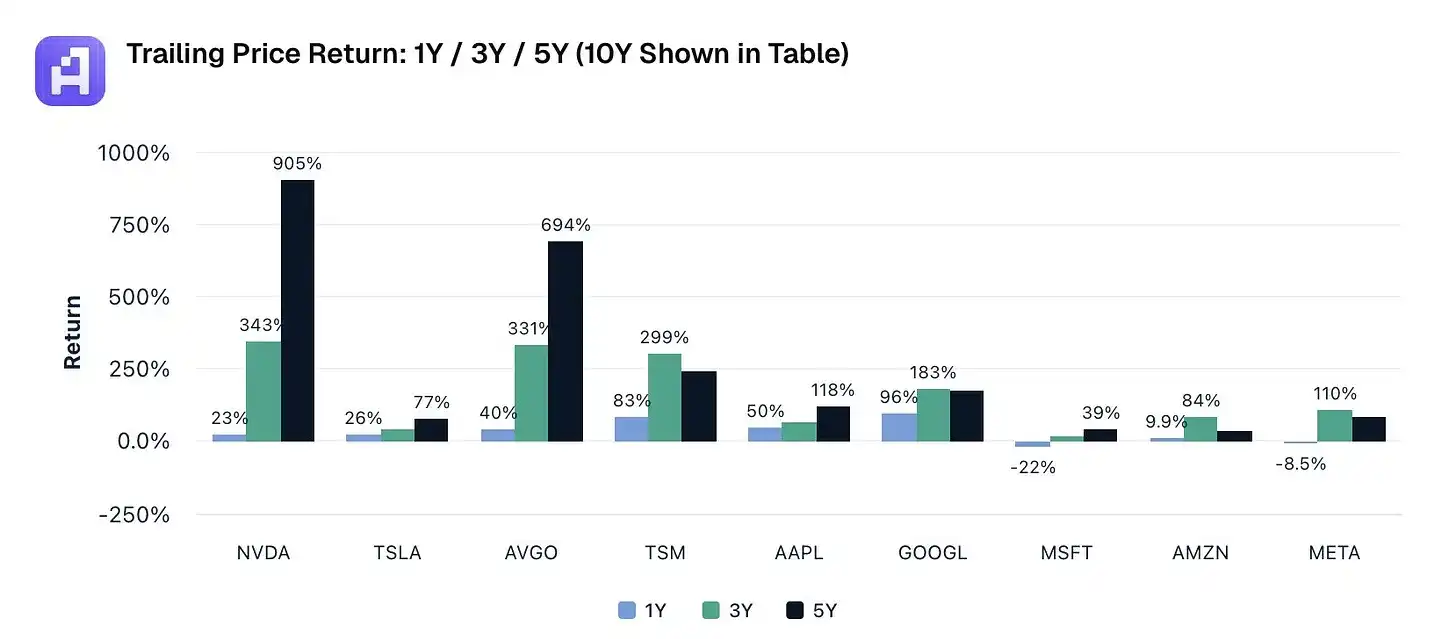
These stocks have only gone up over the past decade.
Please genuinely make RWA the focus of the Robinhood chain, enabling more investors to trade stocks and pre-IPO companies and expanding financial access. Teams like RWA.xyz and Artemis are happy to help highlight these use cases.

The biggest bear case for Robinhood is that it's saturated the US market—27 million funded accounts, with Wall Street predicting only 31-32 million by FY2028, not explosive enough growth.
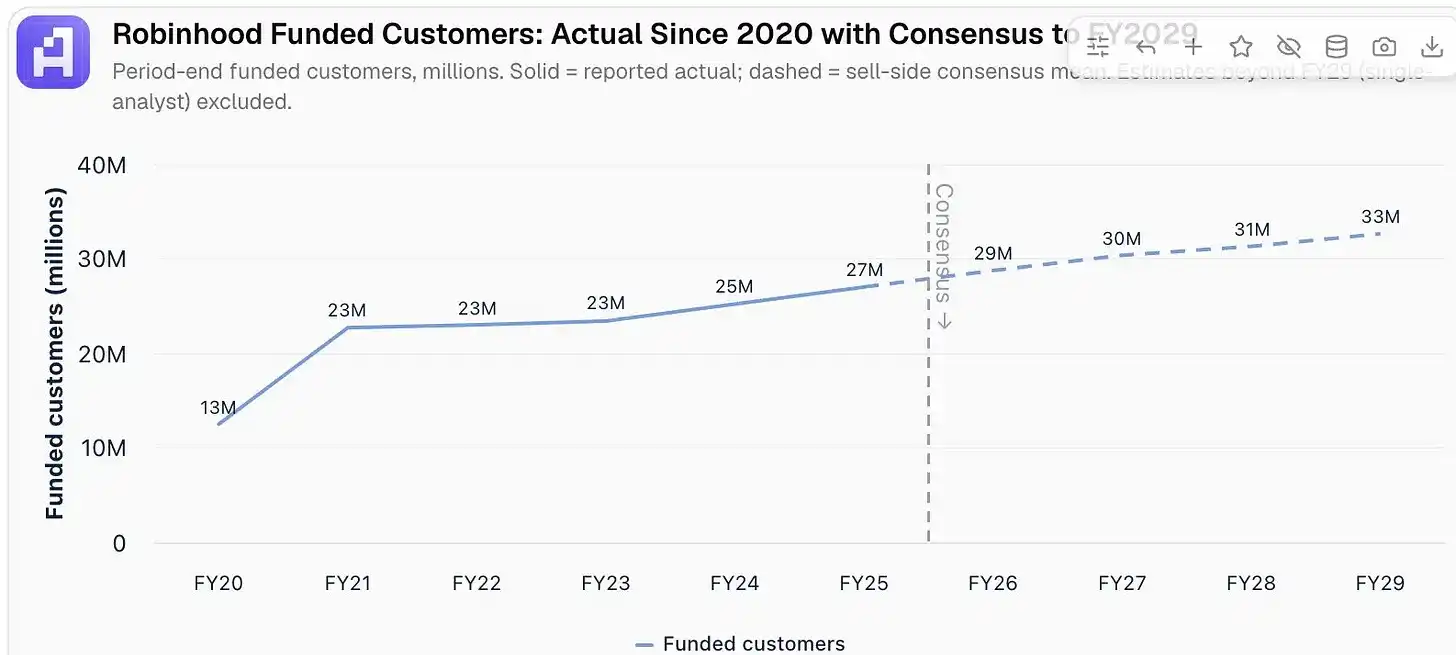
My bull case for Robinhood is: Reaching over 100 million international investors via Robinhood Chain, who can now invest in RWAs, prediction markets, stablecoins, public companies, and pre-IPO stocks, serving as an early top-of-funnel for the Robinhood App.

There is real demand for 24/7/365 tokenized stock trading—look at Trade.xyz on Hyperliquid, where people are mainly trading real businesses like SK Hynix with $68 billion in annual revenue.
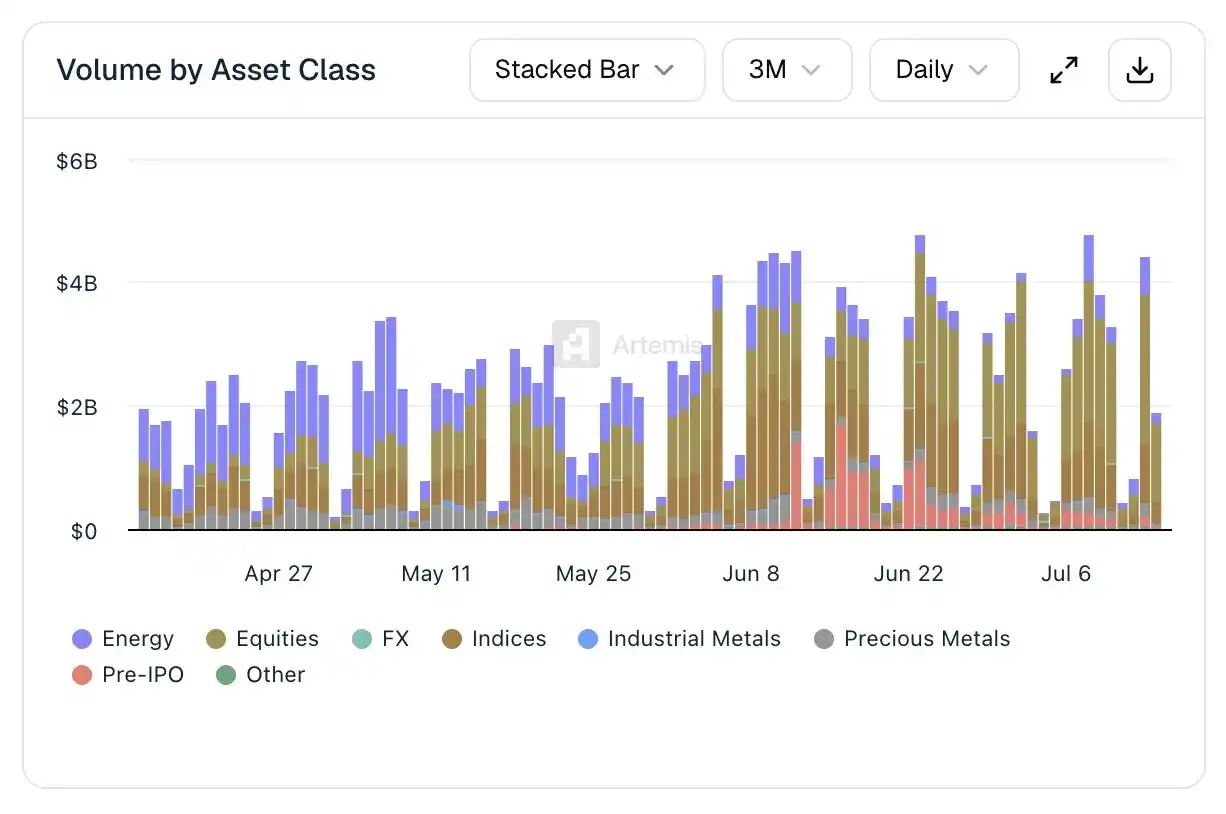
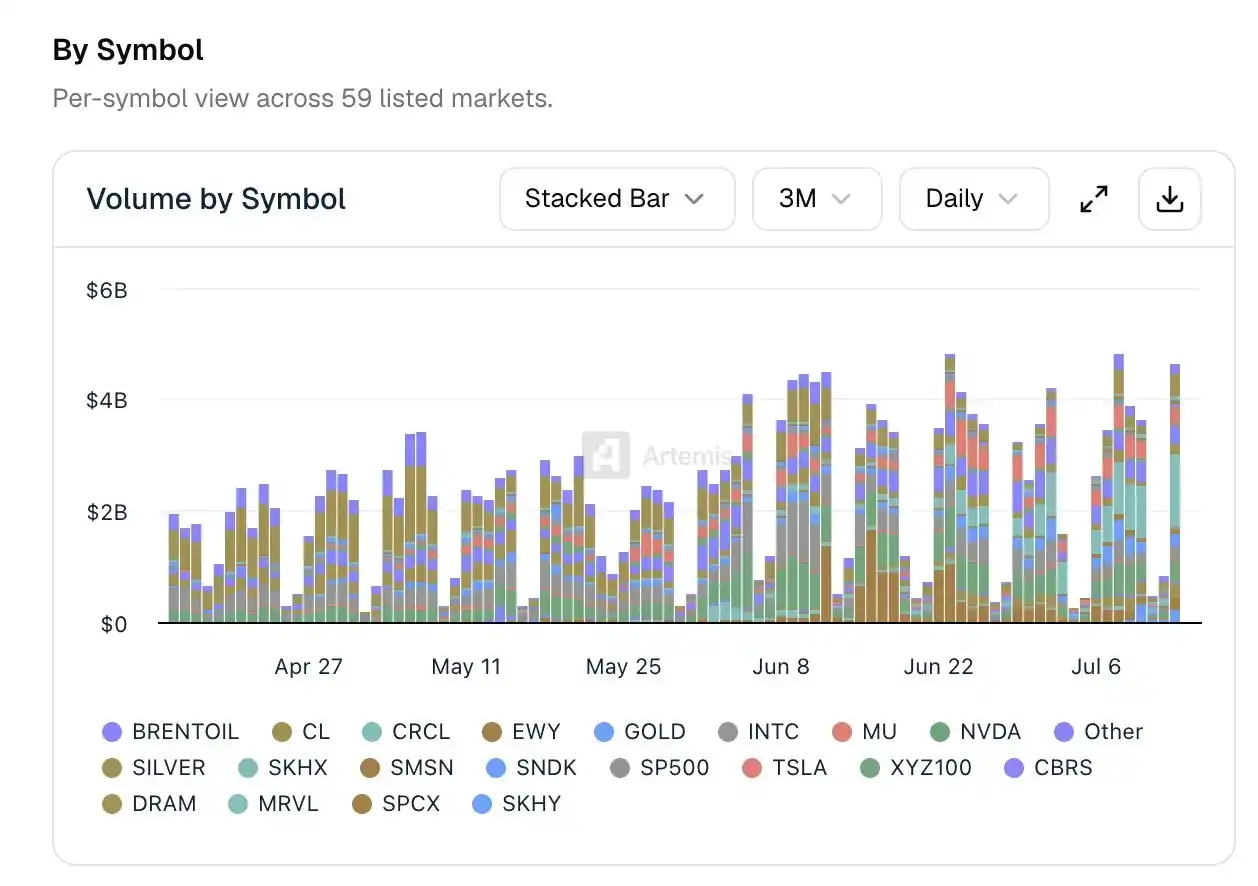
If Robinhood grows to 100 million monthly active users via Robinhood Chain by 2030, with a current ARPU of $171, assuming a lower ARPU for international users (as they pay on-chain fees instead of trading through the higher-fee Robinhood App), let's say $100 ARPU, then consumer revenue alone could reach $10 billion by 2030, surpassing Wall Street's FY2029 projection of $8.78 billion.
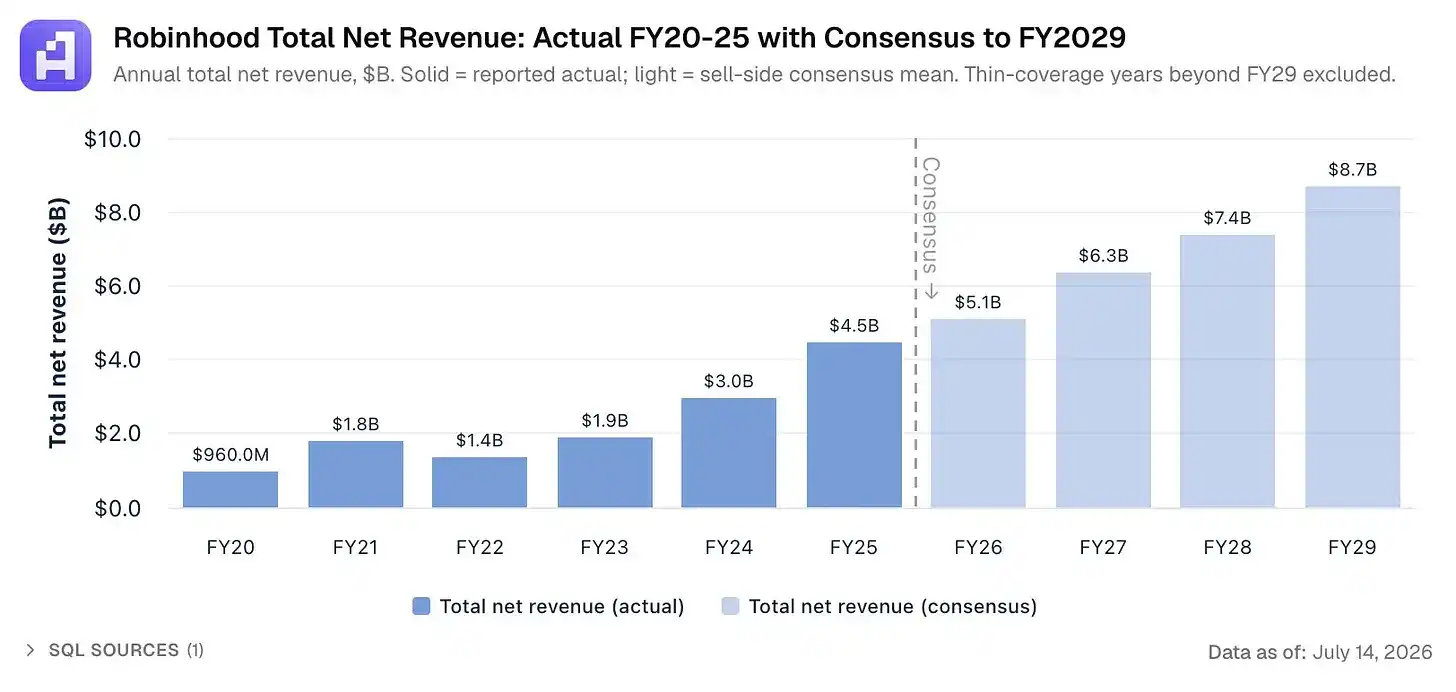
Vlad and Johann, you have the opportunity to realize crypto's promise through asset tokenization—enabling anyone to participate in finance.

Please don't screw it up by turning Robinhood into a memecoin chain.

Wall Street, your customers, and the world will thank you.

A Robinhood User Since 2017

İlgili Sorular

QAccording to the article, what major concern does the author have about Robinhood Chain, and what alternative does the author propose?

AThe author's major concern is that Robinhood Chain is becoming dominated by memecoins, which are seen as speculative and harmful to users' trust and long-term financial well-being. The author proposes that Robinhood should instead focus on real-world assets (RWA), particularly tokenized stocks, which offer a more stable and valuable use case for blockchain technology.

QWhat evidence does the author provide to show that memecoins are not a sustainable or beneficial focus for a blockchain?

AThe author points to data from Base chain showing that memecoins launched in early 2024 have fallen by another 90% in the current year and are down 99% from their 2024 peaks. This demonstrates their volatility, potential to cause financial losses for users, and lack of lasting value.

QHow does the author's bullish case for Robinhood differ from Wall Street's bearish logic regarding the company's growth?

AWall Street's bearish logic is that Robinhood is saturating the US market, with growth projections for funded accounts being slow. The author's bullish case is that Robinhood Chain can serve as a funnel to attract over 100 million international investors by offering access to tokenized assets like stocks, which could dramatically increase the company's user base and revenue.

QWhat is the author's financial projection for Robinhood if it successfully focuses on tokenized stocks and grows its user base internationally?

AThe author projects that if Robinhood grows to 100 million monthly active users by 2030 via its chain, with an assumed lower international ARPU of $100, it could generate $10 billion in consumer revenue from this segment alone. This would exceed Wall Street's revenue forecast of $8.78 billion for the 2029 fiscal year.

QWhich existing platform on Robinhood Chain does the author highlight as a positive example of the direction the company should take?

AThe author highlights Arcus (a decentralized exchange from the former dYdX team) as a positive example, praising it for enabling global users to trade spot tokenized stocks. The author suggests that assets like the SK Hynix token on Hyperliquid's Trade.xyz show the real demand for trading tokenized equities of major corporations.

İlgili Okumalar

Why Bitcoin Holds Above $64,000 After Fed's Hard Pause

**Bitcoin Stabilizes Near $64,000 Following Hawkish Fed Pause** The cryptocurrency market, led by Bitcoin, remained stable around $64,000 despite a volatile reaction to the latest U.S. Federal Reserve meeting. The Fed paused interest rates but signaled a hawkish stance, with three committee members voting for an increase—the highest dissent since 2016. This limits risk appetite but hasn't triggered panic selling. Key market highlights include Bitcoin ETFs seeing a net inflow of $32.1 million, breaking a streak of outflows, while Ethereum ETFs experienced outflows of $18.65 million. Liquidations affected about 90,000 traders. Technically, Bitcoin finds support around $63,000-$63,500, with major resistance near $66,000. While its price is about 49% below its all-time high, institutional demand via ETFs and the absence of mass capitulation support a potential recovery scenario in the second half of the year. Major altcoins showed mixed movements, with Solana attracting capital while Ethereum faced selling pressure despite strong on-chain metrics like a growing staking queue. Regulatory news took a pause as the U.S. Senate delayed the CLARITY Act vote until at least autumn. For the final trading day of July, U.S. inflation and consumer spending data will be crucial. Bitcoin's key levels to watch are $63,000 support and $66,000 resistance. Sustained ETF inflows and Bitcoin holding above $63,000 are seen as positive signs for a potential market recovery later in the year.

cryptonews.ru1 saat önce

Why Bitcoin Holds Above $64,000 After Fed's Hard Pause

cryptonews.ru1 saat önce

Participants in XRP Fraud Scheme That Stole $9 Million from 71 Investors Arrested

South Korean police have arrested three individuals accused of operating a fraudulent investment platform that stole approximately 3.4 million XRP (worth about $9 million) from 71 investors between October 16 and 23. The suspects promoted the site Fxrpntwork.com through blogs, online articles, and YouTube videos, promising guaranteed principal and monthly returns of 1.5% to 1.8%. Investors were instructed to transfer XRP from Korean exchanges to overseas platforms and then to wallets controlled by the group before the site was shut down. The scammers copied the branding of legitimate projects Flare Network and FXRP to appear credible. Authorities warn that such impersonation frauds, which use familiar branding and urgent promises of guaranteed profits, are a common red flag. Legitimate companies do not solicit cryptocurrency transfers through unsolicited promotions. Seoul police have issued an Interpol Red Notice for a fourth suspect abroad and are investigating others involved in creating and promoting the fraudulent website. While investigators froze 17.3 billion won in assets, approximately 10 billion won was moved during the probe, with wallet analysis revealing transfers totaling 27.3 billion won, suggesting there may be additional unidentified victims and accomplices. The case underscores the organized, cross-border nature of crypto investment fraud.

cryptonews.ru1 saat önce

Participants in XRP Fraud Scheme That Stole $9 Million from 71 Investors Arrested

cryptonews.ru1 saat önce

İşlemler

Spot
活动图片





