Those Who Hate Bitcoin Are 'Plundering' the World with Private Credit

marsbit2026-03-06 tarihinde yayınlandı2026-03-06 tarihinde güncellendi

Özet

Author Jeff Park argues that private credit is the latest and most insidious financial innovation designed to conceal risk, ultimately socializing losses onto unsuspecting pensioners and insurance policyholders. Unlike past instruments like junk bonds or structured credit, private credit is structured to be opaque, with slow, smoothed valuations that hide problems until catastrophic, instantaneous write-downs occur (like BlackRock recently writing two loans to zero). The article posits that the 2008 crisis didn't eliminate risk but pushed it into a shadow banking system. The $2 trillion private credit market, now funding major AI projects, creates a perverse cycle: workers' retirement savings are used for automation that may eliminate their jobs. The core criticism is the flawed incentive structure: fund managers collect fees upfront while long lock-ups and a lack of transparency ensure that retirees and ordinary investors bear all the losses when the investments fail, making it a form of "theft of time" where profits are privatized and losses are socialized.

Written by: Jeff Park

Compiled by: Chopper, Foresight News

In the financial world, every generation invents a new tool to package its worst instincts into something that appears prudent.

The 1980s had junk bonds, cloaked in the guise of 'democratizing capital'; the 1990s had emerging market debt, packaged as a noble cause to help developing countries integrate into the global economy; the 2000s had structured credit, so complexly layered that even its designers couldn't understand it before it collapsed.

These 'innovations' share a common thread: they created artificial solutions (like liquidity transformation) for real problems (like insufficient growth), ultimately leading to disaster due to excess.

Private credit is the latest chapter in this story, and perhaps the most insidious one. Unlike its predecessors, it is designed from the outset to make the清算 (liquidation) before a risk explosion completely invisible. By the time it's discovered, the consequences are irreversible.

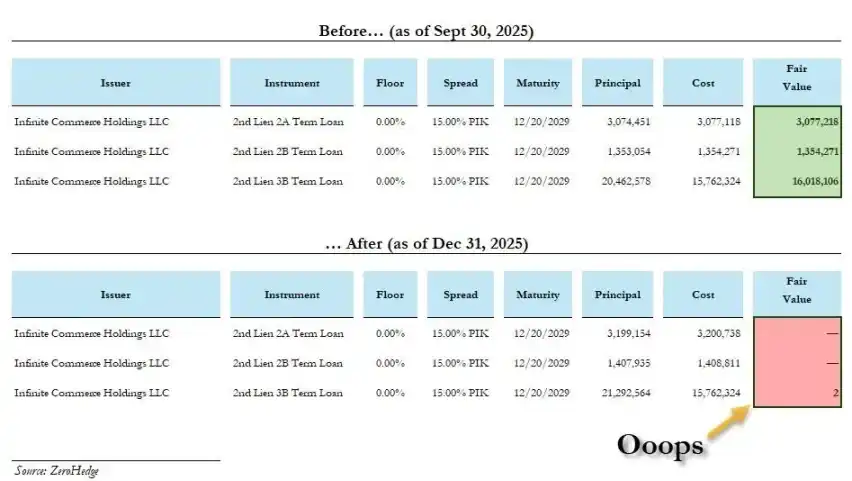
Recently, BlackRock directly wrote down the face value of two private credit loans from 100% to 0 in one go, one of them in less than a month. This doesn't look like a technical error in valuation methods; it looks more like a confession of flawed incentives.
How did we get here?

The Crisis Isn't the Root Cause; Concealing the Truth Created It

The mainstream industry narrative goes like this: After the 2008 financial crisis, banks, constrained by Basel III, became afraid to lend. Non-bank institutions stepped in to fill the void, serving small and medium-sized enterprises. This was the market's inevitable choice.

The more truthful situation is that the post-2008 regulatory framework did not truly eliminate risk. Instead, it actively fostered a shadow system that bears the same underlying risks but evades the regulations originally designed to constrain them.

The private credit market has ballooned from $46 billion in 2000 to about $2 trillion today. This money didn't appear out of thin air, nor did it accidentally flow into pension funds and insurance companies. It was precisely channeled to institutions with large capital bases, long lock-up periods, and a willingness to accept opaque valuations.

Its structure is identical to that which precipitated the 2008 financial crisis, with one significant difference. When the subprime mortgage market collapsed in 2008, losses were concentrated in reckless borrowing households and the banks that lent to them. If private credit crashes, the losses have no boundaries; the money comes from life insurance policyholders and pension beneficiaries—ordinary people.

The socialization of losses that outraged the public in 2008 at least had a preceding period of private gains. With private credit: profits go into the pockets of fund managers, losses are socialized and flow to the retirement accounts of teachers, nurses, civil servants—people who never agreed to bear this risk.

Worse, the industry, not content with just harvesting institutions, is now targeting retail investors. Since 2025, private credit ETFs have become hugely popular, but the problem is even more severe: illiquid assets don't become liquid by being put into an ETF. It merely transfers the bomb of 'redemption runs hitting but assets being unsellable' from professional institutions to the brokerage accounts of ordinary investors.

This is the reality unfolding.

Asset Allocators Who Hate Bitcoin Expose Everything

Over the past few years, I've been recommending Bitcoin to institutions everywhere and discovered a startling pattern: those who reject Bitcoin are often fervent enthusiasts of private credit. This isn't just two different viewpoints on a topic; it's the same mentality.

Their objections to Bitcoin sound 'prudent': too volatile, drawdowns are inexplicable, no cash flow so it can't be valued.

But the subtext is: Bitcoin's price is too honest. Real-time, public, visible to all. If it makes a mistake, it's wrong, and it can't be hidden.

Private credit is the exact opposite:

  • Valuation changes are extremely slow, 'smoothed' quarterly by fund managers
  • There is no liquid market to puncture the lies
  • Lock-up periods are long enough for the decision-makers to get promoted, change jobs, or retire

The so-called 'proprietary deal flow' is just an excuse for a lack of effective pricing competition.

A true fiduciary seeks the truth. These allocators seek to avoid facing the truth. This isn't risk management; it's the opposite of risk management, yet it's cloaked in professionalism, completely disregarding the beneficiaries' interests.

The AI Boom Turns It Into a Systemic Risk

Morgan Stanley estimates that from 2025 to 2028, global data centers will require $2.9 trillion in capital expenditure, with about $800 billion of that to be solved by private credit. This has turned private credit from a lending market into the key infrastructure for the most important technological transformation of the coming decades.

A typical case: In October 2025, Meta and Blue Owl completed a $27 billion data center financing deal, the largest private credit transaction in history. The money came from PIMCO, BlackRock, and ultimately from pensions and insurance companies.

The cruelty of this cycle: the retirement savings of ordinary workers are used to fund automation and AI, which in turn replaces the very jobs of those workers. Private credit distorts the cost of capital and suppresses the value of labor. Now, nearly $50 billion in private credit floods into the AI sector every quarter.

The financialization of AI infrastructure and the displacement of the workforce that funds it form a closed loop: the left hand cuts the right hand.

Liquidity Transformation is Theft of Time

I'm not saying credit itself is sinful, nor that all private credit firms are bad. Credit has always been a game of probabilities; bad debts and mismatches exist in every era.

The key difference is: who truly bears the loss?

  • If a bank makes a bad loan, it's on their balance sheet, regulated, faces bank runs and equity wipeouts—there is real money at risk;
  • Private credit managers earn performance fees, incentives that 'encourage you to place bets,' not incentives that 'encourage you to win responsibly.'

By the time the loan goes to zero, the manager has already made enough money.

Every financial engineering endeavor ultimately points to one question: who bears the costs nobody wants?

The 'brilliance' of private credit is how 'elegantly' it answers this question:

Profits flow upward and backward: to the older, already retired beneficiaries of long-term capital

Costs flow downward and forward: suppressing wages, freezing hiring, delaying investment, distorting the entire economy's cost of capital

Private credit is the theft of time.

This is the age-old liquidity transformation in finance, just stripped of its disguise.

They bear risks they shouldn't have to bear, through tools they cannot choose, at prices they cannot foresee.

Lock-up periods ensure they cannot exit. The lack of public valuation ensures they cannot protest. And the quarterly valuation smoothing mechanism ensures that when the final bill comes, those responsible are long gone.

It doesn't look like plunder; it looks like 'steady returns.' The two are almost indistinguishable until the moment of collapse. While this story is age-old, the novelty lies in its sheer scale, its profound lack of transparency, and the astounding success of an asset class built on this illusion of safety, which has managed to convince the world's most cautious capital managers.

There is no asset class in the world that can be valued at 100% for three consecutive months and then written down to zero overnight.

If this isn't theft, then I don't know what is.

İlgili Sorular

QWhat is the main argument the author makes about private credit?

AThe author argues that private credit is the latest and most insidious financial innovation that artificially solves real problems like lack of growth, but is designed to hide risks until it's too late. It socializes losses onto ordinary people while managers privatize gains, making it a form of 'theft of time'.

QAccording to the author, what is a key difference between the 2008 subprime crisis and a potential private credit crash?

AIn the 2008 subprime crisis, losses were primarily concentrated on reckless households and lending banks, with a period of private gain before losses were socialized. In a private credit crash, losses would flow directly to pensioners, teachers, nurses, and public servants—ordinary people who never agreed to bear the risk—while the gains have already been pocketed by fund managers.

QWhy does the author believe that asset allocators who reject Bitcoin often favor private credit?

AThe author contends that these allocators reject Bitcoin because its price is 'too honest'—it is real-time, public, and cannot hide mistakes. In contrast, they favor private credit because its valuations are smoothed, lack a liquid market to expose lies, and have long lock-up periods that allow decision-makers to avoid accountability by the time losses occur.

QHow is the AI boom exacerbating the systemic risks of private credit?

AThe AI boom is creating massive capital expenditure needs for data centers, with an estimated $800 billion expected to be funded through private credit. This transforms private credit from a lending market into critical infrastructure for a major technological shift. It creates a perverse cycle where workers' pension funds are used to finance AI and automation that may ultimately replace their own jobs.

QWhat does the author mean by 'private credit is theft of time'?

AThe author means that private credit 'steals time' through its structure: profits flow upward and backward to older, retired beneficiaries of long-term capital, while the costs (lower wages, hiring freezes, delayed investment) are pushed downward and forward onto future generations. The long lock-ups and lack of transparency ensure that by the time the bill comes due, those responsible are no longer accountable, and the true risk-takers (ordinary people) cannot protest or exit.

İlgili Okumalar

You Bet on the News, the Pros Read the Rules: The True Cognitive Gap in Losing Money on Polymarket

The article explains that the key to profiting on Polymarket, a prediction market platform, lies not just predicting real-world events correctly, but in meticulously understanding the specific rules that govern how each market will be resolved. It illustrates this with examples, such as a market on Venezuela's 2026 leader, where the official rules defining "officially holds" the office overruled the intuitive answer of who was in practical control. Other examples include debates over the definition of a "token" or what constitutes an "agreement." The core argument is that a "reality vs. rules" gap creates pricing discrepancies that savvy traders ("车头" or "whales") exploit. The platform has a formal dispute resolution process managed by UMA token holders to settle ambiguous outcomes. This process involves proposal submission, a challenge window, a discussion period, and a final vote. However, the article highlights a critical flaw in this system compared to a traditional court: the lack of separation between the arbiters (UMA voters) and the interested parties (traders with financial stakes in the outcome). This conflict of interest undermines the discussion phase, leads to herd mentality, and results in opaque final decisions without explanatory rulings. Consequently, the system lacks a body of precedent, making it difficult for users to learn from past disputes. The ultimate takeaway is that success on Polymarket requires a lawyer-like scrutiny of the rules to identify and capitalize on the cognitive gap between how events appear and how they are contractually defined for settlement.

marsbit1 saat önce

You Bet on the News, the Pros Read the Rules: The True Cognitive Gap in Losing Money on Polymarket

marsbit1 saat önce

İşlemler

Spot
Futures

Popüler Makaleler

BITCOIN Nedir

HarryPotterObamaSonic10Inu (ERC-20)'yu ve Kripto Alanındaki Yerini Anlamak Son yıllarda, kripto para piyasası, hem ticaret yapanların hem de topluluk etkileşimi ve eğlence değeri arayanların ilgisini çeken meme coin'lerin popülaritesinde bir artış gördü. Bu benzersiz token'lar arasında, kripto para dokusuna kültürel referansları harmanlayan ilginç bir proje olan HarryPotterObamaSonic10Inu (ERC-20) bulunmaktadır. Bu makale, HarryPotterObamaSonic10Inu'nun temel yönlerini, mekanizmalarını, topluluk odaklı ethosunu ve daha geniş kripto manzarasıyla etkileşimini incelemektedir. HarryPotterObamaSonic10Inu (ERC-20) Nedir? Adından da anlaşılacağı gibi, HarryPotterObamaSonic10Inu, Ethereum blok zinciri üzerinde inşa edilen bir meme coin'dir ve ERC-20 standardı altında sınıflandırılmaktadır. Geleneksel kripto paraların pratik kullanılabilirlik veya yatırım potansiyeline odaklandığı durumların aksine, bu token eğlence değeri ve topluluğunun gücü üzerine kuruludur. Proje, bağlı kullanıcıların bir araya gelebileceği, fikirlerini paylaşabileceği ve çeşitli kültürel fenomenlerden ilham alan etkinliklere katılabileceği bir ortam yaratmayı hedeflemektedir. HarryPotterObamaSonic10Inu'nun dikkate değer özelliklerinden biri işlemlerde sıfır vergi olmasıdır. Bu çekici unsur, küçük ölçekli yatırımcıları caydırabilecek ek ücretlerden yoksun olarak ticareti ve topluluk katılımını teşvik etmeyi amaçlamaktadır. Coin'in toplam arzı bir milyar token olarak belirlenmiştir; bu, topluluk içinde önemli bir dolaşım sağlama niyetini göstermektedir. HarryPotterObamaSonic10Inu (ERC-20) Yaratıcısı HarryPotterObamaSonic10Inu'nun kökenleri bir miktar gizemlidir; yaratıcısı hakkında spesifik bilgilerin ne olduğu bilinmemektedir. Bu token'ın geliştirilmesi, belirli bir ekip veya açık bir plan eksikliği ile gerçekleşmiştir; bu durum, meme coin sektöründe oldukça yaygındır. Proje, topluluğunun heyecanı ve katılımına dayalı olarak organik bir şekilde ortaya çıkmıştır. HarryPotterObamaSonic10Inu (ERC-20) Yatırımcıları Dış yatırımlar ve destekler söz konusu olduğunda, HarryPotterObamaSonic10Inu da belirsiz kalmaktadır. Token, bilinen herhangi bir yatırım fonunu veya önemli bir kurumsal desteği listelememektedir. Bunun yerine, projenin can damarı, kolektif eylem ve kripto alanındaki katılım yoluyla büyüme ve sürdürülebilirlik sağlayan temel topluluğudur. HarryPotterObamaSonic10Inu (ERC-20) Nasıl Çalışır? Bir meme coin olarak, HarryPotterObamaSonic10Inu, genellikle varlık değerini yöneten geleneksel çerçevelerin dışında çalışmaktadır. Projenin nasıl çalıştığını tanımlayan birkaç özelliği vardır: Sıfır Vergi İşlemleri: İşlemlerde vergi ücreti olmadan, kullanıcılar gizli maliyet endişesi olmadan token'ı serbestçe alıp satabilirler. Topluluk Etkileşimi: Proje, topluluk etkileşimi üzerine kuruludur ve sosyal medya platformlarını kullanarak heyecan yaratarak katılımı kolaylaştırır. Tartışmalar, içerik paylaşımı ve katılım, projenin erişimini genişletmeye ve destekleyiciler arasında sadakat oluşturmaya yardımcı olan kritik unsurlardır. Pratik Kullanılabilirlik Yok: HarryPotterObamaSonic10Inu'nun mali ekosistem içinde somut bir kullanılabilirlik sunmadığı belirtilmelidir. Daha ziyade, eğlence ve topluluk etkinlikleri için bir token olarak sınıflandırılmaktadır. Kültürel Referans: Token, popüler kültürden unsurları zekice harmanlayarak ilgi çekmektedir ve hem meme meraklıları hem de kripto takipçileriyle bağlantı kurmaktadır. HarryPotterObamaSonic10Inu, meme coin'lerin, daha geleneksel kripto para projelerinden nasıl farklı çalıştığını örneklendirmektedir; bu projeler, utilitarist varlıklar yerine yenilikçi sosyal yapıların bir parçası olarak piyasaya girmektedir. HarryPotterObamaSonic10Inu (ERC-20) Zaman Çizelgesi HarryPotterObamaSonic10Inu'nun tarihi, birkaç dikkate değer kilometre taşı ile işaretlenmiştir: Oluşum: Token, birçok kripto meraklısının hayal gücünü yakalayan bir viral meme'den ortaya çıkmıştır. Spesifik yaratım tarihleri mevcut değildir ve bu onun organik yükselişini vurgulamaktadır. Borsa Listelemeleri: HarryPotterObamaSonic10Inu, topluluğun daha kolay erişim ve ticaret yapabilmesini sağlamak için çeşitli borsalarda yer bulmuştur. Topluluk Katılım İnisiyatifleri: Yarışmalar, sosyal medya kampanyaları ve hayranlar ile destekçilerden içerik üretimini içeren topluluk etkileşimini artırmayı amaçlayan devam eden etkinlikler. Gelecek Genişleme Planları: Projenin yol haritası, kültürel temalarına ilişkin bir NFT koleksiyonu, ticari ürünler ve bir e-ticaret sitesi başlatılmasını içermektedir; bu da topluluğun daha fazla katılımını sağlamayı ve ekosistemine daha fazla boyut kazandırmayı hedeflemektedir. HarryPotterObamaSonic10Inu (ERC-20) Hakkında Kilit Noktalar Topluluk Odaklı Doğası: Proje, kullanıcı katılımını geliştirme önceliği taşır ve böylece kullanıcıların sürecin en önünde yer almasını sağlar. Meme Coin Sınıflandırması: Eğlenceye dayalı kripto paranın doruk noktasıdır ve geleneksel yatırım araçlarından ayrılmaktadır. Bitcoin ile Doğrudan İlişki Yok: Ticker ismindeki benzeliğe rağmen, HarryPotterObamaSonic10Inu ayırt edicidir ve Bitcoin veya diğer yerleşik kripto paralarla herhangi bir ilişkisi yoktur. İşbirliğine Odaklanma: HarryPotterObamaSonic10Inu, sahipleri arasında işbirliği ve hikaye paylaşımı için bir alan oluşturmak üzere tasarlanmıştır ve bu da yaratıcılık ve topluluk bağlarını sağlamaktadır. Gelecek Beklentileri: Başlangıçta belirlendiği temalardan NFTs ve ticari ürünlere genişleme arzusu, projenin dijital kültürde daha ana akıma girebilmesi için bir yol haritası çizmektedir. Meme coin'ler, kripto para topluluğunun hayal gücünü çalmaya devam ederken, HarryPotterObamaSonic10Inu (ERC-20), kültürel bağları ve topluluk merkezli yaklaşımıyla öne çıkmaktadır. Geleneksel bir hizmet odaklı token modeliyle uyumlu olmasa da, özünde destekçileri arasında sağlanan neşe ve dostluğu vurgulayarak, giderek dijitalleşen bir çağda kripto paraların evrilen doğasını göstermektedir. Proje gelişmeye devam ettikçe, topluluk dinamiklerinin blockchain teknolojisi dünyasındaki seyrini nasıl etkilediğini izlemek önemli olacaktır.

1.4k Toplam GörüntülenmeYayınlanma 2024.04.01Güncellenme 2024.12.03

BITCOIN Nedir

BTC Nasıl Satın Alınır

HTX.com’a hoş geldiniz! Bitcoin (BTC) satın alma işlemlerini basit ve kullanışlı bir hâle getirdik. Adım adım açıkladığımız rehberimizi takip ederek kripto yolculuğunuza başlayın. 1. Adım: HTX Hesabınızı OluşturunHTX'te ücretsiz bir hesap açmak için e-posta adresinizi veya telefon numaranızı kullanın. Sorunsuzca kaydolun ve tüm özelliklerin kilidini açın. Hesabımı Aç2. Adım: Kripto Satın Al Bölümüne Gidin ve Ödeme Yönteminizi SeçinKredi/Banka Kartı: Visa veya Mastercard'ınızı kullanarak anında Bitcoin (BTC) satın alın.Bakiye: Sorunsuz bir şekilde işlem yapmak için HTX hesap bakiyenizdeki fonları kullanın.Üçüncü Taraflar: Kullanımı kolaylaştırmak için Google Pay ve Apple Pay gibi popüler ödeme yöntemlerini ekledik.P2P: HTX'teki diğer kullanıcılarla doğrudan işlem yapın.Borsa Dışı (OTC): Yatırımcılar için kişiye özel hizmetler ve rekabetçi döviz kurları sunuyoruz.3. Adım: Bitcoin (BTC) Varlıklarınızı SaklayınBitcoin (BTC) satın aldıktan sonra HTX hesabınızda saklayın. Alternatif olarak, blok zinciri transferi yoluyla başka bir yere gönderebilir veya diğer kripto para birimlerini takas etmek için kullanabilirsiniz.4. Adım: Bitcoin (BTC) Varlıklarınızla İşlem YapınHTX'in spot piyasasında Bitcoin (BTC) ile kolayca işlemler yapın.Hesabınıza erişin, işlem çiftinizi seçin, işlemlerinizi gerçekleştirin ve gerçek zamanlı olarak izleyin. Hem yeni başlayanlar hem de deneyimli yatırımcılar için kullanıcı dostu bir deneyim sunuyoruz.

7.2k Toplam GörüntülenmeYayınlanma 2024.12.12Güncellenme 2025.03.21

BTC Nasıl Satın Alınır

$BITCOIN Nedir

DİJİTAL ALTIN ($BITCOIN): Kapsamlı Bir Analiz DİJİTAL ALTIN ($BITCOIN) Tanıtımı DİJİTAL ALTIN ($BITCOIN), geleneksel değerli metallerin özelliklerini merkeziyetsiz teknolojilerin yeniliği ile birleştirmeyi amaçlayan Solana ağı üzerinde çalışan blockchain tabanlı bir projedir. Bitcoin ile aynı isme sahip olmasına rağmen, genellikle bir değer saklama aracı olarak algılandığı için “dijital altın” olarak anılmaktadır; DİJİTAL ALTIN, Web3 ortamında benzersiz bir ekosistem yaratmak için tasarlanmış ayrı bir tokendir. Hedefi, uygulanabilir bir alternatif dijital varlık olarak kendini konumlandırmaktır, ancak uygulamaları ve işlevleri ile ilgili ayrıntılar hala gelişmektedir. DİJİTAL ALTIN ($BITCOIN) Nedir? DİJİTAL ALTIN ($BITCOIN), Solana blockchain'inde kullanılmak üzere açıkça tasarlanmış bir kripto para tokenidir. Bitcoin'in yaygın olarak tanınan bir değer saklama rolü sağlamasının aksine, bu token daha geniş uygulamalara ve özelliklere odaklanıyor gibi görünmektedir. Dikkate değer yönler şunlardır: Blockchain Altyapısı: Token, yüksek hızlı ve düşük maliyetli işlemleri yönetme kapasitesi ile bilinen Solana blockchain'inde inşa edilmiştir. Arz Dinamikleri: DİJİTAL ALTIN'ın maksimum arzı 100 katrilyon token (100P $BITCOIN) ile sınırlıdır, ancak dolaşımdaki arzı ile ilgili ayrıntılar şu anda açıklanmamıştır. Kullanım Alanı: Kesin işlevler açıkça belirtilmemiş olsa da, token'ın merkeziyetsiz uygulamalar (dApps) veya varlık tokenizasyon stratejileri ile ilgili çeşitli uygulamalar için kullanılabileceğine dair işaretler bulunmaktadır. DİJİTAL ALTIN ($BITCOIN) Yaratıcısı Kimdir? Şu anda, DİJİTAL ALTIN ($BITCOIN) arkasındaki yaratıcıların ve geliştirme ekibinin kimliği bilinmemektedir. Bu durum, merkeziyetsiz finans ve meme coin fenomenleriyle uyumlu olan birçok yenilikçi proje arasında yaygındır. Böyle bir anonimlik, topluluk odaklı bir kültürü teşvik edebilirken, yönetişim ve hesap verebilirlik konusundaki endişeleri artırmaktadır. DİJİTAL ALTIN ($BITCOIN) Yatırımcıları Kimlerdir? Mevcut bilgiler, DİJİTAL ALTIN ($BITCOIN) için bilinen herhangi bir kurumsal destekçi veya önde gelen risk sermayesi yatırımı olmadığını göstermektedir. Proje, geleneksel finansman yolları yerine topluluk desteği ve benimsemeye odaklanan bir eşler arası modelde çalışıyor gibi görünmektedir. Faaliyetleri ve likiditesi esas olarak PumpSwap gibi merkeziyetsiz borsalarda (DEX'ler) yer almakta olup, bu da onun taban hareketine vurgu yapmaktadır. DİJİTAL ALTIN ($BITCOIN) Nasıl Çalışır DİJİTAL ALTIN ($BITCOIN) 'ın operasyonel mekanikleri, blockchain tasarımı ve ağ özellikleri temelinde açıklanabilir: Konsensüs Mekanizması: Solana'nın benzersiz tarih kanıtı (PoH) ile bir hisse kanıtı (PoS) modelini birleştirerek, proje ağın yüksek performansına katkıda bulunan verimli işlem doğrulamasını sağlar. Tokenomik: Belirli deflasyonist mekanizmalar kapsamlı bir şekilde detaylandırılmamış olsa da, geniş maksimum token arzı, henüz tanımlanmamış mikro işlemler veya niş kullanım durumlarına hitap edebileceğini ima etmektedir. Etkileşim: Solana'nın daha geniş ekosistemi ile entegrasyon potansiyeli bulunmaktadır; bu, çeşitli merkeziyetsiz finans (DeFi) platformlarını içermektedir. Ancak, belirli entegrasyonlarla ilgili ayrıntılar belirtilmemiştir. Önemli Olayların Zaman Çizelgesi DİJİTAL ALTIN ($BITCOIN) ile ilgili önemli kilometre taşlarını vurgulayan bir zaman çizelgesi: 2023: Token'ın Solana blockchain'inde ilk dağıtımı, sözleşme adresi ile işaretlenmiştir. 2024: DİJİTAL ALTIN, PumpSwap gibi merkeziyetsiz borsalarda işlem görmeye başladıkça görünürlük kazanır ve kullanıcıların bunu SOL karşısında ticaret yapmasına olanak tanır. 2025: Proje, topluluk odaklı etkileşimlere yönelik potansiyel ilgi ve ara sıra ticaret faaliyetleri görür, ancak şu ana kadar dikkate değer ortaklıklar veya teknik ilerlemeler belgelenmemiştir. Kritik Analiz Güçlü Yönler Ölçeklenebilirlik: Temel Solana altyapısı, yüksek işlem hacimlerini destekleyerek $BITCOIN'in çeşitli işlem senaryolarındaki faydasını artırabilir. Erişilebilirlik: Token başına potansiyel düşük ticaret fiyatı, perakende yatırımcıları çekebilir ve parçalı mülkiyet fırsatları sayesinde daha geniş katılımı kolaylaştırabilir. Riskler Şeffaflık Eksikliği: Kamuya açık olarak bilinen destekçilerin, geliştiricilerin veya bir denetim sürecinin olmaması, projenin sürdürülebilirliği ve güvenilirliği konusunda şüpheler doğurabilir. Piyasa Volatilitesi: Ticaret faaliyeti büyük ölçüde spekülatif davranışa dayanmakta olup, bu da yatırımcılar için önemli fiyat dalgalanmalarına ve belirsizliklere yol açabilir. Sonuç DİJİTAL ALTIN ($BITCOIN), hızla gelişen Solana ekosisteminde ilginç ama belirsiz bir proje olarak ortaya çıkmaktadır. “Dijital altın” anlatısını kullanmaya çalışırken, Bitcoin'in değer saklama rolünden ayrılması, amaçlanan faydasının ve yönetişim yapısının daha net bir şekilde tanımlanması gerekliliğini vurgulamaktadır. Gelecekteki kabul ve benimseme, mevcut belirsizliklerin giderilmesine ve operasyonel ile ekonomik stratejilerinin daha açık bir şekilde tanımlanmasına bağlı olacaktır. Not: Bu rapor, Ekim 2023 itibarıyla mevcut olan sentezlenmiş bilgileri kapsamaktadır ve araştırma döneminin ötesinde gelişmeler yaşanmış olabilir.

92 Toplam GörüntülenmeYayınlanma 2025.05.13Güncellenme 2025.05.13

$BITCOIN Nedir

Tartışmalar

HTX Topluluğuna hoş geldiniz. Burada, en son platform gelişmeleri hakkında bilgi sahibi olabilir ve profesyonel piyasa görüşlerine erişebilirsiniz. Kullanıcıların BTC (BTC) fiyatı hakkındaki görüşleri aşağıda sunulmaktadır.

活动图片











