This Year's Graduates, Trapped in Countless 'Online Assessments'

marsbit2026-08-20 tarihinde yayınlandı2026-08-20 tarihinde güncellendi

Özet

This Year's Graduates, Trapped in Endless "Online Assessments" After years of standardized exams, new graduates face a new hurdle: a seemingly endless series of online evaluations to enter the job market. Over 60% of large and mid-sized companies now incorporate online tests into their campus recruitment, increasingly using AI for screening and even initial interviews. For graduates like Yang Liu, daily life revolves around practicing for these assessments—covering professional skills, aptitude tests (similar to civil service exams), and personality quizzes. The pressure is immense, with a record 12.22 million graduates in 2025 and fierce competition for limited positions. Even securing an internship often requires passing multiple rounds of tests, some involving complex tasks like producing full industry reports using specific AI tools. From an HR perspective, these rigorous screenings are a necessary tool to manage overwhelming application volumes and identify candidates with the right learning ability, logic, and resilience. Some insiders acknowledge the process also acts as a "compliance test" to filter for stable, adaptable candidates. However, many graduates feel the tests are often irrelevant to the actual job and serve merely as a bulk-filtering mechanism. This has spawned a grey market catering to graduate anxiety. Services range from selling leaked question banks and AI-powered cheating tools to high-priced "full-process tutoring" packages promising to secure of...

Entrance exams for junior high, high school, college, postgraduate studies... After countless exams, fresh graduates are finally ready to knock on the door of their ideal careers, only to find an endless array of assessments still waiting for them.

Relevant data shows that over 60% of large and medium-sized enterprises incorporate online written tests into their campus recruitment processes. Furthermore, with the widespread adoption of AI, most of these assessments no longer require HR personnel to grade them personally; AI directly screens the results, and even interviews can be conducted by AI.

Academic qualifications and internship experience are no longer the ticket to an interview; whether you can pass the aptitude tests, personality tests, and AI video interviews now determines if you have the qualification to be seen.

To cope with these assessments, many job seekers jokingly call themselves suffering from 'assessment anxiety' on social media. The prevailing belief is that most online tests are unrelated to the actual work of the position and are merely tools for companies to screen candidates en masse. But no one can avoid them.

For countless young people, the daily routine of job hunting has ultimately become an endless cycle of mass applications, practicing test questions, being a mere participant, getting eliminated, and applying again.

This issue of 'Micro-Story' will delve into the job seekers trapped by these assessments.

Here are their real stories:

Trapped in Endless Tests

Since submitting her graduation thesis in April, 25-year-old Yangliu has spent several hours every day practicing test questions, listening to lectures, reviewing answer strategies, and sometimes even recording videos of herself on her phone to check the effect.

Don't get it wrong—she is not preparing for civil service or graduate school entrance exams. Every set of questions she practices is for one thing only: dealing with the massive wave of online assessments for the upcoming autumn recruitment.

Every July and August is the core window period for autumn campus recruitment, also the time when job-seeking activity is most concentrated throughout the year.

Data shows that in 2025 alone, 12.22 million college graduates entered the job market. Over 31% of fresh graduates submitted more than 20 resumes in the initial stage of their job search, and 42% of previous-year graduates reported being invited by companies to take assessments after submitting their resumes.

Facing a massive influx of resumes, simple academic screening and initial resume filtering are no longer sufficient to meet companies' recruitment pace. Nowadays, not only state-owned enterprises, central enterprises, and leading internet giants but almost all large-scale enterprises have made online application (resume submission) and participating in written tests or assessments mandatory steps before interviews. Some companies have even started using AI interviews.
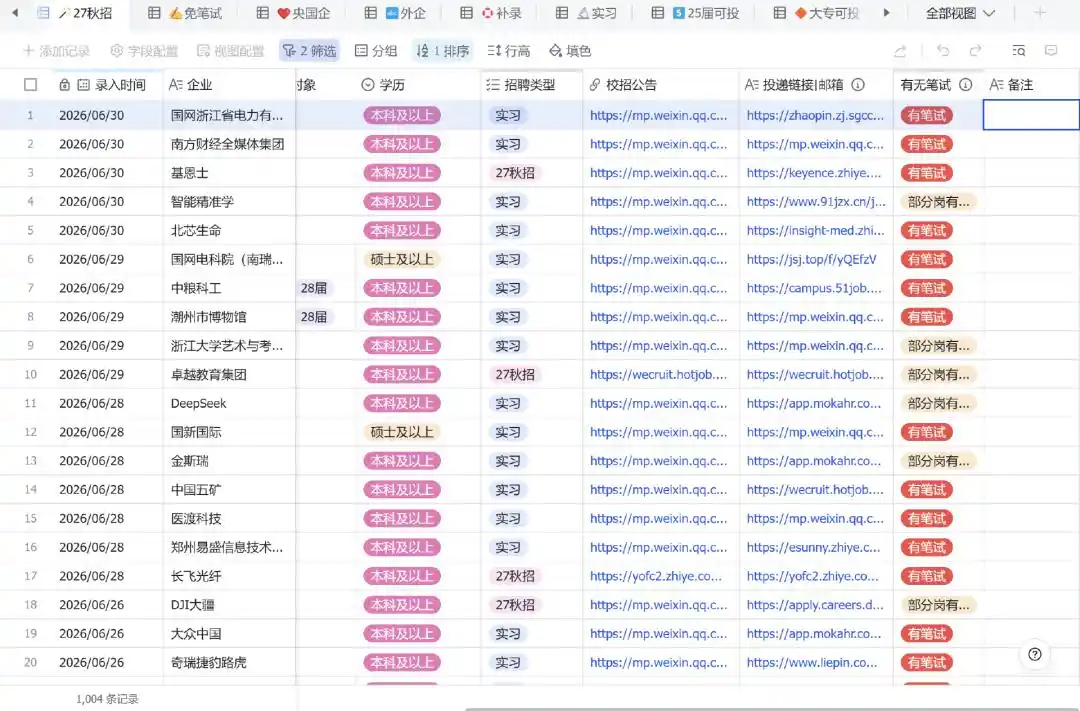
Image | Some companies explicitly mention a written test phase in related online autumn recruitment information

"AI interviews use algorithms to observe the candidate's body language and emotional changes, analyze their verbal logic, and finally, AI screens whether they proceed to the next stage," Yangliu explained. Some AI interviews are very strict; uncoordinated body movements or wandering eyes might be flagged as 'cheating.'

Besides AI interviews, written tests have also become more difficult than before. Some sections have time limits, and they might even suddenly ask you about specific details of certain company projects.

To improve her answer accuracy and efficiency, Yangliu had to prepare on multiple fronts—even though she graduated from a 211 university, her degree is not a significant advantage in the job market. "Without hardcore professional barriers, I can only rely on mass applications, taking many assessments, and trying widely, using quantity to exchange for probability."

Yangliu's senior used a similar strategy, applying to over 100 positions, taking more than 20 written tests, and finally finding a job. "This year, there are even more graduates, so the situation might be more severe," Yangliu said.

Currently, company written tests are mainly divided into three categories: position-specific professional ability tests, general aptitude tests similar to civil service exams, and personality tests used to screen for specific traits.
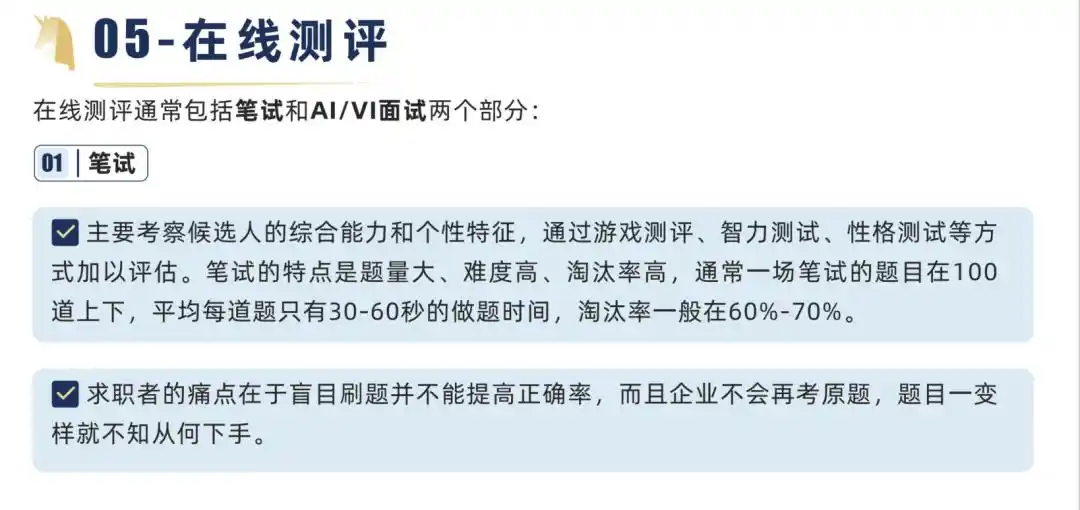
Image | Introduction to online assessments by a certain career service agency

These three question types are randomly combined with varying difficulty levels, so one can only rely on advance preparation as a safety net.

Her senior summarized a preparation formula: Professional questions are closely related to the business and are the most difficult; you can only accumulate problem-solving ideas by analyzing industry cases. Aptitude test questions have no shortcuts; only massive practice makes perfect. For personality tests, you cannot answer freely; you must simulate repeatedly to align with the workplace's core expectations for employee resilience, ambition, and stability.

In a way, this is also the job-seeking path for all current graduates: To not miss any opportunity, the vast majority of graduates choose to apply in bulk. The cost of mass applications is being swept along by countless online assessments.

Xu Wang, who just secured a summer internship offer, feels similarly. "Nowadays, even finding a summer internship requires participating in multiple assessments."

In the past two years, the number of internship positions in the market has shrunk by over 15%, while the number of applications has surged dramatically. The competition of 'many monks, little gruel' is intensifying.

To gain an advantage, starting in February this year, Xu Wang threw himself wholeheartedly into assessment preparation. By June, he had submitted over 120 applications, triggering 32 written test invitations.

After screening out some positions, Xu Wang took on 21 tests and ultimately secured 7 internship offers.

In contrast, Li Xin, an international student from the UK, was less fortunate. In the same timeframe, she submitted 15 internship applications, 12 triggered written assessments, and only 1 progressed to the interview stage.

"The written tests contain many obscure professional terms and comprehensive assessments that require long periods of thought," Li Xin said. The most mentally exhausting one required her to use a designated AI tool to answer continuously for three hours and independently complete a logically sound, data-rich, and comprehensive industry research report.

In the past, such tasks might only be undertaken independently by professionals with 3-5 years of experience. Now, they have become written test questions for newcomers.

Thinking they could escape over a decade of exam-driven competition after leaving school, they never expected that the first step into the workplace would be entering an even denser, harsher, and more inescapable cage of exams.

"Our generation seems to be born to be exam-taking tools," Li Xin often jokes.

"You Could Also See It as a Compliance Test"

Compared to school exams, pre-employment tests are more like a never-ending, answerless 'compliance test' that consumes you endlessly.

In one written test, Li Xin spent over two hours answering professional questions related to data maintenance and merchant operation optimization for a Key Account position at an internet company. However, the system wouldn't reveal her score or accuracy; she could only wait to see if anyone would notify her within two days.

After entering the interview, Li Xin was surprised to find that the interviewer didn't ask any business-related questions at all. All the questions revolved around her personal experience: "Your undergraduate internship experience isn't vertical enough. Why? Didn't you know what you wanted to do back then? How can I be sure you're passionate about this position?"

Towards the end of the interview, the HR representative was even more direct: "Aside from you being a local, I don't see any traits in your experience that fit this position."

Ultimately, Li Xin 'failed' the interview. The reason given was 'not a good match.'

This left Li Xin puzzled: "If they could tell I wasn't a good match for this position during the resume screening phase, why set up so many steps, keep me until the interview, and then tell me I'm not suitable?"

However, from the perspective of companies and HR, setting up these complex hurdles to challenge applicants is also a helpless move under the imbalance of market supply and demand.

Chen Chen, an HR professional with years of experience at a major internet company, explained that hiring fresh graduates carries higher risks than experienced hires. Most people's resumes are relatively simple and don't reveal their logical ability, learning ability, or resilience when facing actual work problems. Therefore, they can only screen through complex question design.

At the same time, the逐年暴涨 skyrocketing number of fresh graduates each year has infinitely lowered companies' tolerance for hiring mistakes. The number of graduates in 2026 is approximately 12.7 million, with graduates from top-tier 985 and 211 universities alone reaching the hundreds of thousands. In stark contrast, all the leading internet companies in China combined offer only about 25,000 summer internship positions per year.

Image | Scene from the 2026 Heilongjiang Talent Week

"This means that even if only one-third of the students from 985 and 211 schools intend to apply for internet summer internships, at least 300,000 people will be competing. Assuming each person applies for an average of 10 positions, that's 3 million resumes to process."

Chen Chen stated that without these assessment stages, companies simply wouldn't have a way to screen candidates in bulk.

Furthermore, with rising labor costs and the widespread adoption of AI, many companies themselves have entered an era of improving efficiency and tightening budgets. Even experienced employees face constant optimization and layoff risks, so companies are even more cautious about hiring new employees.

"We still hire fresh graduates now, but the graduates we bring in all have at least 2-3 internship experiences lasting around 3 months each, equivalent to the level of newcomers with 1-2 years of experience in the past," Chen Chen said.

This also means that pure newcomers are no longer welcome in the industry.

"Once we hire a newcomer who cannot quickly adapt or perform in the role, our recruitment department gets complaints from the business units and faces warnings or performance deductions," Chen Chen explained. To avoid recruitment risks and improve efficiency, companies can only continuously raise the hiring bar, increase the difficulty of written tests, and use high-intensity assessments to select the best from the best.

Therefore, Chen Chen doesn't deny the term 'compliance test.' "If you can't withstand these pre-employment tests during the job search, it will be very difficult to establish yourself in the future workplace. The written test itself is also a low-cost way to screen out potential hires who are more emotionally stable and compliant."

Moreover, for companies, compared to headhunting, written tests are relatively inexpensive.

"Having 200 people take a written test for one position costs less than half of what a headhunter charges. For the company, the written test is almost a zero-cost, zero-risk, high-return screening solution for newcomers."

As newcomers increase, positions decrease, and patience for training newcomers diminishes, the vicious cycle of assessment competition has become an unsolvable industry norm.

Struggling with All Their Might to 'Land' a Job

As pre-employment assessments become increasingly competitive, gray-market demands have also emerged. A commercialized gray industry chain, attached to job-seeking assessments and specifically serving fresh graduates' exam needs, has begun to permeate the entire graduation-season job market.

In major job-seeking communities and social media platforms, some people specifically compile and aggregate 'positions without written tests' lists. Such compilation posts are always traffic goldmines, instantly being saved, forwarded, and bookmarked by graduates upon release.
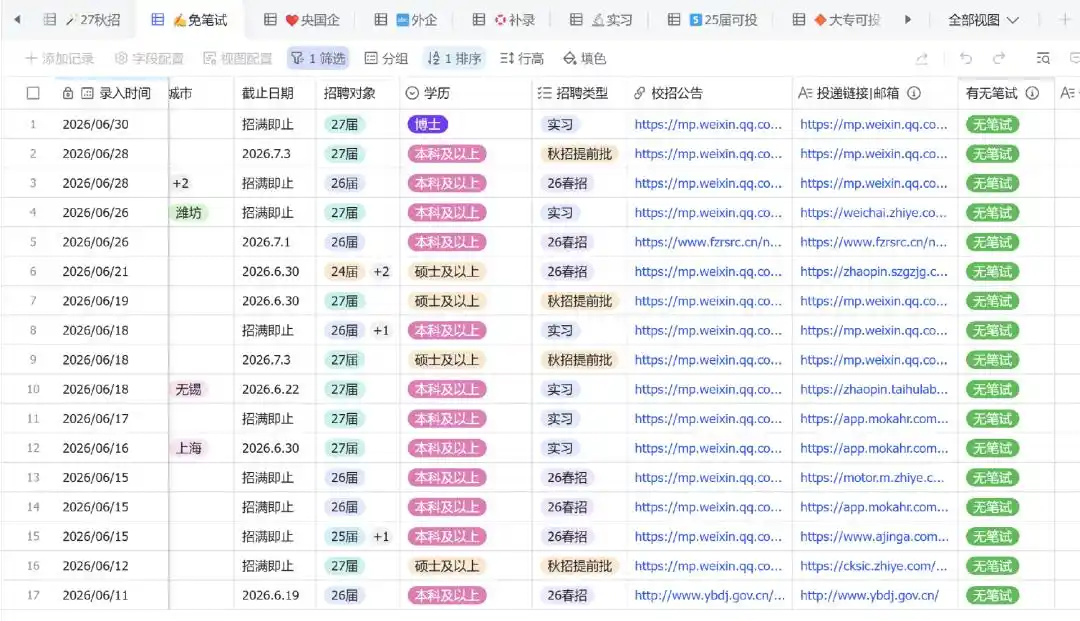
Image | In reality, the number of companies explicitly stating 'no written test' is extremely scarce in recruitment.

"Some people openly sell access to related positions at fixed prices," Chen Chen said, having seen people openly claim in their social media circles that they could secure state-owned enterprise jobs for a fee of 150,000 RMB. "But as things get stricter now, such things are mostly scams or only lead to outsourcing jobs."

Since the vast majority of job seekers can't avoid the written test stage, corresponding businesses have emerged: from test question banks and AI-powered answering services to guaranteed pass packages and full-process job-seeking guidance, each layer feeding on graduates' anxiety.

Li Xin tried buying a question bank.

When summer internship positions opened, she learned from friends that most companies' assessments rely on mainstream third-party platforms like Beisen, Zhiding, Niuke, and Saima—these platforms have fixed question banks, and the system randomly draws questions to form tests. Even though question types vary, the core test points and answering strategies are traceable.

"Taking the Beisen question bank as an example, I saw online that some say if you score below 50, your resume might be automatically filtered out and not reach the interview selection stage," Li Xin said. After learning this 'unspoken rule,' she felt particularly anxious and ultimately bought a set of Beisen assessment questions online for a low price of 4.9 RMB, claiming to be the 'most comprehensive on the entire internet.'
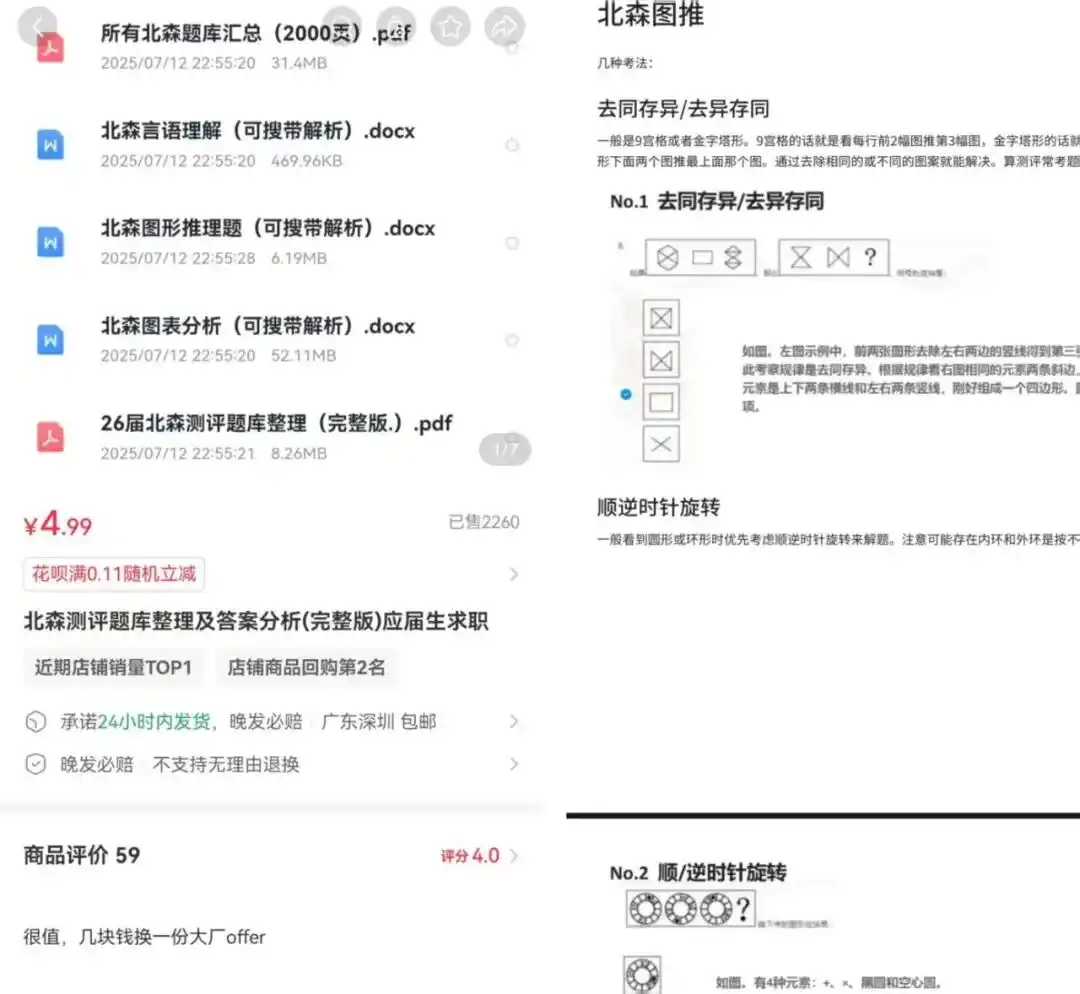
Image | Beisen question bank sold online

The question bank content is all-encompassing, covering past years' real questions, answering技巧 skills, standard answers for personality tests, and quick-solving思路 for aptitude tests. The purchase page showed that this document had already sold over 2,000 copies, meaning at least two thousand anxious graduates like her had clicked 'pay.'

Given mass applications, practicing questions is ultimately a笨办法消耗极大的体力消耗笨办法 that requires significant stamina. The autumn and spring recruitment windows are highly concentrated. A single student often submits hundreds of resumes and faces twenty or thirty assessments in succession. Aptitude tests, situational questions, and personality tests come one after another. No one has the energy to practice all the questions.

Many start taking risks, using AI to search for answers and cheat to提高通过率抬高通过率.

Image | The interviewer's system may display which candidates are suspected of cheating; in Chen Chen's words, he would directly screen out such candidates.

Fresh graduate Xu Wang is very familiar with these tactics—during summer internship recruitment, many of his classmates employed such methods.

"Each company's requirements are different," Xu Wang explained. Many中小企业的线上笔试中小企业的线上笔试 do not require enabling the camera or microphone; the entire test is done on a webpage, with supervision几乎形同虚设几乎形同虚设. Job seekers simply open AI tools, search for answers while answering, and can submit a logically complete答卷答卷 within a few dozen minutes.

Even when facing strict assessments with single-camera or dual-camera全程录像全程录像, the圈子圈子 had long prepared countermeasures: virtual machines, private browsers, device isolation—using technology to bypass system风控风控 and search for answers悄无声息悄无声息.

"There is a cost, though. If detected cheating, it might affect subsequent recruitment," Xu Wang said. Many of his competitors 'went under' this way.

Nevertheless, Chen Chen stated that every year, many job seekers still take the risk and cheat, betting on their luck.

"Even though there's a chance of being flagged for cheating, 'fortune favors the bold,'" some总结道总结道.

Practicing questions and自助作弊自助作弊 are just small-scale actions. To secure a stable and decent job, many middle-class families are willing to spend tens of thousands of RMB to sign up for '全程陪跑全程陪跑' services offered by career agencies.

"Every autumn and spring recruitment peak season, our business immediately booms," said Wang Weijia, who once worked at a career training institution, revealing the industry's引流套路引流套路. During recruitment seasons, a large number of accounts渲染就业焦虑渲染就业焦虑 appear online in batches, most of which are水军账号水军账号 operated by同行同行.

Online题库售卖帖题库售卖帖 and晒单帖晒单帖 are随处可见随处可见,帖子帖子 constantly渲染渲染 'successful上岸上岸 with coaching,' deliberately放大放大 graduates' job-seeking恐慌恐慌, all ultimately paving the way for引流引流 to高价付费业务高价付费业务.

Agencies charge based on company tiers. Guaranteed pass packages for written tests at internet giants, state-owned enterprises, and central enterprises are priced动不动上万动不动上万, "the highest can reach 36,800 RMB." Services bundled include内部内推内部内推, one-on-one远程协助答题远程协助答题, pre-exam真题梳理真题梳理, and even承诺承诺 'full refund if not passed' to打消打消 students' and parents'顾虑顾虑.

Image | A case shared by a career agency, claiming a student landed a Product Manager position at a major internet company through a 43,800 RMB全程陪跑全程陪跑 service.

Wang Weijia observed that the profile of those willing to pay a hefty price is very clear: middle-class families with decent financial means but no industry connections to help their children find jobs. "These parents lack the ability to pull strings for their children. Watching their children fail repeatedly at the written test stage, filled with anxiety, they would rather place a heavy bet just to secure a job entry ticket for their child."

Such衍生服务衍生服务 sell very well. The most popular 'background enhancement' costs around 10,000 RMB. "Simply put, it's paying to have your name listed on project rosters or purchasing short-term paid internships to包装包装 an impressive履历履历 and提高面试通过率提高面试通过率," Wang Weijia explained. Additionally,配套配套面试辅导面试辅导, career choice consultation are generally priced at 500 RMB per hour per subject, and many families are willing to pay this fee.
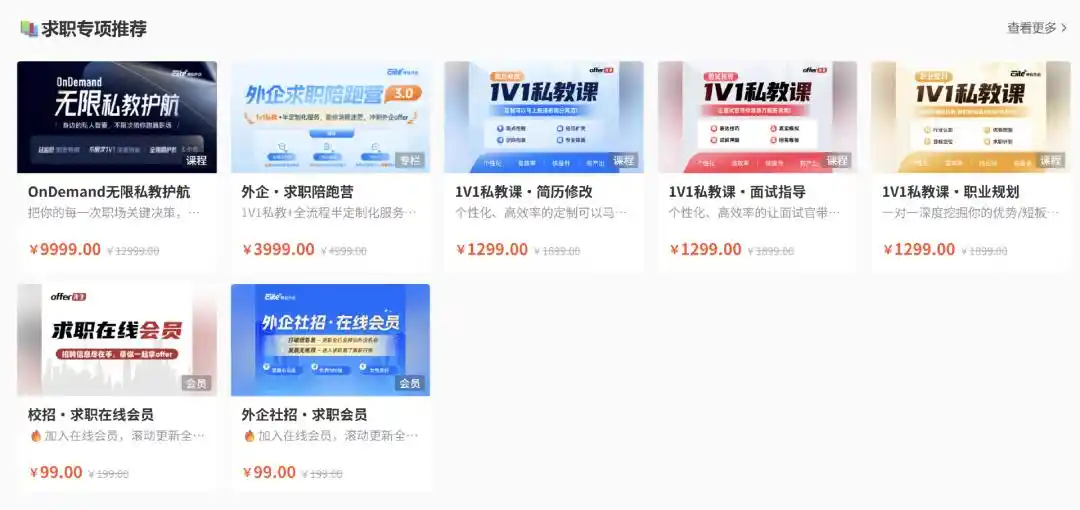
Image | Service pricing of a certain career agency

"Earlier, I found it hard to understand the concept of 'paying to work,' but after seeing more in recent years, I realized such businesses are booming year by year. Even requiring a deposit of several thousand RMB first, customers still keep coming," Wang Weijia感慨感慨.

On one side, companies continuously升级测评难度升级测评难度,抬高筛选门槛抬高筛选门槛, using rigorous assessments to筛选优质人才筛选优质人才,测试新人抗压能力测试新人抗压能力与服从性与服从性. On the other side, fresh graduates疯狂刷题疯狂刷题,付费买题付费买题,借助AI作弊借助AI作弊,购买保过服务购买保过服务, using every means to突破考核壁垒突破考核壁垒 to successfully 'land' a job.

No one wants to陷入无休止的应试内卷陷入无休止的应试内卷, and no one wants to依赖灰色手段求职依赖灰色手段求职. But in a job market with岗位稀缺岗位稀缺,竞争白热化竞争白热化, and淘汰无底线淘汰无底线, everyone is被大势裹挟被大势裹挟,只能被动挣扎只能被动挣扎,全力突围全力突围.

Changed Lives

The白热化白热化的求职考核与招聘节奏,一点一点地掰正了年轻人原本清晰的人生规划.

Yangliu originally had plans to pursue a Ph.D. Her teachers and seniors劝她冷静劝她冷静 time and again: nowadays, the threshold for academic positions in universities is越来越高越来越高, job prospects for humanities Ph.D. holders are狭窄狭窄, and emerging into the job market as a fresh graduate at thirty, with no work履历履历, would only make就业就业 even more被动被动.

After weighing her options several times, she temporarily搁置搁置 her academic理想理想 and plunged into the求职人海求职人海,开始了开始了 one笔试拉锯战笔试拉锯战 after another.

Li Xin originally planned to go to the United States for a one-year master's degree. But she carefully calculated the job-seeking节奏节奏: the one-year U.S. program is short, with graduation in June the following year. The graduation year刚好撞上刚好撞上 autumn recruitment. According to the current recruitment rule where companies lock in candidates a year in advance, she would have to仓促开启仓促开启 job search备战备战 even before setting foot on campus.

To争取喘息的余地争取喘息的余地, she临时改换赛道临时改换赛道, switching her target institutions to the UK. The UK system issues graduation certificates in December each year. Enrolling in 2025 would顺延划为顺延划为 the 2027 graduating class, finally giving herself an额外多出额外多出一整年的缓冲期缓冲期.

Li Xin has a friend who once满怀憧憬满怀憧憬,立志成为一名立志成为一名 free travel blogger. Faced with the现实现实 of连续多月投递无果连续多月投递无果, they最终妥协最终妥协, accepting an internet sales position. In the industry's求职履历求职履历, such positions are not considered优质经历优质经历 and might even become短板短板 for future job changes.

But they had no more挑选余地挑选余地, only hoping to尽快拿到尽快拿到 offer顺利上岸顺利上岸 and早日结束早日结束 the遥遥无期的等待遥遥无期的等待.

To this day, Li Xin still has零 offer零 offer and can only重整心态重整心态,备战备战 the even more竞争激烈的竞争激烈的 autumn recruitment.

She occasionally jokes about the闭环闭环 that has formed: "It's good. Graduates use AI to write theses, companies use AI for assessments, we use AI to search for answers, and then use AI to work after getting in. Everyone is魔法对轰魔法对轰."

This article is from the WeChat public account 'Micro-Story' (ID: xianweigushi), author: Micro-Story Editorial Department


Trend Kriptolar

İlgili Sorular

QWhat are the three main types of written assessments that enterprises commonly use in their online recruitment process for graduates?

AThe three main types are: 1) Professional Competency Tests specific to the job position; 2) General Aptitude Tests similar to civil service exams; and 3) Personality Tests used to screen for specific traits.

QWhy do HR professionals from enterprises justify the use of increasingly complex and difficult online assessments in graduate recruitment?

AHR professionals justify the complex assessments due to a severe market imbalance where a massive number of graduates far exceeds the available job positions. These tests allow for efficient bulk screening. Additionally, they serve as a low-cost way to assess a candidate's logical thinking, learning ability, and pressure tolerance, acting as a form of 'compliance test' to find candidates who are more stable and adaptable.

QWhat 'gray industry' practices have emerged in response to the intense competition and prevalence of online assessments?

ASeveral gray industry practices have emerged, including: selling 'written test-free job position lists'; compiling and selling past question banks and answer keys for common testing platforms; using AI tools or technical methods to cheat during online exams; and offering expensive 'full-process job-seeking coaching' services from agencies, which may include paid internships for resume padding, guaranteed interview packages, and one-on-one tutoring.

QAccording to the article, how has the intense job-seeking process impacted the life plans of some graduates mentioned?

AThe intense process has significantly altered their plans. One student (Yang Liu) postponed her PhD aspirations to focus on job hunting. Another (Li Xin) switched her intended study destination from the US to the UK to better align her graduation timeline with the recruitment cycle. A friend of Li Xin's abandoned his dream of being a travel blogger and reluctantly accepted a sales job just to secure an offer.

QWhat is the core irony or 'closed loop' that the graduate Li Xin sarcastically points out regarding the use of AI in the education-to-employment pipeline?

ALi Xin sarcastically points out a 'closed loop' or irony where: graduates use AI to write their theses, enterprises use AI to screen candidates (through assessments and interviews), candidates use AI to search for answers during tests, and finally, once hired, they use AI to perform their jobs. It's a cycle of 'magic against magic' where AI is used at every stage, often to counteract or navigate systems also powered by AI.

İlgili Okumalar

Jameson Lopp's BIP-110 Postmortem: Bitcoin Is Driven by Game Theory, Not Morality

Jameson Lopp's analysis concludes that BIP-110, a proposal to restrict arbitrary data (like inscriptions) on Bitcoin, failed due to economic and technical realities, not moral arguments. The proposal, championed by Luke Dashjr and others, aimed to "cleanse" the chain but never reached its 55% miner activation threshold. Upon its forced signaling deadline in August, only the OCEAN pool (with ~1% hash rate) supported it, creating a short-lived fork that quickly died as miners faced unredeemable block rewards. Lopp's earlier predictions about its economic infeasibility were proven correct. Technically, BIP-110 was flawed; workarounds to embed data compliant with its rules were demonstrated almost immediately, proving it couldn't achieve its stated goal. The debate often devolved into moralistic rhetoric, with supporters accusing opponents of supporting child exploitation material—a tactic Lopp criticizes as ineffective for building consensus. Lopp argues Bitcoin is driven by incentives and game theory, not morality. Past forks like Bitcoin Cash promised economic benefits, while BIP-110 offered only restrictions and reduced miner fees, gaining no substantial support from major economic players. He predicts the "puritans" behind the failed fork will continue complaining but their new chain will remain insignificant. The episode reaffirms that attempting to censor data on a permissionless, anti-censorship network like Bitcoin is a futile battle.

marsbit28 dk önce

Jameson Lopp's BIP-110 Postmortem: Bitcoin Is Driven by Game Theory, Not Morality

marsbit28 dk önce

Tokenization Scale Soars to $4.3 Billion, But Why Did Securitize Incur a $5.5 Million Loss?

Securitize's first quarterly report post-IPO reveals a paradox: while its tokenized assets under management hit a record $4.3 billion (up 16% YoY) and platform trading volume surged 147% to $5.3 billion, total revenue fell 5% to $14.4 million. Tokenization revenue specifically dropped ~12% to $7.8 million, leading to an adjusted EBITDA loss of $5.5 million. CFO Francisco Flores explained that most trading volume is not yet monetized, with the majority of tokenization revenue still coming from one-time projects like new protocol integrations. In contrast, asset servicing revenue, a more recurring stream, grew slightly to $6.6 million. The company has lowered its full-year revenue guidance to $70-$80 million from an initial projection of $110 million. Industry experts note this highlights a structural challenge for the tokenization sector. Scaling assets on-chain doesn't automatically scale a profitable business model. Current implementations often rely on costly, customized projects for each new asset or jurisdiction. The future, they argue, lies in building standardized infrastructure that generates recurring "infrastructure revenue" from post-issuance activities like compliance, distributions, and secondary trading—similar to enterprise software. Analysts caution against misinterpreting high trading volumes as indicative of a mature fee-based model, as Securitize's broad volume metric includes many non-monetized actions. The key test for the industry is whether adding billions in new assets can generate sustainable revenue without constant new custom projects.

marsbit31 dk önce

Tokenization Scale Soars to $4.3 Billion, But Why Did Securitize Incur a $5.5 Million Loss?

marsbit31 dk önce

The Five Paradoxes of Artificial Intelligence

**Five Paradoxes of Artificial Intelligence** Artificial intelligence (AI) is an era filled with paradoxes, which we navigate as we advance. **1. The Prediction Paradox** AI experts, from pioneers like Marvin Minsky to contemporary figures like Geoffrey Hinton and Demis Hassabis, have a history of inaccurate forecasts regarding AI's capabilities and timelines, such as achieving human-level machine intelligence or surpassing radiologists. Predictions about Artificial General Intelligence (AGI) vary wildly between optimistic entrepreneurs and skeptical academics, highlighting the inherent unpredictability of technological futures. **2. The Employment Quantification Paradox** Despite numerous studies from institutions like the OECD, IMF, and McKinsey attempting to quantify AI's impact on jobs, estimates of affected employment range from 0.4% to 67%, revealing vast inconsistencies. This paradox arises because isolating AI's effect from other economic, social, and technological factors is virtually impossible, and forecasts depend on static assumptions about a dynamically evolving technology. **3. The Productivity Paradox** While AI is a transformative General Purpose Technology, significant productivity growth has not yet materialized in major economies like the EU and has only matched historical averages in the US. This disconnect between rapid innovation and slow productivity gains, reminiscent of the "Solow Paradox" from the computer age, is often explained by time lags. History shows it takes decades for such technologies to diffuse and trigger complementary innovations that boost productivity. **4. The Data Value Paradox** Data is hailed as the "new oil" and critical for AI, yet its economic value is paradoxical. Its worth is realized only in use, not in straightforward trade. Despite policy emphasis and initiatives for data asset recognition on corporate balance sheets in China, the monetized value remains negligible—accounting for only about 0.06% of major telecom operators' total assets—highlighting the gap between perceived utility and financial valuation. **5. The Industrial Revolution Paradox** For decades, nearly every major new technology, from the internet and nanotechnology to blockchain and now AI, has been proclaimed as the driver of a "Fourth Industrial Revolution." This constant reassignment suggests prior labels were premature. True industrial revolutions are typically identified in hindsight, not in real-time. Furthermore, the coexistence of such a proclaimed transformative revolution with ongoing economic crises would be historically anomalous. Whether AI truly defines a new industrial revolution remains a narrative for the future to decide.

marsbit33 dk önce

The Five Paradoxes of Artificial Intelligence

marsbit33 dk önce

İşlemler

Spot

Popüler Makaleler

$S$ Nedir

SPERO'yu Anlamak: Kapsamlı Bir Genel Bakış SPERO'ya Giriş İnovasyonun manzarası gelişmeye devam ederken, web3 teknolojilerinin ve kripto para projelerinin ortaya çıkışı dijital geleceği şekillendirmede önemli bir rol oynamaktadır. Bu dinamik alanda dikkat çeken projelerden biri SPERO, $$s$$ olarak adlandırılmaktadır. Bu makale, SPERO hakkında ayrıntılı bilgi toplamak ve sunmak amacıyla, meraklılar ve yatırımcıların web3 ve kripto alanlarındaki temellerini, hedeflerini ve yeniliklerini anlamalarına yardımcı olmayı amaçlamaktadır. SPERO,$$s$$ Nedir? SPERO,$$s$$, kripto alanında merkeziyetsizlik ve blok zinciri teknolojisi ilkelerini kullanarak etkileşimi, faydayı ve finansal kapsayıcılığı teşvik eden bir ekosistem yaratmayı amaçlayan benzersiz bir projedir. Proje, kullanıcıların yenilikçi finansal çözümler ve hizmetler sunarak eşler arası etkileşimleri yeni yollarla kolaylaştırmayı hedeflemektedir. SPERO,$$s$$'nin temel amacı, bireyleri güçlendirmek ve kripto para alanındaki kullanıcı deneyimini artıran araçlar ve platformlar sağlamaktır. Bu, daha esnek işlem yöntemlerini mümkün kılmayı, topluluk odaklı girişimleri teşvik etmeyi ve merkeziyetsiz uygulamalar (dApp'ler) aracılığıyla finansal fırsatlar yaratmayı içermektedir. SPERO,$$s$$'nin temel vizyonu kapsayıcılık etrafında dönmekte olup, geleneksel finansal sistemlerdeki boşlukları kapatmayı ve blok zinciri teknolojisinin faydalarından yararlanmayı hedeflemektedir. SPERO,$$s$$'nin Yaratıcısı Kimdir? SPERO,$$s$$'nin yaratıcısının kimliği bir miktar belirsizdir, çünkü kurucusu(ları) hakkında ayrıntılı arka plan bilgisi sağlayan sınırlı kamuya açık kaynaklar bulunmaktadır. Bu şeffaflık eksikliği, projenin merkeziyetsizlik taahhüdünden kaynaklanabilir—birçok web3 projesinin paylaştığı bir etik anlayışı, bireysel tanınmanın yerine kolektif katkıları önceliklendirmektedir. Topluluk ve onun kolektif hedefleri etrafında tartışmaları merkezileştirerek, SPERO,$$s$$, belirli bireyleri öne çıkarmadan güçlendirme özünü taşımaktadır. Bu nedenle, SPERO'nun etik anlayışını ve misyonunu anlamak, tek bir yaratıcının kimliğini belirlemekten daha önemlidir. SPERO,$$s$$'nin Yatırımcıları Kimlerdir? SPERO,$$s$$, kripto sektöründe yeniliği teşvik etmeye adanmış girişim sermayedarlarından melek yatırımcılara kadar çeşitli yatırımcılar tarafından desteklenmektedir. Bu yatırımcıların odak noktası genellikle SPERO'nun misyonuyla uyumlu olup, toplumsal teknolojik ilerlemeyi, finansal kapsayıcılığı ve merkeziyetsiz yönetimi vaat eden projeleri önceliklendirmektedir. Bu yatırımcı temelleri, yalnızca yenilikçi ürünler sunan projelere değil, aynı zamanda blok zinciri topluluğuna ve ekosistemlerine olumlu katkılarda bulunan projelere de ilgi duymaktadır. Bu yatırımcıların desteği, SPERO,$$s$$'yi hızla gelişen kripto projeleri alanında dikkate değer bir rakip haline getirmektedir. SPERO,$$s$$ Nasıl Çalışır? SPERO,$$s$$, onu geleneksel kripto para projelerinden ayıran çok yönlü bir çerçeve kullanmaktadır. İşte benzersizliğini ve yeniliğini vurgulayan bazı temel özellikler: Merkeziyetsiz Yönetim: SPERO,$$s$$, kullanıcıların projenin geleceğiyle ilgili karar alma süreçlerine aktif olarak katılmalarını sağlayan merkeziyetsiz yönetim modellerini entegre etmektedir. Bu yaklaşım, topluluk üyeleri arasında sahiplik ve hesap verebilirlik duygusunu teşvik etmektedir. Token Kullanımı: SPERO,$$s$$, ekosistem içinde çeşitli işlevler sunmak üzere tasarlanmış kendi kripto para token'ını kullanmaktadır. Bu token'lar, işlemleri, ödülleri ve platformda sunulan hizmetlerin kolaylaştırılmasını sağlayarak genel etkileşimi ve faydayı artırmaktadır. Katmanlı Mimari: SPERO,$$s$$'nin teknik mimarisi, modülerlik ve ölçeklenebilirliği destekleyerek projenin evrimi sırasında ek özelliklerin ve uygulamaların sorunsuz bir şekilde entegrasyonuna olanak tanımaktadır. Bu uyum sağlama yeteneği, sürekli değişen kripto manzarasında geçerliliği sürdürmek için hayati öneme sahiptir. Topluluk Katılımı: Proje, işbirliği ve geri bildirim teşvik eden mekanizmalar kullanarak topluluk odaklı girişimlere vurgu yapmaktadır. Güçlü bir topluluk oluşturarak, SPERO,$$s$$, kullanıcı ihtiyaçlarını daha iyi karşılayabilir ve piyasa trendlerine uyum sağlayabilir. Kapsayıcılığa Odaklanma: Düşük işlem ücretleri ve kullanıcı dostu arayüzler sunarak, SPERO,$$s$$, daha önce kripto alanında yer almamış bireyler de dahil olmak üzere çeşitli bir kullanıcı tabanını çekmeyi hedeflemektedir. Bu kapsayıcılık taahhüdü, erişilebilirlik yoluyla güçlendirme misyonuyla uyumludur. SPERO,$$s$$ Zaman Çizelgesi Bir projenin tarihini anlamak, gelişim yolculuğu ve kilometre taşları hakkında kritik bilgiler sağlar. Aşağıda, SPERO,$$s$$'nin evriminde önemli olayları haritalayan önerilen bir zaman çizelgesi bulunmaktadır: Kavram Geliştirme ve Fikir Aşaması: SPERO,$$s$$'nin temelini oluşturan ilk fikirler, blok zinciri endüstrisindeki merkeziyetsizlik ve topluluk odaklılık ilkeleriyle yakından uyumlu olarak geliştirildi. Proje Beyaz Kağıdının Yayınlanması: Kavramsal aşamayı takiben, SPERO,$$s$$'nin vizyonunu, hedeflerini ve teknolojik altyapısını ayrıntılı bir şekilde açıklayan kapsamlı bir beyaz kağıt yayımlandı ve topluluk ilgisini ve geri bildirimini toplamak amacıyla sunuldu. Topluluk Oluşturma ve Erken Katılımlar: Projenin hedefleri etrafında tartışmalar yürüterek destek toplamak ve erken benimseyenler ile potansiyel yatırımcılar için bir topluluk oluşturmak amacıyla aktif iletişim çabaları gerçekleştirildi. Token Üretim Etkinliği: SPERO,$$s$$, yerel token'larını erken destekçilere dağıtmak ve ekosistem içinde başlangıç likiditesini sağlamak amacıyla bir token üretim etkinliği (TGE) gerçekleştirdi. İlk dApp'in Yayınlanması: SPERO,$$s$$ ile ilişkili ilk merkeziyetsiz uygulama (dApp) faaliyete geçti ve kullanıcıların platformun temel işlevleriyle etkileşimde bulunmalarını sağladı. Sürekli Gelişim ve Ortaklıklar: Projenin tekliflerine sürekli güncellemeler ve iyileştirmeler yapılmakta olup, blok zinciri alanındaki diğer oyuncularla stratejik ortaklıklar, SPERO,$$s$$'yi rekabetçi ve gelişen bir oyuncu haline getirmiştir. Sonuç SPERO,$$s$$, web3 ve kripto paranın finansal sistemleri devrim niteliğinde dönüştürme ve bireyleri güçlendirme potansiyelinin bir kanıtıdır. Merkeziyetsiz yönetime, topluluk katılımına ve yenilikçi tasarlanmış işlevselliğe olan bağlılığıyla, daha kapsayıcı bir finansal manzaraya doğru bir yol açmaktadır. Hızla gelişen kripto alanındaki herhangi bir yatırımda olduğu gibi, potansiyel yatırımcılar ve kullanıcılar, SPERO,$$s$$ içindeki devam eden gelişmelerle ilgili olarak kapsamlı bir araştırma yapmaları ve düşünceli bir şekilde katılmaları teşvik edilmektedir. Proje, kripto endüstrisinin yenilikçi ruhunu sergileyerek, sayısız olasılığını keşfetmeye davet etmektedir. SPERO,$$s$$'nin yolculuğu hala devam ederken, temel ilkeleri, teknoloji, finans ve birbirimizle etkileşim biçimimizi etkileyebilir.

413 Toplam GörüntülenmeYayınlanma 2024.12.17Güncellenme 2024.12.17

$S$ Nedir

AGENT S Nedir

Agent S: Web3'te Otonom Etkileşimin Geleceği Giriş Web3 ve kripto para dünyasında sürekli gelişen manzarada, yenilikler bireylerin dijital platformlarla etkileşim biçimlerini sürekli olarak yeniden tanımlıyor. Bu tür öncü projelerden biri olan Agent S, açık ajans çerçevesi aracılığıyla insan-bilgisayar etkileşimini devrim niteliğinde değiştirmeyi vaat ediyor. Otonom etkileşimlerin yolunu açarak, Agent S karmaşık görevleri basitleştirmeyi ve yapay zeka (AI) alanında dönüştürücü uygulamalar sunmayı hedefliyor. Bu detaylı inceleme, projenin karmaşıklıklarına, benzersiz özelliklerine ve kripto para alanındaki etkilerine dalacaktır. Agent S Nedir? Agent S, bilgisayar görevlerinin otomasyonunda üç temel zorluğu ele almak üzere özel olarak tasarlanmış çığır açıcı bir açık ajans çerçevesidir: Alan Spesifik Bilgi Edinimi: Çerçeve, çeşitli dış bilgi kaynaklarından ve iç deneyimlerden akıllıca öğrenir. Bu çift yönlü yaklaşım, alan spesifik bilgi açısından zengin bir veri havuzu oluşturmasını sağlar ve görev yürütmedeki performansını artırır. Uzun Görev Ufukları Üzerinde Planlama: Agent S, karmaşık görevlerin verimli bir şekilde parçalanmasını ve yürütülmesini kolaylaştıran deneyim artırımlı hiyerarşik planlama kullanır. Bu özellik, çoklu alt görevleri etkili ve verimli bir şekilde yönetme yeteneğini önemli ölçüde artırır. Dinamik, Homojen Olmayan Arayüzlerle Başlama: Proje, ajanlar ve kullanıcılar arasındaki etkileşimi geliştiren yenilikçi bir çözüm olan Ajan-Bilgisayar Arayüzü'ni (ACI) tanıtmaktadır. Çok Modlu Büyük Dil Modellerini (MLLM'ler) kullanarak, Agent S çeşitli grafik kullanıcı arayüzlerini sorunsuz bir şekilde gezinebilir ve manipüle edebilir. Bu öncü özellikler aracılığıyla, Agent S, makinelerle insan etkileşimini otomatikleştirmede karşılaşılan karmaşıklıkları ele alan sağlam bir çerçeve sunarak, AI ve ötesinde birçok uygulama için zemin hazırlıyor. Agent S'nin Yaratıcısı Kimdir? Agent S'nin kavramı temelde yenilikçi olsa da, yaratıcısı hakkında spesifik bilgiler belirsizliğini koruyor. Yaratıcı şu anda bilinmiyor, bu da projenin yeni aşamasını veya kurucu üyeleri gizli tutma stratejik tercihini vurguluyor. Anonimlikten bağımsız olarak, odak çerçevenin yetenekleri ve potansiyeli üzerinde kalıyor. Agent S'nin Yatırımcıları Kimlerdir? Agent S, kriptografik ekosistemde oldukça yeni olduğundan, yatırımcıları ve finansal destekçileri hakkında ayrıntılı bilgiler açıkça belgelenmemiştir. Projeyi destekleyen yatırım temelleri veya organizasyonları hakkında kamuya açık bilgilerdeki eksiklik, finansman yapısı ve gelişim yol haritası hakkında sorular doğuruyor. Destekleyicilerin anlaşılması, projenin sürdürülebilirliğini ve potansiyel pazar etkisini değerlendirmek için kritik öneme sahiptir. Agent S Nasıl Çalışır? Agent S'nin temelinde, çeşitli ortamlarda etkili bir şekilde çalışmasını sağlayan son teknoloji bir sistem yatmaktadır. İşleyiş modeli birkaç ana özellik etrafında inşa edilmiştir: İnsan Benzeri Bilgisayar Etkileşimi: Çerçeve, bilgisayarlarla etkileşimleri daha sezgisel hale getirmeyi amaçlayan gelişmiş AI planlaması sunar. Görev yürütmedeki insan davranışını taklit ederek, kullanıcı deneyimlerini yükseltmeyi vaat eder. Anlatı Belleği: Yüksek düzeyde deneyimlerden yararlanmak için kullanılan Agent S, görev geçmişlerini takip etmek amacıyla anlatı belleğini kullanarak karar verme süreçlerini geliştirir. Episodik Bellek: Bu özellik, kullanıcılara adım adım rehberlik sağlayarak, çerçevenin görevler gelişirken bağlamsal destek sunmasına olanak tanır. OpenACI Desteği: Yerel olarak çalışabilme yeteneği ile Agent S, kullanıcıların etkileşimleri ve iş akışları üzerinde kontrol sağlamasına olanak tanır ve Web3'ün merkeziyetsiz felsefesiyle uyumlu hale gelir. Dış API'lerle Kolay Entegrasyon: Çeşitli AI platformlarıyla uyumluluğu ve çok yönlülüğü, Agent S'nin mevcut teknolojik ekosistemlere sorunsuz bir şekilde entegre olmasını sağlar ve geliştiriciler ile organizasyonlar için cazip bir seçenek haline getirir. Bu işlevsellikler, Agent S'nin kripto alanındaki benzersiz konumuna katkıda bulunarak, karmaşık, çok aşamalı görevleri minimum insan müdahalesi ile otomatikleştirir. Proje geliştikçe, Web3'teki potansiyel uygulamaları dijital etkileşimlerin nasıl gelişeceğini yeniden tanımlayabilir. Agent S'nin Zaman Çizelgesi Agent S'nin gelişimi ve kilometre taşları, önemli olaylarını vurgulayan bir zaman çizelgesinde özetlenebilir: 27 Eylül 2024: Agent S'nin kavramı, “Bilgisayarları İnsan Gibi Kullanan Açık Bir Ajans Çerçevesi” başlıklı kapsamlı bir araştırma makalesi ile tanıtıldı ve projenin temelini sergiledi. 10 Ekim 2024: Araştırma makalesi arXiv'de kamuya açık olarak yayınlandı ve çerçevenin derinlemesine bir incelemesini ve OSWorld benchmark'ına dayalı performans değerlendirmesini sundu. 12 Ekim 2024: Agent S'nin yetenekleri ve özellikleri hakkında görsel bir içgörü sağlayan bir video sunumu yayımlandı ve potansiyel kullanıcılar ve yatırımcılarla daha fazla etkileşim sağlandı. Bu zaman çizelgesindeki işaretler, sadece Agent S'nin ilerlemesini değil, aynı zamanda şeffaflık ve topluluk katılımına olan bağlılığını da göstermektedir. Agent S Hakkında Ana Noktalar Agent S çerçevesi gelişmeye devam ederken, birkaç ana özellik öne çıkmakta ve yenilikçi doğasını ve potansiyelini vurgulamaktadır: Yenilikçi Çerçeve: İnsan etkileşimine benzer bir bilgisayar kullanımı sağlamak üzere tasarlanan Agent S, görev otomasyonuna yeni bir yaklaşım getiriyor. Otonom Etkileşim: GUI aracılığıyla bilgisayarlarla otonom olarak etkileşim kurabilme yeteneği, daha akıllı ve verimli hesaplama çözümlerine doğru bir sıçrama anlamına geliyor. Karmaşık Görev Otomasyonu: Sağlam metodolojisi ile karmaşık, çok aşamalı görevleri otomatikleştirerek süreçleri daha hızlı ve daha az hata payı ile gerçekleştirebilir. Sürekli İyileştirme: Öğrenme mekanizmaları, Agent S'nin geçmiş deneyimlerden öğrenmesini sağlar ve sürekli olarak performansını ve etkinliğini artırır. Çok Yönlülük: OSWorld ve WindowsAgentArena gibi farklı işletim ortamlarında uyumlu olması, geniş bir uygulama yelpazesine hizmet edebilmesini sağlar. Agent S, Web3 ve kripto alanında kendini konumlandırırken, etkileşim yeteneklerini artırma ve süreçleri otomatikleştirme potansiyeli, AI teknolojilerinde önemli bir ilerlemeyi temsil etmektedir. Yenilikçi çerçevesi aracılığıyla, Agent S dijital etkileşimlerin geleceğini örneklemekte ve çeşitli sektörlerde kullanıcılar için daha sorunsuz ve verimli bir deneyim vaat etmektedir. Sonuç Agent S, AI ve Web3'ün birleşiminde cesur bir sıçramayı temsil ediyor ve teknoloji ile etkileşim biçimimizi yeniden tanımlama kapasitesine sahip. Henüz erken aşamalarında olmasına rağmen, uygulama olanakları geniş ve çekici. Kritik zorlukları ele alan kapsamlı çerçevesi ile Agent S, otonom etkileşimleri dijital deneyimin ön plana çıkmasına taşımayı hedefliyor. Kripto para ve merkeziyetsizlik alanlarına daha derinlemesine girdikçe, Agent S gibi projelerin teknoloji ve insan-bilgisayar işbirliğinin geleceğini şekillendirmede önemli bir rol oynayacağı kesin.

864 Toplam GörüntülenmeYayınlanma 2025.01.14Güncellenme 2025.01.14

AGENT S Nedir

S Nasıl Satın Alınır

HTX.com’a hoş geldiniz! Sonic (S) satın alma işlemlerini basit ve kullanışlı bir hâle getirdik. Adım adım açıkladığımız rehberimizi takip ederek kripto yolculuğunuza başlayın. 1. Adım: HTX Hesabınızı OluşturunHTX'te ücretsiz bir hesap açmak için e-posta adresinizi veya telefon numaranızı kullanın. Sorunsuzca kaydolun ve tüm özelliklerin kilidini açın. Hesabımı Aç2. Adım: Kripto Satın Al Bölümüne Gidin ve Ödeme Yönteminizi SeçinKredi/Banka Kartı: Visa veya Mastercard'ınızı kullanarak anında Sonic (S) satın alın.Bakiye: Sorunsuz bir şekilde işlem yapmak için HTX hesap bakiyenizdeki fonları kullanın.Üçüncü Taraflar: Kullanımı kolaylaştırmak için Google Pay ve Apple Pay gibi popüler ödeme yöntemlerini ekledik.P2P: HTX'teki diğer kullanıcılarla doğrudan işlem yapın.Borsa Dışı (OTC): Yatırımcılar için kişiye özel hizmetler ve rekabetçi döviz kurları sunuyoruz.3. Adım: Sonic (S) Varlıklarınızı SaklayınSonic (S) satın aldıktan sonra HTX hesabınızda saklayın. Alternatif olarak, blok zinciri transferi yoluyla başka bir yere gönderebilir veya diğer kripto para birimlerini takas etmek için kullanabilirsiniz.4. Adım: Sonic (S) Varlıklarınızla İşlem YapınHTX'in spot piyasasında Sonic (S) ile kolayca işlemler yapın.Hesabınıza erişin, işlem çiftinizi seçin, işlemlerinizi gerçekleştirin ve gerçek zamanlı olarak izleyin. Hem yeni başlayanlar hem de deneyimli yatırımcılar için kullanıcı dostu bir deneyim sunuyoruz.

2.2k Toplam GörüntülenmeYayınlanma 2025.01.15Güncellenme 2026.06.02

S Nasıl Satın Alınır

Tartışmalar

HTX Topluluğuna hoş geldiniz. Burada, en son platform gelişmeleri hakkında bilgi sahibi olabilir ve profesyonel piyasa görüşlerine erişebilirsiniz. Kullanıcıların S (S) fiyatı hakkındaki görüşleri aşağıda sunulmaktadır.

活动图片