This Xiaohongshu Graphic Layout AI Skill Has Found a Route to Bypass AI Labeling for Graphic Generation

marsbit2026-05-28 tarihinde yayınlandı2026-05-28 tarihinde güncellendi

Özet

A new open-source tool called "guizang-social-card-skill" has emerged, offering a unique workaround for AI content labeling rules on platforms like Xiaohongshu. Instead of using AI models to generate images, it employs AI to make layout decisions, then uses HTML/CSS to render the final graphic. Photographic assets are sourced from libraries like Unsplash. The output is a rasterized browser screenshot, not an "AI-generated image." This approach is a direct response to platform policies. In early 2026, Xiaohongshu mandated labeling for AI-generated synthetic content and deployed audio-visual recognition models to detect AI-generated pixels based on statistical patterns. This tool bypasses those pixel-level detectors by not using diffusion or GAN models for image generation. The tool provides 28 predefined layout templates across two visual styles. Users input a topic, and the AI selects a template, positions text, and integrates elements like maps (using OpenStreetMap). The system prioritizes user-uploaded photos before falling back to stock image searches. The article outlines three divergent technical paths for social media graphic tools: 1) AI models directly generating pixels (highest detection risk), 2) API template engines (risk of anti-spam rules for homogeneity), and 3) this HTML-rendering method. The longevity of this workaround depends on whether platforms broaden their definition of "AI-generated content" to include programmatically rendered, AI-designed graphics....

In February 2026, Xiaohongshu issued an announcement requiring AI-generated synthetic content to be proactively labeled; unlabeled content would face distribution restrictions. More than three months later, an open-source project named guizang-social-card-skill appeared on GitHub, specializing in generating Xiaohongshu 3:4 graphics and public account covers. Its technical path had an unusual choice: it doesn't use any AI model to generate image pixels. The entire visual is rendered by HTML+CSS, with supporting images sourced from searches in real photo libraries like Unsplash. What it outputs is not an "AI-generated image" but a web page screenshot rasterized by a browser engine.

This choice corresponds to a specific change. Since 2026, Xiaohongshu has deployed audio-visual recognition models that analyze pixel distribution patterns and audio features to identify AIGC content. During the same period, over 800,000 AI-operated accounts and nearly 150,000 AI-fabricated notes were penalized. For content creators who need to produce graphics frequently, the probability of detection and labeling for images generated by tools like Midjourney or Canva AI is continuously increasing. Developer Cang Shifu's Skill chose another path: let AI handle layout decisions and leave the final pixels to rendering engines and real photo libraries.

This is a conscious technical bypass. However, how far this solution can go depends on the elasticity of the platform's definition of the term "AI-generated synthetic content."

28 Layout Skeletons: AI Handles Layout Logic, Not Drawing

Developer Cang Shifu, real name Gui Zang, previously released guizang-ppt-skill, another AI tool for graphic layout scenarios. This new social-card-skill has a more focused positioning: targeting Xiaohongshu 3:4 graphics, public account 1:1 and 21:9 covers, outputting resolutions of 1080×1440, 1080×1080, and 2100×900 respectively.
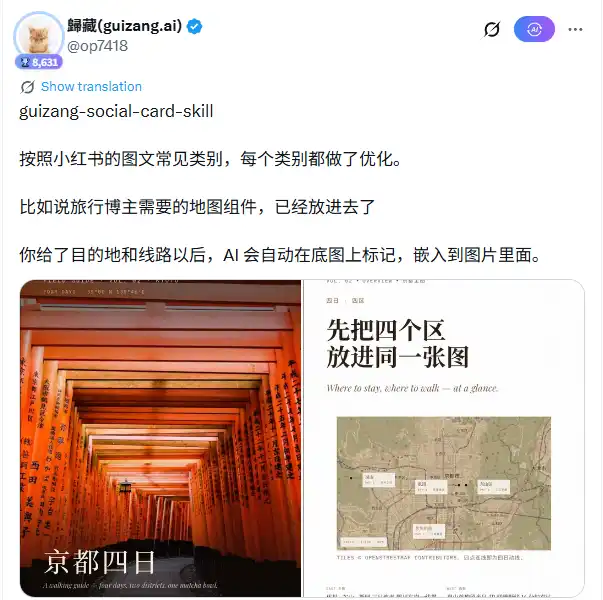

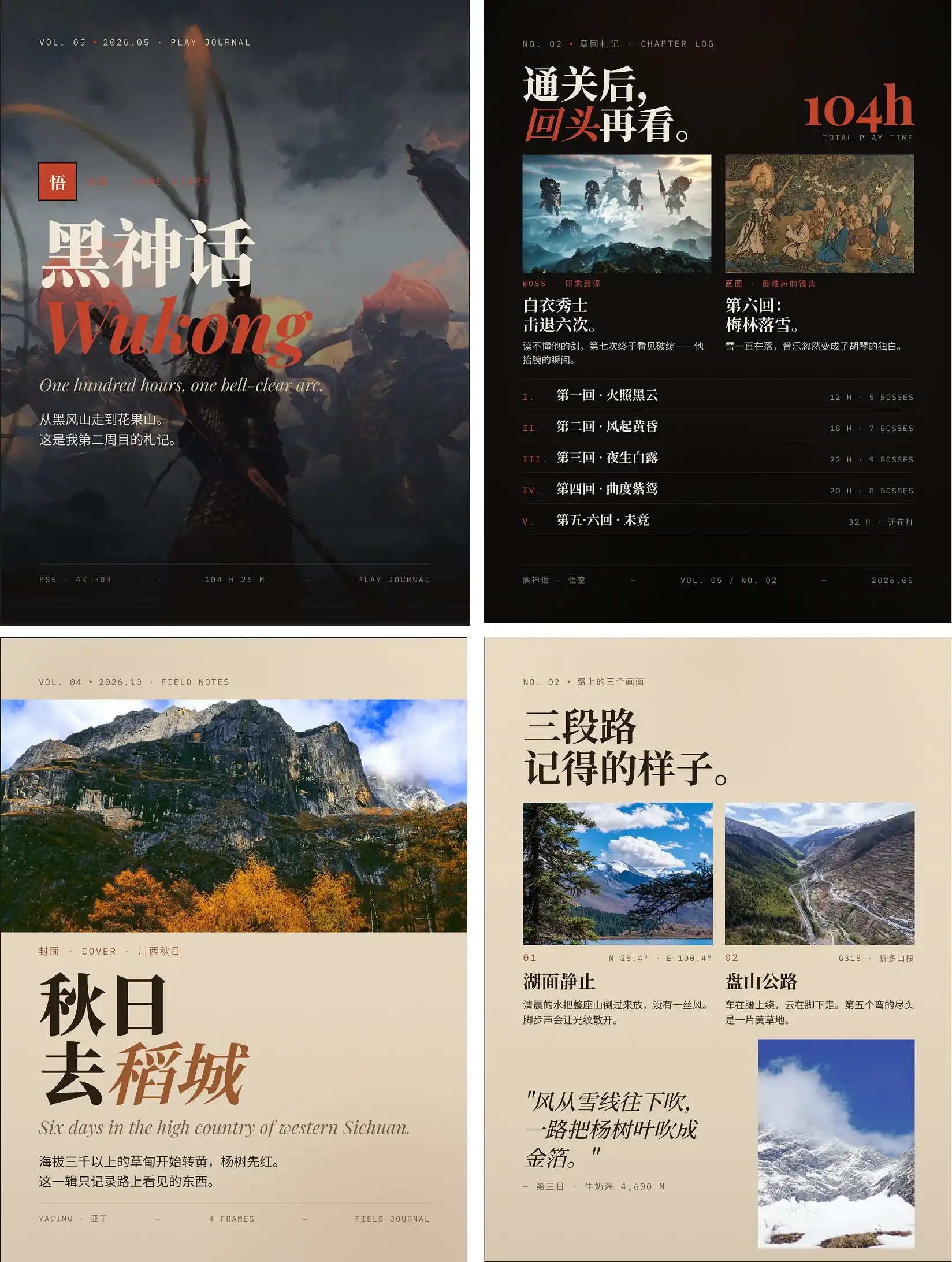
In terms of technical architecture, this Skill has 28 built-in layout skeletons, divided into two visual systems: Editorial (magazine style, 16 layouts) and Swiss (Swiss International Style, 12 layouts), accompanied by 10 preset theme color schemes. After users input a destination, itinerary, or note topic, the AI is responsible for selecting an appropriate layout skeleton, deciding text positioning, processing map annotation parameters, and then writing all design decisions into HTML+CSS. The Playwright rendering engine takes over the subsequent steps, capturing screenshots page by page to output PNGs.

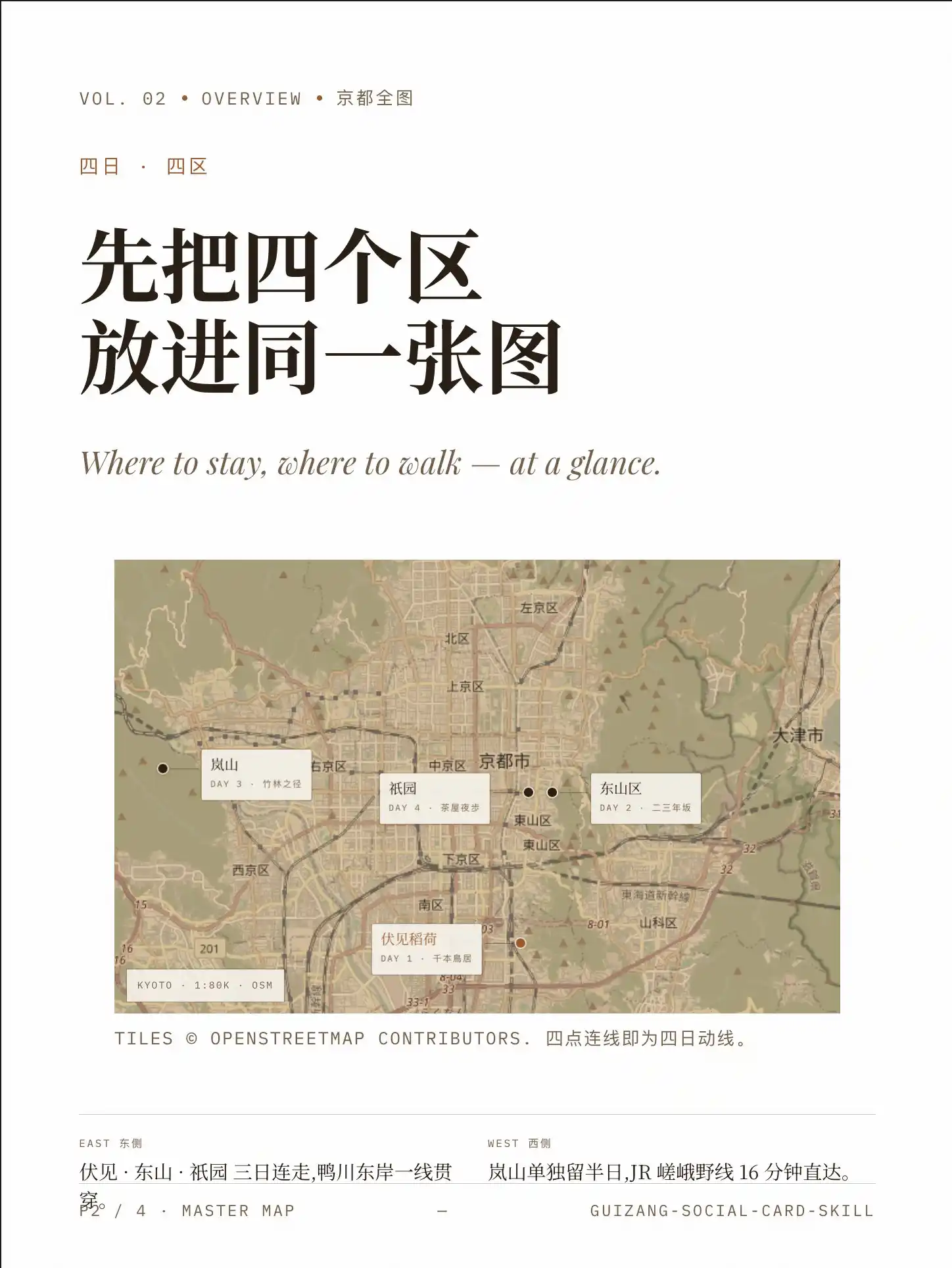
A particularly useful component for travel bloggers is the map module. It uses MapLibre to load real tiles from OpenStreetMap, supporting multiple location markers and connecting lines. Users only need to provide city or attraction names; the AI automatically generates a basemap with annotations and embeds it into the layout. The accompanying image sourcing workflow has a clear priority: user-provided real photos take precedence; when no user images are available, it automatically retrieves supporting images in the order of Unsplash → Pexels → Flickr CC → Wallhaven.

The entire process is executed in seven steps: Intake (receive input) → Style & Theme (determine style and theme) → Layout Selection → Asset Prep (material preparation) → Compose & Render (layout and rendering) → Deliver & Review (output and review) → Iterate (iterative modifications). Each step is recorded in .poster files within the task directory. For batch image generation, run node render.mjs, and Playwright renders them one by one. Another validation script, validate-social-deck.mjs, measures DOM elements in a real browser environment to detect layout issues like text overflow, font size exceeding limits, and footer element collisions.

The design goal of this mechanism is clear: to be as precise and controllable as printing layout software, rather than as free but unpredictable as diffusion models. The cost is that creative freedom is confined to these 28 grids. For creators who rely on personal photography styles, hand-drawn elements, or irregular collages, these layout skeletons provide not efficiency gains, but design constraints.

Regarding the entry barrier: the CLI version requires installing Playwright, Node environment, and obtaining API access for Claude Code or Codex. There's also a web version portal at xiaohongshu.guizang.ai for non-developer users, but there is no public comparison yet on whether its feature completeness matches the CLI version. The developer's several X platform posts and frequently updated README indicate this project is still in rapid iteration.

Pixels Not from Generative Models, But Compliance Doesn't Equal Long-term Safety

Xiaohongshu's AI content detection logic, according to public information and technical analysis, relies primarily on audio-visual recognition models. These models determine whether content originates from AI generative models by analyzing pixel distribution patterns. Diffusion models and GANs leave specific statistical signatures at the pixel level when generating images, which differ from the natural lighting, lens distortion, and noise patterns captured by camera sensors. The training objective of audio-visual recognition models is precisely to capture this inconsistency in statistical patterns.

The evasion logic of Cang Shifu's Skill is based on a key distinction: its output image pixels do not come from any generative model. The HTML rendering engine rasterizes CSS styles, producing pixel distribution characteristics closer to browser interface screenshots or desktop publishing software outputs. The photographic portions come from real human-shot materials in libraries like Unsplash; these images, captured by cameras and manually post-processed, do not carry diffusion model signatures.


However, the validity of this distinction depends on the platform's definition of "AI-generated synthetic content" being precisely drawn at the line of "AI model generating pixels." Xiaohongshu's official announcement uses the term "AI-generated synthetic content," a phrase whose original scope is not narrow. Once the platform expands the definition to include "AI-assisted design programmatically rendered output" or incorporates the browser rendering characteristics of HTML-rasterized images into the training data for its recognition models, the current technical advantage of this solution would disappear.

The platform has both the technical foundation and governance motivation to expand the definition. The audio-visual recognition models themselves are continuously iterating. If training data includes a large number of comparative samples between HTML-rendered images and AI-generated images, models could learn to distinguish "subpixel anti-aliasing features of browser font rendering" from "irregular pixel blocks in GAN-generated text." There's no public information indicating Xiaohongshu has initiated training in this direction yet, but from the perspective of model capability boundaries, such expansion is technically feasible.

More noteworthy are compliance factors related to mini-program/API hosting. Currently, there is no official documentation indicating that this Skill has integrated a model filing number or completed related compliance registration. If the platform adds traceability requirements for the image generation toolchain to its content review process, the lack of filing information could become a new blocking point.

API Template Engines, Platform-specific Tools, and HTML Rendering Are Forging Three Diverging Paths

Observing tools in the market that generate images for social media, one finds they are diverging into three distinct technical routes, each facing a different structure of review risks.

Direct Image Generation by AI Models. The representative of this path is the Magic Design feature released by Canva AI in April 2026, which generates design drafts containing AI visual elements directly from text prompts. Images generated by models like Midjourney, DALL·E also fall into this category. The problem is clear: these images are the primary detection target for audio-visual recognition models. Canva's response is to encourage transparent labeling, not evasion of detection. On Xiaohongshu, there is no public data to confirm whether posts with AI-generated images receive lower recommendation weights after being labeled, but the platform's policy of "restricting distribution of unlabeled AI content" is already established. Each update to diffusion models may change pixel statistical signatures, and the corresponding detection models iterate simultaneously, meaning creators face a continuously moving target.

API Template Engine Rendering. Bannerbear is typical of this route. Users create templates in a designer, modify layer variables by passing JSON data via REST API, and the server renders and outputs PNGs or JPGs. Its core is also "programmatic rendering," not "model-generated pixels," and outputs lack diffusion model signatures. The difference from Cang Shifu's Skill is: Bannerbear's templates rely on manual design; AI doesn't participate in layout decisions. Cang Shifu's Skill lets Claude directly read/write HTML, giving layout selection power to AI. Bannerbear's solution has risks in another dimension: when many accounts use identical templates, colors, and fonts to produce graphics, even if each image isn't AI-generated, it can trigger pattern recognition of "programmatic batch production" on the platform side. The triggers for anti-spam rules aren't identical to AI detection, but for creators operating batch accounts, the result is also restricted distribution.

Platform-specific Custom Generation. Tools like Pin Generator are designed exclusively for Pinterest, automatically generating Pin images that align with the platform's algorithm preferences. The core of this route isn't evasion, but full adaptation—dimensions, visual style, publishing rhythm all conform to platform specifications. The advantage is the lowest review risk; the downside is obvious: tool capabilities are tied to platform rules. When Pinterest adjusts its algorithm or restricts third-party API calls, the tool directly fails. Compared to Cang Shifu's Skill, the former is a platform-exclusive tool, while the latter is a cross-platform general solution. Platform-exclusive is safer but more fragile; cross-platform is more flexible but more complex—a recurring trade-off in the AI tool space.

The three routes have different risk structures. AI generation offers the most freedom but must constantly respond to new detection models with each update. Template engines are most stable but risk being caught by anti-spam rules. HTML rendering walks between the two: layouts are flexibly controlled by AI, pixels are left to the browser and real photos, evading detection at the "AI-generated pixels" layer but unable to counter rule expansions at the platform's semantic level.

The Ceiling of the Layout System Lies Not in Code, But in Content Type

The 28 layout skeletons cover two mainstream visual systems: magazine and Swiss styles. For travel bloggers needing to display map routes, timelines, and multi-day itineraries, this system is a high match. Map annotations and itinerary connections are core information for such notes; the layout skeletons structure this information while maintaining a professional layout aesthetic.

However, Xiaohongshu's content ecosystem is far richer than travel guides. Outfit notes rely on personal photography style and color tone; makeup reviews need high-definition macro photos and product comparisons; lifestyle content heavily uses multi-photo collages and handwritten annotations. The "layout" for these content types isn't about structured information presentation but an expression of personal aesthetics and mood. The 28 layout skeletons are not tools but constraints in such scenarios.

Technical limitations are also real. It currently supports three sizes: 1080×1440 (Xiaohongshu 3:4), 2100×900 (Public Account 21:9), and 1080×1080 (Public Account 1:1). Formats like Douyin's 9:16 vertical cover or Bilibili's 16:9 horizontal cover are not supported. The image libraries rely on Unsplash and Pexels; their material leans towards high-quality photography, suitable for travel, scenery, and urban architecture. However, coverage for high-frequency materials in verticals like food close-ups, cosmetic product flat lays, or fashion items is limited in these libraries. The user-image-first strategy can partially mitigate this, provided creators have sufficient real photo material themselves.

The validation mechanism is a double-edged sword. validate-social-deck.mjs can intercept layout accidents before output, ensuring zero errors in 100 batch renders. This is an efficiency guarantee in operational scenarios requiring dozens of daily graphics. But it also means any design not conforming to preset layout rules will be rejected by the script. Creators wanting to add a slanted text decoration or custom margin within a standard layout cannot simply drag and adjust as in Canva; they need to edit the HTML and CSS source code directly.

The local deployment barrier is another stratification point. Creators capable of running Playwright and Node scripts can dive into layout skeletons and rendering scripts for customization. But for most Xiaohongshu bloggers, what's accessible is likely a functional subset via a web interface. The actual value derived from this Skill differs greatly between these two user groups. The core user base of open-source projects is creators and developers willing to tinker and with technical backgrounds, not the "one-click output" demands of average content producers.

No Universal Answer, But the Divergence of Technical Paths Itself Tells a Story

A Xiaohongshu travel blogger faces three choices: use Midjourney to generate illustration-style itinerary graphics, bearing the risk of labeling and demotion; use Bannerbear to set up templates and batch-fill data daily, bearing the anti-spam risks from template homogeneity; or use Cang Shifu's Skill, letting AI choose the layout and outputting via HTML rendering, bearing the risk of the platform expanding its "synthetic content" definition. There's no safe card, only combinations of different risk structures.

This landscape itself conveys a message: the adversarial iteration between platforms and AI tools has begun. Every time a platform updates its detection model, the technical advantage period for a batch of tools ends. Every time a new tool finds a bypass route, the platform adjusts its strategy. This is not a process that will converge to a stable state. The validity period of the HTML rendering solution depends on whether Xiaohongshu's audio-visual recognition model training continues to focus on "diffusion model pixel features" or expands to "all non-native photographic pixels."

For content creators, distinguishing between "AI-assisted" and "AI-replacement" gains practical significance. The platform's stance is clear: encourage AI as a creative amplifier, oppose using AI to replace humans for low-quality batch production. In Cang Shifu's Skill, AI handles layout decisions, not content generation; photos are real, layouts are preset skeletons by human designers. This precisely falls into the "AI-assisted" zone. Content where everything from copy to images is generated by models is what the platform explicitly aims to crack down on.

Whether this distinction will become an operational standard for platform review is uncertain. But tool developers are already responding to this definition with their technical choices.


Trend Kriptolar

İlgili Sorular

QWhat is the main technical approach of the 'guizang-social-card-skill' to bypass AI content labeling on Xiaohongshu?

AThe 'guizang-social-card-skill' does not use AI models to generate image pixels. Instead, it employs AI to make layout decisions and then uses HTML+CSS for visual rendering. The final pixel output is a rasterized screenshot of a webpage generated by a browser engine, with supporting images sourced from real photo libraries like Unsplash.

QWhat are the three main technical paths for social media image generation tools mentioned in the article, and their associated risks?

A1. **AI Model Direct Generation** (e.g., Canva AI, Midjourney): High risk of detection by AI recognition models analyzing pixel patterns. 2. **API Template Engine Rendering** (e.g., Bannerbear): Risk of triggering anti-spam rules due to identical templates, even without AI-generated pixels. 3. **Platform-Specific Custom Generation** (e.g., Pin Generator): Lowest audit risk but highly dependent on and vulnerable to changes in a single platform's rules.

QHow does the article assess the long-term viability of the HTML rendering approach used by the guizang-social-card-skill?

AIts viability depends on how platforms like Xiaohongshu define 'AI-generated synthetic content.' Currently, it avoids detection by not using generative models for pixels. However, if platforms expand their definitions to include 'program-rendered outputs assisted by AI' or train their detection models to recognize browser-rendering features, this technical workaround could lose its effectiveness.

QWhat are the limitations of the guizang-social-card-skill's design system for content creators?

AIts 28 layout templates, while efficient for structured content like travel itineraries, act as constraints for content types that rely on personal aesthetics, such as fashion, makeup, or lifestyle posts. It also has technical limitations: it only supports specific aspect ratios (not 9:16 or 16:9), relies on general-purpose photo libraries lacking niche content, and its validation scripts strictly enforce preset rules, limiting creative customization for non-technical users.

QAccording to the article, what key distinction for content creators is emerging in the context of platform AI policies?

AThe distinction between **'AI assistance'** and **'AI replacement'** is becoming crucial. The guizang-social-card-skill exemplifies 'AI assistance,' where AI handles layout logic but the photos are real and layouts are human-designed templates. This aligns better with platforms' stated goals of encouraging AI as a creative amplifier rather than a tool for low-quality, fully AI-generated bulk production, which is the primary target for platform restrictions.

İlgili Okumalar

After Three Consecutive Quarters of Decline, Can the Crypto Market Find a Window for Stabilization in Q3?

The cryptocurrency market has just concluded its worst-performing quarter since 2022, with total capitalization dropping 12.6% to $2.1 trillion. All core metrics indicate capital is leaving the sector, not just rotating within it. Bitcoin fell 14.2% and Ethereum dropped 25.4% in Q2, breaking their previous correlation with US tech stocks. A key driver is the reversal in US spot Bitcoin ETF flows, which saw a net outflow of approximately $4.67 billion in Q2, including a record monthly outflow near $4.5 billion in June. While recent data suggests long-term holders are accumulating again, sustained ETF outflows mean continued selling pressure. Market focus is now singularly on the Federal Reserve. The upcoming July FOMC meeting is seen as the most critical event for Q3. A dovish signal could support Bitcoin reclaiming a $68,000-$84,000 range, while a hawkish stance might establish a new trading band around $50,000-$56,000. Additionally, regulatory uncertainty persists, with the progress of the crucial *CLARITY Act* stalling in the Senate, reducing its perceived 2026 passage probability to 40-45%. Despite the broad downturn, a few sectors showed growth. Prediction markets saw nominal volume surge 48.7% year-over-year to $113.8 billion, and tokenized collectibles transaction volume rose 143% quarterly to $1.4 billion. The Real-World Asset (RWA) tokenization sector also continued steady growth, now representing ~$28.1 billion in on-chain value. The market's foundation for an extreme crash appears limited, with Bitcoin price hovering near its 200-week moving average. However, the trading paradigm has shifted from narrative-driven speculation to decisions based on price action, policy developments, and interest rate expectations, making a broad sentiment-driven rally unlikely in the near term.

marsbit4 saat önce

After Three Consecutive Quarters of Decline, Can the Crypto Market Find a Window for Stabilization in Q3?

marsbit4 saat önce

BIT Trading Moment: BTC Still Suppressed by Weekly 200 EMA, Rejection May Restart Decline; Storage and Semiconductors that Surged Last Night Begin Falling in Evening Trading

**Crypto & Stock Market Wrap: Bitcoin Tests Resistance, Stocks Retreat After AI Surge** Bitcoin consolidates around $66,000, facing key resistance near $68,000—an area seen as a major psychological and technical hurdle where previous rallies have failed. Analysts note the cryptocurrency is caught between its 200-week moving average (~$63,333) and 200-week EMA (~$68,328). A clear break above $68k is needed to signal a stronger bullish trend, while a rejection could lead to a retest of $63k support. Market sentiment remains cautious, with low futures open interest pointing to a low-liquidity rebound rather than a full bull market. Bitcoin spot ETFs saw another $203 million inflow. US stock futures pointed lower after a strong Tuesday session led by a massive rebound in semiconductors and memory stocks. The rally was fueled by renewed optimism about AI-driven hardware demand, with Micron, SanDisk, and SK Hynix surging. However, those gains reversed in pre-market trading. Super Micro Computer (SMCI) soared over 20% after hours on strong guidance and a record backlog. Other standouts included Rocket Lab and nuclear energy plays Oklo and X-Energy. Rising oil prices (Brent above $91) and climbing Treasury yields (10-year near 4.64%), however, are reigniting inflation concerns and acting as a headwind for equities. In Asia, markets were mixed. South Korea's KOSPI pared early gains to close slightly higher as semiconductor stocks like SK Hynix gave back initial surges. Japan's Nikkei edged lower as the yen hit a fresh 38-year low against the dollar, raising fears of potential market intervention. Key events to watch include the Samsung Galaxy launch, AMD's AI event, and a slew of major tech earnings from Alphabet, Tesla, and IBM after the close on Wednesday, followed by the ECB meeting and Intel's earnings on Thursday.

marsbit4 saat önce

BIT Trading Moment: BTC Still Suppressed by Weekly 200 EMA, Rejection May Restart Decline; Storage and Semiconductors that Surged Last Night Begin Falling in Evening Trading

marsbit4 saat önce

Former CFTC Chairman, Circle President Tarbert: Preaching Long-Termism While Cashing Out $30 Million Himself

Former CFTC Chairman and Circle President Heath Tarbert has consistently advocated for a long-term vision in public, urging patience from investors as Circle’s stock price has fallen significantly from its peak. However, it has been revealed that since Circle’s IPO, Tarbert has continuously sold his CRCL shares through pre-arranged trading plans, cashing out approximately $30 million, without making any public market purchases. This contrast between his public messaging and personal actions has drawn criticism. Tarbert joined Circle in July 2023 as Chief Legal Officer, leveraging his regulatory experience to help guide the company through its IPO and expansion. Despite promoting stablecoins as long-term infrastructure, he established a 10b5-1 trading plan just before Circle went public, leading to substantial stock sales over the following year. In March 2026, he initiated another plan to sell more shares. His career trajectory highlights a pattern of moving between high-level regulatory roles and influential positions in the financial sector. After resigning as CFTC Chairman in early 2021, he joined Citadel Securities as Chief Legal Officer just 27 days later, during a period of intense regulatory scrutiny for the firm. He later joined Circle, aiding its efforts to navigate regulatory challenges for its public listing. While Tarbert's expertise in policy and compliance is valuable to companies like Circle, his actions—advocating long-term confidence while personally divesting—raise questions about the alignment between his public statements and his private financial decisions, leaving investors who followed his advice to bear the market risks.

marsbit4 saat önce

Former CFTC Chairman, Circle President Tarbert: Preaching Long-Termism While Cashing Out $30 Million Himself

marsbit4 saat önce

Gate Research Institute: The 'Wall Street-ization' Wave of Crypto Financial Products – Competition or Integration?

The article titled "Gate Research Institute: Are Crypto Financial Products Sparking a 'Wall Street' Wave—Competition or Convergence?" explores the evolving relationship between the crypto ecosystem and traditional finance (TradFi). The piece begins by reflecting on Bitcoin's original 2009 vision of decentralization, disintermediation, and moving away from banks. It then contrasts this with the 2024 landscape, where key crypto assets like Bitcoin are increasingly held through Wall Street products like ETFs issued by giants like BlackRock. The article questions whether this signifies that TradFi is systematically taking over the rights to issue, price, custody, and distribute crypto financial assets. The core argument is that this is not a zero-sum takeover but rather a bidirectional convergence where each side addresses the other's weaknesses. Crypto offers 24/7 global markets, programmable settlement, and open access but lacks compliant channels, institutional-grade custody, deep fiat liquidity, and mainstream distribution. TradFi possesses these but is constrained by legacy systems, limited operating hours, and slow settlement. Two primary convergence paths are highlighted: * **Path A (CEX to TradFi):** Exemplified by Gate, which has progressed from offering tokenized stocks and CFDs to providing direct, real stock trading (US, Hong Kong, South Korea) within its platform, using USDT. * **Path B (TradFi to Crypto):** Exemplified by Robinhood, which has integrated crypto trading, acquired exchanges like Bitstamp, and is moving traditional assets like stocks onto the blockchain via tokenization and its own Layer 2. Both paths are ultimately competing to become the next-generation, unified financial account—a "super account" where users can seamlessly trade cryptocurrencies, stocks, ETFs, RWA (Real World Assets), and tokenized treasury products in one interface. The growth of RWA and tokenized treasuries (e.g., BlackRock's BUIDL) is presented as the asset-layer fusion, providing stable, yield-bearing assets on-chain and acting as a bridge between the two worlds. In conclusion, the "Wall Street-ization" of crypto is framed as a mutual transformation. Decentralized ideals persist in the protocol layer, while at the application layer, a more efficient, global, and accessible unified capital market is emerging from this convergence. The future competition lies not between crypto exchanges and stockbrokers, but between platforms vying to offer the most comprehensive asset coverage, liquidity, and user experience within a single account.

marsbit4 saat önce

Gate Research Institute: The 'Wall Street-ization' Wave of Crypto Financial Products – Competition or Integration?

marsbit4 saat önce

İşlemler

Spot

Popüler Makaleler

GROK AI Nedir

Grok AI: Web3 Döneminde Konuşma Teknolojisini Devrim Niteliğinde Yenilik Giriş Hızla gelişen yapay zeka alanında, Grok AI, ileri teknoloji ve kullanıcı etkileşimi alanlarını birleştiren dikkate değer bir proje olarak öne çıkıyor. Ünlü girişimci Elon Musk'ın liderliğindeki xAI tarafından geliştirilen Grok AI, yapay zeka ile etkileşim şeklimizi yeniden tanımlamayı hedefliyor. Web3 hareketi devam ederken, Grok AI, karmaşık sorgulara yanıt vermek için konuşma yapay zekasının gücünden yararlanmayı amaçlıyor ve kullanıcılara sadece bilgilendirici değil, aynı zamanda eğlenceli bir deneyim sunuyor. Grok AI Nedir? Grok AI, kullanıcılarla dinamik bir şekilde etkileşimde bulunmak üzere tasarlanmış sofistike bir konuşma yapay zeka sohbet botudur. Birçok geleneksel yapay zeka sisteminin aksine, Grok AI, genellikle uygunsuz veya standart yanıtların dışında kabul edilen daha geniş bir sorgu yelpazesini benimsemektedir. Projenin temel hedefleri şunlardır: Güvenilir Akıl Yürütme: Grok AI, bağlamsal anlayışa dayalı mantıklı yanıtlar sağlamak için sağduyu akıl yürütmeyi vurgular. Ölçeklenebilir Denetim: Araç yardımı entegrasyonu, kullanıcı etkileşimlerinin hem izlenmesini hem de kalite için optimize edilmesini sağlar. Resmi Doğrulama: Güvenlik en önemli önceliktir; Grok AI, çıktılarının güvenilirliğini artırmak için resmi doğrulama yöntemlerini entegre eder. Uzun Bağlam Anlayışı: AI modeli, kapsamlı konuşma geçmişini saklama ve hatırlama konusunda mükemmel bir performans sergileyerek anlamlı ve bağlamsal olarak farkında tartışmaların yapılmasını kolaylaştırır. Saldırgan Dayanıklılık: Manipüle edilmiş veya kötü niyetli girdilere karşı savunmalarını geliştirmeye odaklanarak, Grok AI kullanıcı etkileşimlerinin bütünlüğünü korumayı hedefler. Özünde, Grok AI sadece bir bilgi alma cihazı değil; dinamik diyalogu teşvik eden, etkileyici bir konuşma partneridir. Grok AI'nın Yaratıcısı Grok AI'nın arkasındaki beyin, otomotiv, uzay yolculuğu ve teknoloji gibi çeşitli alanlarda yenilikle özdeşleşen Elon Musk'tır. Yapay zeka teknolojisini faydalı yollarla geliştirmeye odaklanan xAI çatısı altında, Musk'ın vizyonu, yapay zeka etkileşimlerinin anlaşılmasını yeniden şekillendirmeyi amaçlıyor. Liderlik ve temel etik, Musk'ın teknolojik sınırları zorlamaya olan bağlılığı tarafından derinden etkilenmektedir. Grok AI'nın Yatırımcıları Grok AI'yi destekleyen yatırımcılarla ilgili spesifik detaylar sınırlı kalmakla birlikte, projenin kuluçka merkezi olan xAI'nin, esasen Elon Musk tarafından kurulduğu ve desteklendiği kamuya açık bir şekilde kabul edilmektedir. Musk'ın önceki girişimleri ve mülkleri, Grok AI'nın güvenilirliğini ve büyüme potansiyelini daha da artıran sağlam bir destek sağlar. Ancak, şu anda Grok AI'yı destekleyen ek yatırım fonları veya kuruluşlarıyla ilgili bilgiye kolayca erişim sağlanamamaktadır; bu da potansiyel gelecekteki keşif alanını işaret etmektedir. Grok AI Nasıl Çalışır? Grok AI'nın operasyonel mekanikleri, kavramsal çerçevesi kadar yenilikçidir. Proje, benzersiz işlevselliklerini kolaylaştıran birkaç son teknoloji ürünü teknolojiyi entegre eder: Sağlam Altyapı: Grok AI, konteyner orkestrasyonu için Kubernetes, performans ve güvenlik için Rust ve yüksek performanslı sayısal hesaplama için JAX kullanılarak inşa edilmiştir. Bu üçlü, sohbet botunun verimli çalışmasını, etkili bir şekilde ölçeklenmesini ve kullanıcılara zamanında hizmet vermesini sağlar. Gerçek Zamanlı Bilgi Erişimi: Grok AI'nın ayırt edici özelliklerinden biri, X platformu (önceden Twitter olarak biliniyordu) aracılığıyla gerçek zamanlı verilere erişim yeteneğidir. Bu yetenek, yapay zekaya en son bilgilere erişim sağlar ve diğer yapay zeka modellerinin gözden kaçırabileceği zamanında yanıtlar ve öneriler sunmasına olanak tanır. İki Etkileşim Modu: Grok AI, kullanıcılara “Eğlenceli Mod” ve “Normal Mod” arasında seçim yapma imkanı sunar. Eğlenceli Mod, daha eğlenceli ve mizahi bir etkileşim tarzı sağlarken, Normal Mod, kesin ve doğru yanıtlar vermeye odaklanır. Bu çok yönlülük, çeşitli kullanıcı tercihlerine hitap eden özelleştirilmiş bir deneyim sağlar. Özünde, Grok AI performansı etkileşimle birleştirerek, hem zenginleştirici hem de eğlenceli bir deneyim yaratmaktadır. Grok AI'nın Zaman Çizelgesi Grok AI'nın yolculuğu, gelişim ve dağıtım aşamalarını yansıtan önemli dönüm noktalarıyla işaretlenmiştir: İlk Geliştirme: Grok AI'nın temel aşaması, modelin ilk eğitim ve ince ayarının yapıldığı yaklaşık iki ay boyunca gerçekleşmiştir. Grok-2 Beta Yayını: Önemli bir ilerleme olarak, Grok-2 beta duyurulmuştur. Bu sürüm, sohbet etme, kodlama ve akıl yürütme yetenekleriyle donatılmış iki versiyon—Grok-2 ve Grok-2 mini—sunmuştur. Halka Açık Erişim: Beta geliştirmesinin ardından, Grok AI X platformu kullanıcılarına sunulmuştur. Telefon numarasıyla doğrulanan ve en az yedi gün aktif olan hesap sahipleri, sınırlı bir versiyona erişim sağlayarak teknolojiyi daha geniş bir kitleye ulaştırmaktadır. Bu zaman çizelgesi, Grok AI'nın kuruluşundan kamu etkileşimine kadar sistematik büyümesini kapsar ve sürekli iyileştirme ve kullanıcı etkileşimine olan bağlılığını vurgular. Grok AI'nın Ana Özellikleri Grok AI, yenilikçi kimliğine katkıda bulunan birkaç ana özelliği kapsamaktadır: Gerçek Zamanlı Bilgi Entegrasyonu: Güncel ve ilgili bilgilere erişim, Grok AI'yı birçok statik modelden ayırarak, etkileyici ve doğru bir kullanıcı deneyimi sağlar. Çeşitli Etkileşim Tarzları: Farklı etkileşim modları sunarak, Grok AI çeşitli kullanıcı tercihlerine hitap eder ve yapay zeka ile konuşurken yaratıcılığı ve kişiselleştirmeyi teşvik eder. Gelişmiş Teknolojik Altyapı: Kubernetes, Rust ve JAX kullanımı, projeye güvenilirlik ve optimal performans sağlamak için sağlam bir çerçeve sunar. Etik Tartışma Dikkati: Görüntü üreten bir işlevin dahil edilmesi, projenin yenilikçi ruhunu sergiler. Ancak, aynı zamanda tanınabilir figürlerin saygılı bir şekilde tasvir edilmesi ve telif hakkı ile ilgili etik konuları da gündeme getirir—bu, yapay zeka topluluğunda süregelen bir tartışmadır. Sonuç Konuşma yapay zekası alanında öncü bir varlık olarak Grok AI, dijital çağda dönüştürücü kullanıcı deneyimlerinin potansiyelini kapsar. xAI tarafından geliştirilen ve Elon Musk'ın vizyoner yaklaşımıyla yönlendirilen Grok AI, gerçek zamanlı bilgiyi gelişmiş etkileşim yetenekleriyle birleştirir. Yapay zekanın neler başarabileceği konusunda sınırları zorlamayı hedeflerken, etik konulara ve kullanıcı güvenliğine odaklanmayı sürdürmektedir. Grok AI, sadece teknolojik ilerlemeyi değil, aynı zamanda Web3 manzarasında yeni bir konuşma paradigmasını da temsil eder ve kullanıcılara hem yetkin bilgi hem de eğlenceli etkileşim sunma vaadinde bulunur. Proje gelişmeye devam ederken, teknolojinin, yaratıcılığın ve insan benzeri etkileşimin kesişim noktasında nelerin başarılabileceğinin bir kanıtı olarak durmaktadır.

469 Toplam GörüntülenmeYayınlanma 2024.12.26Güncellenme 2024.12.26

GROK AI Nedir

ERC AI Nedir

Euruka Tech: $erc ai ve Web3'teki Hedefleri Üzerine Bir Genel Bakış Giriş Blockchain teknolojisi ve merkeziyetsiz uygulamaların hızla gelişen manzarasında, her biri benzersiz hedefler ve metodolojilerle yeni projeler sıkça ortaya çıkmaktadır. Bu projelerden biri, kripto para ve Web3 alanında faaliyet gösteren Euruka Tech'tir. Euruka Tech'in, özellikle $erc ai token'ının ana odak noktası, merkeziyetsiz teknolojinin büyüyen yeteneklerinden yararlanmak için tasarlanmış yenilikçi çözümler sunmaktır. Bu makale, Euruka Tech'in kapsamlı bir genel görünümünü, hedeflerini, işlevselliğini, yaratıcısının kimliğini, potansiyel yatırımcılarını ve Web3'teki daha geniş bağlam içindeki önemini keşfetmeyi amaçlamaktadır. Euruka Tech, $erc ai Nedir? Euruka Tech, Web3 ortamının sunduğu araçlar ve işlevsellikleri kullanan bir proje olarak tanımlanmaktadır ve operasyonlarında yapay zekayı entegre etmeye odaklanmaktadır. Projenin çerçevesine dair spesifik detaylar biraz belirsiz olsa da, kullanıcı etkileşimini artırmayı ve kripto alanındaki süreçleri otomatikleştirmeyi amaçlamaktadır. Proje, yalnızca işlemleri kolaylaştırmakla kalmayıp, aynı zamanda yapay zeka aracılığıyla öngörücü işlevsellikleri de entegre eden merkeziyetsiz bir ekosistem yaratmayı hedeflemektedir; bu nedenle token'ının adı $erc ai'dir. Amaç, büyüyen Web3 alanında daha akıllı etkileşimleri ve verimli işlem işleme süreçlerini kolaylaştıran sezgisel bir platform sunmaktır. Euruka Tech'in Yaratıcısı Kimdir, $erc ai? Şu anda, Euruka Tech'in arkasındaki yaratıcı veya kurucu ekip hakkında bilgi verilmemiştir ve bu durum biraz belirsizdir. Bu veri eksikliği, ekibin geçmişi hakkında bilgi sahibi olmanın genellikle blockchain sektöründe güvenilirlik oluşturmak için gerekli olduğu endişelerini doğurmaktadır. Bu nedenle, somut detaylar kamuya sunulana kadar bu bilgiyi bilinmeyen olarak sınıflandırdık. Euruka Tech'in Yatırımcıları Kimlerdir, $erc ai? Benzer şekilde, Euruka Tech projesinin yatırımcıları veya destekleyen organizasyonları hakkında mevcut araştırmalarla kolayca sağlanan bir bilgi yoktur. Euruka Tech ile etkileşimde bulunmayı düşünen potansiyel paydaşlar veya kullanıcılar için kritik bir unsur, kurumsal finansal ortaklıklar veya saygın yatırım firmalarından gelen destekle sağlanan güvencedir. Yatırım ilişkileri hakkında açıklamalar olmadan, projenin finansal güvenliği veya sürdürülebilirliği hakkında kapsamlı sonuçlar çıkarmak zordur. Bulunan bilgilere paralel olarak, bu bölüm de bilinmeyen durumundadır. Euruka Tech, $erc ai Nasıl Çalışır? Euruka Tech için detaylı teknik spesifikasyonların eksik olmasına rağmen, yenilikçi hedeflerini göz önünde bulundurmak önemlidir. Proje, yapay zekanın hesaplama gücünden yararlanarak kripto para ortamında kullanıcı deneyimini otomatikleştirmeyi ve geliştirmeyi hedeflemektedir. AI'yi blockchain teknolojisiyle entegre ederek, Euruka Tech otomatik ticaret, risk değerlendirmeleri ve kişiselleştirilmiş kullanıcı arayüzleri gibi özellikler sunmayı amaçlamaktadır. Euruka Tech'in yenilikçi özü, kullanıcılar ile merkeziyetsiz ağların sunduğu geniş olanaklar arasında kesintisiz bir bağlantı yaratma hedefinde yatmaktadır. Makine öğrenimi algoritmaları ve AI kullanarak, ilk kez kullanıcı zorluklarını en aza indirmeyi ve Web3 çerçevesindeki işlem deneyimlerini düzene sokmayı amaçlamaktadır. AI ve blockchain arasındaki bu simbiyoz, $erc ai token'ının önemini vurgulamakta ve geleneksel kullanıcı arayüzleri ile merkeziyetsiz teknolojilerin gelişmiş yetenekleri arasında bir köprü işlevi görmektedir. Euruka Tech, $erc ai Zaman Çizelgesi Maalesef, Euruka Tech hakkında mevcut olan sınırlı bilgiler nedeniyle, projenin yolculuğundaki önemli gelişmeler veya kilometre taşları hakkında detaylı bir zaman çizelgesi sunamıyoruz. Genellikle bir projenin evrimini haritalamak ve büyüme eğrisini anlamak için değerli olan bu zaman çizelgesi şu anda mevcut değildir. Önemli olaylar, ortaklıklar veya işlevsel eklemeler hakkında bilgiler belirgin hale geldikçe, güncellemeler kesinlikle Euruka Tech'in kripto alanındaki görünürlüğünü artıracaktır. Diğer “Eureka” Projeleri Üzerine Açıklama Birden fazla projenin ve şirketin “Eureka” benzeri bir isimlendirmeye sahip olduğunu belirtmek önemlidir. Araştırmalar, robotlara karmaşık görevler öğretmeye odaklanan NVIDIA Research'ten bir AI ajanı gibi girişimleri, ayrıca eğitim ve müşteri hizmetleri analitiğinde kullanıcı deneyimini geliştiren Eureka Labs ve Eureka AI'yi tanımlamıştır. Ancak, bu projeler Euruka Tech'ten farklıdır ve hedefleri veya işlevleri ile karıştırılmamalıdır. Sonuç Euruka Tech, $erc ai token'ı ile birlikte, Web3 manzarasında umut verici ancak şu anda belirsiz bir oyuncuyu temsil etmektedir. Yaratıcısı ve yatırımcıları hakkında detaylar açıklanmamış olsa da, yapay zekayı blockchain teknolojisiyle birleştirme konusundaki temel hedefi ilgi odağı olmaktadır. Projenin, gelişmiş otomasyon aracılığıyla kullanıcı etkileşimini teşvik etme konusundaki benzersiz yaklaşımları, Web3 ekosistemi ilerledikçe onu farklı kılabilir. Kripto piyasası gelişmeye devam ederken, paydaşların Euruka Tech etrafındaki gelişmelere dikkat etmeleri önemlidir; belgelenmiş yeniliklerin, ortaklıkların veya tanımlanmış bir yol haritasının gelişimi, önümüzdeki dönemde önemli fırsatlar sunabilir. Şu an itibarıyla, Euruka Tech'in potansiyelini ve rekabetçi kripto manzarasındaki konumunu açığa çıkarabilecek daha somut içgörüler beklemekteyiz.

443 Toplam GörüntülenmeYayınlanma 2025.01.02Güncellenme 2025.01.02

ERC AI Nedir

DUOLINGO AI Nedir

DUOLINGO AI: Dil Öğrenimini Web3 ve AI İnovasyonu ile Entegre Etmek Teknolojinin eğitimi yeniden şekillendirdiği bir çağda, yapay zeka (AI) ve blok zinciri ağlarının entegrasyonu dil öğrenimi için yeni bir ufuk açmaktadır. DUOLINGO AI ve ona bağlı kripto para birimi $DUOLINGO AI ile tanışın. Bu proje, önde gelen dil öğrenme platformlarının eğitimsel yeteneklerini merkeziyetsiz Web3 teknolojisinin faydalarıyla birleştirmeyi hedefliyor. Bu makale, DUOLINGO AI'nın temel yönlerini, hedeflerini, teknolojik çerçevesini, tarihsel gelişimini ve gelecekteki potansiyelini incelerken, orijinal eğitim kaynağı ile bu bağımsız kripto para girişimi arasındaki netliği korumaktadır. DUOLINGO AI Genel Görünümü DUOLINGO AI'nın temelinde, öğrenicilerin dil yeterliliğinde eğitimsel kilometre taşlarına ulaşmaları için kriptografik ödüller kazanabilecekleri merkeziyetsiz bir ortam oluşturma hedefi yatmaktadır. Akıllı sözleşmeler uygulayarak, proje beceri doğrulama süreçlerini ve token tahsislerini otomatikleştirmeyi amaçlamakta, şeffaflık ve kullanıcı sahipliğini vurgulayan Web3 ilkelerine uymaktadır. Model, dil edinimindeki geleneksel yaklaşımlardan ayrılarak, token sahiplerinin kurs içeriği ve ödül dağıtımları üzerinde iyileştirmeler önermesine olanak tanıyan topluluk odaklı bir yönetişim yapısına dayanmaktadır. DUOLINGO AI'nın bazı dikkat çekici hedefleri şunlardır: Oyunlaştırılmış Öğrenme: Proje, dil yeterlilik seviyelerini temsil etmek için blok zinciri başarıları ve değiştirilemez tokenleri (NFT'ler) entegre ederek, katılımcıları motive eden dijital ödüller sunmaktadır. Merkeziyetsiz İçerik Üretimi: Eğitmenler ve dil meraklılarının kendi kurslarını katkıda bulunmalarına olanak tanıyarak, tüm katkıda bulunanların fayda sağladığı bir gelir paylaşım modeli oluşturmaktadır. AI Destekli Kişiselleştirme: Gelişmiş makine öğrenimi modellerini kullanarak, DUOLINGO AI dersleri bireysel öğrenme ilerlemesine uyacak şekilde kişiselleştirmekte, köklü platformlarda bulunan uyarlamalı özelliklere benzer bir deneyim sunmaktadır. Proje Yaratıcıları ve Yönetişim Nisan 2025 itibarıyla, $DUOLINGO AI'nın arkasındaki ekip takma isimler kullanmaktadır; bu, merkeziyetsiz kripto para alanında sıkça görülen bir uygulamadır. Bu anonimlik, bireysel geliştiricilere odaklanmak yerine kolektif büyümeyi ve paydaş katılımını teşvik etmek amacıyla tasarlanmıştır. Solana blok zincirinde dağıtılan akıllı sözleşme, geliştiricinin cüzdan adresini not etmekte, bu da yaratıcıların kimliğinin bilinmemesine rağmen işlemlerle ilgili şeffaflık taahhüdünü simgelemektedir. Yol haritasına göre, DUOLINGO AI, Merkeziyetsiz Otonom Organizasyon (DAO) haline gelmeyi hedeflemektedir. Bu yönetişim yapısı, token sahiplerinin özellik uygulamaları ve hazine tahsisleri gibi kritik konularda oy kullanmalarına olanak tanımaktadır. Bu model, çeşitli merkeziyetsiz uygulamalarda bulunan topluluk güçlendirme ethosu ile uyumlu olup, kolektif karar verme sürecinin önemini vurgulamaktadır. Yatırımcılar ve Stratejik Ortaklıklar Şu anda, $DUOLINGO AI ile bağlantılı olarak kamuya açık tanımlanabilir kurumsal yatırımcılar veya risk sermayedarları bulunmamaktadır. Bunun yerine, projenin likiditesi esas olarak merkeziyetsiz borsa (DEX) kaynaklıdır ve bu, geleneksel eğitim teknolojisi şirketlerinin finansman stratejileriyle keskin bir zıtlık oluşturmaktadır. Bu tabandan gelen model, merkeziyetsizliğe olan bağlılığını yansıtan topluluk odaklı bir yaklaşımı işaret etmektedir. DUOLINGO AI, beyaz kitabında, kurs tekliflerini zenginleştirmeyi amaçlayan belirsiz “blok zinciri eğitim platformları” ile işbirlikleri kurmayı planladığını belirtmektedir. Belirli ortaklıklar henüz açıklanmamış olsa da, bu işbirlikçi çabalar, blok zinciri yeniliğini eğitim girişimleri ile birleştirmeyi amaçlayan bir stratejiyi ima etmektedir ve çeşitli öğrenme yollarında erişimi ve kullanıcı katılımını genişletmektedir. Teknolojik Mimari AI Entegrasyonu DUOLINGO AI, eğitimsel tekliflerini geliştirmek için iki ana AI destekli bileşen içermektedir: Uyarlanabilir Öğrenme Motoru: Bu sofistike motor, kullanıcı etkileşimlerinden öğrenmekte olup, büyük eğitim platformlarından gelen özel modellere benzer. Belirli öğrenici zorluklarını ele almak için ders zorluğunu dinamik olarak ayarlamakta ve zayıf alanları hedeflenmiş alıştırmalarla pekiştirmektedir. Konuşma Ajanları: GPT-4 destekli sohbet botlarını kullanarak, DUOLINGO AI kullanıcıların simüle edilmiş konuşmalara katılmalarına olanak tanıyarak, daha etkileşimli ve pratik bir dil öğrenme deneyimi sunmaktadır. Blok Zinciri Altyapısı $DUOLINGO AI, Solana blok zincirinde inşa edilmiş kapsamlı bir teknolojik çerçeve kullanmaktadır: Beceri Doğrulama Akıllı Sözleşmeleri: Bu özellik, yeterlilik testlerini başarıyla geçen kullanıcılara otomatik olarak token ödülleri vermekte, gerçek öğrenim sonuçları için teşvik yapısını güçlendirmektedir. NFT Rozetleri: Bu dijital tokenler, öğrenicilerin kurslarının bir bölümünü tamamlamak veya belirli becerileri ustalaşmak gibi ulaştıkları çeşitli kilometre taşlarını simgelemekte ve bunları dijital olarak takas etmelerine veya sergilemelerine olanak tanımaktadır. DAO Yönetişimi: Token sahibi topluluk üyeleri, anahtar öneriler üzerinde oy kullanarak yönetişime katılabilir, bu da kurs teklifleri ve platform özelliklerinde yeniliği teşvik eden katılımcı bir kültürü kolaylaştırmaktadır. Tarihsel Zaman Çizelgesi 2022–2023: Kavramsallaştırma DUOLINGO AI için temel, dil öğrenimindeki AI ilerlemeleri ile blok zinciri teknolojisinin merkeziyetsiz potansiyeli arasındaki sinerjiyi vurgulayan bir beyaz kağıdın oluşturulmasıyla başlar. 2024: Beta Lansmanı Sınırlı bir beta sürümü, popüler dillerdeki teklifleri tanıtarak, erken kullanıcıları token teşvikleri ile ödüllendirir ve projenin topluluk katılım stratejisinin bir parçası olarak sunulmaktadır. 2025: DAO Geçişi Nisan ayında, tokenlerin dolaşıma girmesiyle tam bir ana ağ lansmanı gerçekleşir ve topluluk, Asya dillerine ve diğer kurs gelişmelerine olası genişlemeler hakkında tartışmalara başlar. Zorluklar ve Gelecek Yönelimleri Teknik Engeller Hırslı hedeflerine rağmen, DUOLINGO AI önemli zorluklarla karşı karşıyadır. Ölçeklenebilirlik, AI işleme ile merkeziyetsiz bir ağı sürdürme maliyetleri arasında denge kurma konusunda sürekli bir endişe kaynağıdır. Ayrıca, merkeziyetsiz bir teklif arasında kaliteli içerik üretimi ve moderasyonu sağlamak, eğitim standartlarını koruma konusunda karmaşıklıklar yaratmaktadır. Stratejik Fırsatlar İleriye dönük olarak, DUOLINGO AI, akademik kurumlarla mikro yeterlilik ortaklıkları kurma potansiyeline sahiptir ve dil becerilerinin blok zinciri ile doğrulanmış onaylarını sağlamaktadır. Ayrıca, çapraz zincir genişlemesi, projenin daha geniş kullanıcı tabanlarına ve ek blok zinciri ekosistemlerine erişim sağlamasına olanak tanıyabilir, böylece birlikte çalışabilirliğini ve erişimini artırabilir. Sonuç DUOLINGO AI, yapay zeka ve blok zinciri teknolojisinin yenilikçi bir birleşimini temsil etmekte olup, geleneksel dil öğrenim sistemlerine topluluk odaklı bir alternatif sunmaktadır. Takma isimli geliştirme süreci ve ortaya çıkan ekonomik modeli bazı riskler taşısa da, projenin oyunlaştırılmış öğrenme, kişiselleştirilmiş eğitim ve merkeziyetsiz yönetişim konusundaki taahhüdü, Web3 alanında eğitim teknolojisi için bir yol haritası aydınlatmaktadır. AI gelişmeye devam ederken ve blok zinciri ekosistemi evrim geçirirken, DUOLINGO AI gibi girişimler, kullanıcıların dil eğitimi ile etkileşim biçimlerini yeniden tanımlayabilir, toplulukları güçlendirebilir ve yenilikçi öğrenme mekanizmaları aracılığıyla katılımı ödüllendirebilir.

484 Toplam GörüntülenmeYayınlanma 2025.04.11Güncellenme 2025.04.11

DUOLINGO AI Nedir

Tartışmalar

HTX Topluluğuna hoş geldiniz. Burada, en son platform gelişmeleri hakkında bilgi sahibi olabilir ve profesyonel piyasa görüşlerine erişebilirsiniz. Kullanıcıların AI (AI) fiyatı hakkındaki görüşleri aşağıda sunulmaktadır.

活动图片












