When the Bitcoin ETF was approved in early 2024, many cryptocurrency practitioners jokingly referred to each other as "distinguished U.S. stock traders." But when the New York Stock Exchange planned to develop on-chain stocks and 24/7 trading, making token integration part of the traditional finance agenda, the crypto community belatedly realized that the crypto industry had not conquered Wall Street.
On the contrary, Wall Street had been betting on integration from the beginning and has now gradually transitioned into an era of two-way acquisitions: crypto companies buying traditional finance licenses, clients, and compliance capabilities; traditional finance buying crypto technology, pipelines, and innovation capabilities. The two sides are mutually infiltrating, and the boundaries are gradually disappearing. In three to five years, there may no longer be a distinction between crypto companies and traditional financial companies—only financial companies.
This co-option and integration is taking place under the legal framework of the Clarity for Digital Assets Act (hereinafter referred to as the CLARITY Act), which is reshaping the wildly growing crypto sphere into a form familiar to Wall Street at the institutional level. The first to be reformed is the concept of "token rights," a purely crypto notion that is not as popular as stablecoins.
The Era of Binary Choices
For a long time, practitioners and investors in the crypto space have been living in an anxiety of illegitimacy, often subjected to enforcement-style regulation by government departments. This tug-of-war not only stifles innovation but also places investors holding tokens in an awkward position, as they hold tokens but possess only token rights. Unlike investors in traditional financial markets, token holders have neither legally protected rights to information nor recourse against insider trading by project teams.
Therefore, when the CLARITY Act was passed with overwhelming support in the U.S. House of Representatives last July, the entire industry placed high hopes on it. The core demand of the market was clear: to define whether tokens are digital commodities or securities, and to end the years-long jurisdictional dispute between the U.S. Securities and Exchange Commission (SEC) and the Commodity Futures Trading Commission (CFTC).
The Act stipulates that only assets that are fully decentralized and have no actual controlling party can be recognized as digital commodities, falling under the jurisdiction of the CFTC, just like gold or soybeans. Any asset with traces of centralized control or used for fundraising by promising returns is classified as a restricted digital asset or security, falling under the iron-fisted jurisdiction of the SEC.
For networks like Bitcoin and Ethereum, which long ago lost any actual controlling party, this is good news. But for the vast majority of DeFi projects and DAOs, it is almost a death knell.
The Act requires any intermediary involved in digital asset transactions to register and implement strict anti-money laundering (AML) and know-your-customer (KYC) procedures. For DeFi protocols running on smart contracts, this is an impossible task.
The Act's summary document explicitly mentions that certain decentralized financial activities related to the operation and maintenance of blockchain networks will be exempted, but it retains enforcement powers against fraud and manipulation. This is a typical regulatory compromise, allowing activities like writing code and developing front-end interfaces to exist, but once they involve transaction matching, profit distribution, and intermediary services, they must fall under a heavier regulatory framework.
Precisely because of this compromise, the CLARITY Act did not truly reassure the industry after the summer of 2025, as it forced all projects to answer a brutal question: What are you, really?
If you claim to be a decentralized protocol and comply with the CLARITY Act, your token cannot have actual value. If you don't want to shortchange token holders, you must acknowledge the importance of equity structure and subject the token to the scrutiny of securities laws.
Take the Team, Not the Token
This choice played out repeatedly in 2025.
In December 2025, a merger and acquisition news story triggered截然不同的 reactions on Wall Street and in the crypto community.
The world's second-largest stablecoin issuer, Circle, announced the acquisition of Interop Labs, the core development team behind the cross-chain protocol Axelar. In the eyes of traditional financial media, this was a standard talent acquisition: Circle gained a top-tier cross-chain technology team to enhance the circulation capability of its stablecoin USDC in multi-chain ecosystems. Circle's valuation solidified, and Interop Labs' founders and early equity investors walked away satisfied with cash or Circle stock.
But in the cryptocurrency secondary market, the news triggered panic selling.
Investors discovered upon dissecting the deal terms that Circle's acquisition target was limited to the development team and explicitly excluded the AXL token, the Axelar network, and the Axelar Foundation. This discovery instantly shattered previous optimistic expectations. Within hours of the announcement, the AXL token not only erased all gains previously made on acquisition rumors but fell even deeper.
For a long time, crypto project investors had defaulted to a narrative: buying tokens was equivalent to investing in the startup. As the development team worked hard, protocol usage would increase, and the token's value would rise accordingly.
Circle's acquisition shattered this illusion, declaring from both a legal and practical standpoint that the development company (Labs) and the protocol network (Network) are two completely separate entities.
"This is legalized robbery," wrote an investor who had held AXL for over two years on social media. But he could not sue anyone because, in the legal disclaimers of the prospectus and whitepaper, the token was never promised residual claim rights to the development company.
Looking back at acquisitions of crypto projects with tokens in 2025, these acquisitions often involved the transfer of technical teams and underlying infrastructure but excluded token权益, causing significant冲击 to investors.
In July, Kraken's Layer 2 network Ink acquired the engineering team and underlying trading architecture of Vertex Protocol. Subsequently, Vertex Protocol announced the shutdown of its services, and its token VRTX was abandoned.
In October, Pump.fun acquired the trading terminal Padre. Simultaneously with the announcement, the project team declared the PADRE token worthless with no future plans.
In November, Coinbase acquired the trading terminal technology built by Tensor Labs; this acquisition同样 did not involve权益 for the TNSR token.
At least in this wave of mergers and acquisitions in 2025, more and more transactions tended to buy only the team and technology, while abandoning the tokens. This has also made more and more investors in the crypto industry indignant: "Either赋予代币 the same value as stocks, or don't issue tokens at all."
DeFi's Dividend Dilemma
If Circle was a tragedy caused by external acquisition, then Uniswap and Aave demonstrated the internal conflicts that have long existed at different stages of the crypto market's development.
Aave, long regarded as the king of the DeFi lending space, found itself embroiled in a fierce internal civil war over money at the end of 2025, with the conflict focusing on the protocol's front-end revenue.
The vast majority of users do not interact directly with the smart contracts on the blockchain but through the web interface developed by Aave Labs. In December 2025, the community敏锐地 discovered that Aave Labs had quietly modified the front-end code, redirecting the high transaction fees generated from token swaps on the webpage to Labs' own corporate account, rather than to the treasury of the decentralized autonomous organization Aave DAO.
Aave Labs' justification aligned with traditional business logic: the website was built by us, the server fees are paid by us, the compliance risks are borne by us, so the monetization of traffic理应 belong to the company. But in the eyes of token holders, this was a betrayal.
"Users are here for the Aave decentralized protocol, not for your HTML webpage." This argument caused Aave's token market capitalization to evaporate by $500 million in a short period.
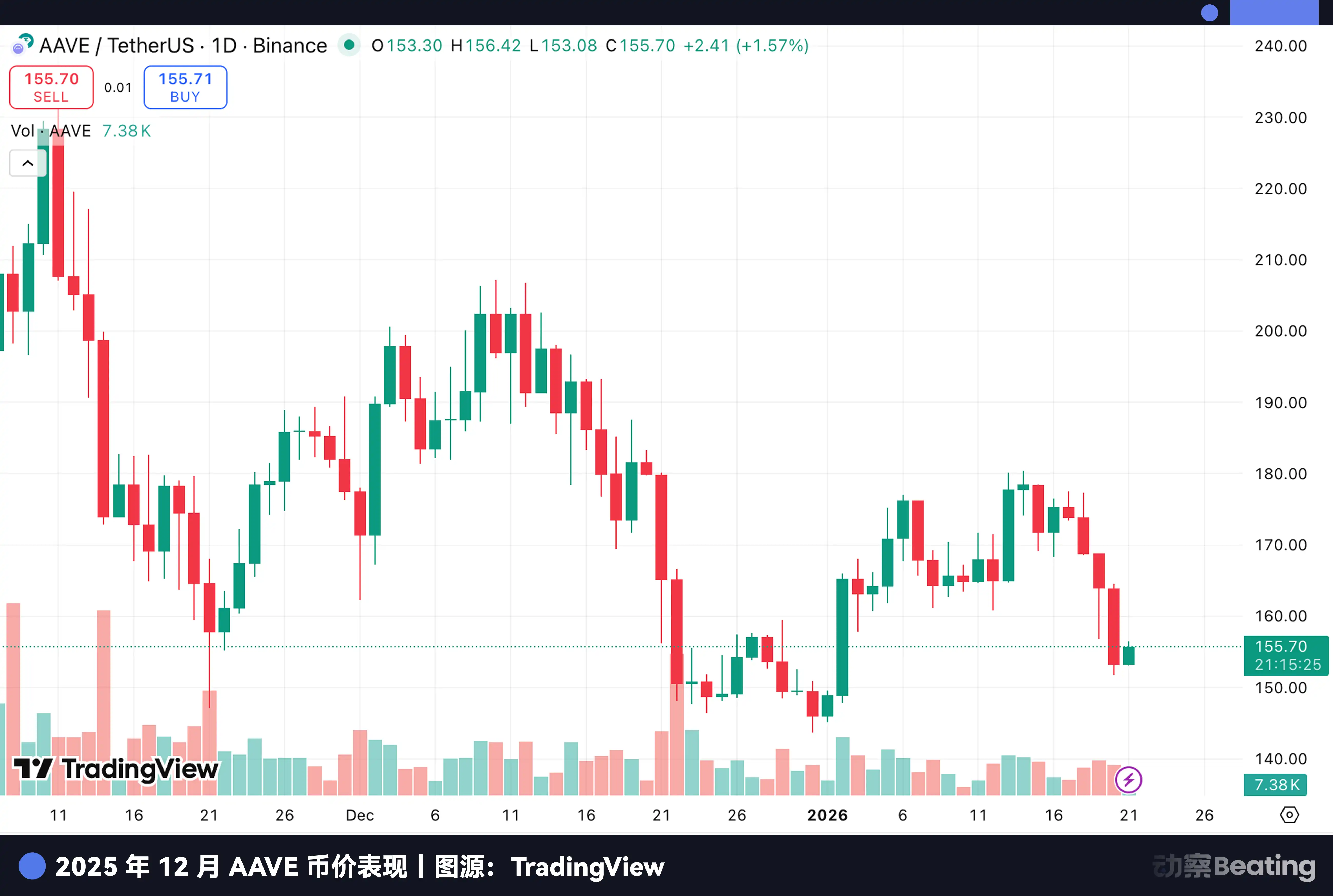
Although the two sides eventually reached a compromise under immense public pressure, with Labs承诺 proposing a plan to share non-protocol revenue with token holders, the rift could not be healed. The protocol may be decentralized, but the entry point for traffic is always centralized. Whoever controls the entry point controls the actual power to tax the protocol's economy.
Meanwhile, the decentralized exchange behemoth Uniswap also had to self-neuter for compliance reasons.
Between 2024 and 2025, Uniswap finally advanced its highly anticipated fee switch proposal, aimed at using a portion of the protocol's transaction fees to repurchase and burn UNI tokens, attempting to transform the token from a useless governance ticket into a deflationary, yield-bearing asset.
However, to avoid being classified as a security by the SEC, Uniswap had to undertake extremely complex structural separation, physically isolating the entity responsible for dividends from the development team. They even registered a new type of entity in Wyoming called a DUNA (Decentralized Unincorporated Nonprofit Association), trying to find a place on the edge of compliance.
On December 26, Uniswap's final governance vote on the fee switch proposal was passed. The core content also included burning 100 million UNI tokens and Uniswap Labs closing front-end fees to further focus on protocol layer development.
Uniswap's struggles and Aave's civil war together point to an awkward reality: the dividends investors crave are precisely the core basis for regulatory agencies to认定证券. Wanting to赋予代币 value invites fines from the SEC; wanting to avoid regulation forces the token to remain in a state of having no actual value.
Empty Rights Mapping, and Then What?
When trying to understand the token rights crisis of 2025, it is helpful to look towards more mature capital markets. There exists a highly illustrative reference point: the American Depositary Receipts (ADS) of Chinese concept stocks and the Variable Interest Entity (VIE) structure.
If you buy Alibaba (BABA) stock on Nasdaq, seasoned traders will tell you that you are not buying direct equity in the operating entity running Taobao in Hangzhou, China. Restricted by law, you hold权益 in a holding company in the Cayman Islands, which in turn controls the operating entities in China through a series of complex agreements.
This sounds very much like some altcoins—you're buying a kind of mapping, not the thing itself.
But the lesson of 2025 tells us that there is a significant difference between ADS and tokens: legal recourse.
The ADS structure, although circuitous, is built on decades of trust in international commercial law, a sound auditing system, and默契 between Wall Street and regulators. Most crucially, ADS holders legally enjoy residual claim rights. This means that if Alibaba is acquired or privatized, the acquirer must follow legal procedures to置换 your ADS with cash or equivalents.
In contrast, tokens, especially those governance tokens originally placed with high hopes, exposed their本质 in the 2025 acquisition wave: they are neither on the liability side of the balance sheet nor on the owner's equity side.
Before the CLARITY Act landed, this fragile relationship was maintained by community consensus and bull market faith. Developers hinted that tokens were like stocks; investors pretended they were doing VC. But when the compliance hammer fell in 2025, everyone had to face the fact that under the traditional corporate law framework, token holders are neither creditors nor shareholders; they are more like fans who bought expensive membership cards.
When assets can be traded, rights can be split. When rights are split, value converges towards the end that is most legally recognized,最能承载现金流, and最能被强制执行.
In this sense, the crypto industry in 2025 did not fail; it was incorporated into financial history. It began to be judged, like all mature financial markets, by capital structure, legal text, and regulatory boundaries.
As crypto's move towards traditional finance becomes an irreversible trend, a sharper question arises: where will the industry's value flow afterwards?
Many people thought that integration meant victory, but historical experience often suggests the opposite. When a new technology is adopted by an old system, it gains scale but does not necessarily retain the originally promised distribution method. What the old system is best at is taming innovation into a form that is regulatable, accountable, and balance-sheetable, and firmly nailing the residual claim rights to the existing power structure.
The合规化 of crypto may not return value to token holders but is more likely to return value to the parts familiar to the law: companies, equity, licenses, regulated accounts, and contracts that can be liquidated and enforced in court.
Token rights will continue to exist, just as ADS will continue to exist; they are both allowed mappings of rights in financial engineering. But the question is, which layer of mapping are you actually buying?