The US Stock Market in 2026, It's Almost Too Easy, and That Makes Me Nervous

marsbit2026-05-08 tarihinde yayınlandı2026-05-08 tarihinde güncellendi

Özet

The U.S. stock market's performance in 2026, particularly in the semiconductor memory sector, has generated significant returns that make some investors uneasy. A popular sentiment contrasts the perceived skill required for success in China's A-shares with the apparent ease of profiting from simply holding U.S. stocks. The primary driver is a global memory chip boom. Stocks like Micron, Seagate, Western Digital, and especially SanDisk (spinning off from WDC in 2025) have skyrocketed, with some gains exceeding 500% or even 2200%. Korean giants Samsung and SK Hynix, dominating their domestic index, have also surged. This rally is fueled by an AI-driven demand surge for memory like HBM (High-Bandwidth Memory), critical for AI chips. Tech giants like Google and Microsoft are placing massive, "unpriced" orders, while analysts continuously upgrade forecasts. SK Hynix reported its 2026 HBM capacity is already sold out. Despite record profits and sky-high margins (e.g., SK Hynix's 72% operating margin), major memory manufacturers are deliberately restricting capital expenditure and capacity expansion, controlling over 90% of DRAM supply. This supply discipline sustains high prices but draws parallels to cartel behavior. The situation presents two narratives. The bullish case sees AI demand as a structural, long-term shift with a prolonged supply gap. The bearish case, exemplified by short-seller Citron's failed bet against SanDisk, warns of a classic commodity cycle where prices e...

「Making money in the A-share market proves you have skill, luck, courage, competence, foresight, insight, and patience.

Making money in the US stock market only proves you have money in the US stock market.」

This has become the reality for most US stock traders in 2026.

Those who quietly bought US memory stocks, uninstalled the app, and went to relax, logged back in one day to find their accounts had multiplied several times over.

Spurred by the US market, A-share memory stocks are also taking off.

Crypto enthusiasts have shifted from discussing memecoins and altcoins to talking about US stocks: 「I live every day in fear of US stocks rising and BTC falling」.

New account holders pose the soul-searching question in group chats: Why is making money in US stocks so easy?

1. Who's Actually Rising in the US Stock Market?

The clear capital theme in the 2026 global market is storage.

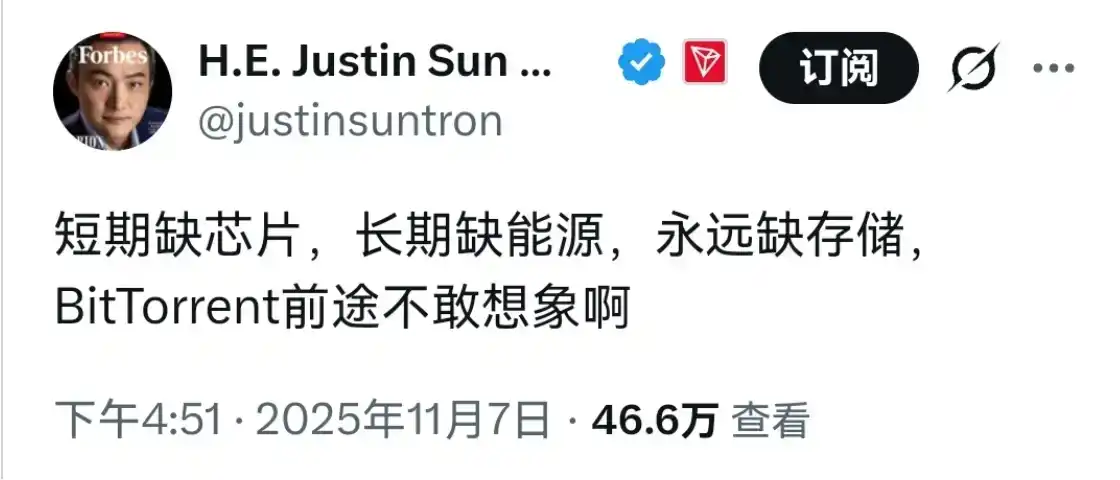
Justin Sun was among the first to tout the storage sector in late 2025.

As netizens calculated, if you had bought US memory-related stocks at the time Sun made his call:

If you bought Micron, you'd be up +222%; if you bought Seagate, up +256%; if you bought Western Digital, up +280%; if you bought SanDisk, up +515%.

If you had invested 500,000 yuan in SanDisk stock a year ago, you would now have 15 million yuan.
What exactly is 'storage'?

Memory chips are the components in computers and phones responsible for 'remembering' things, divided into two types: DRAM handles short-term memory, used to temporarily store data while programs run; NAND handles long-term memory, where your phone's photos and files are stored. Choosing between 128G and 256G for a phone—that capacity is NAND.

Globally, the companies capable of producing these two things number no more than five.

The stocks of these five companies have surged this way over the past year:

SanDisk, spun off from Western Digital in February 2025, an old company making USB drives and SSDs, saw its stock price peak at a 22-fold increase.

Micron, a cyclical stock shunned by fund managers for a decade, rose over 550% in a year, with gross margins pulled from 18% to 56%. Apple's gross margin is about 43%, already considered a high-water mark for profitability in tech. Micron is now higher.

SK Hynix is up 123% this year. Samsung is up 94%.

Seagate, Western Digital, both at all-time highs.

Then there's South Korea.

Samsung and SK Hynix together account for over 30% of the weighting of South Korea's KOSPI index. In 2025, they drove the entire Korean stock market up 76%, clinching the annual champion title among major global indices.

Two memory makers' explosive performance lifted an entire nation's stock market.

On the price side, it's even more direct. DDR4 memory chips, $1.45 at the start of 2025, peaked at $17 in February 2026, an almost 12-fold increase in a year. Kingston 16GB memory sticks in Huaqiangbei rose from 200 yuan to 800 yuan. Part of the reason your recent phone or computer purchase was more expensive lies in these stocks you didn't buy.

SK Hynix's Q1 2026 net profit exploded by 398%, with an operating margin of 72%. Samsung Electronics' overall operating profit skyrocketed 755% year-on-year.

Sell 100 yuan worth of memory, 72 yuan is profit, 28 yuan is cost. This isn't doing business anymore; this is mining.

2. Institutions Have Lost Their Minds Even More Than Retail

In a typical market, institutions are the ones in sharp suits, expressionlessly saying "we are bullish long-term on fundamentals," while retail investors are the ones shouting "to the moon!" in group chats.

In the 2025-2026 storage sector, the institutions went crazy first.

Google, Microsoft, Amazon began placing "price-unlimited, quantity-unlimited" open orders with Micron.

The term "price-unlimited" is worth pondering. It means you name your price, we pay it, no haggling. This procurement method usually appears in wartime scenarios when governments buy military supplies.

In 2025-2026, it appeared in tech companies buying memory sticks.

Broadcom locked in supply through 2028.

SK Hynix said at an investor conference: "Our 2026 HBM production capacity is completely sold out."

Completely. The entire year.

HBM is high-end memory specifically designed to work with AI chips. For every AI chip Nvidia sells, a piece of HBM must accompany it. Globally, only SK Hynix, Samsung, and Micron can make HBM, with SK Hynix holding about 57% market share. "Completely sold out" means one of the most critical components in global AI infrastructure has no spares for the entire year of 2026.

Then came the analysts.

Within three months, Wall Street's consensus estimate for SanDisk's 2026 EPS was revised up by 172%. Citigroup predicted a 144% year-on-year increase in the average price of server DRAM in 2026. Nomura said the supercycle would last at least until 2027, with meaningful supply increases earliest in 2028. Melius upgraded Micron to Buy after the stock had already risen hundreds of percent, adding "still 41% upside over the next 12 months," without blushing or losing breath.

DeepMind CEO Demis Hassabis publicly stated that the overall memory supply chain is constrained, hampering massive AI deployment. Intel CEO Dr. Randhir Thakur (Note: The article uses "陈立武", likely a mistake or alias; actual CEO at the time is Pat Gelsinger, but the translation follows the text) said memory shortages won't ease before 2028.

Then SK Hynix secretly filed with the SEC to issue ADRs in the US, aiming to raise up to $15 billion. A company with fully sold-out capacity and a 72% profit margin decided to go raise more money in New York, reasoning that the Korean market gives too low a valuation, while US investors understand AI better and are willing to pay a higher price.

The A-share market followed suit.

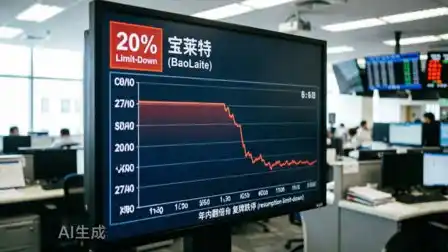
DeMingLi hit limit-up, BIWIN Storage surged, Longsys rose 41%. Small player Shannon Semi's Q1 net profit was preliminarily estimated to grow 6714% to 8747%, a quadruple-digit increase. Topics in finance groups shifted from "Is CSI 300 still worth buying?" to "Which to buy, Micron or SK Hynix?" People who didn't know how to spell HBM two months ago started explaining how High Bandwidth Memory works in group chats.

Even many matchmaking groups started discussing memory stocks.

3. The Most Ironic Scene

On February 24, 2026, Citron Research announced it was shorting SanDisk, giving three reasons.

First, memory is cyclical. 2008, 2012, 2018—each period of high profitability ended in a crash. Existing capacity is already double the 2018 peak. Supply release is just a matter of time.

Second, SanDisk sells a commodity.

"Nvidia has a moat; SanDisk is just a commodity." Nvidia's moat is its CUDA software ecosystem; almost all global AI models run on it, making switching costs extremely high.

SanDisk's SSDs? Samsung could make an identical one tomorrow, possibly cheaper.

Third, major shareholder Western Digital is massively selling SanDisk shares at a 25% discount to the market price.

Selling their own stock at a 25% off. Needing cash urgently is one possibility; another is thinking it will be cheaper later. Neither scenario is called being bullish on future prospects.

Two trading days later, SanDisk rebounded and later continued to hit new all-time highs. Citron's report circulated in various finance groups, becoming meme material.

One question was skipped by everyone: Whose accounts did those shares sold at a 25% discount ultimately end up in?

4. Making Money in US Stocks, As Easy as Breathing?

The world's three most profitable memory companies, at the peak of their profits, collectively chose not to expand production.

SK Hynix's 2025 capital expenditure related to HBM fell 50% year-on-year, officially citing concerns about oversupply in 2027. Samsung's 2026 DRAM capacity growth is only about 5%, far below demand growth.

The entire industry's capital expenditure growth is only 14%, while historically during each expansion phase it's typically 30% to 50%.

Three companies controlling 92% of global DRAM capacity simultaneously choosing not to expand production has a name in any other commodity market: supply-side coordination. OPEC did this with oil, resulting in the 1973 oil crisis. The concentration in the memory chip market is even higher than OPEC's; the combined market share of these three is something thirteen oil-producing nations can't achieve.

Investors interpreting "manufacturers' restraint in expansion" as a positive is logically not wrong; prices can indeed be sustained longer. But what this structure means for the buyers on the other end isn't in any analyst report.

Two plausible narratives can be told about this rally.

The first: AI's demand for memory is a structural shift. AI models in the inference era need to remember increasingly long contexts, requiring memory in orders of magnitude more. The three major memory makers control 92% of capacity, new fabs won't be operational until 2027 at the earliest, and the gap won't disappear before then.

The second: It's just like every other time in history. The 2000 dot-com bubble narrative was "the internet changes everything," which was true. The 2008 subprime narrative was "housing prices won't fall nationwide," which also held up based on historical data back then. The real problem is never whether the story is right, but whether the price has already discounted that story.

The memory industry has an ironclad rule, unbroken for 30 years: Prices rise slowly, but fall fast.

During the 2018 supercycle, from peak to halving took less than two quarters.

No one knows which day this cycle's peak will be. Including those selling shares at a 25% discount, or rather, especially those selling shares at a 25% discount, because they are selling chips—and selling chips to those who are currently believing the story is the most efficient.

The last time you bought a phone, upgrading the memory from 128G to 256G cost you an extra three or four hundred yuan. That three or four hundred yuan traveled through an industry chain, distributing profits layer by layer, and a tiny portion of it ultimately appeared in SK Hynix's 72% operating margin, in Samsung's 755% profit growth, and in all those stocks you didn't buy.

It also, of course, finally aggregates into the moment you open any social media app and see others' soul-searching question: Why is making money in US stocks so easy?


İlgili Sorular

QWhat is the main investment theme driving the global capital markets in 2026, according to the article?

AAccording to the article, the main investment theme driving global capital markets in 2026 is the storage sector, specifically storage memory chips.

QHow did the profitability of leading storage companies like SK Hynix compare to that of Apple in 2026, as mentioned in the article?

AThe article states that in 2026, Micron Technology, a leading storage company, achieved a gross margin of 56%, which was higher than Apple's gross margin of approximately 43%. SK Hynix's operating profit margin was reported to be 72%.

QWhy did Citron Research issue a short report on SanDisk in February 2026, and what was the subsequent market reaction?

ACitron Research issued a short report on SanDisk on February 24, 2026. Their main arguments were that the storage sector is cyclical, SanDisk's products are commodities without a strong moat, and its major shareholder, Western Digital, was selling shares at a 25% discount. The market's initial reaction was a price dip, but SanDisk's stock rebounded after two trading days and continued to reach new highs, making the report a subject of memes in financial chat groups.

QWhat is HBM memory, and why is its supply critically tight in 2026?

AHBM (High Bandwidth Memory) is a high-end type of memory specifically designed to work with AI chips, like those from Nvidia. The article explains that in 2026, the supply of HBM was critically tight because SK Hynix, which holds about 57% of the market, stated its entire 2026 HBM production capacity was already sold out for the year. This shortage is a key bottleneck for global AI infrastructure deployment.

QAccording to the article, what is a unique and potentially concerning behavior of the top three storage companies during the 2026 market boom?

AA unique and potentially concerning behavior highlighted in the article is that during the peak of profitability in 2026, the top three global storage companies (Samsung, SK Hynix, and Micron) collectively chose not to significantly expand their production capacity. Their capital expenditure growth was much lower than historical norms during expansion periods. This lack of supply increase, while supporting high prices, creates a market structure reminiscent of coordinated supply-side control, similar to OPEC in the oil market.

İlgili Okumalar

Meta Follows the Trend into Prediction Markets: Can It Avoid Repeating the Failure of the Metaverse?

Meta, the tech giant behind Facebook, has reportedly formed a team to develop "Arena," a new application focused on prediction markets. Users would use platform points to place bets on outcomes in politics, sports, and global events. This move follows Meta's massive, nearly $900 billion, losses from its heavily-invested metaverse division, Reality Labs. The prediction market industry is already showing strong demand, with leading platforms like Kalshi and Polymarket facilitating hundreds of billions in annual volume. Meta, with its 3.56 billion daily active users across its apps, possesses the unprecedented scale to bring this niche activity to a mainstream audience, similar to its past success in cloning features like Stories and Reels. However, Arena faces significant hurdles. Meta plans to start with a points-based system to avoid strict financial regulations, but this may dilute the core incentive of accurate prediction that real-money markets provide. More critically, Meta enters the space with a major trust deficit stemming from its past regulatory battles, notably the failed Libra/Diem stablecoin project, and its controversial history with political content and misinformation. The prediction market sector itself is under increasing regulatory scrutiny, with recent CFTC actions including fines and the first-ever insider trading case. While Meta's vast user base offers a unique opportunity to expand the market, its success hinges on navigating complex regulations and rebuilding the credibility necessary for a platform dealing with sensitive topics like elections. The outcome could range from Meta dramatically growing the industry to Arena becoming a high-profile regulatory target before it can scale.

Foresight News5 dk önce

Meta Follows the Trend into Prediction Markets: Can It Avoid Repeating the Failure of the Metaverse?

Foresight News5 dk önce

Stock Soars 1200% on First Day, 80s Sales Engineer's Reversal: From Selling FRP to a Fortune of 29 Billion

On its first day of listing, Zhenbao Technology (stock code "N Zhenbao") surged by 1207%, marking itself as the second "ten-bagger" new stock of the year on the STAR Market. The closing price of 585 yuan propelled it into the top 20 of the A-share market by stock price. Dubbed the "first share of semiconductor consumables," the company is backed by a comprehensive shareholder list including National Integrated Circuit Industry Investment Fund Phase II, SMIC, BOE, and YMTC. Zhenbao's business model focuses on supplying critical consumable components like silicon rings and quartz parts to semiconductor fabs. Unlike expensive core equipment with low repurchase rates, these consumables require frequent replacement as long as production lines are running, generating stable recurring revenue—a key reason for its high market valuation. Founder Wang Bing, an 80s-born former sales engineer, built the company by identifying a supply chain vulnerability: foreign monopolies on high-purity materials led to high costs and unstable deliveries for domestic fabs. Zhenbao's strategy emphasized reliability and speed over absolute top-tier performance, offering products at about 50% of the price with 80% of the performance but 100% on delivery and responsiveness. To achieve this, the company vertically integrated its operations across "raw materials + components + surface treatment," ensuring supply chain control and cost reduction. Its clientele now spans major domestic fabs like BOE and Huahong, as well as international players like SK Hynix and Texas Instruments. However, risks accompany its rapid expansion. The IPO raised approximately 1.605 billion yuan primarily for capacity expansion, which will bring significant annual depreciation costs, potentially impacting future profitability. The company's growth is heavily reliant on sustained high levels of fab expansion, making it vulnerable to the semiconductor industry's cyclical downturns. Other concerns include high accounts receivable (70.83% of revenue at one point in 2025), heavy reliance on its top five customers (over 70% of sales), and questions about the stability and authenticity of its R&D investments, evidenced by volatile R&D headcount and unusual spikes in R&D energy consumption. While the "consumables story" commands a premium, long-term valuation will depend on maintaining high capacity utilization and healthy cash flow conversion.

marsbit11 dk önce

Stock Soars 1200% on First Day, 80s Sales Engineer's Reversal: From Selling FRP to a Fortune of 29 Billion

marsbit11 dk önce

Warsh Deals a Heavy Blow to the 'Dollar Devaluation Trade'! Gold Crashes, Bitcoin Slumps, How Long Can the Chip Frenzy Hold?

The "dollar devaluation trade" that dominated Wall Street this year is rapidly unraveling, driven by a hawkish pivot from Fed Chairman Kevin Warsh and a surging U.S. dollar. This double pressure has triggered a sharp sell-off in non-yielding assets. Gold broke below $4,000 an ounce, silver tumbled below $60, and Bitcoin fell under $60,000, with all retreating significantly from their earlier 2025 peaks. The dollar index hit a 14-month high. Warsh's emphasis on price stability has solidified market expectations for aggressive rate hikes, increasing the opportunity cost of holding assets like precious metals. Concurrently, massive fund flows are rotating out of metals and cryptocurrencies into the semiconductor sector, providing a temporary boost to stocks like Micron and SK Hynix. However, analysts warn this chip rally shows signs of a speculative top. Extreme volatility, with semiconductor stocks seeing trillion-dollar swings, is historically characteristic of major market turning points. Factors like month-end rebalancing, a flood of new equity issuance, and insider selling further signal potential exhaustion. While Micron's strong earnings briefly stemmed selling, it may offer a favorable exit point for remaining chip bulls. The sustainability of the semiconductor frenzy is now in serious doubt as the broader market reprices assets around a stronger dollar and tighter monetary policy.

华尔街日报19 dk önce

Warsh Deals a Heavy Blow to the 'Dollar Devaluation Trade'! Gold Crashes, Bitcoin Slumps, How Long Can the Chip Frenzy Hold?

华尔街日报19 dk önce

Micron Shuts Up the Bears, Makes India's 'Buffett' Regret: Sold Too Early, Missed Out on $2 Billion

Indian value investor Mohnish Pabrai, a disciple of Warren Buffett, revealed his costly mistake of selling shares in Micron Technology too early. He initially invested in 2017, holding it for six years and building a position as large as 77% of his portfolio, based on a thesis that the memory chip industry would consolidate into a stable oligopoly of Samsung, SK Hynix, and Micron. However, he sold his entire stake in September 2023, fearing oversupply after Samsung announced production expansion. Shortly after his exit, demand for high-bandwidth memory (HBM) surged with the rise of AI, and Micron's stock price skyrocketed over 15 times in two years. Pabrai estimates this premature sale cost him roughly $20 billion in potential gains. He expressed similar regret over selling his investment in SK Hynix too soon, stating he violated his own principle of holding companies forever. Reflecting on these errors, Pabrai emphasized his core investment checklist principles: avoiding leverage, focusing on the durability of a company's competitive moat, and assessing management's character. Despite these personal trading missteps, his long-term view on the remaining memory chip leaders remains bullish, advising current holders not to sell as "the party is just getting started." He concluded by sharing his philosophical outlook, prioritizing character over wealth, and his goal to donate his entire fortune before his passing.

marsbit1 saat önce

Micron Shuts Up the Bears, Makes India's 'Buffett' Regret: Sold Too Early, Missed Out on $2 Billion

marsbit1 saat önce

Mihoyo's Next Protagonist Is Her, Who Plays the Piano

Mihoyo, widely recognized for its hit game Genshin Impact, has long harbored a grander ambition: creating a virtual world where one billion people would want to live. While its character design is unparalleled, the company recognizes a fundamental limitation—these beloved virtual characters are not truly "alive." Their dialogue and actions are pre-scripted. This drive for authentic "living" characters has guided Mihoyo's strategic investments in cutting-edge fields like brain-computer interfaces, AI (including an early investment in MiniMax), and nuclear fusion. Following the release of ChatGPT in late 2022, co-founder Cai Haoyu stepped down from management to lead a new overseas AI venture, Anuttacon, focused on creating AI-driven virtual beings. Mihoyo's path has involved experimentation and iteration. Anuttacon's early project, *Whisper of the Stars*, showcased real-time AI conversation but revealed limitations in underlying language models. The team subsequently focused its resources on developing a sophisticated "emotional" large language model, distinct from purely utilitarian AI. Co-founder Liu Wei (Dawei) announced plans to invest up to 100 billion RMB in this AI pursuit. The first tangible product of this vision is *BSide: Olivia Lin*, a free Steam application featuring a piano-playing virtual companion. Unlike typical AI chatbots demanding constant interaction, Olivia Lin operates on a slower, more deliberate rhythm—responding to letters, playing user-submitted melodies, and serving as a desktop presence. This design emphasizes "lifelikeness" over exhaustive conversation, strategically working around current technological constraints while building a sense of authentic connection. The company's journey traces back to its name, "miHoYo," where "mi" pays homage to the virtual singer Hatsune Miku. For nearly two decades, fans have loved Miku, a character unaware of their devotion. Mihoyo's ultimate goal, now backed by massive investment and AI research, is to bridge that gap—to create virtual beings that can truly know they are loved.

marsbit1 saat önce

Mihoyo's Next Protagonist Is Her, Who Plays the Piano

marsbit1 saat önce

İşlemler

Spot
Futures
活动图片